Month: July 2025

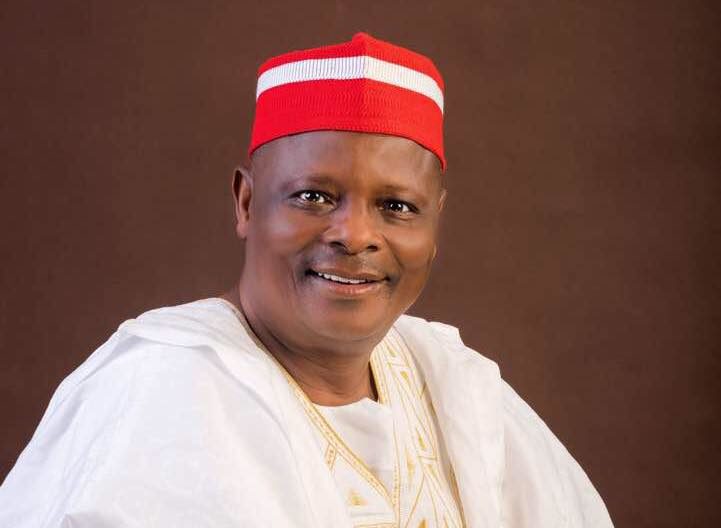
Kwankwaso to receive honorary doctorate as Northwest University holds combined convocation

By Uzair Adam

The Vice-Chancellor of Northwest University, Kano, Professor Muktar Atiku Kurawa, has announced that the institution will host its second combined convocation ceremony from Friday, July 25 to Saturday, July 26, 2025.

Speaking at a press conference on Tuesday, Professor Kurawa described the event as a significant milestone in the university’s development.

He noted that the convocation would cover five academic sessions, from 2018/2019 to 2023/2024, and will include both undergraduate and postgraduate graduands.

The Daily Reality reports that this marks the first convocation for the university’s postgraduate students, following the commencement of its postgraduate programmes in 2021.

Highlighting the uniqueness of this year’s convocation, the Vice-Chancellor revealed that Justice Sidi Bage Muhammad I, a retired Supreme Court Justice, will be installed as the new Chancellor of the university.

As part of the ceremony, the university will confer honorary doctorate degrees on notable Nigerians who have significantly contributed to its growth and progress.

Among them is Engineer Dr. Rabiu Musa Kwankwaso, former governor of Kano State and founder of the university and its sister institution, Aliko Dangote University of Science and Technology, Wudil.

Other recipients of the honorary doctorate include philanthropist Hajiya Maryam Sunusi Dantata, the late Alhaji Aminu Dantata (to be honoured posthumously), Alhaji Aliyu Sa’idu Bebeji, proprietor of Aliko Oil, and Alhaji Adamu Yahya (popularly known as A.Y Maikifi).

“These individuals have supported the university since inception and have been instrumental in promoting its mission. We obtained Senate approval to honour them accordingly,” Professor Kurawa stated.

A pre-convocation lecture is scheduled for Friday, July 25, at the university’s City Campus, to be delivered by Professor Abubakar Adamu Rasheed, former Executive Secretary of the National Universities Commission.

The event will be chaired by the Minister of State for Education, Professor Suwaiba Sa’id Ahmad.Speaking on institutional development, Professor Kurawa disclosed that the university has grown from five to nine faculties, with a tenth — the Faculty of Communication and Media Studies — currently under review by the National Universities Commission (NUC).

Plans are also underway to establish a Faculty of Allied Health Sciences offering programs in Nursing, Medical Laboratory Science, Radiography, Physiotherapy, and related fields.

The Vice-Chancellor also confirmed that the university has reverted to its original name, Northwest University, Kano, following a bill signed by the Governor of Kano State on December 25, 2024.

Describing the institution as “first among equals,” Professor Kurawa emphasized that the university is progressing steadily and remains competitive nationally.

He added that the number of students to be convocated is yet to be finalized but assured that a breakdown by session will be released in due course.

Bauchi governor launches ₦7.8 billion upgrade of state assembly complex

By Sabiu Abdullahi

Bauchi State Governor, Bala Mohammed, has inaugurated the renovation and modernization of the State House of Assembly complex, a project estimated at ₦7.8 billion.

The governor performed the flag-off ceremony on Tuesday, describing the development as part of his administration’s pledge to foster a functional atmosphere for the three arms of government.

“The renovation, remodeling and upgrading of the complex we are witnessing today is a case of equal and just treatment for all the three arms of government which constitute a tripod upon which the government rests,” he said.

Mohammed highlighted the importance of improving the complex to meet the standards expected of such a key institution in governance.

“This project has been awarded at the cost of N7.8 billion for which 50 per cent of the money has already been approved and paid to the contractor and it has a 12 months completion period.

“Indeed, the mutual understanding and respect between the executive and the legislative arms of government has become responsible for the seamless delivery of the dividend of democracy during our time,” he added.

Speaking at the event, Speaker of the Bauchi State House of Assembly, Abubakar Suleiman, recalled that the assembly complex was constructed during the First Republic, in the tenure of the late Governor Abubakar Tatari-Ali.

Since then, he said, only a single minor renovation took place in 2011.

He said the structure had been the core of legislative work in the state for decades and was long due for comprehensive restoration.

“On behalf of all members of the Bauchi state house of assembly, management staff, and all other workers, I express our sincere gratitude to the governor for his visionary leadership and commitment to the development of not only the legislative infrastructure but the entire infrastructure in the state.

“This renovation signifies not only a physical upgrade but also a renewed dedication to transparency, efficiency and service delivery to our constituents.

“The project will modernise our facilities, enhance our working environment and enable us to better fulfill our constitutional responsibilities and service delivery to our constituents,” he said.

The Speaker also encouraged lawmakers, staff, and residents of Bauchi to see the initiative as a collective investment in governance, democracy, and the state’s future.

Also speaking, Commissioner for Housing and Environment, Danlami Kaule, said his ministry, which is in charge of supervising the work, would ensure the contractor maintains the expected quality and delivers the project on schedule.

Security personnel block Senator Natasha from entering NASS complex

By Sabiu Abdullahi

Security agents, including police officers and personnel from other agencies, on Tuesday prevented Senator Natasha Akpoti-Uduaghan from entering the National Assembly premises.

The senator, who represents Kogi Central, arrived at the gate in a black SUV. However, she was denied entry by security operatives who had barricaded the entrance.

Her supporters were also seen engaging in a heated exchange with the officers at the scene.

This incident occurred hours after reports emerged that Senator Natasha was planning to resume plenary, citing a court ruling as justification for her return.

Earlier in the day, SaharaReporters had reported a strong security presence around the National Assembly, with several security vehicles stationed at key entry points.

Operatives from the Department of State Services (DSS), Nigeria Police Force, and Nigeria Security and Civil Defence Corps (NSCDC) were deployed to guard the complex.

Despite a recent ruling by the Federal High Court that declared her suspension unconstitutional, the Senate leadership has maintained that Senator Akpoti-Uduaghan remains suspended.

The lawmaker had been suspended in March 2025.Over the weekend, the embattled senator declared her intention to resume legislative activities.

“I have pretty much two months more before the six months expire. However, I have written to the Senate again telling them that I’m resuming on the 22nd, which is on Tuesday, by the special grace of God,” she said during a constituency training event.

“I will be there, because the court did decide on that. Now, they argue that it’s an order, it’s not an order, but it is a decision,” she added.

Her lawyer, West Idahosa, a Senior Advocate of Nigeria, backed her position.

He argued that the judgment provided enough legal grounds for her return to the red chamber.

“Let me be honest with you. Attendance is a legislative action. As far as we are concerned, we are focused on the appeal and other issues before the court. I think the decision to go back to the Senate will be determined by the constituents,” Idahosa said.

He continued: “The suspension was overreaching the provisions of the constitution. I mean, that was clearly stated there. When you say that the plaintiff should go back, you mean that she should go back to work. I think that is more or less an order… She is still a senator of the Federal Republic of Nigeria.”

However, the Senate leadership has taken a different view. In a letter dated July 14 and addressed to Akpoti-Uduaghan’s lawyer, Michael Jonathan Numa (SAN), the National Assembly asserted that the court did not issue any binding directive on the Senate to recall her.

The letter, signed by Charles Yoila, Director of Litigation and Counselling for the Clerk to the National Assembly, stated that the judgment merely “advised” the Senate to consider allowing her return.

Despite the resistance at the gate, Senator Natasha was later seen trekking into the complex, a video of which was shared online.

In defence of Alhaji Auwalu Tijjani Rabiu

By Mohammed Mohammed

Like many others, I was shocked when I recently saw an advisory by the Economic and Financial Crimes Commission (EFCC) declaring Alhaji Auwalu Tijjani Rabi’u wanted for alleged money laundering involving over $1.9 million.  

My shock, and that of many others, stemmed from the general belief in Alhaji Auwalu’s reputation as a businessman of integrity over the years and across his business constituencies in Nigeria, the UAE, and beyond. 

Having gone through the details of the transactions in question, including the reports of a reputable audit firm, which audited the transactions between Alhaji Auwalu and the purported petitioner, one Ifeanyi Ezeokoli, it’s quite clear that the former took advantage of Alhaji Auwalu’s tendency to trust people even without due diligence sometimes, which stems from his sheer clean-mindedness.   

According to the available records, Alhaji Auwalu made an overpayment of more than $3 million to  Ifeanyi Ezeokoli in 2022 as part of a business transaction that spanned a year. And though Ifeanyi was aware of the mix-up behind the regular overpayment, he turned a blind eye and continued receiving payments not due to him. 

And knowing that the bubble would burst one day, he continued to use different companies’ bank accounts, most of which were for third parties, apparently to complicate the auditing of the transactions. Yet, when it appeared to him that his game was over, he came up with an allegation that Alhaji Auwalu owes him over $1.9m, and even went ahead to file a case at the EFCC, which, in turn, declared him wanted. 

However, now that the Federal High Court in Kaduna has issued an interim order restraining the EFCC from taking any measures against Alhaji Auwalu pending the determination of his complaint before it, things have begun to take the right direction, which will undoubtedly culminate in not only absolving Alhaji Auwalu but also enabling him to recover his money from Ifeanyi. 

After all, if for nothing, Alhaji Auwalu is a man whose life seamlessly blends the acumen of business with the compassion of philanthropy. Known across communities not just for his remarkable business success, but more so for his boundless generosity, Auwalu stands tall as a symbol of service and humility. 

Alhaji Auwal’s journey in the business world is one of resilience and integrity. He has built an impressive legacy, earning respect not only for his achievements but for how he achieved them, with fairness, foresight, and a deep sense of responsibility. Yet, what truly sets him apart is that he never allowed success to cloud his sense of duty to others.

Through quiet acts and major initiatives alike, Auwalu has touched countless lives. From supporting the vulnerable and other acts of charity, his contributions have brought light and hope to individuals and entire communities. For many, he is not just a benefactor; he is a lifeline, a silent force who sees a need and responds with action, not applause.

His philanthropy is not showy or self-serving. It is driven by sincere empathy and a belief that every life uplifted enriches us all. Whether in times of ease or crisis, Auwalu has remained steadfast, ever ready to give without hesitation and serve without seeking recognition.

To speak of Auwalu is to talk about impact. His name inspires admiration, but more importantly, it inspires others to give, to build, and to believe in a better world.

Auwalu is more than a businessman. He is a builder of dreams, a guardian of dignity, and a blessing to many.

Mohammed Mohammed wrote from Dubai, United Arab Emirates.

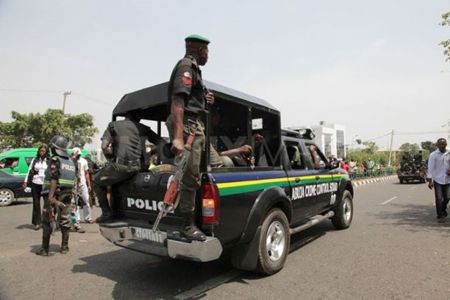
IGP to engage retired police officers over pension-related protest

By Sabiu Abdullahi

The Inspector-General of Police, Kayode Egbetokun, has promised to hold a direct meeting with retired police personnel who took to the streets in Abuja to protest their poor pension arrangements.

This assurance was conveyed through the Federal Capital Territory Commissioner of Police, who addressed the protesters on behalf of the IGP.

According to a post shared Monday on the official X handle of the Nigeria Police Force, the FCT Commissioner met with the retirees to hear their concerns.

The statement also revealed that plans have been finalized for the IGP to meet with them at the Peacekeeping Hall, Force Headquarters, Abuja.

The demonstration, which was led by human rights activist and 2023 presidential candidate of the African Action Congress (AAC), Omoyele Sowore, focused on advocating for improved welfare for both serving and retired officers of the Nigeria Police Force.

The police, in their statement, also pointed out that “some individuals with ulterior motive attempted to hijack the protest.”

However, no further details were given about those allegedly involved.

The protest brought renewed attention to long-standing grievances by retired officers who have repeatedly called for better treatment after years of service.

The passing of Muhammadu Buhari: A political loss for both APC and ADC

By Zayyad I. Muhammad

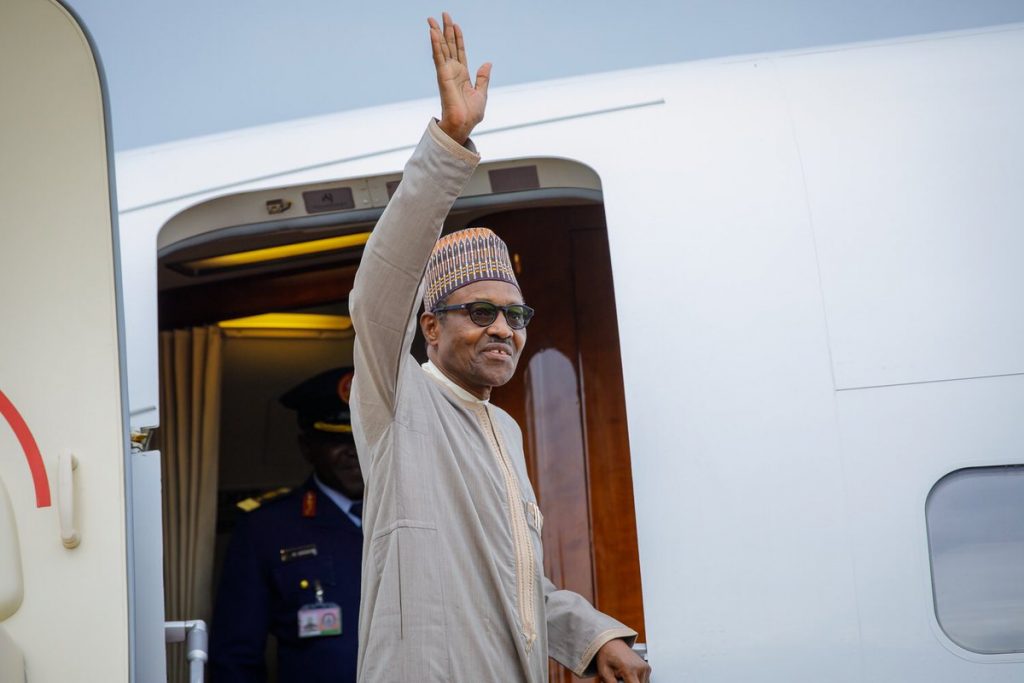
The passing of former President Muhammadu Buhari marks not just the end of an era but also a significant political loss for two of the three key political parties in Nigeria, the ruling All Progressives Congress (APC) and the rising coalition force, the African Democratic Congress (ADC).

For both parties, Buhari represented more than just a former head of state; he was a political symbol with immense influence. His mere presence at a campaign rally, no matter how brief, would have carried tremendous weight, particularly among his loyal base, which is estimated to be over 12 million strong. These supporters, often described as a “cult-like” following, have remained fiercely committed to him since his early political days under the Congress for Progressive Change (CPC) and the Buhari Organisation. However, the number may have decreased by now.

In recent times, many former CPC loyalists and Buhari-era political operatives have appeared to find a new home in the ADC, reshaping its structure and lending it a dose of national relevance. This quiet but strategic realignment has positioned the ADC as a potential beneficiary of some of the Buhari political legacy, especially in northern Nigeria, where his influence remains deeply rooted. However, a good number of the CPC bloc and the Buhari Organisation have remained in the APC.

Had Buhari lived to make even a symbolic appearance at an APC campaign event, it would have significantly dampened the ADC’s momentum and reinforced the APC’s claim to his enduring political capital. Conversely, had he chosen to lend his image, even silently, to the ADC, it would have sent shockwaves through the APC, raising questions about its hold over his base.

Now, with his passing, both parties are left in a competitive vacuum, each scrambling to appeal to the millions who revered Buhari for his perceived integrity, simple lifestyle, and northern populist appeal. The political battlefield is wide open, and neither the APC nor the ADC can confidently claim to be the rightful heir to Buhari’s legacy.

However, President Bola Ahmed Tinubu may have gained an early edge. His respectful and dignified handling of Buhari’s death, marked by prompt tributes, state honours, and symbolic gestures, may resonate with many of Buhari’s followers. In Nigerian politics, such symbolic acts are never underestimated. They signal alignment, loyalty, and shared values, all of which matter deeply to a base that is emotional, ideological, and still seeking a new political anchor.

As the 2027 election cycle approaches, the real question becomes: Who will inherit the Buhari political machinery? The answer may shape the future of both the APC and ADC, and by extension, Nigeria’s political landscape.

 Zayyad I. Muhammad writes from Abuja via zaymohd@yahoo.com.

A letter to Hauwa Halliru Gwangwazo

Dear Hauwa,

I am delighted to hear about your journey from intern to staff member at Radio France Internationale (RFI) Hausa.You’ve truly followed in your father’s footsteps, carrying on his legacy as a dedicated and passionate journalist. He was a veteran in the field, and it’s clear that you’ve inherited his gift for storytelling and commitment to excellence.

Your work shines brightly, just like your looks. Your talent, intelligence and work ethic have earned you recognition and praise, and rightly so. 

You have a gift, Hauwa, and it’s not just your beauty or talent – it’s your passion, drive, and commitment to making a difference.

As you continue to grow in your career, I want to remind you to stay focused on your goals. It’s easy to get caught up in praise and admiration, but don’t let that distract you from your vision. Don’t let it go to your head and make you feel like you’ve already arrived.

Look to your professional colleagues, such as Madina Maishanu, and trailblazers like Kadaria Ahmed, who have paved the way for Northern women in journalism with their dedication and resilience. Take inspiration from their journeys and continue to push boundaries, tell impactful stories, and inspire others.

I pray that you’ll continue to excel in your career, staying true to your values and passion. May your path be filled with opportunities, and may your heart remain full of joy and purpose. May you always find strength in your convictions and continue to shine brightly in all you do.

With love, admiration, and best wishes,

Ukasha Kofarnassarawa

Best regards, 

Nigerian physicist appointed to UN scientific panel on nuclear war

By Hadiza Abdulkadir

KANO — Nigeria has earned international recognition following the appointment of Professor Rabia Sa’id, a renowned physicist from Bayero University Kano, to a newly established United Nations independent scientific panel tasked with assessing the impacts of nuclear war.

The 21-member panel, constituted under UN Resolution 79/238, will provide a comprehensive scientific report on the consequences of nuclear conflict by 2027. The panel is part of a broader global initiative aimed at strengthening nuclear disarmament efforts and promoting peace through evidence-based research.

Professor Sa’id’s inclusion in the panel underscores Nigeria’s increasing influence in global peacebuilding, science diplomacy, and advocacy for nuclear non-proliferation. Her appointment is being hailed as a significant milestone for Nigerian science and for women in STEM across Africa.

A respected scholar and advocate for science education and sustainable development, Professor Sa’id brings to the panel a wealth of academic experience and a strong commitment to global security.

Her appointment has been widely celebrated within Nigeria’s academic and diplomatic communities as a positive step toward the country’s deeper engagement in global scientific and humanitarian initiatives.

Kperogi apologises to Aisha Buhari over controversial divorce claim

By Anas Abbas

Farooq Kperogi, a journalism professor at Kennesaw State University in the U.S. and a Nigerian commentator, has publicly apologised to former First Lady Aisha Buhari following backlash from a Facebook post in which he erroneously claimed she had divorced the late President Muhammadu Buhari.

In a statement issued days after the post ignited widespread public outcry, Kperogi acknowledged that his July 16 update, titled “Aisha Buhari, Divorce, and Forgiveness Claim,” represented a significant misjudgment on his part.

Kperogi expressed regret for not foreseeing the distressing impact his words would have on Mrs. Buhari and her family.

“I did not anticipate the profoundly painful consequences that my Facebook update would have on former First Lady Mrs. Aisha Buhari and those closest to her,” Kperogi stated.

He described the incident as one of the most regrettable lapses in judgment he has experienced, leading to “unfathomable personal anguish.”

In his original post, Kperogi claimed that Aisha Buhari had reverted to her maiden name, Halilu, and suggested she had refused to travel to London to care for her husband during his illness.

He asserted that the information was sourced from a reliable individual but acknowledged that making it public was a mistake.

“My source maintains the accuracy of the information but never intended for it to be disclosed publicly. It was wrong of me to share it,” he said.

He also mentioned that Alhaji Sani Zorro, former Senior Special Assistant on Public Affairs to the First Lady, reached out to contest the claims’ validity.

“I will not dispute the details with Alhaji Sani, who communicated Mrs. Buhari’s position that her marriage remains intact. As the late MKO Abiola famously said, no one can give you a haircut in your absence,” he stated.

Kperogi reiterated that only Mrs. Buhari has the authority to discuss her marital status and that her truth should be respected above all else.

He clarified that he did not intend any malice but recognised that the harm caused by his post far outweighed any potential value it might have held.

“The truth of this information is now far less significant than the hurt my disclosure has caused. I should not have shared it publicly. Period. This action violated every moral and ethical principle I uphold,” he admitted.

He concluded with a sincere apology: “To Mrs. Aisha Buhari, I offer my heartfelt and unreserved apology for the needless and deeply regrettable hurt I have caused. I am truly sorry.”

Kperogi’s post gained traction just three days after President Buhari’s passing, eliciting reactions across various political and social media platforms.

The afterlife of a conspiracy: Why facts alone cannot bury “Jibril of Sudan”

By Ibraheem Muhammad Mustapha

The passing of former President Muhammadu Buhari on July 13, 2025, presents a fascinating and troubling paradox for the information ecosystem. Instead of closing a chapter, it appears to have reopened a well-worn, debunked narrative that the “real” Buhari died during his medical trip to London in 2017, and was replaced by a clone or body double named “Jibril” from Sudan. 

As a fact-checker who has previously addressed and debunked this claim, this moment is a sobering litmus test for me and other fact-checkers, as it poses an elementary question of whether classical fact-checking is effective. My analysis leads me to a disquieting conclusion: we are not merely fighting a deficit of information, but a surplus of emotionally resonant, identity-affirming mythology.

Motivated Reasoning and the Psychology of Belief

To grasp the tenacity of the “Jibril” theory, we must first dispense with the simplistic notion that its believers are merely ignorant or unintelligent. The phenomenon is far more complex, rooted in predictable and well-documented psychological mechanics. The primary force at play is what political scientists Milton Lodge and Charles Taber have extensively studied as motivated reasoning. This framework posits that humans, especially in politically charged contexts, behave less as impartial judges and more as motivated attorneys seeking to arrive at a conclusion that aligns with their pre-existing beliefs and identities. For Nigerians whose political identity was defined by opposition to or deep disappointment with the Buhari administration, the “Jibril” narrative was never a hypothesis to be tested; it was a conclusion to be defended.

This dovetails seamlessly with the basic cognitive dissonance theory as was first postulated by Leon Festinger in the 1950s. From the perspective adopted by Festinger, an individual suffers great mental discomfort when they hold contradictory beliefs or are confronted with new information that challenges their existing beliefs. For a citizen who felt alienated, disenfranchised, experienced worse economic conditions or insecurity under a leader they may have once supported or hoped would succeed, the psychological stress is immense. It is far less dissonant to embrace a radical conspiracy that the “real,” competent Buhari is gone than to accept the more painful and complex reality that his administration, for a host of intricate reasons, fell short of expectations. The “Jibril” theory, therefore, is not a failure of logic but a psychological coping mechanism, a path of least resistance to resolve an otherwise unbearable internal conflict.

The Power of Narrative and the Poverty of Facts

Furthermore, fact-checkers fundamentally misunderstand the nature of the battle when we arrive armed with a dossier of facts and data to a war of narratives. Human cognition is not optimised for data points; it is wired for stories. The “Jibril” theory is a masterclass in narrative potency. It contains a villain (the cabal that orchestrated the switch), a victim (the Nigerian populace), a tragic secret (the president’s death), and a mystery to be solved. It transforms the believer from a passive citizen into a heroic truth-seeker, possessing gnosis —a secret, elevated knowledge unavailable to the deluded masses. In contrast, what does the truth offer? It offers the mundane and often unsatisfying complexity of economic policy, security logistics, and bureaucratic inertia. The conspiracy narrative is simply a better, more emotionally gripping story. It provides a scapegoat, assigns clear blame, and creates a sense of intellectual superiority in the believer.

For its most ardent believers, “Jibril” is a symbol of how distant, disconnected, and unrepresentative Buhari’s government felt. Claims that he no longer spoke Fulfulde fluently or looked physically different were not weighed as forensic evidence; they were experienced as embodied metaphors of alienation.

 The Core Crisis is Institutional Distrust

This entire dynamic is supercharged by a catastrophic collapse of institutional trust, which I see as the true Achilles’ heel of fact-checking as a profession. Our work as fact-checkers is predicated on the assumption that a trusted, authoritative third party can adjudicate truth claims. The “Jibril” case demonstrates the collapse of this assumption. The theory gained traction in an environment of profound distrust in public institutions. When citizens do not trust the government to tell the truth about policy or the economy, why would they trust it to tell the truth about the president’s identity? The fact-check is DOA (Dead on Arrival) because the source is already deemed compromised. Therefore, in an environment of deep-seated cynicism towards government, media, and experts, any attempt at debunking is easily reframed as part of the cover-up. Hence, the more forcefully an official source denies a conspiracy, the more it can convince believers that the conspiracy is real. This phenomenon was documented by researchers Brendan Nyhan and Jason Reifler, who identified the backfire effect: each denial is interpreted as a sign of panic from those trying to hide the “truth.” President Buhari’s own need to address the rumour in 2018 (“It’s the real me, I assure you”) was, for many believers, served not as a refutation but as high-level confirmation that they were indeed onto something big.

Reassessing the Role of the Fact-Checker

Therefore, I am forced to reassess our role as fact-checkers and the efficacy of our traditional methods. The “Jibril of Sudan” case study demonstrates that reactive debunking is akin to trying to unring a bell. The path forward must be a paradigm shift towards what social psychologist William J. McGuire pioneered as Inoculation Theory. Rather than merely correcting falsehoods after they have taken root, we must pre-emptively “vaccinate” the public by exposing them to weakened forms of misinformation and deconstructing the manipulative techniques being used. The goal is to build cognitive antibodies against emotional manipulation, conspiratorial thinking, and logical fallacies.

Also, we need to learn how to fight a narrative war, not a Factual Skirmish, because we cannot defeat a powerful story with a list of facts. We must counter it with a more compelling, truthful narrative. This involves storytelling that explains complex realities in an accessible and empathetic way.

Then we need to embrace the method of empathy before evidence. The first step in engaging a believer is not to present a fact-check but to acknowledge the underlying grievance. A conversation that starts with, “I understand the frustration with the country’s direction that leads people to seek drastic explanations,” is more likely to open a door for dialogue than one that starts with, “You are wrong, and here’s why.”

Lastly, the ultimate antidote to misinformation is trust. This is a generational project, not a short-term fix. It requires sustained efforts from the media, government, and civil society to operate with transparency, accountability, and a genuine commitment to public welfare.

The persistence of the “Jibril of Sudan” theory, even in the face of death, is not an indictment of our work as fact-checkers. It is a diagnosis of a deeper societal condition where trust has eroded, and narratives have become more powerful than reality. It signals that the core battle is not over facts, but over trust. Until we can begin the long, arduous work of rebuilding faith in the institutions that serve as arbiters of reality, we will remain locked in this frustrating cycle. The work of a fact-checker, I now believe, must evolve from being a mere verifier of claims to becoming an architect of a more resilient, critical, and trust-based information ecosystem.