Month: July 2025

Kano moves to protect mothers, babies as hepatitis B cases exceed 1.2 million

By Uzair Adam

The Kano State Government has launched Nigeria’s first Triple Elimination Programme aimed at preventing the transmission of HIV, Hepatitis B, and Syphilis from mothers to their babies.

The Commissioner for Health, Dr. Abubakar Labaran Yusuf, disclosed this on Monday during a press briefing in Kano to commemorate the 2025 World Hepatitis Day with the theme “Hepatitis: Let’s Break it Down.”

Dr. Yusuf said the state government has released N95 million for the procurement of test kits and Tenofovir Disoproxil Fumarate (TDF) for pregnant women who test positive for Hepatitis B.

He added that another N135 million is awaiting approval for the purchase of additional materials to support the prevention of mother-to-child transmission (MTCT).

“This makes Kano the first state to commence and own the process of Triple Elimination of HIV, Hepatitis, and Syphilis for pregnant women,” he said.

He explained that the pilot programme, titled “HepFree Mothers, Healthy Babies” (HepFree Uwadajariri), was launched in February 2025 to eliminate mother-to-child transmission of Hepatitis B through early screening and treatment.

The effort is aligned with the global Triple Elimination goal targeting HIV, Hepatitis, and Syphilis among pregnant women attending antenatal care.

According to Dr. Yusuf, preliminary data shows that Kano State reflects the national trend, with an estimated burden of over 1.2 million people living with Hepatitis B and a prevalence rate of over 6% based on retrospective and current facility data.

He stressed that the infection, though preventable and treatable, often goes undetected, leading to avoidable deaths from liver complications.

The pilot programme is currently implemented in six major facilities: Aminu Kano Teaching Hospital, Murtala Mohammed Specialist Hospital, Muhammad Wase Teaching Hospital, General Hospital Gaya, General Hospital Bichi, and General Hospital Wudil.

In these hospitals, all eligible pregnant women are screened for Hepatitis B free of charge. Those who test positive are placed on TDF treatment starting from 32 weeks of pregnancy until delivery.

Additionally, immunization officers are posted in labour wards to administer the first dose of the Hepatitis B vaccine to newborns at birth, also free of charge.

Dr. Yusuf said this effort is part of the state’s strategy to prevent mother-to-child transmission, which accounts for about 70 to 80 percent of all Hepatitis B infections.

He also noted that blood transfusion services across both public and private health facilities in Kano are aligned with screening protocols to ensure safety.

The commissioner reaffirmed Kano State’s commitment to advance the HepFree Mothers, Healthy Babies initiative, integrate hepatitis services into existing maternal and child health platforms, strengthen commodity and data systems, and advocate for increased domestic funding to sustain the gains made.

He called on development partners, the private sector, and the media to support the programme through advocacy, funding, and public sensitisation.

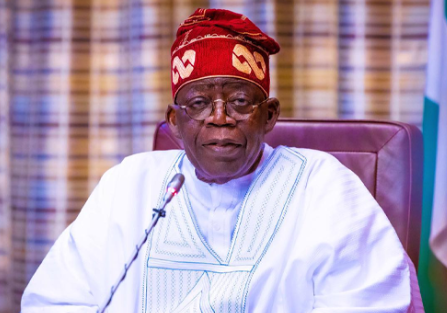
Appraising President Tinubu’s transformational strides in two years

By Jamilu M Magaji

On May 29, 2025, President Bola Ahmed Tinubu, GCFR, marked his second anniversary as the President and Commander-in-Chief of the Armed Forces of the Federal Republic of Nigeria. This milestone represents not just the passage of time, but a turning point in Nigeria’s modern political and economic history—a testament to bold reforms, strategic governance, and a relentless pursuit of national development. 

In just 24 months, President Tinubu’s administration has laid a firm foundation for economic revitalisation, security stabilisation, and human capital investment. The following is my attempt to appraise the two years of transformational strides of the presidency driven by purpose, progress, and the promise of a new Nigeria:

1. Empowering Nigerians through Strategic Financial Interventions

One of the hallmark initiatives of the Tinubu administration is the Presidential Loan and Grant Scheme, which has supported over 900,000 entrepreneurs and small business owners. This lifeline of financial empowerment is revitalising the informal sector and unlocking grassroots innovation. Complementing this effort, the Students’ Loan Scheme has already benefitted over 300,000 young Nigerians, giving them access to quality higher education without the financial burden that has held back generations. These programs signal a long-overdue democratisation of access to capital and education.

2. Restoring Fiscal Stability and Investor Confidence 

In a remarkable feat, Nigeria has cleared over $10 billion in FX debt, a move that has stabilised the naira and restored international confidence. This bold financial reengineering is matched by a surge in Foreign Direct Investment (FDI), with over $50 billion in new commitments, indicating trust in Nigeria’s economic direction. In addition, Nigeria’s net foreign exchange reserves have seen an unprecedented jump — from $3.99 billion in 2023 to $23.11 billion in 2024 — a result of stringent reforms, strategic investment policies, and renewed international engagement.

The oil and gas sector, once plagued by underinvestment, is also experiencing a renaissance. Over $8 billion in new investments have been unlocked, laying the groundwork for energy security and industrial expansion. Meanwhile, the solid minerals sector attracted over $800 million in processing investments in 2024 alone, positioning Nigeria for a post-oil economy.

3. Infrastructure and Economic Growth on the Fast Lane

President Tinubu has significantly accelerated infrastructure development, with over 440 road projects currently underway, including more than 2,700 kilometres of new superhighways. These projects are not just roads — they are economic corridors, connecting communities, facilitating trade, and enhancing logistics nationwide. This infrastructure push has underpinned Nigeria’s 3.84% GDP growth in Q4 2024, the highest in three years, signalling a recovering and resilient economy under proactive leadership.

4. People-Centric Reforms and Regional Inclusion

The federal government approved and commenced payment of a N70,000 minimum wage, reinforcing its commitment to the welfare of Nigerian workers. This is a bold move by the government to address rising living costs and boost workers’morale. Moreover, the administration has introduced four new landmark Tax Bills, ensuring a more equitable, transparent, and growth-oriented tax system. These legislative milestones are simplifying compliance and boosting non-oil revenue streams.

Furthermore, new Regional Development Commissions have been established, decentralising development and giving states a stronger voice in the national growth agenda. This was a nod to Nigeria’s long-standing diverse regional aspirations.

5. Securing the Nation, Securing the Future

Perhaps one of the most critical achievements is in the area of national security. Under President Tinubu’s leadership, over 13,500 terrorists have been eliminated, significantly degrading insurgent capabilities and restoring relative peace to previously volatile regions. These gains are the result of strategic military coordination, improved equipment, and the unwavering resolve to secure every inch of Nigerian territory.

In conclusion, let me say that two years into his presidency, President Bola Ahmed Tinubu has demonstrated that transformative leadership is possible when courage meets vision. As the nation looks ahead, Nigerians are increasingly hopeful that these gains will be deepened, institutionalised, and scaled for future generations.

Magaji, a Public Affairs Analyst based in Birnin Kebbi, Kebbi State, can be reached via: mjmagaji@gmail.com.

Hausa digital neologisms

By Prof. Abdalla Uba Adamu 

Let me start with a context. It happened on June 27, 2024, Gabon’s Show on YouTube.

“Zarmalulu no work” was an expression uttered by TikTok influencer Sayyada Sadiya Haruna, describing the state of her marriage to another TikToker, Abubakar Ibrahim, a Hausa Rapper based in Kano, northern Nigeria, and known by the stage name G-Fresh Alamin. She used the expression during her interview with Hadiza Aliyu Gabon, a Kannywood (Hausa cinema of northern Nigeria) film actress, in an episode of Gabon’s YouTube Show, “Gabon,” on June 27, 2024. Haruna used the expression to inform Gabon and her viewers that G-Fresh was impotent on their wedding night, using ‘Zarmalulu’ as a social code for his non-performing reproductive organ.   

The expression, which quickly became a meme referring to the male sexual organ and its (dis)abilities, became a trending term in Hausaphone social media counterculture, and G-Fresh, usually full of swagger and macho posturing, was highly ridiculed and his swagger deflated, as it were. In this process, Haruna has provided males with an easy way of explaining their erectile dysfunction to either their partners or their healthcare provider in a less embarrassing and amusing way. The use of the term openly reveals a growing vocabulary of erotic neologisms in Hausa social media and reflects the emergence of what I refer to as Hausa digital counterculture.

This media incidence – which received massive views, significantly improving Gabon’s financial standing – reflects one of the fascinating aspects of language development within the context of media anthropology. I am pretty sure that Margaret Mead, the doyen of cultural anthropologists, would have welcomed social media and its potential in studying digital natives. Safer, too. With the increasing creation of conventional and alternative communities on social media, a new discipline has emerged to enable people to study others without the necessity of being in the same physical space and time with them. So, what exactly is “media anthropology”? 

Media anthropology is the ethnographic and critical study of how media—especially digital and social media—are embedded in the cultural, social, political, and economic lives of people. It is a subfield of anthropology that examines how people create, utilise, interpret, and are influenced by media in their daily lives. It blends the traditional ethnographic methods of anthropology—such as participant observation and in-depth interviews—with the analysis of media technologies and content.

My initial focus was on Hausa literature and its transformations – from physical print to online publishing, then to the film industry – encompassing feature films and distribution through tapes, CDs, DVDs, and YouTube series. I then moved on to music, from griot wordsmiths to rap and hip hop. It was all pretty exciting. Then, social media made its entrance and created multiple new entries into the field. 

As a media anthropologist, I immerse myself in communities—both online and offline—to understand how people engage with digital media. For this study, I focused primarily on Facebook as a social network. Hundreds of communities were created on Facebook—mainly by young people—that discuss a wide range of topics, providing a rich source of data concerning youth subcultures and how social networks offer a subversive template for creating new identities and expressions. 

As I swing from one community to another – using Robert Kozinet’s Netnographic methods – I began to notice a new pattern of language usage among young Hausa online digital natives. Then I started gathering new words and expressions that offer alternative meanings to their conventional ones. For the most part, they tended to be innocuous, while hiding a deeper, often darker meaning, and are essentially communicated to ingroup members of the communities. Quite rapidly enough, some of the words began to take on a new urban lexicon on their own. 

A typical example is “capacity,” an innocuous word that means exactly what it says: maximum production or containment. Yet, digital natives have turned it into “kafasiti” to indicate an urban cool, swagger, ability, capability, “arrived”, etc. The word is now used in multiple forms and contexts to refer to attainment of either distinction or class (“Alaji, wallahi an baza kafasiti a bikin nan”). 

But, then, old words have always had new meanings in Hausaphone urban language use. For instance, “shege” is literally a bastard in Hausa, but recontextualised to mean “an expert” or “outstanding.” “Mugu” (bad) became an adjective for extremities (“mugun kyau”, extreme beauty). “Arne” (pagan) transformed into contemporary “bro” (kai arne, yaya dai/yo, bro, wazzup?). “Kwaro” (insect) translates into a tenacious, usually studious person. For southern Nigerians, “Aboki” is an imagined insult referring to any northerner, whether Hausa or not, rather than “friend,” its actual meaning. 

Hausa digital natives utilise the unconventionality of the social media they inhabit to create neologisms that often reflect hidden, dark, or altered meanings, frequently dealing with in-group lexicons. After trawling through various sites and TikTok videos, I was able to gather approximately 35 neologisms and incorporate them into a paper I am still working on. 

Looking at these digital coinages and the transformation of words, I was struck by the fact that many of them refer to bawdy or sexually suggestive language along the entire sexual preference spectrum. They tend to be more common in social networks (e.g., Facebook, WhatsApp, Telegram, Signal), where interactions are mainly conversational, than in visual social media (e.g., TikTok, Instagram). The reason is that visuality often identifies the person easily, and in Kano, an Islamicate state in northern Nigeria, this could lead to prosecution on moral grounds. On social networking sites, users often use aliases instead of their real names. Such anonymity gives them the freedom to express their thoughts and use these neologisms in their correct grammatical sense. The sentences are meaningful only to in-group members, within or outside the online communities. 

Examples include “Malam Zakari da almajirai biyu”, referring to the male reproductive organs. “Kaya” (load, baggage) referring to trophy (girl, money, etc), “tarkon alƙali” (judge’s trap/jailbait) for pedophilic behaviour, royal rumble (orgy) and murfi (cover) referring to lesbian activity.

As I noted, over 70% of the neologisms in my collection were bawdy and sexually slanted. Their creators chose the anonymity of online communities not only to create new coinages but also to perpetuate them, without any fear of social labelling or prosecution. Some of these words will gradually become part of conventional social usage, along with their attendant meanings. There is no stopping them. Their very existence highlights another way social media is influencing our culture, language, and traditions. 

But, what do you think – good, bad, indifferent? Whatever your feeling, what can we do about it? Hausa is not the only language facing this, though. A recent book by Adam Aleksic, Algospeak: How Social Media Is Transforming the Future of Language” (July 15, 2025), reveals the international nature of this phenomenon through “algorithmic speech”. As the blurb indicates:

“From ‘brainrot’ memes and incel slang to the trend of adding ‘-core’ to different influencer aesthetics, the internet has ushered in an unprecedented linguistic upheaval. We’re entering an entirely new era of etymology, marked by the invisible forces that drive social media algorithms. Thankfully, Algospeak is here to explain. As a professional linguist, Adam Aleksic understands the gravity of language and its use: he knows how it has evolved and changed, how it reflects society, and how, in its everyday usage, we carry centuries of human history on our tongues…New slang phrases emerge and go viral overnight. Accents are shaped or erased on YouTube. Grammatical rules, loopholes, and patterns surface and transform language as we know it. Our interactions, social norms, and habits—both online and in person—shift into something completely different.”

No, I don’t have “eCopy” to Acibilistically share. You gotta buy the original print copy if you are interested in the way in which social media usage transforms contemporary language. I can give you the cover of the book for free, though!

Troops kill 3 terrorist bandits in Sokoto

By Anwar Usman

Troops of the Joint Task Force under Operation Fansan Yamma have eliminated three notorious kingpins in Sabon Birni Local Government Area of Sokoto State.

The operation, which took place on Friday, was a carefully executed ambush between Mallamawa and Mazau villages in the Tsamaye/Mai Lalle District.

According to military authorities, the terrorists, identified as Kachalla Nagomma, Gurmu, and Ali Yar Daribiyar, were intercepted while attempting to extort ransom and levies from locals in the area.

Three AK-47 rifles with magazines and a motorcycle were recovered from the scene during the operation.

The success of the mission has been met with widespread jubilation in the affected communities of Mai Lalle, Tsamaye, Rimaye, and nearby areas in Sabon Birni and Goronyo LGAs.

Residents of the communities, terrorised by the activities of the neutralised criminals and their foot soldiers, expressed happiness and renewed confidence in the security efforts.

Operation FANSAN YAMMA, a security task force aimed at restoring peace and stability across Nigeria’s North West and parts of the North Central region, reiterated its commitment to intensifying counter-terrorism efforts in collaboration with local communities.

The Media Information Officer of OPFY, Captain David Adewusi, in a statement issued on Saturday called on the public to continue sharing genuine information that’ll help the ongoing military operations.

He further stated that “the Joint Task Force remains resolute in its mission to eradicate terrorism and restore lasting peace to all affected areas”.

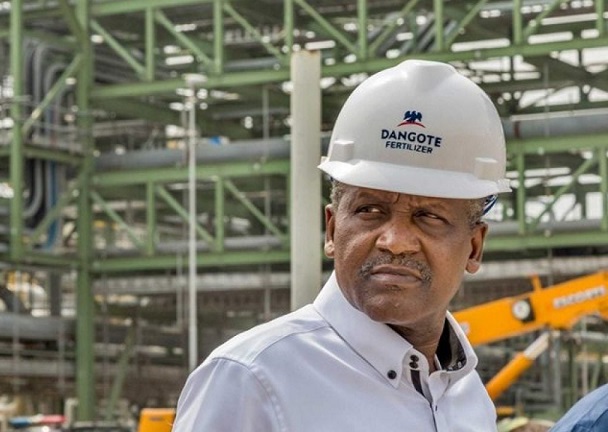
Dangote begins free petroleum distribution across Nigeria to ease fuel prices

By Abdullahi Mukhtar Algasgaini

The Dangote Group has announced its plan to distribute petroleum products across Nigeria free of charge in an effort to reduce the soaring fuel prices in the country.

A fleet of Compressed Natural Gas (CNG)-powered trucks has already arrived in Lagos, signaling the company’s commitment to easing the fuel supply crisis.

This move comes as the Nigerian government tightens regulations on petroleum distribution, potentially displacing independent marketers from the sector.

Meanwhile, Aliko Dangote has announced his retirement from the cement business to focus entirely on the petroleum industry.

The development has sparked mixed reactions among Nigerians, with many questioning how this shift will reshape the nation’s fuel market dynamics.

Gov Yusuf orders probe into transport commissioner’s alleged role in drug suspect’s bail

By Uzair Adam

Kano State Governor, Alhaji Abba Kabir Yusuf, has ordered a full-scale investigation into the alleged involvement of the State Commissioner for Transport, Alhaji Ibrahim Namadi, in the controversial bail of a suspected drug baron, Sulaiman Aminu Dan Wawu.

The directive came following public outrage after reports surfaced that the Commissioner’s name appeared in official documents that facilitated the suspect’s release.

This was disclosed in a statement issued on Saturday by the Governor’s spokesperson, Sanusi Bature Dawakin Tofa.

To address the matter, Governor Yusuf has constituted a special investigative committee chaired by Barrister Aminu Hussain, his Special Adviser on Justice and Constitutional Matters.

The committee has been tasked with unraveling the circumstances surrounding the incident and recommending appropriate actions without delay.

The Daily Reality reports that members of the committee include Barr. Aminu Hussain (Chairman), Barr. Hamza Haladu, Barr. Hamza Nuhu Dantani, Alhaji Abdullahi Mahmoud Umar, Maj. Gen. Sani Muhammad (Rtd.), Comrade Kabiru Said Dakata, and Hajiya Bilkisu Maimota, who will serve as Secretary.

While announcing the committee’s formation, Governor Yusuf expressed deep concern over the alleged misconduct, reiterating his administration’s commitment to combating drug abuse and other social vices in the state.

Barau flags off constitution review in Kano, calls for inclusive reform

By Uzair Adam

Deputy Senate President and Chairman of the Senate Committee on the Review of the 1999 Constitution, Senator Barau I Jibrin, on Saturday, July 26, 2025, declared open the North West Zonal Public Hearing of the Committee in Kano.

The two-day public hearing aims to gather input from citizens and stakeholders across the zone on proposed amendments to the 1999 Constitution.

The Daily Reality gathered that this is part of a broader nationwide exercise by the National Assembly to foster inclusive governance and constitutional reform.

Barau explained that the Kano session had been previously postponed out of respect for the late business magnate, Alhaji Aminu Dantata, and former President Muhammadu Buhari, GCFR, both of whom passed away earlier this month.

In his opening remarks, Barau reiterated the importance of citizen engagement in the reform process.

He noted that while Nigeria has undergone five constitutional alteration phases since 1999, several key issues remain unresolved.

“Many of these challenges cannot be addressed by regular legislation alone. We must be honest about our commitment not just to the letter of the Constitution, but to its spirit,” he said.

The Deputy Senate President highlighted that the 10th Senate established the Constitution Review Committee to lead a consultative process that reflects national consensus.

He said the Committee received hundreds of memoranda on major national concerns, including electoral and judicial reform, local government autonomy, gender representation, traditional institutions, and security structure.

“These memoranda have been translated into draft Bills which we are now bringing back to the people for further discussion,” he added.

Barau assured participants that the Committee remains impartial and open to all views, encouraging stakeholders to offer their contributions freely and responsibly.

He stressed the need for intergovernmental cooperation in ensuring that any agreed constitutional changes are properly implemented.

“A law that is not put into effect is as good as not passed,” he remarked.

The Senate Committee chairman also acknowledged the support of Kano State authorities, fellow legislators, civil society organisations, and development partners, describing their involvement as a vital step in strengthening Nigeria’s democratic institutions.

The hearing continues on Sunday, July 27.

Disability is not a license to bed

Street begging is often wrongly associated with disability. When someone loses a leg, an arm, their sight, or any part of their body, many assume that the next step is to become a street beggar — as though it’s prescribed. This harmful stereotype is one of the reasons PWDs are widely known for begging.

I have personally experienced this bias before. It happened when I got out of a tricycle that had pulled up at Kabuga Underway. I was unfamiliar with the area and trying to find my way to Bayero University, Kano (New Site). I approached a passerby and handed him a scrap of paper on which I had written:

“Assalamu Alaykum. Please, where can I get a tricycle to the BUK New Site?”

The man was around thirty to thirty-three years old. He had a neatly trimmed beard, wore a stylish sky-blue shirt paired with dark jeans, and black shoes.

To my surprise, he refused to collect the paper. Instead, he reached into his pocket and brought out a one-hundred-naira note and offered it to me. I was stunned and disappointed.

I declined the money and insisted that he read the paper. Reluctantly, he took it, read it, and then immediately apologised. He directed me to the place where I could find a tricycle to BUK.

I didn’t hold it against him. I understood. He had likely encountered deaf individuals who were begging with a solicitation note on the streets and had generalised.

But this is precisely why I strongly condemn street begging. Disability should never be an excuse for begging. PWDs should not be reduced to beggars simply because of their condition. We must challenge this narrative.

Instead, society should actively support PWDs. Disabilities can indeed limit one’s ability to perform certain tasks. But that doesn’t mean we are incapable. Those who are uneducated should be empowered with vocational skills to start small businesses. Those who are educated should be given equal opportunities for employment.

The real problem is not disability. It is the lack of support, education, and inclusion. Street begging is not a destiny for PWDs. With the proper support, we can live independently, contribute meaningfully to society, and break this damaging stereotype.

Ibrahim Tukur is a Disability Rights and Inclusion Advocate. He can be reached via email at: inventorngw@gmail.com.

Senator Ningi defies Senate, blocks $21bn loan over lack of accountability

By Abdullahi Mukhtar Algasgaini

Senator Abdul Ningi (PDP, Bauchi Central) has taken a firm stand against President Bola Tinubu’s $21 billion foreign loan request, refusing to endorse the deal despite its approval by the Senate.

The outspoken lawmaker, a known advocate for fiscal responsibility, criticized the lack of transparency in the loan agreement, demanding full disclosure of repayment terms and project allocations before any further borrowing.

“How can we approve such a massive loan without clear terms? This is fiscal recklessness,” Ningi declared during a press briefing.

“Nigerians deserve to know exactly how these funds will be used and how we intend to repay them.”

The rejection comes amid rising concerns over Nigeria’s ballooning debt profile, which has surpassed N121 trillion. Analysts warn that unchecked borrowing could plunge the nation deeper into economic instability.

The Presidency has yet to respond, but sources indicate Tinubu may seek alternative approval routes if Senate support wavers.

Opposition figures and civil society groups have rallied behind Ningi’s demand for accountability.

Over 200 women empowered with N50k in Kano by Zam-Zam, Light Up Orphans Foundation

By Uzair Adam

More than 200 women in Kano have received financial support from Zam-Zam Educational Initiative in partnership with the Light Up Orphans Foundation, as part of efforts to cushion the effects of the current economic hardship in the country.

The empowerment programme, which took place on Thursday at the premises of Zam-Zam College in Kano, saw each beneficiary receive N50,000 in cash to support their livelihood and small-scale businesses.

Speaking during the event, Sheikh Muhammad Aminu Ibrahim Daurawa, proprietor of Zam-Zam and a prominent Islamic scholar, said the initiative was borne out of a desire to support vulnerable women, especially in the face of growing economic challenges.

He was quoted as saying, “We considered giving N20,000 or N30,000 to enable us to reach more people. But we decided on N50,000 to ensure the beneficiaries can do something tangible with the amount, whether in business or home support.”

Sheikh Daurawa explained that the money was given in cash to avoid technical issues and delays often associated with bank transfers.

“Sometimes, people complain that they didn’t receive their share when it’s sent through banks. We wanted to avoid that entirely,” he added.

He also noted that while the team initially preferred a low-key distribution, the event was made public in the interest of transparency and accountability to their donors.

Also speaking at the event, Malam Aisar Fagge, General Manager of Salsabil TV, a media outlet under Sheikh Daurawa, described the gesture as a righteous act that aligns with Islamic values.

“This is one of the most beloved deeds in the sight of Allah — helping those in need, especially women who are struggling to make ends meet,” he said.

The beneficiaries, many of whom appeared visibly elated, expressed appreciation to the organisers, describing the assistance as timely and life-changing.

The Daily Reality learned that the empowerment programme is part of an ongoing commitment by Zam-Zam Educational Initiative and Light Up Orphans Foundation to improve the lives of the less privileged in society, particularly women and orphans.