Month: July 2025

Stories we don’t translate become stories we lose

By Habib Sani Galadima

In the 1960s, South Korea was poor, dependent on American aid, and still struggling with the scars of war. Then President Park Chung-hee changed the script. His government blocked most consumer imports and poured resources into industries that could export. Credit, subsidies, policy direction; all of it was aimed outward. By 1969, exports were growing at 35.3 percent each year. In the 1970s, they kept climbing at over 25 percent annually. Over two decades, South Korea’s economy grew by nearly 10 percent a year.

The turning point was clear. Instead of surviving on what came in, they built power by focusing on what went out. This same logic applies to language, especially to the future of Hausa.

For decades, translation into Hausa served as a cultural intake valve; bringing foreign ideas, religious teachings, policy language, and literary forms within reach of local audiences. This inward-facing strategy was institutionalized in 1933, when Rupert East and the Translation Bureau (later known as Gaskiya Corporation) launched a historic literature contest. The goal was practical: Western education had arrived in Northern Nigeria, schools were filling up, but there were no Hausa books to read.

That contest birthed a canon. It gave us Ruwan Bagaja by Abubakar Imam, Gandoki by Muhammadu Bello Kagara, Shaihu Umar by Abubakar Tafawa Balewa, Idon Matambayi by Muhammadu Gwarzo, and Jiki Magayi by John Tafida Umaru and Rupert East. These were not just books; they were tools for reading, models for fiction, and blueprints for cultural imagination.

Yet today, the imbalance is unmistakable. Nearly all cultural translation still flows inward, despite the fact that Hausa literature now spans generations, genres, and thousands of titles. We are no longer short on reading material. What we lack is export.

As a result, most outsiders now know Hausa culture through social media behavior, not through its stories. The literary gaze of the mid-to-late 20th century has faded. In its place is a shallow feed, not a studied archive. Our cultural signals are reduced to online patterns. Our worldview is flattened by algorithms.

The hunger for culturally grounded stories is not the problem. The gap lies in output direction. Hausa literature has grown in abundance from contemporary novels (known as Adabin Kasuwar Kano), oral chronicles, audio dramas, and digital fiction communities. But most of this intellectual output remains sealed within Hausa, or reduced to summaries when it crosses into English. This isn’t just a publishing shortfall, it is a missed tool of cultural diplomacy.

A language spoken by tens of millions across West Africa, rich in rhythm and moral nuance, should be shaping global discourse through its stories. The same way Korea exported Samsung and cinema to build national identity, Hausa can export ‘Magana Jari Ce or ‘So Aljannar Duniya , not just as books, but as blueprints of thought, ethical scaffolding, and communal logic.

But cultural export needs architecture. It means funding skilled translation from Hausa into global languages. It means backing writers who carry both the language and the ambition. It means understanding that prestige is not inherited through English, but built by those willing to make Hausa visible to the world. Until then, we keep importing ideas we already understand in a language that is not our own.

A people who do not share their worldview will one day find it narrated by outsiders. That is the quiet danger we face. Hausa is not vanishing, but it is being compressed. Our literature, our metaphors, our moral reasoning; all remain alive among us, but they rarely cross borders in our own voice. Others interpret us through news cycles and trending hashtags, not through the stories we wrote ourselves.

Kashifu Inuwa Abdullahi: The national asset powering Nigeria’s digital dream

By Umar Farouk

In a time when Nigeria faces complex challenges in its quest for economic growth, digital inclusion, and youth empowerment, one man has quietly and steadily emerged as a beacon of visionary leadership: Kashifu Inuwa Abdullahi, the Director-General of the National Information Technology Development Agency (NITDA). Appointed in August 2019, he has not only repositioned the agency but also redefined what leadership in the public sector should look like: effective, transparent, youth-focused, and transformative.

As Nigeria strives toward a diversified economy powered by innovation and technology, Kashifu Inuwa Abdullahi has been the chief architect, laying a strong digital foundation that could sustain the country for decades to come. His work has turned NITDA into a symbol of hope, especially for Nigeria’s millions of tech-savvy, ambitious youths who are eager to shape their future in the global digital economy.

Before Kashif took the reins, NITDA was largely known for its regulatory role. However, under his stewardship, the agency has evolved into a full-blown enabler of digital transformation and economic development. One of his most remarkable achievements is the Strategic Roadmap and Action Plan (SRAP 2021–2024), a bold vision designed to guide Nigeria’s digital aspirations across seven critical pillars, including policy, regulation, digital literacy, innovation, and stakeholder engagement.

As of 2023, over 64% of the goals outlined in the SRAP have been achieved. These include improved IT project clearance (which saved the government over N300 billion), robust cybersecurity policies, and the aggressive push toward digital literacy and inclusivity. By aligning NITDA’s operations with national priorities, such as the National Digital Economy Policy and Strategy (NDEPS), Kashifu has ensured that digital development is no longer a side project; it is now a central engine of governance and growth.

Perhaps one of the most commendable areas where Kashifu Inuwa Abdullahi has excelled is youth empowerment. Nigeria, with over 70% of its population under the age of 30, faces both a challenge and an opportunity. Kashifu saw the potential and acted. He launched multiple initiatives aimed at equipping millions of young Nigerians with the skills, tools, and platforms necessary for success.

Through NITDA’s various capacity-building programs, more than 3 million Nigerians have been trained in essential digital skills. The organisation also offers free online training for young Nigerians in areas such as coding, data science, AI, and cybersecurity. 

There is Tech4COVID, during the pandemic, Kashifu led efforts to upskill thousands of youths and develop local IT solutions to support education, healthcare, and e-commerce, while through ONDI and programs like iHatch and Technology Innovation and Entrepreneurship Support (TIES), hundreds of startups have received technical support, seed funding, and global exposure. These programs have helped thousands of young Nigerians gain employment, start businesses, and even attract international investment. 

Under his leadership, NITDA has taken infrastructure development seriously. He has overseen the establishment of over 600 Digital Economy Centres, including Innovation Hubs, Fab Labs, and IT Community Centres, across the country. Including the virtual Libraries and Smart Classrooms for schools in underserved areas.

Kashifu Inuwa is also an advocate for homegrown solutions. He has actively promoted the use of Made-in-Nigeria software and hardware, ensuring that local IT firms get the recognition and support they deserve.

Furthermore, through the enforcement of the Nigerian Data Protection Regulation (NDPR), NITDA has strengthened data security practices across industries. His tenure has seen the licensing of over 59 Data Protection Compliance Organisations (DPCOs), the creation of thousands of jobs, and the protection of millions of Nigerians’ data from misuse and breaches.

Today, NITDA, under the guidance of Kashifu Inuwa Abdullahi, has become a shining example of integrity and productivity in the government. In 2022, NITDA was awarded as the Most Productive Government Agency and became the first federal agency to earn ISO 27001 certification for information security management. Kashifu has represented Nigeria on global stages at GITEX, the World Summit on the Information Society, and the Smart Africa Alliance, consistently advocating for Nigeria’s place as a rising power in the digital world.

Hence, Kashifu’s vision goes beyond just setting up programs or delivering statistics. He is cultivating a digital culture in which innovation is encouraged, risk-taking is rewarded, and the government actively supports the next generation of builders, creators, and entrepreneurs. He often emphasises that Nigeria must move “from consumption to creation”, and everything he does at NITDA reflects this philosophy.

Kashifu Inuwa Abdullahi is more than just a Director-General; he is a national asset. His leadership at NITDA has ushered in a new era of innovation, digital transformation, and youth empowerment in Nigeria. By investing in people, building infrastructure, and promoting indigenous technology, he is laying the groundwork for a digital economy that benefits all Nigerians.

His story serves as a reminder that when leadership is grounded in vision, integrity, and action, it can truly transform lives and shape the destiny of a nation.

Umar Farouk writes from Abuja. 

Dr Yasir Qadhi pays tribute to Alhaji Aminu Dantata

By Hadiza Abdulkadir

Renowned U.S.-based Islamic scholar Dr. Yasir Qadhi has paid a heartfelt tribute to Nigerian business mogul and philanthropist Alhaji Aminu Alhassan Dantata, who passed away at the age of 94.

In a message shared via his social media platforms, Dr. Qadhi described Dantata as “a shining star and a legendary icon” in Nigeria, praising his humility, honesty, and lifelong commitment to philanthropy.

“He was one of the most successful entrepreneurs and business tycoons in Africa,” Dr. Qadhi wrote. “Yet everyone knew him to be a humble and honest man… ever-ready to help others less fortunate, never greedy for more.”

Recalling a recent meeting with Dantata in Nigeria, Qadhi shared the late businessman’s parting words of wisdom: “Honesty! Always, be truthful and sincere, and leave the rest to Allah.”

Alhaji Dantata, who declined a political appointment, was never involved in a scandal and was laid to rest in the revered Baqi al-Gharqad cemetery in Madinah, Saudi Arabia.

“Such men are very rare indeed,” Qadhi noted, praying for Allah’s mercy upon him and for his legacy to continue through his progeny.

Prof. Haruna Musa emerges most popular candidate in BUK vice-chancellor selection process

By Muhammad Sulaiman

Professor Haruna Musa, Deputy Vice-Chancellor (Academics) at Bayero University, Kano (BUK), has emerged as the most widely accepted candidate in the university’s Vice-Chancellor selection process, following a keenly observed congregation vote held on Tuesday, July 1, 2025.

Prof. Musa, a Professor of Polymer Chemistry, secured a commanding 853 votes, far ahead of his four contenders in a process described as transparent and credible by participants and observers.

The vote, part of BUK’s Vice-Chancellor appointment procedure, serves as an indicator of community acceptability, contributing 20% to the final selection by the Governing Council.

Other contenders included Professors Mahmoud Umar Sani (367 votes), Sani Muhammad Gumel (364 votes), Adamu Idris Tanko (161 votes), and Bashir Fagge (18 votes).

Presiding over the session, Vice-Chancellor Prof. Sagir Adamu Abbas applauded the maturity and democratic spirit shown during the process, describing the outcome as a “collective victory” for the university.

“The result showcases our institutional commitment to transparency and unity,” he said, urging all candidates to support the eventual appointee.

Electoral Committee Chairman Prof. Muhtari Ali Hajara announced that 1,784 staff members were accredited to vote, with 17 votes deemed invalid and four unaccounted for.

Commending the process, Prof. Gumel, one of the candidates, stated: “The election was fair and credible. The result shows the community’s direction.”

Former Minister of Education, Prof. Rukayyatu Ahmed Rufa’i, and ex-VC of NOUN, Prof. Abdalla Uba Adamu, also praised the outgoing VC and the electoral process, urging continued cooperation for the university’s development.

The final appointment now rests with BUK’s Governing Council.

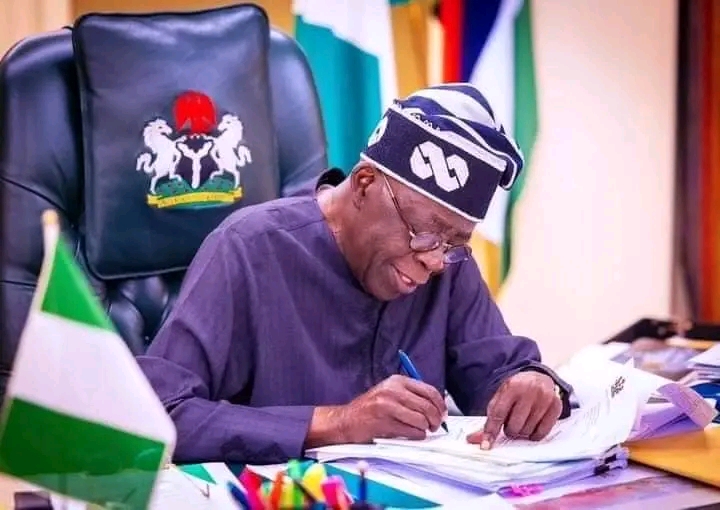
Tinubu’s new tax reforms and the North

By Zayyad I. Muhammad

On Thursday, June 26, 2025, President Bola Tinubu signed into law four landmark tax bills that the National Assembly had recently passed.

Whether one agrees or disagrees with Tinubu’s style of governance, the new tax bills signal a new beginning for Nigerians, businesses, and governments, both at the subnational and federal levels.

Some key  highlights of the Reforms are:

Elimination of Duplication in Tax Collection: One major reform is the establishment of the new Nigeria Revenue Service (NRS), which will now collect revenues that were previously handled by numerous agencies, such as the Nigeria Customs Service, Nigerian Ports Authority (NPA), Nigerian Upstream Petroleum Regulatory Commission (NUPRC), NIMASA, and others.

Tax Exemption for Low-Income Earners: With the new provisions, individuals earning ₦800,000 or less per year are now fully exempt from income tax. This is a masterstroke, especially for many people in the North. It removes a huge burden and creates space for their small and medium-sized businesses to grow and flourish.

New Personal Income Tax Rate: 

Only those earning above ₦50 million annually will be required to pay the new 25% personal income tax rate. This is both fair and reasonable.

Another significant win for the North, which has the highest concentration of impoverished people in Nigeria, is the removal of VAT on essential goods and services, including school fees, medical services, food, pharmaceuticals, and electricity. This is a significant relief for the poor and small to medium-sized businesses.

The corporate tax rate will now be reduced from 30% to 25%, and small businesses will be fully exempt from paying income tax.

The controversial VAT issue has now been ‘fairly’ settled, and again, it’s a big win for the North, which had previously raised concerns. The new revenue-sharing formula is as follows:

Federal Government: 10%

States: 55%

Local Governments: 35%

Even more importantly, the VAT sharing formula has been revised in a way that favours the North. If northern states seize the opportunity to harness and develop their economies and markets, especially in agriculture, they will benefit significantly.

The new sharing criteria are:

50% of VAT is shared equally among all states

20% is based on population

30% is based on where goods/services are consumed

One of the most important features of these tax reforms is how they protect and uplift the poor and small businesses,especially in the North, where:

About 65% of Nigeria’s poorest people live

Over 52% of the country’s states are located

More than 60% of the population resides

Nearly 70% of Nigeria’s landmass is found

And almost 80% of agricultural production takes place

It’s time for northern states to tap into local knowledge and deploy homegrown experts to thoroughly study the four landmark tax laws in line with each state’s peculiarities and needs, yet with the whole North as the unifying objective.

If well studied and strategically implemented, Tinubu’s new tax reforms could be the silver bullet the North has been waiting for.

They offer fiscal justice, decentralisation of revenue, protection for the poor, incentives for businesses, and a practical opportunity to lift millions out of poverty.

However, as always, it will take visionary leadership, technical expertise, and political will to translate policy into meaningful impact. The opportunity is here. The North must not waste it.

Zayyad I. Muhammad writes from Abuja via zaymohd@yahoo.com.

FUD to hold combined convocation for 4,227 graduates

By Ibrahim Yunusa

Federal University Dutse (FUD) is set to convoke a total of 4,227 students in a combined convocation ceremony for the 2022/2023 and 2023/2024 academic sessions.

This was announced by the Vice Chancellor of the university, Professor Abdulkarim Sabo Muhammad, during a pre-convocation press briefing, where he outlined the preparations and schedules for the event.

The convocation ceremony is scheduled to take place on Saturday, July 5th, 2025, by 9:30 am.

A convocation lecture will precede the ceremony on Friday, July 4th, 2025, at 4:00 pm at the Nuhu Muhammad Sunusi Auditorium.

The lecture, titled “Harnessing Research and Innovation for Sustainable Development in Nigeria: The Role of Higher Education Institutions,” will be delivered by Guest Professor Jibrilla Dahiru Amin, the pioneer VC of the university.

According to the VC, a total of 99 and 110 students graduated with First Class honors in the 2022/2023 and 2023/2024 academic sessions, respectively.

Additionally, 544 and 727 students graduated with Second Class Upper Division in the respective sessions, while 879 and 115 students graduated with Second Class Lower Division.

Furthermore, 321 and 283 students graduated with Third Class honors in the 2022/2023 and 2023/2024 academic sessions, respectively.

The VC highlighted some of the remarkable achievements of his tenure, including the university’s attractiveness to prospective students, with around 20,000 applicants seeking admission annually.

Other notable achievements include improvements in student and staff welfare, physical infrastructure development, introduction of new faculties and departments, enhanced security, research grant wins, and digital transformation, among others.

ZABAFEST 2025: How Zaria’s first books and arts festival reimagined legacy and sparked a cultural awakening

By Maryam Shehu

In April 2025, the historic city of Zaria, long hailed as Birnin Ilimi (City of Knowledge), witnessed its first-ever Books and Arts Festival, a groundbreaking literary and cultural event curated by a young visionary determined to rekindle the flames of creativity in Northern Nigeria.

Despite its rich academic tradition, Zaria has often left arts, literature, and creativity feeling orphaned, without the nurturing hands they deserve. It takes a persistent muse to find a home in the hearts of the younger generation. To fill this void, in 2022, driven by passion and a deep desire to engage in literary conversations with like-minded individuals, I founded Pen Warriors. It began as a shade tree for emerging voices to be heard and appreciated.

Later, the initiative was rebranded as Bookish Alchemy, with a bookstore arm, Bookish Alchemy Bookstore, whose profits now partially fund our literary programs. Since then, we’ve hosted programs that have reached over 300 individuals, including poetry competitions, a mentorship session with Abduljalal Musa Aliyu, book chats with authors such as Sani Abdulrazak and Aliyu Danladi, serene Silent Book Reading sessions, and intensive August mentorship weekends on spoken word, short story writing, and public speaking.

Toward the end of 2024, the idea of hosting Zaria’s first Books and Arts Festival took hold of me. At first, I was paralysed by thoughts of funding. Some peers warned that such an event would require thousands of dollars I didn’t have. But the idea felt like a child ready to be born–it refused to be ignored.

I assembled a team of six brilliant minds: Halliru Sani Salihu, Abdurrazak Maiwada, Mardiyya Nura, A’isha Ibrahim Ahmad, Sani Abdulrazak, and Hadiza Isyaku Abdulsalam. We dived headfirst into planning, reaching out to guests, drafting sponsorship proposals, and building the foundation from scratch.

With the generous support of organisations like Duniate Culture (Kaduna), Gidan Dabino (Kano), Creative Corner (Kano), Katsina Times, Poetic Wednesday Initiative, Beyond the Pages, and the Bukar Usman Foundation (Abuja)–though none from Zaria itself–Bookish  Alchemy brought the Zazzau Books and Arts Festival (ZABAFEST) to life.

A FESTIVAL IS BORN

To ensure a smooth and enjoyable experience for guests and attendees, Hadiza and Mardiyya coordinated 10 incredible volunteers. Out of sheer love for the arts, Mahmud Jimada, Abdulmumini Yahuza, Abdullahi Abubakar, Maryam Jalo, Khadija, Hauwa, Asma’u, Fatima, Auwal, and Ibrahim took on various roles, including registration, ushering, stage management, and guest welfare.

On April 26–27, 2025, ZABAFEST debuted at the Sultan Muhammad Sa’ad Abubakar Assembly Hall, Barewa College.

“Maryam, how many times have you cried while putting this together? If you haven’t yet, get ready for more,” said Prof. Audee T. Giwa, a day before the festival, as he submitted his book collections, fully aware of the emotional toll such a project could take.

With the theme “Legacy Reimagined,” the dream came to life.

HIGHLIGHTS OF DAY ONE

Day One opened with the presentation of a Lifetime Achievement Award to Alhaji Ado Ahmad Gidan Dabino, actor, author, filmmaker, and cultural icon. The award was presented by Isma’il Bala, author of Ivory Nights, in a moment of reverent celebration.

Prof. Audee T. Giwa delivered a stirring keynote on The Role of Arts in Preserving Our Culture, emphasising how the arts help conserve heritage and foster unity in Nigeria’s diverse landscape.

Next came a rich Hausa panel titled “Ma’abota Al’adu: Muhimmancin Marubutan Hausa wajen Kiyaye Gadon Mu,”moderated by Mal. Abba Abubakar Yakubu, featuring Prof. Ibrahim Malumfashi, Safiyya Jibril Abubakar, and Gidan Dabino. Together, they explored how Hausa literature sustains cultural identity.

The festival’s literary journey was anchored on four key books: Ivory Nights by Isma’il Bala, ZABBA’U by Prof. Audee T. Giwa, An Abundance of Scorpions by Hadiza El-Rufai, Girls and the Silhouette of Form by Star Zahra (who could not attend due to illness)

A captivating book chat on Ivory Nights, moderated by Abduljalal Musa Aliyu, provided readers with an opportunity to engage with the author and ask questions that had lingered since the book’s release.

After lunch, the session Cultural Amnesia: What Happens When We Forget Our Culture? Brought together Sani Abdulrazak, Isma’il Bala, and moderator Ibrahim Ahmed to reflect on the consequences of cultural neglect.

“It looks like a bird entangled in a cage, but it is worth it. It will pay–not now, but definitely. Just endure the pain,” said Gidan Dabino in an emotional aside to me backstage.

The afternoon wrapped up with Ahmad Mubarak Tanimu’s African Literature Quiz. Guests and attendees were grouped and tested on their knowledge of African books, with the winners showcasing impressive literary awareness.

The day closed with the Abubakar Imam Poetry Slam, named after the legendary author of Magana Jari Ce and Tafiya Mabudin Ilimi. Twelve contestants competed under the theme Al’adunmu: A Window to the Past for a ₦200,000 prize. Judged by Namse Udosen, Nasiba Babale, and Abdulbasit Abubakar Adamu, the session left a lasting impression on the hearts of the attendees.

“It wasn’t easy to choose the winners. They came with fire in their words and metaphorized our hearts,” a judge remarked.

DAY TWO: POWER, PEACE, AND POETRY

Day Two welcomed even more guests. The panel Women, Arts, and Activism: Using Creative Expression to Promote Social Justice featured Aisha Lawan Indabawa, Hadiza El-Rufai, and Nana Sule. Their discussion, from creative writing to activism, highlighted the intersections of creativity and impact.

The next session, “The Role of Arts in Conflict Resolution and Peace Building,” moderated by Aliyu Jalal, gathered Sani Muhammad, Salim Yunusa, Nasiba Babale, and Amir Lukman Haruna to explore how poetry and storytelling can serve as tools for healing.

Nasiba Babale also hosted a moving book chat with Hadiza El-Rufai on An Abundance of Scorpions, a novel that follows a woman’s journey through loss and recovery. It was called one of the festival’s most powerful sessions.

Timely and futuristic, the panel on “Ethics of AI-Generated Arts: Authorship, Ownership, and Creativity,” moderated by Mujaheed Aminu Lilo, featured Namse Udosen, Aliyu Danladi, and Ahmad Mubarak Tanimu, sparking debate and insights into emerging creative technologies.

Prof. Giwa’s novella ZABBA’U took the spotlight next, in a discussion with Ahmad Mubarak Tanimu, drawing philosophical and literary insights from the audience.

Later, Husayn Zuguru gave a mesmerising Afrodervish performance, whirling poetry and movement into a dance of spirit and silence.

The final session, The Poetry Garden, featured open mic performances by Abdulbasit, Hidaya, Aisha Indabawa, and other talented poets. It was a closing tribute soaked in metaphor and soul.

MORE THAN A FESTIVAL

ZABAFEST 2025 welcomed over 30 guest speakers from 7 states and more than 300 attendees from 13 states, uniting people from diverse ethnic and cultural backgrounds through a shared love for literature and the arts.

“Organising a festival isn’t easy, especially with today’s financial climate, but this is a much-needed initiative in Northern Nigeria,” said Hadiza El-Rufai. “I applaud your efforts and promise our support for future editions.”

For a first-time festival in a city that rarely spotlights the arts, the positive feedback far outweighed the challenges. Attendees left inspired, encouraged, and ready to write new chapters in their own lives.

The next edition of ZABAFEST promises to be even more expansive. It will explore themes such as climate change, digital creativity, and social advocacy and feature voices from across Nigeria and beyond.

We’re just getting started. The journey continues.

Maryam Shehu wrote from Zaria via maryamshehu6354@gmail.com.

Four arrested in Turkey over Prophet Muhammad’s cartoon

Turkish authorities have arrested four staff members of a well-known satirical magazine following the publication of a cartoon that many believe portrays the Prophet Muhammad — a depiction strictly forbidden in Islam.

The country’s Interior Minister, Ali Yerlikaya, described the cartoon released by LeMan magazine as “shameless,” confirming that the magazine’s editor-in-chief, cartoonist, graphic designer, and institutional director had been taken into custody.

In a post on X (formerly Twitter), Yerlikaya also released footage of their arrests and condemned the illustration as a “vile drawing.”

Responding to the outrage, LeMan firmly denied that the image was a caricature of the Prophet.

“The work does not refer to the Prophet Muhammed in any way,” the magazine wrote on X. It later issued an apology “to well-intentioned readers who feel hurt,” while maintaining that the cartoon was misinterpreted.

“The cartoonist wanted to portray the righteousness of the oppressed Muslim people by depicting a Muslim killed by Israel, and he never intended to insult religious values,” the statement read.

The magazine added, “We do not accept the stain that is cast on us because there is no depiction of our Prophet. You have to be very malicious to interpret the cartoon in this way.”

Despite the denial, hundreds of people gathered outside the magazine’s Istanbul office on Monday in protest. Demonstrators were heard chanting “tooth for tooth, blood for blood, revenge, revenge.”

Riot police intervened as the protest escalated, and a journalist from Agence France-Presse (AFP) reported the use of rubber bullets and tear gas by security forces to disperse the crowd.

Justice Minister Yilmaz Tunc revealed that the Istanbul Chief Public Prosecutor’s Office had opened an inquiry into the matter, accusing the magazine of “publicly insulting religious values.”

He stated, “The caricature or any form of visual representation of our Prophet not only harms our religious values but also damages societal peace.”

He added that legal action against the staff of LeMan would proceed “without delay.”

Authorities have also issued arrest warrants for other senior figures at the magazine.Images of the cartoon, now widely circulated on social media, depict two winged characters floating over a war-torn city.

One character is quoted as saying, “Peace be upon you, I’m Muhammed,” to which the other replies, “Peace be upon you, I’m Musa.”In a comment to AFP, LeMan’s editor-in-chief Tuncay Akgun, who is currently in Paris, argued that the drawing had been misunderstood.

He stressed that LeMan would “never take such a risk.” He also compared the backlash to the 2015 attack on French satirical magazine Charlie Hebdo over its caricatures of the Prophet, describing the response to LeMan as “very intentional and very worrying.”

The Charlie Hebdo incident led to the deaths of 12 people and marked one of the darkest moments in recent French history.