Month: July 2025

The dilemma of the Tinubu/Shettima ticket in 2027

By Zayyad I. Muhammad

The growing political controversy surrounding the Tinubu/Shettima presidential ticket for the 2027 general elections came to the fore at the Northeast Zonal Meeting of the All Progressives Congress (APC), held in Gombe on Saturday, June 14, 2025. Party leaders, stakeholders, and delegates gathered to endorse Tinubu for a second term, amid rising internal debates over the party’s viability, unity, and future direction ahead of the next electoral cycle.

If President Tinubu decides to drop Vice President Kashim Shettima in favour of another Muslim from the North, it could reignite the deeply divisive Muslim-Muslim ticket debate that stirred significant controversy during the 2023 presidential election.

Retaining Vice President Kashim Shettima may help the Tinubu camp avoid reigniting the contentious Muslim-Muslim ticket debate, but it also raises questions about the ticket’s continued strategic value. While the pairing was originally calculated to consolidate support among Muslim voters in the North during the 2023 election, changing political dynamics suggest that the ticket may no longer hold the same appeal. With growing dissatisfaction in parts of the North and shifting voter sentiments nationwide, some within the APC believe that the Tinubu/Shettima combination may now offer diminishing electoral returns.

Even if President Tinubu opts for a new Muslim running mate, the Muslim-Muslim ticket may no longer deliver the same political dividends in the North. A growing number of Northern-Muslim voters reportedly feel underrepresented or sidelined in the current administration, despite the religious alignment of the top two offices. 

Discontent over perceived sidelining in federal appointments, economic policies, and security outcomes has weakened the assumption that religious pairing alone can secure Northern loyalty. As such, simply replacing Shettima with another Northern Muslim may not be enough to re-energise the base or guarantee widespread support in 2027.

Should President Tinubu replace Shettima with another Muslim from the North, it would likely provoke renewed backlash from Christian communities nationwide, especially in the North. Many would raise the familiar and legitimate question: Are there no capable Northern Christians fit to serve as Vice President? In a country where religious identity plays a central role in politics and representation.

If President Tinubu chooses a Northern Christian as his running mate, he risks alienating a core part of the APC’s support base. These Northern Muslim voters have historically been the backbone of the party’s electoral strength in the north. Many within this bloc view the Muslim-Muslim ticket as both symbolic and strategic. Without votes from the north, Tinubu’s second term will have key-leg

Selecting a running mate from the Northwest could trigger resistance or even quiet rebellion from the Northeast, which may interpret the move as a political slight or marginalisation. Having produced the current Vice President, the Northeast might expect to retain the position as a matter of continuity and recognition of its contribution to the party’s 2023 victory. Overlooking the region could stir resentment among its political leaders and grassroots supporters, potentially weakening the APC’s hold in key Northeastern states. It may also open the door for opposition parties to exploit regional grievances and rally disaffected voters under the banner of regional justice and equity. The  NorthCentral will also ask some questions- Tinubu won four states in north central- Kogi, Benue, Kwara and Niger

Choosing another Muslim running mate from the Northeast, but outside the Borno-Yobe axis, could provoke backlash from that axis. The Borno-Yobe axis, long considered the APC’s stronghold in the Northeast, may view such a move as a betrayal of loyalty, especially given that Borno was the only state in the region that delivered a win for Tinubu in the 2023 presidential election. Overlooking this issue in favour of another Northeastern state could result in protest votes or political apathy from key stakeholders and voters who feel their support is being taken for granted. In a tightly contested 2027 race, such fractures could prove costly.

Ultimately, the debate surrounding the Tinubu/Shettima ticket for 2027 is shaping up to be an early and avoidable self-inflicted wound for the APC. Rather than uniting the party around governance and strategy, it has reopened an unnecessary debate and controversy. This is fueling unnecessary tension within the party ranks and distracting from core governance issues that could strengthen the APC’s re-election prospects. 

Yet, amid all the speculation and lobbying, it is important to remember that the selection of a running mate remains the sole constitutional prerogative of the presidential candidate. While input from party leaders and stakeholders matters, the final decision rests with President Tinubu, who must now weigh loyalty, optics, regional dynamics, and electoral viability in making a choice that could define both his legacy and the APC’s future.

Zayyad I. Muhammad writes from Abuja via zaymohd@yahoo.com.

Ribadu visits Prof. SAS Galadanci in Kano, pays tribute to national security pioneer

By Muhammad Abubakar

The National Security Adviser, Mallam Nuhu Ribadu, has paid a courtesy visit to Professor S.A.S. Galadanci in Kano, describing the meeting as both inspirational and encouraging.

Ribadu, who was in the city to offer condolences to the Dantata family, took the opportunity to visit Prof. Galadanci, the second Nigerian ever appointed as Adviser on National Security—then known by that title.

In a post shared on his social media handle, Ribadu referred to Prof. Galadanci as a “pacesetter” in the field of national security and a father figure with longstanding ties to his family.

“I was humbled by his confidence in our modest efforts and his profuse prayers for me and our country,” Ribadu wrote.

The visit, he said, provided valuable lessons and motivation as he continues in his current role.

Yoruba group orders removal of non-indigene posters, demands Lagos political exclusion

By Abdullahi Mukhtar Algasgaini

The Yoruba Conservative group has issued a directive demanding its members remove all non-Yoruba political campaign posters sighted across Lagos, denouncing their presence as a “disrespect to Yoruba natives.”

In a strongly-worded statement released today, the group declared that non-indigenes should be barred from contesting political office in Lagos State altogether.

The group argues that the principle of reciprocity justifies this stance, claiming other Nigerian states like Anambra, Kano, and Kaduna already restrict major political offices to their own indigenes.

“It is a disrespect to Yoruba natives for foreign posters to flood its street,” the statement asserted.

“If anyone want[s] to contest, let them go to their various state to do that… But you can’t do that on our soil because you won’t also allow us to do the same on your soil.”

The group explicitly rejected the concept of “One Nigeria” in the context of political participation within states, stating: “If ONE NIGERIA doesn’t work in your own state, then it shouldn’t work in my own state too. You can’t reserve your resources for yourself and come to share in my own. That’s impossible!”

According to the statement, the Yoruba Conservative has already taken steps to enforce this vision.

They claim to have “consulted some top Lagos Politicians to stop giving a political ticket to non Yoruba” and have “sent letters of resignation to some foreigners holding political positions in Lagos to resign and vacate the seat as he or she is occupying a post meant for Yoruba people.”

The group dismissed comparisons to diverse democracies like the UK or US, insisting Lagos should only be compared to other Nigerian states where, they allege, a Yoruba person would not be allowed to contest and win.

“Therefore why should I say YES to you in my own state?” the statement questioned.

While describing themselves as “peace loving people,” the group issued a stark warning: “If you come to us in [a] violent manner, be rest assure[d] you will face the unforgivable consequences.”

This declaration highlights rising tensions over indigene-settler politics and access to political power within Nigeria’s diverse states, bringing a controversial and exclusionary stance to the forefront in Lagos.

Bukarti is clueless: Nigerians stand with the ADC coalition 

By Salisu Uba Kofar Wambai

Audu Bulama Bukarti is a noisemaker who understands nothing about politics. His recent comments on the newly formed opposition coalition are not only shallow but also dangerously misleading. While millions of Nigerians are applauding this coalition as a timely and necessary step to challenge the Bola Ahmed Tinubu administration and rescue the country from economic suffocation, Bukarti — a London-based lawyer — chose to mock the effort on social media.

Rather than supporting a credible and coordinated opposition, he is promoting a vague, unstructured “youth political party,” claiming that only the youth can bring about change. This may sound attractive on paper, but it shows just how politically naive he is. Politics isn’t wishful thinking — it’s a game of structure, influence, visibility, and strategic alliances.

Just like filmmaking, where unknown actors rarely carry a blockbuster, political success depends on familiar, trusted, and tested figures. The leaders in the ADC-led coalition may not be perfect, but they possess the political weight, experience, and resources to help Nigeria emerge from this crisis. They are not saints, but they know what the people are going through, and their unity reflects the seriousness of the moment.

We must not forget the damage the Tinubu-led APC government has caused: the reckless removal of fuel subsidy, the crippling naira devaluation, inflation that has turned food and transportation into luxury, and a general sense of hopelessness among ordinary citizens. Nigerians are hungry and angry — and they need relief, not political experiments.

Bukarti’s idea that youth alone can take over now is not only unrealistic, but also risky. It will divide the opposition, weaken the resistance, and give the APC a smooth ride into another term of hardship. The youth are important, yes. However, they must join hands with established political structures to make an impact, rather than isolating themselves in emotional idealism.

The ADC coalition brings together people who understand Nigerian politics, who have reach, recognition, and machinery. That’s what it takes to defeat a regime that has weaponised poverty and punished the poor. Unity is the only way forward. This is not a time to gamble or experiment — it is a time to act wisely and strategically.

Bukarti’s obsession with promoting his “youth party” at this critical point raises serious questions. Is it merely ignorance, or is he playing a hidden role to distract and sabotage the coalition’s genuine efforts? Either way, Nigerians must not be fooled. The real enemy is not the coalition, but the hunger, insecurity, and hopelessness forced on us by the Tinubu government.

This is not the time for ego or empty noise. What Nigerians need are leaders with courage, experience, and structure, not social media loudspeakers who offer nothing but confusion. Bukarti should either contribute meaningfully or step aside.

The ADC coalition may not be perfect, but it is Nigeria’s best shot at ending the nightmare. This moment demands unity, not division — strategy, not noise — and above all, action, not confusion.

Salisu Uba Kofar Wambai wrote from Kano. He can be reached via salisunews@gmail.com.

FG offers bandits fresh peace deal—Turji

By Abdullahi Mukhtar Algasgaini

Notorious bandit leader Bello Turji, also known as Kacalla, has announced that the Nigerian Federal Government is initiating new peace negotiations with armed groups operating in the country’s troubled northwest region.

According to a statement reportedly delivered by Sheikh Murtala Assada of Sokoto via his official Facebook page, Turji stated he received a message from the government requesting him to inform his followers and other “concerned parties” of their readiness for reconciliation and peace.

Crucially, Turji emphasized that participation in the proposed talks would be entirely voluntary. “Anyone who feels they are not interested in the peace talks can continue their operations as bandits,” he was quoted as saying.

The bandit leader further relayed that he had been instructed to inform everyone involved and urged those unwilling to engage to declare their stance immediately.

“I do not want this to create tension or problems between me and anyone,” Turji added.

The message, now widely circulating online, has ignited discussions among communities and observers closely monitoring the protracted security crisis in Northern Nigeria. There has been no immediate official confirmation from the Federal Government regarding Turji’s claims.

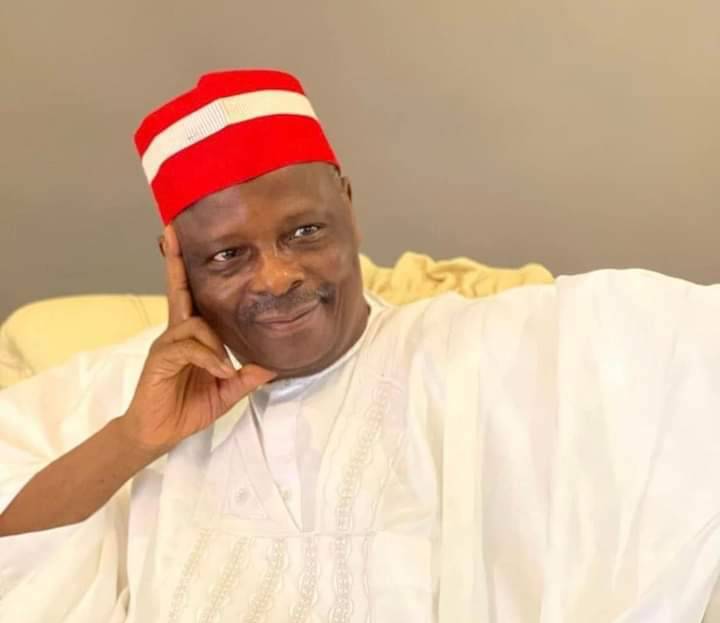
NNPP disowns Kwankwaso, says he can’t contest 2027 presidency on its platform

By Uzair Adam 

The New Nigeria Peoples Party (NNPP) has declared that its 2023 presidential candidate, Senator Rabiu Musa Kwankwaso, no longer has the party’s platform to contest against President Bola Tinubu or any other presidential hopeful in the upcoming 2027 elections.

This was announced in a statement on Saturday by the party’s National Chairman, Dr. Agbo Major, in response to comments made by Buba Galadima, who claimed that Kwankwaso would remain in the NNPP and contest the next presidential election on its ticket.

Galadima had dismissed speculations that Kwankwaso was defecting to the All Progressives Congress (APC), insisting the former governor would strategically stay in the NNPP until the 2027 political whistle is blown. He also urged Nigerians to support Kwankwaso’s presidential ambition.

However, Dr. Agbo refuted Galadima’s claims, stressing that both Kwankwaso and Galadima had long been expelled from the party for anti-party activities and therefore could not speak for or use the NNPP for any political ambition.

“Our Memorandum of Understanding with the Kwankwasiyya Movement, led by Kwankwaso, ended shortly after the 2023 elections. We cannot allow Kwankwaso back into the NNPP because of the internal crises and legal battles he caused,” Agbo stated.

He alleged that Kwankwaso attempted to hijack the party by changing its logo to reflect the Kwankwasiyya movement’s identity, which was later reversed through court intervention after a controversial convention in Abuja.

Agbo also dismissed the possibility of Kwankwaso receiving another automatic ticket from the NNPP, stating that such a privilege would not be granted again.

“Kwankwaso is known for joining only political parties where he can control leadership. But here, that era is gone. His ambition is dead on arrival,” Agbo added.

While affirming Kwankwaso’s constitutional right to contest any office, Agbo emphasised that the NNPP would not be involved in any antagonism against the President or other political parties.

He said the party is now considering fresh aspirants ahead of 2027 and will ensure due process and transparency in selecting its next presidential candidate.

“The NNPP has moved on. We will not be drawn into needless controversies. We advise Kwankwaso to form his own party if he still wants to pursue his ambitions,” Agbo concluded.

Benue: The noise, the blood, and the silence that matter

By Oladoja M.O

Benue bleeds again. A recent massacre in Yelewata village, where at least 100 to 150 lives were claimed, cast a shadow over headlines, but smothered the deeper truth of decades-long sorrow. As images flash across social media in real time, outrage erupts. But near-instant outrage often substitutes for understanding. And in Benue, where tragedy is almost normalised, such performative empathy does more harm than good.

A Land on Fire, not for the First Time. This is not a one-off disaster. The roots go deep:

The 2001 Zaki‑Biam, where Nigerian soldiers massacred hundreds of Tiv civilians, razing villages in a brutal military reprisal, the 2016 Agatu Massacre, where more than 300, possibly up to 500, villagers were slaughtered during herders‑farmers clashes, leaving thousands displaced, the Odugbeho 2021, where suspected Fulani herders killed at least 40 residents in Agatu LGA, part of a continued wave of violence. In April 2022, over 25 were murdered in coordinated herder attacks on farming communities in Goma, up till this latest carnage, where victims were shot and burned in their homes, echoing a tragic pattern.

Between 2015 and March 2023 alone, 5,138 lives were lost across Benue in herder‑farmer attacks. Under President Buhari’s term, Benue became a killing field; 6,000 killed, 2 million displaced. The Humanitarian Crisis has been ongoing under the surface of fleeting headline moments.

The tragedy is not fodder for political stunts. The moment a video goes online, hashtags spiral: blaming the President, vilifying the government, and stirring political gain. But very few pause to ask: who suffers most in these cycles of condemnation? The dead do not return. The displaced families do not reclaim their farms. The real loss is in our silence, our unwillingness to grasp the whole before pointing fingers. Yes, government leaders, state and federal, bear responsibility.

The 2017 anti‑open grazing law in Benue was well-meaning. However, it remains a paper tiger: characterised by uneven enforcement, a lack of ranches, and feeble federal support. President Tinubu’s speeches and increased defence budgets amount to little on the ground when arms still flow, and security forces remain under-resourced. And when political opponents oversimplify the conflict as mere religious persecution or ethnic cleansing, nuance is lost.

At the heart of all these disputes is a struggle over scarce resources, including land, water, and natural resources, as well as grazing routes, which is exacerbated by climate change. Historically, grazing corridors existed. However, escalating population growth, farmland encroachment, and desertification have reduced these spaces. Compounding this: centuries-old migration, religious and ethnic tensions, cattle rustling, and political exclusion of Fulani groups. Each side bears accumulated grievances; farmers over burnt crops, herders over stolen cattle.

This is fundamentally communal, not merely political. Solutions must be rooted in non‑kinetic, non‑violent engagement. Dialogue tables must sit Fulani herders alongside Tiv farmers and local officials. Traditional leaders, ranchers, security services, and federal authorities must all negotiate a win-win framework, including grazing reserves, clear land-use maps, property rights enforcement, and swift justice for perpetrators. Yes, bring the perpetrators to book. Those profiting from killing, whether herders or cartels supplying arms, must face speedy consequences. However, we cannot rely solely on force. We need intelligence systems, community policing, and legal reform. We need peaceful co-management of land and water.

It’s time for Nigerians to shift from hashtag empathy to hard-won solidarity. Unleashing threads of blame on social media while clicking “share” does little for grieving widows or orphaned children. 

Recording a burn-out home instead of rescuing a trapped neighbor is the hallmark of a self‑absorbed age. 

Public discourse must evolve from political opportunism to intellectual empathy. From performance to purpose. When presidents speak, let’s demand substance: “Where are the ranches? Where is land‑use reform? Who funds security at the village level?”

We demand action, but not at the cost of conscience. We must hold leaders accountable while still listening. Civil society must stop yelling into empty rooms, and start negotiating into full ones.

A practical roadmap might include;

Reviving grazing reserves with clear boundaries, monitored jointly by local farmers and herders, enforcement of anti-grazing laws, backed with ranching incentives and federal support, swift prosecution of killers, with community courts supported by federal justice, strengthening local security, with trained village vigilantes under lawful guidelines. Climate adaptation, planting trees, building dams, restoring soil to reduce migration pressure, and, more importantly, promoting inter‑communal peace‑building through youth exchanges, shared markets, and local councils.

If Nigeria continues to allow Benue’s blood to stain its conscience, we’ll face another generation hardened by loss, distrust, and rage. A country that waits for television headlines before honouring its fallen has already forgotten them. Benue’s suffering needs more than outrage; it needs us: grounded, knowledgeable, purposeful. We must reject hollow political theatre and demand real solutions. Because beneath the noise and the blood, lies an entire community crying for justice, and silence is not an option.

Oladoja M.O writes from Abuja and can be reached at: mayokunmark@gmail.com.

Wike accuses Amaechi of corruption, claims wife got N48bn from NDDC

By Abdullahi Mukhtar Algasgaini

FCT Minister Nyesom Wike has launched scathing corruption allegations against his political rival and former Rivers State Governor, Rotimi Amaechi, accusing him of enriching his family through government agencies.

Speaking on Channels Television’s Politics Today, Wike vehemently denied Amaechi’s recent claims of disliking money while portraying his wife as merely a businesswoman.

Wike labelled Amaechi a “liar” and alleged systematic corruption.Wike’s key accusations include:

1.NDDC Payments: Claiming Amaechi’s wife received ₦4 billion monthly for one year, totaling ₦48 billion, from the Niger Delta Development Commission (NDDC).

2.Contract Facilitation:Asserting that as Minister of Transportation, Amaechi facilitated government contracts for his wife within agencies under his ministry – specifically the Nigerian Ports Authority (NPA) and the Nigerian Maritime Administration and Safety Agency (NIMASA).

3.Agencies’ Debt Motive: Suggesting Amaechi’s recent mention of NPA and NIMASA owing contractors stemmed from debts owed to his wife’s companies.

4.Rolls Royce Gift: Condemning Amaechi for allegedly accepting a Rolls Royce as a gift from a contractor working for Rivers State in 2014.

Wike challenged President Bola Tinubu to release a forensic audit report on the NDDC, vowing it would expose Amaechi’s wife’s dealings.

He staked his position, declaring, “should the allegations be found untrue, he is ready to resign as FCT Minister.”

These accusations mark a significant escalation in the long-running feud between the two prominent Rivers State politicians. Amaechi is yet to publicly respond to these specific claims.

While I’m still in PDP, I’ll fork for ADC—Sule Lamido

By Ibrahim Yunusa

Former Jigawa State Governor and founding member of the Peoples Democratic Party (PDP), Sule Lamido, has expressed his willingness to support the African Democratic Congress (ADC) in a bid to ensure President Bola Tinubu’s defeat in the 2027 general elections.

Lamido, while reaffirming his membership in PDP, accused President Tinubu of having total control over the party, alleging that figures like Samuel Ortom and Nyesom Wike are being used to weaken the PDP’s position as a formidable opposition.

He declared support for any coalition or group that aligns with the goal of unseating the ruling APC, adding that reclaiming the country’s integrity and ensuring peace for the masses is his top priority.

Arsenal’s Thomas Partey charged with multiple sexual offences

By Maryam Ahmad

Arsenal midfielder Thomas Partey has been officially charged with multiple sexual offences, the Metropolitan Police Service confirmed on Thursday.

In a statement, the police said the Crown Prosecution Service (CPS) had authorised the charges following a file of evidence submitted by detectives. Partey, 32, of Hertfordshire, faces five counts of rape and one count of sexual assault.

The alleged offences are reported to have taken place between 2021 and 2022.

“The Met has issued a charge and requisition to Thomas Partey… in connection with the following offences: Five counts of rape, One count of sexual assault,” the statement read.

Further details about the case have not been released, and a court date is expected to be announced soon.

Partey and his representatives have yet to make a public statement regarding the charges.