Month: July 2025

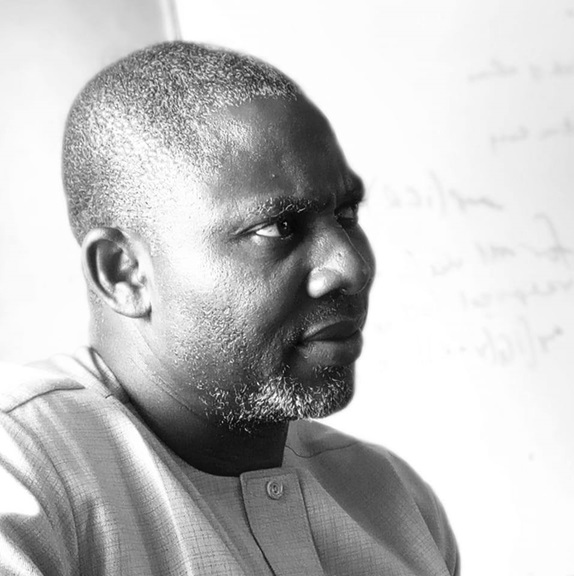
Political satirist Dan Bello faces brief detention

By Anas Abbas

Nigerian political satirist and social media influencer, Bello Habib Galadanchi, widely known as Dan Bello, was briefly detained on Saturday afternoon upon his arrival at the Mallam Aminu Kano International Airport, according to multiple sources.

His comedic sketches often highlight pressing issues such as the deterioration of public education, the collapse of healthcare facilities, and the increasing economic hardships faced by citizens.

While the exact reasons for his arrest remain unclear, it quickly attracted public attention given his reputation as a staunch critic of the political elite.

Fortunately, he was released shortly after being taken into custody, as confirmed by an associate.

As of now, there has been no official statement from the Nigerian Immigration Service or any other security agencies regarding the circumstances surrounding his arrest and subsequent release.

How the lack of strong opposition masks the government’s failures in Katsina 

By Muhammad Isyaku Malumfashi

One thing I despise about Katsina’s political realm is the absence of a strong and formidable opposition that will tackle the government’s dormancy and make them very focused and renaissance-like toward their responsibilities by using both envious and constructive criticism against those in power, so that at least the citizens may witness democratic dividends seen in some states.

But for the opposition to hold hands and keep mute without holding those in power accountable for any misfortune is unhealthy, and that’s the reason why we are here. Many citizens have questions about the power, but they are afraid to ask due to threats of arrest or intimidation by those close to the power. Perhaps some would disguise themselves in the name of advice to convince you not to oppose this failed government led by the so-called PhD, but they will not prove to you that what you said about the government is not true.

It’s a good thing to advise one to be cautious and watchful of his tongue, but it’s cowardice to intimidate him with arrest or cite the quibbles of his words without pointing out the error in them. The present Katsina government at all levels has become a failure despite the boasting made about the ‘educational qualification’ of the governor during the campaign and even after in his first year of office.

The governor made it clear that he would work with only ‘educated people’ because he is a PhD holder. His academic position was also used to deceive people into believing that Katsina would have a governor for the first time who had attained such a high level of education, unlike his predecessors, who were only master’s degree and diploma holders. People believed that the highest level of education equates to good governance until Governor Radda spent two years in office with nothing to show, or at least outshine or perform better than his predecessors.

That’s when we realised that a secondary school leaver may do better than a PhD in governance because it’s not about the qualification but fear of God, experience, integrity, and honesty. This administration of a PhD holder has not endangered any sector in Katsina. Take the security issue first, which is the most pressing issue in the state.

During the campaign, the governor made it clear that even if it’ll cost him not constructing a single gutter, he’ll eliminate insecurity in the state. We were happy to hear that and even began to see some desirable steps toward actualising that by distributing ammunition to citizens, launching the Katsina State Security Watch Corps, and arresting and killing many people found sabotaging the fight against insecurity. But what happened along the way?

The emphasis was later shifted to politics; the bold promise of no negotiation with bandits at the weak point was broken, and we saw negotiations made in some local governments when it was apparent that the bandits breached many trusts that had been placed in them by the previous government after the talks, and the insurgency escalated. It’s only during Radda that we’ve seen the worst of banditry, especially in my hometown of Malumfashi.

Initially, they only attacked villages, but later they expanded their attacks to cities. People are no longer safe. The son of our immediate local government chairman has been in bandits’ captivity for months now. My sibling, a sister of the same father and the same mother, was kidnapped in the same area where the ex-chairman lived while in office, and his child was abducted.

Many people inside Malumfashi were kidnapped; some were killed, and some had ransom paid to release them. Even today, I woke up seeing the sad news of the death of a PDP leader in Malumfashi from bandits. It’s under this government that dozens of villages in Malumfashi were evacuated due to banditry, and a whole brigadier general from Tsiga was kidnapped and spent more than 50 days in their hands before gaining freedom after millions were paid to them as ransom.

And a first-position winner from Katsina of the National Qur’anic Competition (Musabaqa) held in Kebbi was also kidnapped with his parents along their way back to Faskari from Katsina, where the governor gave him prizes and gifts, but was not able to ask security to escort him home despite the apparent danger of their town. And the governor made a blatant lie in a video, which I saved for my unborn children to remind them that ‘he’s the one feeding every family whose head is kidnapped in the state.’ This is not just a capital lie but a grievous one.

If you take education, you still have nothing to show. The previous government was paying WAEC and NECO for every student in government schools who passed the qualifying exams. Still, this government of ‘PhDs’ paid only NECO to every student, even if he or she passed both WAEC and NECO last year. Katsina’s NECO result was released late last year, after many schools had concluded their admission processes, and the pass rate was very low. Katsina was ranked among the three lowest-passing states in the NECO exam last year.

The governor employed thousands of teachers and a few from the health sector. I agreed, but he did not tell us how many thousands have retired in every sector every year and how far along the replacement process is. No school will go without seeing a shortage of teachers, and the same goes for clinics.

How long did it take him to implement the 70k minimum wage, and has it been implemented 100%? You’ll hardly see a civil servant who saw an increase of up to 50k in his salary, like in other states. What was the cause of his dispute with the university staff about the minimum wage implementation, and how many times did they reject his low implementation of minimum wage for them?

The tertiary school fees were raised when many students were dropping out due to the high cost of education, even though the governor is now earning more than his predecessor because of the removal of subsidies. His predecessor did not increase the school fees, but PhD did. In his just two years in office, he claims to have spent more on security than the previous government did in 8 years, yet there has been no clear difference between the two governments in their success against banditry in the state.

Only these two crucial areas are sufficient to condemn this Yan Boko government, but the lack of opposition in Katsina is giving the governor the confidence to speak badly about the coalition. 

Coalition/opposition has come to stay in Katsina, and no man born of a woman can stop it.

The alarming rise of thug violence and phone snatching in Kano State 

By Alhassan Hassan Salihu

The shocking surge of thuggery and phone snatching in Kano State has evolved into a grave crisis. This escalating violence threatens the safety, security, and well-being of residents, particularly in the metropolitan areas.  

Despite the overwhelming fear gripping communities, remaining silent is not an option; silence could very well mean becoming the next victim of these ruthless gangs preying on innocent people.

Kano’s Youth Violence

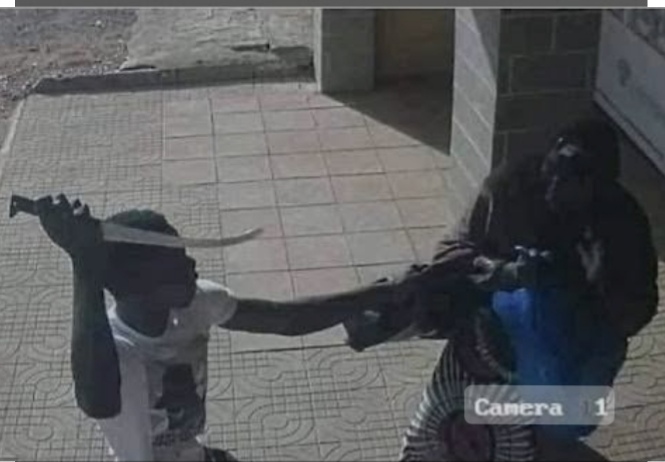
From the streets of Kurna to Dorayi, and Rijiyar Lemo to Gwagwarwa, chilling reports of violence have become commonplace. Street clashes, stabbings, daylight robberies, and innocent lives traumatised by gangs wielding machetes, stones, and knives have turned these areas into unsafe zones. 

The brutality of these gangs is more devastating. Social media platforms are inundated with graphic videos and images depicting these violent incidents. 

Terrified bystanders film young thugs attacking victims who resist having their phones snatched, with many victims bleeding from multiple stab wounds. 

These violent encounters are no longer isolated incidents but part of an alarming pattern that threatens the peace and stability of Kano.

A Personal Near-Miss in Dorayi

Just days ago, a student narrowly avoided becoming a victim during a routine trip from Zoo Road to Dorayi in a commercial tricycle (Keke Napep). 

Two young men suddenly jumped into the vehicle; one sat beside them, the other beside the rider. Despite explaining that it was a private drop-off, one of the youths became aggressive. 

Thankfully, the presence of a nearby police outpost likely deterred any violent intentions. They dropped off at a university gate without incident.

This encounter serves as a sobering reminder that violence can erupt anytime, anywhere. Such an incident was lucky, not guaranteed. For many others, it ends in tragedy.

Violence Spreads Beyond Kano

The wave of thuggery and phone snatching extends beyond Kano State. In neighbouring Kaduna, the tragic stabbing of a naval officer, Lieutenant Commander M. Buba, shocked the region. 

While changing a flat tyre in the Kawo area, he was attacked and stabbed in the chest after he refused to surrender his phone. Despite intervention by local vigilantes, he was pronounced dead on arrival at Manaal Hospital.

Authorities have since detained at least 13 suspects and initiated covert operations to dismantle gangs terrorising Kaduna’s streets. Yet the spread of this violence signals a regional issue that calls for coordinated responses beyond the borders of individual states.

 Tragic Loss of a Community Leader

Closer to home, Kano mourned the brutal murder of Alaramma Jabir Lawan Abdullahi, a respected Islamic teacher and tech expert. 

On the evening of May 17, 2025, near Gidan Sarki, he was attacked while travelling in a commercial tricycle amidst heavy traffic. When he resisted attempts to snatch his phone, he was stabbed multiple times by suspected thugs and left to die on the roadside.

This horrific act has ignited outrage across Kano. The fact that a well-known and respected educator could fall victim so brutally sends a clear message: no one is safe in the current climate of violence. 

Arrests Made, Yet Violence Continues

According to the Kano State Police Command, over 200 suspected thugs and phone snatchers have been arrested over the last six months. 

In March 2025 alone, the police paraded over 85 suspects from hotspots such as Kofar Ruwa, Dan’agundi, Zango, and Dorayi. Weapons, stolen phones, and illicit drugs were seized.

Despite these efforts, the menace persists, the gangs’ deep-rooted networks rapidly replenish lost members, highlighting the inadequacy of enforcement alone. 

Underlying socio-economic challenges, including high unemployment, widespread drug abuse, and poor educational opportunities, fuel the cycle of crime and violence.

Steps Taken, But More Must Be Done

The Kano State Government has made commendable strides in tackling this crisis. 

Rehabilitation centres in Kiru and Dorayi, alongside the National Drug Law Enforcement Agency’s (NDLEA) facility for addiction treatment, are important tools in combating the link between substance abuse and violent crime.

However, these centres require urgent expansion and increased funding to meet growing demand. With rising numbers of youths affected by drugs and crime, scaling rehabilitation services is essential, and more compulsory.

Need For Holistic Action

Security agencies cannot rely solely on arrests to solve such enduring crises, which require a community-based approach. 

Strengthening community policing, empowering neighbourhood vigilante groups, improving local surveillance, and fostering trust between residents and law enforcement are critical for restoring safety. Equally important is addressing the root causes of youth involvement in crime. 

The government must urgently invest in job creation schemes, vocational training centres, and youth empowerment initiatives such as sports and cultural programmes. 

Idle youth are more vulnerable to gang recruitment and drug addiction. Productive engagement is the key to prevention. Moreover, effective rehabilitation programmes and mental health support for addicted offenders must be prioritised. Without this, many youths will remain trapped in a vicious cycle of crime and incarceration.

Lastly, the justice system must be reformed to ensure quick and fair prosecution. Many arrested criminals return to the streets quickly due to weak legal follow-up, undermining deterrence and public confidence. Stronger, faster legal processes and appropriate sentencing are necessary to break the cycle, as it was previously demonstrated.

Conclusion

The menace of “fadan daba and phone snatching” in Kano has reached a tipping point. No one is immune, from students and traders to community leaders and law enforcement.

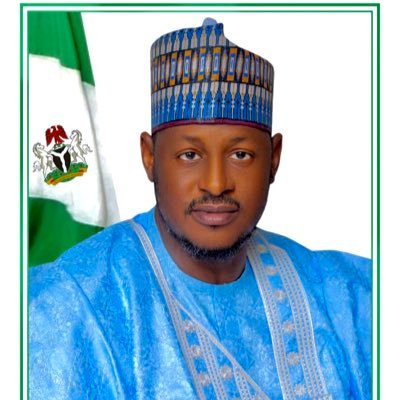
Professor Pate elected as Fellow Nigerian Academy of Letters

By Anwar Usman

The Vice Chancellor, Federal University of Kashere, Gombe state Professor Umaru Alhaji Pate, has been elected a Fellow of the Nigerian Academy of Letters (NAL).

Pate’s election was approved by the College of Fellows during a meeting held on Tuesday, July 8, 2025.

The Academy also announced other new Fellows both Regular and Overseas as well as Honorary Fellows and recipients of its 2025 Awards of Excellence in Humanistic Practice.

Professor Pate, a scholar in Communication and Media Studies, was recognized for his works in journalism education and university leadership.

NAL, in a statement, said the formal inauguration of Professor Pate and other newly elected Fellows will take place on August 14, 2025, during the Academy’s 27th Convocation at the University of Lagos.

The statement in part reads “The investiture of the new Fellows and the conferment of awards will take place during the Academy’s 27th Convocation”.

Other newly elected Fellows include Professor Ebunoluwa Olufemi Oduwole and Professor Temisanren Ebijuwa in Classical Studies, Philosophy, and Religions; Professor Emeritus Alkasum Abba in Historical Studies; and Professors Gbemisola Aderemi Adeoti, Aderemi Raji-Oyelade, and Victor Chiagozie Ariole in Literary Studies.

In Cultural Studies, Creative Writing, Theatre, Visual and Performing Arts, the Fellows are Professors Mohammed Inuwa Umar-Buratai, Ameh Dennis Akoh, and Charles Emeka Nwadigwe.

In Linguistics, Professors Gideon Sunday Omachonu and Obiajulu Augustine Emejulu were named.

Professor Akinwumi Ogundiran was elected an Overseas Fellow in Historical Studies.

The Academy of Letters further revealed that, the event will mark a moment to reflect on “the profound contributions of these individuals to humanistic scholarship and practice.”

Kano settles ₦22 billion gratuity backlog, pledges full clearance — Governor Yusuf

By Muhammad Sulaiman

In a major stride toward social justice and responsible governance, the Kano State Government has cleared ₦22 billion out of the ₦48 billion backlog owed to retired workers and families of deceased civil servants.

Speaking at a ceremony marking the release of the fourth tranche of ₦6 billion, Governor Abba Kabir Yusuf described the payments as a milestone in his administration’s commitment to restoring dignity to pensioners and bereaved families.

“This settlement is part of our broader agenda to address long-standing liabilities and reposition Kano State as a model of responsible governance,” the governor said.

Governor Yusuf emphasised that the payments not only bring relief to affected families but also reaffirm his administration’s dedication to restoring trust in government institutions. He assured that the remaining ₦26 billion will be paid in subsequent tranches.

“No pensioner or bereaved family will be left behind,” he declared.

Kano Emirate Crisis: Group demands swift police response after ‘premeditated’ palace disruption

By Hadiza Abdulkadir

A coalition of concerned citizens has issued a strong call to the Nigeria Police Force for an urgent investigation into what they describe as “premeditated acts of provocation and incitement” targeting the Kano Emirate.

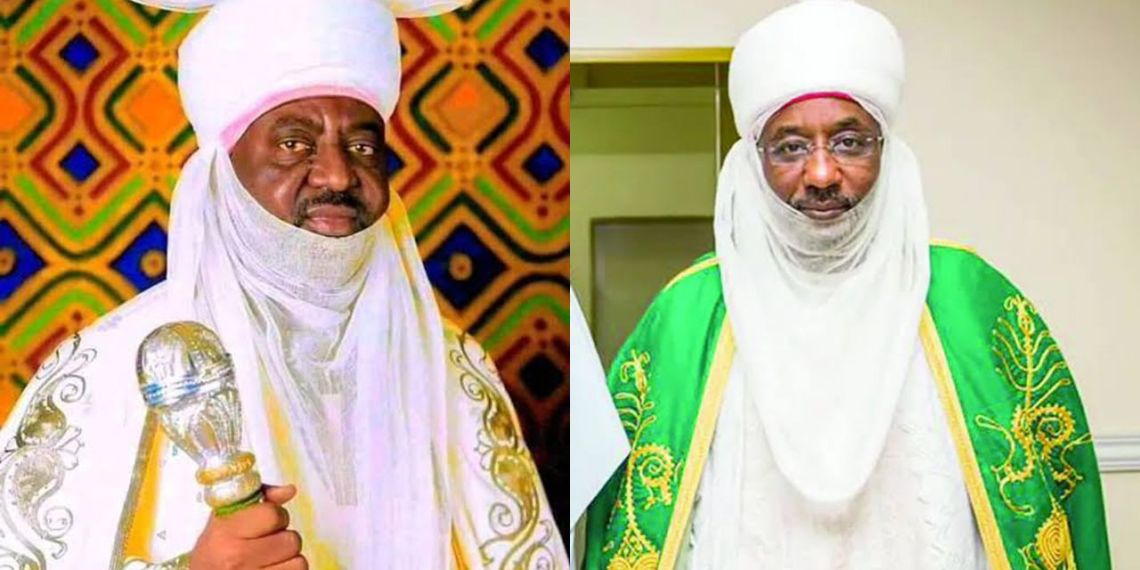
The group, led by Secretary General Rabiu Matazu, alleges that recent unrest surrounding the annual Durbar celebrations was orchestrated by associates of the deposed Emir, Aminu Ado Bayero. According to the statement, supporters of the former Emir had publicly mobilised thugs via social media to gather at his Mandawari residence, which lies directly along the route of Emir Sanusi’s durbar procession.

The release also describes a separate incident involving Aminu Ado Bayero’s convoy, which reportedly passed in front of Gidan Rumfa — the official residence of the Emir — during a condolence visit. Eyewitnesses claim the convoy tore down official banners and damaged parts of the palace wall, while chanting threats against Emir Sanusi.

“This is not [a] mere coincidence,” the statement read. “These are coordinated efforts to provoke confrontation and destabilise the Emirate.”

In stark contrast, the statement commended Emir Sanusi II for what it described as a peaceful and respectful gesture during the Nasarawa Eid durbar, deliberately avoiding the Nasarawa Palace where Bayero is said to be “squatting.”

The group is demanding that the police investigate all aspects of the incidents, including social media incitement, acts of vandalism, and the role of any influential individuals behind the provocations. They emphasise that accountability should not be selective.

“Kano has suffered enough,” the statement concluded. “The people deserve peace, stability, and a police force that enforces the law without fear or favour.”

Nigeria Customs Service intercepts container with over 10,000 donkey genitals on Kaduna–Abuja Highway

By Sabiu Abdullahi

The Nigeria Customs Service (NCS) has announced the interception of a container carrying more than 10,000 donkey genitals along the Kaduna–Abuja Highway.

The disclosure was made by the Comptroller-General of Customs, Adewale Adeniyi, through the Service’s National Public Relations Officer, Assistant Comptroller Abdullahi Maiwada, during a press conference held at the government warehouse in Karu, Abuja, on Thursday, July 10, 2025.

Maiwada said the interception was part of ongoing efforts by the Customs to combat illegal wildlife trade through the activities of its Special Wildlife Office (SWO), which operates under the Customs Intelligence Unit (CIU).

He explained that the unit’s mandate includes intelligence gathering, profiling, investigations, and enforcement against criminal networks involved in trafficking endangered species.

According to CGC Adeniyi, officers of the SWO and CIU carried out the operation on June 5, 2025, at about 9:00 p.m. following actionable intelligence.

He noted that the interception highlights the continuous threat posed by transnational syndicates exploiting Nigeria’s trade routes.

He stated that in line with established procedures, the confiscated wildlife products would be transferred to the National Environmental Standards and Regulations Enforcement Agency (NESREA) to ensure inter-agency cooperation and environmental protection.

Adeniyi also reviewed the Service’s wildlife enforcement track record over the past year. He mentioned that in December 2024, six African Grey Parrots were confiscated in Kano, while in May 2025, Customs officials at Lagos Airport intercepted various animals including two live pangolins, five Mona monkeys, two Tantalus monkeys, one baby baboon, and another African Grey Parrot.

“In a separate operation, officers arrested a suspect in the Ikom area of Cross River State in connection with 213 parrot heads, six eagle heads, 128 hornbill heads, and other exotic species,” he added.

He further stated, “On 13 January 2025, tortoises were rescued and handed over to the National Park Service in Oyo State. We have also recorded seizures of taxidermy specimens such as life-sized lions, zebra hides, gorilla parts, and pangolin scales.”

Adeniyi also revealed that a container loaded with 119.4 kilograms of pangolin scales was intercepted in Calabar, and in Fufore, Adamawa State, 120 African Grey Parrots were rescued while a suspect was apprehended.

“These figures underscore the scale and sophistication of illegal wildlife trade. It is not just an ecological issue, but one tied to organised crimes, including money laundering, arms smuggling, and illicit currency flows,” he said.

He affirmed the Service’s commitment to curbing wildlife crime through advanced tools, noting that Customs is now investing in digital surveillance, cross-border cooperation, and species identification technologies.

“Our Wildlife Office’s investigations, including digital forensics and phone analysis of suspects, have strengthened our evidence base, with several prosecutions currently underway,” he stated.

Also speaking at the event, the Head of the Customs Wildlife Office, Assistant Comptroller Anuhu Mani, acknowledged the support of local and international conservation groups and neighbouring enforcement agencies.

He specifically appreciated organisations such as Focused Conservation, Wildlife Conservation Society, Wild Power Trust, Green Fingers, and Padrilas for their collaborative efforts.

Nigerian forces kill 30 bandits in Katsina counter-operation

By Abdullahi Mukhtar Algasgaini

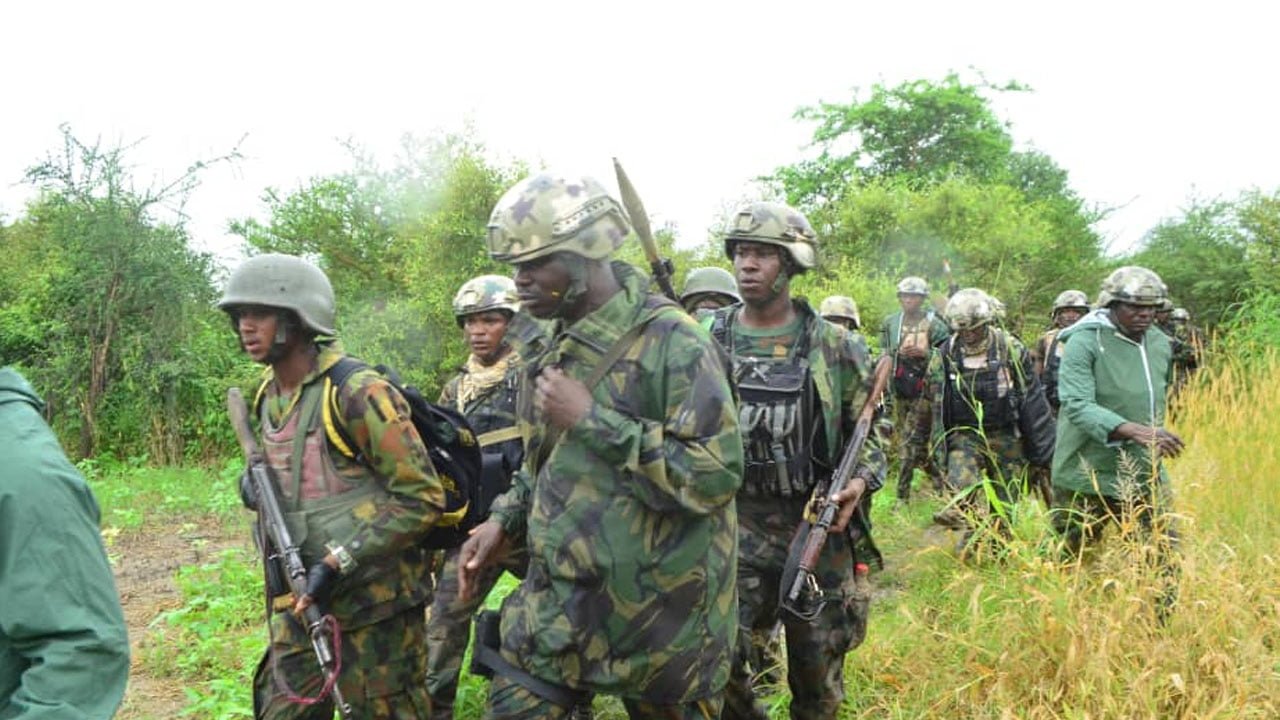
Security forces in Katsina State, Northern Nigeria, have announced the killing of 30 bandits following a counter-operation in Faskari Local Government Area.

The action came in response to attacks launched by the terrorists on three villages within the state on Tuesday.

The bandits had targeted the villages of Kadisau, Raudama, and Sabon Layi.

This prompted a coordinated response involving ground troops from the police and army, supported by the Nigerian Air Force.

The joint operation successfully neutralized 30 terrorists.

However, the engagement resulted in the loss of five security personnel and one civilian.Katsina State Commissioner for Internal Security, Dr. Nasir Mu’azu, confirmed the success.

He stated that security forces, acting on prior intelligence about the bandits’ planned attack, deployed personnel from Dandume and the Nigerian Air Force to intercept the assailants.

“After a prolonged gunfight involving ground and air assets,” Mu’azu said, “the bandits’ attempted attack was successfully repelled.”

Katsina State is located in Nigeria’s troubled North-West region, which has endured persistent bandit attacks leading to significant loss of lives and property.

Governor Yusuf approves ₦6bn pension payment for Kano retirees

By Abdullahi Mukhtar Algasgaini

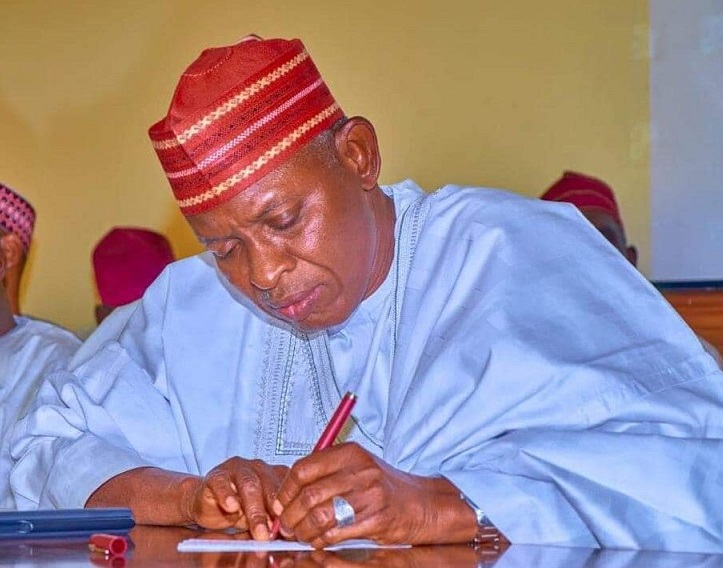
In a significant move to fulfill pre-election commitments and address long-standing welfare concerns, Kano State Governor, Alhaji Abba Kabir Yusuf, has approved the disbursement of over Six Billion Naira (₦6,000,000,000) to retired civil servants.

This marks the governor’s fourth major pension payment initiative since taking office.

The payment, described by the state government as a “restoration of dignity,” targets pensioners who served Kano and Nigeria diligently but faced years of neglect and hardship under previous administrations.

Governor Yusuf stated that the gesture underscores his administration’s commitment to justice and compassion for those who built the state “with their strength and intellect.”

At a ceremony overseeing the disbursement, officials highlighted the critical timing of the support amid Nigeria’s severe cost-of-living crisis.

Many beneficiaries had reportedly endured years without income or stable employment, with some battling illness or struggling to support dependents.

The state government stated that the funds offer “a beacon of new life and a foundation to rebuild dreams.

“Beyond the financial relief, the payment aims to formally recognize the retirees’ contributions and restore their sense of value after retiring “with integrity.”

Governor Yusuf’s administration framed the ₦6bn payout as evidence of prioritizing worker welfare, contrasting it with the perceived inaction of past governments.

“What others couldn’t achieve in eight years, we have accomplished in just two,” a government statement noted, positioning the fourth installment as proof that Governor Yusuf’s government “has not forgotten its contributors.”

The administration reaffirmed its pledge to continue supporting retirees and upholding social contracts with the people of Kano State.

Prof. Amoka slams SAN over “Unpopular Opinion” on Nigerian professors

By Muhammad Abubakar 

Professor Abdelghaffar Amoka of the Department of Physics at Ahmadu Bello University, Zaria, has responded strongly to what he calls a “misinformed and politically biased” opinion by Sunusi Musa, SAN, regarding the state of Nigerian academia.

In a lengthy rejoinder titled “The Impoverished Nigerian Professors and the ‘Unpopular Opinion’ of a Misinformed SAN,” Prof. Amoka criticised Musa for attributing the poverty of Nigerian professors to their alleged lack of productivity and large family sizes. 

Amoka argued that the true cause lies in the systemic neglect and chronic underfunding of the Nigerian education sector, particularly university staff salaries and research funding.

He noted that academic salaries have remained stagnant since 2009, with professors now earning the equivalent of less than $400 per month, a sharp drop from over $3,000 in 2009. He described the situation as a “crime against humanity,” accusing the political class of starving intellectuals while enriching themselves.

Amoka debunked the claim that Nigerian academics are unproductive, citing the international recognition they receive and their contributions to research and student success abroad. 

He further pointed out the lack of sufficient research funding, comparing Nigeria’s meagre investments to the billions spent annually by countries like the US, UK, China, and even smaller nations such as Norway and Malaysia.

The professor further criticised the SAN for bringing personal life choices—such as marriage and family size—into a discussion about national policy failure. He emphasised that productivity in academia depends on conducive working conditions and appropriate incentives.

Amoka ended the piece by urging fellow academics to prioritise their well-being, pursue legitimate side hustles if necessary, and continue doing their best to sustain a struggling system. He warned that the continued devaluation of education poses a threat to the country’s future.

“We are starving the thinkers and feeding those who can’t think. What sort of system are we expecting to create?” he asked.