Month: June 2025

INEC sets August 16 for Chikun/Kajuru by-election, 15 others

By Abdullahi Mukhtar Algasgaini

The Independent National Electoral Commission (INEC) has scheduled by-elections for 16 vacant legislative seats, including the Chikun/Kajuru Federal Constituency in Kaduna State, for Saturday, August 16, 2025.

The polls follow the death of Hon. Ekene Adams, the former representative of Chikun/Kajuru.

The elections will cover five federal and 11 state constituencies across 12 states.INEC Chairman, Prof. Mahmood Yakubu, announced the date during a meeting with political parties in Abuja.

Over 3.5 million registered voters in 32 LGAs, 356 wards, and 6,987 polling units will participate, with 30,451 officials deployed for the exercise.

Yakubu assured that INEC remains committed to conducting a free, fair, and credible election to fill the vacant seats.

President Tinubu signs tax reform bills into law

By Anwar Usman

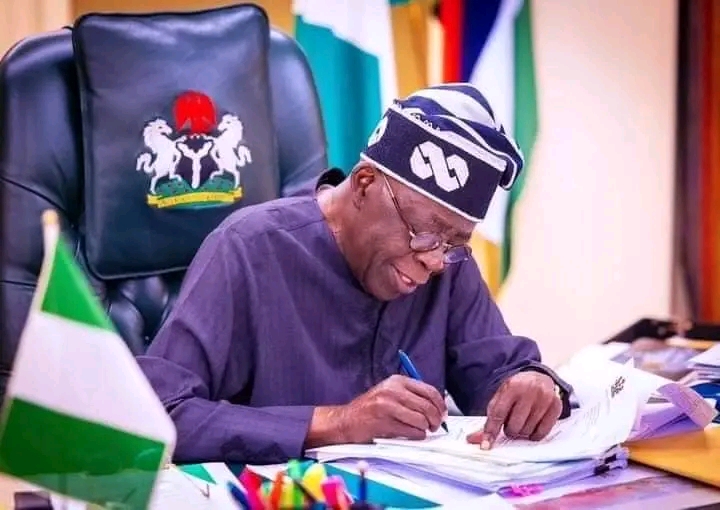
The President of Nigeria, Bola Ahmed Tinubu, has today signed the four tax reform bills into law.

The bills, which he said will transform Nigeria’s fiscal and revenue framework, were signed at the Presidential Villa in Abuja on Thursday afternoon.

The four bills include the Nigeria Tax Bill, the Nigeria Tax Administration Bill, the Nigeria Revenue Service (Establishment) Bill, and the Joint Revenue Board (Establishment) Bill, which were recently passed by the National Assembly.

Those present at the signing ceremony were Senate President Godswill Akpabio, Speaker of the House of Representatives, Tajudeen Abbas; Senate Majority Leader, House Majority Leader, chairman of the Senate Committee on Finance, and his House of Representatives counterpart.

On Wednesday, Bayo Onanuga, Special Adviser to the President on Information and Strategy, stated that the implementation of the new tax laws would significantly transform tax administration in the country, leading to increased revenue generation, an improved business environment, and a boost in domestic and foreign investments.

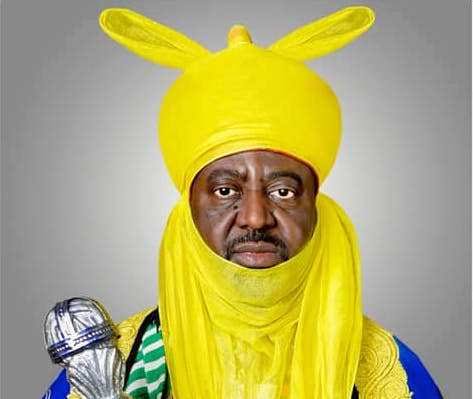
Open letter to Emir Aminu Ado Bayero: A reflection on leadership and legacy

By Kamal Alkasim

As a passionate observer of our culture and heritage, I am writing this letter from the heart of Kano metropolis. It was driven not by personal interest, but by love for our land, its history, and the legacy entrusted to its leaders.

Your Highness, it is said that to whom much is given, much is expected. As the custodian of a rich cultural heritage, the expectations placed on your shoulders are immense. You come from a distinguished royal lineage: your late uncle, Emir Muhammadu Sanusi I, was a towering figure whose leadership left a deep mark across Northern Nigeria. More recently, your nephew, Muhammadu Sanusi II, carried the same torch, boldly defending the dignity and legacy of the Kano Emirate, even after facing unjust dethronement in 2020.

The legacy of your father, the late Emir Ado Bayero, speaks for itself. He reigned with wisdom and dignity for over five decades. History recalls how former Governor Abubakar Rimi once attempted to depose him, but fate and divine will had other plans. That chapter ended in tragedy, and Rimi never held office again. Your father, on the other hand, continued to serve and left behind an enduring legacy.

Your Highness, the Kano Emirate has stood for over a thousand years as a beacon of leadership, culture, and Islamic scholarship. It deserves a leader who will defend its dignity with integrity, wisdom, and a sense of responsibility that transcends personal or political interests.

Sadly, many believe that under your leadership, the kingdom has faltered. There are concerns that you have allowed yourself to be used as a tool by those with no regard for the unity and peace of Kano. These are strong words, but they come from a place of deep concern and affection for our home.

Leadership is not about holding a title; it is about rising to the moment and making tough but principled decisions in the interest of the people. Leadership is not about clinging to a throne while the city suffers unrest and division. Peace, justice, and unity must always come first.

Your name will forever be in the history books as one of the Emirs of Kano. That, in itself, is no small achievement—one that countless princes before you have dreamed of. But how your name is remembered depends on what you do with the responsibility now entrusted to you.

Let Kano rise again—not as a battlefield for political power plays, but as the most peaceful, united, and respected state in Nigeria and beyond. Let the Emirate return to being a symbol of honour, not controversy.

May God guide you to lead with justice, dignity, and wisdom—for the sake of our people and the generations to come.

Kamal Alkasim is a Concerned Son of Kano.

Nigeria’s digital shield: Why SOC analysts, threat-intelligence teams become business-critical

By: Kabir Fagge

As Nigeria’s fintech boom, e-commerce surge and digital-government projects push ever more data online, the threat surface is expanding faster than many boardrooms realise. In January 2025 alone, Nigeria jumped two places on Check Point Software’s global list of most cyber-attacked countries, moving from 13th to 11th in just four weeks.

The previous month saw the National Bureau of Statistics knocked offline by an account takeover, forcing the agency to warn citizens against fraudulent data releases. Analysts say the uptick is part of a wider continental pattern: an INTERPOL-led sweep across Africa in March netted 300 suspects (130 of them in Nigeria) accused of everything from investment-app scams to crypto-laundering rings.

Against this backdrop, the unsung heroes of Nigeria’s blue-team defences. Security Operations Centre (SOC) analysts and threat-intelligence (TI) specialists have never been more vital. “Think of the SOC as a 24-hour digital emergency ward,” says Ofuafo Orumeteme, a Texas-based Nigerian cybersecurity professional completing an M.Sc. in Cybersecurity at Stephen F. Austin State University and formerly a technical-support lead in the Nigerian banking sector. “Every log line, every traffic spike is a vital sign we triage in real time. Without that vigilance, a ransomware infection can burn through a network before leadership even knows something is wrong.”

A modern SOC is typically staffed in shifts of Tier-1, Tier-2 and incident-response engineers who hunt for anomalies across security information and event management (SIEM) dashboards such as Splunk or IBM QRadar. When an alert fires, say, an unusually large data exfiltration at 2 a.m., Tier-1 analysts validate it, block the malicious IP or quarantine the affected endpoint, and escalate the case for deeper forensics.

“Speed is everything,” Orumeteme notes. “The median ‘dwell time’ of attackers worldwide dropped to 10 days last year, but in West Africa, it’s often measured in hours because many criminals are after quick-hit business email compromise payouts. A well-drilled SOC can cut that dwell time to minutes.” Deloitte’s 2025 Nigeria Cybersecurity Outlook agrees, warning that ransomware groups are now “weaponising automation” to compress their attack cycles.

While SOC operators fight fires, threat-intelligence teams work further upstream. They scrap dark-web marketplaces, analyse malware samples and map adversary tactics, techniques and procedures (TTPs) to the MITRE ATT&CK framework. Their goal is to transform fragments of chatter or novel code into actionable “indicators of compromise” (IOCs) that can be fed back into SIEM detection rules.
“In practice, TI is our radar,” Orumeteme explains. “If we learn that a credential-harvesting toolkit now embeds specific PowerShell obfuscation, we will write a YARA rule the same day. That way, the SOC spots it on packet capture before the attacker pivots to domain controllers.”

The Central Bank of Nigeria’s updated risk-based cybersecurity framework for deposit-money and payment-service banks now makes a formal TI programme mandatory. It urges institutions to “proactively identify, detect and mitigate” emerging threats. NITDA’s Strategic Roadmap likewise lists “developmental regulation” and indigenous capacity-building as cornerstones of its 2021-24 plan. These policies are beginning to shape budgets.

Nigerian banks spent an estimated ₦ 35 billion on cyber controls last year, industry executives say, with SOC outsourcing and TI subscriptions topping the list. Yet investment alone is not enough, warns Orumeteme. “You can buy a SIEM overnight, but you can’t buy muscle memory. Organisations need tabletop exercises, cross-training between network and security teams, and clear playbooks that specify who calls whom at 3 a.m. when the alarms go red.”

Nigeria’s cybersecurity workforce deficit is still wide. It is roughly around 76,000 professionals short of demand, according to ISC² regional estimates. That shortage is felt acutely in blue-team roles that require both technical depth and nerves of steel. University programmes are expanding, but Orumeteme argues that industry must accelerate on-the-job apprenticeships:
“Give junior analysts sandbox labs, let them dissect real malware and write correlation searches. Pair them with TI researchers who can teach open-source-intelligence tradecraft. It’s the fastest way to grow tier-2 talent.”

Data-leakage incidents in Nigeria have doubled year-on-year, with BusinessDay warning of “a crisis in the making” as attackers exploit cloud misconfigurations and unpatched VPNs. The average cost of a breach in the country now hovers around ₦ 300 million. Insurers say that money could fund expansion, R&D or thousands of new jobs.

“When executives ask for ROI, remind them that a single business-email compromise drained ₦ 1.2 billion from a West-African conglomerate last quarter,” Orumeteme says. “A mature SOC caught early recon on day one, blocked it, and saved shareholder value.”

Nigeria is aggressively cracking down on cyber-fraud. Over 1,000 arrests and 152 successful prosecutions in the past year show that progress is possible. But enforcement must be matched by enterprise-level vigilance. SOC analysts and threat-intelligence operatives sit at that nexus, turning raw telemetry and scattered clues into the actionable knowledge that keeps businesses and citizens safe.

As Orumeteme puts it, “Cybersecurity isn’t just an IT line item anymore. It’s national economic policy. And the SOC floor at 2 a.m. is where that policy succeeds or fails.”

Kabir Fagge Ali writes from Abuja, Nigeria and can be contacted via faggekabir29@gmail.com

FG postpones recruitment into major paramilitary agencies

By Sabiu Abdullahi

The Federal Government has rescheduled the recruitment exercise into four key paramilitary agencies under the Ministry of Interior.

In a statement released on Wednesday night, the Civil Defence, Correctional, Fire and Immigration Services Board (CDCFIB) announced a new date for the opening of its recruitment portal.

“The Civil Defence, Correctional, Fire and Immigration Services Board (CDCFIB), wishes to notify the general public that its recruitment portal which was earlier slated to open on Thursday 26th June, 2025, will now open on Monday 14th July, 2025,” the statement said.

The Board also informed applicants that the recruitment portal can now be accessed via recruitment.cdcfib.gov.ng, and reminded the public that the entire application process is free.

“Applicants are kindly requested to take note of the above changes as well as be reminded that all applications are free and do not attract any payment,” it added.

The Board apologized for any disruption the change may have caused and urged applicants to disregard any contrary information not coming from official sources.

This announcement comes days after the Board had declared the commencement of recruitment into the Nigeria Immigration Service (NIS), Nigeria Security and Civil Defence Corps (NSCDC), Federal Fire Service, and Nigerian Correctional Service.

Thousands of job seekers across the country are expected to apply for the limited positions in the various agencies.

‘Health is God?’ — Outrage as brand misfire with offensive Hausa translation

By Sabiu Abdullahi

There is growing discontent among Hausa speakers and language professionals over what many describe as careless and culturally insensitive translations in advertisements and public communications by major Nigerian companies.

This concern resurfaced recently when Hygeia HMO, a prominent health maintenance organization, launched a campaign in Northern Nigeria using the slogan “Lafiya Ubangiji ne.”

While it may have sounded spiritual to non-native ears, it struck many Hausa speakers as bordering on blasphemy.

“The intended meaning was likely, ‘Health comes from God,’ but what people heard was ‘Health is God,’” said Habib Sani Galadima, a professional Hausa-English translator. “It wasn’t just a translation error. It was a failure to respect cultural and religious sensitivities.”

In an opinion piece published by Nigerian Tracker, Galadima criticized the use of literal translation in a language where tone, logic, and spiritual coherence matter deeply.

He pointed out that the message would have been better rendered with a familiar Hausa expression such as “Lafiya uwar jiki”, which loosely means “health is wealth.”

“Too often, translation is treated as a technical afterthought,” Galadima added. “But when it’s done carelessly, the damage is real—especially in communities where moral and religious values are central.”

The outrage is not limited to a single campaign. Another incident involved a drink advertisement that attempted to promote a non-alcoholic beverage using the phrase “Ba barasa a cikin wannan giya”, which literally means “No alcohol in this beer.”

But in Hausa, both barasa and giya mean alcohol—making the phrase sound absurd.

A better alternative, Galadima suggested, would have been “Abin sha mai daɗi kuma babu giya a cikinsa”—a clearer and culturally appropriate way to convey the same message.

Frustration is also mounting on social media, where many Hausa speakers are voicing concerns over perceived regional bias and neglect.

“How is it that companies based in Lagos are approving translations for audiences in Kano?” one user asked. “You call MTN customer care or your bank, and you’re shocked by how bad the Hausa sounds.”

Others argue that the issue goes beyond language—it’s about representation and systemic imbalance.

“Most company headquarters are in the South, and they prefer to use their own people—even when the result is subpar,” said one commentator. “Even when northern celebrities are made ambassadors, their packages don’t compare to those given to their southern counterparts.”

Some have pointed to the broader cultural implications, suggesting that the North must do more to support its own.

“We don’t promote our own talent enough, and we’re not intentional about protecting our language,” one respondent lamented.

This issue is not new in the tech and linguistic communities either. A PhD who is a Hausa NLP expert, shared how during his early involvement with Masakhane, an African language machine translation initiative, Yoruba speakers were initially translating Hausa using tools like Google Translate.

“I had to push back and reclaim that space for actual Hausa speakers,” he said.

The recurring problem, many argue, is the lack of qualified translators with a deep understanding of Hausa culture, values, and dialectal variations.

In Hausa, words are not just linguistic units—they carry rhythm, reverence, status, and deep social cues.

Professional translators and language advocates are now calling for a national conversation and policy shift.“What would change if we trained translators not just in grammar, but in cultural listening?”

Galadima asked in his piece. “This work requires more than accuracy. It requires care.”

As Hausa remains one of the most widely spoken languages in Africa, the stakes are high.

Without proper translation, messages meant to connect may instead offend, confuse, or alienate the very people they are trying to reach.

For now, voices from the North are growing louder: “This is more than bad grammar—it’s about respect.”

31 Muslim passengers lynched in Plateau: ABU Muslim Forum demands justice

By Muhammad Sulaiman Abdullahi

The Muslim Forum of Ahmadu Bello University (ABU), Zaria, has condemned the brutal lynching of 31 Muslim passengers in Mangu Local Government Area of Plateau State, describing the attack as a “horrific act of savagery and barbarism.”

According to the Forum’s statement, signed by its Secretary-General, Dr. Munir Sani Ari, the victims—travelling in an 18-seater bus marked “ABU-Zaria”—were ambushed on Friday, June 20, 2025, while seeking directions in Mangu. Twelve passengers were reportedly killed and burned on the spot, while 18 others sustained serious injuries and are currently receiving medical care following military intervention.

Among the deceased was a staff member of ABU’s Department of Physics, who was reportedly transporting women and children to a wedding. The Forum emphasised that this was not an isolated incident but part of a “disturbing pattern of impunity-driven violence” against Muslims in Plateau State.

Criticising the response by Mangu LGA Chairman, Mr. Emmanuel Bala, who attributed the massacre to a “case of mistaken identity”, the Forum labelled the remark as “futile and insulting,” citing social media posts glorifying the attack as evidence of premeditated hate.

The Forum issued a set of urgent demands, including a full and independent investigation, public prosecution of those responsible, prompt compensation for victims, and immediate government intervention to prevent future attacks. It also called on the Kaduna State Government to support the victims’ families and cover medical expenses.

The Forum warned that continuing to fail to act decisively would only deepen national tensions, urging authorities to pursue justice beyond “mere rhetoric.”

Kano declares Thursday public holiday for Islamic new year

By Anwar Usman

The Kano State Government has announced Thursday as public holiday to mark the beginning of the Islamic New Year, 1447 AH.

This is contained in a statement by the state Commissioner for Information and Internal Affairs, Ibrahim Waiya, which was made available to journalists on Wednesday.

The state governor, Abba Yusuf, congratulated the Muslim faithful on witnessing the New Year, which begins with the month of Muharram, the first month of the Islamic lunar calendar.

The governor called on the people of the state and the entire Muslim Ummah to reflect on their actions over the past year and to use the occasion to pray for peace, unity, and prosperity in the state and the country at large.

He also assured the people of the state of his administration’s commitment to improving their living standards through dedicated and people-oriented governance.

NDLEA arrests 583 in Adamawa, seizes 4 tonnes of drugs

By Uzair Adam

The National Drug Law Enforcement Agency (NDLEA) in Adamawa State has arrested 583 suspects and seized four tonnes of illicit drugs between June 2024 and June 2025.

The State Commander, Aliyu Abubakar, disclosed this during a press conference in Yola on Wednesday to mark the 2025 International Day Against Drug Abuse and Illicit Trafficking.

He revealed that N1,213,875, being proceeds of crime, was forfeited to the Federal Government and paid into the Treasury Single Account (TSA).

According to Abubakar, the command also secured 225 convictions, with the offenders sentenced to various terms of imprisonment.

He added that 53 individuals battling drug addiction—51 males and two females—were treated and rehabilitated within the period.

The agency, he said, has also launched a programme known as “Prevention Ambassadors” aimed at training 1,000 secondary school teachers and other stakeholders to champion drug prevention efforts.

“This is being achieved through the creation of drug prevention desks in all secondary schools across the state,” he explained.

It was gathered that this year’s theme is “The Evidence is Clear: Invest in Prevention” with a central message urging society to “Break the Cycle.”

Abubakar described the theme as a reaffirmation of NDLEA’s resolve to address drug abuse and illicit trafficking, positioning prevention as not only a health issue but a matter of national security.

Six child traffickers sentenced to 120 years in prison in Kano

By Hadiza Abdulkadir

A Kano State High Court has handed down a combined sentence of 120 years to six members of a notorious child abduction and trafficking syndicate found guilty of abducting and selling children under the age of 10.

The convicts, who operated between Kano and Onitsha, Anambra State, were charged with multiple counts of child abduction, trafficking, and conspiracy. According to court records, the group abducted several young children from various parts of Kano and trafficked them across state lines to Onitsha, where the children were sold.

Justice Zuwaira Yusuf, who presided over the case, found all six guilty as charged and sentenced them to various prison terms without the option of a fine.

Justice Yusuf described the crimes as “heinous and inhuman,” noting that the syndicate’s actions had caused “unimaginable trauma to innocent families.”

She sentenced Mercy Paul to 55 years imprisonment, Ebere Ogbono to 41 years, Emmanuel Igwe to 9 years, Loius Duru to 6 years, Monica Oracha to 5 years, and Chinelo Ifedigwe to 9.

The verdict follows years of investigation and cooperation between security agencies in Kano and Anambra. Parents of the abducted children expressed relief at the ruling, calling it a step toward justice.

Authorities say efforts are ongoing to rescue the remaining missing children and dismantle the broader trafficking network.