Month: April 2025

NDLEA intercepts cocaine concealed in religious books bound for Saudi Arabia

By Hadiza Abdulkadir

Operatives of the National Drug Law Enforcement Agency (NDLEA) have intercepted a consignment of cocaine ingeniously hidden inside 20 sets of religious books intended for export to Saudi Arabia.

The discovery was made on Tuesday, April 15, at a courier company in Lagos by the Directorate of Operations and General Investigation (DOGI) officers. During a routine search of outbound cargo, the officers uncovered 20 parcels of cocaine, weighing a total of 500 grams, carefully buried within the pages of the books.

The NDLEA described the concealment method as a “desperate and deceptive tactic,” aimed at evading detection. The books were among items listed for shipment to Saudi Arabia, raising concerns over the potential abuse of religious materials to traffic illicit substances.

This interception is part of a broader crackdown by the agency, which has recorded several major seizures across the country in recent days. However, the religious bookcase has drawn particular attention due to its audacious nature and the sensitive destination.

NDLEA Chairman, Brig. Gen. Mohamed Buba Marwa (Rtd) commended the Lagos command for its vigilance and professionalism. He emphasised the agency’s resolve to disrupt drug trafficking networks using any means, no matter how disguised.

Investigations into the identity of those behind the shipment are ongoing.

Rivers, Nigeria’s democracy and matters arising

By Blaise Emeka Okpara

If recent events in Nigeria’s body politic are anything to go by, then one would be right to conclude that our democracy is headed for the rocks. At no time in our nation’s history has such a calamity of monumental proportions befallen us! What is worse, we are witnessing for the first time an unholy alliance between the three arms of government. What this portends is that the people, who should be the primary concern of governance, are now being relegated to the background.

There is great danger, and from the look of things, it might not get better anytime soon. The current reality in Nigeria, where both the legislature and judiciary have collapsed their structures into that of the executive, has created an atmosphere of distrust and hopelessness among Nigerians. There is a disconnect between the government and the people. This dichotomy exists due to the nonchalance associated with the current crop of political leaders.

Of great concern is the recent declaration of a state of emergency in Rivers State, which saw the suspension of a duly elected governor and the appointment of a sole administrator. While it is undeniable that the Constitution of the Federal Republic of Nigeria, in Section 305, bestows upon the President the power to declare a state of emergency, it does not grant him the power to remove an elected governor. 

More disheartening was the speedy ratification by the Senate through a voice vote. How, on earth, did the Senate determine a two-thirds majority through a voice vote? These and many other questions continue to bug the discerning.

As if that were not enough, the Attorney General of the federation and Minister of Justice, Lateef Fagbemi SAN, was vociferous  in his outburst, threatening that the President would not hesitate to declare more states of emergency in any state if it becomes necessary. In a democracy! Such unguarded utterances should not be encouraged because they go against the principles of democracy. 

Moreover, from all indications,it seems that the days of healthy debates in the national assembly are gone. Today, Nigeria has a  national assembly that functions as an extension of the executive. One wonders what might become of our democracy if President Ahmed Tinubu decides  to prolong his stay in office beyond the constitutionally required terms. With the antecedents of this current national assembly, one might conclude that it is a done deal. 

Sadly, the judiciary is not exempt. At a time when Nigerians look to the judiciary as the bastion of democracy, the institution has been so undermined that it no longer inspires confidence among the populace. Brazen disregard for justice, driven by monetary inducement, has become the norm. This is even more evident in the audacity with which Nigerian politicians now instruct aggrieved individuals to go to court. 

Outcomes of judicial processes can easily be predicted by simply observing those involved. When a nation has a judiciary that takes orders from the executives, where then lies the hope for the common man? One can only find judges hobnobbing with politicians in a compromised judiciary.  

The return to constitutional democracy was met with great expectations and optimism from Nigerians after years of military rule. However, more than two decades later, it seems Nigeria is gradually drifting towards a darker era where only a privileged few individuals manage the affairs with little or no regard for the people.

There is a pervasive feeling of helplessness among Nigerians that those in positions of authority can do and get away with anything. As scary and unsavory as this may sound, it is the truth, given recent occurrences. It reeks of a lack of empathy for a President to declare the removal of the subsidy on the day of his inauguration without considering the impact on the people. To this day, Nigerians are still reeling from the effects of that hasty decision. Needless to say,millions of Nigerians were plunged into poverty as a result. 

Unlike in 2013, when the then-President removed the fuel subsidy and Nigerians had the freedom and courage to take to the streets, the reverse is now true. In fact, during the last “Hunger protest,” most protesters were teargassed by the police, and some were arrested. The criminalization of protests in Nigeria by the current administration has instilled fear among citizens. When citizens are frightened by the government of the day, it’s not a democracy.

The usual refrain by the police that protests would be hijacked is purely a calculated attempt to suppress dissenting voices. This confrontational approach to peaceful protesters is undemocratic because it contradicts citizens’ rights to freedom of expression as enshrined in section 39 of the 1999 constitution (as amended). If citizens’ rights to protest are being trampled upon, then it is correct to conclude that we are gradually sliding back to the despotic years of the military, where speaking truth to power was considered an act of bravery. 

Conclusively, most of those in positions of authority today, like the sitting President, often wax lyrical about their heroics during the NADECO days of the military. President Tinubu was among the major organizers of the “occupy Nigeria” protests, which saw his party, the All Progressive Congress(APC), come to power. If protest was fashionable then,why is it not now? 

Democracy thrives on fundamental principles such as the separation of powers among the three branches of government to ensure checks and balances, fundamental human rights, the rule of law, popular participation, and, most importantly, legitimacy. 

Only the people can bestow this legitimacy through periodic elections. When these core principles are abused,democracy is in danger. Political office holders need to engage in introspection to curtail their high-handedness and save our democracy from imminent collapse. To be forewarned is to be forearmed.

Blaise Emeka Okpara writes from Abuja and can be reached at: emyokparaoo1@gmail.com.

Eight arrested over death, secret burial of newborn in Maiduguri hospital

By Uzair Adam

The Borno State Police Command has confirmed the arrest of eight individuals over the alleged killing and secret burial of a newborn baby at a private hospital located in Kwatam along Baga Road in Maiduguri.

The Police Public Relations Officer, Nahun Daso, disclosed the development in an interview with the press on Saturday.

According to him, the incident occurred around 1:00 p.m. on April 18, 2025, after concerned residents alerted the police to a suspicious act at the hospital.

Daso said officers from the Ite Division responded immediately, secured the premises, and apprehended the suspects at the scene. 

Forensic experts were later deployed, and the baby’s remains were exhumed for examination.

He added that the suspects have been transferred to the State Criminal Investigation Department (SCID) for further investigation to uncover the circumstances behind the act.

The police called on the public to continue supporting security efforts by sharing timely and credible information.

Kano: My city, my state

By Huzaifa Dokaji

Kano is not a place you reduce to a headline or dismiss with a stereotype. It is a city with too many layers for that—too much memory, too many voices. This is the Kano of Muhammadu Rumfa, the ruler who gave it form and vision, and of Ibrahim Dabo, the scholar-king. The Kano of Kundila and Dangote, where wealth meets ingenuity.

It is the Kano the British once described as the ‘London of Africa,’ the Tripolitans praised as ‘a city like a thousand others’, each one magnificent—and its own people, knowing its complex social and ideological chemistry, named tumbin giwa, the intestine of an elephant: vast, winding, and full of hidden depths.

Kano has always carried many lives at once. It is the home of Shehu Tijjani Na Yan Mota and the sanctuary of Abdullahi dan Fodio when he felt the revolution had been betrayed. It is Madinar Mamman Shata and the home of Aminu Ala, the author of the philosophical Shahara and masterfully composed Bara a Kufai. This is the same Kano that made Dauda Kahutu Rara, the master of invective lyrics, and Rabiu Usman Baba, the Jagaban of Sha’irai.

Here, contradictions do not cancel each other, they coexist. It is the city of yan hakika and yan shari’a, of Izala and Tariqa, of Shaykh Rijiyar Lemo and of Shaykh Turi. It is the Kano where people will argue passionately about doctrine, then share tea afterward. Where silence and speech, mysticism and reform, are all part of the same long interesting yet boring conversation.

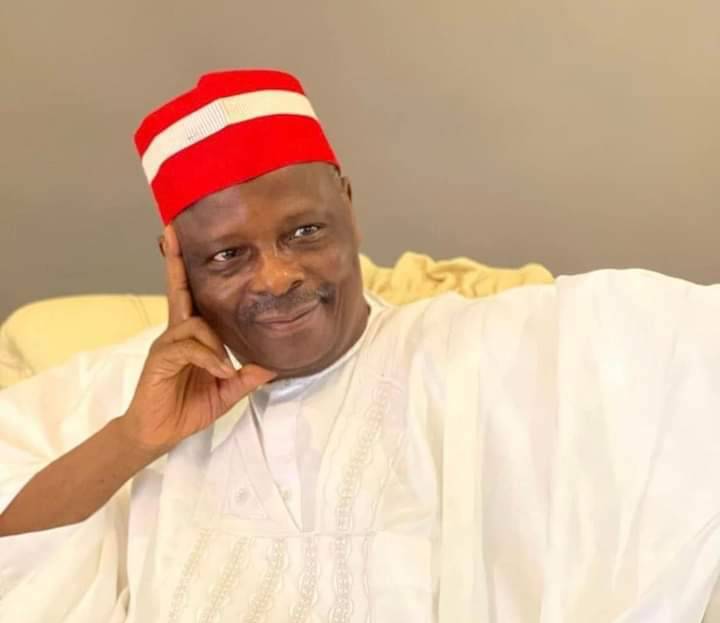
This is the Kano of the diplomatic Emir Ado Bayero and combatant Muhammad Sanusi II. Of Rabiu Kwankwaso, the red-cap-wearing jagora, and of the agreeable Ibrahim Shekarau. It is that same Kano of the incorruptible Malam Aminu Kano and Dollar-stuffing Ganduje. The cosmopolitan city of Sabo Wakilin Tauri and of the saintly Malam Ibrahim Natsugune.

If not Kano, then what other city could birth Barau Kwallon Shege, the bard of the profane, and welcome Shaykh Ibrahim Nyass, the towering saint of the mystics? Where else but Kano would you find Shaykh Nasiru Kabara- scholar and Sufi master- sharing the same cityscape with Rashida Yar Daudu and all the remembered and forgotten Magajiyoyin Karuwai? This is the Kano of yan jagaliya and attajirai, of the sacred and the profane, the pulpit and the street. The Salga and of Sanya Olu and Ibedi streets. Kano has never pretended to be a city of one truth, its greatness lies in the multitude it carries.

So when people speak carelessly about Kano, they miss the point. Kano is not a relic. It is alive. It debates itself. It holds its tensions with pride. And like Adamu Adamu said, “the story of this enigmatic city is simple and straight backward – and , in the end one can only say Kano is Kano because Kano is Kano – and that’s all; for; it is its own reason for being.”

You don’t explain Kano. You respect it.

Huzaifa Dokaji is a PhD student and teaching assistant at the Department of History, State University of New York at Sony Brook. He can be reached via huzaifa.dokaji@stonybrook.edu.

Presidency refutes allegations of rift between Tinubu, Shettima

By Uzair Adam

The Presidency has refuted claims that Vice President Kashim Shettima was recently denied access to the Presidential Villa, describing the report as completely false and misleading.

In a statement issued on Saturday in Abuja, the Senior Special Assistant to the President on Media and Communications (Office of the Vice-President), Mr. Stanley Nkwocha, condemned the report as “a deliberate and well-planned orchestration of falsehood.”

Nkwocha noted that the story was far removed from reality and could only gain traction among individuals unfamiliar with the operations of the Nigerian government.

He urged the public to disregard the misleading publication and called on the media to rely on credible sources while treating sensational claims with caution.

He decried what he described as a growing pattern of misinformation targeted at the Vice President and his office, all in an attempt to sow discord within the Presidency.

“The most recent of these fabricated stories claims that the Vice President was refused entry into the Villa by armed military units — a wild tale that reflects a combination of wishful thinking and misinformation,” Nkwocha stated.

He noted that nothing of such nature ever occurred and described the publication by obscure blogs as a desperate move to mislead the public and tarnish the image of both the President and the Vice President.

Nkwocha recalled that the Presidency had earlier this week also debunked another false report related to campaign posters of President Bola Tinubu, noting that such stories aim to cast doubt on the unity and legitimacy of the current administration.

He reaffirmed that Vice President Shettima remains focused on his duties and on supporting President Tinubu to fulfill the aspirations of Nigerians.

“Shettima does not have the luxury of time to entertain distractions born out of fiction and mischief,” he said.

Nkwocha praised Nigerians who continue to support the administration and are committed to combating the spread of fake news, reaffirming that no amount of misinformation can shake the democratic foundation upon which the current government stands.

Plateau Attacks: What is salient from the silent

By Musa Kalim Gambo

ND Shehu Kanam, a political scientist and son of the soil, offered a searing insight into Governor Caleb Mutfwang’s recent statewide broadcast in a Facebook post following the blood-soaked tragedy that befell some communities in Plateau. In dissecting the speech, he made a remark that has lingered in my conscience like smoke from an unquenched fire:

The governor made reference to previous attacks including Dogo Nahauwa and completely ignored the attack in Garga District of Kanam LGA in 2022 where over 100 lives were killed. At all times, Kanam LGA is being treated as third-class citizens in Plateau State.

And how true that is—how bitter, how brazen. One would expect that in the arithmetic of grief, every loss would count, that memory would not play favourites. But alas, even in mourning, there is politics. Even in death, there are those deemed more worthy of remembrance than others.

Let’s be clear: every act of violence against any group of people is an abomination. It should be met with absolute condemnation. Those who carry out such horrors—burning homes, hacking down the old and the young, silencing lives with the crack of a rifle—are not just criminals. They are monsters in human form, agents of chaos and cruelty, and they must be made to face the full wrath of justice, if justice still has a name.

But then we turn to the governor’s address. Perhaps the speechwriter, weary and burdened, meant no harm. Maybe it was all too much—the urgency, the pressure, the tears behind closed doors. Perhaps grief blurred the pen, and memory failed. But selective memory tells a deeper story, whether by accident or design. It speaks of a hierarchy of pain where some cries echo louder in the chambers of power while others are muffled into silence.

The omission of the Kanam massacre, where bullets and blades buried over a hundred souls in 2022, is not just an editorial oversight. It is a symbolic erasure. It is a painful reminder that suffering is not always seen in some communities in Plateau. The state does not always mourn their dead. Their pain is not always acknowledged. In the cold theatre of political memory, Kanam seems to occupy the balcony—watching, grieving, unheard.

But why? Why must Kanam and others like it constantly beg to be seen?

Maybe the intention of the governor’s speech wasn’t to compile a historical record of tragedies. Perhaps it was just a passing mention meant to stir the ghosts and frame the urgency. But even a passing mention must carry the weight of justice. When invoking past massacres, we must strive for balance, breadth, and truth. We cannot cherry-pick grief.

This is not mere sentimentality—it’s about shaping policy from a place of inclusion. When the memory of a people is consistently erased or ignored, how can they believe in the solutions presented to them?

Interestingly, embedded in the governor’s speech was a subtle but telling reference to the nature of the attacks. The subsequent ban on open grazing and cattle movement at night across the state implies that the perpetrators may be connected to patterns of pastoral violence. Whether these connections are definitive or speculative is for the intelligence community to clarify. Yet, in that policy, one senses that the governor has a working theory of the violence–it is, therefore, expected that this act of violence will be brought to a definite end very soon.

Still, even the most astute policies will fall flat if people feel excluded from the conversation—if they feel like third-class citizens in their own land.

A state cannot heal when its government speaks selectively, and a people cannot move forward when some of their dead are left behind in the narrative. To move forward, we must gather all the names, all the villages, all the cries, and lay them bare—without hierarchy or hesitation.

Governor Mutfwang must do better. Plateau deserves better. Kanam demands no pity—only remembrance, and justice.

Let this not be another footnote in the long, bitter history of the Middle Belt. Let this be a turning point—where silence gives way to truth, and truth gives rise to healing.

Musa Kalim Gambo writes from Barkinladi, Plateau State.

NNPP dismisses claims of Kwankwaso’s planned defection to APC

By Uzair Adam 

The New Nigeria People’s Party (NNPP) in Kano State has dismissed rumours suggesting that its 2023 presidential candidate, Senator Rabiu Musa Kwankwaso, is planning to defect to the All Progressives Congress (APC).

The state party chairman, Hashimu Dungurawa, made this known while reacting to growing speculation surrounding Kwankwaso’s alleged defection.

Dungurawa stressed that neither Kwankwaso nor the NNPP had any intention of joining the APC, which he described as a party that has failed Nigerians.

“Definitely, we (NNPP) don’t have that interest or intention. We see them (APC) as enemies of democracy. Look at where they’ve led the country today. People are only waiting for the day of the election to teach them a lesson,” Dungurawa stated.

He further noted the steady decline in the APC’s electoral support, saying, “In 2015, they had almost 20 million votes. In 2019, they got 16 million, and in 2023, it dropped to 8 million votes.”

This comes after the Chairman of the APC in Kano State, Abdullahi Abbas, welcomed the idea of Kwankwaso joining the APC but stated that it would be under certain conditions.

APC Kano cautions against opportunistic defections amid Kwankwaso speculations

By Uzair Adam

The All Progressives Congress (APC) in Kano State has addressed the growing speculations regarding the potential defection of Senator Rabiu Musa Kwankwaso, leader of the New Nigeria People’s Party (NNPP), to the APC.

During a press conference held at the party’s state headquarters in Kano on Friday, APC State Chairman Hon. Abdullahi Abbas acknowledged that the party, under its renewed hope agenda, is actively receiving defectors from various political parties.

However, Abbas expressed concern over what he described as strategic attempts by certain political actors, particularly those with controversial pasts, to seek refuge within the APC.

“We are fully aware that some individuals are desperate to join the APC because they have squandered their political goodwill and are looking to the APC for relevance,” Abbas stated.

He stated that joining the APC should not be seen as a means to evade accountability or to escape scrutiny from anti-corruption agencies such as the EFCC and ICPC.

“Joining the APC is not a shield from anti-corruption scrutiny or consequences,” Abbas asserted.

The party also called on prospective defectors who have previously made derogatory statements against President Bola Ahmed Tinubu and Vice President Kashim Shettima to offer public apologies as a sign of remorse and respect for future relationships.

“We unequivocally call on all those prospective defectors who have earlier made derogatory statements against our leaders to offer a public apology,” Abbas said.

Furthermore, the APC Kano chapter reaffirmed its commitment to fairness, justice, and a transparent political process, urging prospective members to align with the party’s principles rather than use it as an escape route.

This development comes amid ongoing political realignments in Kano State, with both the APC and NNPP experiencing defections.

Notably, the APC has recently received former NNPP members, including ex-NNPP National Chairman Prof. Rufa’i Alkali and other chieftains, who cited the APC’s accommodating platform as a reason for their defection.

Wike explains why he rejected Atiku’s 2023 presidential bid

By Uzair Adam

The Minister of the Federal Capital Territory, Nyesom Wike, has said his opposition to former Vice President Atiku Abubakar’s 2023 presidential ambition was driven by principle and not personal disappointment.

Wike clarified that his stance was not about being sidelined for the vice-presidential slot, as widely speculated, but rather rooted in his belief that power should have shifted to the South after President Muhammadu Buhari’s tenure.

“I wanted power rotation. After eight years of Buhari, I couldn’t support power remaining in the North. It wasn’t about whether I was picked or not—it was about principle,” he said in a recent interview.

The former Rivers State Governor added that he never considered Atiku a viable option because, according to him, the former Vice President is not reliable.

“From day one, I told my delegates that Atiku doesn’t keep to his words,” Wike said, citing past experiences.

He recounted how in 2019, Atiku, alongside Bukola Saraki and Uche Secondus, assured him of nominating individuals for key ministerial positions, but later acted contrary to the agreement.

“I was told I would nominate the attorney general and minister of petroleum. After the election, I saw the legal team formed on TV, and the person I was supposed to nominate didn’t even know when it happened. That was when I laughed and called Saraki,” Wike explained.

He maintained that he never trusted Atiku’s promises and never expected to be selected as his running mate.

Wike’s remarks add another layer to the internal wrangling that plagued the Peoples Democratic Party (PDP) in the lead-up to the 2023 elections.

Professor Kurfi loses father

By Uzair Adam

Professor Mainasara Yakubu Kurfi, a former Head of the Department of Mass Communication at Bayero University, Kano, and a current lecturer at the institution, has announced the passing of his father.

The Daily Reality reports that he shared the news via a post on his Facebook page, revealing that his father died on Thursday night.

Professor Kurfi added that the funeral prayer was scheduled for Friday morning in Kurfi town, Katsina State.

“Inna lillahi wa Inna Ilayhi raji’un. With a heavy heart, I share the news that my beloved father passed away on Thursday night,” the professor wrote, while also praying for Allah’s mercy and forgiveness upon his father’s soul.