Month: April 2025

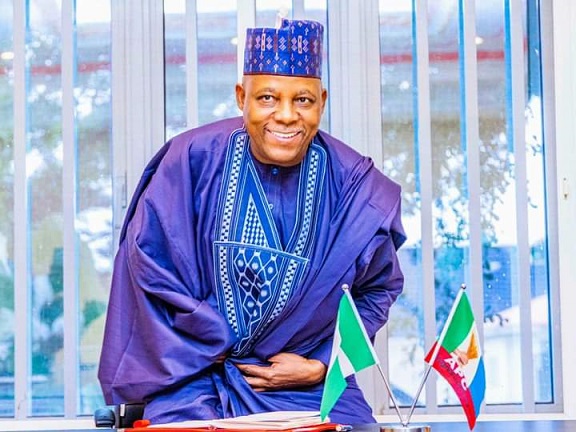
Rising through the storm: Kashim Shettima triumphs over trials

By Lawan Bukar Maigana 

From the ashes of battle-weary Borno to the powerful corridors of Aso Rock, Vice President Kashim Shettima has consistently defied the odds. His journey has never been one of privilege but of perseverance, grit, and unswerving faith in destiny.

As governor, he governed Borno State at a time when Boko Haram unleashed one of the worst humanitarian crises in Nigeria’s history. While others fled, Shettima stayed. He took bold, calculated risks to keep his people safe, rebuild destroyed communities, and stabilise a state under siege. Many thought Borno would collapse—yet under Shettima’s leadership, it stood.

Transitioning to the Senate, Shettima faced different types of warfare—political manoeuvring, underestimation, and party intrigues. Yet again, he rose above, earning his place as a voice of reason and strength within the APC, known for his eloquence, intellect, and firm grasp of national issues.

Today, as Nigeria’s Vice President, Shettima faces yet another challenge—this time from within. A coordinated campaign has emerged, allegedly pushed by political actors with ambitions for 2027, aiming to sow discord between him and President Bola Ahmed Tinubu. Fake news merchants have been deployed to twist narratives and fabricate rifts. But the facts remain stronger than fiction.

President Tinubu’s trust in Shettima runs deeper than many understand. Tinubu chose Shettima as his running mate—without pressure, without external consultation, and certainly without seeking endorsement from even the most powerful figures like former President Muhammadu Buhari. His decision was based on conviction, not compromise.

Each time the media speculates on a rift, President Tinubu swiftly dispels it, reiterating his confidence and respect for Shettima. This alliance is built on shared vision and mutual respect, not convenience.

Kashim Shettima has emerged stronger, wiser, and more determined through every fire he has walked. History shows us that adversity sharpens his focus. This latest round of animosity, though loud, is fleeting. Just like before, he will rise—not only to prove his critics wrong, but to reaffirm the values of loyalty, resilience, and visionary leadership.

The noise will fade in the end, but Shettima’s legacy—like his rise—will endure.

Lawan Bukar Maigana is an award-winning journalist and humanitarian who can be reached at: lawanbukarmaigana@gmail.com.

President Tinubu returns to Nigeria after 19-day private trip to Europe

By Abdullahi Mukhtar Algasgaini

President Bola Ahmed Tinubu returned to Nigeria on Monday night after a 19-day private visit to Europe, where he stayed in Paris and London.

Initially, the presidency stated that the trip would last two weeks, but the extended stay raised concerns among Nigerians.

Upon his arrival at the Nnamdi Azikiwe International Airport in Abuja, President Tinubu was welcomed by top government officials, including Secretary to the Government of the Federation George Akume, Chief of Staff Femi Gbajabiamila, National Security Adviser Nuhu Ribadu, FCT Minister Nyesom Wike, and Defence Minister Bello Matawalle.

The president had traveled to Paris on April 2, 2025, before proceeding to London, where he continued handling official duties remotely.

However, his absence drew criticism from opposition leaders, including Atiku Abubakar of the PDP and Peter Obi of the Labour Party, who argued that the president should not have left the country amid worsening security challenges.

The Presidency dismissed rumors that Tinubu traveled for medical reasons, insisting it was a private visit.

Grand Imam of al-Azhar mourns Pope Francis, hails his legacy of peace

By Abdullahi Mukhtar Algasgaini

Sheikh Ahmed El-Tayyeb, the Grand Imam of Al-Azhar, expressed profound grief on Monday over the passing of Pope Francis, honoring him as a “distinguished humanitarian and dear friend.”

In a heartfelt Facebook post, El-Tayyeb praised the late pontiff for his lifelong dedication to serving humanity, advocating for refugees, the oppressed, and marginalized communities.

He also lauded Pope Francis’s efforts in promoting interfaith dialogue and global peace.

“The world has lost a towering symbol of compassion,” El-Tayyeb wrote, recalling the Pope’s steadfast support for Palestine and his condemnation of Islamophobia.

He highlighted the historic 2019 “Document on Human Fraternity,” co-signed by the two religious leaders, as a testament to their shared vision.

Al-Azhar acknowledged the strengthened ties between the Vatican and the Islamic institution under Pope Francis’s leadership, citing his 2017 visit to Al-Azhar’s peace conference as pivotal.

The Grand Imam extended condolences to Catholics worldwide and the Pope’s family, praying for solace during this difficult time.

No women, no peace: A call for transformation in conflict-prone Northern Nigeria

By Hauwa Mohammed Sani PhD

The phrase “No women, no peace” has become a rallying cry for those who recognise the critical role of women in peacebuilding. Yet, in conflict-prone regions like rural Northern Nigeria, this vision often feels like a distant dream. During my recent visit to communities of displaced women, coinciding with the Ramadan period in March 2025, I witnessed heartbreaking realities. Despite the challenges, I remain convinced that positive change is possible and that women hold the key to it.

My first heartbreak came from witnessing the deplorable conditions in which these women live; hunger, poverty, ignorance, and social exclusion were evident in their lives. 

The second heartbreak occurred when a child fetching water fell into a deep, uncovered well. I have never felt a more profound sense of helplessness. 

Although these women may not be able to read, write, or comprehend my work, this article represents my humble contribution to the society I belong to, with the hope that it will reach the ears and eyes of those it may concern.

As a researcher, I am supported by the Science for Africa (SFA) Foundation in Nairobi, Kenya, and the Carnegie Corporation through the Preparing Outstanding Social Science Investigators to Benefit Lives and Environments in Africa initiative (POSSIBLE Africa) Postdoctoral Fellowship. My research aims to go beyond portraying women as victims to spotlight their potential as active peacebuilders in Northern Nigeria.

The statistics are staggering: In the conflict-prone zones of Northern Nigeria, women and girls suffer disproportionately from conflict, displacement, and violence. They flee their homes, lose their livelihoods, and often face trauma that leaves lasting scars. During my visit, I saw this pain firsthand. The tears I shed were more than emotional; they were a testament to the suffering I witnessed.

It is pathetic to recount that these women’s expectations have shrunk to a single plea: “May the government come to our aid.” When I inquired about their own efforts toward peace, they shared that they engage in regular prayers and fasting. Yet, they feel that their tormentors are always one step ahead because they are often accompanied by clerics. Still, they seek spiritual protection and divine intervention, clinging to faith as their last refuge. 

Some even recounted instances where women, in acts of desperation and courage, pretended to be mentally unstable or “mad”, hoping that such displays might scare off their oppressors, which in many instances worked.

This mindset illustrates the psychological toll of prolonged violence and displacement. Over time, a person’s sense of agency may erode. Many begin to see themselves solely as victims, dependent on external rescue.

But women are not just victims of conflict. They are also agents of change. In some rural Northern Nigeria, women are organising themselves into cooperatives, advocating for their rights, and supporting one another to rebuild their communities and foster peace.

How can we support these women in their quest for peace and development?

Amplify their voices: Provide platforms for storytelling, problem-sharing, and solution-finding, for example, through theatre for development, etc.

Build their capacity: Offer education, psychosocial support, and economic empowerment tools. Address root causes: Confront the structural issues, poverty, injustice, and exclusion that feed cycles of violence.

Healing Collective Traumas: From Erasure to Memory

Violent conflict does not just destroy homes; it scars communities. Healing collective trauma involves:

1. Acknowledgement and Recognition: Validating and recognising the suffering of affected communities.

2. Truth-telling and Documentation: Recording stories and preserving collective memory.

3. Community-Based Initiatives: Promoting healing through solidarity groups and cultural activities.

4. Education and Awareness: Raising understanding to encourage empathy and reconciliation.

Conclusion

“No women, no peace” is more than a slogan. It is a truth we must act upon. Women are essential to peacebuilding, particularly in conflict-prone regions like rural Northern Nigeria. By recognising their voices, supporting their efforts, and addressing the systemic roots of violence, we can build a future where peace is not just possible but sustainable.

Hauwa Mohammed Sani, PhD, is the Deputy Director of the Institute for Development, Research &Training at Ahmadu Bello University, Zaria. She can be reached at hauwamohammedsanim@gmail.com.

Tinubu’s assault on Rivers and Democracy: which state will be next?

Abdulhamid Abdullahi Aliyu

With a single stroke, President Bola Ahmed Tinubu has upended Nigeria’s constitutional order, suspending Rivers State Governor Siminalayi Fubara, his deputy, and the state legislature under the guise of a state of emergency.

This unprecedented and legally questionable move raises urgent questions: Has Nigeria’s democracy just been hijacked? If a sitting president can summarily remove elected state officials without due process, what stops Abuja from toppling any governor who falls out of favor?

The political crisis in Rivers has been simmering for months, with intense factional battles within the People’s Democratic Party (PDP) leading to threats of impeachment against the governor. But was the situation truly dire enough to warrant a presidential intervention of this magnitude?

Under Section 305 of the 1999 Constitution, a state of emergency can only be declared in cases of war, imminent danger of invasion, total breakdown of public order, or natural disasters. Even then, such a declaration requires National Assembly approval.

More importantly, the Constitution does not grant the President the power to suspend a sitting governor, deputy governor, or members of the state legislature.

By single-handedly ousting a duly elected state government and replacing it with a military figure, Tinubu has overstepped his constitutional bounds, effectively staging what many legal experts are calling a “constitutional coup.”

If this move is allowed to stand, it raises a troubling question: which state is next? Today, it is Rivers; tomorrow, it could be any other state where the President or ruling party faces political opposition. The implications are chilling—no governor, regardless of electoral mandate, would be safe from federal interference.

Would this have happened in Lagos or Kano? Would a northern state be subjected to such federal strong-arming? The answer is clear. Rivers, an oil-rich and politically volatile state, is an attractive target.

But what happens when this dangerous game of executive overreach extends beyond Rivers? If Tinubu can remove Fubara this easily, then Nigeria’s entire federal structure is under threat.

Beyond the political chaos, a more pressing question emerges: Is this really about governance, or is it about controlling Rivers’ oil wealth? History has shown the federal government’s keen interest in oil-producing states—from the militarization of the Niger Delta under past administrations to the strategic placement of federal loyalists in key oil-rich states.

The pattern is all too familiar. Could this move be less about political stability and more about tightening Abuja’s grip on Rivers’ vast economic resources?

With the Constitution clearly violated, all eyes now turn to the judiciary. Will the Supreme Court rise to the occasion and declare this move unconstitutional? Or will the courts bow to political pressure, allowing a dangerous precedent to take root?

The judiciary must recognize that this is not just about Rivers—it is about safeguarding Nigeria’s fragile democracy from the creeping shadows of authoritarianism. If this unconstitutional takeover is not reversed, no state governor in Nigeria will ever govern with full confidence in their electoral mandate again.

Since the return to civil rule in 1999, Governor Siminalayi Fubara is now the third sitting governor to be suspended by a Nigerian President under a democratic setting. In 2004, former President Olusegun Obasanjo suspended Plateau State Governor Joshua Dariye and the State Assembly over ethno-religious violence in Jos and other parts of the state, appointing Maj. Gen. Chris Alli (rtd.) to take charge.

Two years later, Obasanjo removed Ekiti State Governor Ayo Fayose and his deputy over political crises and impeachment controversies, installing Brig. Gen. Tunji Olurin (rtd.) as the new head of the state.

In 2013, President Goodluck Jonathan declared a state of emergency in Borno, Yobe, and Adamawa States in response to Boko Haram’s escalating insurgency. However, unlike his predecessors, Jonathan did not suspend the sitting governors; instead, he allowed state governments to continue operating alongside increased federal military intervention.

Now, in 2025, Tinubu has declared a state of emergency in Rivers State, citing political crisis and governance breakdown. But his move goes even further—suspending Governor Fubara, his deputy, and all members of the House of Assembly for six months.

While past interventions were carried out under Section 305 of the 1999 Constitution, the legality and necessity of removing elected officials have always been controversial. The Constitution outlines a clear procedure for declaring a state of emergency: the President must issue a proclamation, publish it in the official Gazette, and submit it to the National Assembly for approval.

Yet, in Rivers, Tinubu has acted unilaterally, preempting legislative approval and exceeding constitutional limits by removing elected officials.

As these events unfold, one thing is certain—2027 is shaping up to be a defining moment for Nigeria’s democracy. Will the courts uphold the rule of law, or will this be remembered as the moment Nigeria’s democracy took a dangerous turn?

The Nigerian people, civil society, and democratic institutions must resist this unconstitutional move by all legitimate means. If left unchecked, this will mark the moment when the line between democracy and dictatorship in Nigeria blurred beyond recognition.

Abdulhamid Abdullahi Aliyu- an NYSC serving corps member, writes from Center for Crisis Communication (CCC) in Abuja.
Easter wellness tips: eat light, move more, stress less

By Maimuna Aliyu Katuka

Easter is a season of joy, reflection, and renewal. While it is often associated with festive meals, it is also an opportunity to embrace healthier habits without taking away from the fun and spirit of the celebration.

As the world becomes increasingly health-conscious, we can find creative ways to enjoy Easter while taking care of our physical and mental well-being.

By making thoughtful choices, we can turn this season into a meaningful and health-positive experience for ourselves, our families, and our communities.

Easter, which marks the resurrection of Jesus Christ, according to the Christians, is one of the most significant holidays in Christianity. For many, it symbolizes the triumph of life over death—a powerful reminder of hope, rebirth, and new beginnings.

Even non-Christians often take advantage of the holiday to travel or spend time with loved ones, making it a perfect occasion to reflect on personal wellness and communal values.

Whether you are planning a large family gathering or a quiet weekend retreat, here are some practical tips to help you celebrate Easter in a healthy and fulfilling way:

Healthy Eating and Drinking Habits

1. Balance indulgence with healthy choices:
Enjoy traditional Easter treats in moderation. Complement your meals with fruits, vegetables, and whole grains to maintain a balanced diet.

2. Stay hydrated:
Drink plenty of water throughout the day, especially if you are consuming rich or salty foods.

3. Choose healthier alternatives:
Opt for baked or grilled meats instead of fried ones. Dark chocolate or fruit-based desserts can also be tasty and nutritious options.

Staying Physically Active

1. Take a walk or hike:
Incorporate light physical activities like walking, hiking, or biking into your day to stay energized and connected with nature.

2. Plan outdoor games:
Organize family games or community sports that encourage movement and bonding while having fun.

Supporting Mental Well-being

1. Practice mindfulness:
Take time to relax, meditate, or simply enjoy the presence of family and friends. Mindfulness can help ease stress and promote gratitude.

2. Set boundaries:
Prioritize self-care by setting healthy limits on social and work commitments. Maintain a balance that supports your mental peace.

Additional Smart Tips

1. Plan meals ahead:
Prepare healthy dishes and snacks in advance to reduce the temptation of unhealthy choices.

2. Be mindful of portion sizes:
Enjoy your favorite dishes without overindulging by keeping portions in check.

3. Educate the next generation:
Teach children the importance of healthy living. Turn Easter traditions into learning moments about good nutrition and staying active.

Last Line:
As we prepare to celebrate Easter, let us take this opportunity to embrace a lifestyle that reflects the true spirit of the season—renewal, joy, and wellness.

By making simple, conscious changes, we can foster healthier habits that last beyond the holiday.

So, gather your loved ones, get creative with your traditions, and make this Easter not just memorable—but meaningfully healthy.

Farida Musa Kalla (FMK Duniya Ce): A role model for Hausa women

By Salihi Adamu Takai

Farida Musa Kalla(FMK) should be the exact definition of the Hausa woman in Kano, not as some of themmischievously intend to misrepresent to the world, being a hope of a lavish and luxurious life without a purpose in their matrimonial home. 

FMK, a woman who married her husband in her early years during her university days, uses her courage and ambition to define how women should be. She has steadfastly retained her femininity, contrasting with how others view them. 

Women are not a liability and shouldn’t be seen as such, neither by how “feminists” position them nor through the extremism of “masculinists.”

I was on Facebook, browsing my timelines when I came across a video on the DCL Hausa Page featuring an interview with Farida Musa Kalla, the CEO of FMK Nigerian Ltd. The program is titled “Sirrin Ɗaukaka,” and it invitesindividuals whose names trend in the media. 

In the interview, FMK disclosed how she started the business with a bit of capital of 30k in her matrimonial home. She used the market tactics she’s known for to advertise her business, recording videos for the materials she sells. This was the first time her name started coming to the media—Facebook, X, and YouTube.

As she improved the business, her husband advised her to put 600k in the business, given to her by her mother, to buy a car. According to her, this 600k expanded the business and blessed it in every second. And today she runs the business with hundreds of millions. 

As FMK’s business improves and gains recognition in the market, she poses a threat to prominent marketers in Kano, such as Mudassir & Brothers. They have started to adopt her market strategies — using videos to unveil their faces as the CEOS of their company, as she has been doing.

Interestingly, FMK has not been using immoral activities just to advertise her business, but rather strategies that are not questionable for a married woman. 

FMK should be a challenge to all the women in Hausa land who think that they’re a liability to their husbands, as they “belong to the kitchen,” as propagated by the immediate former President of the Federal Republic of Nigeria, Muhammadu Buhari.

Salihi Adamu Takai wrote via salihiadamu5555@gmail.com.

“Stop playing God, Nigeria is too delicate” – Tunde Bakare warns Tinubu

By Abdullahi Mukhtar Algasgaini

Pastor Tunde Bakare, a former presidential aspirant of the All Progressives Congress (APC), has raised concerns over Nigeria’s current state after accusing President Bola Tinubu of overstepping democratic boundaries and undermining the legislature.

Speaking during his State of the Nation address at the Citadel Global Community Church (CGCC) in Lagos on Sunday, Bakare criticized Tinubu’s leadership, stating that Nigeria is heading in the wrong direction.

“Mr. President, Nigeria is too delicate for this kind of politics,” Bakare said. “If this state capture was what you meant by ’emii lo kan,’ it is an anti-climax that can only be counterproductive in the end.”

The cleric condemned the National Assembly for allegedly acting as an extension of the executive, citing recent controversial actions, including the approval of a state of emergency in Rivers State and the suspension of Senator Natasha Akpoti-Uduaghan.

“This National Assembly has proven to be the most spineless in our recent history, rubber-stamping the whims of the presidency,” Bakare declared.

He accused lawmakers of violating the principle of separation of powers, turning the legislature into “the 48th member of the president’s cabinet.”

Bakare urged Tinubu to reflect on the dangers of unchecked power, warning, “No man is wise enough nor good enough to be trusted with unlimited power. Please, stop playing God.”

His remarks come amid growing tensions over governance and legislative independence under the Tinubu administration.

Nigerian striker Osimhen reportedly agrees personal terms with Man United

By Sabiu Abdullahi

Super Eagles forward, Victor Osimhen, has reportedly reached a personal agreement with Manchester United ahead of a possible summer transfer, according to Turkish journalist Serdar Çelikler.

“Victor Osimhen has reached an agreement with Manchester United. But there is also the club side of the matter,” Çelikler said while speaking on a podcast.

Osimhen, who is currently on loan at Turkish club Galatasaray, has been in remarkable form this season.

He has scored 29 goals and made six assists in 34 appearances across all competitions.

Manchester United are believed to be prioritizing the signing of a top striker, especially with Rasmus Hojlund’s underwhelming performance in the current campaign.

The Danish striker has only scored three Premier League goals, and new manager Ruben Amorim is reportedly keen to offload him at the end of the season.

Although Osimhen is said to have agreed to personal terms with United, negotiations between the English club and Napoli regarding a transfer fee are still underway.

Osimhen’s release clause is reportedly set at €75 million (£63 million), but there are suggestions that Napoli may lower the asking price for United.

Juventus, another long-time admirer of the Nigerian star, remain interested.

However, Napoli are unwilling to strengthen a direct domestic rival, which could give United the advantage in securing his signature.

Reports also indicate that Osimhen is eager to play in the UEFA Champions League next season, making United’s qualification crucial to finalizing the deal.

In case the move fails, United have other options in mind, including Liam Delap and Jean-Philippe Mateta.

Earlier, Turkish journalist Ali Naci Küçük revealed that Manchester United had offered Osimhen a weekly wage of £660,000 before tax, which would make him the highest-paid player at the club.

“There is a high possibility that Osimhen will say goodbye (to Galatasaray), but there is no decision made at the moment,” Küçük said. “Juventus and Manchester United clearly want Osimhen. Juventus and Manchester’s offer is a net €20m (£660,000-a-week).”Although Galatasaray would like to keep Osimhen, the club may not be able to meet his financial expectations. He is said to have demanded €15 million in wages from the Turkish side.

“Osimhen’s words do not mean that he will leave,” Galatasaray’s vice-president Ibrahim Hatipoglu said recently.

“He said that Galatasaray will always be in his heart even if he leaves in the worst-case scenario, but he did not say that he would leave. We want him to stay with us.”

When asked about his future, Osimhen responded, “There are always rumours about me, of course. But I prefer to live in the moment. I am enjoying myself right now. I am enjoying both the club and my life here.”

Osimhen joined Galatasaray on loan at the beginning of the season. The club is reportedly paying €6 million of his €10–11 million net annual salary, while Napoli covers the remainder.

Kano to launch statewide data collection Initiative

By Muhammad Sulaiman Abdullahi

The Kano State Government is set to begin engaging volunteer ad-hoc data collectors across the state’s 484 wards as part of efforts to establish a comprehensive multisectoral data bank and dashboard. The initiative, which is nearing 70 per centcompletion, has been approved by the Executive Governor, Alhaji Abba Kabir Yusuf.

According to the State Statistician-General, Dr. Aliyu Isa Aliyu, the volunteers, who must be residents of their respective wards, will be trained by the State Bureau of Statistics on the use of digital data collection tools. 

Dr Aliyu added that their responsibilities will include collecting demographic data such as births, deaths, maternal and child mortality rates from ward head registers and graveyards, as well as statistics on education, healthcare, security, and access to water and electricity.

Dr. Aliyu emphasised the importance of collaboration between volunteers, ward heads, and community stakeholders to collect accurate and timely data. He added that school teachers and health workers are strongly encouraged to apply once the application portal is made public.

“This is a collective responsibility and an opportunity for all of us who are committed to supporting our state,” he said. “Together, we shall make Kano great.”