Month: March 2025

Like soldiers, like trees

By Abubakar Idris Misau

According to a study published 10 years ago in the journal Nature (Ehrenberg, 2015), our planet is home to a staggering 3.04 trillion trees. Now, try searching for the article titled “Global forest survey finds trillions of trees”; come back with a different result and refer to me as “Mr. Sociologist” – as Reno Omokri would say it, please. 

When writing in the realm of science and research, one cannot simply state things. Often, figures are necessary, and it is not enough to just present them; one must also explain where and how they were obtained, detailing their validity. This is the academic way. This is the scientific way. This is not the sociologist’s way. And definitely not the way of “political science.“ 

With “political science” in quotes, let me share a short story: While at the University of Maiduguri (UNIMAID), there was a legend involving the renowned mathematics guru, Professor M.Y. Balla. They said he remarked, “While mathematics is the simplest thing to understand, the most difficult concept ever conceived is the one that led to the naming of a department or discipline as political science.” It’s quite a legend!

Deduce, meanwhile, that science is proof, not talk. Scientific research writing can tire a person before they reach the end of the first sentence – only for one to finish the terrible journey and have people saying, “wetin this one talk nii?”

In other words, a scientific work is like a qualified doctor’s handwritten prescription: terrible and difficult to read, yet easy to understand by the right audience, such as a pharmacist, when it comes to a medical doctor’s handwritten advice.

Hence, with this message targeting the general public, it remains so – as it is. The scientific way isn’t for us.

Let’s get to work:

As we navigate the complexities of our planet’s ecosystem, one ironic truth holds: the most formidable soldiers of our planet are not those wielding guns or bombs, but rather the ones with leaves, roots, and trunks. Trees, the often-overlooked sentinels of our environment, are the true warriors of planet Earth.

Contrary to what some of us mistakenly believe, these arboreal giants are not merely passive observers; they are actively engaged in a continuous struggle to protect our planet’s fragile balance. 

From producing oxygen to filtering pollutants and supporting biodiversity, trees are the frontline defenders against the ravages of climate change. 

But if we think that’s all they do, then we cannot be more wrong. In truth, as this little note shows, trees are more than just ecological warriors; they are also master strategists. 

In an academic context and hopefully for the last time, a study entitled “Net Transfer of Carbon Between Trees by Ectomycorrhizal Fungi in the Field” demonstrates that trees have evolved complex communication networks, utilizing fungal hyphae to share nutrients and warn of potential threats (Simard, 1997). 

This symbiotic relationship eerily resembles the tactics used by human militaries, where intelligence sharing and coordination are essential to success. Technical? Sorry about that. That’s the best I can do! Keep the tempo up.

The point is that trees have developed an impressive array of defense mechanisms to counter the numerous threats they face. From the chemical defenses used by the majestic baobab tree (Adansonia digitata) to the physical barriers created by the resilient redwood (Sequoia sempervirens), trees have evolved a remarkable range of strategies to ensure their survival.

And here comes the shocking open secret: despite their critical role in maintaining planetary balance, trees are facing unprecedented threats. Anthropogenic activities are taking a devastating toll on global tree populations, including industrialization, farming, housing, and shambolic acts. 

The game of numbers: We cut down 41 million trees each day! That amounts to 15 billion trees annually. This means we have only 200 years to eliminate the remaining 3.04 trillion standing soldiers. 

Mind you, it isn’t as if we are making any real effort to reverse the dangerous trend. Currently, we plant less than 2 billion trees a year (about 5 million each day).

To maintain our current situation – without increasing our numbers, which we desperately need to avoid – we must plant 36 million more trees daily, totaling 13 billion trees needed to close the gap between what we destroy and what we establish each year.

We are, therefore, through this trade-up, waging a war against our own planet, with trees as the immediate casualties.

However, we need to understand that trees are not just individual organisms; they are part of a larger web of life. They are some of the most important elements of this web. Soldiers. Custodians. Protectors of life itself. 

Therefore, we must acknowledge the vital role trees play in protecting our planet and take steps to preserve them.

The future of our planet relies on the ongoing vigilance of these unsung heroes – the arboreal army standing tall, steadfast, and tireless in their defense of our world.

Let’s stop the starvation and attacking our saviors, please!

The Good News: We are approximately 8 billion people. Planting two trees per person means planting 16 billion trees. This results in a surplus of about one billion trees compared to the 15 billion stands we destroy each year. The ball is in our court.

Happy International Day of Forests, 2025.

Abubakar Idris, a Forestry and Wildlife graduate from the University of Maiduguri, writes from Katsina. Contact: abubakaridrismisau@gmail.com. 

Sustain Ramadan virtues, support less privileged – Governor Yusuf

By Uzair Adam 

The Governor of Kano State, Alhaji Abba Kabir Yusuf, has extended warm Eid-el-Fitr greetings to Muslims in Kano and beyond, urging them to uphold the virtues of patience, compassion, and unity cultivated during Ramadan.  

In a statement issued by his spokesperson, Sunusi Bature Dawakin Tofa, on Sunday, the governor emphasized the need to sustain the spirit of sacrifice and selflessness, encouraging citizens to support the less privileged and promote harmony in their communities.  

Governor Yusuf reaffirmed his administration’s commitment to improving living conditions by ensuring economic growth, social welfare, and infrastructural development. 

He also stressed the importance of peaceful coexistence among different ethnic and religious groups, describing unity as Kano’s greatest strength.  

Addressing the recent killing of Kano indigenes in Edo State, the governor expressed deep sorrow over the tragedy and vowed that his government would not rest until the perpetrators were identified and brought to justice.  

He urged citizens to use the festive period to strengthen family bonds, promote reconciliation, and foster peace. 

He also called on them to emulate the exemplary character of Prophet Muhammad (Peace Be Upon Him) by upholding justice, honesty, and compassion in all dealings.

Sanusi cautions Kano youths against retaliatory attacks over Edo killings 

By Uzair Adam 

The 16th Emir of Kano, Muhammadu Sanusi II, has urged youths in the state to refrain from retaliatory attacks following the killing of 16 northern travelers in Edo State.  

Speaking after leading the two-rakat Eid-el-Fitr prayer at the Kofar Mata Eid ground, the former Governor of the Central Bank of Nigeria (CBN) warned against taking the law into their own hands, emphasizing the need for peace and order.  

“We received reports that some youths in certain areas are planning to carry out reprisal attacks after the Eid prayers. We strongly urge them not to do so,” Sanusi stated.  

He called on authorities to act swiftly in ensuring justice for the victims, stressing that an investigation should be conducted to bring the perpetrators to justice.  

Similarly, the 15th Emir of Kano, Aminu Ado Bayero, also appealed for prompt action, urging relevant authorities to ensure that those responsible for the killings are held accountable.  

Meanwhile, Kano State Governor Abba Yusuf, alongside his deputy, Comrade Aminu Abdussalam Gwarzo, and other government officials, joined worshippers in observing the Eid prayers.  

Sanusi further reminded the Muslim faithful to uphold the lessons of Ramadan and avoid returning to acts of wrongdoing.

Breaking: New moon of Shawwal sighted in Nigeria—Sultan

By Uzair Adam

The Sultan of Sokoto, Muhammad Sa’ad Abubakar III, has announced the sighting of the new moon of Shawwal in Nigeria, signalling the end of Ramadan.

The Daily Reality reports that Sultan announced this shortly in a broadcast in Sokoto, on Saturday.

He was qouted to have said,”Today 29th day of March,2025 equivalent to 29th day of Ramadan 1446AH.

“Today 29th day of Ramadan, we received reports from various Muslims leaders and organisations, such as Shehu of Borno, Emir of Dutse, Emir of Argungun, Emir of Daura and also the leadership of JIBWIS in Jos of the sighting of the new moon 1446AH, therefore tomorrow, 30th March, makes it 1st of Shawwal 1446AH and also the Eid-el-Fitr,” he added.

Police falsify reports of Kano killings

By Anwar Usman

The Kano State Police Command has dismissed a false social media reports claiming an attack on an 18-seater passenger bus in Kano.

This was revealed in a statement issued by the Command’s spokesperson, SP Abdullahi Kiyawa, in Kano on Saturday.

Kiyawa said this report was entirely false and misleading.

“The police command reaffirms its commitment to maintaining law and order, ensuring the safety and security of all residents, and promoting harmony among diverse communities.

“An investigation is currently underway to uncover the source of this fake news, and those responsible will face consequences for their actions.

“The command urges the public to disregard this fake news and refrain from spreading unverified information that can cause harm, panic and unrest in society,” he stated.

What Nigeria can learn from global best practices in fiscal transparency and public integrity

By Muhammad Ahmad Iliyasu

Nigeria’s governance and fiscal challenges are undermined by persistent corruption, inefficiencies in public finance, and a lack of transparency, all of which have stymied economic progress, among other issues. According to the 2024 Mo Ibrahim Index on African Governance, Nigeria ranked 33rd out of 53 African nations with a score of 45.7 out of 100, reflecting a decline of 1.4 in its governance score between 2014 and 2023. 

The ranking (above) is further emphasized by low scores across critical categories such as Security & Rule of Law (39.7), Participation, Rights & Inclusion (47.9), Foundations for Economic Opportunity (48.6), and Human Development (46.4). While these challenges are substantial, examples worldwide illustrate the transformative potential of fiscal transparency and public integrity when supported by robust institutions and data-driven strategies. Nigeria can identify actionable solutions to address its governance deficits by examining how other countries have succeeded in these areas.

One of the most striking examples of fiscal transparency comes from Estonia, which has emerged as a global leader in e-government. Estonia has digitized its public financial management systems and introduced blockchain technology to monitor public procurement and spending. According to the World Bank, these innovations have resulted in a 30% increase in administrative efficiency and a 25% decrease in opportunities for corruption. 

In comparison, Nigeria’s procurement processes remain largely opaque, frequently marred by corruption scandals involving inflated contracts and the misappropriation of public funds. By 2023, procurement-related corruption cost Nigeria an estimated 30% of its annual budget. Estonia’s success showcases that technology when applied systematically, can be a game-changer in ensuring fiscal accountability.

Participatory budgeting, which originated in Porto Alegre, Brazil, is another area from which Nigeria could draw valuable lessons. By directly involving citizens in decisions regarding local government budgets, Porto Alegre has boosted investment in vital services such as healthcare and education by 20%, specifically targeting underserved communities. This participatory approach has not only enhanced public service delivery but also built trust in government institutions. 

In Nigeria, public participation in budgeting remains minimal, with the process often limited to elite stakeholders. A 2021 report by BudgIT revealed that over 70% of Nigerians feel disconnected from how public funds are allocated. A more citizen-centric budgeting process would bridge this gap, fostering trust and ensuring that budgetary decisions reflect public priorities.

Anti-corruption frameworks in countries such as Singapore and Botswana highlight the significance of institutional independence and efficiency. Singapore’s Corrupt Practices Investigation Bureau (CPIB), established in 1952, functions independently from other government agencies and has played a crucial role in reducing corruption to negligible levels. This success is evident in Singapore’s top-tier ranking on Transparency International’s Corruption Perceptions Index (CPI), where it achieved a score of 85 out of 100 in 2023. In contrast, Nigeria scored 24 out of 100, ranking 150th among 180 countries. The difference stems not only from institutional strength but also from the enforcement of laws. While Nigeria’s Economic and Financial Crimes Commission (EFCC) has made strides, its efforts are frequently compromised by political interference, inadequate resources, and inconsistent prosecution of high-profile cases.

Fiscal discipline is another area where Nigeria lags behind global standards. Sweden and Germany, for instance, have adopted fiscal rules that ensure economic stability. Sweden’s balanced budget rule requires government expenditures not to exceed revenues over an economic cycle, while Germany’s “debt brake” caps structural deficits at 0.35% of GDP. These policies have allowed both nations to maintain sustainable debt levels—38% and 60% of GDP, respectively, as of 2022. In contrast, Nigeria’s public debt has risen sharply, reaching 40% of GDP in 2023, with debt servicing consuming over 80% of government revenues. Without strict fiscal rules, Nigeria risks entering a debt trap that could hinder long-term economic growth.

Open data initiatives also illustrate the potential for transparency. The United Kingdom’s Open Data Portal provides public access to over 40,000 datasets on government operations, enabling citizens and civil society to monitor public spending effectively. This transparency has contributed to a 15% increase in public trust in government institutions, as reported in a 2020 World Bank study. Meanwhile, Nigeria’s efforts at transparency, such as the Nigeria Open Contracting Portal (NOCOPO), have yet to achieve comparable results. A lack of comprehensive data and limited public awareness have restricted its impact, with Transparency International noting that only 10% of procurement data is consistently published.

In this context, the Center for Fiscal Transparency and Public Integrity (CeFTIP) plays a crucial role in Nigeria’s quest for better governance. Through its annual Transparency and Integrity Index, CeFTIP evaluates government ministries, departments, and agencies (MDAs) on their adherence to standards of transparency and accountability. Its reports reveal systemic gaps in compliance with fiscal transparency norms and provide recommendations to bridge these gaps. Additionally, CeFTIP organizes sensitization campaigns to raise awareness about the importance of fiscal openness, while its capacity-building programs train public officials in best practices for financial management and anti-corruption measures. These efforts are vital in establishing the foundational infrastructure for a culture of accountability in Nigeria.

Whistleblower protection is another area where Nigeria falls short. In New Zealand and Canada, robust legal frameworks safeguard whistleblowers from retaliation, resulting in a significant increase in reported cases of corruption and misconduct. According to the International Whistleblower Protection Network, countries with effective protections detect 30% more corruption cases. In Nigeria, the whistleblower policy introduced in 2016 initially led to the recovery of over $500 million but has since stagnated due to weak legal protections and a lack of institutional support.

South Africa offers valuable lessons in civil society collaboration. Organizations such as the Public Service Accountability Monitor (PSAM) have successfully partnered with government entities to track public spending, resulting in a 25% improvement in service delivery outcomes, according to the World Bank. In Nigeria, civil society organizations like CeFTIP, BudgIT, and Connected Development have made strides in promoting accountability but often face resistance from government agencies. Strengthening these partnerships could amplify their impact and ensure more transparent governance.

Recommendations

For Nigeria to replicate these successes, it must prioritize institutional reforms like DOGE and adopt data-driven strategies tailored to its context. Establishing a robust digital public finance system akin to Estonia’s would enhance transparency and reduce corruption. Adopting participatory budgeting processes, starting at the local government level, would empower citizens and align public spending with community needs. Strengthening anti-corruption agencies through legal and financial autonomy is essential to combating high-level corruption.

Moreover, Nigeria should introduce enforceable fiscal rules to curb excessive borrowing and ensure sustainable debt levels. Expanding open data initiatives and increasing public awareness of platforms like NOCOPO would improve oversight and citizen engagement. Supporting organizations like CeFTIP through increased funding, open access, and government collaboration could scale their impact on promoting transparency. Finally, enacting comprehensive whistleblower protection laws and fostering partnerships with civil society organizations would create a more inclusive and accountable governance framework.

By learning from the advancements in countries such as Estonia, Singapore, and Brazil, and by utilizing the ongoing initiatives of organizations like CeFTIP, Nigeria can establish a direction toward fiscal transparency and public integrity. These reforms, although challenging, are essential for rebuilding public trust, attracting investment, and ensuring a prosperous future for all Nigerians.

Muhammad Ahmad Iliyasu is Strategic Communications Officer at the Center for Fiscal Transparency and Public Integrity. He can be reached via his email: Muhada102@gmail.com.

FRSC deploys 1,889 personnel for sallah special patrol in Kano

By Uzair Adam

The Federal Road Safety Corps (FRSC) Kano Sector Command has deployed 1,889 personnel for a special Eid-el-Fitr patrol operation aimed at ensuring smooth vehicular movement and safety on highways.

The Sector Commander, Ibrahim Abdullahi Matazu, stated that the operation, scheduled to run from March 27 to April 2, includes 1,348 regular marshals and 541 special marshals.

The Daily Reality reports that their duties will include traffic control, enforcement of road safety regulations, and providing immediate assistance to accident victims.

Matazu urged motorists to adhere to traffic rules, warning against reckless driving, underage driving, and car racing during the festive period.

“The FRSC Kano Sector Command wishes the good people of the state a peaceful and hitch-free Sallah celebration,” he said.

Nigeria’s porn ban: A distraction from real issues

By Abdulhamid Abdullahi Aliyu

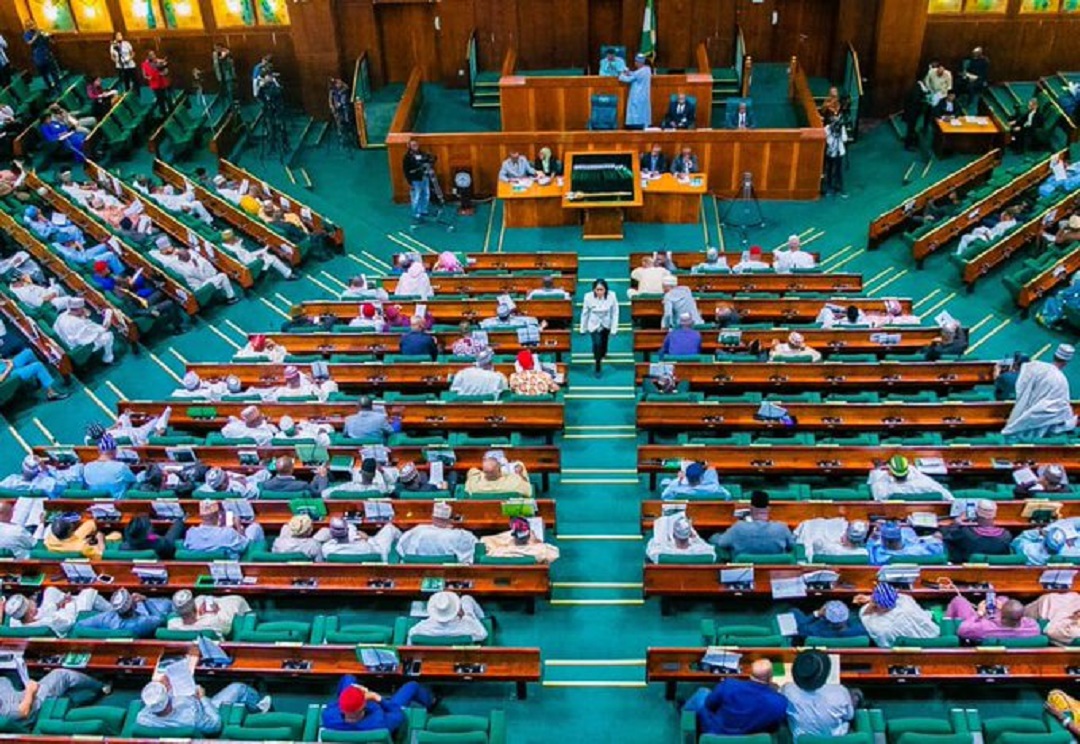
The Nigerian House of Representatives has directed the Nigerian Communications Commission (NCC) to block all pornography websites, arguing that adult content is fueling moral decay in the country.

Lawmakers behind the move claim it is necessary to protect societal values, but many Nigerians are asking: With all the pressing challenges facing the nation, is this the priority?

At a time when the cost of living is unbearable, insecurity is rampant, and unemployment continues to frustrate millions, banning pornography feels like a classic case of misplaced focus.

There is no doubt that pornography is a controversial topic, especially in a country as religious and conservative as Nigeria. Many believe it is a moral threat, linking it to addiction, broken homes, and declining values among the youth. But is an outright ban the solution?

If the government is genuinely concerned about morality, should it not focus on improving education, strengthening family values, and addressing the root causes of social vices? What about the rising cases of drug abuse, internet fraud, and sexual exploitation—issues that demand urgent action?

It is often easier for politicians to push symbolic laws than to tackle society’s deeper problems. But morality cannot be legislated; it is shaped by economic stability, good governance, and proper education.

Even if we assume the government is serious about this ban, another question arises: Can it actually be enforced? Countries like India, Indonesia, and China have attempted similar restrictions, only for people to bypass them with VPNs and other simple workarounds.

Nigeria, with its millions of tech-savvy youths, will be no different. At best, this ban will be a temporary roadblock; at worst, it will push the industry underground, making regulation even more difficult.

What is most concerning is the potential for this move to set a dangerous precedent for internet censorship in Nigeria. Today, it is pornography. Tomorrow, it could be news websites, social media platforms, or even political activism.

If the government can dictate what people access online, what stops it from controlling other forms of content? Where does it end?

Beyond the moral and censorship debates, an outright ban could also have unintended economic consequences. Nigeria’s creative and tech industries thrive on the internet’s openness.

Restrictions like this could discourage investment in the digital space. Besides, history has shown that banning something does not eliminate demand—it simply drives it underground.

This move may just create a bigger mess instead of solving anything. If the real concern is protecting children and upholding values, there are smarter ways to achieve this.

Many developed countries regulate adult content through strict age verification, parental control mechanisms, and public awareness campaigns. A more effective approach would involve educating young people about digital responsibility, empowering parents with monitoring tools, and addressing the economic and social conditions that contribute to moral decline.

With the economy in crisis, insecurity worsening, and corruption still unchecked, is banning pornography really what Nigerians need right now?

This is not to suggest that pornography is beneficial or free of consequences. However, governance revolves around priorities. A country that is struggling to feed its people should not waste energy on internet policing.

Nigeria’s progress will not depend on what it bans but rather on how effectively it addresses the fundamental issues that hold it back.

And unfortunately, a porn ban does nothing to fix them.

Abdulhamid Abdullahi Aliyu, an NYSC serving corps member, writes from the Center for Crisis Communication (CCC) in Abuja. 

Police arrest 30 over killing of northern travelers in Edo

By Uzair Adam 

The Edo State Police Command has arrested over 30 suspects in connection with the brutal killing of 16 northern travelers and the burning of their truck in Udune Efandion.  

The Daily Reality reports that the attack occurred on Thursday along the Uromi/Obajana Expressway.  

Confirming the arrests in a statement on Friday in Benin, the command’s Public Relations Officer, CSP Moses Yamu, condemned the killings and assured that justice would be served.  

Yamu stated that the police were committed to ensuring justice for the victims and that no stone would be left unturned in the ongoing investigation.  

He revealed that a truck carrying 25 travelers from Elele, Rivers State, was intercepted by a vigilante group in Uromi. 

During the stop, some travelers were reportedly found in possession of locally made dane guns, raising suspicion among the vigilantes.  

“While this was ongoing, some vigilante members raised an alarm, claiming the travelers were suspected kidnappers. 

This led some community members and passers-by to attack and lynch 16 occupants. The truck conveying them was also set on fire,” Yamu said.  

Police operatives from the Uromi Division swiftly responded to the scene and managed to rescue ten of the travelers, two of whom sustained injuries. 

The injured victims were taken to a hospital and are currently responding to treatment.  

“In the course of investigations, 14 suspects have been arrested in connection with the crime. An emergency meeting was also convened with stakeholders and community members,” Yamu added.  

Meanwhile, a unit of the Police Mobile Force and other tactical teams have been deployed to the area to prevent further violence.  

The Commissioner of Police in Edo, Betty Otimenyin, urged residents to remain calm and cooperate with law enforcement while cautioning against reprisal attacks or unlawful gatherings that could escalate tensions.

Atiku condemns killings of Hausa hunters in Edo State, calls for justice

By Hadiza Abdulkadir

Nigerians, particularly in the northern region, mourn the tragic killing of several Hausa hunters traveling from Port Harcourt to Kano. The incident sparks an outcry on social media.

Atiku Abubakar, the former vice president and PDP presidential candidate, extended his condolences to the families of the victims and urged a comprehensive and impartial investigation.

“We must protect innocent lives,” he stated, urging authorities to act swiftly to prevent future incidents of jungle justice. 

Abubakar called for public confidence in security institutions, insisting that justice must be done and seen to be done. The community awaits action in the wake of this horrific event.