Month: February 2025

ASUU: KASU lecturers suspend strike, hail Kaduna government

By Ishaka Mohammed

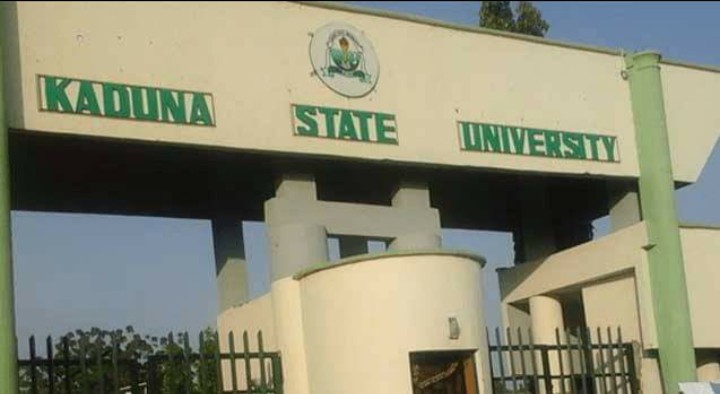
The Academic Staff Union of Universities (ASUU), Kaduna State University (KASU) chapter, has suspended its indefinite strike action following an agreement with the state government.

The decision followed the congress meeting held on February 22, 2025 and the approval of the union’s National Executive Council (NEC). 

In a statement released on Sunday, the branch leadership headed by Dr Peter Adamu appreciated the Kaduna State government for demonstrating goodwill towards resolving the issues that prompted the strike. 

According to the statement, the government is releasing funds immediately to pay the 60% withheld September 2017 salaries and the Student Industrial Work Experience Scheme (SIWES) supervision allowances for five sessions. It has also set a timeline for the payment of five months’ withheld salaries (May – September 2022), promotion arrears, Earned Academic Allowance (EAA), pension remittances from 2009 to 2019, as well as death benefits and Group Life Assurance.

The statement also featured the government’s commitment to implementing a wage award and granting full autonomy to KASU.

The Daily Reality last week reported the above issues as the causes of the strike.

The KASU chapter of ASUU praised Governor Uba Sani for deviating “from the dark days of the past where members [of ASUU] were victimized for participating in lawful strike actions”.

Barau distributes 61 cars, 1,137 motorcycles to Kano APC leaders, promises more support 

By Uzair Adam  

On Sunday, the Deputy President of the Senate, Senator Barau I. Jibrin, distributed 61 cars and 1,137 motorcycles to leaders of the All Progressives Congress (APC) in Kano State.  

The distribution, held at Meena Event Centre on Lugard Road near the Kano State Government House, was attended by key party stakeholders, including the APC National Chairman, Dr Abdullahi Umar Ganduje.  

The vehicles and motorcycles were allocated to party chairmen in the 44 local government areas and 484 wards of the state as part of efforts to strengthen the APC’s grassroots structure.  

Speaking at the event, the Kano State APC Chairman, Abdullahi Abbas, lauded Barau for consistently supporting the party since the New Nigeria People’s Party (NNPP) took over the state in 2023. 

He emphasized that ahead of the 2027 elections, aspirants would be assessed based on their contributions to the party’s development.  

Similarly, the Chairman of the House of Representatives Committee on Petroleum Resources (Upstream), Rep. Alhassan Ado Doguwa, expressed confidence in the APC’s resurgence, predicting that the NNPP would be defeated before 1 p.m. on election day in 2027.  

In his remarks, APC National Chairman Dr Ganduje commended Barau for the initiative, describing it as a step towards consolidating the party and improving the livelihoods of its members. 

He also highlighted the increasing defections from the NNPP to the APC, suggesting that the opposition party’s influence in Kano was waning.  

Senator Barau, while addressing the gathering, described the empowerment initiative as just the beginning of a broader program targeting various sectors, including youths, students, farmers, women, traders, and clerics. 

He reaffirmed his commitment to expanding the initiative and urged continued support for President Bola Ahmed Tinubu’s administration.  

He noted that Tinubu’s policies were beginning to yield positive results, citing the gradual reduction in fuel prices, stabilization of the Naira, and improvements in food prices.  

“This is just the tip of the iceberg. We will empower all spheres of society. Let’s continue to support Mr. President for the success of his programs,” Barau said.

SERAP sues CBN over increased ATM transaction fees

By Uzair Adam

The Socio-Economic Rights and Accountability Project (SERAP) has taken legal action against the Central Bank of Nigeria (CBN) over its recent decision to increase Automated Teller Machine (ATM) transaction fees, calling it “unlawful, unfair, unreasonable, and unjust.”

The CBN recently introduced a new charge of N100 per N20,000 withdrawal from an ATM not located within a bank’s branch premises.

Additionally, withdrawals at shopping centers, airports, and standalone cash points will attract a N100 fee along with a surcharge of up to N500 per N20,000 withdrawal.

In a lawsuit filed at the Federal High Court in Lagos, SERAP is seeking a judicial review of the CBN’s decision, arguing that the policy contradicts the Federal Competition and Consumer Protection Act of 2018.

The organization wants the court to declare the fee hike illegal and issue an injunction preventing its enforcement.

According to SERAP, the increase disproportionately affects low-income Nigerians, creating financial barriers for those who rely on ATMs for daily transactions.

The group further claims that the move violates constitutional provisions, consumer protection laws, and international human rights obligations.

SERAP’s legal team, led by Kolawole Oluwadare and Andrew Nwankwo, asserts that the new charges should be borne by banks and their shareholders rather than being passed onto consumers.

They argue that the CBN is acting in a manner that prioritizes banks’ profits over the welfare of Nigerians, with many banks declaring substantial annual profits.

The lawsuit also challenges the CBN’s authority to unilaterally impose such fees without the consent of the Federal Competition and Consumer Protection Commission (FCCPC). SERAP is urging the court to nullify the CBN’s circular on the fee hike and restrain banks and financial institutions from implementing the charges.

A date for the hearing of the case has not yet been set.

Four died, ten injured in Jigawa bus fire accident

By Abdullahi Mukhtar Algasgaini

Four people, including three children, were burnt to death, while 10 others sustained injuries when a commercial Hummer bus caught fire in Gwaram, Jigawa State, on February 22, 2025. The incident occurred around 4:00 p.m., near the Government Girls Unity Secondary School.

The bus, a white Hummer with registration number ZAK 382 XA, was driven by 40-year-old Dalha Saleh from Saldigal Village, Bauchi State. The vehicle was carrying 44 passengers—25 adults and 19 children—from Zaki LGA in Bauchi State to Rabadi Village when the fire broke out.

Sources indicate that the fire originated from the bus’s exhaust system after a mattress tied to the back of the vehicle caught fire due to sparks from the exhaust.

The victims, all from Saldigal Village, Bauchi State, have been identified as Ziwaira Hassan, Fatima Hassan, Iyatale Hassan, and Halima Muhammad (10 years old). Ten other passengers were rushed to Gwaram Cottage Hospital with varying degrees of burns. The remaining passengers escaped unharmed.

The charred remains of the victims will be released to their families for burial after medical examination.

In related news, the issue of reckless overloading of commercial vehicles continues to be a serious safety concern in the region. Buses and vans meant for passengers are often stuffed with goods meant for trailers, creating dangerous hazards on the roads. Despite numerous security and road safety checkpoints, many of these vehicles pass unchecked due to bribery, exacerbating the risks of road accidents.

The Federal Road Safety Corps (FRSC), police, and other security agencies have been criticized for their failure to effectively enforce regulations. The lack of proper oversight contributes to the deterioration of road infrastructure and increases the likelihood of deadly accidents. It also opens the door for criminal activities, such as terrorists smuggling weapons and fuel under the guise of commercial transport.

There is an urgent need for stronger enforcement of vehicle safety regulations, weight limits, and more thorough inspections at checkpoints to prevent further tragedies. The government must take decisive action to ensure that safety standards are upheld and that security personnel are empowered to carry out their duties without compromise.

Autobiographies as constructed narratives: Reflections on General Ibrahim Badamasi Babangida’s “A Journey in Service”

By Ibraheem A. Waziri 

On February 20, 2025, Nigeria marked a pivotal moment in its historical and literary landscape by launching A Journey in Service, the autobiography of General Ibrahim Badamasi Babangida, the nation’s former Military Head of State. Held at the Transcorp Hilton Hotel’s Congress Hall in Abuja, the event drew an illustrious crowd: President Bola Tinubu, former Presidents Yakubu Gowon, Abdulsalami Abubakar, and Goodluck Jonathan, alongside business magnates Aliko Dangote and Abdulsamad Rabiu. 

Beyond the fanfare and the nearly N17.5 billion raised for the IBB Legacy Centre—mistakenly dubbed a presidential library in early reports—the memoir’s release reignites a profound discussion about autobiographies. Far from being vessels of absolute truth, such works are meticulously crafted narratives designed to logically articulate an author’s perspective while justifying their actions and thoughts—past, present, and future. Babangida’s A Journey in Serviceembodies this, offering a lens to explore the constructed essence of autobiographical storytelling.

Autobiographies are, by design, subjective endeavours, distinct from impartial chronicles. They weave personal accounts from memory, intent, and selective disclosure, often prioritising coherence over unvarnished fact. Babangida, who governed Nigeria from August 27, 1985, to August 26, 1993, remains a divisive figure. Known for deft political manoeuvres—earning monikers like “Maradona” for his agility and “evil genius” for his cunningness—he oversaw a tumultuous era marked by economic upheaval and democratic setbacks. His most infamous act, the annulment of the June 12, 1993, presidential election—widely deemed Nigeria’s freest at that time, won by Moshood Abiola—has haunted his legacy for 31 years. 

Nigerians anticipated A Journey in Service as a chance for clarity or confession, yet its launch reveals a narrative sculpted to reflect Babangida’s self-perception. He acknowledges Abiola’s victory, a move Tinubu hailed as “unusual courage,” but frames the annulment as an unauthorised act by General Sani Abacha and other officers while he was in Katsina, sidelined by circumstance. This selective disclosure suggests not a full unveiling but a justification, repositioning him as a constrained leader rather than complicit.

This subjectivity underscores a broader truth: books, especially memoirs, filter reality through hindsight, bias, and audience expectation. Babangida’s 420-page work, reviewed by former Vice President Yemi Osinbajo, promises insights into his eight-year tenure—economic reforms like the Structural Adjustment Programme (SAP), infrastructure feats, and banking deregulation—yet sidesteps a complete reckoning. 

Critics highlight glaring omissions: no confession regarding the October 19, 1986, assassination of journalist Dele Giwa by a parcel bomb widely linked to his regime; no accounting for the $12.4 billion Gulf War oil windfall, per the 1994 Pius Okigbo report; and no remorse for the executions of coup plotters like Mamman Vatsa in 1986 and Gideon Orkar in 1990. Babangida’s claim that he feared Abiola’s assassination if he took office—a speculative justification—casts him as a reluctant actor amidst a military cabal, absolving himself of agency. As much as the revelations, these silences illustrate how A Journey in Service constructs a narrative that defends, rather than fully discloses, a deliberate choice aligning with autobiographical norms.

The memoir’s role as a legacy-building tool further amplifies its constructed nature. Launched as Babangida, now 83 (born August 17, 1941), nears life’s twilight, and Nigeria approaches the 2027 elections, the event doubled as a fundraising spectacle for the IBB Legacy Centre. Billion-naira pledges from Dangote, Rabiu, and others—totalling N17.5 billion per ThisDay—underscored Babangida’s enduring clout 31 years after stepping down. 

The title A Journey in Service reframes his rule as a patriotic endeavour, softening the authoritarian edges of his “evil genius” persona. By admitting Abiola’s win while distancing himself from the annulment’s execution, he crafts a complex portrait: a transformative leader navigating chaos, appealing to admirers who credit him with modernisation while mitigating critics’ ire over economic hardship and political repression. This duality reflects a narrative engineered to reconcile his past with the statesman image he seeks today, extending its influence beyond the page into Nigeria’s political present.

The historical context of Babangida’s tenure enriches this analysis. His regime followed a series of military coups, inheriting a nation battered by oil-dependent economics and factional strife. The SAP, intended to liberalise the economy, sparked inflation and unrest, while his annulment catalysed protests and deepened ethnic divides, paving the way for Abacha’s reign. A Journey in Service likely glosses over these ripple effects, emphasising achievements—like the Third Mainland Bridge or Abuja’s development—to counterbalance failures. This selective memory mirrors how autobiographies prioritise legacy over accountability, inviting readers to weigh Babangida’s narrative against Nigeria’s collective experience.

Reactions to the memoir underscore its status as perspective, not fact. Tinubu, a June 12 activist turned president, praised its candour as setting “records properly,” perhaps reflecting political pragmatism. Afenifere, a pan-Yoruba group, rejected it as too late to mend the annulment’s “ogbonge damage,” echoing Yoruba grievances. Activists accused Babangida of exploiting Nigeria’s accountability vacuum, a sentiment rooted in decades of unresolved justice. Literary scholar Pius Adesanmi, were he alive, might have called it a “textual performance,” blending truth and theatre. These responses reveal a fragmented reception: the book’s narrative is interpreted through readers’ biases, not universally embraced as truth, highlighting the elusive nature of autobiographical authority.

However, this constructed nature does not diminish the value of A Journey in Service; rather, it enhances its complexity. It provides a window into Babangida’s mind: his rationalisations, regrets, and aspirations amid a career of calculated risks. At the launch, Goodluck Jonathan urged the preservation of such narratives to enrich Nigeria’s political archive, calling for the institutionalisation of personal histories. 

Readers, however, must approach it sceptically, recognising it as one voice in a cacophony of perspectives—those of June 12 activists, SAP victims, and silenced journalists. Its significance lies not in claiming absolute truth but in sparking reflection and debate, compelling Nigerians to confront the ambiguities of their history. For youth, as commentators suggest, it offers leadership lessons—resilience and adaptability—albeit through a self-justifying lens that demands critical parsing.

Comparatively, A Journey in Service fits a global tradition of autobiographical narrative-building. Nelson Mandela’s Long Walk to Freedom blends triumph with curated humility, while Barack Obama’s Dreams from My Father navigates identity with selective introspection. With its wit (per Osinbajo’s review) and strategic candour, Babangida’s work joins this lineage, tailoring Nigeria’s military past to a personal saga. Its launch timing—amid economic woes and democratic flux—amplifies its relevance, positioning Babangida as a commentator on leadership in crisis, a narrative thread justifying his past while influencing future discourse.

In conclusion, autobiographies like A Journey in Service are not absolute truths but woven narratives serving their authors’ ends. Launched on February 20, 2025, Babangida’s memoir—through selective revelations, strategic omissions, and legacy-driven intent—justifies actions like the annulment while shaping his present stature and future remembrance. 

As Nigerians grapple with its contents, it stands as a testament to storytelling’s power: not a final word, but a provocation to question, analyse, and seek broader truths it skirts. In a nation wrestling with its past—where military rule, economic policy, and democratic betrayal remain raw—such narratives are vital, not for certainty, but for the conversations they ignite, urging a deeper reckoning with history’s many voices.

Ibraheem A. Waziri wrote from Zaria.
Nigerian Army officer killed by abductors after delay in ransom payment

By Abdullahi Mukhtar Algasgaini

A Nigerian Army Senior Non-Commissioned Officer (SNCO), Abdulfatai Odutola, has been killed by kidnappers after a delay in the payment of his ransom.

Odutola, who was traveling to Yola, Adamawa State, was abducted on February 15, 2025, along the Abuja-Jos highway.

The kidnappers had initially demanded a ransom of N20 million for his release.According to a military internal memo, Odutola had been en route from Ilorin and was staying in Abuja before continuing his journey when he was abducted.

The memo requested urgent assistance from the appropriate authorities to secure his release.

However, a subsequent update revealed that Odutola’s lifeless body was found by police in the Jos forest.

The kidnappers had reportedly killed him after the deadline for the ransom payment passed.

His car was also recovered at the scene.

Trump dismisses top military officer in major shake-up

By Abdullahi Mukhtar Algasgaini

President Donald Trump has fired the United States’ top military officer, Gen. Charles “CQ” Brown, in a significant reshuffling of the country’s armed forces leadership.

Gen. Brown, who was appointed Chairman of the Joint Chiefs of Staff less than two years ago, had been serving a four-year term.

In a brief statement posted on his Truth Social network, Trump expressed his gratitude toward Gen. Brown for his more than four decades of service to the country.

“I want to thank Gen. Brown for his over 40 years of service to our country, including as our current chairman of the Joint Chiefs of Staff. He is a fine gentleman and an outstanding leader, and I wish a great future for him and his family,” Trump wrote.

No further explanation was provided for the decision to dismiss the highly regarded general.

Politics and the erosion of integrity: The deterioration of Nigeria’s most esteemed institutions

By Muhammad Rabiu Jibrin (Mr. J)                 

Isn’t the religious institution now on the brink of suffering the same fate as the traditional institution, whose integrity, moral authority, and influence have been swept away by the political hurricane?

Historically, the Nigerian traditional and religious institutions were best known as the custodians of culture and justice, commanding immense respect and dignity. They were no-go areas with clear boundaries known to politicians. Their political neutrality, ethical brevity, and golden silence made them stand out, shielding them against political threats and disrespect. But with the gradual mental shift and negligence of purpose, the passage of time paved unnoticeable ways for political interference in their affairs, rendering them into a vulnerability that warms what once cooled them.

Although the Constitution of the Federal Republic of Nigeria does not clearly prohibit traditional rulers from engaging in politics, it expects public officeholders, including traditional rulers, to remain neutral. The state laws of most states, if not all, prohibit traditional rulers from participating in partisan politics, as such acts can be seen as a breach of their traditional duties and a justification for removal.

History has shown that most allegations against Emirs were connected to issues like partisan politics, outspoken nature, and mismanagement, among others. On March 9, 2020, the Kano State government under Governor Abdullahi Ganduje officially dethroned Sanusi Lamido Sanusi as the Emir of Kano. His grandfather, Emir Muhammadu Sanusi I (1953–1963), faced the same issue under the Premier of the Northern Region, Sir Ahmadu Bello, on April 10, 1963. Similarly, Emir Mustapha Jokolo of Gwandu (1995–2005) was deposed in June 2005 by the Kebbi State government under Governor Muhammad Adamu Aliero, while Emir Abubakar Atiku of Zurmi (2010–2012) was removed from his position by the Zamfara State government in 2012.

Having successfully influenced traditional institutions, are Nigerian politicians not now attempting to test the same waters on religious institutions through their appointments and donations services?

How our religious leaders glorify and endorse politicians while also criticising one another on political matters in mosques, churches, or during their religious sermons is akin to setting a bushfire that would consume all its inhabitants. It is not difficult for politicians to offer them lucrative sums of money, gift them extravagant cars, and so forth, enabling them to manipulate their views and dilute their words during sermons for material gain.

The silver lining is that the spiritual blueprints and the footsteps that guide them would resolutely remain unchanged till eternity, no matter their deviation.

The recent verbal altercation between Sheikh Sani Yahaya Jingir and Sheikh Muhammad Kabir Gombe, which stemmed from the issue of the ‘Qur’an Festival,’ is disheartening. I view Sheikh Sani Yahaya Jingir as a cleric who strives to speak the truth but often talks excessively. He is a mature, responsible Sheikh who should not demean himself by engaging in disputes with younger individuals like Sheikh Kabiru Gombe. His reputation, knowledge, and age should elevate him beyond such conflicts. He ought to discourage the young, emerging ‘Shuyukh’ under his mentorship from becoming involved in such matters, let alone involving himself.

As for Sheikh Kabiru Gombe, I see his utterances as disrespectful and illogical toward a man of that age, no matter the heat of the moment. If two ‘Shuyukh’ and their followers resort to ranting and calling each other names, what credibility do their preachings hold, and how will their followers perceive them? Where is the unity, patience, and love for one another that Islam teaches and which they claim to promote? No matter the misunderstanding, religious leaders should be careful with their words toward one another in all circumstances.

In conclusion, unless our religious leaders fight selfishness among themselves, adhere to the teachings of Islam, respect one another despite divergent views, and remain united, the future will unravel unfavourably. Only by adhering to the holistic teachings of Islam and the prophetic tradition can they stand resolute against any factor that seeks to erode their strength.

Muhammad Rabiu Jibrin (Mr.J) wrote via muhammadrabiujibrin@gmail.com.

Nigeria to witness new moon crescent on February 28, 2025—Space research agency

By Abdullahi Mukhtar Algasgaini

The National Space Research and Development Agency (NASRDA) has confirmed that the new moon crescent for 2025 will be visible in Nigeria on February 28.

According to a statement released by the Director of Communication and Public Relations of NASRDA on Saturday, the crescent will appear at exactly 1:45 AM Nigeria time (WAT).

This moment, known as the “Crescent Zero Hour,” marks the earliest point at which the new moon can be observed under optimal conditions using telescopes or special viewing equipment.

However, for those without such equipment, the crescent will be visible to the naked eye on the evening of Friday, February 28, between 6:17 PM and 7:35 PM in various parts of the country.

In Kachia, Kaduna State, the crescent is expected to be visible between 6:38 PM and 7:12 PM.

NASRDA has advised the public to use telescopes or special viewing glasses if necessary, and to choose open areas with unobstructed views of the western horizon after sunset.

Clear sky conditions are crucial for optimal viewing of the new moon crescent.

FRSC intensifies crackdown on mixed overloading after Kano fatal crash

By Uzair Adam 

The Federal Road Safety Corps (FRSC) Kano Sector Command has intensified efforts to curb the dangerous practice of mixed overloading of trailers with goods, animals, and human passengers. 

It was gathered that the initiative aims to enhance road safety and prevent fatal crashes resulting from unsafe transportation practices.  

In a statement on Friday, FRSC Kano Public Relations Officer CRC Abdullahi Labaran disclosed that the sector command, led by Sector Commander CC UM Masa’udu, in collaboration with the Nigeria Police Force, conducted a special public sensitization campaign on February 20, 2025. 

The exercise took place along Kano-Maiduguri Road, near the Muhammadu Buhari Interchange Flyover, Hotoro, from 4:00 PM to 6:00 PM.  

The campaign was prompted by the tragic road crash on February 13, 2025, at the same location, which claimed 23 lives and left 48 others injured. 

Investigations revealed that the accident was caused by a dangerously overloaded trailer, a practice that significantly increases the risk of fatal accidents.  

During the sensitization exercise, CC UM Masa’udu warned drivers, transport operators, and stakeholders about the severe dangers of mixed overloading and emphasized the need for strict compliance with safety regulations. 

He reiterated that the FRSC will not tolerate traffic violations that put lives at risk.  

The campaign was attended by representatives of key transport unions, including the National Association of Road Transport Owners (NARTO) and the Road Transport Employers Association of Nigeria (RTEAN), who pledged their commitment to raising awareness among their members and ensuring safer road transport practices.  

The FRSC Kano Sector Command reassured the public of its continued efforts to promote road safety awareness and strict enforcement to prevent further tragedies. 

It urged road users to cooperate with authorities and adopt safer transportation practices for the well-being of all.