Month: February 2025

Police officer takes own life in Niger State

By Abdullahi Mukhtar Algasgaini

Shafi’u Bawa, an Assistant Superintendent of Police (ASP) attached to the 61 Police Mobile Force in Kontagora, Niger State, has reportedly taken his own life.  

The incident occurred on Saturday afternoon, 8 February 2025, when the officer was found hanging from the ceiling of his room. His father, Mallam Usman Bawa, alerted the authorities after discovering the tragic scene.  

The Niger State Police Command spokesperson, SP Wasiu Abiodun, confirmed the incident, stating that the deceased’s body has been released to his family for burial.  

“The reason behind his action is yet to be determined, and the matter is under investigation,” Abiodun stated.  

Further details will be provided as the investigation progresses.

Student arrested for murder in Nasarawa

By Abdullahi Mukhtar Algasgaini

A Federal Polytechnic, Nasarawa student has been apprehended for allegedly murdering a fellow student in a violent confrontation. 

The Nasarawa State Police Command has confirmed the arrest of John Gambo, a second-year Banking and Finance student, in connection with the death of Ibrahim Matthew, a Computer Science student at the institution.

According to the Police Public Relations Officer (PPRO), SP Ramhan Nansel, the arrest followed a complaint from Madam Mercy-Bassey, a resident who witnessed the violent confrontation between the two students. 

When police arrived at the scene, they found Matthew lying in a pool of blood. He was immediately taken to the General Hospital in Nasarawa but was pronounced dead due to the extent of his injuries.

The suspect, Gambo, was arrested and reportedly confessed to using an axe and a knife to attack his victim. The Commissioner of Police, Shettima Jauro Mohammed, has instructed that the case be transferred to the State Criminal Investigation Department in Lafia for further investigation and prosecution.

Shehu Sani Support Group stands with Governor Uba Sani

By S. A Ishaq

A group known as Senator Shehu Sani Support Group (SSSG) has publicly declared its support for Governor Uba Sani and his administration in Kaduna State. 

Speaking during a press conference in Kaduna, the group expressed their support, stating that their endorsement was based on the governor’s demonstration of commitment to good governance and a prosperous Kaduna State. 

The group’s Chairman, Comrade Yusha Abdul, said, “Governor Uba Sani is genuinely committed to fostering unity, peace and prosperity in Kaduna State”. 

Comrade Yushau added, “Governor Uba Sani is reshaping Kaduna State through his people-oriented policies in security, economic growth, and social development.” 

This endorsement comes amidst escalating political tensions between Governor Uba Sani and his former political ally, ex-Governor Nasiru El-Rufai.

Ogun II Customs haiils officers as revenue surpasses ₦32 billion in 2024

By Sabiu Abdullahi

The Ogun II Area Command of the Nigeria Customs Service (NCS) has commended its officers for their dedication and professionalism after recording a total revenue of ₦32.46 billion in the 2024 fiscal year.

Speaking at a press briefing held at the command headquarters in Abeokuta on Thursday, February 6, 2025, the Customs Area Controller (CAC), Comptroller Olusola Alade, attributed the milestone to the hard work and efficiency of the command’s personnel.

“This remarkable growth is a testament to our officers’ commitment to duty and our unwavering dedication to strengthening the national economy,” he stated.

Alade also praised the Customs Intelligence Unit, Monitoring Unit, and Customs Police Unit for their contributions to compliance and enforcement, which played a significant role in boosting revenue.

In addition, he expressed appreciation to the Comptroller-General of Customs, Adewale Adeniyi MFR, for his leadership and policy direction, which he said had enhanced excise duty collection and industrial monitoring.

Acknowledging the role of businesses in compliance, Alade applauded traders and manufacturers who have adhered to customs regulations and encouraged more businesses to follow suit to support economic growth.

Providing further insights into the command’s achievements, he disclosed that revenue for January 2025 alone stood at ₦4.34 billion, representing a 104% increase compared to the ₦2.14 billion collected in the same period last year.

He also highlighted that improved monitoring of Free Trade Zones, particularly the Ogun Guangdong, Ceplast, and Flourmill Free Trade Zone, had significantly contributed to the revenue increase.

Additionally, the command identified four unlicensed factories—Evita Moore, Lekan Industries, Scarlet Eagle Ltd, and IBK Ventures—which were operating without proper authorisation.

These factories have now been placed under excise control and are undergoing registration.

Affirming the command’s commitment to enhancing revenue generation, facilitating trade, and enforcing national security, Alade assured that Ogun II Customs would continue striving for operational excellence to support Nigeria’s economic development.

ECOWAS alliance fracture: The Sahelian state exodus, regional stability and Nigeria’s leadership litmus test – can Abuja steer a new path?

By Iranloye Sofiu Taiye

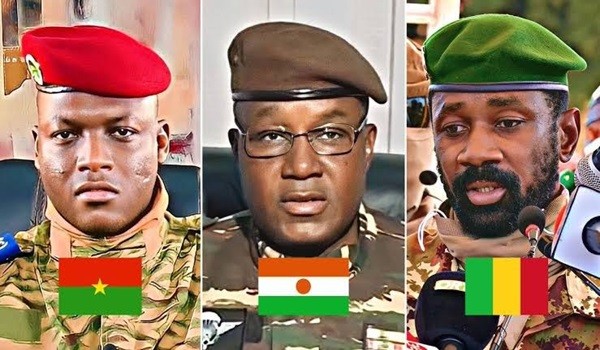
The recent decision by Mali, Burkina Faso, and Niger to withdraw from the Economic Community of West African States (ECOWAS) has triggered reactions of uncertainty across the geopolitical landscape of West Africa. This unprecedented move, announced in January 2024, marks a critical juncture for a bloc historically revered as a beacon of regional integration and collective security. The departure of these three Sahelian nations, all grappling with military rule, jihadist insurgencies, and socioeconomic fragility threatens to destabilize the delicate equilibrium of ECOWAS, undermining its credibility and operational efficacy.

ECOWAS was founded in 1975 via the Treaty of Lagos Nigeria, ECOWAS emerged as a post-colonial vision to foster economic integration, political solidarity, and collective self-reliance among West African states. Its architects envisioned a regional powerhouse capable of rivaling global economic blocs, anchored by principles of free movement, a common market, and monetary union. Over the decades, ECOWAS evolved beyond economics, establishing itself as a custodian of democratic norms through protocols such as the 2001 Supplementary Protocol on Democracy and Good Governance, which condemned any form of unconstitutional government changes.

The bloc’s peacekeeping ventures, notably the ECOWAS Monitoring Group (ECOMOG) interventions in Liberia (1990), and Sierra Leone (1997) demonstrated its capacity to mediate conflict. However, ECOWAS has also faced perennial challenges including coups d’état, governance failures, and the paradox between its lofty ideals and the grim realities of poverty and instability. The recent wave of military takeovers in Mali (2020, 2021), Burkina Faso (2022), and Niger (2023), each met with ECOWAS sanctions and suspensions exposed cracks in the bloc’s authority, heralding the current crisis.

The withdrawal of Mali, Burkina Faso, and Niger strikes at the heart of ECOWAS’s political legitimacy. These nations, representing 10% of the bloc’s population and vast territorial expanse, have denounced ECOWAS as a “tool of foreign powers” and accused it of imposing punitive measures that exacerbate their populations’ suffering. Their exit underscores a broader regional disillusionment with ECOWAS’s perceived alignment with Western interests, particularly France, amid rising anti-colonial sentiment.

For ECOWAS, the secession weakens its bargaining power on continental and global stages. The bloc’s ability to enforce democratic norms is now in jeopardy, emboldening other authoritarian regimes and eroding its moral authority. Moreover, the formation of the “Alliance of Sahel States” (AES) by the three nations — a mutual defense pact aligned with Russia — signals a shift toward alternative alliances, potentially fracturing West Africa into competing spheres of influence. This realignment risks destabilizing the region further, as rival powers like Russia, China, and Western nations vie for strategic footholds.

Economically, the departure of Mali, Burkina Faso, and Niger disrupts ECOWAS’s integration agenda. The bloc’s flagship projects — such as the ECOWAS Single Currency (Eco), slated for 2027—face existential threats. These nations collectively contribute critical mineral resources (gold, uranium) and agricultural output, and their absence could fragment supply chains, inflate intra-regional trade costs, and deter foreign investment.

The free movement protocol, a cornerstone of ECOWAS, may also unravel. Border closures and visa restrictions could follow, stifling cross-border commerce and cultural exchange. Nigeria, which accounts for over 60% of ECOWAS’s GDP, stands to lose significantly: its northern states rely on trade with Niger, while its industries depend on regional markets. The exodus may also derail infrastructure projects like the Kano – Maradi rail project hampering economic growth.

As ECOWAS’s traditional hegemon, Nigeria must spearhead the bloc’s response to this crisis. Historically, Nigeria has bankrolled ECOWAS initiatives and mediated conflicts, but its recent influence has waned amid domestic challenges—security crises, economic stagnation, and diplomatic inertia. To reclaim its leadership, Nigeria must adopt a multi-pronged strategy:

Diplomatic Re-engagement: Nigeria should initiate high-level dialogues with the AES states, addressing grievances while advocating a return to constitutional order. Leveraging its cultural and economic ties — particularly with Niger, with whom it shares a 1,600km border — Nigeria must balance firmness with empathy, avoiding the perception of bullying.
Institutional Reforms: ECOWAS requires structural revitalization. Nigeria should champion reforms to decentralize decision-making, reduce Francophone-Anglophone tensions, and prioritize grassroots economic integration. A revised governance framework, incorporating civil society and youth voices, could restore public trust.

Security Collaboration: The Sahel’s jihadist insurgencies, which have spilled into Nigeria’s northwest, demand a unified approach. Nigeria could propose a joint ECOWAS-AES security task force, blending counterterrorism efforts with development programs to undercut extremism.
Economic Incentives: To lure back the AES, Nigeria could advocate for sanctions relief tied to democratic transitions, coupled with debt forgiveness and infrastructure investments. A Marshall Plan-like initiative for the Sahel, funded by ECOWAS and international partners, might alleviate poverty fueling instability.
Conclusively, the exit of Mali, Burkina Faso, and Niger from ECOWAS is not merely a regional setback but a clarion call for introspection. The bloc’s survival hinges on its ability to reconcile idealism with pragmatism, balancing democratic principles with the urgent needs of fractured states. Nigeria, as the region’s linchpin, must rise to the occasion, blending visionary leadership with humility. In an era of shifting global alliances and resurgent authoritarianism, the stakes could not be higher: without decisive action, the dream of West African unity may dissolve into a mosaic of discord, leaving millions vulnerable to the storms of history.

Iranloye Sofiu Taiye can be reached via:
iranloye100@gmail.com

SERAP sues Tinubu over unexecuted N167bn projects fraud in MDAs

By Anwar Usman

The Socio-Economic Rights and Accountability Project (SERAP) has taken legal action against the President of Nigeria, Bola Tinubu, over his alleged failure to prosecute contractors who received over N167bn from 31 ministries, departments, and agencies for projects that were never executed.

The lawsuit, filed last Friday at the Federal High Court in Lagos (suit number FHC/L/MISC/121/2025), also listed the Attorney General of the Federation and Minister of Justice, Lateef Fagbemi, SAN, as a respondent.

This was contained in a press release on Sunday titled, “SERAP Sues Tinubu Over Failure to Prosecute Contractors in N167bn Project Fraud in MDAs.”

The release, signed by Deputy Director, SERAP Kolawole Oluwadare, urges the court to compel Tinubu to direct the Minister of Finance and Coordinating Minister of the Economy, Wale Edun, to publicly name the contractors involved and ensure their prosecution.

The organisation is also seeking a court order that’ll force Edun to publish details of the projects, together with their locations, the amounts received by each contractor, and the identities of the shareholders.

SERAP further argued that “The allegations of corruption involving these contractors have continued to impair, obstruct, and undermine the access of poor Nigerians to essential public goods and services”.

According to SERAP, the 2021 Audited Report by the Auditor-General of the Federation, published on November 13, 2024, revealed that 31 MDAs collectively paid over N167 billion for projects that were never carried out.

SERAP further reiterated that allowing companies and contractors to go away with public funds unpunished amounts to a grave violation of the Nigerian Constitution, anti-corruption laws, and international obligations under the United Nations Convention against Corruption.

“Holding these contractors accountable would help prevent waste, fraud, and abuse in public spending,” SERAP stated.

Availability and affordability of food

By Lawal Dahiru Mamman

Why are the Nigerians not having enough food to eat? Why? That is the question we need to answer. Statistics paint a grim picture and the anecdotal evidence is there. We have working farmers but numbers say people are not eating well.

The above was paraphrased from the address of the Chairman, Media Trust Group, at the 22nd Daily Trust Dialogue and Presentation of Unsung Heroes, themed “Food Security: Availability or Affordability?” held at the NAF Conference Centre in Abuja on 23 January 2025. One does not need an emeritus to explain the reasoning behind the choice of theme.

As an individual with a background in agriculture, I have often had serious discussions with two close friends about the true value of our certificates. If we cannot make a tangible impact on curbing hunger, which continues to plague Nigerians, then what is the point? The alarming statistics of hunger and malnutrition only paint a bleaker picture each year.

We never really take into account other graduates from different subsectors of agriculture, but we somehow always come to the conclusion that we are part of the reason millions of Nigerians go hungry, and we hope to make a difference in the near future, dumping the noise and swinging into real action.

It is this very concern that drives my desire to attend conferences or dialogues like the aforementioned, but circumstances did not permit it. Thankfully, technology has been birthed and it came to the rescue. The organisers provided live coverage across Facebook, YouTube, and Zoom, which I was able to access, allowing me to participate in the programme, albeit not until the very end.

It was a session to examine the current state of affairs and an open floor for discussion on how to make food available and affordable. Pundits brainstormed Nigeria’s vast fertile land, large bodies of water and adequate rainfall in each geopolitical zone, suitable for various crops and rearing animals, explored and seeked to decode how despite these rich agrarian factors hunger perseveres when there should be no correlation at all.

Farmer-herder clashes, a misunderstanding that has escalated from cultivated lands to homes, affecting innocent women and children, were deliberated upon, along with their impact on optimum crop production. In my view, our inability to properly harness pasture and rangeland is a contributory factor.

To put things into perspective, in a class, we studied over ten plants that, when cultivated, can provide sustenance for our livestock. This not only helps resolve clashes, but also reduces competition for valuable food resources between humans and domesticated animals, until we achieve self-sufficiency.

Genetically modified organisms (GMO) foods was another talking point. Exploring and tweaking specific genetic traits for better quality in other plants or animals is not new in agriculture. Before we sort ethical issues surrounding GMOs for long term solution on food availability, attention must be paid on short term remedy for same, and affordability.

Post harvest spoilage or waste was another concern. Even as these food items, especially perishables, are not sufficiently abundant, during harvest, a lot go to waste without arriving markets. What does this tell us? There is the ability to produce sufficiently but, as a nation it becomes imperative to invest in processing and storage infrastructure to arrest the issue of availability and affordability, it is basic economic principle of demand and supply.

Insecurity remains the bane of farmers. Many have abandoned their lands in order to remain alive, frankly, no one blames them. In offering solution, President of All Farmers Association of Nigeria (AFAN) said there is a need to defoliate forests in Nigeria which serves as safe haven for criminal elements – bandits, Boko Haram, ISWAP and Lakurawa alike.

He alluded to the fact that his idea may not sit well with climate change and environmental enthusiasts but stood firmly by this suggestion. This idea may not necessarily be out of place when we zoom our lens to realities of food availability and affordability. What I must add, if this is not welcomed, stakeholders should have a round table talk on other ways to save lives and tackle food insecurity without defoliation.

Present during the dialogue was the Minister of Livestock Development, Alhaji Idi Mukhtar Maiha. Among a lot of things he said Nigerians are tired of saying the country has “potential”, stressing that it is time to ”activate” it. Although we must know the potentials before attempting to activate, his assertion is oncourse, our potentials have since been established.

According to him, policies should address the issue where people produce for only family consumption with little to sell while also highlighting the need to change the way we do things in the agricultural sector, for us to get a different outcome. Rightly captured but do average farmers have at their disposal sophisticated tools to produce for family and market? our practice is still largely primitive you know.

I am a believer that every citizen has a role to play for the betterment of Nigeria but importantly, leadership bears greater responsibility therefore, I was happy the Minister and a representative of the Speaker of House of Representatives – both in positions to “make things happen” – were present or represented among other stakeholders.

Overall, the dialogue was critical, informative, and enlightening, but we hope to see where we go from here in our efforts to make food available and affordable.

Lawal Dahiru Mamman writes from Abuja and can be reached on: dahirulawal90@gmail.com

Word of thanks to Wunti Al-Khair Foundation

By Mallam Musbahu Magayaki 

I write to express my appreciation for the efforts of the abovementioned foundation, sponsored by Dr. Bala Maijama’a Wunti, Chief Health, Safety, and Environment Officer of NNPCL. Their impactful, consistently implemented programs genuinely change the narrative to a more prosperous journey in Bauchi State.

The foundation in the state extends many humanitarian gestures to the development of youth and provides mentorship in many aspects of positive development that will help them change the narrative. In many aspects of life, ranging from agriculture to education to health, Wunti Al-Khair, with the support of Dr. Bala Wunti, is touching the lives of Bauchi State products.

These days, you can’t go to media spaces without reading them and making headlines about executing a particular project using the hashtag #Wakf. Bala Wunti, fondly called BW, has become a household name across the 20 local governments in Bauchi State. This is because no one could object to youth being picked from every LG for their activities to ensure fairness and inclusivity! I hail the programs director, Ango Mustapha, for that!

Come on, just recently, they organised programs in Bauchi North through the Katagum Youth League’s flag-bearing. The program was on climate change, which is being campaigned on globally, and it was successfully organised and implemented. This will greatly encourage the participants to use what they have learnt from the speakers to free their communities from all sorts of climatic issues.

On Saturday, 25th January 2025, the Wunti Al-Khair Foundation made a post on their social media handle bearing Wak Foundation, introducing a new program titled the Bala Wunti Tech Fellowship in collaboration with AltSchool Africa, for the interested growing populace of Bauchi State to fill the form online and submit it before February 1st, 2025, as a deadline for the application.

However, this tech fellowship provides access to quality education, offering financial support that every Bauchi graduate deserves. It also facilitates global learning by connecting with over 13,000 trained students across 83 countries through AltSchool Africa’s innovative courses, as well as providing mentorship and networking opportunities to enhance one’s education, among other benefits.

Moreover, the number of mosques and those who pray in them that were built through the Wunti Al-Khair Foundation, sponsored by Dr. Bala Wunti, is too large to count. In addition, the foundation has built an academy with which it will collaborate with a particular organisation in the United Kingdom to nurture and educate the younger people in the state.

Therefore, I urge the good people of Bauchi State to develop the habit of praying for the man and spreading words of encouragement so that he can continue helping people achieve their planned objectives against all odds!

With Bala Wunti in Bauchi State, youth would keep breathing the air of hope.

Mallam Musbahu Magayaki wrote from Sabon Fegi, Azare, Bauchi State via musbahumuhammad258@gmail.com.

Kano: Governor Yusuf appoints Umar Farouk Ibrahim as new SSG

By Muhammad Sulaiman

Kano State Governor, Abba Kabir Yusuf, has appointed Umar Farouk Ibrahim as the new Secretary to the State Government (SSG). The appointment was announced in a statement by the governor’s spokesperson, Sunusi Bature Dawakin Tofa, on Saturday.

Ibrahim, a seasoned administrator with over three decades of public service experience, will officially assume office on Monday, February 10, 2025. His selection is expected to strengthen the administrative framework of the current government and enhance policy implementation.

Throughout his career, Ibrahim has held key leadership positions, including serving as Permanent Secretary for Research, Evaluation, and Political Affairs from 2001 to 2015. He also briefly acted as SSG in 2013 and 2014, reflecting the trust placed in him by past administrations.

Ibrahim holds a Bachelor of Science (B.Sc.) in Political Science from Ahmadu Bello University, earned in 1985. He has also obtained several professional certificates that have further enriched his expertise in governance and administration.

Governor Yusuf expressed confidence in Ibrahim’s ability to contribute to the state’s development agenda, emphasizing the importance of experienced leadership in achieving sustainable progress.

2027: Aregbesola, Kwankwaso hold ‘strategic meeting’ in Lagos

Former Minister of Interior Rauf Aregbesola and ex-Kano State Governor Rabiu Kwankwaso recently met in Lagos for a “strategic” discussion in preparation for the 2027 general elections.

“Aregbesola and Kwankwaso just completed a marathon meeting in Lagos where they strategised on the 2027 election,” a source within the party disclosed.

This development follows the recent exit of Aregbesola’s political group, Omoluabi Progressives, from the All Progressives Congress (APC).

Abosede Oluwaseun, the group’s spokesperson, explained that their decision to leave was due to issues such as “ostracisation from the party, suspension and expulsion of leaders without fair hearing, and continuous denigration of the structure.”

Shortly after, the APC in Osun State expelled Aregbesola, citing alleged anti-party activities. Aregbesola, who served as Osun’s governor from 2010 to 2018 under the APC and later as a minister in former President Muhammadu Buhari’s administration, now finds himself at the center of discussions on forming a coalition to challenge the ruling party in the upcoming elections.

In recent months, key opposition figures have been holding similar strategic meetings. In November, former Vice President Atiku Abubakar met with Peter Obi of the Labour Party (LP) over breakfast in Adamawa.

In January, Nasir el-Rufai, former Kaduna governor, and Hamza Al-Mustapha, a former aide to the late Sani Abacha, convened in Abuja alongside other politicians in a meeting organized by Shehu Gabam, the national chairman of the Social Democratic Party (SDP).

Kwankwaso, who was the New Nigeria People’s Party (NNPP) presidential candidate in the 2023 elections, has remained a significant figure in opposition politics.

Meanwhile, Ajuji Ahmed, the NNPP chairman, recently stated that while the party is not currently engaged in coalition discussions, it is open to the possibility in the future.