Month: January 2025

Trump suspends HIV treatment funds for Nigeria, other developing nations

By Uzair Adam

The United States government has temporarily suspended financial support for HIV treatment programmes in Nigeria and other developing countries, following an executive order issued by former President Donald Trump.

This decision has resulted in a 90-day pause in disbursements from the President’s Emergency Plan for AIDS Relief (PEPFAR), a US initiative providing life-saving HIV/AIDS treatment across Africa and other regions.

The suspension is linked to an order signed on Trump’s first day in office, which instructed all government agencies overseeing foreign development aid to halt fund distribution temporarily.

PEPFAR, which operates on an annual budget of $6.5 billion, provides HIV/AIDS treatment to over 20.6 million people worldwide. Since its establishment, the programme has reportedly saved 26 million lives, making it a cornerstone of global health initiatives.

According to NPR, the funding halt could extend for at least three months unless PEPFAR secures an exemption.

Public health experts have expressed concern over the potential long-term consequences, including the risk of the programme being permanently discontinued by the Trump administration.

Tammy Bruce, a spokesperson for the US State Department, stated that the government “is no longer going to blindly distribute money without returns for the American people.”

In Nigeria, where approximately two million people live with HIV, the suspension could have devastating effects. PEPFAR has been instrumental in providing life-saving medication and improving the country’s healthcare infrastructure.

Over the years, PEPFAR has contributed more than $6 billion to Nigeria’s HIV/AIDS response, saving countless lives and playing a pivotal role in controlling the virus’s spread.

The suspension now threatens to reverse these gains, sparking widespread concern among healthcare advocates and policymakers.

‘It’s high time we ended tanker explosion in Nigeria’—VP Shettima

By Anwar Usman

Vice President Kashim Shettima sympathized with the victims and government of Enugu State over the fuel tanker fire which claimed lives in the state.

He added that it is time to bring an end to avoidable tanker accidents and explosions.

The fuel tanker had on Saturday skewed off course and burst into flames along the Ugwu-Onyeama section of the Enugu-Onitsha Expressway.

In his condolence message to those who lost their lives and injured, signed by the spokesperson to the vice president Stanley Nkwocha, the vice president noted that President Bola Tinubu was very concerned and disturbed by the incident and other tanker explosions in recent times.

He said, “It was with a heart full of sadness that I received news of the fuel tanker explosion that occurred on Saturday, January 25, 2025, in Ugwu Onyeama Local Government Area of Enugu State. I am deeply saddened that another tanker accident would lead to the loss of lives of Nigerians, leaving others injured in the gory incident.

“President Bola Ahmed Tinubu is seriously worried by the frequency of these tanker explosion incidents on public roads and residential areas, which are ordinarily avoidable. Just as he has directed the relevant agencies in his message of condolence on Sunday, I want to reassure Nigerians that the government will stop at nothing to put an end to tanker accidents on our roads”.

The vice president promised that following Mr President’s directive, the government will engage relevant agencies, including the Federal Road Safety Corps (FRSC), on possible ways the road traffic authorities, as well as federal and state transportation ministries can cooperate to urgently forestall further tanker accidents and explosions across the country.

Atiku, El-Rufai, Obi, others speak on Nigeria’s democratic challenges

By Abdullahi Mukhtar Algasgaini

Nigeria’s former vice president, Atiku Abubakar addressed, has spoken at a recent conference on the major challenges threatening Nigeria’s democracy.

He warned that democracy is under a big threat due to weak institutions and judicial imbalances, calling for urgent reforms to tackle these issues.

The conference participants recommended strengthening political parties by ensuring that party members, especially leaders, adhere to both party and national laws to safeguard the integrity of democracy.

They also advocated for strict penalties for electoral fraud and the enforcement of rules requiring politicians who defect to vacate their positions.

The conference was attended by Atiku Abubakar, Peter Obi, Rotimi Amaechi, Aminu Waziri Tambuwal, Nasiru El-Rufai, Kayode Fayemi, Liyel Emoke, Emeka Ihedioha, Sen. Olujimi, and other prominent figures.

411 Nigerians killed while scooping fuel in 2024—FRSC

By Sabiu Abdullahi

The Federal Road Safety Corps (FRSC) reported that 411 Nigerians died in 2024 while attempting to scoop fuel from fallen tankers across the country.

This was disclosed by the FRSC Corps Marshal, Malam Shehu Mohammed, during a press briefing on the Corps’ 2024 special patrol operations in Abuja.

According to Mohammed, the FRSC recorded significant improvements in road safety compliance in 2024, with a 26% increase in adherence to traffic rules and a 23.5% reduction in traffic law violations compared to 2023.

He noted that 21,580 traffic offenders were arrested in 2024, a sharp drop from the 29,220 recorded in the previous year.

Discussing road traffic crashes (RTCs), Mohammed stated that the Corps documented 9,570 RTCs in 2024, a 10% decrease from the 10,617 incidents recorded in 2023.

He added that injuries from these crashes also slightly decreased, with 31,154 people injured in 2024 compared to 31,874 in 2023, representing a 2% reduction.

However, the FRSC Corps Marshal revealed a 7% rise in fatalities, with 5,421 deaths recorded in 2024, up from 5,081 in 2023.

Of these fatalities, 411 were linked to fuel scooping, which accounted for 7.6% of total deaths.

Mohammed described the practice of scooping fuel as “the very monster the Corps is fighting,” and emphasized that without these incidents, the fatality figure for 2024 would have stood at 5,010.

The FRSC continues to advocate for strict compliance with traffic laws and urges Nigerians to avoid the dangerous act of scooping fuel from crashed tankers to prevent further loss of lives.

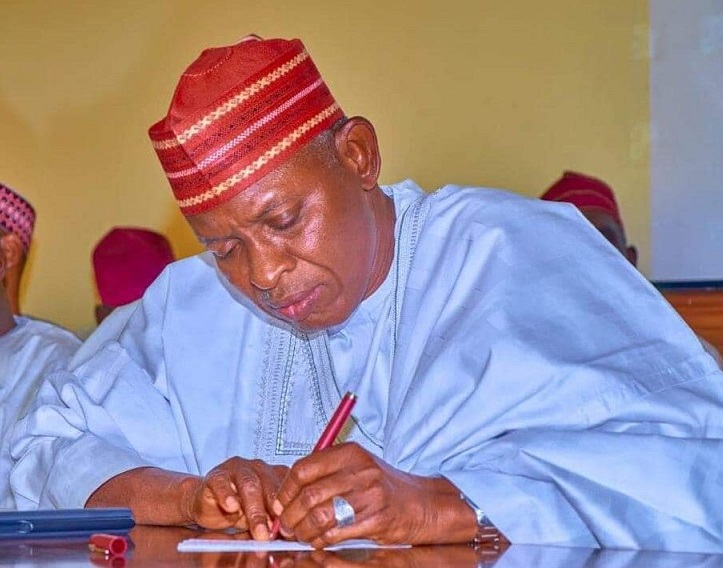
Governor Yusuf makes key appointments, revitalises Kano Line to enhance public service

By Muhammad Sulaiman

In a significant move to strengthen governance and improve public service delivery, Governor Abba Kabir Yusuf of Kano State has unveiled a series of strategic appointments and initiatives. This announcement was made through a press statement issued by his spokesperson, Sanusi Bature Dawakin Tofa, on Monday.

The governor’s actions are directed toward ensuring that skilled professionals occupy key positions within the state’s administration. He emphasizes the need for improved financial management and the overall efficiency of services provided to Kano’s citizens.

The statement noted several key appointments, including Jamila Magaji Abdullahi, the new Accountant General of Kano State. With over 16 years of experience in financial compliance and risk management, Abdullahi, a Bayero University graduate, is expected to bring integrity and transparency to the state’s financial operations. Previously, she held prominent roles in the Federal Inland Revenue Service and the Kano State Ministry of Finance.

Additionally, Muhammad Yahaya Liman has been appointed as the Director of the Treasury. Liman is a seasoned banker with extensive experience in financial reporting and regulatory compliance. He holds multiple degrees from Bayero University, including an MBA in Finance and Investment. His leadership is anticipated to significantly strengthen the state’s treasury operations.

In administration, Akibu Isa Murtala has been promoted to Special Adviser on Administration, a role that highlights his effectiveness in ensuring smooth governance processes. 

Furthermore, Governor Yusuf has reassigned Engr. Abubakar Sadiq has been appointed Deputy Managing Director of the Rural Water Supply and Sanitation Agency (RUWASA). This strategic move aims to enhance the quality of life in rural communities by addressing critical infrastructure needs.

A major highlight of the announcement was the revival of the Kano State Transport Authority, colloquially known as Kano Line. Governor Yusuf has established a strategic committee, chaired by Sa’idu Abdullahi Shu’aibu, to oversee the operation of Kano Line over the next six months. This initiative seeks to improve public transportation efficiency and align it with the state’s broader developmental goals.

The committee includes representatives from various ministries and sectors, reflecting a collaborative approach to enhancing transportation services in the state.

In his message to the newly appointed officials, Governor Yusuf highlighted the importance of innovation, dedication, and accountability in their roles. He urged them to work diligently and stressed that their contributions are vital to achieving the administration’s vision of improved governance and service delivery.

These appointments and initiatives are seen as a clear commitment from Governor Yusuf’s administration to foster development and position Kano State as a model of effective governance. 

World Economic Forum: Pan-Africanism in VP Shettima

By Lawan Bukar Maigana

I have always maintained the opinion that aid is a mechanism used by the so-called powerful nations to underdevelop weaker countries—though not deliberately, especially in African countries where insecurity is caused by terrorism or ethnic cleansing, which is a crime against humanity or genocide.

In Africa, particularly Nigeria, our major problem is poverty—a singular issue that has metamorphosed into intractable insecurities, including but not limited to the Boko Haram insurgency, banditry, and kidnapping, among others. Many people might argue that Boko Haram and the Biafra movements are ideological in nature, but the truth is that those ideological elements have long since faded, leaving the agitations as an economic venture for certain nefarious countries and individuals to exploit.

They recruit jobless, uneducated, desperate, and misguided young people into their criminal community to kill not just their enemies but anyone who upholds peace and stability. I was born and raised in Maiduguri, and I’ve never left the ‘Home of Peace’ even for a day because of the insurgency—not even when it was at its peak. Therefore, I am qualified to say a few things regarding the phenomenon. We’ve witnessed how young people were recruited into the deadly and infamous sect known as Boko Haram.

Some were paid 50k weekly, some received 150k to 300k monthly, depending on the nature of the work assigned to them, and some of the payments were in hard currencies. The same thing happens in the North Western region of Nigeria, where banditry and kidnapping thrive in the open — dozens of lives are lost, and women and children are left in depression, poverty, and psychological trauma. 

This has attracted many INGOs and subsequently led to the formation of local NGOs in the country, whose assistance is largely unsustainable and dependent. They provide cash and food items, with only a few engaging in ‘goat and sheep empowerment’, similar to the initiative recently unveiled by the Kano State Government. That initiative, too, is ineffective, as more than two-thirds of the beneficiaries, if not all, sell these items at the distribution venue. This arises because it is aid, not a partnership for economic growth.

Vice President Kashim Shettima, who is attending the World Economic Forum in Switzerland, shares my opinion. His remarks reflect a deep understanding of global economic dynamics and the need for sustainable development in Africa. Leaders like him talk about Nigeria’s untapped potential as a partner for global powers and investors. 

Instead of perpetuating the cycle of aid dependency, he spoke about the urgent need for the world to recognize Nigeria’s potential as a hub for industrialization, which would provide opportunities for millions of youth and contribute to global economic growth.

Africa, and particularly Nigeria, has long received foreign aid, often with good intentions but yielding unsustainable results. Aid might address immediate crises, but it does not tackle the root causes of poverty or unemployment. Instead, it fosters dependency, undermines local capacity, and creates temporary solutions. As Sen. Shettima’s example illustrates, Nigeria does not need fish handed to it; it needs to be taught how to fish through strategic partnerships that prioritize industrialization, skill development, and innovation.

By working together to build industries, Nigeria can unleash the potential of its vast, youthful population and ensure long-term, self-sustaining growth.

World powers and private investors must recognise Nigeria for what it truly is: a land of opportunity. With a population of over 250 million, Nigeria represents one of the largest consumer markets globally, along with an abundance of natural resources and human capital. Establishing industries in sectors such as manufacturing, technology, agriculture, and renewable energy would not only tackle the country’s unemployment crisis but also offer global investors access to untapped, profitable markets.

Partnerships that create factories, manufacturing plants, and tech hubs will empower Nigeria’s youth, reduce migration pressures, and ultimately benefit the global economy. The need for industrialisation cannot be overstated. Nigeria’s youths, brimming with talent and ambition, are eager to contribute meaningfully to the nation’s development. 

However, without opportunities, many remained unemployed, looking forward to migration in search of greener pastures. The international community can help transform Nigeria into a global production hub by establishing industries and leveraging its demographic dividend to drive innovation and development. This is the position of Sen. Shettima, who advocates for economic empowerment rather than reliance on foreign assistance.

Furthermore, industrialisation offers a win-win scenario for both Nigeria and the world. While Nigeria gains employment opportunities, technological transfer, and a diversified economy, global powers and businesses secure access to a vibrant and emerging market. Beyond economic benefits, these partnerships strengthen political stability, reduce security threats, and position Nigeria as a strong ally on the global stage. 

Sen. Shettima’s representation at the World Economic Forum emphasised this potential as he spoke about Nigeria’s challenges and its vast opportunities for collaboration and growth.

The message is that Africa, particularly Nigeria, does not require handouts. It needs partnerships that promote self-reliance, innovation, and sustainability. The world must transition from giving aid to creating opportunities. Let industries rise, let innovation flourish, and let Nigeria demonstrate to the world that, with the right tools and partnerships, it can be a formidable force. 

Lawan Bukar Maigana, Daily Trust’s 2024 Unsung Hero, writes from Maiduguri, Borno State, and can be reached via email: LawanBukarMaigana@gmail.com.

ABU awards Honorary Doctorate to Sheikh Sharif Saleh Al-Hussaini, restoring its prestige

By Hamisu Adamu Dandajeh, PhD

Recently, I have not encountered anyone more deserving of an Honorary Doctorate Degree globally than Sheikh Sharif Ibrahim Saleh Al-Hussaini Maiduguri CON. The 87-year-old global scholar and researcher has authored over 400 books and 100 conference papers in Arabic. 

Sheikh is a global mufti who currently heads the Supreme Council for Fatwa and Islamic Affairs in Nigeria (NSCIA). Throughout Nigeria’s history as a nation, no recognised Islamic scholar has made such remarkable contributions to the body of quality knowledge as the Mufti himself.

This renowned Sheikh embodies knowledge and humility and is a product of the Tsangaya System. Sheikh Sharif is, in fact, overly qualified. European universities established an Honorary Doctorate in the 15th Century to recognise exceptional individuals who have made substantial contributions to a particular field, society, and humanity despite lacking traditional academic credentials.

Sheikh Sharif has written extensively on nearly every facet of Islam, encompassing Quranic sciences, Hadith, Islamic law, history, philosophy, Islamic jurisprudence, linguistics, Islamic polity, Tauhid, Fiqh, Tafseer, Sufism, Arabic literature, Islamic law, inheritance, astronomy—indeed, astronomy—and the peaceful coexistence between nations.

While some universities worldwide have drifted away from the 15th-century original purpose of awarding Honorary Doctorates, instead prioritising celebrity appeal, fundraising, politics, diplomacy, and commercialisation, Ahmadu Bello University in Nigeria remains committed to upholding the original intent, as evident in the recent award to Sheikh Sharif. 

Sheikh Sharif has spent his entire life teaching, learning, researching, and contributing to community development, which aligns with the exact purpose of universities globally. He has exemplified scholarship and knowledge sharing, promoted interfaith dialogue, and fostered a culture of peaceful coexistence. 

Sheikh Sharif has produced many scholars of global repute, including Sheikh Professor Ibrahim Maqari, now the Chief Imam of the Central Mosque in Nigeria. He is building one of the biggest Islamic centres (Markaz) in Abuja to advance international teaching and research.

Sheikh Sharif brings class, integrity, dignity, and prestige to the Honorary Doctorate. We hope that, going forward, the nomination, review, selection, and conferment processes will remain transparent and accountable. 

To know what is next for Nigerian universities after this remarkable award, here is what Abdulbasit Kasim, a friend and a postdoctoral fellow at the African and American Studies at Stanford University, USA, added: “After awarding Shayk an honorary doctorate, Ahmadu Bello University should proceed to the next phase of translating and incorporating his books into the University curriculum. If I can include Shayk’s work on history, politics, philosophy, and economics in my Stanford syllabus, there is no reason why Nigerian students in humanities and social sciences should study Antonio Gramsci and Karl Popper but not Sharif Ibrahim Saleh and Adam Abdallah al-iluri. While this honorary degree has aesthetic value, I hope Ahmadu Bello University will diversify and broaden the curriculum beyond [the] Western canon.

Thank you, Ahmadu Bello University, for honouring an erudite scholar. Congratulations, Sheikh Sharif Ibrahim Saleh Al-Hussaini Maiduguri, on your well-deserved Honorary Doctorate in Law award.

Hamisu Adamu Dandajeh, PhD, is a Senior Lecturer in Sustainable Fuels, Energy and Climate Change at Ahmadu Bello University, Zaria – Nigeria.

Ganduje’s seized property: We only invited Muhuyi Magaji—Police

By Abdullahi Mukhtar Algasgaini

The Nigeria Police Force (NPF) has addressed recent rumors claiming the arrest of Mr. Muhuyi Magaji Rimin Gado, the Executive Chairman of the Public Complaints Commission (PCC) and the Anti-Corruption Commission.

The police clarified that no such arrest has occurred.

The police confirmed that Mr. Magaji was only invited to cooperate in an ongoing investigation related to a complaint filed against him.

On Friday, January 17, 2025, the Special Investigation Unit of the Inspector General of Police (IGP) received a formal complaint involving Mr. Magaji.

As part of the standard investigative process, he was invited to meet with police officers and assist in the inquiry.

The police emphasized that, as a respected government official, it was expected that Mr. Magaji would cooperate fully with the investigation, ensuring the matter is handled appropriately without drawing unnecessary media attention.

The police strongly rejected claims that Mr. Magaji had been arrested, labeling the reports as false and misleading.

They called on the media and the public to refrain from spreading unverified information that could cause confusion or unnecessary alarm.

The NPF reiterated its commitment to upholding the rule of law and conducting thorough investigations in accordance with legal procedures.

Germany: Duisburg offers free beer to boost voter turnout

By Maryam Ahmad

According to Bild, the German city of Duisburg is taking an innovative approach to encourage voter participation in the upcoming federal elections by offering free beer to those who cast their votes.

Mayor Sören Link explained the initiative, saying, “We want to do something about the low voter turnout and strengthen democracy.”

In the 2021 federal elections, Duisburg recorded a voter turnout of 68.1%, significantly below the national average of 76.6%. The city hopes the promise of a cold drink will motivate more residents to vote.

Non-alcoholic beer and other beverages will also be available for those who don’t drink alcohol.

Society of Nigerian Broadcasters collaborates with Faculty of Communication on investigative journalism

By Anas Abbas

Faculty of Communication of Bayero University, Kano and the Society of Nigerian Broadcasters organized a two-day round table meeting on investigative and data-driven journalism challenges.

The roundtable, held on Monday, focused on challenges of investigative and data-driven journalism and was themed ” Round table meeting on issues and challenges of investigative and data-driven journalism in the broadcast sector in North West Nigeria.”

The event, organized in collaboration with the Society of Nigerian Broadcasting, took place at the CBN Centre of Excellence at Bayero University, Kano.

Professor Umaru Pate, a communications expert and seasoned scholar, presented a paper titled “The Imperative of Investigative and Data-Driven Journalism in North West Nigeria.” 

As the keynote speaker, Pate thoroughly explained that “investigative journalism contributes to freedom of information.” 

Pate noted that some companies might pull their advertisements if the media content conflicts with their interests. 

He highlighted the pressing issue of inadequate funding for research within media organisations.

Pate noted that many outlets often overlook the necessity of investing in thorough research, emphasizing that producing quality news requires financial commitment. “To deliver high-quality journalism, organizations must be willing to allocate resources toward research,” he stated.

He addressed another significant challenge faced by investigative journalism, which is “the threats to journalists’ safety,” which underscores the need for greater support and protection for those committed to uncovering important stories.