Month: January 2025

Namadi’s SSA was wrong: A clarification concerning students’ allowances

By Isma’il Alkasim

Since the Jigawa State government announced a 100% increase in scholarship allowances for state students, it has served as a beacon of hope and high expectations. This timely intervention comes amid the economic hardship caused by the removal of fuel subsidies and the subsequent increase in registration fees at tertiary institutions. 

The government emphasised that Governor Umar A. Namadi understands the challenges students face. To support their education, the state’s scholarship board was instructed to disburse scholarship payments before the start of each academic session. This directive has undoubtedly restored hope and brought joy to the students.

The State Executive Council approved a series of memos and tags to supplement the payment, but only to a few institutions. Although the state government boasts of having paid all students, over eighty percent of institutions have not received any payment from the board. We have repeatedly read that the government approved a substantial sum for the payment, but to no avail. This has engendered mistrust and left a deep scar in our memory, raising concerns that heartless and corrupt opportunists may have stolen the funds.

Moreover, in an interview with Radio Jigawa, the Senior Special Assistant on Students Matters to the Executive Governor of Jigawa State claimed that the government had given scholarship allowances to all Jigawa State students. This claim either demonstrates his inability to represent his office truthfully or suggests his complicity in misappropriating public funds intended for student support. 

Furthermore, to strike a balance and provide an honest treatment of this issue, we attempted to reach Ambassador Muhammad Salisu Seeker, the SSA, to clarify his ill-founded assertion. However, despite our numerous text messages, he arrogantly refused to answer our calls. He did not even have the courtesy to respond. This arrogance is unbecoming of a public servant who represents the government in students’ eyes. 

As a concerned student, I find the SSA’s claim offensive and insulting. To date, Ahmadu Bello University, Zaria students have not received any payment from the Jigawa State Scholarship Board. The Senior Special Assistant has abused the trust bestowed on him by the Governor, demonstrating sheer incompetence and a monumental failure in public service.

Finally, as a concerned citizen of Jigawa State, I call upon Governor Umar A. Namadi to investigate this matter thoroughly and ensure that anyone found guilty faces the full force of the law. I also urge him to address the misconduct of his Senior Special Assistant on Students Affairs, Amb Muhammad Salisu (Seeker), who has demonstrated a pattern of abusing his office through gross incompetence.

Isma’il Alkasim is a student at Ahmadu Bello University in Zaria. He writes from Garki Jigawa State and can be reached at kogasgarki@gmail.com.

My journey as a studentpreneur

By Amina Muhammad Sani

When I first stepped into university life, I thought it would be a breeze compared to secondary school. I assumed that financial burdens would be minimal and that I could coast through with ease. But reality quickly set in.

As a young adult, I realised I needed to take charge of my finances. That’s when I ventured into the egg business—sourcing eggs from farms and selling them to shop owners. The business initially showed promise, but I soon encountered a major hurdle: getting paid on time.

The delayed payments took a significant toll on my mental well-being. As a student entrepreneur, I relied heavily on the income from my egg business to cover essential expenses like transportation, handouts, and saving for next year’s school fees. With the uncertainty of when I’d receive payment, I found it challenging to focus on my studies. The constant worry and stress began to affect my academic performance. It was then that I decided to pivot and explore a new business venture – making samosas.

Initially, my samosa business took off, and I was thrilled to have finally found a reliable source of income. However, success comes at a cost. Making samosas was labour-intensive and time-consuming, requiring me to wake up at night to prepare for the day. The exhaustion was overwhelming, and I often dozed off during lectures. Despite the high demand and timely customer payments, I realised that the business was jeopardising my academic performance. The very reason I started the business – to support my education – was now being undermined. I knew I had to make a change again. This time, I decided to switch to making buns and doughnuts.

Making buns and doughnuts proved to be a more manageable venture, as I could prepare them in advance. However, I soon faced a new challenge: declining demand. Students lost interest in my baked goods, preferring samosas instead. The economic climate didn’t help, as the rising prices of snacks made it difficult for students to afford my products. As a result, sales dwindled, and I was left relying on the kindness of friends who purchased my snacks out of sympathy. But I knew I couldn’t sustain a business based on charity. I needed a more reliable solution. Having always been self-sufficient, I decided to explore alternative options for supporting myself financially. This led me to take on a job as a sales girl at the market.

Landing a job as a sales girl at the market was a dream come true. The pay was good, and I was finally on my way to becoming a successful, independent businesswoman – a goal I’d always been passionate about. As a final-year student in my final semester, I had a flexible schedule, with lectures only on Mondays and Thursdays. This allowed me to dedicate the remaining days to work, as agreed upon with my boss.

However, my new role came with its own set of challenges. My early morning departures and late evening returns raised concerns at home. In my community, it’s deemed improper for a female child to stay out late at night. My mom would often call me, suggesting that I quit my job, as it was deemed more suitable for men. The real issue, though, was the difficulty I faced in finding transportation after closing work at 6 PM. The location was far from home, and the rush of workers leaving at the same time made it challenging to find a ride, often leaving me stranded until 7 or 8 PM.

My experience as a salesgirl taught me valuable lessons about perseverance and determination. However, juggling this role with my academic responsibilities proved incredibly challenging. The physical and mental exhaustion were constant companions, and convincing my mom to allow me to continue working was an ongoing battle.

Through this journey, I’ve come to realise that becoming a successful businessperson requires unwavering dedication. Business and education are two distinct paths that demand individual focus. In my opinion, it’s unrealistic to expect someone to excel in both simultaneously.

I struggled to balance these two aspects of my life, and I firmly believe that students should prioritise their studies. Entrepreneurship can wait until after graduation, or students can explore business ventures that complement their academic schedules without compromising their studies. By focusing on one goal at a time, individuals can give their all and achieve success.

Amina is a level 400 student of Mass Communication, and she writes from Bayero University, Kano

KAYI Microfinance Bank: Empowering Tsangaya schools for economic transformation in Northern Nigeria

By Rabiu Alhassan Elkanawi

As Nigeria continues to champion financial inclusion and socio-economic development, KAYI Microfinance Bank has taken a decisive step to address the needs of remote communities through an initiative named Grassroots Empowerment and Engagement Project.

Recognising the unique challenges faced by Tsangaya (Almajiri) schools in Northern Nigeria, KAYI Bank has launched a pilot program across four states—Kano, Katsina, Kaduna, and Jigawa—targeting these centuries-old learning centres to boost financial literacy, entrepreneurial activities, and access to digital banking services.

Tsangaya schools have traditionally offered Islamic knowledge, basic literacy, and numeracy skills, primarily in Arabic. Many of these centres are located in areas with little or no access to conventional banking facilities, leaving them vulnerable to financial exclusion. Poverty and unemployment continue to be rampant in these communities, where students (almajirai) often resort to street begging to meet their needs. This new program by KAYI Microfinance Bank directly tackles these issues by positioning Tsangaya instructors and leaders as community champions of digital financial inclusion and economic empowerment.

Piloted in August 2024, the program provides each participating Tsangaya school with a range of resources valued at about five million naira. This includes training sessions on financial literacy, business management, and start-up funds. These investments enable each school to establish and operate a cash point business, offering critical services such as deposits, withdrawals, and transfers. By eliminating the need for community residents to travel long distances to access banking, the initiative significantly cuts costs and eases residents’ financial transactions.

The empowering nature of this approach promotes trust in financial institutions. Community members can interact with familiar faces—teachers and leaders from the Tsangaya schools—who have undergone comprehensive training to provide financial literacy and other training to the community and effectively manage these cash points. Over time, the program will enhance economic engagement, stimulate local entrepreneurship, and help reduce poverty rates in historically underserved regions.

By placing financial tools within reach of marginalised populations, KAYI’s initiative offers a sustainable solution. Stakeholders, including students, parents, and local traders, gain firsthand exposure to the benefits of digital banking. Basic financial concepts—saving, budgeting, and prudent money management—are introduced in an environment that respects the community’s cultural norms and values.

This program’s potential extends beyond immediate monetary benefits. Supporting Tsangaya schools contributes to the broader goal of social development and community upliftment. If children have better prospects for skills acquisition and financial stability, fewer may be compelled to resort to street begging. Building trust and familiarity with digital banking services encourages more people to open savings accounts, apply for microloans, and engage in entrepreneurial endeavours.

KAYI Microfinance Bank’s efforts align with the broader objectives of financial inclusion strategies set by the Central Bank of Nigeria (CBN). With many remote regions in the North still lagging in access to credit and other essential banking products, the bank’s model provides a blueprint for how financial institutions can partner with local leaders to overcome distrust and logistical barriers. Further replication of this approach will likely spur economic activities, reduce unemployment, and help alleviate poverty.

As the pilot program continues, KAYI plans to monitor and measure outcomes to refine and expand the model. The ultimate goal is to replicate the initiative across more states in Northern Nigeria and beyond. The bank envisions a future where every region, no matter how remote, can participate actively in the digital financial system, thereby nurturing entrepreneurship and uplifting entire communities.

KAYI Microfinance Bank is a beacon of corporate social responsibility. By creating a culture of financial literacy among grassroots populations, the bank has set a high standard for other financial institutions to follow. By merging profit-driven objectives with a genuine commitment to social impact, the bank has created a virtuous cycle: stronger local economies, lower poverty rates, and a more inclusive financial ecosystem that can drive sustainable development across Nigeria.

Rabiu Alhassan Elkanawi writes from Kano, and he can be reached via email at alhassanelkanawi@gmail.com.

Kano gov celebrates new year, assures residents peace, prosperity in 2025

By Anwar Usman

Kano state Governor, Abba Yusuf of has extended warm and heartfelt New Year greetings to the people of the state within and outside the state including those in the diaspora.

He expressed optimism that 2025 would be a brighter and more prosperous year.This was contained in a statement signed by the governor’s spokesman, Sunusi Tofa on Wednesday.

In his message, the governor appreciated the resilience and patience of Kano residents in navigating the challenges of 2024 and reassured them of his unwavering commitment to delivering meaningful progress and development in 2025.

The governor, in the statement was quoted saying “Happy New Year to the good people of Kano State. May 2025 bring us peace, prosperity, and more unity”.

While pledging to work tirelessly to improve the lives of every citizen of the state, Yusuf said his administration had made significant efforts to ensure the timely approval of the 2025 budget, describing it as a critical step toward accelerating development across the state.

With the budget now in place, the governor expressed confidence that Kano would witness remarkable improvements in infrastructure, healthcare, education, and agriculture in the year ahead.

He also reiterated his administration’s commitment to empowering youth and women through skills acquisition initiatives and increased access to credit for small and medium-sized businesses.

The governor called on the people of Kano to remain united and supportive of the government’s vision for progress.

BUK promotes Suwaiba Sa’id, Suleiman Yaradua, 64 others to professors, associate professors

By Uzair Adam

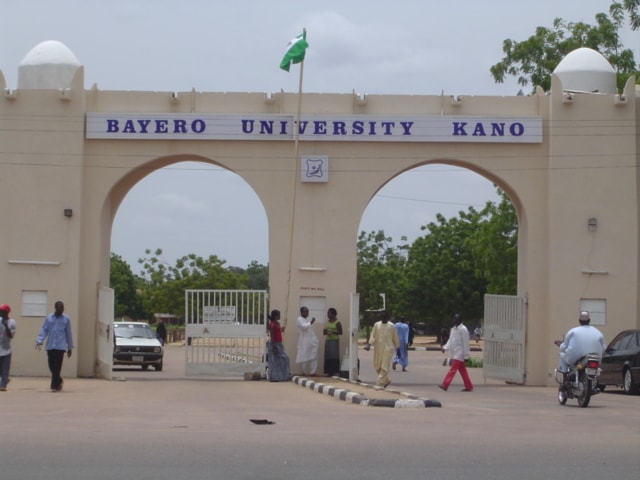
Bayero University Kano (BUK) has announced the promotion of 66 academic staff to the esteemed ranks of Professors and Associate Professors for the year 2024.

This was disclosed in a statement issued by the Deputy Registrar/Head of Public Affairs Directorate, Lamara Garba, on Tuesday.

The Daily Reality reports that 44 academic staff members were elevated to the rank of Professors, while 22 others achieved the status of Associate Professors.

The statement noted that this achievement reflects the university’s unwavering commitment to promptly recognizing and rewarding academic excellence.

“Among these recent promotions are the backlogged cases from 2023, ensuring that all deserving staff members receive due recognition,” the statement added.

Promoted to the Professorial cadre were the Minister of State for Education, Suwaiba Said Ahmed, Suleiman Mainasara Yaradua, and Muhammad Sani Umar Musa, among others.

The Management reassured the university community that all eligible individuals would be promoted in line with the institution’s promotion guidelines, while urging staff and departments to strictly adhere to these guidelines to uphold the integrity and transparency of the promotion process.

Tinubu promises better days for Nigerians in 2025

By Uzair Adam 

President Bola Ahmed Tinubu expressed optimism about brighter prospects for Nigerians in 2025 in his New Year message. 

He highlighted economic improvements, such as reduced fuel prices, strengthened foreign reserves, and increased foreign investments, and attributed them to his administration’s efforts.  

Tinubu acknowledged challenges like high food and drug costs and pledged to tackle inflation, aiming to lower it from 34.6% to 15%. 

He announced plans to expand credit access by establishing a National Credit Guarantee Company to begin operations by mid-2025 to boost economic growth and support underserved groups.  

The president called for unity, urging Nigerians to avoid divisive tendencies and remain focused on building a prosperous nation. 

He reaffirmed his commitment to reforms, emphasising his goal of achieving a one trillion-dollar economy.

FCT Police recover ₦409m from kidnappers, others in 2024

By Anwar Usman

The Nigeria Police Force, Federal Capital Territory Command, recovered a total of ₦409,992,000 from criminals during various operations in 2024.

A breakdown of the recovered sum, according to the command’s scorecard made available to journalists on Wednesday by the command’s spokesperson, Josephine Adeh, revealed that ₦36,850,000 was recovered from kidnapping suspects; ₦68,552,000 from armed robbery suspects; ₦19,590,000 from burglary cases and ₦285,000,000 from fraud cases.

Also, in 2024, Adeh stated that 1,426 cases were reported, leading to the apprehension of 1,077 suspects.

According to the scorecard, fraud cases were the most reported, with 385 cases and 422 suspects arrested. This was followed by armed robbery, with 268 cases and 132 suspects arrested.

One-chance robbery ranked third, with 263 cases leading to 71 arrests. Car theft came next, with 127 cases and 64 suspects arrested. Kidnapping took the top five position with 104 cases, resulting in the arrest of 216 suspects.

“For cybercrime, 32 cases were reported, and 15 suspects were arrested. For homicide, 68 cases were reported, leading to 78 arrests. Burglary saw 73 cases, with 20 suspects arrested, while cultism recorded 38 cases, leading to 59 arrests,” the scorecard stated.

The report also indicated that 376 firearms, including 13 AK-47 magazines and 187 rounds of live ammunition, were recovered.

The report further revealed that “Seventy-three vehicles were recovered from car theft cases, 24 from one-chance robbery cases, and two from cultism cases. The above statistics show a 15.1% reduction in crime incidents within the FCT, recorded between 2023 and 2024. Additionally, 68 kidnapping victims and 19 one-chance robbery victims were rescued”.

While highlighting the command’s readiness for 2025, Adeh explained that efforts would focus on enhancing community policing and conducting targeted operations.

“Building on the successes of 2024, the Command will intensify: Community policing engagements—intelligence-led policing strategies. Targeted clearance operations and public enlightenment initiatives were used to address the evolving security demands of the FCT.

“With a significant reduction in crime rates and a stable, peaceful atmosphere in the FCT, the Command is committed to sustaining the momentum in fighting against criminal activities,” she said.

Bashir Saidu, El-Rufai’s top aide, arrested

By Abdullahi Mukhtar Algasgaini

Bashir Saidu, the chief of staff to Nasir El-Rufai, the former governor of Kaduna State, was arrested by Operation Fushin Kada, formerly Operation Yaki, on Tuesday.

Mr Saidu, a top political ally of Mr El-Rufai, was rounded up by the operatives of the anti-banditry police outfit in the Rigachikun area, allegedly on the orders of the state government.

Sources said the operatives earlier laid ambush near Mr Saidu’s residence at Coronation Crescent, Kaduna, before pinning him down at Rigachikun.

A source familiar with the development said he was first taken to the Operation Fushin Kada office at Constitution Road, where they took his statement and later arraigned him at a magistrate’s court in Rigasa.

“I wonder why Operation Yaki [Operation Fushin Kada] will involve itself in a clear case of political witch-hunt and repression against loyalists of former Governor El-Rufai.

“The operatives have abandoned their job of protecting the citizens against bandits and kidnappers to harass innocent citizens. It is strange that Operation Yaki is now preparing FIR and filing charges against perceived opponents of the governor.

“Despite giving a satisfactory statement, denying involvement in money laundering and sale of 12 government houses, the operatives nevertheless took Bashir Saidu to court,” said the source.

After hearing the arguments of the prosecution and defence counsel, Magistrate Muhammad Lawal Musa rejected the bail application and ordered the former chief of staff remanded at Kaduna Central Prison.

The case was adjourned to January 21, 2025.

Sources familiar with Kaduna politics said politicians loyal to Mr El-Rufai are currently facing charges either in the state or at the Code of Conduct Tribunal, EFCC or ICPC.

A spokesman for Governor Uba Sani, Ibraheem Musa, could not be reached when filing this report.