Month: January 2025

Prof. Mustapha Muhammad retires after nearly 50 years at Bayero University

By Muhsin Ibrahim

Professor Mustapha Muhammad, a long-standing figure in the Department of English and Literary Studies at Bayero University, Kano, officially retired after an impressive 47 years of service. His disengagement marks the end of a significant chapter in the university’s history.

Known for his dedication to teaching, research, and mentoring, Professor Muhammad leaves behind a legacy that has shaped the minds of countless students and educators. His farewell on January 5 was not only a personal milestone but also a moment of reflection for the department that has greatly benefited from his wealth of knowledge and experience.

Colleagues express concerns about the impact of his retirement on the department. Malam Maikudi Zukogi noted that while Professor Muhammad’s departure was anticipated, it highlights the challenges ahead, especially following the recent retirements of two other long-serving faculty members – Profs. Isma’ila Tsiga and Sa’id Babura Ahmad. Zukogi stated, “His absence creates a significant vacuum that will be difficult to fill.”

As Professor Muhammad embarks on this new phase of his life, colleagues and students alike have extended their well wishes, expressing hopes for good health and a smooth transition into retirement. The university community acknowledges his invaluable contributions and looks ahead to sustaining the foundation he helped establish.

Customs receive over 573,000 applications for 3,927 vacancies in just 1 week

By Sabiu Abdullahi

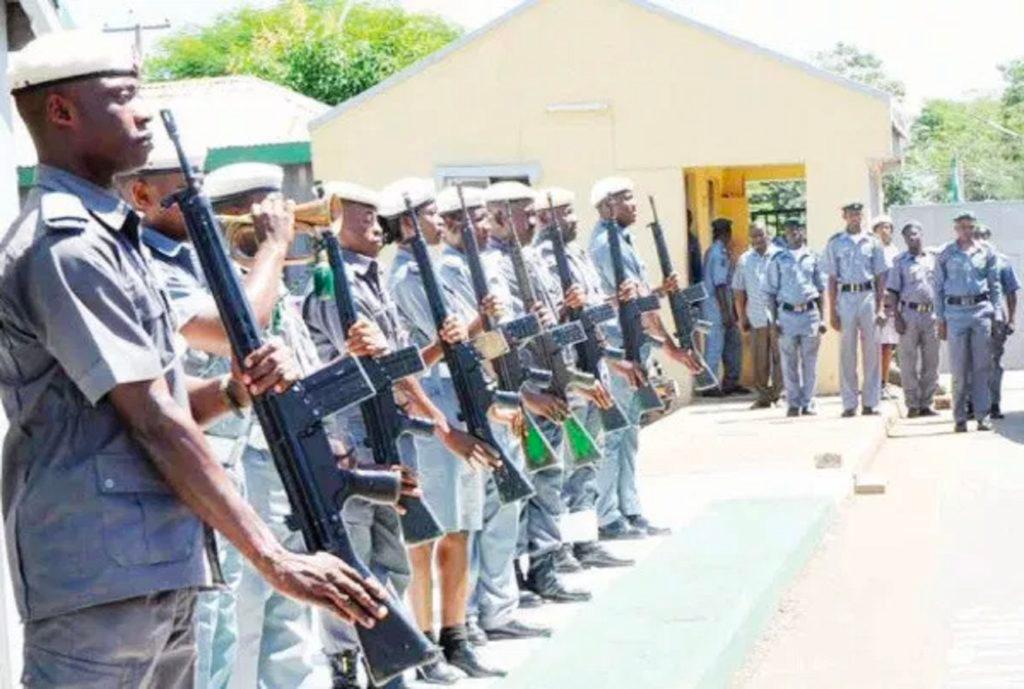
The Nigeria Customs Service (NCS) has disclosed that it received an overwhelming 573,519 applications for its 2024/2025 recruitment exercise within just one week of opening the application portal.

This announcement follows the Federal Government’s recent approval of 3,927 new recruitments for the service.

The Minister of Finance, Mr. Olawale Edun, had earlier revealed that the government had authorized the recruitment, which aimed to strengthen the workforce of the NCS.

Providing an update, the NCS spokesperson, Abdullahi Maiwada, gave a detailed breakdown of the applications submitted for both general duty and support staff positions, spanning multiple ranks.

“I want to break down the number of people that applied. We have two categories of officers: we have the support staff who are professionals, and we have the general duty.

“For the general duty, we have three categories of ranks. For the general duty under the superintendent cadre, we have 249,218,000 candidates who applied. Under the superintendent cadre support staff, we have 27,722,000 with HNDs and university degrees.

“For the inspector cadres, those expected to apply with their National Certificate for Education (NCE) or National Diploma, we have 115,634 applying for the general duty, and for support staff, we have 12,952.

“As for the customs assistants, these are those who are supposed to come in with secondary school certificates.

“There are two categories: those who have basic five-credit results with Maths and English, and those without Maths and English. For the general duty, we have 153,593,000, while for the support staff, we have 14,400,” Maiwada explained.

The recruitment exercise has drawn significant public attention due to the sheer number of applicants vying for the limited positions, highlighting the competitive nature of government employment in Nigeria.

NAHCON kicks off major preparations for 2025 Hajj

By Abdullahi Mukhtar Algasgaini

The National Hajj Commission of Nigeria (NAHCON), led by Chairman Prof. Abdullahi Saleh Usman, has commenced its official preparations for the 2025 Hajj pilgrimage with a significant working visit to Saudi Arabia.

The visit, which started on January 7, 2025, follows an invitation from the Saudi Ministry of Hajj and Umrah (MoHU), and aims to lay the groundwork for a successful pilgrimage later in the year.

The Nigerian delegation, which includes top NAHCON officials, is set to finalize key arrangements for the 2025 Hajj.

This includes the signing of a Memorandum of Understanding (MoU) with Saudi authorities, which is scheduled for January 12, 2025.

The MoU will outline the framework for the coming year’s Hajj operations. Nigerian Foreign Minister, His Excellency Ambassador Yusuf Maitama Tuggar, will sign the MoU on behalf of Nigeria.

Accompanying Prof. Usman are NAHCON Commissioners for Planning, Research, Statistics, Information, and Library Services (PRSILS), Prof. Abubakar Abubakar Yagawal; Operations, Inspectorate, and Licensing Services (OILS), Prince Anofiu Olanrewaju Elegushi; and Policy, Personnel Management, and Finance (PPMF), Alhaji Prince Aliu Abdulrazaq.

Representatives from various Nigerian states’ Pilgrims’ Welfare Boards and Commissions, as well as Private Tour Operators, are also part of the visit.

Additionally, members from the Nigerian National Assembly, the Presidency, and the aviation industry have joined the delegation to help oversee preparations and decision-making.

A crucial part of the visit is the attendance of the International Hajj Expo, which kicks off on January 13, 2025. The delegation will evaluate potential service providers for Nigerian pilgrims at the event.

As part of the visit’s agenda, Prof. Usman and his team will hold consular meetings and engage in discussions with the heads of other countries’ Hajj missions.

They will also meet with the supervisors of the Hajj e-track registration portal, as well as officials from the General Authority of Civil Aviation (GACA) and other key stakeholders.

These consultations will finalize arrangements ahead of the MoU signing and set the stage for subsequent contracts with service providers, including United Agents, Car Syndicates, Tafweej, Adillah in Madinah, and Health Supervision Companies.

Meanwhile, other NAHCON staff members are conducting inspections of accommodations, catering facilities, and medical establishments in Makkah and Madinah to ensure they meet the required standards before finalizing agreements with service providers.

The ongoing preparations reflect Nigeria’s commitment to ensuring a smooth and successful Hajj for its citizens, with all logistical and service arrangements being carefully put in place ahead of the pilgrimage later in the year.

Tinubu splits Nigerian College of Aviation Technology (NCAT) to six zones

By Abdullahi Mukhtar Algasgaini

President Bola Tinubu has announced the division of the Nigerian College of Aviation Technology (NCAT) in Zaria, Kaduna State, into six regions.

Tinubu made the decision to split the Nigerian College of Aviation Technology, Zaria, in order to improve its operations, as stated in the announcement.

According to the APC section in Ondo State, these six campuses will be established in different regions of Nigeria.

New campuses will be set up in Akure (South-West), Osubi (South-South), and Ebonyi (South-East), while others will be established in Ilorin (Central), Yola (North-East), and Zaria (North-West.)

Definitions of 20 newly added Nigerian words in Oxford English Dictionary

By Ishaka Mohammed

The Daily Reality earlier reported that the Oxford English Dictionary (OED) had included 20 Nigerian words in its latest update. Below are their definitions.

1. 419 (noun): Fraud (now usually perpetrated on the internet) involving requests for advance payment in return for a substantial share of a large amount of money, which ultimately is never given. Frequently as a modifier, as in 419 emails, 419 scams, etc.

2. abi (adverb): Used as a sentence adverb: clearly, obviously; of course. Also used interrogatively, at the end of a statement, to prompt agreement, approval, or confirmation: ‘isn’t that so?’, ‘am I not correct?’, etc.

3. adire (adjective, noun): Made of a type of fabric produced mainly in south-western Nigeria, featuring patterns obtained by applying indigo or other dyes using various resist-dyeing techniques; a type of fabric produced mainly in south-western Nigeria, featuring patterns obtained by applying indigo or other dyes using various resist-dyeing techniques. Also: the method of producing this fabric.

4. agbero (noun): Originally: a person (usually a boy or young man) who works as a tout, typically at car parks and bus stops, collecting money from passengers and drivers and ushering passengers onto vehicles. Later also (now chiefly): a person (usually a boy or young man), who obtains money or wins influence by engaging in criminal activity, such as extortion, theft, and drug dealing, often as a member of a gang.

5. area boy (noun): A person (usually a boy or young man), who obtains money or influence by engaging in criminal activity, such as extortion, theft, and drug dealing, often as a member of a street gang. Also: a person (usually a boy or young man) who works as a tout or enforcer.

6. cross-carpet: (verb): Of a politician: to move from one political party to another.

7. cross-carpeting (noun): The action or practice of a politician moving from one political party to another. Also: an instance of this.

8. eba (noun): A kind of dough made with boiled cassava meal, typically shaped into balls, forming a staple food in parts of West Africa.

9. Edo (noun; adjective):  A member of a people inhabiting the ancient Benin Kingdom in present-day southern Nigeria; of or relating to the language of the Edo, a member of the Benue-Congo branch of the Niger-Congo language family; designating this language.

10. gele (noun): A West African head-tie originally worn by Yoruba women, typically consisting of a stiff piece of fabric printed with designs in bright colours, which can be tied or wrapped around the head to form various shapes.

11. jand (noun; verb): A foreign country; a country other than one’s own; to travel overseas, esp. in search of further education, employment, or economic opportunity.

12. janded (adjective): Designating a person who has travelled overseas; of, relating to, or characteristic of such a person. Also: characteristic of or coming from a country other than one’s own; foreign.

13. japa (noun; verb): The emigration of Nigerians to other countries (esp. those in Europe or North America) in search of further education, employment, or economic opportunity; to leave Nigeria for another country (esp. one in Europe or North America) in search of further education, employment, or economic opportunity. Also more generally: to escape, to flee. 

14. Kanuri (noun; adjective): A member of a group of African peoples principally inhabiting north-eastern Nigeria, with some populations in Niger, Chad, Cameroon and Sudan; of or relating to the language of the Kanuri.

15. kobo (noun): Also in extended use: a very small amount (of money); usually in negative constructions, as in not a kobo, not worth a kobo, etc.

16. Naija (adjective; noun): Of, belonging to, or relating to Nigeria or Nigerians; a native or inhabitant of Nigeria, or a person of Nigerian descent.

17. suya (noun): In Nigerian cookery: a dish consisting of thinly sliced pieces of spiced meat grilled or roasted on a skewer, usually sold by street vendors and eaten as a snack.

18. yahoo (noun): Fraud perpetrated on the internet, esp. involving requests for advance payment for services or products that are ultimately never provided. Usually reduplicated, as yahoo yahoo.

19. yahoo boy (noun): A person (esp. a man) who commits fraud on the internet.

20. yarn dust (verb): to talk nonsense.

The history, pronunciation, example sentences and other details about each word are available at https://www.oed.com.

Chinese bank approves €245m loan for Kano-Kaduna railway project

By Uzair Adam 

The China Development Bank (CDB) has approved a €245 million ($254.76 million) loan to fund the Kano-Kaduna railway project in Nigeria.  

In a statement released on its official website on Tuesday, the bank confirmed that the financial package is intended to ensure the smooth continuation of the railway’s construction. 

The statement read, “China Development Bank has recently granted a loan of €245 million ($254.76 million) to the Kano-Kaduna railway project in Nigeria, providing financial support for the smooth progress of the project.”  

The 203-kilometre standard-gauge railway line will connect Kano, a major commercial hub in northern Nigeria, to the federal capital, Abuja. 

Once completed, the railway will enhance regional connectivity, offering residents a safer and more efficient mode of transportation.  

In addition to improving mobility, the project is expected to drive economic growth by promoting industrial development along its corridor. 

It will also generate significant employment opportunities during its construction and subsequent operations.  

The Kano-Kaduna railway is recognized as a key cooperation project under the Third Belt and Road Forum for International Cooperation. Construction is being executed by the China Civil Engineering Construction Corporation, with financing from the CDB.  

Previously, the project was slated for funding by the China Exim Bank, which later withdrew its financial commitment. The CDB subsequently stepped in as the new financier.  

The bank reaffirmed its commitment to collaborating closely with the Nigerian government to ensure timely disbursement of funds and effective management of subsequent project phases.  

“Going forward, [the CDB] will closely coordinate with Nigerian partners to ensure the smooth disbursement of subsequent loans and effective post-loan management,” the statement added.  

President Bola Tinubu had earlier assured Nigerians that the broader Ibadan-Abuja-Kaduna-Kano railway project would be completed satisfactorily. 

The Federal Government has allocated N44.4 billion this year to complete the Abuja-Kaduna Railway project, the Lagos-Ibadan railway, and other rail infrastructure initiatives.  

Meanwhile, the Foreign Minister of China, Wang Yi, is expected in Abuja on Wednesday for an official visit. 

During his stay, Yi, a member of the Political Bureau of the Communist Party of China, will engage in discussions to further strengthen bilateral relations between Nigeria and China.

Africa, France and the New World 

By Zayyad I. Muhammad

Millions of Africans have emigrated to Europe, America, and other parts of the world. This emigration is driven by both push and pull factors — economic challenges, political instability, conflicts, and the pursuit of better job opportunities and more accessible social services.

Despite often being stringent in their immigration policies, receiving countries have found ways to benefit from this influx. They tap into the labour, expertise, and talent of these immigrants. Rather than solely viewing immigration as a burden, many of these nations recognize the potential gains from incorporating skilled and unskilled labour into their economies.

Several West African countries have reassessed and severed their military ties with France in recent years. Notable examples include Mali in 2022, Burkina Faso in January 2023, Niger Republic in 2024, Chad in November 2024, Senegal in December 2024, and Ivory Coast in December 2024. These moves signal a significant shift in regional dynamics as these nations seek to assert greater sovereignty and explore alternative partnerships. Some have terminated defence agreements outright, while others are exploring new international collaborations.

International relations experts see these developments as pivotal. However, they caution that these countries might merely replace one foreign power with another without concrete plans for mutual benefits. For instance, in Niger Republic, the Russian presence, along with the mercenary group Wagner, has not brought substantial change. Wagner’s operations in several African nations, such as Mali, have drawn criticism, with human rights groups accusing its forces of severe abuses.

Reuters reported that: “French President Emmanuel Macron recently expressed frustration over the perceived lack of acknowledgement from certain African nations regarding France’s military interventions in the Sahel region. Speaking at a foreign policy conference with French ambassadors, Macron claimed that some African leaders had “rewritten history” concerning France’s role in combating Islamist militants since 2013. He argued that these states might have lost their sovereignty without French military support.

However, officials from countries like Chad and Senegal have pushed back, asserting that their decisions to expel French troops were made independently and in the best interest of their nations. Chadian Foreign Minister Abderaman Koulamallah criticized Macron’s remarks as disrespectful, while Senegalese Prime Minister Ousmane Sonko emphasized that Senegal’s decision was made without any negotiation with France.”

For Africa to progress, its leaders must define the continent’s needs, recognize its current position, and set a clear direction for the future. Africa must move beyond the outdated narrative that external forces are the primary obstacles to its development. The global landscape has evolved, and Africa must engage with international partners based on mutual respect and benefit.

For example, France and Nigeria have an excellent trade relationship, with Nigeria serving as France’s leading trading partner in sub-Saharan Africa. So, if country A sees the French as a bottleneck, you don’t expect Nigeria to do so. 

If countries like France, China, Russia, or the United States want to invest in Africa, they must do so with clear, mutually beneficial agreements. African resources should be processed on African soil, ensuring the continent gains more than raw material exports. Africa needs technology transfer, expertise, and infrastructure development to foster sustainable growth.

Africa must adopt a global perspective and interact with nations based on their strengths in areas like United Nations status, military power, industrial capacity, African diasporas, trade volumes, and financial influence. Only through strategic, well-negotiated partnerships can Africa harness its full potential and assert its rightful place in the global arena.

Zayyad I. Muhammad writes from Abuja via zaymohd@yahoo.com.

Gov Yusuf special adviser dies day after appointment

By Uzair Adam

Kano State Governor, Alhaji Abba Kabir Yusuf, has expressed profound grief over the demise of Engr. Ahmad Ishaq Bunkure, the newly appointed Special Adviser on Works, who passed away on Tuesday in Egypt.

The governor’s spokesperson, Sunusi Bature Dawakin Tofa, announced the development in a statement released on Wednesday.

Governor Yusuf described the death of Engr. Bunkure as a tragic and irreplaceable loss to the state, his family, and the political community at large.

He offered prayers for Allah’s mercy upon the deceased and fortitude for his family to endure the painful loss.

“This is a heartbreaking moment for us as a government. Engr. Bunkure was a dedicated professional whose expertise and contributions were expected to drive our administration’s vision for development. His loss is deeply felt,” the governor stated.

Engr. Ahmad Ishaq Bunkure’s appointment as Special Adviser on Works had been announced just a day prior, making his sudden death a shock to many.

Condolences have poured in from various quarters, including His Excellency, Senator Rabiu Musa Kwankwaso, and members of the Kano State Government.

Prof Salisu Shehu: right man, right appointment, right time

By Ado Sunusi Sabongida

The recent appointment of Prof. Salisu Shehu as the Executive Secretary of the Nigerian Educational Research and Development Council (NERDC) by President Bola Ahmed Tinubu has sparked a wave of excitement across the education sector. This significant development underscores Prof. Shehu’s unwavering dedication and substantial contributions to the advancement of education in Nigeria.

A Track Record of Excellence

Prof. Shehu’s impressive credentials speak volumes about his capabilities and commitment to educational reform. His previous role as Special Adviser on Social Reorientation Programs during the Isah Yuguda administration in Bauchi State showcased his ability to navigate complex educational landscapes effectively. Furthermore, his leadership as the National Coordinator of the International Institute of Islamic Thought (IIIT) Nigeria office and Secretary of the Nigeria Islamic Council under Sultan Abubakar Sa’ad (III) highlight his influence and dedication to promoting educational initiatives.

Visionary Leadership for a Brighter Future

As the pioneer Director of the Center for Continuing Education at Bayero University, Kano, Prof. Shehu introduced a range of innovative developments that enhanced the institution’s academic environment. His leadership style is characterized by a strong commitment to mentoring and fostering educational growth.

In his capacity as Vice Chancellor of Al-Istiqama University Sumaila, he has consistently sought to develop both academic and non-academic staff through seminars and symposia aimed at boosting their intellectual capacities.

Moreover, his recent appointment as a Shura Council member by Kano State Governor Engineer Abba Kabir Yusuf further attests to his tireless efforts in community development and his dedication to improving educational outcomes.

High Expectations as Prof. Shehu Takes Charge

With Prof. Shehu at the helm of NERDC, we can anticipate a new era marked by innovation and progress within the education sector. His extensive experience, combined with his passion for educational advancement, positions him as an ideal candidate to spearhead meaningful change. “Prof. Shehu will deliver more than expectations in the commission.”

A Bright Future Ahead for Education in Nigeria

The appointment of Prof. Salisu Shehu as Executive Secretary of NERDC is indeed a welcome development for Nigeria’s education sector. With his proven track record and steadfast commitment to educational excellence, Prof. Shehu is well-equipped to leave a lasting impact on the landscape of education in the country. As Nigeria continues its pursuit of educational advancement, Prof. Shehu’s leadership will undoubtedly play a pivotal role in shaping a brighter future for education in Nigeria.

Sabongida writes from Kano State.

Breaking: “Agbero”, “japa”, “suya”, 17 other Nigerian words enter Oxford English Dictionary

By Ishaka Mohammed

The Oxford English Dictionary (OED) has published its latest updates, featuring a collection of 20 words and phrases from Nigeria, Dr Kingsley Ugwuanyi, a consultant on Nigerian English for the OED, announced.

The Daily Reality can confirm that the dictionary has defined the words and phrases. However, while the majority of them (agbero, eba, japa, suya, etc.) were first published in December 2024, others (edo, kanuri, kobo, and yarn) were only updated with new meanings.

Dr Ugwuanyi, who played a significant role in the update, revealed that, in addition to drafting most of the words, he also provided their pronunciations. “When you explore the OED online and click on the pronunciations, you’ll hear my voice bringing these words to life,” he shared in a celebratory post on LinkedIn.

The newly added words reflect diverse aspects of Nigerian life, from everyday slang to cultural expressions. The list includes:

1. 419

2. abi

3. adire

4. agbero

5. area boy

6. cross-carpet

7. cross-carpeting

8. eba

9. Edo

10. gele

11. jand (noun, verb)

12. janded (adjective)

13. japa (noun, verb)

14. Kanuri

15. kobo

16. Naija

17. suya

18. yahoo

19. yahoo boy

20. yarn dust

Dr Ugwuanyi thanked Danica Salazar, the OED’s World Englishes editor, and the entire editorial team and encouraged Nigerians to share their favourite words from the list and suggest new ones for future updates.

Recall that the dictionary added 29 Nigerian words and phrases in 2020, and CNN reported that those were in addition to the at least 57 others already in the dictionary.

The Daily Reality is still compiling the definitions of the latest additions for easier access.