Month: December 2024

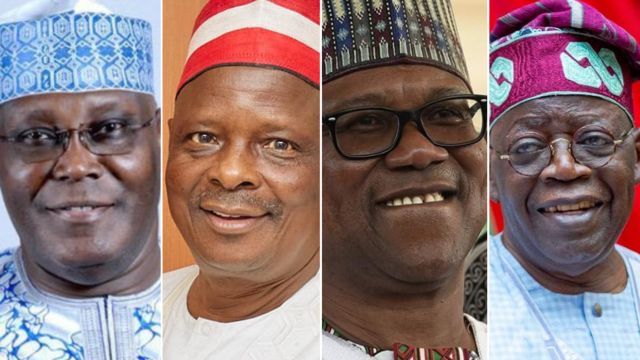
Kwankwaso denies rumours of power-sharing deal with Atiku, Obi

By Uzair Adam 

Senator Rabiu Musa Kwankwaso, former governor of Kano State and presidential candidate of the New Nigeria People’s Party (NNPP), has dismissed rumours suggesting he entered a power-sharing agreement with opposition candidates Atiku Abubakar of the Peoples Democratic Party (PDP) and Peter Obi of the Labour Party (LP).  

In an interview with the BBC, Kwankwaso expressed anger over the claims, describing them as baseless fabrications intended to mislead the public. 

He alleged that Atiku’s camp had met with regional leaders, including clerics, to promote the false narrative.  

“This issue deeply angers me—to hear that respected elders are spreading lies about something that never happened. 

“I was told that nearly 45 clerics were gathered and informed about this fabricated story. I did not appreciate this at all,” he said.  

Kwankwaso further clarified the alleged agreement, which claimed Atiku would serve as president for four years, followed by Kwankwaso for another four years, and Peter Obi for eight years, stating categorically, “This is completely false; such an agreement never existed.”  

Reflecting on his departure from the PDP to join the NNPP, Kwankwaso said he left the party to escape the “humiliation” he and his supporters faced. 

He emphasised that such incidents reinforced his decision to forge a new political path.  

“Such lies and deceit are precisely why we left. Myself, Peter Obi, Wike, and others all left. Now they are coming back, asking us to help those who humiliated us to achieve their goals,” he said.

Prevention first: Save time and resources

By Abdullahi Mukhtar Algasgaini

In today’s world, prevention plays a crucial role in safeguarding our health, safety, and overall well-being. Taking proactive steps to avoid harm and prevent issues before they arise can not only protect us but also conserve valuable resources, reduce stress, and improve our quality of life.

Prevention is key to avoiding harm. Whether it’s wearing a seatbelt while driving, getting vaccinated to protect against diseases, or using sunscreen to prevent skin damage, these simple actions help reduce the risk of serious accidents, illnesses, and long-term complications. By focusing on prevention, we can avoid situations that lead to injury, pain, or loss, making it an essential part of daily life.

In addition to keeping us safe, prevention can also save time, money, and resources. Instead of spending resources on treatment, repair, or recovery, preventative measures often require fewer investments upfront, making it a smart choice for individuals and organizations alike. Regular maintenance on equipment, for example, helps avoid costly repairs and disruptions down the road.

Preventing health issues before they become serious can have a significant impact on physical and mental well-being. Regular exercise, eating nutritious foods, and getting enough sleep are simple ways to prevent chronic diseases and promote overall health. Mental well-being, too, benefits from a proactive approach—by taking steps to manage stress and avoid burnout, we reduce the chance of suffering from anxiety or other psychological challenges.

Taking a proactive approach to health and safety rather than reacting to problems after they occur fosters resilience. Whether it’s scheduling a routine medical checkup, implementing fire drills in the workplace, or using protective gear for outdoor activities, planning ahead makes a difference. The more we invest in prevention, the less we’ll need to face the consequences of neglect.

The use of sunscreen to prevent skin cancer, wearing protective clothing to guard against UV damage, and staying hydrated to keep skin healthy are all crucial preventive measures. By avoiding harsh products and maintaining a consistent skincare routine, we can avoid unnecessary irritation and aging.

“Prevention is better than cure.” By embracing preventive practices in every area of life, from health to safety to skincare, we not only reduce risks but also improve our overall well-being. Taking a proactive approach today can result in a healthier, more fulfilling tomorrow.

Strategies to prevent stampedes during palliative distributions

By Isyaka Laminu Badamasi 

The Inspector General of Police’s concerns and warning against the unorganised distribution of palliatives and relief items that led to confrontation and stampede come at the right time. His calls on groups, individuals, and NGOs planning to distribute alms to the needy to ensure proper planning to avoid stampedes and unnecessary confrontations among citizens seeking assistance are commendable.

During the two unfortunate events at Maitama, Abuja and Okija in Anambra state, several persons lost their lives. Many injured with different degrees of injuries receive treatment at other health facilities where the IGP reiterates the force’s commitment to supporting efforts to create a safer and more structured environment for aid distribution in our communities to prevent future tragedies and ensure such processes are seamless.

To achieve a tragedy-free engagement, philanthropists should collaborate with relevant stakeholders in organising such gatherings. These include security organisations, religious groups, community leaders, and civil society organisations.They should also leverage technology to achieve a hitch-free and transparent selection of beneficiaries and relief distribution. 

Crowd management experts and safeguard specialists are very key in the actualisation of a seamless approach; these could be found in many government and private organisations such as the Nigerian Police as highlighted above, NEMA/SEMA, International relief organisations working at different IDP camps, decades involved in this special tasks in the country.

According to online resources on crowd management and safety, emergency preparedness and management are key, access control, crowd density, and surveillance are paramount, barrier fencing, communications and risk assessment, as well as post-events analysis, knowing your crowd and their dynamics, and positioning security personnel in strategic locations are key to achieving a safer and more effective event organisation.

Organisers of such events should choose spacious, open areas with minimal obstacles and should be scheduled when the crowd is likely to be smaller; this is where the religious and community leaders will come in by submitting the lists of the vulnerable people who primarily benefited from such relief.

The order by the Inspector General of Police to investigate the circumstances that led to the two unfortunate tragedies is commendable. This highlighted the command’s commitment to ensuring safer and better ways to avoid the sad incident in the future, 

Leadership at all levels needs to see the importance and urgency of developing policies and programs to cushion Nigerians’ hunger and poverty levels; this can go a long way in reducing the number of people from trooping to alms distribution events. It will enable them to tread cautiously and prioritise their safety to avoid unforeseen calamities, as the IGP emphasises.

The National Orientation Agency, established to communicate government policies, stay abreast of public opinion, and promote patriotism and national unity, should, as a matter of public interest, develop a sensitisation program, specifically on the Nigerian government’s health and safety measures. This could be achieved through Drama, Skits,and Jingles, leveraging the FRCN radio stations and civil society organisations nationwide to achieve the desired objectives.

Our condolences go to the families and relatives of those who lost their loved ones during the unfortunate incident and to those injured, wishing them a quick recovery.

Isyaka Laminu Badamasi is the Bauchi State Coordinator for the Youths O’clock Nigeria.
Prof. Suwaiba Sa’id Ahmad: Tribute to the Iron Lady

By Adamu Isah Babura

I want to congratulate Professor Suwaiba Sa’id Ahmad on her promotion to the exalted rank of Professor by the Governing Council of Bayero University, Kano.

Prof. Suwaiba is a pioneer. After 20 years in academia, she became the first female professor from Babura, Jigawa State. She progressed from Graduate Assistant to Professor, holding leadership roles like Head of the Science and Technical Education department and Director of the Gender Studies unit.

Her expertise extends beyond the university. She served as the Provost of Jigawa State College of Education. Currently, she holds the esteemed position of Minister of State for Education, Federal Republic of Nigeria, leveraging her vast experience to shape the country’s education landscape.

Prof. Suwaiba, the current Nigerian Minister of State for Education, is an exemplary academic and a shining star in the field of science education. Her unwavering dedication, unrelenting passion, and uncompromising commitment to excellence have left an indelible mark on the lives of countless students, colleagues, and the academic community at large.

As a renowned scholar, Professor’s contributions to her field of Science Education have been groundbreaking, insightful, and profoundly impactful. Her research has not only advanced our understanding of critical issues in the education sector but has also informed policies, practices, and innovation.

Prof. Suwaiba, a gifted teacher and mentor, inspires generations of students to pursue excellence and cultivate a love for learning. Her rare ability to connect with, listen to, and guide students nurtures their growth and earns her deep admiration and gratitude from all who learn from her.

Throughout her illustrious career at Bayero University, Kano, and outside, Professor Suwaiba has demonstrated remarkable leadership. She collaborates with colleagues, institutions, and communities to advance the cause of education, promote social justice, and foster a culture of inclusivity, equity, and excellence.

As we celebrate Prof. Suwaiba’s achievements at this incredible milestone, we honour her remarkable accomplishments,character, values, and unwavering commitment to making a positive difference in education. She is a true treasure, a beacon of hope, and an inspiration.

Adamu Isah Babura wrote from Bayero University, Kano, via adamubabura@gmail.com.

Police rescue 13 kidnap victims in coordinated operation

By Uzair Adam

The Kwara State Police Command has successfully rescued 13 individuals abducted by armed assailants while traveling to a wedding in Kogi State.

The operation, conducted in collaboration with personnel from the Oke-Ero Local Government Security Initiative, was confirmed in a statement by the command’s Public Relations Officer, DSP Toun Ejire-Adeyemi, on Saturday in Ilorin.

According to DSP Ejire-Adeyemi, the operation underscores the command’s commitment to safeguarding lives and maintaining security in the state.

She explained that the rescue followed a distress call received on December 21, 2024. Acting on credible intelligence and with support from local informants, security operatives identified the kidnappers’ hideout in the Idofin-Igbana area.

“The kidnappers, numbering six and some dressed in military uniforms, engaged the operatives in a gun battle.

“However, they were overpowered by the superior firepower of the security team, forcing them to flee with injuries and abandoning their captives,” the statement read.

The rescued victims include three females and 10 males from locations such as Odo-Owa in Oke-Ero Local Government Area, Ilorin, Ogbomoso, and a group of trailer drivers en route to Kogi.

While two of the victims sustained minor gunshot wounds, all 13 individuals received medical attention, were stabilised, and later reunited with their families.

The state Commissioner of Police, CP Victor Olaiya, commended the resilience and swift action of the operatives, noting the importance of community collaboration in combating criminal activities.

The command reiterated its commitment to ensuring the safety of residents and called on the public to provide timely information that could aid in curbing crime.

PEACCI hosts climate action cup to inspire youth engagement

By Uzair Adam

The Presidential Emergency Action on Climate Change Initiative (PEACCI) organized the maiden edition of the Emir Sanusi Lamido Sanusi II Climate Action Cup on Sunday at the Race Course Field, Kano.

The event, aimed at promoting awareness of climate change, featured a football match and a symbolic tree-planting ceremony.

Edidiong Etefia, the Director General of PEACCI, highlighted the importance of the initiative.

“This event is not just a football match but a tribute to Emir Sanusi Lamido Sanusi II, a visionary leader who believes in empowering Africans to address the challenges of climate change,” she said.

The football tournament targeted under-13 players to emphasize their role in securing a sustainable future.

Etefia explained, “We believe that the future belongs to these children. By involving them in such initiatives, we’re making them aware of the importance of tree planting, renewable energy, recycling, proper waste management, and climate-smart agriculture.”

During the event, participants planted a tree as a symbolic gesture, underscoring the need for millions more to combat climate change.

Etefia noted, “This is just the beginning. The children who planted this tree today have taken a bold step towards saving their future. We hope their actions inspire others to join this cause.”

The event concluded with medals and awards presented to participants, reinforcing the message that the activity was a community service initiative rather than a competition. Etefia added, “There were no losers today because everyone who participated contributed to a vital cause—saving our planet.”

PEACCI hopes the Climate Action Cup will serve as a platform to inspire more young people and communities to take responsibility for combating climate change, ensuring a healthier and sustainable future for generations to come.

Nigeria Customs Service to auction seized petrol at reduced rate

By Sabiu Abdullahi

The Nigeria Customs Service is set to auction off 15,325 litres of seized petrol to help alleviate transportation difficulties during the festive season.

The seized premium motor spirit, valued at N27.5 million, was confiscated during operations in Lagos and Ogun states.

According to Hussein Ejibunu, national coordinator of the service’s operation whirlwind, the comptroller-general of customs, Adewale Adeniyi, has directed that the products be auctioned at a rate of N10,000 per 25 litres, which translates to N400 per litre.

This move aims to ease the transportation hardship faced by the public during this festive period.

Ejibunu noted that the operation, which began on May 27, 2024, has yielded positive results, and the comptroller-general has urged operatives to continue their efforts to stamp out the activities of economic saboteurs.

As Ejibunu stated, “This operation has been on since 27 May 2024 and has yielded positive results, as the CGC has urged the operatives to continue sustaining the tempo until the activities of these economic saboteurs are stamped out of this country”.

The auctioning process has been facilitated by a court condemnation order and the completion of all legal processes by the office of the legal adviser.

Ejibunu added, “On this note, the CGC has directed Auctions of the seized product to members of the public at the rate of N10,000 per 25 litres.

“This will ease the transportation hardship during this festive period.”

Why do we underestimate science, technology, and innovation in Nigeria? 

By Abba Ado

I believe the Ministry for Science, Technology and Innovation is not a graveyard ministry where no development or policies will bring positive and sustainable achievement to our state or country. I learned that many people think science and technology are not among the portfolios that can contribute immensely to economic development and growth. 

The Ministry is designed to promote education, scientific research, and development at the state and national levels and evaluate their impact on society. Science, Technology, and Innovation (STI) play a significant role in addressing issues such as agriculture, sustainability, food security, climate change, healthcare, and education. 

Recently,  Kano State Governor Engineer Abba Kabir Yusuf announced his cabinet reshuffle, changing the commissioner for Higher Education to the Ministry for Science and Technology. Some people were mildly upset, while others mocked the commissioner and even underestimated the ministry for political reasons. 

Nigeria has a massive gap in STI policy, and we need to address it to achieve sustainable economic growth. We alsoneed to start relying on technological innovations to solve our existing problems. 

We need an effective policy to help our scientists, technologists, and entrepreneurs develop and commercialise their products. With this, we can start exporting our products, and at the same time, our currency will add value.

I hope the newly assigned commissioner for the Ministry for STI will work hard and implement the “Triple Helix” concept, a collaborative model between industries, academia, and government to promote technological innovations and economic growth. As a commissioner, his duties are to facilitate knowledge from the universities to the industries and eventually to progress it to the society for commercialisation. 

Since 1949, China has focused on Science and Technology, and its economic development has been remarkable. The country has implemented effective policies to exploit local innovation and facilitate its commercialisation. 

Domestic companies like Moonlight Communication should not be taken for granted. We urgently need to optimise their efforts, and the government needs to engage heavily and provide strong networking, which can transform our sustainable development. 

Afri Venture Capital is another opportunity to leverage as a commissioner for STI to establish networking and investment; interestingly, this company has launched its funding opportunities in Kano State.  

I advise the newly appointed commissioner to ignore any discouragement from the naysayers who think his assignment to the Ministry for STI has downgraded him. He should focus on providing a suitable platform for huge investment in research and development in our domestic institutions in Kano State and translating this research into a usable product. 

It might not be easy, but it is possible with hard work and perseverance. As an economist who can think critically, I believe he can easily integrate STI with economic development to help Kano State. This new role will undoubtedly contribute to solving the state problems of energy, climate change, agriculture, and healthcare.

Abba Ado wrote via abbaadomusa0@gmail.com.

Leadership and reputation management crucial in challenging times – Expert

By Anwar Usman

Prof. Mustapha Nasir Malam, a senior lecturer in the Department of Mass Communication at Bayero University, Kano, spoke about the importance of leadership and reputation management, especially during challenging periods.

He explained this during a quarterly professional development lecture organised by the Nigerian Institute of Public Relations, Kano State Chapter.

He explained how quality leadership plays a significant role in shaping an organisation and society. He noted that “good leadership enables a leader to build a good reputation and earns the respect of his subordinates”.

Malam described the qualities of a leader as self-confident, innovative, and having any other attributes that may give the leader an added advantage.

He further asserts that reputation management is crucial and takes a long time to build, citing some countries that excel in it. He also used the #EndBadGovernance, the SAMOA deal agreement, and the recent controversy between the Nigerian junta and Nigeria to highlight how these incidents negatively affected Nigeria’s reputation.

Dr Sule Y. Sule, a program discussant and lecturer in the Department of Mass Communication at Bayero University, has explained how improper reputation management strategies have affected the Nigerian government’s reputation and will take a long time to fix.

He called on the government to strengthen its communication capabilities by employing strategic communication strategies to maintain the country’s reputation and image.

Various lecturers from the Department of Mass Communication, the national spokesperson of the Nigeria Customs Service, public relations practitioners, the publisher of PR Nigeria, students, and media personalities attended.

The lost glory of Kano’s textile industry

By Salihi Adamu Takai

I was at Zakir Naik’s lecture on “The True Religion on Earth,” which concluded in the last few days, standing with brothers Uzairu and Abul-Khair, medical students at King Ceasor University, Uganda. As I was standing in my full Hausa dress with a match-colour cap, an old man saw me

“Assalamu alaikum”, the man greeted me. He was interested in discussing my dress with me. He asked me, “Are you a Nigerian?” I replied, “Yes, I am.” He said, “You must be from Kano State.” Yes, I am from Kano. “Masha Allah,” he said, excitedly.

As I was fully attentive to him, he told me how he knew Kano and its relevance in Islamic history in Uganda. He told me he knew about Kano in two ways: its impact on Islamic history in Uganda and its being the centre of commerce for decades back then. 

“I have constantly visited Kano for thirty years since the state retained its centre of commerce. I exported textiles from there to Uganda, which we found so cheap. In those days, there were many mills producing cotton fabrics. The Trans-Saharan trade fueled Kano’s textile industry, bringing cotton and other raw materials from North Africa”, the man reminisced. 

This meeting taught me a lot of knowledge, which I could say is of non-fortune because I understood that my state has missed what can’t be recovered quickly. 

Gradually, the things the state was known for started to escape from it — right from when it lacked a well-focused leader who could maintain what it had then — thinking that a title could be helpful in the future. 

The headline is the “Reform Tax Bill,” which President Bola Ahmed Tinubu proposed to the National Assembly. The bill aims to favour a state with many factories. Unfortunately, Kano is no longer such a state. The industries established by colonial masters and maintained by the founding fathers have been neglected and abandoned by northerners. The textile industry has declined, relying on importation. So unfortunate!

Salihi Adamu Takai wrote via salihiadamu8888@gmail.com.