Month: September 2024

5 police officers killed, 11 injured in Kano auto crash

By Uzair Adam

The Kano State Police Command has confirmed the death of five officers following a fatal motor accident in Karfi town, located in Kura Local Government Area.

The Daily Reality gathered that the crash also left 11 other officers injured.The Command’s spokesman, SP Abdullahi Kiyawa, disclosed the incident on Tuesday, stating that the officers were involved in the accident while returning to Kano from an official assignment.

“The accident occurred at Karfi, a few kilometers from Kano. Unfortunately, five officers lost their lives on the spot, while 11 others sustained various injuries,” Kiyawa said.

According to preliminary investigations, the officers were traveling in a Hummer bus that collided head-on with a parked trailer, which led to the tragic loss.

The injured officers were rushed to Murtala Mohammed Specialist Hospital, where they are currently receiving medical treatment.

The Kano FRSC spokesperson, Abdullahi Labaran, also confirmed the crash, stating that it was caused by excessive speeding, which led the bus driver to lose control before the collision.

The officers had been deployed to Edo State for election monitoring duties and were returning to Kano at the time of the accident.

Court halts political parties from blocking Kano LG election plans

By Uzair Adam

A Kano State High Court, presided by Justice Sunusi Ado Maaji, has issued a restraining order against the All Progressives Congress (APC), the Peoples Democratic Party (PDP), and 19 other political parties, preventing them from obstructing the Kano State Independent Electoral Commission (KANSIEC) from collecting nomination fees for the upcoming local government elections.

The political parties had initially objected to KANSIEC’s set fees, which were N10 million for chairmanship candidates and N5 million for councillorship candidates.

In response to a federal high court ruling in Abuja questioning the high fees, KANSIEC adjusted the fees to N9 million for chairmanship and N4 million for councillorship.

The local government elections in Kano are scheduled for October 26, 2024.

The defendants in the case include Accord Party, Action Alliance, Action Democratic Party, African Democratic Congress, All Progressives Congress, Allied Peoples Movement, All Progressives Grand Alliance, Boot Party, Labour Party, National Rescue Movement, New Nigeria Peoples Party, Peoples Redemption Party, Social Democratic Party, Young Progressive Party, Young Party, and Zenith Labour Party.

On September 24, 2024, the court granted an ex-parte order, halting any action by the political parties that could derail KANSIEC’s preparations for the election, pending the hearing of the motion on notice, which is set for October 10, 2024.

EFCC investigates bribery allegations involving own officers

By Uzair Adam

The Executive Chairman of the Economic and Financial Crimes Commission (EFCC), Mr. Ola Olukoyede, has ordered an immediate investigation into bribery allegations made against some of the Commission’s officers by Idris Okuneye, also known as Bobrisky, in a viral video circulating across social media platforms.

In the video, Okuneye, an ex-convict, accused unnamed EFCC officers of collecting ₦15 million from him in exchange for dropping money laundering charges.

The allegations were brought to light in a video posted by Martins Vincent Otse, also known as VeryDarkMan.

In a statement released by Dele Oyewale, EFCC’s Head of Media and Publicity, on Tuesday, the Commission’s Chairman responded by assembling a team of investigators to thoroughly examine the claims.

As part of the investigation, the EFCC has summoned both Okuneye and Otse to its Lagos office to assist in uncovering the details of the alleged bribery.

The EFCC assured the public that the allegations would be meticulously investigated, with the findings made public in due course.

The menace of job racketeering in Nigeria

By Usman Muhammad Salihu,

Recently, while scrolling through Facebook, I came across a post by Dr. Muhsin Ibrahim, a lecturer and editor of The Daily Reality. He wrote, “We need to address the issue of buying and selling job offers in Nigeria. It’s disheartening that we no longer condemn this corrupt practice; it’s becoming normalised.” His words hit home, reminding me of my own experience.

A day after graduating from Abubakar Tatari Ali Polytechnic, Bauchi, a familiar acquaintance, approached me and asked, “Now that you’ve graduated, what’s next?” I replied, “NYSC and then maybe looking for a job.” He chuckled and said, “Nigeria is now about who you know or what you have in your pocket. I can help you get a job, but it’ll cost you.” Shocked, I asked, “Where would I get that kind of money?” and walked away, disturbed.

This encounter and Dr. Muhsin’s post made me recall Jibrin, a man I knew in Gombe State. He fell prey to one of these “pay-for-a-job” schemes. Desperate, he sold his house for far below its value to pay the fee, only to end up with neither the job nor the house. Jibrin’s case is sadly not unique. Countless others have been conned by job scammers who vanish, leaving their victims penniless.

The growing prevalence of job trading in Nigeria is alarming. It undermines merit, creating a system where people secure jobs based on connections and bribes rather than qualifications. Deserving candidates are sidelined, while unqualified individuals fill critical roles. This feeds a cycle of corruption, further deepening economic inequality and breeding frustration among the youth.

What is even more troubling is the normalisation of this practice. Instead of condemning the outright sale of jobs, society seems to have accepted it as a new reality. Many young people now believe that they stand no chance in Nigeria’s job market without money or connections. This erodes confidence in a fair system, where hard work and qualifications should decide securing employment.

To tackle this issue, the media needs to lead the charge by highlighting the perils of job trading. The negative impact of this corrupt practice should be exposed through investigative journalism, public debates, and social media campaigns. However, raising awareness alone is not enough. Nigeria needs stronger recruitment regulations, where organisations are held accountable for corrupt hiring practices.

Whistleblowing must be encouraged, and safe and anonymous channels must be provided for reporting job scammers. If potential whistleblowers fear retribution or harassment, they will unlikely come forward, leaving corruption unchecked. The government must establish legal protections and incentives for those who help expose corrupt recruitment activities.

Government agencies and private firms must also ensure transparency in their hiring processes. Job openings should be advertised on official websites with detailed selection criteria. Recruitment processes should be publicised, and there should be clear communication with candidates regarding the status of their applications. This would make it more difficult for corrupt individuals to infiltrate the system and sell job offers.

Civil society organisations and advocacy groups also have a crucial role to play. They can organise awareness campaigns, engage with policymakers, and help victims of job scams seek justice. These groups can push for necessary reforms and create public forums where citizens can voice their concerns.

As individuals, we have a responsibility to reject this corrupt system. We must resist the temptation to pay for jobs, recognising that such actions perpetuate inequality and injustice. By speaking out against job trading and advocating for merit-based recruitment, we contribute to building a more just society. If job seekers refuse to participate in corrupt practices, it will weaken the power of those profiting from them.

In conclusion, job trading is a serious issue in Nigeria, eroding the values of merit and fairness. It is a dangerous practice that widens the gap between the haves and have-nots, promoting a culture of entitlement and greed. This trend needs urgent attention from all sectors of society. Nigeria can combat this corrosive practice through collective action, transparency, and strong legal frameworks and build a future where merit truly matters. It’s time for a change, and the fight starts with each of us.

Usman Muhammad Salihu is a fellow of PRNigeria Young Communication Fellowship 2024. He can be reached via muhammadu5363@gmail.com.

Matawalle’s controversies and gains in the defence sector

By Haroon Aremu Abiodun

As they say, “Uneasy lies the head that wears the crown,” but Bello Matawalle, appointed by President Bola Ahmed Tinubu as Minister for State Defence in 2023, has risen to the challenge. His tenure in office so far is marked by a blend of persistent controversies and significant achievements, with the latter shining a bright light on his leadership and the impact of his decisions.

As Governor of Zamfara state, Matawalle was reported to have taken stringent measures against banditry and insurgency, which led to some success in the fight against terrorism in the Northwestern region.

As such, it is not surprising that he and Mohammed Badaru Abubakar, another former governor of Jigawa State, were appointed Ministers to supervise the defence sector.

This feat was accomplished through military precision and a strategic, forward-thinking focus on infrastructure revitalisation. Their joint efforts led to the rehabilitation of military barracks nationwide, improving the living conditions for soldiers and their families—a clear demonstration of their commitment to the military’s welfare and the future of Nigeria’s defence sector.

A recent major highlight of Matawalle’s leadership was his role in revitalising Nigeria’s defence infrastructure. He worked closely with the Defence Industries Corporation of Nigeria (DICON) and the National Agency for Science and Engineering Infrastructure (NASENI) to establish a domestic arms and ammunition production facility.

This initiative is projected to save Nigeria $60 million annually by reducing the need to import military hardware, marking a significant step towards self-reliance in defence production.

Matawalle’s focus on defence sector reforms to improve efficiency has also caught attention. His reforms are designed to build a more resilient military by streamlining procedures and holding the system accountable.

One of Matawalle’s standout initiatives was his hands-on approach to addressing the grievances of military personnel. His open engagement with soldiers about delayed allowances and welfare issues demonstrated a rare willingness to tackle the heart of the defence system’s morale, evoking empathy for the soldiers and their struggles.

Despite these accomplishments, Matawalle’s tenure has not been without its controversies. Allegations of corruption and mismanagement, along with disputes over his qualification to run the defence ministry, continue to cloud his leadership. Critics question whether these shadows will define his legacy or if his achievements will ultimately shine through.

Born on February 12, 1969, in Maradun, Zamfara State, Matawalle’s educational background includes studies at Yaba College of Technology and the University of West London. His journey from a teacher to a politician has been marked by resilience and a steadfast commitment to public service.

After a successful stint in the Zamfara State House of Assembly during the Abacha regime, he served as a state commissioner before being elected to the House of Representatives in 2003. His political career reached new heights in 2019 when he became the Governor of Zamfara State following a Supreme Court ruling that disqualified the supposed winner.

During his tenure as governor, Matawalle made efforts to address the rampant insecurity in Zamfara State, a region plagued by banditry and violence. He initiated dialogue with various armed groups and made efforts to implement infrastructural projects across the state, including constructing governor’s lodges in all 14 Local Government Areas (LGAs) of Zamfara.

Matawalle’s career reflects a blend of determined public service and significant scrutiny, particularly regarding his financial decisions as governor.

A fanatical loyalist of President Bola Ahmed Tinubu, Matawalle’s leadership in various capacities during this period laid the groundwork for his current role in national defence, where he continues to confront external threats and internal controversies.

Matawalle must prioritise transparency and communication to secure his legacy, ensuring the public understands his decisions and reforms. His continued focus on the welfare of soldiers and veterans, alongside his strategic defence initiatives, will be crucial in determining whether his story will be one of triumph or a missed opportunity.

The final chapter of Bello Matawalle’s legacy is still being written. The world watches as he walks the fine line between triumph and turmoil. Will he be remembered as a transformative leader, or will the crown’s weight prove too much?

His legacy teeters on the edge, and only time will reveal whether his story is one of greatness or missed opportunity.

Haroon Aremu Abiodun is a Mass Communication graduate and a corps member with PRNigeria Center, Abuja. He can be reached at exponentumera@gmail.com.

U.S. applauds peaceful Edo governorship election

By Uzair Adam

The United States government has praised the people of Edo State for the peaceful conduct of the gubernatorial election held over the weekend.

In a statement released on the U.S. Embassy’s website, Ambassador Richard Mills Jr. commended the calm atmosphere during the September 21 election and encouraged continued peace as results were announced.

“We applaud Governor Obaseki’s call for peace and urge all stakeholders, including INEC, to uphold electoral procedures and respect legal channels to contest the results if necessary,” Mills Jr. stated.

He stated the importance of transparency and due process in maintaining public trust in democracy, reaffirming the U.S. commitment to supporting credible and transparent elections in Nigeria.

The U.S. government also expressed its intention to closely monitor developments surrounding the election.

BUA Group donates N2b to support Borno flood victims 

By Sabiu Abdullahi

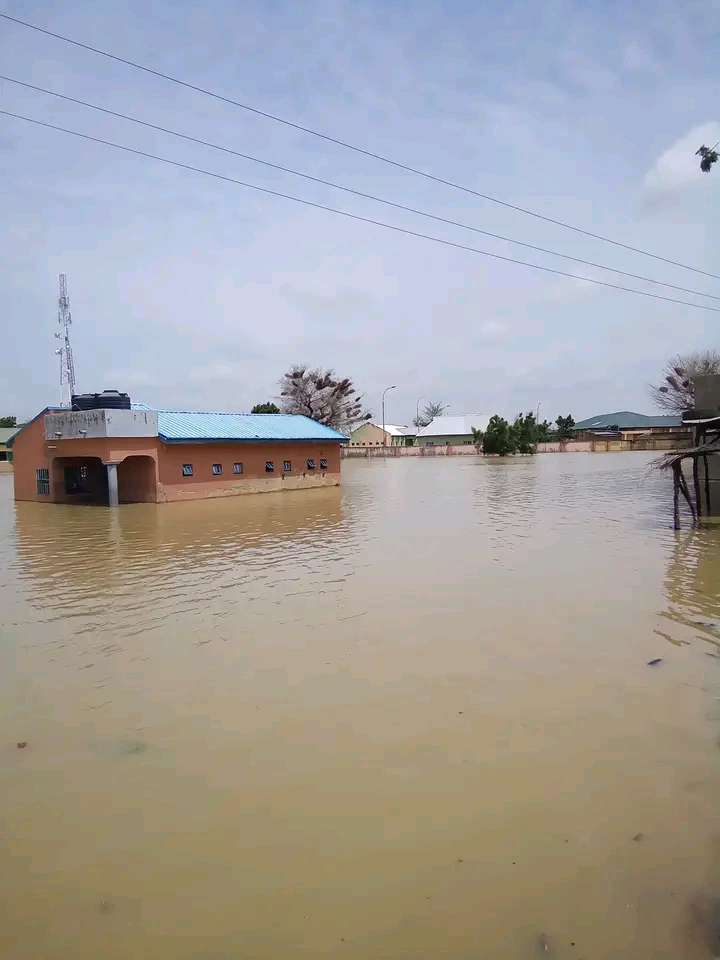
BUA Group, led by Chairman Abdul Samad Rabiu, has responded to President Bola Tinubu’s call for private sector support by donating N2 billion to aid victims of the devastating floods in Maiduguri, Borno State.

This generous donation reflects the company’s commitment to supporting Nigerians in times of need. 

The recent flooding in Maiduguri has caused immense hardship for thousands of families, prompting BUA Group to act swiftly. Rabiu emphasized, “As an organisation deeply rooted in Nigerian society, we believe it is our responsibility to provide relief to those affected.” 

The donation comprises N1 billion in cash and N1 billion worth of essential food supplies, including flour, pasta, sugar, rice, and other vital commodities.

These items will be distributed to the hardest-hit areas to provide immediate relief.

The N1 billion cash donation was presented to the state government to ensure aid reaches those in need quickly. 

The Abdulsamad Rabiu Africa Initiative (ASR Africa), under BUA Group, will continue to monitor the situation and provide necessary resources to help Maiduguri’s residents recover and rebuild.

Rabiu urged other corporate organisations and individuals to join the effort, saying, “Our thoughts are with the affected families and individuals. As we extend our support, we seek to restore hope and rebuild lives.”

WCO, German govt train Nigeria customs personnel, others on arms detection

By Sabiu Abdullahi

The World Customs Organisation (WCO), in collaboration with the German Federation, has successfully conducted a five-day training program focused on the detection of small arms and light weapons for officers of the Nigeria Customs Service and the Nigerian Police Force.

The training took place from September 16 to 20, 2024, at the Old Secretariat in Garki, Abuja, and involved 25 Customs officers along with personnel from the Nigerian Police Force and Nigerian Army.

The workshop was officially inaugurated by the Assistant Comptroller-General of Customs (ACG) in charge of Strategy, Research, and Policy, Sulaiman Chiroma, who represented the Comptroller-General of Customs, Bashir Adewale Adeniyi.

ACG Chiroma stated the significance of the training in enhancing the participants’ ability to detect illegal arms, a vital component of the Nigeria Customs Service’s (NCS) ongoing efforts to combat weapon smuggling into the country.

“This training has gone beyond what we see today. It’s not just about small arms and light weapons for Nigeria Customs Service personnel, but a national initiative, evidenced by the involvement of other agencies,” ACG Chiroma stated.

He further noted that the training is part of the broader West African Security Project (WASP), aimed at fostering collaboration among West African nations in light of shared borders and security challenges.

Chiroma praised the WCO and the German Federation for their ongoing support in organizing such vital training programs, which play a crucial role in enhancing the operational effectiveness of Customs officers.

He urged participants to apply their newly acquired skills diligently.

He said, “You have learned the terminologies of arms detection, and the challenge now is to apply and expand upon what you have learned. To whom much is given, much is expected.”

Participants were encouraged to share their knowledge with colleagues in their respective commands.

“The facilitators and resource persons have provided you with invaluable insight. Now, it’s your responsibility to ensure that this knowledge doesn’t remain with you alone but is passed on to others in your field,” Chiroma added.

The training covered various critical topics, including the detection of improvised explosive devices (IEDs), understanding cultural chemicals, and mastering techniques to combat insecurity in the West African subregion.

Chiroma noted that this comprehensive approach to security training is expected to enhance efforts against illegal arms trafficking throughout the region.

Naira notes live double lives in different parts of Nigeria

By Jibril Mutalib

The naira notes live a life as colourful as the country itself. This isn’t just any currency—it wears its experiences on its sleeve, or rather, on its creases, tears, and patches. The naira isn’t just a medium of exchange; it’s a survivor with a story that shifts depending on where it finds itself in this country.

In the northern part of the country, the naira is a seasoned warrior. It has seen the depths of pockets unwashed for years and battled with rain and sun, leaving it bruised and wrinkled. Yet, the good people of the North, perhaps because of their warm hospitality, never turn their backs on the naira, no matter how worn out it appears in most cases. 

A naira note in Sokoto could look like it just took a swim in the gutter, got into a wrestling match with a goat, and lost a few limbs. But fear not! The traders in the North would still embrace it with open arms. Ah, my friend,” a northern trader might say, “kudi kudi ne”, whether it looks like a prince or a pauper. 

As long as it can buy me a cup of fura or a plate of Denkeli, it’s good enough!” If your money is rejected, then it must be very bad. Perhaps it might have undergone an abnormal surgery where you have Obafemi Awolowo appear on a #50 naira note. Lol.

But when travelling to other regions, the naira’s fortunes change quicker than you can imagine. In places like Kwara, the naira is subjected to intense scrutiny—borderline interrogation. The traders will examine it like a detective at a crime scene, looking for any sign of distress. A small tear? Rejected. A hint of dirt? Not in my shop! And don’t even think about presenting a naira note with a sellotape surgery—it might as well be a counterfeit. Lol.

So, the naira itself is living a double life in different regions of the country. In the North, it is a rugged hero, loved despite its flaws. In the South, it is an outcast, shunned for the slightest imperfection. I wonder why naira notes are treated so differently based on location. 

And so, if you ever find yourself possessing a naira note that has seen better days, do not despair. Simply tuck it away safely and wait until you return to the northern lands. There, you’ll find a warm welcome for your weary traveller. And remember, it’s not just about having money; it’s about having the right money in the right place.

In any region you find yourself, blend with how they treat the currency. When you’re in Sokoto, bring whatever naira you’ve got—no questions asked. I’m not saying they accept money in Sokoto; they do but on rare occasions. If your money is denied, it’s already very bad beyond repairs.

What I discovered about Nigerian women and public discourse

By Rabi Ummi Umar

Recently, I found myself in the heart of Abuja—a bustling city surrounded by the everyday hustle and bustle of urban life. The streets were alive with activities—commercial drivers calling out for passengers, pedestrians hurrying to their destinations, and the overall pace of the city reflecting the urgency of modern life.

Though an intern, I was there with some female staff writers of Economic Confidential, a tabloid published by Image Merchants Promotion (IMPR) Limited. This, however, was not for leisure or sightseeing but for an official assignment—to shoot an episode of ‘Economy on the Streets’ for the Economic Confidential’s YouTube channel. Yet, what caught my attention was something that went beyond the task at hand, revealing a deeper issue about women’s involvement in public discourse.

As a budding communicator, this ‘field trip’ was more than just an opportunity to write news stories, features, or opinion pieces. It was a chance to extend my skills beyond the written word, to engage directly with the public through a street interview—what we call a vox pop—to gauge Nigerians’ thoughts on the contentious issue of the reintroduction of fuel subsidies.

It was also a chance to experience the realities of journalism beyond the confines of a newsroom. To my surprise, I noticed that most of the respondents were men. Conversely, women seemed reluctant to lend their voices or share their opinions on the matter.

At first, I rationalised that perhaps the women were in a hurry, given that it was a weekday. I thought they might not have a few minutes to discuss Nigeria’s pressing economic challenges as more important tasks were awaiting them.

However, as the seconds, minutes, and hours ticked by and the number of women who declined to participate grew, it became clear that they did not want to discuss our nation’s challenges.

This realisation took me back to last year when I was on my Student Industrial Work Experience Scheme (SIWES) with News Digest, an online media platform. I was invited as a guest on WE FM (106.3), a radio station in Abuja, to discuss “Women Participation in Politics.”

During that discussion, I argued passionately that there were insufficient opportunities for women to engage in politics, and I stood firmly by my belief. Yet, a year later, my experience during the street interviews has led me to question this stance. The opportunities, it seems, are indeed out there.

On the streets, even though these women were not holding political office themselves, they had the chance to contribute to public discourse. Yet, they chose not to. This realisation troubles me because it raises questions about women’s participation in public life—whether in political offices or the organised private sector.

We frequently hear discussions about gender equality, inclusivity, roles, and the presence of women in positions of power. However, when we look deeper, we might find that men are not the primary reason women like myself remain on the periphery of public discourse or power.

As women, we may contribute to our marginalisation by refusing to seize opportunities, even when they are right before us. This brings me to a few questions we should all consider: Are women not given opportunities because men seek to dominate?

Are women holding themselves back because society expects them to remain confined to domestic roles? Are we, as women, making efforts to break free from these constraints? Or are we simply holding ourselves back?

While I leave these questions for you to ponder, I want to call on women to recognise that opportunities exist to showcase our capabilities, our capacity to deliver, and much more. We should strive to reach our goals based on what we have to offer.

But we must start somewhere, even if it’s as simple as participating in a street interview. Your voice is vital to society’s prosperity. No matter how insignificant you may think your contribution is, your participation in various aspects of society, community, and the nation at large matters more than you realise. Your voice truly matters.

Rabi Ummi Umar is a student of Al-Hikmah University, Ilorin. She can be reached at rabiumar058@gmail.com.