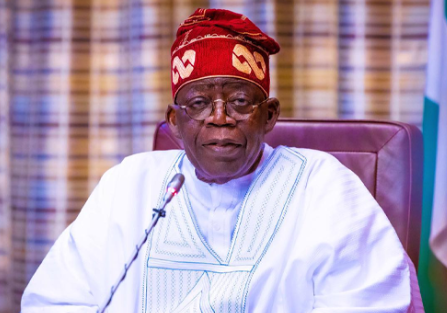
The Vice President, Senator Kashim Shettima, has announced that the federal government is implementing measures to ensure the return of residents displaced by insecurity and floods in Niger State.
Speaking during a visit to an Internally Displaced Persons (IDP) camp in Gwada, Shiroro Local Government Area, Shettima expressed the administration’s commitment to alleviating the suffering of affected individuals.
He stated that his visit was a directive from President Bola Ahmed Tinubu to assess the conditions of the displaced residents and assure them of government support.
The Vice President also launched the distribution of relief materials at the camp, highlighting that each state had received N3 billion to address the impacts of floods and security challenges.
Shettima emphasized that states like Niger, Borno, Sokoto, Bayelsa, and Jigawa, which have been significantly affected by these crises, would receive additional support from the federal government.
He called on citizens and organizations to assist the government in providing relief to those affected by disasters across the country.
The Vice President was joined by other key officials, including the Minister of Information and National Orientation, Mohammed Idris, and the Minister of State for Agriculture, Senator Aliyu Sabi.
Niger State Governor, Mohammed Umaru Bago, disclosed that 14 out of the 25 local government areas in the state had experienced flooding this year, resulting in loss of lives and property.
The Federal Government has announced that petrol supply from Dangote Refinery will commence on Sunday, September 15, 2024, following a pricing and supply agreement reached between both parties.
During a press briefing in Abuja, Zacch Adedeji, a member of the Presidential Committee on the Sale of Crude Oil and Refined Products and Chairman of the Federal Inland Revenue Service (FIRS), revealed that the Nigerian National Petroleum Company Limited (NNPC) will serve as the sole buyer of petrol from the refinery.
Other marketers will purchase the product from NNPC.The agreement stipulates that starting October 1, 2024, NNPC will supply 385,000 barrels of crude oil per day to Dangote Refinery, with payments to be made in Naira.
In return, Dangote Refinery will provide petrol and diesel to the domestic market, with diesel available for purchase by any interested buyer, while petrol will be reserved exclusively for NNPC.
The deal is expected to alleviate the ongoing petrol shortages across the country and ensure continued subsidy payments on the product.
The Presidential Committee confirmed that the first batch of petrol from Dangote Refinery will be ready for loading on Sunday.
Yelwa Zangam is a gridlocked, rural area located in Jos North Local Government, Plateau State, North-Central, Nigeria. It has an estimated population of over 10,000 inhabitants and its nearest villages. The hinterland is just 21 minutes’ drive from the University of Jos, main campus. Most of the people are agrarian farmers and living below a minimal income.
Nigeria operates a three tier system of government, consist the federal, the state and the local government. Similarly, the Nigerian health system functions along such relations. Primary health care is at the local government stage, Secondary health care is managed by the state and the tertiary health system by maintained by the Federal.
Primary Health care is known for intervening, caring and controlling communicable diseases and non-communicable diseases, taking care of antenatal and post-natal, observing child growth, dispensing vaccines to children and Health Education and Community Mobilization.
According to the National Primary Health Care Development Agency (NPHCDA), a body oversees, coordinates and regulates the standard of Primary Health Care in Nigeria. The minimum infrastructural requirements for such a health centre; are as follows; a least 13 rooms in good condition with functional doors and netted windows, separated female and male words toilets, water supply (borehole), electricity (or alternative source of power), sanitary waste collection spot, waste disposal site and staff accommodation. However, it has a staff station, two consulting rooms, two delivery rooms (labour rooms), maternity sections, and a laboratory and the building must be fenced.
The United Nations, Refugee Agency (UNCHR) stated in its ‘Emergency Handbook the primary healthcare workforce is composed of a wide range of health professionals, including medical doctors, nurses, midwives, clinical officers or physician assistants, laboratory technicians, pharmacists, community health workers, managerial and supporting staff.
Yelwan Zangam’s Primary Health care began 31 years ago and was built by the local government in 2001 through direct allocations from federation funds. Global Alliance for Vaccine and Immunization, an international organisation under a sub-body ‘GAVI FUNDS’ partnered with the National Primary Health Care Development Agency (NPHCDA) for the renovating the centre in 2011.
Now, the unfenced facility faced a series of challenges; a leak roofing with only 6 rooms apart from the labour room, unkempt rooms in shambles conditions, single working toilets, no water supply, shortage of mattresses, obsolete medical equipment, dearth of medical personnel and constants insufficiency of drugs supply problems. Since its existence, the hospital has not been connected to an electric power source.
Fali Emmanuel John is a Health Officer in primary health care. He narrates a dire condition “We are facing a lot of problems in maintaining the hospital. Firstly, non-availability of electricity and solar systems for the storage of children’s vaccines, even if there is electricity. It’s compulsory to have a solar system. Due to power instability in Nigeria, so that we can render vaccination daily. Lack of electricity is a big setback to the community and the hospital. Secondly, our personnel need staff quarters. Primary health care is established for 24-hour services. Definitely, staff accommodation should be within the vicinity”.
He reiterates “The community starts building a staff quarters. But they are overstrained. The building is uncompleted”.
Mr. John lamented “The hospital is supposed to have 10 to 20 medical staff. According to medical ethics, working hours range from three shifts; morning, afternoon and evening (night). The deficiency of personnel here is too bad. We only have 3 medical doctors. Sometimes 1 medical doctor works for 24 hours, which is unprofessional and painful to us”.
“Issues concerning drugs, the government are making a little effort. We urged for more. Before the community donated money for drugs and other essentials”, he added.
Fauziya Musa Abdullahi is a nursing mother, who visits the hospital often for antenatal services and delivers her 6-month son to primary health care. She expresses “The most difficulty, women encounter is during night hours. For example, if a woman came to give birth. On certain occasions, there is no doctor available”.
She added “Sometimes, drugs are not available. It’s for patients to buy from the city. During, my last admission here. I wait for a long moment. Before drugs, injections and intravenous drips were bought. If authorities get involved and provide drugs in a hospital. It will be good for the patient to have treatment in any given situation”.
Usman Garba Danladi, an assistant sectary to the community and for years among the people work in progress of Yelwa Zangam community, says “For now, a local agency, Plateau State Contributory Health Care Management Agency (PLASCHEMA), supplies drugs”.
He shared “30 years ago, local government authority grants a fund under a scheme ‘REVOLVING FUNDS’, it was used to supply drugs and other necessary items. The drugs were sold to patients at affordable prices”.
“Financial challenges for buying drugs. Some patients run away with complicated health issues”, he cried out.
Nigeria’s highest court, on 11 July passed a judgement for local government to have full autonomy. Henceforth, the allocation from the federation account is to be funded directly into the local government, not through the state government ‘Joint account’. Mr. Danladi chip in “I am dreamt for local government to be independent. In the past, primary health care was managed from local government funds, not state government. Certainly, with this development electricity will be installed, more workforce and enough drugs to the patients and the facility will be improved”.
Mr John remarks “I am grateful to Almighty God for the Supreme Court’s verdict to allow local government to use their money for local affairs. Local government autonomy is a great success to health sectors”.
Abdullahi D. Hassan writes from Jos in Plateau State and can be reached via +234 803 323 7977.
The Federal Government has announced a public holiday on Monday, September 16, to commemorate the birth of the Holy Prophet Muhammad (PBUH), marking this year’s Eid-ul-Mawlid celebration.
In a statement released on Friday, September 13, Permanent Secretary of the Ministry of Interior, Magdalene Ajani, confirmed the public holiday.
Minister of Interior, Dr. Olubunmi Tunji-Ojo, congratulated the Muslim community on the occasion, encouraging them to embrace the values of patience, sacrifice, and resilience.
Dr. Tunji-Ojo also urged Nigerians to use the opportunity to pray for lasting peace and a more prosperous nation.
The public holiday allows Muslim Nigerians to observe the significant Islamic occasion with their loved ones and communities.
Those with a deep knowledge of my biography will always remember me in the Faculty of Education’s Department of Education, which I joined in July 1980 at the relatively young age of 24. With a professorship in 1997, I felt I had enough of Education: I was talking loud and saying nothing. So, I shifted my research focus to media and cultural communication.
I never thought the shift would lead to another professorship in 2012, giving an academically glamorous status of being ‘dambu mai hawa biyu’ (up till now, I don’t know exactly what this epithet means!), or double professor – in Science Education and Media and Cultural Communication. Three people were responsible for this, one from Edo State and another two from Zaria. How did it all start?
In 1992, I had just returned from a Fulbright African Senior Research Scholar residency at the University of California, Berkely, when I was visited in my office by the late Prof. Mike Egbon (from Benin), then the Head of the Department of Mass Communication, Bayero University Kano. It was our first meeting, and it instantly created a deep bond of friendship between us. He wants me to work with a student of his in supervising a PhD project on the Mass Communication curriculum in Nigerian universities. I was happy to oblige, especially when I learnt that the student is another highly respected colleague, now Prof. Umar Faruk Jibril, the Dean of Communication at BUK.
Thus began my first footsteps in Mass Communication. Before long, I was drafted to teach Advanced Research Methods for PhD students (while still in the Department of Education). This put me in contact with virtually all the current staff of the Faculty of Communication. I felt so happy and so comfortable with them, as well as their tutors in other areas of the Department. One tutor stood out. He was Mal. Gausu Ahmad (from Zaria, if you are keeping track!).
My relationship with Mal. Gausu was incredible and often amusing. For some reason, we were both mesmerised by each other. I had followed his column in New Nigeria years earlier. I was fascinated by his incredible take on Bayero University in his essay “Looking Beyond the Badala”, a critique of the lack of synthesis between Bayero University and its host community. That article drew my attention to Mal. Gausu and I became an avid follower. So, when Mike drafted me into supervision duties in Mass Comm, I met Gausu Ahmad for the first time.
I saw a neoclassical Hausa gentleman in Malam Gausu. His cheerful mien reminds one of an older Uncle or a grandfather but with contemporary perspectives—for instance, Mal. Gausu is the only person I know who has commissioned a traditional barber (wanzami) to come to his office and cut his hair in molo style. No barbing salons for him! We became instantly drawn to each other.
In 2003, I was the Chairman of the defunct Center for Hausa Cultural Studies Kano, a think tank on interfaces between media and society. We organised an international conference on Hausa films—the first of its kind in the country. Virtually all the staff of Mass Communication, including Mal. Gausu, was wholly involved in the conference. Mal. Gausu was the HOD of Mass Communication then. It was at the conference that he consolidated his relationship with me.
I was then also asked to teach a course on Online Communication in the Department, introducing new ideas that departed from the straight-up Mass Communication scholarship of the Department in print and broadcast media. By then, I had well-established online communities on the defunct Yahoo! Groups (since 2001), which became the first gathering places for future social media citizens. So, I was excited to be asked to teach Online Communication – even more excited were junior colleagues who wanted to be part of the course.
This went on for a while, with me being an adjunct member of the Mass Communication Department, a position I relish far more than my education position at the university. In 2004, my break-out media year, I was a visiting professor at the University of Cologne, Germany. The paper was “Enter the Dragon: Shari’a, Popular Culture and Film Censorship in Northern Nigeria.” When I returned, Mal. Gausu expressed dismay that I presented a paper about events in Kano at a foreign university. He insisted that the paper must be represented in the Department of Mass Communication, which I did later in the year – thus opening up new vistas of media anthropology. To cement this position, I invited Brian Larkin to come to the Department and present his book “Signal and Noise” about media anthropology in July 2008. It is the first public presentation of this ground-breaking book.
Unknown to me, Mal. Gausu has submitted my name to the Registrar of the University, then Mal. Sani Aminu (Zaria!) for appointment as Part-Time Lecturer in the Department of Mass Communication. This was instantly approved, and I was only aware of it when I got the letter in November 2005. From then on, I became part of the Mass Communication ecosystem. Not only did I have more classes, but I also had more students. The number of postgraduate students I supervised in a few years in Mass Comm was far more than the number of students in all the 25 years I had been in Education.
Under his leadership of the department, a wonderful atmosphere of camaraderie and brotherhood was fostered. His elegant, calm demeanour does not brook any disagreement with any policy because policies and decisions in the Department were collectively arrived at and implemented together.
His biggest trait, however, was his humility. He was indeed a knowledge seeker. He was never shy or hesitant in asking questions about what he did not know. Our offices were always close together, and in the evenings after Asr prayer, when the building was quieter, we spent moments exchanging ideas and concepts. He became a sort of student to me. He would ALWAYS insist on carrying my rucksack to my car. ALWAYS. He fiercely resists anyone attempting to take the rucksack from him, insisting it is his duty and honour. On the other hand, I always felt uncomfortable with an older person taking my rucksack to the car! But he always insisted.
From January to March 2012, I was a European Union visiting professor at the University of Warsaw. When I returned in April, informed my Vice-Chancellor, and submitted my report, the next thing I knew was that I was caught up in the whirlwind of being appointed as professor of Media and Cultural Communication and already a professor of Science Education since 1997. I was surprised as I thought it was not done. However, the vice chancellor who did it, Prof. Abubakar Adamu Rasheed, was another bold and innovative person. And from Zaria! After all the due process, I was eventually announced as a Media and Cultural Communication professor in January 2013, effective October 2012.
The icing on the cake was the clause that I was to move from the Department of Education to the Department of Mass Communication. After 32 years in Education and having served as HOD for nine years, I was delighted to leave. Thanks to Mal. Gausu Ahmad, I felt more comfortable, personally, emotionally and intellectually, in Mass Communication. I felt blessed. Imagine doing research in an area I am deeply interested in and making contributions to knowledge. Currently, in 2024, as a staff member of the Department of Information and Media Studies, I am under the administrative leadership of Prof. Nura Ibrahim. Do I need to say it? Ok. From Zaria!
The biggest lessons I learned from Malam Gausu were humility and patience. He faced many challenges during his time in Mass Comm, but he stoically endured them and eventually triumphed.
Mal. Gausu retired at the age of 70 on 12 September 2024. He retired as a professor, but his humility and salute to scholarship will always root him in the superior ‘Malam’ category. Anyone can be a professor, but it takes a special kind of person to be appreciated and applauded as a Malam. Mal. Gausu Ahmad is genuinely a first-class Malam, embodying all the qualities of such a position.
I congratulate him on his successful and honourable retirement from the University. He was one of the few academicians who brought real-life print journalism to academia and brought out the true application of the theory of Political Economy. His doctoral thesis, “The Rise and Fall of the New Nigerian Newspaper”, in 2014, followed by publication by ABU Press in 2016 under the same title, is an excellent slice of northern Nigerian media history, as only possible from an insider. If you really want to know print media history in northern Nigeria, get the book.
I pray to Allah (SWT) to continue to endow him with humility, kindness, gentleness, health and prosperity as he charts the next course of his life.
Oh, and my prayers and gratitude to Zage-zagi for being ‘iyanyen gidana’ in scholarship (but not iyayen gidan Kanawa)!
The Nigeria Customs Service (NCS) Operation Whirlwind has announced a major seizure of over 20,000 litres of Premium Motor Spirit (PMS), with a Duty Paid Value (DPV) of N18 million, during a seven-day operation in the Zone ‘A’ area.
According to Comptroller Hussein Ejibunu, National Coordinator of Operation Whirlwind, “These seizures were made at strategic locations in Ogun State, including Ere River, Imeko, and Idiroko, where smugglers attempted to illegally transport fuel. The operation also led to the confiscation of five vehicles used for smuggling.”
Ejibunu stated the need for a collective effort to tackle the illegal exportation of PMS to neighbouring countries, stating that such activities pose a threat to Nigeria’s economic stability.
He assured that his team will intensify efforts to protect Nigeria’s petroleum resources and bring economic saboteurs to justice, warning smugglers to desist from their actions and embrace legitimate trade.
“There is no hiding place for those involved in illicit trade. Their only option is to embrace legitimate business,” he said.
Gombe State Government has donated ₦50 million to aid victims of the recent terror attack in Mafa, Tarmuwa Local Government and the devastating flood disaster in Yobe State.
In a gesture of solidarity and compassion, Governor Muhammadu Inuwa Yahaya, CON, sent a high-level delegation led by the Deputy Governor, Dr. Manassah Daniel Jatau, to Yobe State to convey the heartfelt condolences and support of the government and people of Gombe State.
Dr. Manassah Jatau, speaking on behalf of Governor Inuwa Yahaya, expressed deep sorrow over the tragic incident in the community, calling it both sad and unfortunate.
“We stand with you in this moment of grief as you face the double tragedy of the attack on the Mafa community and the devastating floods that claimed lives and destroyed homes and farmlands across the state,” he stated.
He said the N50 million donation will help the state government provide much-needed assistance to the affected victims.
While receiving the delegation, the Governor of Yobe State, Hon. Mai Mala Buni, CON, expressed profound appreciation for the support.
He described the visit as demonstrating a strong bond of brotherhood and love between Gombe and Yobe States.
He emphasized that while the financial aid will significantly help the victims, solidarity and care in such trying times will be remembered as a remarkable show of unity between the neighbouring states.
Governor Buni noted that the donation and the visit are a source of immediate relief and a lasting symbol of the friendship and cooperation between the people of Gombe and Yobe.
In aggressive, offensive operations against terrorism and insurgency, Nigerian Army troops have obliterated yet another terrorist stronghold, successfully rescuing kidnapped students and seizing a significant cache of arms and ammunition. Troops also eliminated some insurgents, while some others were captured alive.
On 12 September 2024, acting on reliable intelligence, troops stationed in Kaduna State launched a highly coordinated operation aimed at rescuing abducted persons from violent extremist camps. Engaging in an intense firefight at Chigbolu village, Kachia Local Government Area, the troops overpowered the terrorists, forcing them to flee and abandoning their captives.
A thorough sweep of the area led to the rescue of 13 victims, comprising six males and seven females, as well as the recovery of one AK-47 rifle, 87 rounds of 7.63mm ammunition, four magazines, a locally fabricated rifle and the sum of ₦192,220.00.
Five solar panels, five mobile phones, dry rations, and clothing items were also recovered. The rescued victims have been evacuated to 1 Division Medical Services and Hospital for medical attention.
In another decisive operation, troops in Kachia Local Government Area have intercepted two notorious terrorist logistics suppliers, Mallam Usman Waikili and Salisu Idris, at Kagarko village. The troops confiscated the sum of ₦1,306,700.00, three SIM cards, two mobile phones, three national identity cards, 8 ATM cards, 2 Moniepoint POS machines, an MTN MiFi and other items from the suspects.
In a separate operation in Suleja, Niger State, troops stormed a terrorist hideout, triggering a fierce exchange of gunfire. The troops’ overwhelming firepower led to the neutralization of 3 terrorists, while three others, identified as Mallam Halalu, Mallam Suleiman, and Mr. Musa, were captured alive. The suspects led the troops to a hidden armoury, where 3 AK-47 rifles, 121 rounds of 7.62mm.
President Bola Tinubu has welcomed the National Bureau of Statistics (NBS) ‘s new report on the country’s trade balance.
According to the report, Nigeria recorded another trade surplus in the second quarter of 2024, hitting N6.95 trillion.
The current surplus is 6.60% higher than the N6.52 trillion surplus recorded in the first quarter.
Just days after the country recorded almost 100 percent oversubscription of its first $500 million domestic bond and half-year revenue of N9.1 trillion, the latest report underscores the increasing positive shifts in the economy over the last year.
President Tinubu expresses confidence in the reforms his administration is pursuing and believes they will create a more robust economy that will usher in a new era of prosperity for Nigerians.
The NBS report reflects the country’s strong export performance in the second quarter.
Although total merchandise trade in Q2 2024 stood at N31.89 trillion, a 3.76% decline compared to the preceding quarter (Q1 2024), it marked a 150.39% rise from the corresponding period in 2023.
The NBS reported that the Q2 surplus was essentially driven by exports to Europe, the United States and Asia.
Total exports stood at N19.42 trillion, accounting for 60.89% of the country’s total trade. This represents a 1.31% increase from N19.17 trillion in the first quarter and a 201.76% surge from N6.44 trillion recorded in Q2 2023.
The dominance of crude oil exports remains a key factor in this performance, contributing N14.56 trillion, or 74.98% of total exports.
Non-crude oil exports, valued at N4.86 trillion, comprised 25.02% of the total export value, with non-oil products contributing N1.94 trillion.
The strong export performance, particularly in crude oil, ensured Nigeria maintained a favourable trade balance.
In Q2 2024, European and American countries dominated Nigeria’s top export destinations. Spain emerged as the largest export partner, receiving goods valued at N2.01 trillion, accounting for 10.34% of Nigeria’s total exports.
The United States followed closely with N1.86 trillion (9.56%), while France imported N1.82 trillion of Nigerian goods, representing 9.37% of total exports.Nigeria’s other major export partners include India (N1.65 trillion or 8.50%) and the Netherlands (N1.38 trillion).
Generally, the economic indicators, which were very low when President Tinubu assumed office last year, are turning positive.
The government will continue to consolidate on the gains of the reforms as more fiscal and tax policy reforms already embarked upon by the administration come to fruition.
President Tinubu is determined to confront the inhibitions that have stunted the growth and development necessary to unlock the country’s full potential.
Indeed, when people begin to do things in such a way as to defy their rules or behaviours, it is only proper for scientific research to be conducted to discover the reason(s) behind such behavioural change. In fact, for leaders, it is essential to continuously study the people’s behaviour to decode their actions and inactions in response to government decisions for the sake of the government’s sustainability and continued law and order in the polity. If, however, this is not done accordingly, there is every tendency that, in time, a government may not know it has lost the people’s confidence.
An example of such a situation is that of the present Nigeria, where its people, who in their usual antecedents are most unlikely to protest against hardship and pain, went to the streets to express dissatisfaction with how things are happening in the country.
Just as the haranguing of the taciturn is altogether a surprise and definitely attention seeking, Nigerians, in unison, going out to the streets to express anger is astonishing and thus a clear message to the government that all is not well in the country. And true to it, most Nigerians are in untold hardship, increasingly perceiving the miasma of hopelessness with each passing day.
The people cannot be well and happy in an economy, with its currency becoming valueless at the end of every business day. This implies that at every sunrise, the Naira in the hands of Nigerians can buy less than what it could have on the previous day. And with the government’s refusal to subsidise fuel and electricity, the economy, which is already unproductive, has nosedived the more, leaving entrepreneurs at the receiving end. The nation’s economy now has no middle class. Poverty is in every corner of Nigeria, with illiteracy buttressing it.
This economic downturn has had a ripple effect on the social fabric of the nation. Crime rates have skyrocketed as young people, desperate for survival, resort to illegal activities. The once vibrant and bustling cities are now ghost towns as businesses close down and unemployment soars. The health sector is already deplorable and is now on the brink of collapse. Hospitals lack basic amenities, forcing patients to purchase essential drugs and supplies. The educational sector is not spared either. Public schools are dilapidated, and teachers are poorly remunerated, leading to a decline in the quality of education.
The political landscape is equally fraught with challenges. The ruling class is more concerned with self-enrichment than the welfare of the people. Corruption is endemic, and public funds are siphoned into private pockets. Irregularities mar the electoral process, and the voices of the people are often ignored. The lack of accountability and transparency has eroded the trust between the government and the governed.
The security situation in the country is also a major concern. Banditry and kidnapping have become commonplace in most parts of the country. The people live in fear and uncertainty, as their lives and property are not safe.
It is evident that Nigeria is at a crossroads. The government must take urgent steps to address the myriad problems facing the nation. This includes revamping the economy, improving the standard of living, providing adequate security, and promoting good governance. The government must also listen to the people and implement policies that are in their best interest.
The time for empty promises and rhetoric is over. The people are demanding action. The government must deliver on its promises or risk losing the trust and confidence of the people. The future of Nigeria depends on the choices made today.