Month: August 2024

Bauchi State mourns as Emir of Ningi, Yunusa Danyaya, passes away 

By Sabiu Abdullahi

The Emir of Ningi in Bauchi State, His Royal Highness Alhaji Yunusa Muhammad Danyaya, has passed away.

He died on Sunday morning in Kano, where he was receiving medical treatment for age-related health issues. 

The late Emir will be buried on Sunday evening at 4pm, following a funeral prayer at the Emir’s Palace in Ningi.

The funeral announcement was made by the Secretary of the Emirate, Alhaji Usman Sule, Magayakin Ningi. 

In a statement, Alhaji Sule said: “We belong to Allah and to Him we hope. God bless His Majesty the King of Ningi, Dr. Yunusa Muhammadu Dan Yaya (OON), who passed away this morning in Kano.”

Nigerian polytechnic unveils Nigeria’s first electric tricycle, seeks support for mass production

By Sabiu Abdullahi 

The Federal Polytechnic, Ilaro, Ogun State, has made history by inventing Nigeria’s first electric automated tricycle.

The innovation, unveiled at the institution’s innovation centre, is a significant milestone in the country’s quest for sustainable transportation solutions. 

Rector Dr. Mukail Akinde stated the need for government and corporate support to commercialize the invention, stating, “Mass production of this tricycle will reduce importation, ease pressure on foreign exchange, and create job opportunities for youths.” 

The polytechnic’s Governing Council Chairman, Alhaji Garba Gashua, praised the innovation and promised to mobilize support for its commercialization.

The National Automotive Design and Development Council also commended the initiative, urging government assistance to expand the project. 

The innovation centre’s director, Jide Soyemi, highlighted the centre’s focus on cutting-edge technology, including Artificial Intelligence and robotics, with students contributing significantly to the projects. 

This groundbreaking invention has the potential to revolutionize Nigeria’s transportation sector, and with adequate support, it could become a reality.

Kano court grants bail to 40 minors arrested during #EndBadGovernance protests

 By Sabiu Abdullahi

A Kano State court has released 40 minors on bail who were among the hundreds arrested during the recent #EndBadGovernanceInNigeria protests.

The minors were freed following the intervention of Advocate for Justice Alliance, a civic organisation led by Barrister AK Musa. 

The Kano State Police Command had arrested 873 suspects for alleged crimes committed during the protests, which were held to demand solutions to Nigeria’s economic woes and insecurity.

The suspects were arraigned before magistrates and detained in various prison facilities. 

Barrister Musa confirmed the release of the minors, saying, “We’re pleased that 40 minors have been granted bail, but unfortunately, no adults have been released.”

He added that his organisation is working to secure the release and representation of more detainees, with the next court hearing set for September 11, 2024. 

The protests, which took place across the country, saw over 1000 Nigerians arrested and detained, according to Amnesty International.

The global human rights organisation criticized the government’s response to the protests, saying it failed to address the economic issues driving the demonstrations.

FG uncovers 21,600 fake certificates among Nigerian students

By Uzair Adam

The Federal Government has revealed that over 21,600 students are using fake certificates obtained from degree mills in countries such as Benin Republic and Togo.

This was disclosed by the Minister of Education, Professor Tahir Mamman, during a press briefing in Abuja, marking his first year in office.

Professor Mamman stated that out of these, 1,105 students hold fake certificates from Togo.

This revelation follows the government’s formation of an Inter-Ministerial Investigative Committee on Degree Certificate Milling in March, aimed at addressing the proliferation of fake degrees.

The Minister stated that all fake degrees, whether from Nigerian or foreign institutions, will be systematically removed from the system.

He mentioned that the Office of the Head of Civil Service of the Federation has been instructed to issue a circular to ensure the removal of individuals holding such certificates.

Additionally, Professor Mamman highlighted the challenges faced by tertiary institutions due to high electricity tariffs and announced a government-approved long-term plan to power these institutions using Compressed Natural Gas (CNG).

He also shared that, over the past year, the ministry has successfully reintegrated around four million out-of-school children back into the education system.Efforts are also underway to enhance teacher support, welfare, and development in collaboration with UNESCO and the World Bank.

Furthermore, the Minister addressed recent concerns about the safety of school buildings and the government’s collaboration with the Council for the Regulation of Engineering to improve school infrastructure standards.

In response to the ongoing discussions with the Academic Staff Union of Universities (ASUU), Professor Mamman assured that steps are being taken to meet their needs and prevent future strikes.

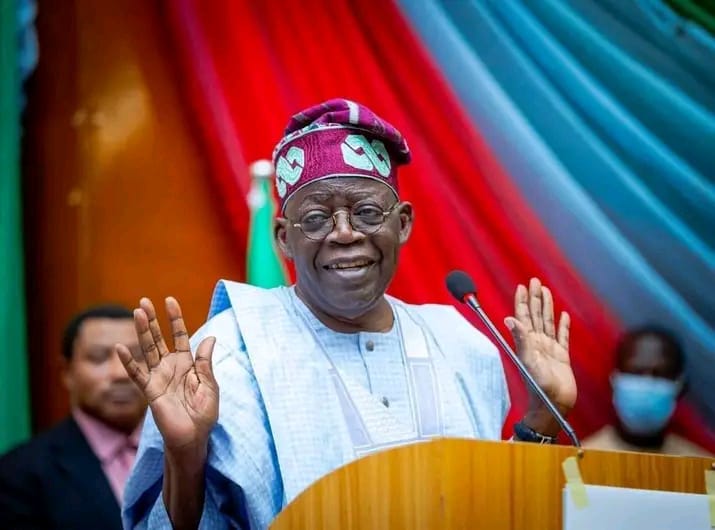
President Tinubu: ‘Water don pass garri’

By Muhammad Danjuma Abubakar

In a democracy, citizens’ expression of choice for candidates is guided by factors such as hopes for peace, security, and welfare; better economic opportunities; effective and efficient management of resources; diversity and inclusion; practical respect for civil liberty and freedom; and regards for the constitution and constitutionalism, among others. This democratic choice is reflective of their collective aspirations for better well-being. 

From this expression of choice comes citizens justified high expectations from those they give mandates; this is why it is an indictment on the collective conscience of those elected to call for patience, prayers, and understanding from those who entrust them, as it undermines the initial trust and confidence placed on the elected by the electorates. 

Prayers, patience, and understanding are not required to run for office in Nigeria. Therefore, it is unreasonable for elected officials to demand these from the public to justify their failures.

Voters assess candidates based on their competence, experience, and fairness. Even during elections, voters are often impatient and look for leaders who will perform extraordinary feats and effectively meet their needs.

In this context, the expectations of Nigerians from President Tinubu, like those of Buhari, were high, spurred by his campaign promises and the political image and antecedents he portrayed to Nigerians.

This said, without fear of contradiction, President Tinubu was presented to innocent Nigerians with amplified messages like he is an architect of economic transformation, a builder of modern Lagos, a mentor of human resources, a top recruiter of quality talent, a bridge builder, a Nigerian with a broad national stature, and a kingmaker with little desire for power. Even the aftermath of his elections has shown a different picture. 

Even in the run-up to the election period, Tinubu stumbled and fumbled many times in words and deeds, either knowingly or unknowingly. 

First, he awed Nigerians by asserting that it was his turn to rule the country (Emi lokan) as if the elective office was an arranged turn-by-turn affair. Such a public statement, which appears to subordinate citizens’ interests, could be intolerable in more exposed democratic climes.

In addition to that controversy, he also went to the extreme by emotionally blackmailing his predecessor, Buhari, claiming he single-handedly made him president, as though he only constituted millions of voters.

As a politician, Tinubu’s political gamesmanship is second to none. This is why, knowing that large chunks of votes would come from the North, a Muslim-dominated region of the country, he decided to choose Shettima—a northern Muslim—as his running mate, despite criticisms from adherents of other faiths.

This move proved successful, as he was declared duly elected by the nation’s electoral umpire, INEC. But it is frustrating and worrisome that we are not better off as citizens and as a nation.

For the records, this is not suggesting that Tinubu’s predecessor left the power better than he met it, considering many shortcomings of his administration, including alleged high-scale corruption under his ‘nose’. Yet, the severity of this administration’s hardships and bad economic conditions surpasses’ Buhari’s.

Under Tinubu’s administration, life for the average Nigerian has taken a drastic turn. Poverty has deepened, and insecurity in the North has deteriorated much faster and worse than during Buhari’s tenure.

 This worsening condition is reflected in various negative indicators, including the soaring inflation rates in basic life necessities, such as food. 

An average Nigerian has not forgotten, not even at all, that during Buhari’s presidency, four good slices of meat were sold at N300 in the North. And a mudu of garri (cassava flour) was being sold for the same N300. The price of a mudu is now the price of a cup. 

Our situation today is akin to what a Nigerian street man would say: ‘Water don pass garri,’ which translates to ‘water has surpassed soaked cassava flour.’ This invariably means a terrible situation that has gone out of control, just as it appears to have gone out of the control of Tinubu’s presidency. 

The only way left for the suffering masses to voice their pains to a government that chooses to be tight-lipped is through peaceful protests legitimized under our constitution, which Tinubu himself led several times but is now not comfortable with and so perceived to be ruthlessly suppressing with state forces, harassments and intimidating the starving angry poor.

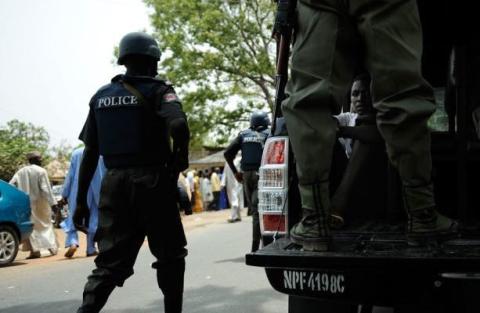
The DSS and police, expected to uphold professionalism, etiquette, justice, and respect for the rule of law, are focused on arresting and intimidating perceived ‘persons of interest.’ How on earth do the masses deserve such cruelty? The masses with whom lie the true powers in a democracy! 

As a matter of fact, why shouldn’t the common masses be outraged? Insecurity is at its worst. Inflation has soared to an unprecedented 33%. Amid pervasive hunger and widespread poverty, the government splurges on private jets and extravagant renovations for the VP’s residence. 

Meanwhile, educational institutions’ workers, including the NLC, are often treated dismissively, with no government-backed economic opportunities for the poor, the vulnerable, and even the educated youths. 

Having achieved his long-time ambition of becoming President, Tinubu only seems preoccupied with the temporary power of his office. His long arms of presidential powers reinforce the perception of vindictiveness against those perceived as either not in his good books or his predecessor’s appointees. 

Through the excesses of federal powers, it suffices to believe that federal powers subtly dabbled in issues outside its mandate, including the Kano Emirate saga, the Fubara vs. Wike conflict, and Ndume’s removal as Senate Chief Whip.

As for Sen. Ndume, are we to link his current travails to his choice in the run-up to the APC 2023 Presidential primaries?

 In the build-up to the APC Presidential primaries, Senator Ndume didn’t hide his mobilization and support for Tinubu’s co-contestant, Rotimi Amaechi. 

Talking about appointments, the current administration has also been accused of stripping northerners of their key positions and replacing them with Lagos men who had failed to deliver the same Lagos, which he was credited with its heights and development. 

One may rightly argue that the Buhari presidency, in a similar fashion, rewarded the region that gave him the highest votes through appointive positions. But it is worthy of note that Tinubu’s highest election votes also came from the northern region.

 Yet, this predominantly Muslim-dominated region is neglected. For instance, the Baro Port in Niger State, a significant project for the benefit of the entire North, is yet to receive any sincere attention, even with over 30 trillion Naira budget now in effect.

 For Tinubu’s presidency, water don pass garri since this is not what Nigerians voted for and hoped for. The administration is out of touch with people’s needs, and its actions are in sharp contrast with expectations.

Muhammad Danjuma Abubakar is a public affairs commentator and lives in Minna, Niger State. He wrote via muhammadcares4u@gmail.com.

Customs CG appoints new management members in acting capacity

By Sabiu Abdullahi

The Comptroller General of Customs, Bashir Adewale Adeniyi, has announced key management appointments and redeployments within the Nigeria Customs Service (NCS) following the statutory retirement of some management team members.

BM Jibo has been appointed as Acting Deputy Comptroller General of Finance Administration and Technical Services (FATS), while OA Alajogun takes on the role of Acting Deputy Comptroller General of Enforcement, Inspection and Investigation (EI&I).

IG Umar has been redeployed as Acting Assistant Comptroller General of Headquarters, OA Salefu as Acting Assistant Comptroller General of Training and Doctrine Command (TRADOC), BA Makinde as Acting Assistant Comptroller General of Human Resource Development (HRD), and T Bomodi as Acting Assistant Comptroller General of Enforcement, Inspection and Investigation (EI&I).

The appointments, made in acting capacity, aim to enhance strategic service delivery and are a testament to the officers’ exemplary services and dedication to the NCS.

Adeniyi congratulated the newly appointed officers, charging them to “redouble their efforts to ensure the Service achieves greater heights in its mandates of revenue generation, suppression of smuggling and trade facilitation.”

The Comptroller General also thanked the retired members of the management for their meritorious services.

Supreme Court upholds Imo governorship election result

By Sabiu Abdullahi

The Supreme Court on Friday, August 23, dismissed the appeal filed by the Peoples Democratic Party (PDP) and its gubernatorial candidate, Samuel Anyawu, challenging the outcome of the Imo State governorship election. 

A unanimous judgement delivered by a five-member panel of the court, led by Justice Mohammed Baba Idris, found the appeal to be without merit, thereby affirming the original election result. 

This ruling brings the legal battle over the Imo State governorship election to a close, providing clarity and finality to the political landscape of the state.

Jigawa woman dies by self-immolation following divorce

By Uzair Adam

A woman in Jigawa State has died by self-immolation after reportedly being devastated by her recent divorce.

The 40-year-old, whose identity has been withheld, set herself on fire in Garin Mallam village, located in the Guri Local Government Area.

The incident was confirmed by DSP Lawan Shiisu, the Police Public Relations Officer (PPRO) for the state, in a statement released on Friday in Dutse.

According to Shiisu, the woman poured petrol on herself and set herself ablaze on the outskirts of the village.

“On Thursday at about 7:40 a.m., the command received heartbreaking news from Guri that a woman had set herself on fire after pouring petrol on her body. The incident occurred in Garin Mallam village, and she was burnt beyond recognition,” Shiisu stated.

Following the report, officers from the Guri Divisional Police Headquarters were dispatched to the scene to verify the incident. The woman’s charred remains were subsequently taken to a hospital and later released to her family for burial.

Preliminary investigations suggest that the woman had been struggling with depression for several months after her divorce.

The state’s Commissioner of Police, Mr. Ahmadu Abdullahi, expressed his condolences and urged the public to seek guidance and counseling from elders when facing difficult situations.

He also encouraged people to entrust their affairs to a higher power for solace.

Asset dispute: Chinese firm seizes another Nigerian jet in Canada

By Uzair Adam

A Chinese company, Zhongshang Fucheng Industrial Investment Ltd, has seized another Nigerian jet, this time in Canada.

The firm, which has already been involved in the seizure of three Nigerian aircraft in France and other assets in various countries, took custody of the Bombardier 6000 type BD-700-1A10 aircraft after a Quebec court authorized the seizure.

This action is part of Zhongshang’s efforts to enforce an arbitration award of over $70 million against Nigeria, leading to the confiscation of several Nigerian assets overseas.

The dispute stems from a legal battle involving the Ogun State Government, which has seen the firm seize numerous Nigerian properties and aircraft as it seeks to recoup its claims.

Despite ongoing tensions, Zhongshang recently released an Airbus A330 aircraft, allowing Nigerian President Bola Tinubu to travel to France for a scheduled meeting with French President Emmanuel Macron.

Soldiers allegedly kill three people, over 100 cows in Kaduna

By Uzair Adam

Residents of Sabon Birnin Daji in the Igabi Local Government Area of Kaduna State have accused soldiers of killing three people and over 100 cows during an incident at a local cattle market on Sunday.

According to eyewitnesses, the soldiers, some reportedly on motorcycles, arrived at the market and opened fire, resulting in the deaths of both humans and cattle.

Villagers are demanding compensation for the damages and losses incurred, claiming over 140 cows were killed and goods worth more than N50 million were destroyed.

One witness, Shamsudeen Sabon Birni, described how the soldiers confronted the Sarkin Pawa, the market leader, before shooting him.

Shamsudeen lamented the indiscriminate nature of the soldiers’ actions, stating they forced traders to lie down before firing at the animals and damaging their goods.

In response, the Nigerian Army has ordered a thorough investigation into the incident.

Major-General Onyema Nwachukwu, the army spokesperson, confirmed that the Chief of Army Staff, Lt.-Gen. Taoreed Lagbaja, has directed an inquiry to determine the causes of the incident and hold those responsible accountable.

Amnesty International Nigeria and the Human Rights Writers Association of Nigeria (HURIWA) have called for an independent investigation, expressing concerns about potential bias in the military’s internal probe and emphasizing the need for transparency and accountability in such cases.

The Kaduna State Police Command has yet to comment on the incident, as efforts to reach their spokesperson were unsuccessful.

Meanwhile, the community continues to grapple with the aftermath of the event, seeking justice and answers.