Month: August 2024

Bandits abduct over 150, rustle 1,000 cattle in Gobir days after emir’s death

By Uzair Adam

Bandits have reportedly abducted over 150 individuals and stolen more than 1,000 cattle from villages in Gobir Emirate, Sokoto State.

The Emir, Alhaji Isa Muhammad Bawa, also the District Head of Gatawa, was kidnapped on July 29 along with his son and six others on the Sokoto-Sabon Birni Road.

A distressing video showed the Emir pleading for ransom payment before his death, a situation that led to local protests and a curfew in Sabon Birni.

Our reporters gathered that the bandits’ recent activities have reignited concerns about their operations in the region.

In an interview with Daily Trust, Professor Bello Bada from Usmanu Danfodio University expressed frustration over the bandits’ apparent familiarity with local networks, questioning the effectiveness of local security measures.

He emphasized the need for a comprehensive solution to prevent further attacks.

Aminu Boza, a member of the Sokoto State House of Assembly, reported that between Tsamaye and Sabon Birni, 192 people have been abducted, with over 20,000 hectares of land lost due to banditry.

He criticized the lack of security in affected areas and revealed ongoing efforts to increase military presence in the region.

The Sokoto State Police Public Relations Officer, SP Ahmad Rufa’i, stated that no formal report had been received but would investigate the matter further.

NIS justifies increase in passport fees for improved quality, efficiency

By Uzair Adam

The Nigeria Immigration Service (NIS) has provided reasons for the recent increase in international passport fees, citing the need to enhance the quality of the passports, ensure faster processing, and improve accessibility.

During a sensitization event in Yola, Adamawa State, on Monday, NIS Comptroller Mr. Ibrahim Mohammed explained that starting from September 1, applicants within Nigeria will be required to pay ₦50,000 for a 32-page passport booklet with a five-year validity period.

This marks an increase from the previous fee of ₦35,000. The fee for a 64-page passport booklet, valid for ten years, will rise to ₦100,000, up from ₦70,000.Mr.

Mohammed clarified that the fee hike will not affect applicants living abroad. He emphasized that the new passports feature enhanced durability and quality, meeting international standards.

The inclusion of fingerprints in the new design makes it more secure and difficult to counterfeit compared to the previous version.He urged prospective applicants to apply online or visit NIS offices directly, cautioning against the use of intermediaries to avoid scams.

He also called on religious leaders to educate their followers on the changes and noted that those who apply before the September 1 deadline would still be charged the old rates.

The NIS is extending its awareness campaign to local government areas, beginning with Mubi, and has also taken the sensitization efforts to motor parks and major streets in the state capital.

Representatives from the Christian Association of Nigeria (CAN) and the Muslim Council in Adamawa, Mr. Joel Manzo and Alhaji Aliyu Iya, respectively, expressed their gratitude to the NIS for the enlightenment and pledged to relay the information to their communities.

Borno finance commissioner Ahmed Ali mysteriously found dead 

By Sabiu Abdullahi

The Borno State Government has been plunged into mourning following the sudden and mysterious death of its Finance Commissioner, Ahmed Ali Ahmed.

According to sources, Ahmed’s lifeless body was discovered in his room on Monday morning, after he failed to emerge at his usual time. 

“It was a shock to everyone, as his door was forced open and his corpse was found inside,” a source revealed to our correspondent.

“Oga is no more, he died early this morning,” the source added, conveying the news of Ahmed’s passing. 

This devastating loss marks the second time in a year that Governor Babagana Zulum has lost a member of his cabinet. 

As the news of Ahmed’s death spreads, an investigation into the circumstances surrounding his passing is expected to be launched, to unravel the mystery behind this tragic event.

The safety valve of society 

By Bilyamin Abdulmumin, PhD

In the 25 years of our current uninterrupted democracy, four significant protests stand out: the 2007 protest against fuel price hikes, the 2012 Occupy Nigeria movement, the 2020 EndSARS demonstrations, and the protest against hunger.

When Olusegun Obasanjo’s tenure ended, he bid the public goodbye with an unpopular move: increasing the pump price from 65 to 75 naira. Among the ensuing protestors, one placard was ridiculous: “Return the old price, or there will be a revolution.” Imagine adding 10 naira to the pump price, and someone called for a revolution. What would that person call for now?

Why would President Obasanjo end his tenure with a bitter pill for the public? This remains a puzzle I still cannot piece together. Isn’t it when leaders come to leave power that they show the greatest love for the masses? Perhaps this was Obasanjo’s way of punishing us for rejecting his third-term agenda. Maybe he wanted to give his successor, Yar’Adua, a golden baton by allowing him to reverse the pump price, a gesture for which he is still remembered. Anyway, let me not overthink.

The Occupy Nigeria in 2012 is still fresh in our memory. GEJ love lost with Nigerians reached its crescendo, giving rise to Boko haram and a pile of allegations of corruption under his watch as if that was not enough, the peacemaker and true statesman threatened to jack up the pump price to N145, the opposition would find the straw they were looking for, together with many Nigerians they lock down the nation in the protest. Tinubu admits to being involved in this and several other protests, but he tempered them with fragrance by emphasizing that they were peaceful protests.

Like many protests, ENDSARS in 2020 didn’t get momentum in the north thanks to clerics’ admonishing. The trouble is that the Hausa language protests, demonstrations, and riots are perceived differently. So, whenever there is a call for one, riots readily come to mind, which is outrightly prohibited by both scripture and culture. But I found one explanation from an Imam plausible; he said that it is not a peaceful demonstration that was forbidden but that it usually leads to havoc, looting, and sometimes even loss of lives. 

We, therefore, cannot afford to throw a baby with the bath water. There is a need to devise a way to conduct a peaceful demonstration void of wreaking havoc because a demonstration is one of the safety valves of society; whenever enough tension is built, demonstrations can act as a vehicle to bring down the tension. One radical idea is to borrow a leaf from developed nations like England; there should be places like the famous Hyde Park London, also known as Speakers’ Corner, where every grieved Nigerian can go there to voice out their frustrations. We can also have a Ground Zero in New York City where the bereaved gather to relieve their grievances and console each other. But most importantly, they are the safety valves of good governance, employment, recreational and vocational development, and vocational welfare and justice.

The earlier in the list of protests in Nigeria are June 12, SAP, and Ali Must Go. The former one is worthy of discussion. After the push of Nigerians came to shove, the then-military regime toyed with the idea of releasing the power to civilians. Because of several dribbles of public attention and back and forth, IBB would be nicknamed Maradona, which he later padded with air freshener; he said Maradona (Argentina) was playing against just 11 players, but he, as the president was fighting with millions of Nigeria. 

Finally, June 12 was set for the general election; in an unprecedented show of unity, Nigerians en masse elected MKO as president of Nigeria, but only for the military regime to turn down the verdict. Fortunately, or otherwise, the event coincided with the students’ peak, and academic unionism would shut down the country alongside the politicians and other pressure groups. 

Some overzealous went as far as hijacking the plane flying from Lagos to Abuja, diverting it to Niamey, and threatening not to release the plane and hostages until MKO was declared winner of the June 12, 1993, general election. 

This episode is reminiscent of Entebbe Operation; in Entebbe Operation that occurred in 1976, the Air France traveling from Tel Aviv to Paris would be hijacked and diverted to Entebbe, Uganda, where the hijackers demanded the release of 40 Palestinians. That incident became an international sensation thanks to Israel’s successful operation -like in the blockbuster movie, to rescue all the hostages.

The stand-up of the June 12 movement against the military led to the imprisonment of several activists. It claimed many lives, including those of Kudirat Abiola and, later, MKO Abiola himself. To commemorate this event, the Nigerian government changed Democracy Day to June 12, 2018. Although the military officially handed over power to a civilian government on May 29, 1999, the government recognized that no date in Nigerian history symbolized democracy more than June 12. According to this view, democracy was truly restored on June 12. It was only denied.

Customs CG Adeniyi reaffirms commitment to collaboration with NLNG

By Sabiu Abdullahi 

The Comptroller-General of Customs (CGC), Adewale Adeniyi, has reaffirmed the Nigeria Customs Service’s (NCS) commitment to collaborating with Nigeria LNG Limited (NLNG) to boost the Nigerian economy. 

During a courtesy visit by an NLNG delegation led by Managing Director Philip Mshelbila to the Customs Headquarters in Abuja on Wednesday, CGC Adeniyi expressed appreciation for the visit and stated the importance of the longstanding partnership between the two organizations. 

“Your organisation’s contributions to our nation’s energy sector cannot be overemphasised. On behalf of all of us, I wish to let you know that we value the productive partnership between us – and we are committed to sustaining this collaboration to further our shared mandates of fostering national growth and development,” CGC Adeniyi said. 

He commended NLNG’s proactive engagement and dedication to compliance, noting that “such collaboration is essential for the smooth operation of the nation’s trade and economic systems.” 

NLNG Managing Director Philip Mshelbila appreciated the warm reception and reiterated NLNG’s commitment to extending its hands of friendship to NCS for Nigeria’s economic growth. 

The meeting concluded with an exchange of souvenirs, symbolizing the goodwill and mutual respect that defines the relationship between the two organizations.

Gombe Governor mourns passing of Emir of Ningi, Yunusa Danyaya

By Abdullahi Mukhtar Algasgaini

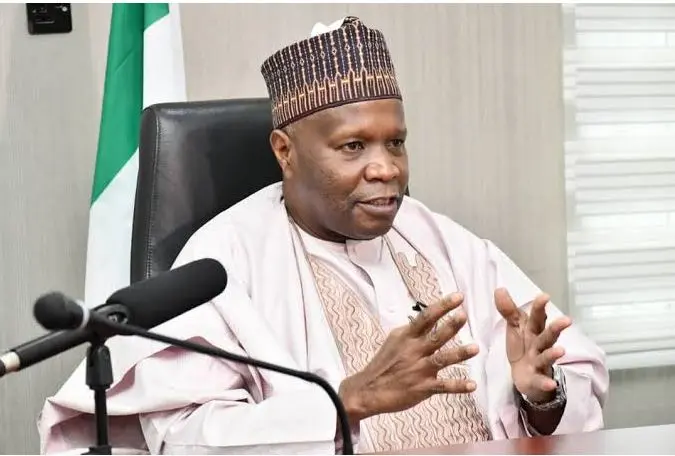
Gombe State Governor, Muhammadu Inuwa Yahaya, CON has condoled with the government and people of Bauchi State over the demise of Emir of Ningi, Alhaji (Dr.) Yunusa Muhammad Danyaya, OON who passed away in the early hours of today, Sunday at the age of 88 years.

In a message of condolence, the Governor said the demise of the first class traditional ruler, especially at this time, is a great loss not only to Ningi emirate but the country as a whole.

He described the monarch as an iconic ruler and a man of peace who, throughout his 46 years of reign, was known for preaching and promoting unity and harmony among the people of his domain, Bauchi state and the nation at large.

The Gombe Governor, who is also the Chairman of the Northern States Governors’ Forum, consoled the bereaved royal family to take solace in the fact that the late emir left behind legacies of honour, dignity and selfless service, urging them to uphold and sustain same.

Governor Inuwa, on behalf of the government and people of Gombe state, extended his heartfelt condolences to his Bauchi state counterpart, Sen. Bala Abdulkadir Mohammed, Chairman of Bauchi State Council of Emirs and Chiefs and Emir of Bauchi, Alhaji Rilwanu Sulaiman Adamu, members of Ningi Emirate Council as well as government and people of the state over the great loss.

Gombe: Government to pay ₦70,000 minimum wage

By Abdullahi Mukhtar Algasgaini

The Governor of Gombe State, Muhammadu Inuwa Yahaya, CON, has announced his intention to pay the ₦70,000 new national minimum wage to workers in the state.

The position of the governor was presented by the Deputy Governor, Manassah Daniel Jatau, PhD, who is also the Chairman of the Tripartite Committee on Minimum Wage Negotiation, Gombe State, during a press briefing at the conference hall of the Deputy Governor’s Office, Gombe.

Represented by the State Head of Civil Service, Alh. Ahmed Kasimu Abdullahi, during a Press briefing ,the Deputy Governor explained that the governor is highly committed to ensuring that civil servants in the state enjoy the 70, 000 new national minimum wage so that they can put in their best in serving the state.

He said, the governor has set a machinery in motion and the standing committee has been fine-tuning to see to the implementation of the new minimum wage.

“Government has set the machinery for the implementation of the new national minimum wage in Gombe State. Let me assure you that His Excellency the Governor is fully determined to pay the minimum wage. Unlike what you have been hearing in some quarters that the governor said he won’t pay. No, not at all. His Excellency is one of the governors in the fore front of payment of the new minimum wage”.

He said Governor Inuwa Yahaya has been magnanimous enough to willingly pay a 10,000 palliative in form of a wage award since September last year, across board to all civil servants in the state to cushion the effect of fuel subsidy removal which, automatically brought the minimum wage to 40,000 naira when other states couldn’t pay the 30,000 minimum wage.”

In the magnanimity of the Governor to alleviate the hardship occasioned by fuel subsidy removal, he approved the payment of 10,000 across board to all civil servants without anyone putting any pressure on him in order to make the civil servants feel better in the discharge of their duties. The additional 10,000 naira was because of his concern, feeling and regard to civil servants and it has made the minimum wage 40,000 instead of 30, 000 even when other states couldn’t pay the 30,000″.

He however pointed out that the negotiation committee has decided to separate the monthly salaries from the 10,000 palliative pending when conclusion is reached in order to prepare the Civil servants on knowing their exact salaries when the minimum wage is finally agreed upon.

“Effective from this month of August, the normal salary will be paid, then after two days the ten thousand naira palliative will be paid to help the worker know his actual salary and this will continue until the new minimum wage is agreed upon. We are now waiting for the salary table from the federal government before we commence the negotiation. Once we reach an agreement the implementation will begin and the 10,000 naira palliative will stop”.

The Nigeria Labour Congress Chairman, Mr. Yusuf Aish confirmed that this was the position reached at the tripartite committee meeting on the new minimum wage.” we had a brief discussion during our negotiation in the last 30,000 naira minimum wage due to some balance of some payment where we have agreed that this committee is a standing committee of minimum wage negotiation in the state. As a result this same committee met to begin negotiation on the new 70,000 naira national minimum wage. However,in our tripartite committee meeting we have agreed to wait for the time the new minimum wage table as approved by the federal government will be released. Whenever it is released we will start full negotiation with a view to reaching an agreement on what is to be paid in Gombe State”.

He also explained that civil servants will receive two alert messages beginning from this month of August, being the normal salary and that of 10,000 naira palliative urging the civil servants to be patient pending when the negotiations will be concluded.

President Tinubu celebrates governor Zulum at 55

By Abdullahi Mukhtar Algasgaini

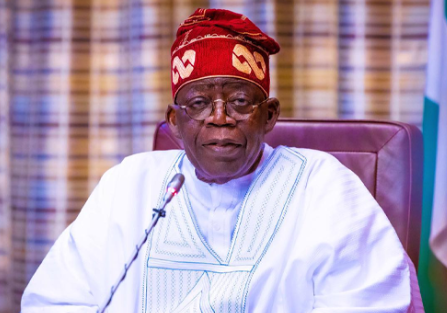
President Bola Tinubu warmly congratulates the Governor of Borno State, Professor Babagana Umara Zulum, CON, MNI, as he marks his 55th birthday.

Governor Zulum is an academic, visionary, reformist, and statesman.

President Tinubu joins the family, friends, and people of Borno State in celebrating the young and dynamic leader who embodies the pragmatism and energy of youth, as well as the sobriety, prudence, and wisdom of the elderly.

The President commends Governor Zulum’s hands-on approach to leadership, demonstrated by his unchoreographed, pre-dawn inspections of rural clinics and critical agencies to ensure their smooth operations and that staff are on hand to provide essential services at world-class standards.

President Tinubu also applauds the governor’s courage, exemplified by his personal interventions in security situations in Borno State and in the recent resettlement of displaced citizens.

The President appreciates Professor Zulum’s facility for providing unifying leadership, epitomized by his efforts towards ensuring the welfare of citizens from other parts of the country and in the promotion of Nigerians of diverse ethnic backgrounds and faiths through the ranks of the Borno Civil Service on the exclusive basis of merit.

“Babagana is one of those luminescent northstars of meritocratic rise in the Nigerian political firmament. From humble beginnings, his tenacious pursuit of personal growth and later on, expeditious state and national development, is a guide to Nigeria’s future generations.

“Borno State and Nigeria at large are fortunate to benefit from his benevolent brand of modest, rigorous, and visionary political and administrative leadership,” the President states.

As the governor marks this milestone, the President wishes him many more years in good health and renewed strength in his service to the nation.

President Tinubu mourns passing of Emir of Ningi

By Abdullahi Mukhtar Algasgaini 

President Bola Tinubu commiserates with the people of the Ningi Emirate and the Bauchi State government over the passing of the Emir of Ningi, Alhaji Yunusa Muhammad Danyaya. 

The first-class monarch passed away in the early hours of Sunday. 

President Tinubu describes the deceased as an illustrious leader who deployed the power and resources of his throne in the service of his community. 

The President prays for the repose of the soul of the departed traditional ruler and condoles with his family and all those grieving the loss.

The August protest has changed nothing!

By Musa Kalim Gambo

Whether you like it or not, populism is the giant stallion politicians ride to victory in every race. They strike at the cords of the utmost desires of the public, exaggerate the failures of the existing structure, and swear by the deities they worship that they possess the magical cure. They have the staff that can open up the Nigerian Red Sea of trouble to ‘let my people go.’

So, this upcoming August protest in Nigeria is another populist stage—dramatic personas will sing the chorus of what everyone already knows, what everyone already endures, and what everyone already believes is no longer humanly possible for the current crop of Nigerian politicians to address. 

#ENDSARS was a huge success (?), to a relative extent. Youths expressed their rage at an overtly abusive agent of the government, a special unit of the Nigerian police force, the Special Anti-Robbery Squad, or SARS, as it became notoriously known in 2020.

The protest was beyond police brutality and high-handedness. This was when the country was amid the coronavirus pandemic, economic recession, and poverty –you could perceive the pungent odor of poverty in the air. Life was becoming unaffordable and unpalatable. So if poverty provides the ground for hunger, then hunger was close relative to anger and frustration,  then it was clear that #ENDARS was bigger than the demand for an end to police brutality. 

It could be concluded that the frustration, hunger, and anger that hung in the air were the oxygen in the protesters’ blood. It was the crucial component of the energy that drove the protesters to the streets—although the activation energy came from the said ‘police brutality’ through the SARS.

Four years later, these youths moved on, and the country’s situation did not seem to display any sign of positive change. The only visible changes, obviously, must be said—there’s a proactive approach to leadership. Even if some government areas prove difficult and impossible, the leadership is resilient. 

It is now widely seen that the federal government has hastily increased the national minimum wage, granted autonomy to local government, launched a student loan scheme, and is vigorously engaging with stakeholders on the eve of this August protest.

The government is already taking important measures to prevent a protest from escalating into an ugly situation.

Here in the North, the Ulama have strong control over the youth, and they are already calling on youths to avoid violence or any action that could potentially undermine the nation’s fragile state. So, if the protest eventually occurs in parts of the North, it is expected to be peaceful. 

The Northerner respects leadership – good or bad, as long as such leadership does not directly conflict with his religious belief, especially the unity of God. But this calm doesn’t suggest silence! Neither does it imply agreement with the prevailing hardship. There will always be strong condemnation and damnation against the extravagant and ostentatious lifestyle of the political elite amidst hardship among the talakwa. This is sometimes expressed in rhetorics – with Allah ya isa.

This weekend, the Hausa political praise singer Dauda Kahutu Rarara, had his Facebook page deleted after users reported him over a song. In Rarara’s usual style, the song in question seeks to indicate that the life of talakawa has improved under the current Nigerian government. It can essentially be said that the song trivializes the grievances of the public against the government. 

Rarara is known to reduce the opposition to his benefactors to nothing, sometimes even mocking them using his rhythm and lyrics. So, this was undoubtedly one of those instances met with the appetizer of the upcoming protest.

Back to the protest—one thing is certain in this part of the world:  no matter how hard the poor fight, the elitist lifestyle that serves as a precursor to their pathetic condition cannot be changed. Protests do not improve the quality of life in this part of the world; they rather push the poor from frying pan to fire, leaving behind ashes of instability and unrest that go on long after the protest is over.

So it’s best to be wise and think twice – peaceful dialogue and engagement with the authorities. 

Musa Kalim Gambo writes from Kaduna via gmkalim.ng@gmail.com.