Month: June 2024

Bauchi commissioner, Ahmad Jalam, dies in car crash

By Uzair Adam Imam 

Bauchi State Commissioner for Local Government and Chieftaincy Affairs, Ahmad Jalam, died in a car accident on Saturday. 

Governor Bala Mohammed announced the death and described Jalam as a dedicated public servant who championed good governance and community relations. 

The commissioner was known for his tireless work, integrity, and compassion. 

He will be buried on Sunday in his hometown in Dambam Local Government Area according to Islamic rites.

Pantami’s three faces

By Zayyad I. Muhammad 

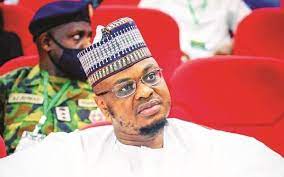
Isa Ali Ibrahim Pantami, former Honourable Minister of Communication and Digital Economy, an Islamic sheikh, and a UK-trained Ph.D. holder, has found himself in a triangular situation: an Islamic sheikh, a politician, and an academic. This revered status means any issue that affects his personality will always be a hot topic and attract public scrutiny.

Pantami’s full transformation into a politician who is eyeing the ‘ballot box’ was noticed during this year’s Ramadan Tafsir; his style of delivery and the content of his messages were noticeably altered. Traditionally known for his sticking to religious contents during tafsirs, this time, the sheikh took every opportunity to showcase his extensive knowledge of the economy, geography, and global politics. This shift did not go unnoticed by the audience and observers.

Pantami’s discussions were peppered with references to economic policies, geographic strategies, and the intricacies of international relations, signalling a significant change in his focus and priorities. Pantami continues to align himself more closely with political aspirations, and his body language has also evolved to reflect this new ambition. 

Recently, controversies, debates, and discussions have emerged about Pantami’s books, Skills, Rather than Just a Degree and A Scholar’s Journey: Navigating the Academia. These books trended for a while and reignited old controversies about how he obtained his professorship. This situation has also awakened Pantami’s political adversaries, who view his behind-the-scenes early efforts to enter the Gombe state governorship race as an encroachment on their territory.

Many politicians, especially in his home state of Gombe, are upset with Pantami because they view him as an outsider who seized opportunities to occupy their ‘slots,’ first as the Director-General of NITDA and later as a federal minister representing Gombe State. However, after eight years of working independently, he now seeks their support to establish himself in their domain.

Conversely, the majority of Pantami’s critics regarding his appointment as a professor are academics. In contrast, most of those who backed the critics were Pantami’s political opponents and their supporters.

One of Pantami’s critics was reported to have penned this: 

“Mr. Pantami was only for the most part a Lecturer 1 or 2 where he first served and didn’t spend a whole working career in the university system or in a university’s employment,” he was “made” a Professor by a university where he never worked, taught, sat in its Senate, worked in its committees, never examined or marked UG or PG exam scripts, and his whole promotion papers were never processed at the departmental and faculty levels, and, indeed, he never had a payroll number… Mr. Pantami was thus never a scholar in the classical or academic sense of that word. I wonder whether he’s now teaching or giving classes or seminar papers at any university after his leaving office in May 2023.”

On the other hand, supporters of Pantami’s professorship encompass academics with a fondness for him, members of religious groups, his students, and his political associates. 

In fairness to Pantami, having held a ministerial position, he is already entrenched in politics. Moreover, the criticisms in his books predominantly consist of one-off comments rather than comprehensive analyses or academic discourse. Furthermore, Pantami’s challenge for a debate on his book is yet to take place. 

The debate about Isa Pantami’s books, professorship, and foray into politics has three divides: his adherents, his opponents, and those sitting on the fence. The views of his followers and critics are well known and are often based on their perspectives. However, those sitting on the fence have, on many occasions, provided valid points both for and against Pantami.

Isa Ali Pantami’s transition from an Islamic scholar to a politician and professor has sparked both controversy and applause. His political opponents view his entry into politics as an intrusion into their territory, while his academic critics regard his professorship as ‘unearned.’ On the other hand, his supporters perceive his multifaceted identity—as a sheikh, a politician, and a professor—as exceptional among his peers.

Zayyad I. Muhammad writes from Abuja via zaymohd@yahoo.com.

Super cop Abba Kyari regains freedom after 27 months in detention

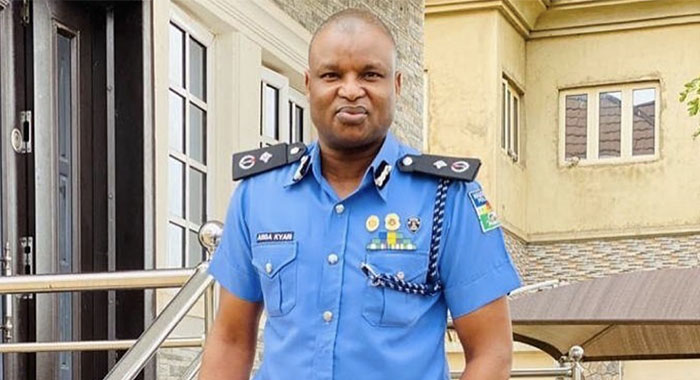
Suspended Deputy Commissioner of Police, Abba Kyari, has been released from the Kuje Custodial Centre after spending almost two years in detention. 

Kyari’s release was confirmed by the Nigerian Correctional Service spokesperson, Adamu Duza, who said the former police chief had met his bail conditions. 

The Federal High Court in Abuja had granted Kyari bail on May 22, 2024, to enable him to bury his mother, Yachilla Kyari, who died on May 5. 

Kyari was arrested in February 2022 by the National Drug Law Enforcement Agency (NDLEA) for alleged involvement in international drug trafficking.

He was arraigned in court alongside four other police officers and two suspected drug traffickers. 

The case is still ongoing, with the next hearing scheduled for May 31, 2024. 

Kyari’s release has sparked mixed reactions, with some calling for his reinstatement and others demanding that he face justice for his alleged crimes.

Kano Emirship Crisis: It always helps to live in the real world

By Dr Raji Bello

Following encouragement from some friends, let me say what I’ve been a bit reluctant to say. It is based on my conviction as a dispassionate and non-partisan observer and of course, as a non-indigene of Kano State.

The root cause of the emirship imbroglio in Kano, in my view, was the inability of Muhammadu Sanusi II to subordinate himself and his office to the Ganduje administration as required by the terms of his appointment. This is essentially what triggered every other thing that has happened and which has led us to where we are today. To correct any problem permanently, we need to examine its root cause.

I am not saying that Sanusi is not an emir of high intellect who is enormously popular among the people. This assessment of mine is based on only one criterion — his willingness or ability to comply with the terms of his appointment — and it is made without prejudice to his qualities, endowments and accomplishments as an individual, technocrat and emir. Like other human beings, the emir is not perfect. He might have excelled in 9 out of 10 criteria but his failure in the 10th is the cause of the emirship crisis because it happened to be a very important criterion.

All post-colonial emirs and traditional rulers have been obligated to demonstrate loyalty and due courtesy to government be it colonial, democratic or military. History is replete with examples of the huge price that was exacted each time an emir fell short on loyalty towards government.

As an intellectual of high standing, the emir must have been aware of that history. When he set out to be emir, he should have been conscious of the terms of appointment and should have fully reflected on whether it was the appropriate platform for someone of his disposition or not. The emir seems to want the Kano emirship in its pristine 19th century form when it didn’t answer to a non-traditional authority. This betrays a lack of situational awareness and good judgement because the reality is that the 19th century is long gone and can never be brought back. So if anyone is interested in becoming emir in the 21st century, it has to be under 21st century terms.

The Ganduje administration had accused the emir of multiple infractions from political partisanship, insurbordination and failure to demonstrate courtesy towards it. Some of these infractions had played out in public for all to see and hear which means that they were not false accusations. I do not fully endorse the former government’s actions (which bore traces of the usual Nigerian impunity) but it is clear that it was provoked into taking actions against the emir. I believe that all state governments are inclined by default to respect the traditional institutions within their states and hostilities only break out when there is a breach of the terms of appointment (usually, but not always) on the part of the traditional rulers.

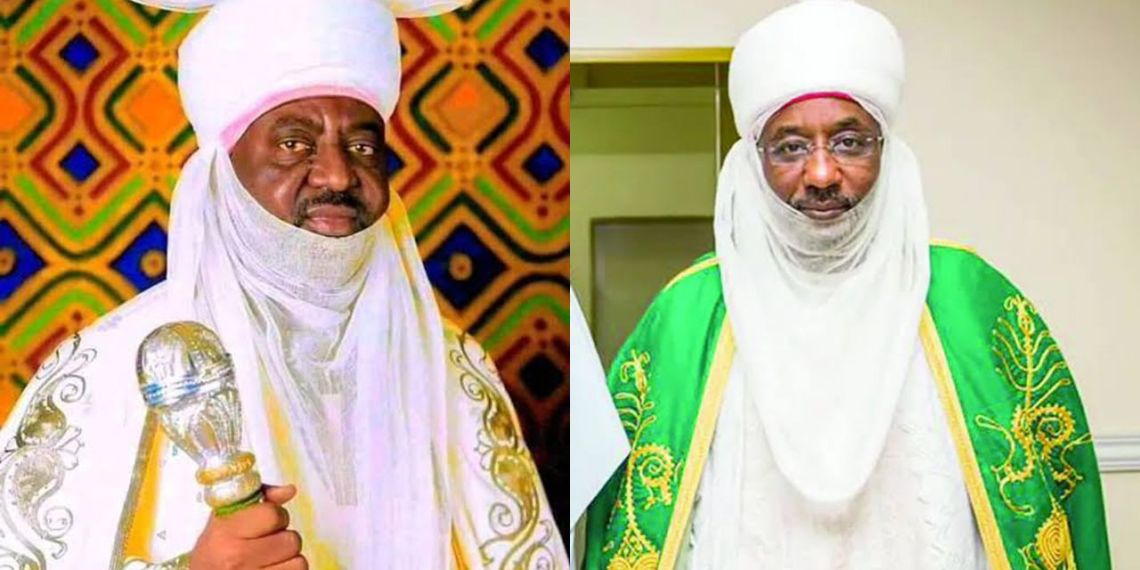
There is no individual who is so important or popular that they would enjoy exemptions from complying with the terms of their appointment. This is an incontrovertible fact. A friend told me that the emirship style of Aminu Ado Bayero is a bit bland compared to that of Muhammadu Sanusi II. I replied that this is true but the Aminu style is actually the correct one.

Post-colonial emirship is not a radical or revolutionary platform and, after the 1976 Local Government Reforms, the traditional institutions in northern Nigeria lost all the vestiges of authority that were previously delegated to them under the Native Authority system. The post of traditional ruler is now just a custodianship of heritage whose essential features are loyalty, co-operation and circumspection.

Yes, Sanusi is wildly popular, has a deeper intellect, a gifted oratory and displays a higher sartorial elegance but it was Aminu Bayero who was doing the emirship correctly under its current terms. Those who cheered Sanusi as he breached the terms of his appointment were not helping him or the Kano emirship institution.