Month: May 2024

The battle of the White Lion, the Eagle, and the rest of us

By Lawan Bukar Maigana 

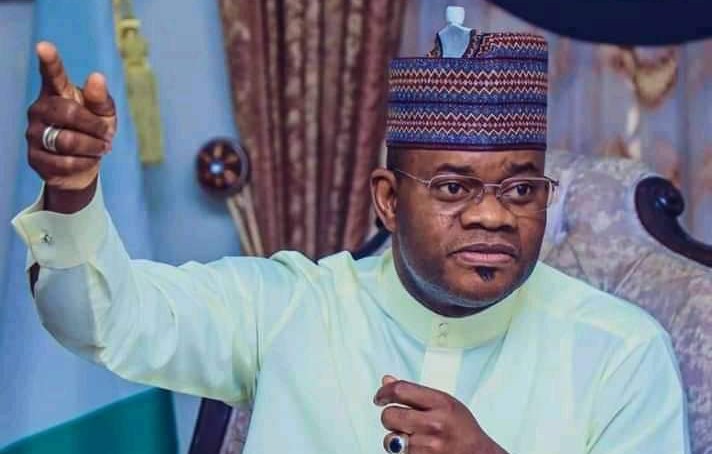
Many people believe that journalists also aid money laundering in Nigeria. This may be true as some professional journalists are sometimes hired to protect and polish the horrible images of politicians, like the former Governor of Kogi State, Alh. Yahaya Bello.

Let us be brutally frank: Bello was notorious for owing Kogi workers their salaries for months and even years when he was governor.  

The self-acclaimed White Lion was a ‘cancer’ Kogi workers battled with throughout his stewardship. Surprisingly, a mere eagle chased him, and everyone knows he went into hiding despite his lioness strengths. It is so strange that a perceived ordinary eagle has humbled him. This eagle deserves a national award for successfully turning a lion into an ordinary fearful man.

Unequivocally, I have come to the realization that some lawyers are also culpable when it comes to issues of protecting political elements who looted public funds for their personal enjoyment, forgetting the indomitable eagle that fights fat-belly lions and defeats them, especially when the lions and tigers have eaten so much that they can’t even run, let alone fight back. 

If not unpatriotic, why would a legal luminary describe the EFCC’s move against the former egoistic Governor of Kogi State, Yahaya Bello, as ‘illegal’? If arresting or declaring him wanted was illegitimate, what is the constitutional name given to money launderers? I guess they are called ‘My lord’. I can’t even describe how sad I was when I read the news that a lawyer has advised the Economic and Financial Crimes Commission (EFCC) not to act above the law in its efforts to arrest and subsequently prosecute Kogi’s former governor.

I don’t know what the lawyer means by ‘not acting above the law’ in this context because it is the law that establishes the commission and empowers it with the right to arrest and prosecute unjust public officers who turned public offices into a stealing factory where theft is committed with impunity. Professionals like journalists and lawyers should ideally lead the fight against injustice and bad governance and uphold state accountability and transparency through every means available at their disposal, not the other way around.

While writing this afternoon, I read an article by a reporter from The Street Journal. The report was accompanied by a video of a female civil servant protesting against the non-payment of nine years’ salaries by the immediate past Governor of Kogi State. She said, ‘I have not been paid for seven years. Tinubu, are you hearing this? I am dying of hunger. Tinubu, where are you? Yahaya Bello, armed robber.’ I believe there are thousands like her who are suffering in silence due to fear of victimization by either the past Governor or his cult-like loyalists, who can commit unspeakable offences to silence the existing truth that uncovers the wrongdoings of the white lion. 

The lawyer uncommonly went on to challenge the withdrawal of state security details attached to the ‘White Lion’ and even termed it as illegal, adding that Bello is now exposed to great political dangers. I tend to wonder if there is anything as dangerous as subjecting people to hunger and starvation by not paying their salaries for years. It is in the news. The man has been having issues with the Labour Congress over non-payment of salaries for years. I guess the alleged pocketed N80.2 billion Naira largely owned by starving civil servants of Kogi State.

In relation to the charges against Yahaya Bello, the 21st Century Chronicle published on January 12, 2024, that the embattled ex-Governor of Kogi State, along with his nephew Ali Bello, had been arraigned before the Federal High Court in Abuja over a suspicious transaction in a N10 billion money laundering case, transferred in tranches from the accounts of the Kogi State Government and that of the state’s government house account. This, among many similar charges against him, shows that he’s unlikely innocent of the crimes attributed to him.

I am not antagonistic towards Yahaya Bello as a person. My concerns stem from patriotism, and I only wish that the Federal Government will not interfere in his case in any way, as he is a white lion who proudly once said that he is never afraid of any confrontation. Let the truth set him free if he was truthful and honest. We are keenly following his case.

Lawan Bukar Maigana writes from Abuja and can be reached via email: Lawanbukarmaigana@gmail.com.
Man arraigned for allegedly forging Oyo Govt hackney permit

By Uzair Adam Imam

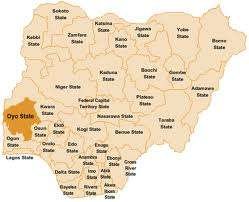
In an Iyaganku Magistrates’ Court in Ibadan, Mr. Samuel Oyetayo, aged 35, faced charges on Monday for allegedly forging the Oyo Government hackney permit and ticket.

Oyetayo, whose address remains undisclosed, stood trial for a count charge related to forgery of the Oyo Government hackney permit.

Despite the accusation, he pleaded not guilty.According to the prosecutor, Insp Toyin Ibrahim, the defendant committed the offense on May 1, in the vicinity of Dugbe, Ibadan.

It was alleged that Oyetayo forged the Oyo Government hackney permit and ticket without proper governmental authorization.

The offense was cited as a violation of Section 467 of the Criminal Laws of Oyo State, 2000.

Magistrate Mrs. Kausarat Ayofe granted the defendant bail in the sum of N50,000, along with two sureties in a similar amount.

The case was adjourned until June 24 for further hearing.

A remarkable story of a tea seller and his customer

By Elisha Bello

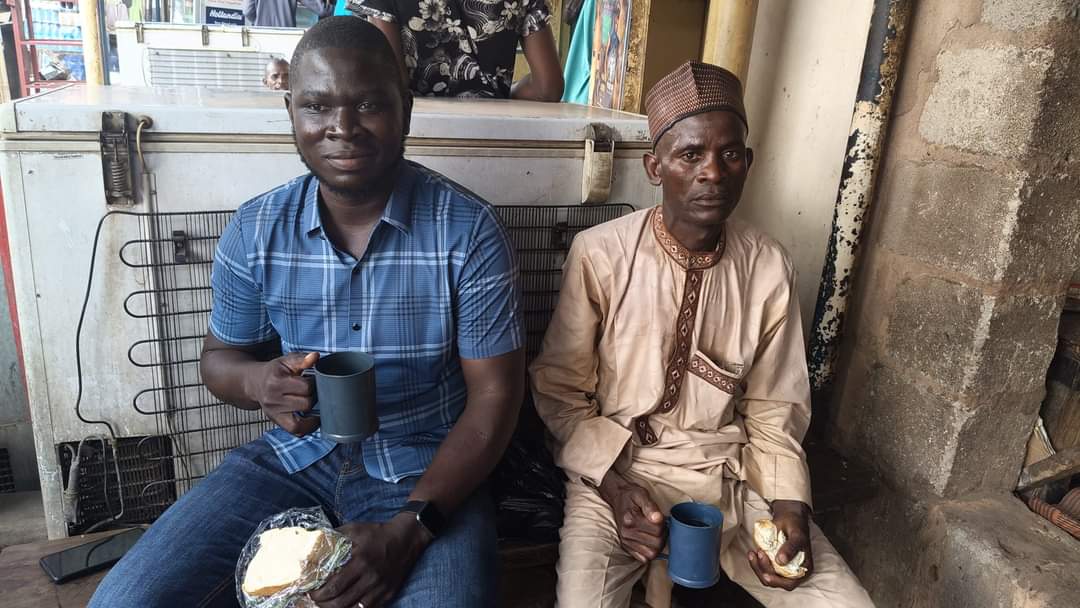
Yesterday, I embarked on a nostalgic journey to visit the son of the late Mallam Ahmadu, a kindhearted individual who had significantly impacted my life during my entrepreneurial venture in Buni Yadi, Gujba LGA, Yobe State.

I used to design and sell posters and stickers featuring Hausa Movie Kannywood actors, Bollywood actors, and football players. My business trips would take me to Kano, where I would purchase these posters and return to sell them in rural markets like Bumsa, Goniri, Kukuwa, Wagir, Buni Gari, and Tarmuwa.

Mallam Ahmadu, may he rest in peace, was a constant source of encouragement and support. He would often welcome me with a warm smile and a refreshing African Tea, accompanied by bread and egg, all for just ₦450. I would make it a point to deposit some money with him in advance, ensuring I could enjoy his hospitality whenever I returned from the markets. On occasion, he would even offer me free tea, a gesture that meant the world to me.

One fateful day, I faced a significant setback when I lost my business capital due to unforeseen circumstances. With my SSS 3 school fees and WAEC/NECO exams looming, I was desperate for a solution. Despite pleading with those around me, I couldn’t gather the required ₦13,250. Feeling defeated, I considered abandoning my education to focus on my business. That’s when Mallam Ahmadu noticed my absence from school and inquired about the reason. I shared my predicament with him, and without hesitation, he asked me to return in the evening to collect the necessary funds.

True to his word, he handed me the exact amount from his wooden drawer, saying, “Allah ya ba da nasara, Doctor Elisha” (May God grant you success, Doctor Elisha). I was overwhelmed with gratitude and asked how I could repay him. He simply said, “Whenever God blesses you, come back and pay me back.” Mallam Ahmadu’s kindness and encouragement stayed with me, and he fondly referred to me as “Doctor Elisha” due to my ability to read and interpret both Hausa and English languages.

Fast-forward 20 years, and I recently had the opportunity to reunite with his eldest son, Salisu, who has continued his father’s legacy. As I shared this story with him, we both became emotional, reminiscing about the past. I treated myself to a cup of African tea, and the memories of Mallam Ahmadu came flooding back. I’ve since repaid the debt and purchased food items for the family. Moreover, I’ve committed to supporting Fatima, his daughter, with her school fees until she completes her university education.

As I parted ways with Salisu, I shared with him that I’ve finally become a Doctor, just as his father used to affectionately call me. He was overjoyed and offered his prayers for me. This heartwarming encounter serves as a poignant reminder of the power of kindness and the impact one person can have on another’s life.

Sunana Elisha Bello, Ph.D.

Editor’s note: The story was published on Dr Elisha Bello’s verified Facebook page.

NAF airstrikes decimate terrorist strongholds in Borno, Niger

By Uzair Adam Imam  

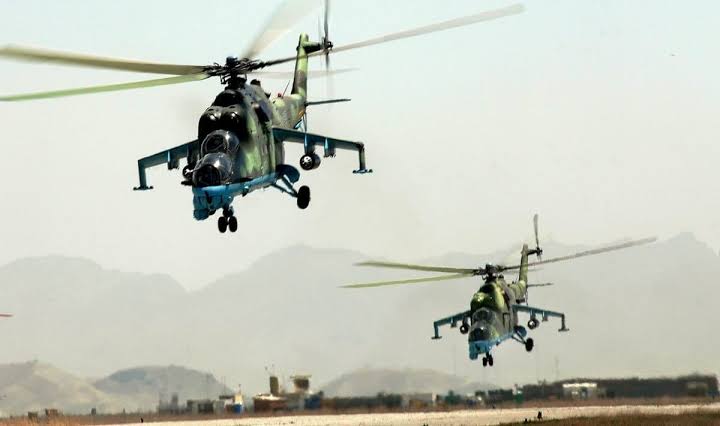
The Nigerian Air Force (NAF) has, in recent operations, made significant success against terrorist elements in Borno and Niger by dealing heavy blows to their infrastructure and mobility. 

According to AVM Edward Gabkwet, the Director of Public Relations and Information for NAF, airstrikes carried out by the air components of Operations Hadin Kai and Whirl Punch have relentlessly targeted terrorist hideouts and disrupted their activities, thereby reducing their capacity to harm ground troops and civilians. 

In Borno, on May 3, airstrikes were authorised and executed over Chinene, located within the Mandara Mountain region, where terrorists were observed gathering for a meeting.  

The attack, targeting assembly areas and concealed weaponry, resulted in the destruction of seven gun trucks and numerous neutralised terrorists, as confirmed by the Battle Damage Assessment. 

Simultaneously, Operation Whirl Punch conducted pre-emptive strikes in Allawa village, near Shiroro town in Niger.  

This operation, prompted by credible intelligence indicating terrorist incursion following the evacuation of locals, aimed to thwart their presence and prevent further attacks.  

Terrorists, spotted wielding firearms, were effectively engaged upon arrival, with subsequent airstrikes targeting their arms cache hidden within Allawa Forest. 

Additionally, NAF conducted airstrikes in the Niger Delta region, specifically North of Arugbana and Temakiri, where illegal refining sites were detected and destroyed.  

This action not only curtails the capabilities of oil thieves but also mitigates the risk of pipeline sabotage and environmental damage. 

The coordinated efforts of NAF demonstrate a steadfast commitment to combating terrorism and securing vulnerable regions, underscoring the crucial role of air power in safeguarding national security.

The harsh reality of being a private school teacher in Nigeria 

By Muhammad Isyaku

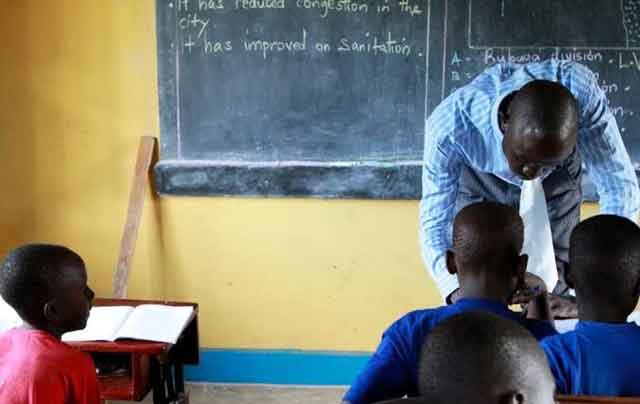
The challenges faced by private school teachers in Nigeria are weighty. Many feel undervalued and disrespected by school proprietors, who often fail to treat them as equals. Despite their qualifications, teachers find themselves in dehumanising situations where their salaries are insufficient to meet their basic needs.

In Nigeria, private school teachers, particularly those working at the crèche, nursery, primary, and secondary levels of education, are akin to pumpkins in deserted homesteads because most school proprietors don’t treat them as fellow humans.

Imagine someone who has never paid your school fees; they just met you as a graduate with your qualifications, but because you are working under them, it would be dehumanising to you as if what they pay you could cater to your life demands.

Private school teachers are going through tough situations, and some of them contribute to their misfortunes because they are stuck in monster schools where they are not respected and dignified. If not for weaklings and silly-minded teachers, how could you choose to continue working with a proprietor who doesn’t respect your persona?

Some proprietors would shout at teachers in front of the students or their parents, giving students much higher priority than teachers in some schools. Some proprietors would prefer losing a teacher to losing a student, and the only excuse they have is that they might use the money to employ another teacher to replace the one they lost but could not use the funds to bring in students to their school, which is a terrible idea to me.

Furthermore, private school students are often disrespectful. Most of them don’t exhibit good manners in school, and their reason for misbehaving toward teachers or other school personnel is that their parents pay for their school fees, so they should be exempted from discipline. In contrast, students in public schools behave better because the government pays for them and provides everything for them for free.

In my experience, the most annoying place for a graduate to work is a private school. Though not all private school students are hellish or mannerless, some respect us as our younger siblings do at home. I won’t fail to admit that but the majority are not well-mannered. 

Most of the management in those schools doesn’t respect the welfare of their staff, but they want teachers to do a donkey job for them in the school. Some even have the manner of owing salaries; some would pay but not complete; some would pay, but teachers have to buy all the textbooks needed for their subjects.

I don’t want to be on record saying all proprietors are bad. Some are good and nice to work with, but others are pharaohs in human skins. My only candid advice for young graduates of either NCE or degree programs to work for private schools is for experience’s sake, nothing more or less.

Suppose one works in a private school before getting employment by the government or any private sector. In that case, he will learn much more, especially by being contemptuous and modest, because the salary can never be enough. Though nothing can be reached in this life, patience is the key.

However, in a private school, if one is to calculate what he is earning, even a pure water hawker could be earning more than he does in a month if all the daily earnings are to be calculated at the end of the month. 

I advise graduates to look for alternatives to teaching in private schools because those proprietors would exploit them and get richer through their sweat while they are getting poorer. The annoying part is that they don’t appreciate your effort. If they did, they should have found a token or incentive to offer you or pay while on vacation, but they won’t. All they do is let the month end before they pay you the salary.

People, especially young graduates, should go and learn skills or other business because teaching in private schools is not for them and can never contain their needs, especially in this hard-hit Nigeria. I am saying this from experience and as a private school teacher presently.

Moreover, for those who might be stricken or hurt by my words, I want to categorically state that I owe nobody an apology whatsoever. If you are unhappy with my submission, you can write a rejoinder and counter-argue.

Muhammad Isyaku wrote via muhammadisyakumalumfashi@gmail.com.

Black Tax: How do you cope with your family and friends?

By Fatimat Ibr

It was my first Ramadan as a graduate and as a serving copper, and it was two days before Ramadan. As a tradition, I called my mom to ask her about the preparation for Ramadan. I knew I couldn’t afford her anything just yet, but checking in was very necessary and important.

She answered, “Hmmm, you know the condition of this house before you left, nothing ohh I don’t have anything, this is 08:30, I am still on my way home from the market, I delayed hoping I will eventually make a good sale so I can get some things we need but no show, things are expensive, we don’t have beans, rice auger or millet, like always I will be buying with cups when I can, Aisha is sick, Usman hasn’t pay his school fees, wallahi I am tired, you and your sis should do fast and come and continue I am tired”.

Before she ended her conversation, my throat was dry and tight, tears were rolling down my cheeks, I couldn’t form a word, tried but couldn’t, and had to end the call.

This is a story of one to a hundred youths in Nigeria, both male and female.

I am a young girl in her early twenties, already caught in the fire of fending for myself, which I barely can do and must carry on with four or five family members. Why? Because I need to pay the “black tax.”

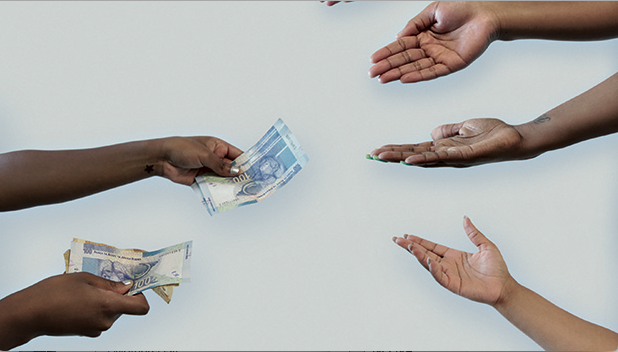
Black tax is a term that originated in South Africa and refers to money that black workers or professionals and others with high income give their parents, siblings, friends, or other family members. The origin of the black tax is rooted in historical and systemic inequality that was prevalent at the time. 

The history of black tax can be traced back to the legacy of apartheid in South Africa, which ended in the 1990s. During the apartheid era, Black individuals and families were denied access to many economic opportunities and resources. As a result, they often relied on the support of extended family and community members to make ends meet.

When apartheid ended, many Black individuals and families gained access to new economic opportunities and were able to improve their financial situations. However, they continued to feel a sense of responsibility towards their extended family and community, and this financial obligation became known as the “black tax.”

The black tax has become a menace in Nigeria that needs to be curbed due to the increase in the rate of poverty.

However, we know that it is a thing of honour and Noble to extend hands to others, family, and the community at large,but not at the expense of your personal development and growth.

As the saying goes, “You can’t give what you don’t have”, which is why you need to show up fully for yourself to be able to show up for others.

I want you, my friends and youths, to know and learn to show up for your siblings, parents, and your community with a full cup. You could be there for them emotionally and intellectually.

I talked with fellow corps members, and they have these to say.

“I do not pick up calls from my mum or siblings anymore. I am taking care of my mental health, and I am tired of hearing stories and being guilt-tripped about how I was trained for school and all. I do know  they are my responsibility, but I need them to understand that I am trying and thinking about them” ~ Oghene Martha

“I have been paying Black tax since my undergraduate days, and I never get to try restaurants and fun places in school that require money. In school, I constantly thought of things we lacked at home that I needed to get when going back, so I used to do little business in school to stay afloat. Now that I am serving and had to go to a different state, it is challenging because I haven’t recognised any opportunity here, and the 33k barely takes me through for three weeks, but I still have to send money home. My siblings always ranting, it overwhelming actually” ~ Yusuf Nana

Both religion and education have taught us the benefits of giving, and its importance cannot be overemphasised. However, strategy and caution are needed in all aspects of life. We strain ourselves so much to our elastic limit that when things get turpsy, we are again looking for the next best target to Leach off from.

How To Deal with Black Tax?

Communicate:  Talk to your family; they will understand. Be transparent, and let them know how much you are trying and working to help yourself and for them. Tell them how much their understanding and emotional support would mean to you. Assure them that you know, see all they did for you, and appreciate them, but you need them to be patient with you.

Work with gross income, not Net income: Your gross income is what you have after settling or deducting your debts, transportation costs, and other daily costs you incur while working over the month. If you must tell your parents, siblings, and friends your salary, it should be your Gross income.

Example: My net income is 250k, and if I tell my parents that I earn that, how would they feel when I send 50k at the end of the month? The best way is this: You earn 250k, you spend 50k monthly on transportation, and airtime 5k. You are left with 195. Then, that is what you share with them. They would be happier if you sent them 30 to 45k.

Set Financial Goals: No matter how minimal your income is, you should have a savings plan; all it takes is discipline, and you will make it work. In the end, it all goes to add up.

Do not lend money to friends and family: 80% of the money you borrow from your friends and family will be very difficult to recover. Most debts end up severing ties between friends and family. Instead, you could adopt this strategy. My friend or one of my siblings asked me to lend her 20k, and I told her I did not have that money, but I could spare her 4 to 5k. I am giving you this for free, so you do not need to pay it back. This is a proven strategy that works most of the time. You protected your relationship and your money. Never give room for cash to steer problems between you and a family.

Learn to say No: This is difficult, but it is necessary. You can be in everyone’s good books. Know what you can bear, recognise your strength, and say no to everything else. Remember, you are nobody’s last hope. Eventually, they will find a way to survive with or without you.

Invest in yourself: You need money to make money, buy things, take trips, and eat good meals. If you fail, people pulling you down with expectations will be the first to criticize you. Take care of yourself. 

Be intentional about your physical, intellectual, and financial growth. Black tax is a tool for guilt trips and emotional blackmail, creating balance, and taking care of your mental health.

Until we learn to eliminate pressure, expectations, and guilt and focus on building sustainability and savings, the black tax will continue to be an endemic that will continue to affect future generations.

Together, we can break the vicious cycle of generational dependence.

Fatimat Ibrahim Abedoh is a corps member in Nassarawa State and wrote via abedohfatimat@gmail.com.

Islamic group rejects proposed defence pact between Nigeria, US, France

By Sabiu Abdullahi  

The Muslim Rights Concern (MURIC) has vehemently opposed any defence agreement between Nigeria and the United States or France, as well as the establishment of military bases by either country on Nigerian soil. 

In a statement released on Sunday, May 5, 2024, MURIC’s Executive Director, Professor Ishaq Akintola, stated that Nigeria must not allow itself to be recolonized.

He cited past and recent events worldwide, which have shown that both the US and France prioritize self-interest, imperialist agendas, and hegemonic goals that can never favor any African country. 

Professor Akintola stated, “We say clearly, emphatically, and categorically that Nigeria should not sign any military pact with either of these two countries. Neither should they be allowed to set up any military base in our country.” 

He highlighted France’s economic exploitation and inhumane treatment of francophone countries, as well as the US’s history of gun-boat diplomacy, funding, arming, and protecting Israel in its conflicts with Palestinians, as reasons for MURIC’s stance. 

“On no account should American or French soldiers set their feet on Nigerian soil,” Professor Akintola noted. 

MURIC’s opposition comes as the debate on a proposed defence pact between Nigeria, the US, and France continues.

The organisation’s stance reflects concerns about the potential risks and implications of such agreements for Nigeria’s sovereignty and national interests.

Ƙ and Ƴ: Who smuggles these characters into Hausa writing?

By Dr. Muhammad Sulaiman Abdullahi

I have recently seen the proliferation of the use of some letters which are clearly not part of the mainstream Hausa writing system. These letters are now getting ground and are even trying to push away the real and bonafide owners of the place. These are no other than the new Ƙ and Ƴ and some of their other dependants.

You see, in the field of Hausa orthography, we are already battling with various challenges that defy simple logic and reasoning and lack uniformity amongst the Hausa scholars. However, I find this recent one very shocking and disturbing. This is simply because, when you have a controversy about how to write a Hausa word, that may not be a big problem as perhaps each variant of the spellings may have some scholars backing it, and they may have a cogent and academic reason for that. But for these new entrants – Ƙ, Ƴ, ƴ – I don’t know who backs them. I don’t know who sent them. I don’t know who among the scholars promotes and propagates them. I feel like they are sent by some hidden forces of technology.

I can guess from where these recalcitrant intruders are coming. They are from our (newly) electronic gadgets and some Hausa keyboard applications, which are just sent into the market without any regard to the experts and knowledgeable professors in the field. Someone who has a company of smartphones will just employ those who think they know Hausa or, those who speak Hausa, or those who don’t even care about Hausa to do the Hausa technical dealings for him. This is where the problem probably came from. If you check our smartphones and some computer symbols, you find these deviant Ƙ and ƴ hanging around without any reason and without knowing who brought them. They are just like gatecrashers who are trying to feast more than the invited VIPs.

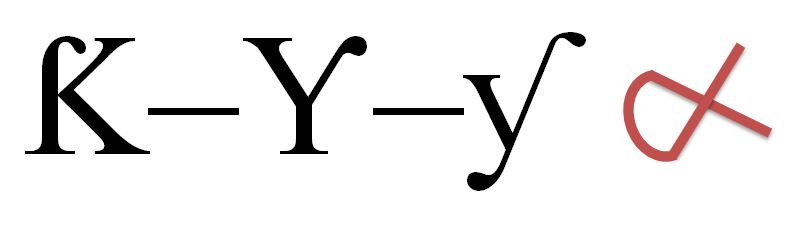
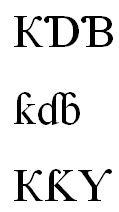
The affected legitimate Hausa consonants, which are the victims of this I-don’t-care mischief, are primarily the К and ‘Y. These are the correct ways in which these two are written: /К/- /ƙ/ and /’Y/- /’y/ respectively, and not as /Ƙ/ and /ƴ/. The main point of contention is the hook and where the hook should be. For the sake of knowledge, these are the only primary hooked and twin letters we have in Hausa, both small and capital, respectively /ɓ/,/ɗ/, /ƙ/,/’y/ and their capital Ɓ, Ɗ, К, ‘Y. The hooks you see on them have their specific and fixed position. It is not hooked anyhow and anywhere.

Phonologically speaking, /К/ is the capital letter of that Hausa voiceless velar ejective sound, while the /ƙ/ is the small letter. Equally, /’Y/ is that Hausa palatalized-glottal stop sound, and /’y/ is the small letter, but we don’t know of the newly emerged – /Ƙ/, /Ƴ/ and /ƴ/, from where are they and how are they phonologically represented? All we know is, that they are the illegitimate trying to push away the legitimate sons of the Hausa alphabet. And they are gradually gaining ground and getting momentum even among those who ought to have cared a lot and dismissed them for long.

Hausa orthography is one of the essential forms of knowledge, yet many people don’t bother to learn. Many writers don’t know how to write Hausa correctly or even know they don’t (know that). So sad! But very few are trying to learn. Good!

Generally, in the Hausa language, the hooked letters suffer a lot of trouble and total neglect by those who don’t care. But we are there for them as we surely care. I recently bought a smartphone and decided to return it when I realized it doesn’t contain Hausa in its language entry setting. I took it to someone who did something to it and the Hausa is back. Later, I formatted the phone and lost the Hausa again. I feel like throwing the phone away because I always feel embarrassed when I have to type something or respond to someone while the hooks are not properly represented. This is something serious to us that many others see as nothing.

I don’t have any problem with them if they are accepted, authorized, and certified by respected members and our professors in the field, but I have problems when they keep popping up and occupying the legal orthographical space of others.

Whatever someone says about them, one thing is certain: They are not in the books or from the books. Who can clarify this for us? Please help and save me or save them. If we accept them, fine; they are welcome. If not, please jail them. They are real intruders and disrupters of peaceful and correct writing.

Muhammad Sulaiman Abdullahi is a Hausa Language lecturer with the Department of Nigerian Languages at Bayero University, Kano, Nigeria. He can be reached via muhammadunfagge@gmail.com.

Do intellectuals watch Kannywood films?

By Dr Musa Ibrahim

The popular Facebook user claiming intellectuals hardly watch Kannywood films and his supporters should understand 1) the need to ensure they conduct proper research on any subject matter or study the existing literature before speaking about it; 2) they could benefit from some guidance on critical engagement with terms, even if they are in our mother tongues, such as ‘wayewa.’ This would help them understand the concept from multifaceted perspectives and know how to use it when referring to ‘self’ and ‘other’ people’s ‘lifeworlds.’ 

When engaging with the Hausa terms ‘wayewa’ and ‘wayayyu’ (intellectualism and intellectuals, although the translations are subject to discussions), the critical questions we should ask about these terms in relation to Kannywood are: what is ‘wayewa’ (intellectualism)? Who exactly are ‘wayayyu’ (intellectuals)? Can we really know all ‘wayayyun mutane’ (intellectuals) and what they do in private and make sweeping statements about all of them without conducting thought research?

For me, it’s difficult to say who ‘wayayyu’ are because it’s subjective and varies from person to person. I mean, who someone regards as wayyaye might not be considered one by others and vice versa. Therefore, it appears to me that the person who made such a claim and their supporters may be ‘unintelligent/unintellectual’ (lacking in intelligence and intellectual approaches) or ignorant about the subjects they are referring to, especially since they ‘speculate’ about the so-called ‘wayyayun mutane’ without considering the diversity of the group. 

As a researcher of popular cultures in Africa, I can report as a fact that all categories of people in northern Nigeria and beyond watch Kannywood films. In the qualitative research we conducted, we interviewed academics, high-profile ‘ulama (Muslim clerics), lawyers, politicians, public workers (some of whom are highly placed decision-makers at various government levels), traders, and various categories of Western and/or Islamic-educated individuals who have been watching Kannywood films.

Ordinarily (if not because of our research), many of our interlocutors may not just openly admit to watching Kannywood films because of the unnecessary stereotypes associated with them. However, some of them go to the extent of referencing specific scenes from the movies they had watched to either illustrate their points or make comparisons with other films. Some influential people and their family members personally communicate with Kannywood stars they know from movies and spend millions to have them perform at their ceremonies. 

So, if we were to believe the claim that ‘intellectuals’ don’t watch Kannywood films, then we would have to say that all those who control the affairs of the region (in which the person making the claim probably lives) are not ‘wayyayu.’ However, regardless of the complexity of the terms wayewa and wayayyau, many would agree that people in the categories mentioned above, including our revered Muslim scholars who participated in the research, could fit into the ‘wayewa’ category or one of its categories (if there are many). Ba za mu ce dukkan su ba wayayyau bane.

So, the person making the claim and the bunch of uncritical minds who agreed with it have just succeeded in portraying themselves as lacking intelligence and critical thinking skills (which is synonymous to wayewa) to engage with the same concept, ‘wayewa,’ at least in this case. This is because they seem not to know ‘how’ and ‘when’ to speak for themselves and ‘how’ and ‘when’ to speak for others from an informed perspective (based on outcomes of scientific research). This also includes avoiding generalisations.

Despite politically motivated censorship from the 2000s to today, Kannywood has survived and thrived. This resilience is a testament to the support it receives from the silent majority, including highly influential individuals who appreciate its cultural significance and work behind the scenes to maintain its popularity and diffuse unnecessary tensions. This inspiring resilience assures us that Kannywood will continue to thrive in the face of differing opinions. 

To close my remarks, regardless of differing opinions about Kannywood, the cultural industry will continue to thrive in different forms. This sustained success should inspire confidence and optimism in the future of Kannywood and those who aspire to participate in the phenomenon, either indirectly as cultural studies scholars or directly as actors, directors, producers, scriptwriters, and associated roles.

Musa Ibrahim, PhD, can be reached via abbadanauta@gmail.com.

Study reveals early sleep crucial for brain reset

By Uzair Adam Imam

A recent study conducted by scientists at the University of California has uncovered intriguing insights into the mechanics of sleep, particularly focusing on the brain’s activity during this crucial rest period.

Published in Nature, the study sheds light on how sleep acts as a “reset” for the brain, primarily during the initial half of the night.

According to the research, during sleep, the brain undergoes a process of weakening newly formed connections between neurons, known as synaptic pruning. This phenomenon predominantly occurs during the first half of sleep, suggesting that this period is crucial for streamlining neural connections.

However, the purpose of the second half of sleep remains enigmatic. While researchers speculate that it may involve processes such as waste removal or cellular repair, further investigation is needed to elucidate its exact function.

Lead author Professor Jason Rihel from UCL Cell & Developmental Biology explains, “When we are awake, the connections between brain cells get stronger and more complex.

“If this activity were to continue unabated, it would be energetically unsustainable. Too many active connections between brain cells could prevent new connections from being made the following day.”

The study supports the Synaptic Homeostasis Hypothesis, suggesting that sleep serves as a necessary reset for the brain, facilitating optimal cognitive function.

Using optically translucent zebrafish, researchers monitored synaptic activity over multiple sleep-wake cycles.

They observed that brain cells gain connections during wakefulness and lose them during sleep, with the extent of synaptic rearrangement influenced by sleep pressure.

Furthermore, the study revealed that synaptic remodeling predominantly occurs in the first half of the nightly sleep cycle, correlating with patterns of slow-wave activity.

While the findings provide valuable insights into the role of sleep in synaptic regulation, questions persist regarding the functions of the second half of sleep.

The study hints at potential avenues for future research into the broader functions of sleep beyond synaptic pruning.