Month: April 2024

Court restrains EFCC from arresting Yahaya Bello

By Uzair Adam Imam

The High Court in Lokoja, Kogi State, has issued a restraining order against the Economic and Financial Crimes Commission (EFCC), preventing them from violating the fundamental human rights of Alhaji Yahaya Bello, former Governor of Kogi State.

During a two-hour session at High Court 4, presided over by Hon. Justice I.A Jamil, in suit no HCL/68/M/2020, the court delivered a verdict on Wednesday.

The judgment prohibits the EFCC from engaging in actions such as arresting, detaining, or prosecuting Bello without explicit authorization from the court.

This definitive order builds upon an earlier interim injunction.The legal proceedings stemmed from a lawsuit initiated by Alhaji Yahaya Bello, who sought to protect his fundamental rights against the EFCC.

The court also mandated the respondents to cease any ongoing persecution of the applicant.

Addressing jurisdictional challenges raised by the EFCC, the court dismissed them in its judgment.Counsel for Alhaji Yahaya Bello, SA Abbas and MS Yusuf, hailed the judgment as a landmark decision.

Similarly, the defense counsel, T.U Odima and Patrick O. Jibril, expressed their alignment with the judgment, praising its thoroughness.

Kano High Court upholds suspension of APC N/Chairman 

By Uzair Adam Imam  

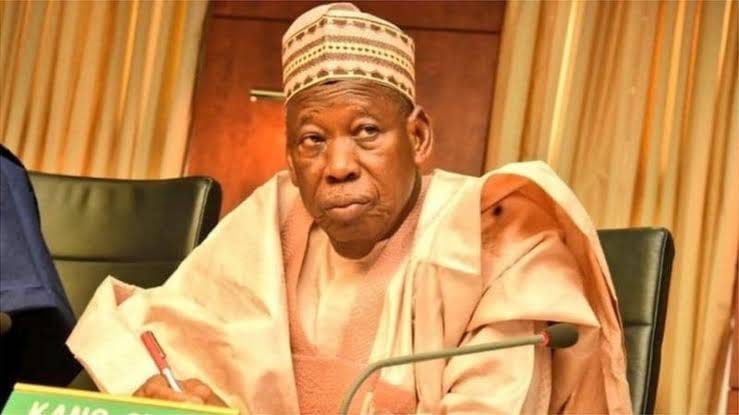
The High Court of Kano State has upheld the suspension of Dr. Abdullahi Umar Ganduje, the National Chairman of the All Progressives Congress (APC), as a member of the party.  

Presided over by Justice Usman Malam Na’abba, the court affirmed the suspension on Tuesday, responding to an ex parte motion filed by Dr. Ibrahim Sa’ad, Esq.  

The motion was brought on behalf of two executive members of APC Ganduje ward in Dawakin-Tofa local government area: assistant secretary Laminu Sani and legal adviser Haladu Gwanjo, who were among the nine ward executives that initiated Ganduje’s suspension two days prior. 

The court’s decision followed an ex parte motion filed by Haladu Gwanjo and Laminu Sani through their counsel, Ibrahim Sa’ad.  

Gwanjo, identifying himself as the party’s ward legal adviser, had announced Ganduje’s suspension earlier. 

Consequently, the court ordered Ganduje to refrain from presiding over any affairs of the National Working Committee (NWC) of the APC.  

This ruling came after the State Working Committee of the APC in Kano suspended ward party leaders who had initially announced Ganduje’s suspension. 

Previously, the leadership of the APC at Ganduje ward in Dawkin Tofa Local Government area had announced Ganduje’s suspension, citing corruption charges filed against him by the government.  

However, Inusa Suleiman Dawanau, the APC Chairman in Dawakin Tofa Local Government, revealed that those behind the suspension were engaged in anti-party activities and had been exposed for their meetings with the ruling opposition. 

In addition to the suspension, the State Working Committee (SWC) sanctioned them for six months and established a panel to investigate various allegations against them.  

Following these developments, the ruling party petitioned the Inspector-General of Police (IGP), Kayode Egbetokun, urging the force to investigate those responsible for Ganduje’s purported suspension.

FG inaugurates national committee to boost trade efficiency

 By Sabiu Abdullahi 

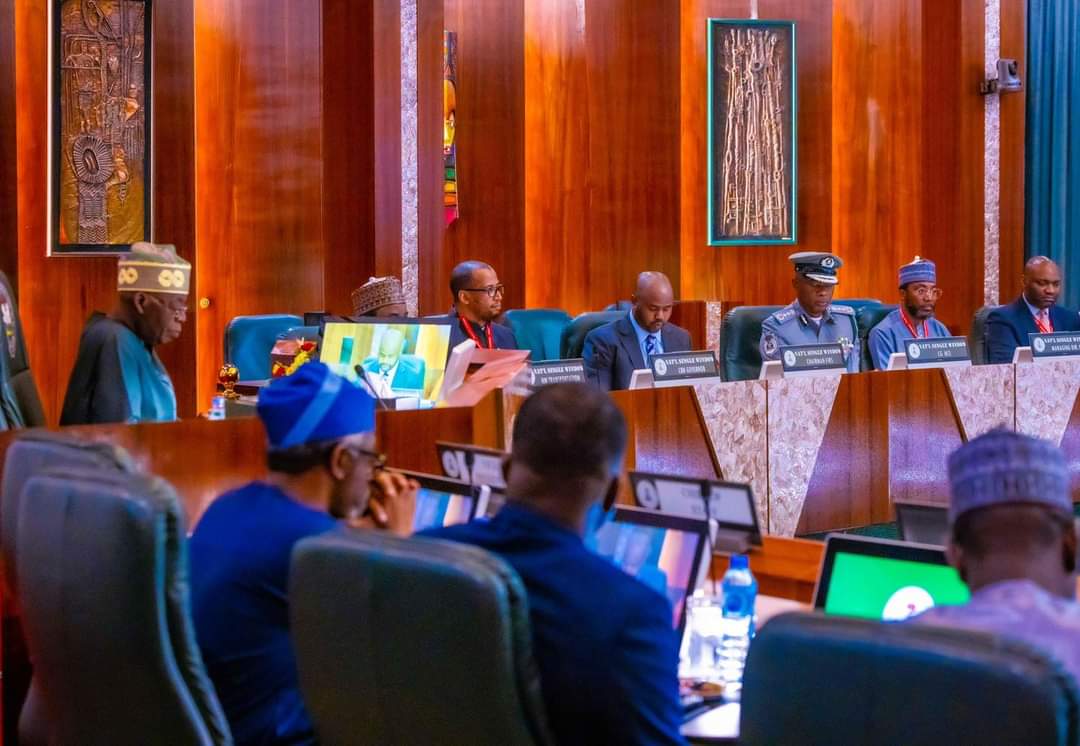
The Federal Government has launched the National Single Window Steering Committee to bolster trade facilitation and streamline the nation’s import and export processes.

The inauguration ceremony was held at the Presidential Villa in Abuja on Tuesday, with President Bola Tinubu presiding. 

The Committee comprises representatives from pivotal federal ministries and agencies.

These include the Ministry of Finance, Marine and Blue Economy, Transportation, Trade and Investment, Federal Inland Revenue Service, Nigeria Sovereign Investment Authority (NSIA), Central Bank of Nigeria, National Agency for Food and Drug Administration and Control (NAFDAC), Standards Organization of Nigeria, and the Nigerian Maritime Administration and Safety Agency (NIMASA). 

Highlighting the significance of the Nigeria Customs Service’s (NCS) involvement, President Tinubu stated, “Nigeria cannot afford to lose an estimated $4 billion annually due to bureaucratic delays, red tape, and corruption at the nation’s ports.

“By embracing the single window system, Nigeria hopes to join countries like Singapore, Korea, Kenya, and Saudi Arabia that have already experienced significant improvements in trade efficiency.” 

The National Single Window project aims to introduce a real-time digital trade compliance system, revolutionizing trade processes.

This initiative is anticipated to enable paperless trade, providing an estimated annual economic benefit of around $2.7 billion.

It is projected to bolster national revenue and enhance port efficiency. With the NCS’s pivotal role in trade facilitation and border security, its involvement in the initiative is deemed crucial.

The service is aligned with the initiative’s goals, aiming to expedite cargo movement and bolster inter-African trade. 

The launch of the National Single Window Steering Committee is viewed as a testament to the government’s unwavering commitment to progress, prosperity, and the welfare of Nigerians.

Prominent clerics who made my days during 1445 A.H Ramadan (II)

By Isma’il Hashim Abubakar 

Dr. Bashir Aliyu Umar was the second teacher whose tafsir I did not miss not only this year’s Ramadan but also many years ago. I had the privilege of attending the tafsir personally several times, which was conducted at Al-Furqān Mosque at GRA, Kano before I left Nigeria five years ago. Dr. Bashir’s erudition and dexterity in addressing contemporary issues that were paraded to him while using sophisticated jurisprudential techniques are enough credentials to attract listeners and students like me.

Additionally, I personally cherished the tafsir session because whenever I heard Malam Sa’idu Harun, the recitation assistant (mai jan baki), it reminded me of Shaykh Ja’far’s tafsir which always proved unique with the recitation of Malam Sa’idu. Dr Bashir’s tafsir would appeal to intellectuals and listeners with a background in Western education. 

Dr Bashir explained verses which mention scientific and universal phenomena excellently and more lucidly. Atheists would find the correct answers to many of their questions and clear up many misconceptions through the exegetical exercises undertaken by Dr Bashir. Drawing on a view of the late Shaykh Isa Waziri on a similar issue, Dr. Bashir, in one of his tafsir sessions, argued that Nigerians are likely robbed of divine bounties similar to what befell the inhabitants of Saba’. 

Dr Bashir is an extraordinarily easygoing and calm person, so much so that at times, he allowed his recitation assistant to decide which question he would respond to either due to its substance or when there was no time and the recitation assistant was eager to fill the venue with his sonorous voice. 

I was surprised, however, when during the closing session of this year’s tafsir on the 28th day of Ramadan, Dr Bashir refused to answer a question about the legal status of bleaching in Islam, which, according to the questioner, has been said to be lawful by some scholars. Dr Bashir’s refusal to respond to the question elicited the interest of the audience to unanimously thundered “Allahu Akbar”, which left a suggestion that the answer to the question was well known to everyone and it might have just been posed to trigger needless, belated controversy. Unlike many scholars, Dr Bashir does not bother to ask new converts if they were forced or they willingly chose and decided to embrace Islam. 

One of the unique episodes with which Dr Bashir’s final tafsir has been characterised for some years is the courtesy visit of his nonagenarian father to bless the occasion and, at times, make sobering reflections on some of the clerical trajectories of his scholar-son. To my knowledge, only Dr Bashir is continuously lucky to have his aged and royal figure father appear during his tafsir and publicly endorse his son’s venture.

Isma’il writes from Rabat and is reachable via ismailiiit18@gmail.com.

New corruption allegations surface against Ganduje

By Uzair Adam Imam  

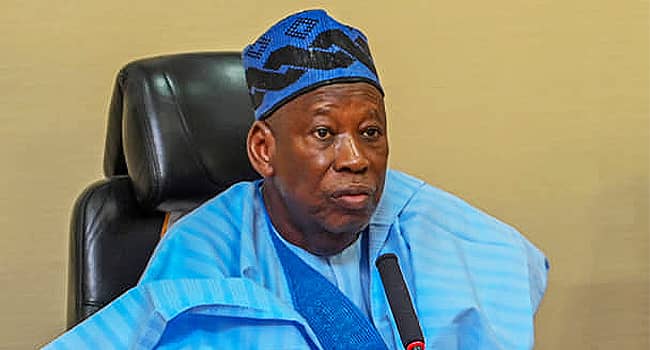
The Kano State Anti-Corruption and Public Complaints Commission has unveiled fresh allegations of corruption and maladministration against former Governor Abdullahi Ganduje. 

The chairman of the commission, Muhuyi Magaji, disclosed that investigations have exposed the diversion of N51.3 billion from local government funds to unauthorised individuals during Ganduje’s tenure.  

Speaking on Tuesday’s edition of Channels Television’s Sunrise Daily programme, Magaji claimed that the administration withdrew N1 billion monthly from state coffers before its conclusion in May 2023.  

Allegedly earmarked for road renovation, these funds were redirected to Bureau de Change operators. Magaji further highlighted a case involving N4 billion transferred from Kano’s consolidated revenue account to an agricultural company.  

He asserted that these revelations merely scratch the surface of broader corruption probes, indicating ongoing investigations into various financial irregularities. 

Magaji stated that, “We have filed a series of cases. We have a case whereby N1 billion was diverted from government coffers under the guise of renovating 30 roads in the metropolis, only to be sent to Bureau de Change.  

“We have another case involving N4 billion transferred from the state’s revenue account to an agricultural company. All these cases are currently before the court,” he added. 

In response to these allegations, the state government has announced its intention to arraign Ganduje, along with his wife and son, for money laundering later this week.  

The unfolding saga adds another chapter to the ongoing scrutiny of political figures and financial mismanagement in Nigeria.

NAF decimates terrorist leaders, 28 fighters in Borno airstrikes

By Uzair Adam Imam  

The Nigerian Air Force announced on Tuesday that its air component of Operation Hadin Kai (OPHK) had successfully neutralised over 30 militants, including two high-profile leaders, Ali Dawud and Bakurah Fallujah im Borno State. 

Air Vice Marshal Edward Gabkwet, Director of NAF Public Relations and Information, disclosed that the airstrikes, carried out over the weekend, targeted the hideouts of ISWAP terrorists nestled within Kolleram village along Lake Chad’s shores.  

The precision strikes, executed on April 13, 2024, resulted in the destruction of numerous vehicles, motorcycles, and logistical assets, severely disrupting the terrorists’ operational capabilities. 

Gabkwet reported that the Battle Damage Assessment (BDA) post-strike revealed the elimination of key figures such as Ali Dawud, Bakurah Fallujah, and Mallam Ari.  

Additionally, intelligence gathered indicated the effective obliteration of a vital facility within the Kolleram enclave, disrupting the terrorists’ food processing activities. 

The success of these airstrikes shows  the NAF’s unwavering commitment to eradicating terrorism and safeguarding Nigerian citizens.  

By neutralising top terrorist operatives and dismantling their logistical infrastructure, the operation has significantly weakened ISWAP’s presence in the region. 

The airstrikes, complementing ground forces’ ongoing efforts on the Lake Chad flank, mark a crucial advancement in Nigeria’s counterterrorism endeavours, signalling a resolute stance against extremist threats.

Grieving Umuahia residents demand justice for cadet’s death

 By Uzair Adam Imam  

Umuahia, the capital of Abia State, witnessed a fervent protest on Tuesday as residents of Okwuta Ibeku rallied to demand justice for Air Force cadet Emmanuel Onyemereche.  

Onyemereche had tragically drowned in the swimming pool of Damgrete Hotel the week prior, leaving his community in mourning. 

Clad in sombre black attire, the demonstrators filled the streets, their mournful chants echoing through the air.  

Holding placards emblazoned with calls for justice, they urged Governor Alex Otti to intervene.  

The diverse crowd, comprising youths, men, and women, marched towards Government House Umuahia, determined to make their voices heard. 

The protesters, represented by figures like Public Relations Officer Mr. Chibuzor Onwukamuche, family Head Prince James Onyeomereneche, and woman leader Mrs. Happiness Ebere, expressed disbelief in the circumstances surrounding Onyemereche’s death.  

They voiced suspicions about the conflicting accounts and demanded a comprehensive investigation into the incident. 

Questioning how a trained Naval Officer could drown in a seemingly ordinary swimming pool, they pointed fingers at Onyemereche’s friend, Valentine Okpechi, and the hotel management.  

In response, Governor Otti, conveyed through Special Adviser Navy Commander Macdonald Uba (Rtd.), conveyed his condolences and assured the grieving community that the State Government would pursue a thorough investigation, promising not to let the matter fade into obscurity.

Prominent clerics who made my days during 1445 A.H Ramadan (I)

By Isma’il Hashim Abubakar 

No doubt, the holy month of Ramadan is a special season that always reactivates our religious consciousness and hikes the level of our spirituality. As Nigerians are passing through unprecedented inflation and increase in prices of commodities, this year’s Ramadan came with a hope that it offered an opportunity for Muslims to use the medium for deep reflections, improvement and promotion of piety and righteousness, but also to devote their time for supplications so that Allah would take them out of the woods and mess they have been grappling with over the years.

One interesting feature of Ramadan season is the commitment of Muslim scholars to deliver religious lessons and to, in a more concentrated fashion, bring the Muslim public closer to Islamic teachings in such a way that they would graduate from Ramadan school with paperless certificates that attest to their participation in one month course for reform of faith and creed, learning and relearning of worship and liturgical formulas and practice, refreshing minds with Islamic history and so on.

Although a few scholars teach books apart from the Qur’anic text, including works on some themes such as traditions and biography of Prophet Muhammad (SAW), interpretation and exegesis (tafsir) of the Glorious Qur’an, the queen of heavenly scriptures and the apex Islamic text, is the dominant exercise that makes the month unique and the best of all other months. Returning to the Qur’an during Ramadan is a universal custom for Muslims, but Nigeria’s religious sphere annually unveils a scintillating atmosphere that other Muslim climes would hardly rival. Pairing a male chief Mufassir and a female recitation assistant (mai jan baƙi) seems to be a strange feature of this year’s tafsir, which elicits so many brouhahas.

As an age-old exercise, tafsir in Hausaland has seen several transformations and shifts both during pre-colonial and contemporary eras, which saw the emergence of hundreds of mufassirun (interpreters of the Qur’an) of varying calibres and credentials. However, the post-independence era has never seen an eloquent, erudite and versatile interpreter of the Islamic scripture like the prominent cleric, the late Shaykh Ja’far Mahmud Adam, who was assassinated in 2007 while leading dawn prayer in his mosque in Kano. Even by accounts and confessions of his critics, opponents and detractors, Shaykh Ja’far was proven and credited to have excelled all his peers and contemporaries in analyzing and expounding the verses of the Glorious Qur’an. His annual Ramadan tafsir at Ndimi Mosque in Maiduguri was a matchless and extraordinary religious conference that reawakened Muslims and renewed and revived Muslims’ interest in the Qur’an and the process of making meaning out of it. 

When Shaykh Ja’far exited the scene in a historic and memorable manner, having been assassinated by unknown gunmen, which enhanced his posthumous popularity and brought millions of Muslims to his camps, many young and upcoming scholars adopted his method of tafsir and not only sought to replicate his path but also rose to earn his popularity, prominence and influence. 

However, God destined that Shaykh Ja’far’s friend and longtime colleague, Dr Muhammad Sani Rijiyar Lemo, would be unanimously accepted to succeed the former in especially the Ndimi Mosque tafsir conference, which later relocated to Bauchi due to persistent insecurity in Maiduguri. Rijiyar Lemo’s erudition was vouched for by no other person more than Shaykh Ja’far himself, who during his lifetime repeatedly mentioned Rijiyar Lemo as a colleague on whom he relied in many respects, particularly in matters pertaining to Hadith authentication, the area in which Rijiyar Lemo specialized.

Interestingly, as sources informed me, when Rijiyar Lemo finished his PhD in Madina in 2005, he intended to stay in Saudi Arabia to work with a research and publication centre. Still, Ja’far prevailed upon him to return to Nigeria to engage in the Da’awah arena, insisting that he would be more useful at home than in Saudi Arabia. It must be a form of karama that Ja’far would successfully persuade a friend to come back to Nigeria, not knowing that he would be his successor within two years in many of his religious engagements.

Rijiyar Lemo’s relocation to Masallacin Gwallaga in Bauchi provided a fertile ground for him to effectively continue with the tafsir exercise and his method, which radically differs from his predecessor’s and makes his rendition more favourable to advanced students of Islamic knowledge. Perhaps one does not have to conduct further research when invited to present tafsir elsewhere and could just have to listen to and summarize the exhaustive tafsir rendered by Rijiyar Lemo. I have made it one of the few lessons I rarely miss within and outside Ramadan. 

Besides the main task of interpreting the verses of the Qur’an, answering questions at the beginning of the conference and leading the session of conversion to Islam by giving the testimony to new converts by the scholar, one of the top themes which Rijiyar Lemo’s tafsir focused on this year was stressing and underscoring the position of Sunnah as an essential component of Islamic legislation. Rijiyar Lemo’s defence for Sunnah came at a time when the year witnessed simmering misunderstandings and social media exchanges about the position of prophetic reports in some popular Hadith collections and the degree of their authenticity. This debate was ignited earlier by Abduljabbar Nasiru Kabara, who was imprisoned after he failed in the historic debate, which then silenced his impasse and briefly paused discussions on the matter. The matter returned, it seems when after he visited Iran to deliberate the plight of Palestinians, Dr. Ahmad Gumi prodded and stirred the discussions through his utterances, which were interpreted by many as a continuation of the task of condemnation of Sunnah which Abduljabbar Kabara started.

Rijiyar Lemo’s response was complemented by a mention of several references for readers, such as Mustapha al-Sibā’ī’s masterpiece and grand defence for Sunnah titled “al-Sunnah wa Makānatuha fī al-Tashrī’ al-Islāmi’ī“. Needless to say, hearing the names of new books is among the countless benefits of listening to Rijiyar Lemo’s tafsir in particular and other Islamic lessons in general. From all indications, Rijiyar Lemo has the ambition to publish an excellent tafsir of the Qur’an before or immediately after interpreting the whole Qur’an in Bauchi or Kano, where he also replaced Shaykh Ja’far at Usman Bin Affan Mosque, Gadon Kaya.

Ismail Hashim Abubakar, PhD, wrote from Morocco. He can be reached via abuarqam89@gmail.com.

OBITUARY: In memory of Saratu Daso, a Kannywood actress of eminence

By Habibu Ma’aruf Abdu

On Tuesday, April 9, 2024, the Kannywood community was shaken by the death of veteran actress Saratu Giɗaɗo, also known as Daso, at the age of 56. Her unexpected departure peacefully in her sleep on the final day of Ramadan plunged the Hausa film industry and the general public into a state of deep sorrow and disbelief.

Reflecting on the sudden death, a Kannywood scholar, Dr Muhsin Ibrahim, said: “The demise of Hajiya Saratu Giɗaɗo (Daso) really shocked me. In the beginning, I thought it was ‘fake news’. She was so alive a few hours ago.

“I have positive thoughts that she has received Allah’s mercy. She passed away while tirelessly soliciting help for orphans so that they too can celebrate Eid like other children…” he added.

Saratu Daso was undoubtedly one of the greatest, most successful and influential Hausa film stars of all time. When the news broke that she had died, a barrage of condolences instantly flooded the social media platforms. There was an unprecedented outpouring of grief from Kannywood personnel and the public alike. Thousands of people attended her funeral prayers, and many politicians paid homage to her, including the president of Nigeria, Bola Ahmed Tinubu

In a press release, the president describes the 56-year-old actress’s passing as saddening for the entire nation, which she honoured through her talent as a thespian.

The former governor of Kano state and presidential candidate Rabi’u Musa Kwankwaso also paid a condolence visit to console the family of the deceased actress.

Renowned for her captivating wit and acting prowess, the late Daso made her film debut in the year 2000 with the Sarauniya movie Linzami Da Wuta. She appeared in more than 100 films throughout her illustrious career, which spanned over two decades. Some of her notable works include Sansani, Mashi, Fil’azal, Daham, Dan Zaki, Gabar Cikin Gida, and Yar Mai Ganye.

Daso is famous for playing various roles in various film genres. She excelled in the portrayal of a dubious and aggressive elderly woman, which became her trademark. The fire she breathed in that role made her stand out among other elderly female actresses of her time.

“I’m often portrayed as a villain, and I know the nitty-gritty of villainous performances in films. I can act in various roles, but I enjoy villainous ones the most. Yet, I’m always ready to play any character if assigned to me,” she told BBC Hausa in an interview.

However, she was quite different in real life from the characters she depicted on screen. She was sweet and jovial. She once remarked, “I’m not aggressive. I’m very kind in real life. In fact, I’m such a taciturn.” Her kindness is one of the things that left a lasting impression on people within and outside the film industry. 

Actor Baballe Hayatu described her as “a good woman of great wit and charm”, while Alhassan Kwalle, chairman of the Kannywood Actors’ Guild, attested to her calm demeanour, stating, “We lived with her peacefully”.

Social media influencer and politician Maryam Shetty also wrote about her interactions with the late actress, saying, “…Daso was always a delight both on and off-screen. In 2016, I had the pleasure of meeting her at the Emir’s palace in Kano (where she was a constant face). We shared a lighthearted moment joking about our shared name.”

Similarly, another Facebook user, Hauwa Barde, affirmed Daso’s humility, noting that “…she would always reply if you commented under her post.”

An alumnus of Kaduna Polytechnic, Daso initially worked as a classroom teacher before joining the film industry. She could speak fluent English and was among the pioneering actors to star in Jammaje’s ‘Kannywood films in English.’ The genre’s promoter, Malam Kabiru Musa Jammaje, mourns the actress, reminiscing about their collaborations.

Jammaje explained: “I worked with her in our Jammaje Productions’ first film, There is a Way, as well as in Light and Darkness and In Search of the King. At one point, we even discussed the possibility of her teaching at Jammaje English Academy, although the plan never materialized”.

Saratu Daso’s legacy extended beyond her acting career; she served as Jakadiya (a traditional female protocol officer) for the 14th emir of Kano, Muhammadu Sanusi II.

She was also a dedicated philanthropist. Every Friday, she cooked food to share with orphans and her neighbours. The videos, where she gave iftar meals and advocated for orphans during the month of Ramadan, have been widely shared on social media as a tribute following her death.

Finally, as a Kannywood film reviewer, I believe that the history of the film industry would be incomplete without mentioning Daso’s contributions. Her departure leaves a void that will be difficult to fill. She will forever be remembered as a great actress of eminence who died during the blessed month of Ramadan while fasting, earning the praises of all and sundry. May Allah bestow His mercy upon her soul.

Habibu Maaruf Abdu wrote from Kano via habibumaaruf11@gmail.com.
Samsung beats Apple, reclaims top spot in global smartphone market—IDC report

By Sabiu Abdullahi

Samsung has regained its position as the world’s leading smartphone seller, overtaking Apple, according to the latest report from the International Data Corporation (IDC) released on Monday.  

The industry tracker revealed that worldwide smartphone shipments saw growth of nearly 8 percent in the first quarter of this year, reaching 289.4 million units.

This marks the third consecutive quarter of growth, indicating a recovery from a previous slump in the sector. 

Samsung shipped 60.1 million smartphones during this period, capturing close to 21 percent of the market share.

On the other hand, Apple shipped 50.1 million iPhones, accounting for just over 17 percent of the market.

Apple’s smartphone shipments experienced a 9.6 percent decline compared to the previous quarter, while Samsung’s shipments decreased by less than one percent. 

Chinese smartphone brands are also making significant strides in the market.

Xiaomi saw a 33 percent growth in shipments, reaching 40.8 million units, securing the third position.

Transsion, another Chinese brand, experienced an impressive 85 percent growth, shipping 28.5 million units and claiming the fourth spot in the overall smartphone market. 

Ryan Reith, Vice President of IDC’s Worldwide Mobility and Consumer Device Trackers team, commented on the shifting dynamics, stating, “While Apple managed to capture the top spot at the end of 2023, Samsung successfully reasserted itself as the leading smartphone provider in the first quarter.”

Reith also expects Samsung and Apple to continue dominating the high-end smartphone market while Chinese competitors aim to increase their sales. 

Nabila Popal, Research Director with IDC’s Worldwide Tracker team, highlighted the changing landscape among the top smartphone companies.

“There is a shift in power among the Top 5 companies, which will likely continue as market players adjust their strategies in a post-recovery world,” Popal said.

She also noted Xiaomi’s strong comeback and Transsion’s growing presence in international markets as key developments to watch.