Month: April 2024

Nigeria Customs Service reaffirms commitment to gender equality

By Sabiu Abdullahi

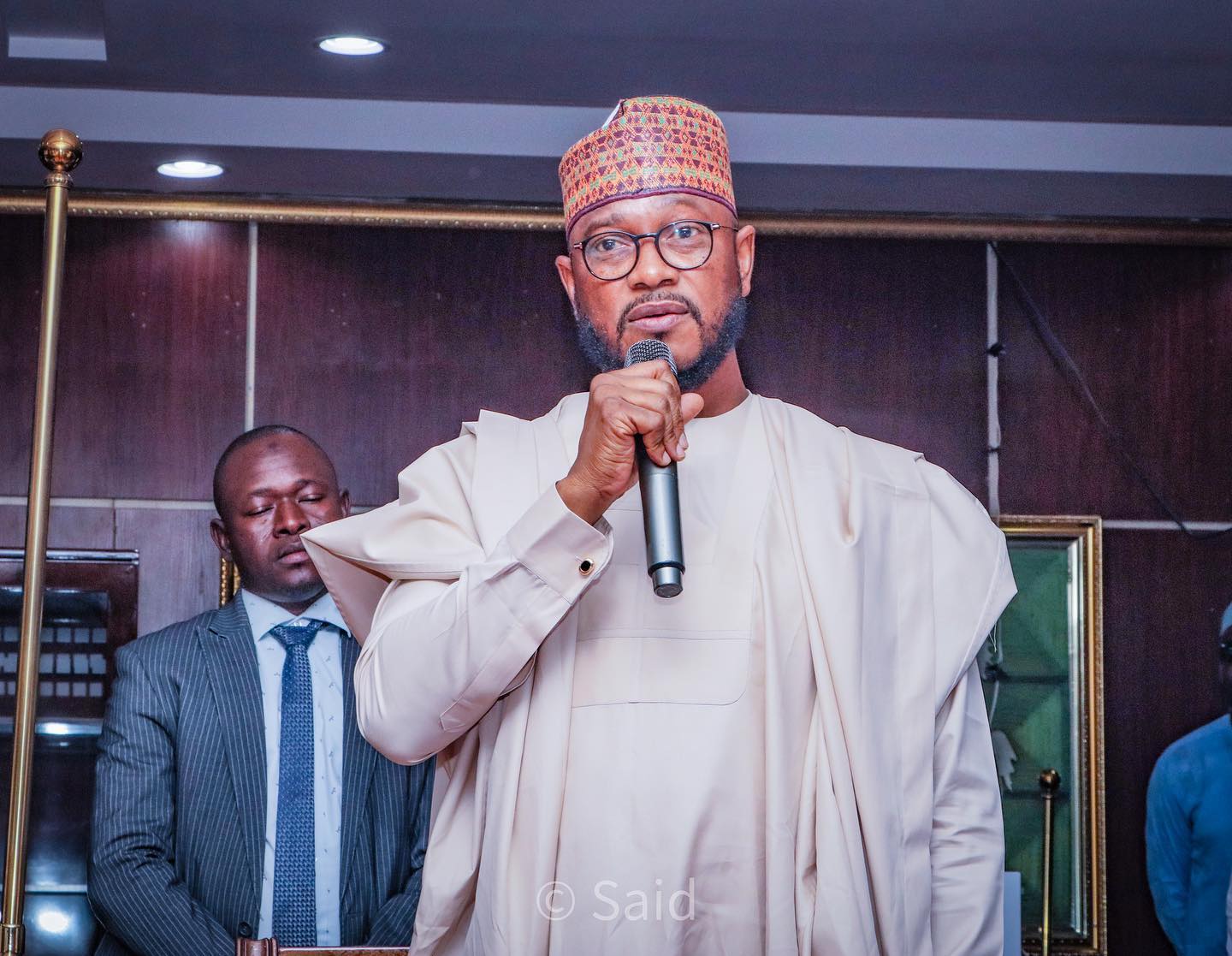
The Nigeria Customs Service (NCS) has reaffirmed its commitment to promoting gender equality in decision-making processes, combating gender discrimination and gender-based violence.

This dedication was reiterated at a capacity-building workshop on gender inclusivity co-organized by the World Customs Organization (WCO) and the NCS in Abuja on Monday, April 22, 2024. 

According to the Comptroller-General of Customs, Bashir Adewale Adeniyi, “Our aim is to create a workplace where everyone has equal opportunities to grow and contribute to the service’s success, regardless of gender.”

He noted that the NCS is committed to addressing gender discrimination, harassment, and biases within its ranks and will work tirelessly to ensure that its policies and practices reflect this commitment. 

The workshop brought together customs officials, gender experts, and stakeholders to discuss strategies for promoting gender inclusivity and addressing gender-based violence in the workplace.

The event demonstrated the NCS’s dedication to creating a more inclusive and equitable work environment where all employees can thrive and reach their full potential. 

Acting Comptroller-General of Customs, Caroline Niagwan, represented the CGC at the event and indicated the need for clear policies and procedures to address gender discrimination, harassment, and biases within the NCS. 

With this reaffirmed commitment, the NCS demonstrates its dedication to promoting gender equality and combating gender-based violence, creating a more inclusive and equitable work environment for all employees.

Crushed by Chickenpox: My journey of immunity, struggle, and healing

By Aisha Musa Auyo

I often dismiss the hearsay that everyone must be attacked by this virus once in their lifetime. It’s a superstition, I would reply to them. My sisters were all attacked by the virus, one after the other at a roll, all four of them. I was the one applying calamine lotion on them. We were all waiting for my turn, but I wasn’t infected. Very unusual, even the doctors would say. I must be immune to the chickenpox, I would boast.

After about 15 years, the virus knocked and crushed me to the point of losing hope of living again. From high fever, sore throat, muscle pain, dizziness, and general discomfort. My son was the one who contracted the virus, and obviously, I’ll be the one to take care of him. I did it with full confidence and carelessness that I was immune to the virus. However, I separated him from his siblings and classmates. His illness didn’t last for more than five days, and in a week, he was okay and mixing with everyone.

We travelled for Easter, and I was sick throughout the Easter break. It is Kano weather, I would say. All I do is lie down. Cooking and Tarawih during the last days of Ramadan became impossible for me, yet I didn’t go to the hospital. I deceived myself into thinking I’d get better when my body adjusted to the weather. Until one Tuesday, I felt so sick I couldn’t walk, couldn’t talk, and hated the sound of everything.

Then, one of my kids complained of heat rashes. I undressed him so I could bathe, and viola! Chickenpox rashes all over his body. I checked my other son and found the same issue, then I took a closer look at myself, the rashes were all over my body. I was so sick that I wasn’t paying attention to my skin. It then dawned on me that all three of us were infected by Haidar two weeks after his illness.

I made some calls and was told to stay at home, that we can infect the entire community by going to the hospital. The virus is very contagious. We stayed indoors, and medication was sent to us. We were told not to entertain visitors and not to go out till we were fully recovered and free from the virus.

“Lockdown II,” I thought to myself. We became prisoners in our house, and although the lockdown did give me a chance to rest and bond with the kids, it’s not anything I would hope for anyone.

My fever kept getting high, and I was told the virus punishes adults 50 times the way it treats kids. 

My kids were active and eating after three days, but I wasn’t. The rashes were all over me, including my feet, palms, ears, scalp, lips, throat and tongue. Eating and drinking become difficult. These rashes are not only irritating to the eyes, they hurt like ant bite. I have to be recording my temperature every 3 hours just to see if everything is going well. I finished all the painkillers in the house. Sitting becomes difficult, and leaving my room becomes difficult, too.

I kept thinking something else must definitely be wrong with me; chickenpox could not be this hard. A malaria drug was prescribed for me. Since I wasn’t eating, the ulcer came back in full force. Then I learned that the rashes and scars do not go away. My world was crumbling, and I was crying like a baby. I can’t imagine living with these scars forever.

After nine days, the pain became bearable. I felt better and had the hope of living again. I was told I could still spread the virus even at that time, so I spent my Eid al Fitr at home, browsing and researching chickenpox and how to get rid of the scars.

I learned that the only immunity to the virus is being infected by it. Once you are infected, you will hardly get infected again. It happens once in a lifetime. Although some countries were able to eradicate it, most countries are still battling the virus.

Now and then, especially during the hot season, this virus will spread. It’s there to make sure everyone is immunized, meaning everyone is infected with it once in his lifetime. If it’s a choice, one would prefer to be infected at a younger age, as the virus is merciful to kids and merciless to adults, lol. I’ve come up with a few things to do when the virus strikes.

• As a parent, once you notice that such a contagious virus infects a family member of yours, kindly seclude your ward from the public. It starts with one person, and in less than a week, the whole committee can be infected. Kindly reject visitors by letting them know your condition. Do not travel till you are fully recovered. These teachings from our beloved Prophet Muhammad, peace be upon him. He emphasized the importance of quarantine, separating sick individuals from healthy ones, and avoiding contact with contagious diseases to prevent their spread, all of which are integral to Islamic rulings on managing infectious diseases.

• Chickenpox medications are over-the-counter meds. You don’t have to go see a doctor. Once you notice fever, headache, muscle ache, and rashes, know that it’s either chickenpox or measles. They’re contagious. By going to the hospital, one may infect the nurses, receptionist, and even the doctors. Send an immune person to get the drugs for you.

• Drink a lot of water and fluids. Those monster rashes drain one to the point of dehydration.

• You, as a healthy individual, should not feel bad when a person tells you not to visit due to the nature of their illness. Kindly understand that they have your best interest at heart. A colleague of mine is still angry with his Uncle because the uncle told him not to visit them as the whole family is infected with chickenpox.

• Chickenpox doesn’t sit well with heat, so make sure you stay in a well-ventilated space and do not wear clothes since you are indoors.

• Bathe at least thrice a day with room temperature water, and avoid hot or warm water.

• If possible, wash your hands with a hand wash every hour when you are not sleeping.

• Try your best not to forcefully scratch or remove the rashes when they’re drying. Allow your skin to shed them. This is easier said than done. Feeling a blister or bump on your skin and letting go isn’t easy. Let me not deceive you.

• Calamine lotion helps to soothe and dry the rashes.

• If the fever is high, try using a damp cloth over the patient and take painkillers according to the doctor’s instructions.

• After you are healthy and free of infection, sanitize the house and the clothes you use with hot water and disinfectants. This includes towels, bedspread and sofas.

• I was told the rashes and scars never disappear; some said it takes years before they disappear. One of my sisters was born with a fair complexion, but after a chickenpox infection, her complexion darkened. She never recovered her colour. As discouraging and sad as this may sound, one should not relax and allow the virus to ruin one’s looks and confidence. Aloe vera gel does wonders with consistency and patience.

• Honey, neem oil, or water infused with neem leaves also help a lot. Retinol creams are also very effective. But please don’t bleach your skin or use harsh chemicals on your body.

Aisha Musa Auyo is a Doctoral researcher in Educational Psychology, a wife, and a mother of three. She is a homemaker, caterer, and parenting/relationship coach.

119 inmates escape from Suleja prison after rainstorm 

By Sabiu Abdullahi

The Nigerian Correctional Service (NCoS) FCT Command has confirmed that 119 inmates escaped from the Suleja Custodial Centre in Niger State on Wednesday night.

The incident occurred after a rainstorm destroyed parts of the facility, including its perimeter fence. 

According to Samson Duza, the Public Relations Officer of the command, the service has activated its recapturing mechanisms and has already recaptured 10 of the escaped inmates.

He assured that efforts are being made to recapture the remaining inmates, with the help of sister security agencies. 

Duza noted that many of the service’s facilities were built during the colonial era and have become old and weak.

He said the service is working to replace these facilities with modern ones, including the construction of six 3,000-capacity ultra-modern custodial centres in all geo-political zones in Nigeria. 

The FCT spokesman urged the public to go about their businesses without fear or hindrance and to report any suspicious movements to the nearest security agency.

He assured that the command is on top of the situation and is working to ensure the recapture of all escaped inmates. 

The public has been enjoined to look out for the fleeing inmates and report any information to the nearest security agency.

The incident has raised concerns about the state of correctional facilities in the country and the need for urgent renovation and reconstruction.

Lead British School saga: the slap or the dress?

By Dr. Fahad Ibrahim Danladi

Unfortunately, bigotry has permeated the fabric of our society, affecting some Nigerians. Recently, I was surprised to learn that the girls wearing miniskirts in the Lead British School, Abuja bullying video were Muslim students.

This incident highlights a concerning trend, also seen in Lagos, where students in private schools may be restricted from wearing modest attire that aligns with their religious beliefs.

In contrast, I’ve witnessed a more inclusive approach in the United States, where my children attend public school. Their schools accommodate diverse religious and cultural backgrounds by offering flexible dress code options.

For instance, my daughter’s elementary school has a uniform policy with various styles that cater to different religious and cultural needs. Similarly, my other daughter in middle school wears traditional Hausa dresses to school without issue.

In light of the Supreme Court’s ruling, it’s crucial for both private and public schools in Nigeria to adopt inclusive uniform policies that respect the two major religions in our country, promoting a culture of acceptance and understanding.

Artificial Intelligence

Artificial Intelligence (AI) has come to stay and co-evolve with us

By Mohammed Usman

Recently, the world has welcomed the advent of a rich, sophisticated, and yet unprecedented technological breakthrough with the potential to reshape the tapestry of human life. This breakthrough is referred to as “artificial intelligence” or simply “AI.” AI means the ability of a computer program to mimic the capability of the human brain. 

Artificial intelligence, more than it was initially envisaged, has proliferated acceptance in almost all realms of life. Because, in a very short period, it has proven itself to be the tool for metamorphosing and mushrooming productivity, efficiency and effectiveness that no human beings would have ever dreamed of. 

However, this breakthrough has recently been a heated debate among experts in various sectors of life, especially academia. Though the debate does not seem to conclude the horizon because of the weight each party has been proving in favour of its side, none can deny that this AI does not solely mimic the human brain’s capability. Still, it has made it evident that there is additional potential to do away with it.

Technology has made many people, especially youth, weak and reluctant to use their brains to think and be productive as long as this Al is at their disposal. They distrust the effectuality of their brains so long as they seek access to AI and find it. This is not only a challenge to the potentiality of youth but also to future generations at large.

A time can come, and God forbid, when people can be likened to pieces of objects that cannot do any simple task for themselves without the help of this Al. Deep and critical thinking, as well as cognitive capacity, will flutter away from those people. 

Hence, the need for members of any given society, especially the youth, to limit the use of this technology can never be overemphasised. It must always be handled with care and suspicion since it has come to stay and co-evolve with them.

Governments at all levels must develop policies, rules, and regulations that govern the use of this technology, be it shadow, put it under control, and ensure that it does not damage its citizens in any way. 

Mohammed Usman (Noble-Pen) wrote via mohammedusman5706@gmail.com.

Ex-aviation minister, Hadi Sirika, arrested by EFCC over alleged ₦8 billion fraud

By Sabiu Abdullahi

The Economic and Financial Crimes Commission (EFCC) has arrested former Minister of Aviation, Hadi Sirika, in connection with an ongoing investigation into alleged money laundering amounting to N8,069,176,864.00. 

Sirika was taken into custody at the EFCC’s Federal Capital Territory Command around 1:00 p.m. on Tuesday.

He was questioned by EFCC investigators over alleged fraudulent contracts he awarded to a company called Engirios Nigeria Limited, which is owned by his younger sibling, Abubakar Sirika. 

The arrest is linked to the ongoing investigation into the Nigerian Air scandal, which involves the alleged embezzlement of over ₦8 billion. 

The EFCC is investigating Sirika for his role in authorising the fraudulent contracts, which were awarded to his brother’s company without following due process. 

Sirika’s arrest is a significant development in the investigation, and it is expected that more details will emerge in the coming days. 

The EFCC has been investigating the Nigerian Air scandal for several months, and Sirika’s arrest is a major breakthrough in the case. 

It is not clear at this time what charges Sirika will face, but it is likely that he will be charged with money laundering and fraud.

A mistake called ‘Band A’

By Zayyad I. Muhammad

The principle “you only sell what you have” is a cornerstone of all businesses, resonating throughout different industries and emphasizing the importance of aligning offerings with available resources and expertise.

It’s crucial to provide goods or services that are accessible and within one’s capabilities. However, Nigerian power distribution companies (DISCOs) are selling services they cannot deliver to their customers. For example, the promised 20–24-hour electricity supply under the new tariffs, such as Band A, appears to be unsuccessful.

The DISCOs are simply selling 20–24 hours of darkness, causing disappointment, eroding trust, and damaging the reputation of both the DISCOs and the Minister of Power.

Among economics and political observers, there is a widely held belief that credibility is paramount in retail, manufacturing, or service-oriented businesses. Customers expect transparency and reliability, and any deviation from this expectation can have detrimental effects on long-term success.

The DISCOs want to emulate other countries, but in those with privatized electricity, tariffs are usually categorized into residential, commercial, and industrial sectors. However, in Nigeria, consumers are simply grouped into ‘BANDs.’ For instance, in countries with reliable electricity, like the EU, consumers have the freedom to choose an electricity supplier from the full range available in their area, as well as the type of tariffs they prefer. In Nigeria, DISCOs hold a monopoly. If your service provider is Ibadan Electric, Kaduna Electric, Yola Electric, etc., you have no alternative; you must remain with that specific DISCO and the tariff band they have assigned to you.

We must acknowledge that every business, including DISCOs, operates within constraints, whether financial, logistical, or technical. While acknowledging these constraints is logical, the new tariff appears to be nothing more than an attempt to expedite Nigeria’s electricity sector development without addressing underlying challenges. How can Nigeria implement tariffs similar to those in countries with well-developed electricity sectors, characterised by massive infrastructure, reliable electricity, flexible tariff structures, and numerous options for consumers in choosing service providers?

The Band A tariff is nothing but overpromising and underdelivering. Businesses that embrace this principle prioritise maximising profits at the expense of their customers’ needs and freedom of choice.

In fact, the majority of Nigerian electricity consumers, regardless of whether they are in Bands A, B, C, D, or E, are angered by two entities: DISCOs and the Minister of Power. DISCOs are perceived as collecting money for services not rendered, while the minister is seen as defending the indefensible.

In serious countries, electricity supplies and tariffs are considered a security and economic imperative. Thus, electricity tariffs can vary widely depending on factors such as economic conditions, infrastructure, government policies, and production methods.

Presently, Nigeria’s economic conditions cannot support or sustain these new tariffs; we lack the infrastructure and economic strength for businesses to bear such high tariffs. Consequently, this would lead to high commodity prices as production costs increase, ultimately resulting in higher prices for goods and services.

In countries with efficient electricity systems, tariffs often reflect the costs of generation, distribution, and maintenance, resulting in lower rates for consumers. For instance, countries like Norway, Sweden, and Switzerland utilise a mix of hydroelectric, nuclear, and renewable energy sources, which helps keep tariffs relatively low compared to gas-powered alternatives.

The Minister of Power and DISCOs must revisit the drawing board as the new tariff has failed upon arrival. For instance, according to an investigative report by the Daily Trust on April 12, 2024, DISCOs issued 37 apologies to Band A customers within one week. They are struggling to sustain a 20–24-hour power supply to Band A customers.

It’s crucial to remind DISCOs of the provision by the Nigeria Electricity Regulatory Commission (NERC): ‘When the Disco fails to meet the committed service level to a Band A feeder for seven consecutive days, the feeder shall be automatically downgraded to the recorded level of supply in accordance with the applicable framework.

Zayyad I. Muhammad writes from Abuja, 08036070980, zaymohd@yahoo.com

I want to appear before court but afraid of arrest—Yahaya Bello

 By Uzair Adam Imam 

The embattled immediate past of Governor of Kagi State, Yahya Bello, has said that he did not appear before the Federal High Court in Abuja today because he feared that he could be arrested. 

However, Bello said he is ready to answer to the 19-count charge the Economic and Financial Crimes Commission (EFCC) preferred against him. 

The Daily Reality learned that, although Bello was absent for his arraignment, he briefed a team of lawyers who addressed the court on his behalf on Tuesday. 

Mr. Adeola Adedipe, SAN, who is a member of his legal team, told the court that his client would have made himself available for proceedings, but was afraid that he would be arrested. 

“The defendant wants to come to court but he is afraid that there is an order of arrest hanging on his head,” Adedipe, SAN, submitted. 

He also urged the court to set aside the exparte order of arrest it earlier issued against the former governor. 

Adedipe, SAN, contended that as at the time the order of arrest was made, the charge had not been served on his client as required by the law. 

He noted that it was only at the resumed proceedings on Tuesday that the court okayed substituted service of the charge on the defendant, through his lawyer. 

“As at the time the warrant was issued, the order for substituted service had not been made. That order was just made this morning. 

“A warrant of arrest should not be hanging on his neck when we leave this court,” counsel to the defendant added.

Governor Lawal calls for use of advanced technology to tackle insecurity

By Uzair Adam Imam

Governor Dauda Lawal of Zamfara State has advocated for the utilization of advanced technology to address the security challenges in his state and the broader Northern region.

During a meeting with Amina J. Mohammed, Deputy Secretary-General of the United Nations in Washington, United States, Governor Lawal emphasized the importance of deploying advanced technology to combat insecurity.

This statement was conveyed through the governor’s spokesman, Sulaiman Bala Idris, in a release issued yesterday.

The meeting, which included governors from Zamfara, Benue, Jigawa, Kaduna, Katsina, Kebbi, and Niger states, received praise from the Deputy UN Secretary-General, Amina J. Mohammed, who commended their efforts in seeking lasting solutions to regional challenges.

Governor Lawal highlighted the critical role of technology in enhancing security, emphasizing the need for a coordinated approach to leverage technological advancements such as Artificial Intelligence (AI), biometric identification systems, and surveillance cameras.

He stated, “We are faced with common problems, primarily insecurity, which demands urgent action.

“Due to insecurity, agricultural activities have suffered, and there’s a pressing need to transition from traditional farming to modern agriculture by leveraging technology to combat insurgency.”

If they won’t read, let them watch

By Ado Magaji Mansur

As the saying goes, “We are the books we read.” Therefore, we should all thank our writers, past and present, for depriving themselves just to share their ideas and experiences with us through books. 

Although I am not a writer, I believe that writing books is both painful and rewarding. Without these books, our world would’ve been a totally different place. 

However, as the world is moving from script to screen, coupled with the gradual death of the reading culture and rise in the “watching” culture, especially among our people. I hereby ask the question: Can’t our intellectuals use film to transmit their great ideas to the people?

We have already made the mistake of entrusting our films to the people we all know who can’t be relied upon as the sole custodians of our culture and the psyche of our younger generation. Therefore, instead of observing and criticising the films, their makers and producers from a distance, why can’t some of the great minds among us think up some appropriate ways of putting their ideas to improve the powerful Kannywood, especially now that it’s been confirmed that they can’t live up to our didactic and moralistic expectations? And since no one can moderate (read: censor) their movies before they reach our homes, we must help them improve.

Very soon, we will start alleging or complaining that foreign countries and organisations are sponsoring and producing films like “Dadin Kowa” to intentionally misrepresent us or to sustain the stereotypical image of us that has already been created. 

Like books, films have the capacity to convey a wide range of ideas, making them a versatile tool for people from all disciplines. If handled with care, films can have a profound impact on the audience, much like books do for readers. 

Finally, I must confess that, some years back, when our friend Muhsin Ibrahim defected from Literary Studies to Theater/Film/Television studies, I secretly doubted the sagacity of his choice because I then wrongly thought that, as a promising writer and critic, he would contribute to his society better as a literary guru than a film scholar. But now we can all see his great job for Kannywood. We can all take some cues from our friend and see how we can contribute.