Month: February 2024

NCS pledges to enhance operations based on scientific studies

By Sabiu Abdullahi

In a bid to streamline customs operations and bolster trade efficiency, the Nigeria Customs Service (NCS) has reaffirmed its commitment to adopting evidence-based approaches.

This commitment was reiterated during the launch of the World Customs Organisation (WCO) assisted Time Release Study (TRS) Scoping Mission for Nigeria.

At the ceremony held in Lagos on Thursday, February 8, 2024, Comptroller General of Customs Bashir Adewale Adeniyi MFR emphasized the significance of the TRS method.

This systematic approach aims to measure the total duration from the arrival of goods at the Customs border until their release. 

CGC Adeniyi highlighted the strategic importance of the initiative, stating, “It represents a critical step in our ongoing efforts to optimize the trading experience and customs operations in Nigeria.”

He underscored the NCS’s commitment to trade efficiency and national development, citing initiatives such as the Authorized Economic Operator (AEO) program and the establishment of a Customs Laboratory. 

The launch of the TRS received commendation from government officials and stakeholders present at the event. Minister of Finance, represented by Lydia Jafiya, stated its alignment with the Federal Government’s agenda for economic revitalization.

Minister of Industry, Trade, and Investment, Doris Uzoka-Anite, stressed the role of trade facilitation in enhancing revenue generation and national competitiveness. 

With collaborative efforts between the NCS, WCO, and other stakeholders, Nigeria aims to leverage scientific studies and innovative strategies to enhance customs operations, promote economic growth, and facilitate international trade.

Reps urge FG to enforce executive order on local textile patronage 

By Uzair Adam Imam 

The House of Representatives has called on the Federal Government to enforce compliance with Executive Order 003 of 2017, which promotes the patronage of locally produced products, including textiles. 

This resolution came after the adoption of a motion by Rep. Esosa Iyawe (LP-Edo) during plenary in Abuja, where he highlighted the significance of the textile sector in Nigeria’s economy. 

Iyawe affirmed the importance of revitalising the Nigerian textile industry, which was once a major employer of labour and a vital component of the manufacturing sector. 

He expressed concerns about the negative impact of non-compliance with the executive order and the preference for imported fabrics over locally made textiles. 

The House urged the Federal Government to ensure the effective implementation of Executive Order 003 and to conduct awareness campaigns to educate Nigerians on the benefits of supporting indigenous textile manufacturers. 

Additionally, the House called on various government agencies, including the Armed Forces and law enforcement agencies, to prioritise the patronage of locally made textiles. 

Furthermore, the House mandated the Committees on Industry and Legislative Compliance to oversee and ensure adherence to the executive order. 

Executive Order 003, signed by former Vice President Yemi Osinbajo in 2017, aims to boost the nation’s economy and create jobs by encouraging government agencies to prioritize the use of locally made goods.

Court sentences man to 7 years imprisonment for attempted robbery

By Uzair Adam Imam 

A Lagos Special Offences Court in Ikeja has handed down a seven-year imprisonment sentence to Toheeb Korede for attempted robbery. 

Justice Olubunmi Abike-Fadipe delivered the verdict on Thursday following Korede’s conviction on charges brought against him by the state government. 

Initially facing a two-count charge related to conspiracy to commit robbery and armed robbery under sections 299 and 297(2)(a) of the Criminal Laws of Lagos State 2015, Korede was found guilty on both counts due to substantial evidence presented by the Lagos State Government. 

However, the discovery of a handmade pistol in Korede’s possession led to additional charges and his conviction for attempted robbery. 

The convict, arrested on November 11, 2020, was arraigned on November 17, 2020, where he pleaded not guilty to the charges. 

During the trial, the prosecution counsel, led by Adebanke Ogunode, presented witnesses including a victim and the Investigating Police Officer (IPO), who testified against Korede.  

The victim recounted his ordeal at the Jakande bus stop in Eti-Osa, Lagos, where Korede and an accomplice robbed him at gunpoint of his smartphone and N125,000.

Rebirth of “humble thought” and a peep into Betta Edu gates

By Sani Bello Hamza

The popular Hausa adage “kyaun Ɗa ya gaji ubansa” is what prompt me to start this column. Humble Thought’s Foundation was laid by my father more than two decades ago on the now defunct Pointer Express; a weekly Newspaper wherein he dissect public issues ranging from politics, education, skills/entrepreneurship and other contemporary issues. I decided to pick the baton and continue with the pace to contribute my own quota to the development of our community and country at large. I believe with my consistency spiced up with your unwavering support and prayers, we will have an easy ride and convey my message with ease and touch the lives of many–as he did. You can always reach out to me through my email or phone number set out hereunder. I’m looking forward to hear from you and read your constructive Criticisms. Enjoy and be safe!

CORRUPTION: BETTA EDU AND THE REST OF US

In mid 2019, Boko Haram insurgency, banditry and kidnapping were on the rise. Families were displaced, schools were closed and businesses were shutdown. As a result, President Buhari through an executive order announced the creation of a new ministry and mandated it to develop humanitarian policies and provide effective coordination of national and international humanitarian interventions; ensure strategic disaster mitigation; preparedness and response; and manage the formulation and implementation of fair focused social inclusion and protection programs in Nigeria. The former president appointed Sadiya Umar Farouq as the first minister of the newly born ministry.

The ministry got a warm welcome from Nigerians as they were “assured” by the former president that the ministry will work tirelessly to mitigate disaster and provide succur to Nigerians affected by Natural or man-made disaster. The first minister Sadiya Umar Farouq also swore to discharge her duties in line with the extant rules and provisions of the Constitution–without prejudice.

Few months after the creation of the new ministry COVID-19 Pandemic surge in and became the major problem of Nigeria and the world. Donations began to pour in from governmental and non governmental organizations to aid in mitigating the spread of the virus as well as cater for the affected victims. However, there were series of allegations and mummurring regarding the financial management of the ministry. There were also unrealistic calculations and assertion by for the minister. For example;

The minister said she mandated the disbursement of COVID 19 palliatives across all the states of the federation. Few months later, the palliatives were found stacked in various states warehouses–untouched and undisbursed. This led to a serious chaos; youths all over the country were seen breaking the warehouses to take their shares from the palliative to cater for themselves and their families.

Again, the former minister also claimed to have spent more than 500 million naira to feed the “non-existent children” in their homes in Abuja and Lagos when schools were locked down in 2020.

The NPOWER scheme also loosed its significance under the minister as beneficiaries were owed for several months without payment.

In spite of the above and other allegations, Former president Buhari form a deaf ear and shun all the allegations without launching an investigative panel to look into the matter.

Ironically, Mrs. Farouq spent four years in office and vacated after President Buhari’s tenure, and today, she’s under intense investigation for alleged laundering of more than 37 billion Naira when she was in office. The former minister is under EFCC’s watch and mandated to report daily to the office.

Are we done with the Humanitarian ministry? No!

As expected, President Bola Ahmed Tinubu appointed Mrs. Betta Edu to steer and rescue the already sinking humanitarian ministry. Betta was expected to perform Better than her predecessor and deliver the missions and visions of the Renewed hope agenda. Betta Edu is among the closest allies to the president; a dedicated party member and a hardworking women leader of the party. She supported the president, campaigned for him and mobilised support him. Yet, the president suspended her to give room for investigation and serve as a deterance to other political appointees who think they are immune and untouchable.

President Tinubu’s no-nonsense and zero tolerance approach is where his administration differs from his predecessor–Buhari.

Among the allegations that led to her suspension was a purpoted memo mandating the Accountant general of the federation to transfer 585 million naira to one account Bridget Onyelu.The memo was full of unrealistic calculations including flight tickets to Kogi State–which is not known to have an airport.

Few days to Edu’s suspension, Mrs. Halima Shehu–the DG NSIPA was sacked for alleged transfer 40billion to a personal account. Mrs. Shehu claimed she mistakingly transferred the money to the personal. In another report, she claimed she transferred the money to stop Mrs. Edu from accessing the funds.

The combined efforts of Sadiya, Halima and Betta are really disheartening and disappointing. It is pathetic seeing “women”– who are suppose to be role models and family builders engaging in such disgusting and inhumane acts. I am certain the president will (as he has always ) make sure whoever is found guilty face the wrath of the law.

We can’t continue like this!

Sani Bello Hamza is a Law student at Ahmadu Bello University Zaria, he writes from Zaria and can be reached through his email; sanibellohamza@gmail.com or 09013506168

NLC, TUC Issue ultimatum to FG, threaten fresh nationwide strike

By Sabiu Abdullahi 

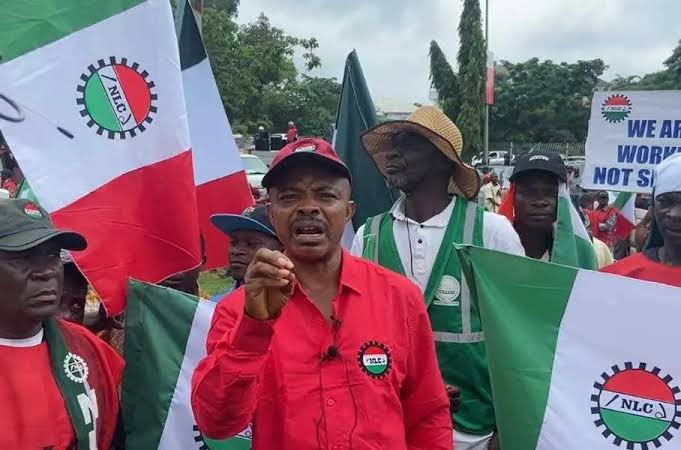
The Nigeria Labour Congress (NLC) and the Trade Union Congress of Nigeria (TUC) have jointly issued a stern ultimatum to the Federal Government.

The ultimatum comes as a response to the alleged failure of the government to fulfil a 16-point agreement reached with the unions on October 2, 2023. 

Expressing their dismay over the situation, leaders of the NLC and TUC affirmed their concern regarding the government’s apparent disregard for the welfare of citizens and workers.

Despite concerted efforts by organised labour to foster cooperation and address issues in the workplace, the unions claim that the government has remained indifferent to the widespread suffering and hardship experienced by Nigerians. 

In a joint statement, the NLC and TUC lamented the necessity of resorting to drastic measures, stating, “It is regrettable that we are compelled to resort to such measures, but the persistent neglect of the welfare of citizens and Nigerian workers and the massive hardship leave us with no choice.” 

The ultimatum issued by the unions gives the Federal Government a 14-day window, starting on February 9, 2024, to honour its commitments outlined in the agreement.

Failure to do so, as stated by the NLC and TUC, will result in the commencement of a nationwide strike. 

The looming threat of a nationwide strike raises concerns about its potential impact on various sectors of the economy and the well-being of the general populace.

It underscores the urgency for dialogue and resolution between the government and organised labour to avert the disruption and hardships that a strike could entail.

Northern groups urge Nigerians to disregard “sponsored protests” against FG

By Uzair Adam Imam

An amalgamation of pro-democracy groups from the 19 Northern states, operating under the banner of Arewa Initiative for Defence and Promotion of Democracy, has dismissed recent protests staged against the Federal Government in Kano and Minna as “sponsored.”

Led by Professor Shehu Abdullahi Ma’aji, the groups attributed the challenging economic situation faced by Nigerians to the legacy of a faltering economy inherited by President Bola Tinubu from his predecessor.

In response to protests in Minna, Niger State, earlier this week, Ma’aji emphasized during a press conference in Abuja that such demonstrations were unwarranted, as the Tinubu-led government was actively addressing economic concerns.

He urged Nigerians to exercise patience and patriotism, emphasizing that it is premature to critique an eight-month-old government, particularly by individuals with vested interests.

Ma’aji called for cooperation with the administration’s efforts to tackle the twin challenges of economic instability and insecurity plaguing the nation.

Mahdi Shehu reportedly nabbed over allegations of extortion, deception

By Sabiu Abdullahi 

Businessman Mahdi Shehu was apprehended in Kaduna, allegedly while attempting to extort a significant sum of $500,000 from his wife, Aisha, according to statements made by Abubakar Malami, a former Minister of Justice. 

The situation took a complex turn as Mr. Shehu, through his legal representative, M.I. Abubakar, claimed that his arrest was a retaliatory action following his demand for legal action against Mr. Malami and other prominent figures from the previous administration. 

According to an official statement from Mr. Malami’s legal firm, A.A. Sheriff, Mr. Shehu was detained by the Inspector-General of Police, IGP Monitoring Unit, based on allegations of engaging in extortion, criminal intimidation, and attempting to deceive a syndicate through the use of GSM numbers and email addresses to acquire money through deceptive means. 

Mr. Sheriff vehemently denied Mr. Shehu’s accusations and clarified that the businessman was apprehended while in the process of attempting to obtain the substantial sum of $500,000 at a hotel in Abuja.

Documents retrieved from Mr. Shehu purportedly linked him to hacking and financial improprieties affecting Hajiya Aisha Abubakar Malami. 

The statement detailed the ongoing investigation into the complaint lodged by Mr. Malami, highlighting communications between Mr. Shehu and the alleged syndicate, which led to his apprehension at the specified hotel location. 

The case has drawn attention to allegations of financial misconduct, hacking, and extortion, shedding light on the complexities surrounding the intersection of personal and legal disputes within Nigeria’s political and business landscape.

As investigations continue, further revelations are anticipated, shaping the narrative of this unfolding saga.

Court orders FG to fix prices of goods, petroleum products

By Sabiu Abdullahi

The Federal High Court, Ikoyi, Lagos, on Wednesday, February 7, mandated the federal government to regulate the prices of essential goods and petroleum products within a span of seven days. 

The presiding judge, Justice Ambose Lewis-Allagoa, issued the directive following an originating motion presented and argued by prominent human rights activist, Femi Falana SAN.

Justice Lewis-Allagoa underscored the significance of the case, highlighting the absence of opposition from the respondents, including the Attorney-General of the Federation and the Price Control Board. 

“I have had the applicant Femi Falana in a suit no San,FHC/L/CS/869/2023 and I have also discovered that despite the service of the Originating motion on the respondents namely Attorney-General of the Federation and the Price Control Board, no opposition to it by way of counter affidavit, which is law that all the facts deposed in the affidavit attached to the originating motion are all deemed admitted,” stated Justice Lewis-Allagoa. 

“Consequently, all prayers that are sought for in the motion papers are hereby granted as prayed.” 

The court’s ruling directs the Nigerian government to set fixed prices for a range of commodities, including milk, flour, salt, sugar, bicycles and spare parts, matches, motorcycles and their spare parts, motor vehicles and their spare parts, as well as petroleum products such as diesel, petrol motor spirit (PMS), and kerosene. 

This landmark decision marks a significant step towards addressing concerns over escalating prices of essential goods and ensuring greater stability in the country’s economy.

It remains to be seen how the government will implement and enforce these mandated price regulations within the stipulated timeframe.

A look at Governor Fintiri’s Model and Mega School projects

By Zayyad I. Muhammad 

Adamawa State Governor Ahmadu Umaru Fintiri has commenced the implementation of his ambitious Mega and Model Schools projects. 

On January 25th, 2024, the Governor officially launched the construction of the model nursery, primary, and junior secondary schools across all 21 local government areas in the Girei local government area. Additionally, the governor plans to build comprehensive one-in-all mega secondary schools, two in each of the state’s three senatorial districts.

The big question is: Why is the Adamawa State Governor engaging in these enormously ambitious projects? There are three answers. First, according to the United Nations Children’s Fund (UNICEF), one in three children in Nigeria is out of school, totalling 10.2 million at the primary level and 8.1 million at the junior secondary school (JSS) level. Adamawa State, positioned as a frontrunner in the north for reducing the number of out-of-school children, aims to sustain and enhance its progress. 

Additionally, the state has achieved remarkable milestones in maintaining existing schools and securing impressive student performance in WAEC and NECO. Notably, in the 2023 NECO examination, Adamawa came first in the North and ranked second nationally for students with more than five credits in all subjects, including mathematics and English. 

Furthermore, as part of Governor Fintiri’s 2024 budget commitment, promises include allocating projects exceeding one billion Naira to each of the 21 local government areas in Adamawa State. The construction of model and mega schools reflects a dedication to fulfilling these promises and spreading development and resources beyond the state capital, fostering a sense of inclusivity among the people.

While some dissenting voices suggest that the government should focus on rehabilitating and maintaining existing schools and skills vocational centres, the governor has already taken care of that through well-designed approaches. According to experts, Adamawa State, known for its exemplary education sector management, employs a highly regarded systematic and systemic approach. 

Adamawa has implemented a system that consistently maintains school infrastructure while concurrently constructing new ones based on needs and distribution. The state actively recruits new teachers and provides ongoing training for existing ones, aiming to enhance teacher quality, welfare, and pupil enrollment to address the challenges of out-of-school children. 

According to the Commissioner of Education, Dr. Umar Garba Pella, there are essentially two types of schools in the world: those with classrooms and street schools. Failing to enrol children in schools with classrooms may result in them attending street schools, where one child in such a setting can negatively impact the education of 10 children in a conventional classroom.

There are three takeaways from Gov. Fintiri’s launch of the construction of the 21-model nusery, primary and junior secondary schools, and the six mega schools. Firstly, there is public excitement; the majority of Adamawa residents are enthusiastic, recognising the government’s effectiveness and the inclusive nature of infrastructure development. Secondly, the projects will have a regional impact: the Model and Mega schools in Adamawa are expected to significantly influence the state’s education sector and contribute to the broader educational landscape of the northeast subregion. These schools are designed to provide advanced facilities, technology, and specialised programs, accommodating many students and fostering diversity. 

Thirdly, the schools will have a multipurpose and economic impact. Governor Fintiri’s mega and model school projects aim to address the challenges highlighted by UNICEF. The UN said that 12.4 million children in Nigeria have never attended school, and 5.9 million left school prematurely. Thus, the project will tackle the high number of out-of-school children in the northeast and provide students with modern skills aligned with globalisation. Furthermore, the economic impact is evident, with the substantial investment of 16 billion naira in the model school project, which is expected to affect the lives of residents in various ways positively.

Zayyad I. Muhammad writes from Abuja via zaymohd@yahoo.com.

Customs to deploy virtual reality technology to control smuggling, improve trade

By Sabiu Abdullahi

The Comptroller-General Customs (CGC) Bashir Adewale Adeniyi MFR, in a bid to bolster trade efficiency and combat smuggling, has announced plans to harness advanced artificial intelligence (AI) with a focus on virtual reality technology (VRT).

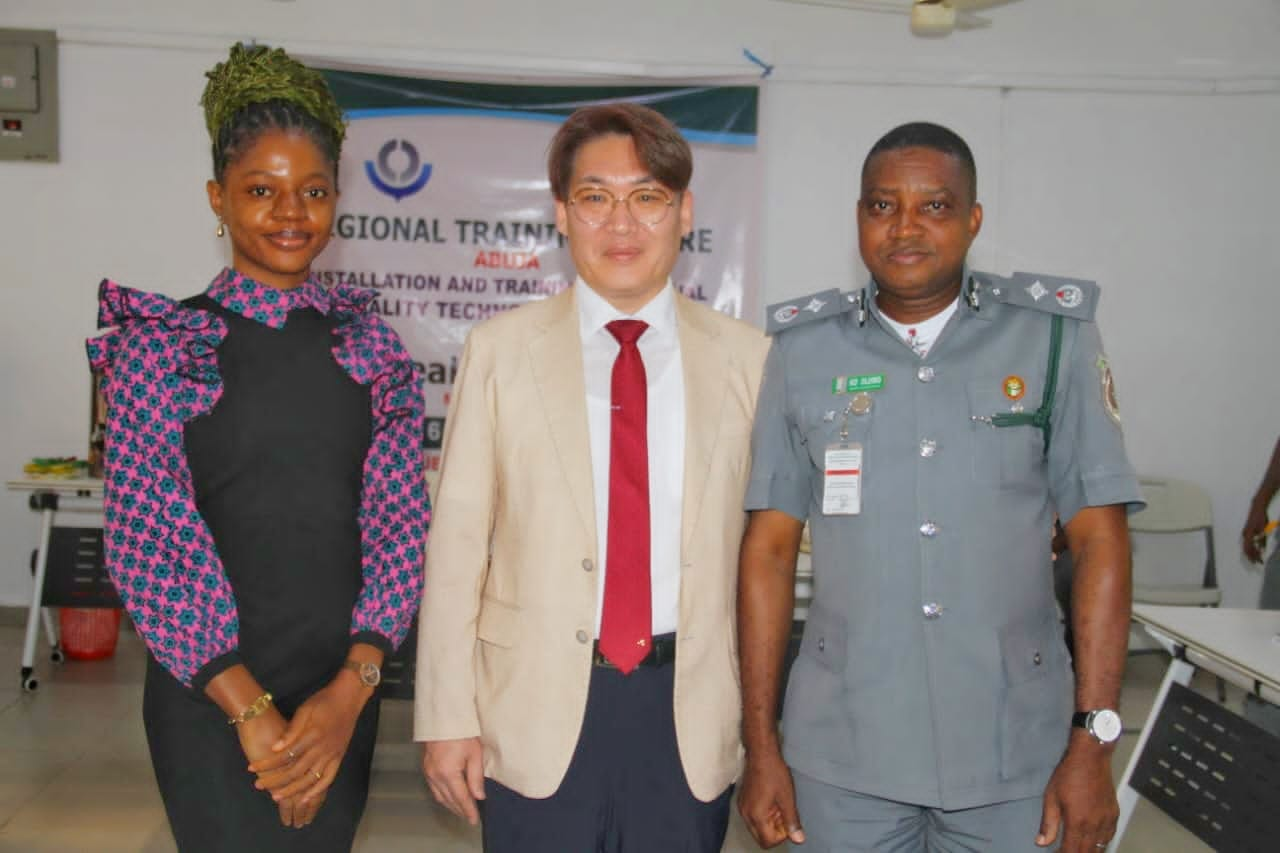
The CGC stated this commitment during a two-day workshop dedicated to the installation and utilisation of VRT, organised in collaboration with the World Customs Organisation (WCO) and Ho Entertainment. 

Speaking on behalf of CGC Adeniyi, Assistant Comptroller-General ACG Malanta Yusuf lauded the partnership with WCO and CCF Korea, recognising it as a crucial step towards leveraging technological advancements in customs operations.

ACG Yusuf stressed the CGC’s unwavering dedication to embracing cutting-edge solutions, citing ongoing officer training initiatives aimed at detecting radioactive materials to thwart smuggling attempts. 

Echoing ACG Yusuf’s sentiments, ACG Kingsley Egwuh, Commandant of the Nigeria Customs College and Staff College (NCCSC), hailed the collaborative efforts as pivotal in enhancing the skills of customs personnel.

He expressed confidence that the workshop would not only elevate inspection protocols but also serve as a deterrent to illicit trade practices. 

The workshop garnered praise from Professor Baek Sung-Sil, a representative from the WCO, who lauded the CGC’s forward-looking approach to modernising customs procedures through technology integration.

Professor Sung-Sil commended the dedication exhibited by participants and expressed optimism regarding the positive impact of the training on customs operations.