Month: February 2024

Mechanical engineers recognise ENGAUSA for bilingual skill acquisition

By Sabiu Abdullahi 

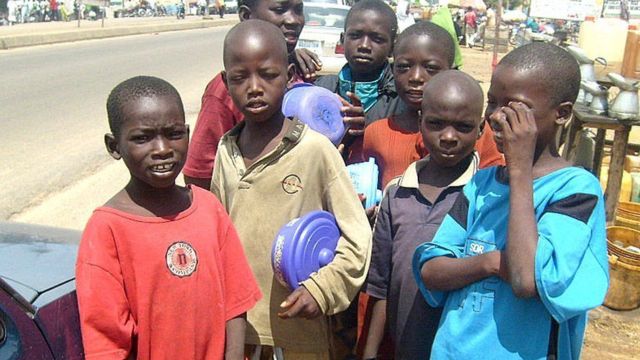
Engausa Global Tech Hub in Kano has been singled out by the Nigerian Institution of Mechanical Engineers (NIME).

Engr. Lawan Usman Isa, the Chairman of the Kano Branch of NIME, lauded the hub during a recent visit, highlighting its bilingual teaching approach and its potential to impact skills knowledge nationwide. 

Engr. Isa commended Engausa for its innovative teaching methods, which incorporate both Hausa and English languages, as he shows the importance of such approaches in enhancing technical education across the country.

The engineers’ delegation expressed admiration for Engausa’s dedication to empowering youth and fostering personal growth, recognising the pivotal role of skill development in community transformation. 

Echoing the sentiments of NIME, Engausa’s founder, Engr. Mustapha Habu Ringim, indicated the hub’s mission to overcome language barriers and promote technical knowledge.

Established four years ago, Engausa Global Tech Hub aims to revolutionise technical education by prioritising practical skill acquisition over mere certification. 

“Our focus is on human capital development and technical skill acquisition,” Ringim affirmed.

He emphasised the hub’s success in training students in Hausa, enabling better comprehension and application of technical concepts, particularly among marginalised groups such as Almajiris and out-of-school children. 

Highlighting the hub’s impact, Ringim noted that many of its graduates are now gainfully employed, underscoring the efficacy of Engausa’s approach in addressing societal challenges such as unemployment and educational exclusion. 

As Nigeria strives to advance technically and bridge the skills gap, collaborations between institutions like NIME and pioneering hubs like Engausa Global Tech Hub are crucial.

By harnessing innovative teaching methodologies and prioritising practical skills development, initiatives like Engausa are poised to play a pivotal role in shaping the nation’s technical landscape and fostering inclusive development.

Israeli military occupation: Nigeria’s suggestion

By Bilyamin Abdulmumin

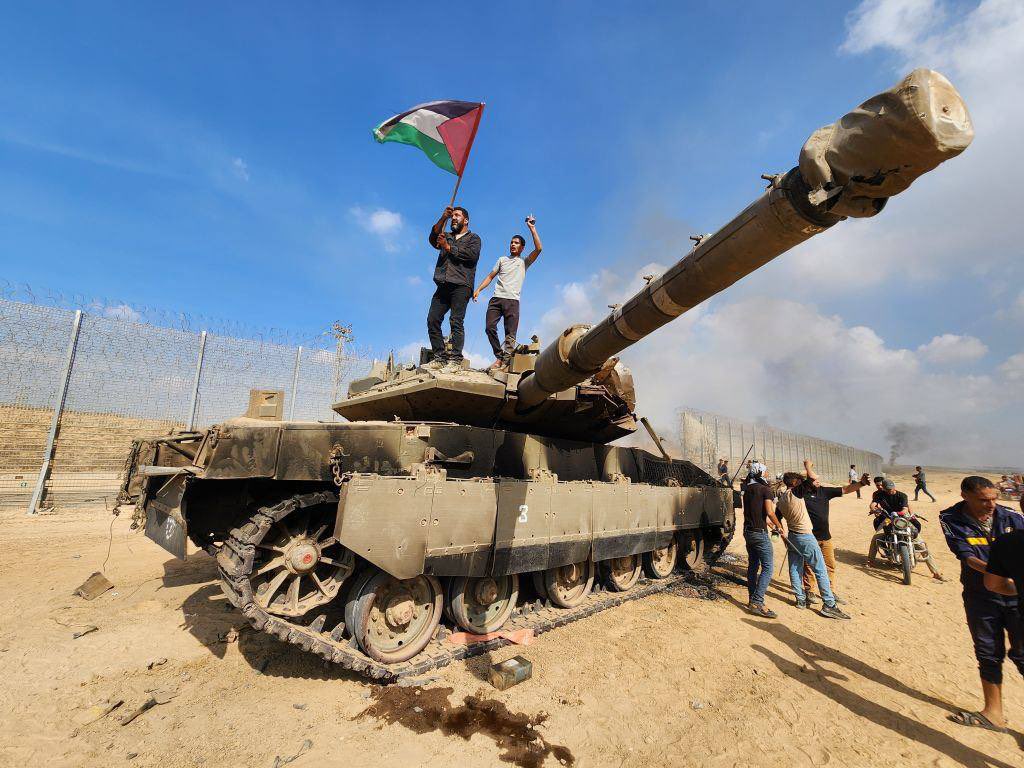
Last quarter of 2023, 7th October to be precise, the patience of Palestinians on the forceful occupation and increasing encroachment of Israel in the Gaza Strip, Westbank, and East Jerusalem reached the breaking point, as the voice and heartbeat of Palestine in the Gaza Strip, Hamas, launched a devastating attack on Israel in the occupied areas. The coordinated attack was said to bypass Israeli intelligence and caught their security off guard. But in a swift reaction, Israel has since been responding brutally, threatening the annihilation of not only Hamas but Palestinians in Gaza.

This article is the second from my reading of the book that Dr Muhsin Ibrahim generously shared: They called me a lioness.

 As far back as the beginning of the 19th century, the geopolitical entity now known as Israel did not exist. Instead, the Jewish population was scattered globally (this is a topic for another day); their population would be dispersed across Europe, America, and even our continent, Africa, as some reports claim. 

The clamour for Israel to settle in Palestine first gained traction after the First World War. When the Ottoman Empire collapsed, the control over Palestine fell under British rule.  Regardless of how one will view the situation,  the genesis of the Palestine-Israel turmoil must go back to the British. Because they sought both the help of Israel and Palestine during the war,   promising  Israel to establish a state for them on one hand and agreeing to get independence for Palestine from the Ottoman Empire on another, the British eventually sided with Israel.

So, in 1917, the British issued the Balfour Declaration, pledging to establish “a national home for the Jewish people” in Palestine. This marked (substantially) the beginning of a series of ongoing conflicts between Israel and Palestine.

 The Second World War saw the Zionist movement get even more traction.  According to Hitler’s fascist ideology, for humanity to attain Utopia, all forms of inefficiency must be removed, including problematic races and even physically or mentally challenged individuals. In Hitler’s vision, Israel fell in the former category,  so they have to be eradicated. In this regard, about six million Jews had been said to have met their brutal end. The individuals with discounts, either physically or mentally, should also have allied nations to thank for ending the fascism ideology; had Hitler succeeded, it would have been the beginning of their eradication, too.  But for Palestine, their predicament increased. Hundreds of thousands of Holocaust survivors fled Europe, with tens of thousands seeking refuge in Palestine.

It appears that Hitler’s apprehension against Israel had some element of truth because all European countries closed their doors to Jews both before and after the World War. The Jewish population seemed a burden, and the world grappled with an approach to address the puzzle.

In 1947, the United Nations formalised Zionism by approving a plan to partition Palestine into a Jewish state and a Palestinian state, with Jerusalem remaining under international control. This marked a triumphant year for Israel, the culmination of the Zionist struggle. Conversely, for Palestinians, it was a time of national mourning and sadness.

A whole new chapter of the standoff between Israel and Palestine would ensue as Arab nations united against Israel to stop the partition. However, the coalition achieved limited success, with only Jordan managing to capture East Jerusalem and the West Bank and Egypt taking control of Gaza after the 1948 war; Palestinians referred to this war as the “Nakba” or catastrophe, reflecting the extent of devastation that was inflicted on them by Israel.

Again, in the 1967 war, known as the Six-Day War, Israel got the upper hand, capturing Gaza, the West Bank, and East Jerusalem and initiating what Palestine currently fights with their heart in their mouth: the military occupation of Palestinian territories. In this process, Israel implemented various methods to relegate Palestinians to second-class status, including the construction of a separation wall, the issuance of green identification cards, and the assignment of white license plates to Palestinians, a sort of apartheid-style.

The fact that both Israel and Palestine are descendants of a common ancestor, Abraham, with the former tracing their lineage through Isaac and the latter through Ishmael, is significant and, at the same time, intriguing. To paraphrase former US president W. J. Clinton, dear brothers and sisters Shalom, sheathe the sword and make a sacrifice to accept the common deal beneficial to both sides like the one Nigeria offered.

 Through the then Ambassador/Permanent Representative of Nigeria to the UN, Tijjani Muhammad-Bande, Nigeria gave the suggestions: “We encourage Israel to take concrete steps to freeze and reverse all settlement-related activities in the West Bank and East Jerusalem. On their part, Palestinian leaders must also signal their readiness to return to the negotiating table, and we reaffirm our unwavering support for a two-state solution, with Israel and Palestine existing side-by-side in peace.” 

Bilyamin Abdulmumin is a doctoral researcher in chemical engineering at ABU Zaria.

Confronting street begging in Nigeria: A call for action

By Usman Muhammad Salihu 

Street begging is the act of soliciting favours, often in the form of money, without the expectation of reciprocation, typically occurring in motor parks, markets, or densely populated areas.

The prevalence of street begging has become widespread across various cities in our country, particularly in the northern regions, where beggars have formed a nuisance.

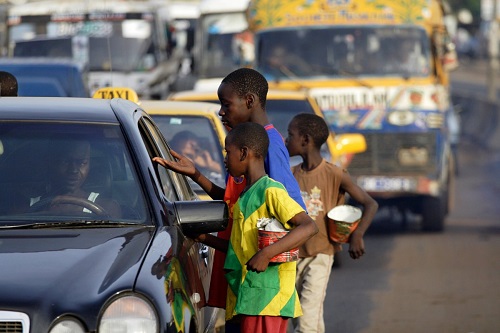
Some beggars adopt a persistent approach, approaching motorists during traffic delays and creating disturbances along major highways. A significant contributing factor to this issue is the economic downturn, resulting in the closure of industries and factories, leaving many without alternative means of livelihood.

Some able-bodied individuals opt for begging rather than engaging in profitable ventures, choosing an easy life over hard work. This phenomenon is exacerbated by factors such as poverty, illiteracy, and societal influences that fail to provide proper orientation.

Addressing the street begging menace requires a collaborative effort from the government, society, and other organisations. Legislation should be enacted to penalise able-bodied individuals found begging, while those with disabilities should receive appropriate care.

Economic improvement is crucial, necessitating the reopening of closed industries and the establishment of new ones to combat unemployment. Revitalising the agricultural sector can offer additional job opportunities, reducing the number of youths resorting to begging.

By implementing and sustaining these measures, the street begging menace can be effectively curbed and eventually eradicated from our society.

Usman Muhammad Salihu writes from Jos, Nigeria and can be reached at muhammadu5363@gmail.com.

TikToker remanded by Kano Sharia court for alleged lesbian claims

By Sabiu Abdullahi 

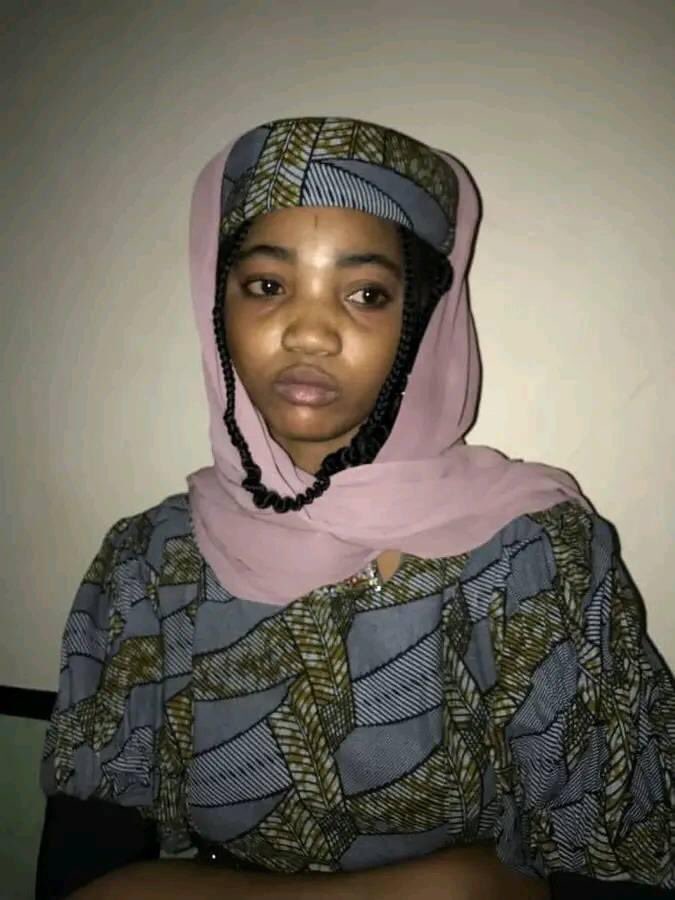
Ramlat Princess, a TikTok skit maker, has been remanded in a correctional centre by a Sharia Court in Kano State following her arrest by the Kano State Hisbah Board. 

Reports show that Ms. Ramlat was apprehended after a video clip surfaced online, where she purportedly proclaimed herself as a lesbian. 

Operatives of the Hisbah command arrested Ms. Ramlat on Thursday, prompted by the viral clip that sparked outrage among social media users, leading to calls for her arrest. 

Upon her arraignment at the Sharia Court, Ms. Ramlat, who reportedly pleaded guilty to charges of sharing explicit material on social media and inciting public outrage, was remanded in prison custody by Judge Sani Tanimu Hausawa.

The judge scheduled a summary judgement for Monday, February 19, 2024. 

Ms. Ramlat, originally from Ghana and residing in Taraba State, claimed she was visiting her elder sister in Kano when she was arrested about a month ago. 

In the controversial video, Ms. Ramlat declared her lesbian identity, stating that any man wishing to marry her must consent to her marrying a woman as well. 

“I am a full-fledged lesbian. Lesbianism is a beautiful act that I can’t do without,” she proclaimed in the video. 

During questioning by Hisbah officials, Ms. Ramlat confirmed her involvement in the video and reiterated her stance on marriage requirements. 

The arrest of Ms. Ramlat follows a similar incident involving another TikToker, Murja Kunya, who was also arrested by the Hisbah Board and remanded in prison. 

It’s important to note that same-sex relationships, including homosexuality and lesbianism, are illegal in Nigeria, with offenders facing a minimum of 14 years in jail if convicted. 

Ms. Ramlat’s case highlights the ongoing enforcement of laws against same-sex relationships in Nigeria and the swift actions taken by authorities in response to perceived violations.

COWA president unveils vision to empower 100k women, combat drug abuse

 By Sabiu Abdullahi 

Kikelomo Adewale Adeniyi, the President of the Customs Officers’ Wives Association (COWA), has outlined a bold vision aimed at empowering 100,000 women and combating drug abuse in Nigeria. 

Speaking at the relaunch of COWA in Abuja on Thursday, February 15, 2024, Mrs.

Kikelomo Adeniyi underscored the association’s determination to support the Federal Government’s efforts in empowering women, addressing drug addiction, and fostering job creation. 

The event, attended by members, stakeholders, government officials, business leaders, and diplomats, served as a platform to reaffirm COWA’s commitment to empowering women and children while launching an intensive campaign against drug abuse. 

Mrs. Kikelomo Adeniyi sought the support of Nigeria’s First Lady, Oluremi Bola Tinubu, to enhance women’s well-being and empowerment across the nation.

She also expressed alignment with President Bola Tinubu’s ‘Renewed Hope’ initiative, identifying it as a catalyst for COWA’s primary projects. 

Highlighting concrete initiatives, Mrs. Adeniyi announced the launch of a pilot programme to empower 1,200 women, with plans to extend support to over 100,000 women by the end of 2024.

Additionally, she revealed plans to establish a state-of-the-art Skills Acquisition Center in Abuja, providing vocational training and retraining for COWA members. 

Furthermore, Mrs. Adeniyi stated COWA’s commitment to providing food and humanitarian aid to 100,000 disadvantaged individuals nationwide by the year’s end. 

The relaunch ceremony also served as a fundraising platform, aiming to garner support from corporate entities and individuals to implement COWA’s programs effectively. 

Mrs. Adeniyi outlined plans to establish Nursery, Primary, and Secondary Schools in border communities and urban areas, providing affordable education to the children of Customs officers. 

In his remarks, the Comptroller-General of Customs, Bashir Adewale Adeniyi MFR, lauded the progress of COWA and commended Mrs. Kikelomo Adeniyi and her team for their dedication.

He highlighted the inclusion of women in crucial positions within the Nigeria Customs Service as a significant achievement in achieving gender balance. 

CG Adeniyi reiterated the NCS’s commitment to supporting COWA’s initiatives, including building schools, assisting widows, and conducting medical outreach programs in border communities. 

He affirmed the NCS’s unwavering support for COWA’s revival and relaunch, expressing confidence in the association’s positive impact on the organization and the community at large.

Nigeria is hard, Nigerians in tears

By Ibrahim El-mu’azzam

It’s a very hard moment for Nigeria. It’s really unbelievable and unbearable to the extent that many Nigerians have forgotten the sweetness of life. Everything is turning from liquid to concrete. We are even getting used to it, only that we are poor in strength to withstand it.

Today, a Nigerian has taken the insecurity problem, with all its significance less valuable. The government has completely abandoned many people to their fate. It isn’t that we have removed the “in” from the “insecurity” but we are more focused on the gunmen and kidnappers that have all of us; hunger and poverty.

Everything is tough! Citizens are losing hope. To some, it’s lost already. Many prefer death than this tense navigation, in a country that we all know and believe to have excess and abundance of what is needed in terms of wealth and resources. We are very far from thinking of saving, everyone is after what he can get not even today but now.

Inflation has blocked the passage of oxygen to the lungs of Nigerians, removed food from their throats and chased away any positive thoughts from their mind. It’s onto the eyes and ears that people are seeing nothing but what suits and relieves them. The translation of this is that unlawful will be lawful, the strong will rule and the society will turn to a jungle.

Everything is drastically increasing price, and there is no control. You can buy a commodity for ₦10 and in an hour or less, it will be ₦20. Both the parties in the markets aren’t smiling, the transaction is dark as it’s done without pleasure.

Maize, rice, beans, millet, corn and even cassava are above the purchase of a common man, not to talk of meat, fish, milk or sugar. “Balance diet” has since been replaced with “living diet” in Nigeria. People today eat not to be satisfied but to retain their consciousness.

Where on earth can a Nigerian put his humble self?

Everywhere, everybody, this is the discussion, especially family men. These are usually family men with something, no matter how little, doing, what is your thought on those who will wake up in the morning without a single direction to follow?

Begging is now very normal and common, and no one questions. You will hear a person swearing that he and his family haven’t eaten for so long. Food, to pass through the throat and relieve hunger is now the problem of a Nigerian, in fact, a Northerner for that matter.

You will visit a house and come out no one will say “Please eat this”. Wives and children are no longer selecting food. It has reached to the extent that some humans are now eating the foods of animals.

I had to stop and rehear a statement yesterday when I heard someone begging people in a mosque to PLEASE BUY WHAT HE IS SELLING. He sells Qur’an and some other small Islamic books; Ƙawa’idi, Akhdari…, and similar stuff. He stood after Magrib prayer begging; “Don Allah a zo a yi min ciniki, don girman Allah”. For the first time in my life, I come across such type of begging.

I continue to ask myself, please where is the sympathy of our leaders? Where is the empathy of our producers and marketers? Where are the price-controlling institutions? Where are the leaders and where is the government as a whole? Please why are we going through this much? Who have we offended and what has been our offence? Please, are Nigerians entitled to suffering and discomfort? Where are we heading to?

It’snt long that we voted with the hope that things would be softened, pains would be relieved, and tears would be wiped, but the absolute reverse is the case. More and more terrific we are getting every day.

The government is careless. The budget has no direct aiding attention to the common Nigerians. Billions are spent on useless renovations, change of vehicles and leisure trips, but not a single unit directly for the common man of the nation.

And upon all these, one beautiful thing is that no one protested, broke any law, or did something illegal, yet. A Nigerian, as strong as he is isn’t so much complaining of the commodity prices, but the money to buy them. You will always hear; “Allah Ya ba mu abin saya”. See this extreme humbleness, humility and positivity.

To be honest, every Nigerian deserves an award of commendation. We have been navigating through a tough situation with increasing anger and frustration, yet quiet, peaceful, and even managing a fake smile. Weldone fellow countrymen, it’s getting over, it’s getting better, soon by the grace of God.

We urge, with a very loud voice, every Nigerian leader, scholar, producer, marketer, and every other stakeholder to remember that he or she will be accountable for this before God. He or she shall be fully responsible for the dying Nigerians, especially those who have what to do but chose not to do it.

Every stakeholder, from community leaders, councilors, religious figures, schoolers, elders, marketers, and others at the community level, moving to the local, state, to national level, this is the task now! People, move to them. Disturb them until we get their attention.

The government should as fast as possible intervene in these ravaging problems and provide solutions. Aid and humanitarian activities should be given extra priority under trusted custodians. If there is a need, I believe Nigerians will agree to the relocation of any project fund to address this problem. The government should reconsider its decision on the removal of fuel subsidy and all other subsidies it is removing. Nigerians are dying! Focus on Nigerians, focus on their condition, Nigeria will be better. PLEASE ITS URGENT!

Ibrahim El-mu’azzam
elmuazzammail@gmail.com
Inflation: Cement prices soar to about ₦15k in Abuja

By Sabiu Abdullahi

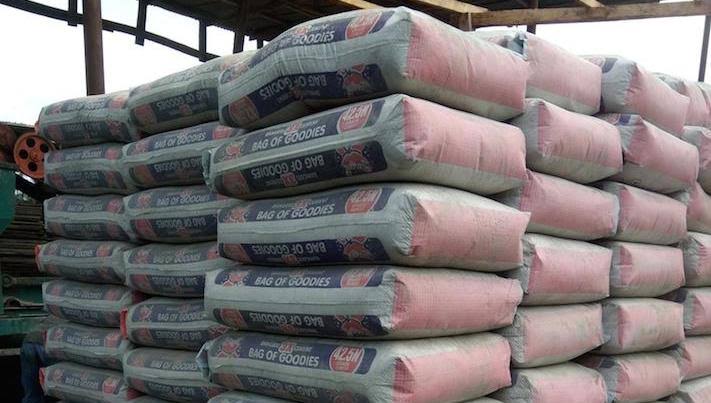
The cost of cement in Abuja, the Federal Capital Territory, has seen a significant spike, with prices now ranging between N10,000 and N15,000 for a 50-kg bag.

A survey, conducted in various areas, including Gwarimpa, Area 10, Kubwa, Lugbe, and Dawaki, revealed that Dangote cement is priced at N10,000 per bag, while BUA cement is selling for N15,000.

Yinka Adebayo, a retailer in Gwarimpa, expressed dismay over the rapid increase in prices, highlighting that just last month, he sold a bag of cement for N6,000.

“We sell Dangote cement for N10,000 per bag, and the BUA is N15,000. Unfortunately, it may surprise you that I sold the same bag of cement for N5,500 to N6000 last month,” he stated.

Similarly, Rukiyat Abdullahi, a retailer in Kubwa, echoed similar sentiments, stating that Dangote cement is now priced at N10,200, while BUA costs N16,000 per bag.

Retailers in Lugbe confirmed the escalating prices, with Dangote and BUA cement being sold at N10,000 and N15,000, respectively.

The surge in cement prices in Abuja mirrors the trend observed in other parts of the country, reflecting challenges such as scarcity and increased production costs.

FG seals Sahad Store for alleged lack of price transparency

By Sabiu Abdullahi

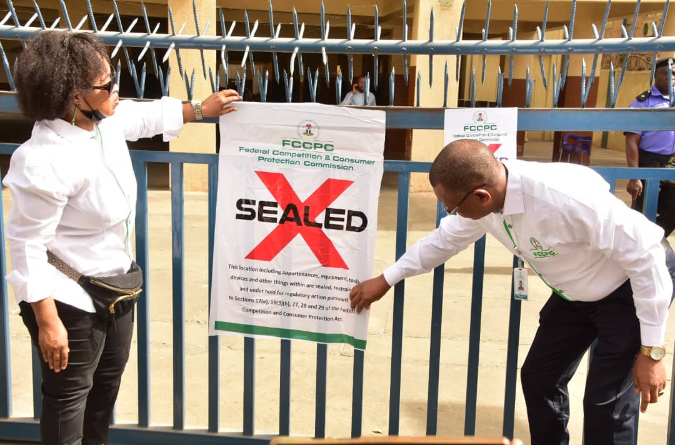
The Federal Competition and Consumer Protection Commission (FCCPC) took decisive action on Friday by sealing Sahad Store, a prominent supermarket located in the Garki area of Abuja.

The commission cited the store’s lack of transparency in price fixing as the reason for the closure. 

This development comes just a day after President Bola Tinubu announced plans to address factors contributing to the ongoing food crisis in Nigeria.

Following a meeting with state governors, security agency heads, and ministers at the Presidential Villa in Abuja, Minister of Information and National Orientation, Mohammed Idris, revealed that a committee would be established to combat product hoarding. 

According to Idris, some traders have been accused of hoarding food products, exacerbating the challenges faced by Nigerians.

He emphasised the need to ensure that essential commodities are readily available to people at fair prices. 

The enforcement team from FCCPC, led by Acting Executive Vice Chairman Adamu Ahmed Abdullahi, found Sahad Store guilty of misleading pricing and lack of transparency during a preliminary investigation.

Abdullahi stated that the store would remain sealed until further investigations are completed. 

The commission invoked Section 115(3) of the law, which prohibits charging consumers prices higher than those displayed.

Additionally, Section 155 outlines severe penalties for corporate entities found in violation, including fines and potential imprisonment for directors. 

Despite being summoned to defend their actions, Sahad Store’s management failed to appear, only sending a lawyer who was not familiar with the case. Abdullahi emphasised that compliance with the law is necessary for the store’s reopening. 

The closure of Sahad Store underscores the government’s commitment to ensuring fair pricing practices and protecting consumers from exploitation amidst the current economic challenges facing Nigeria.

President Tinubu arrives in Addis Ababa for AU Summit

By Sabiu Abdullahi 

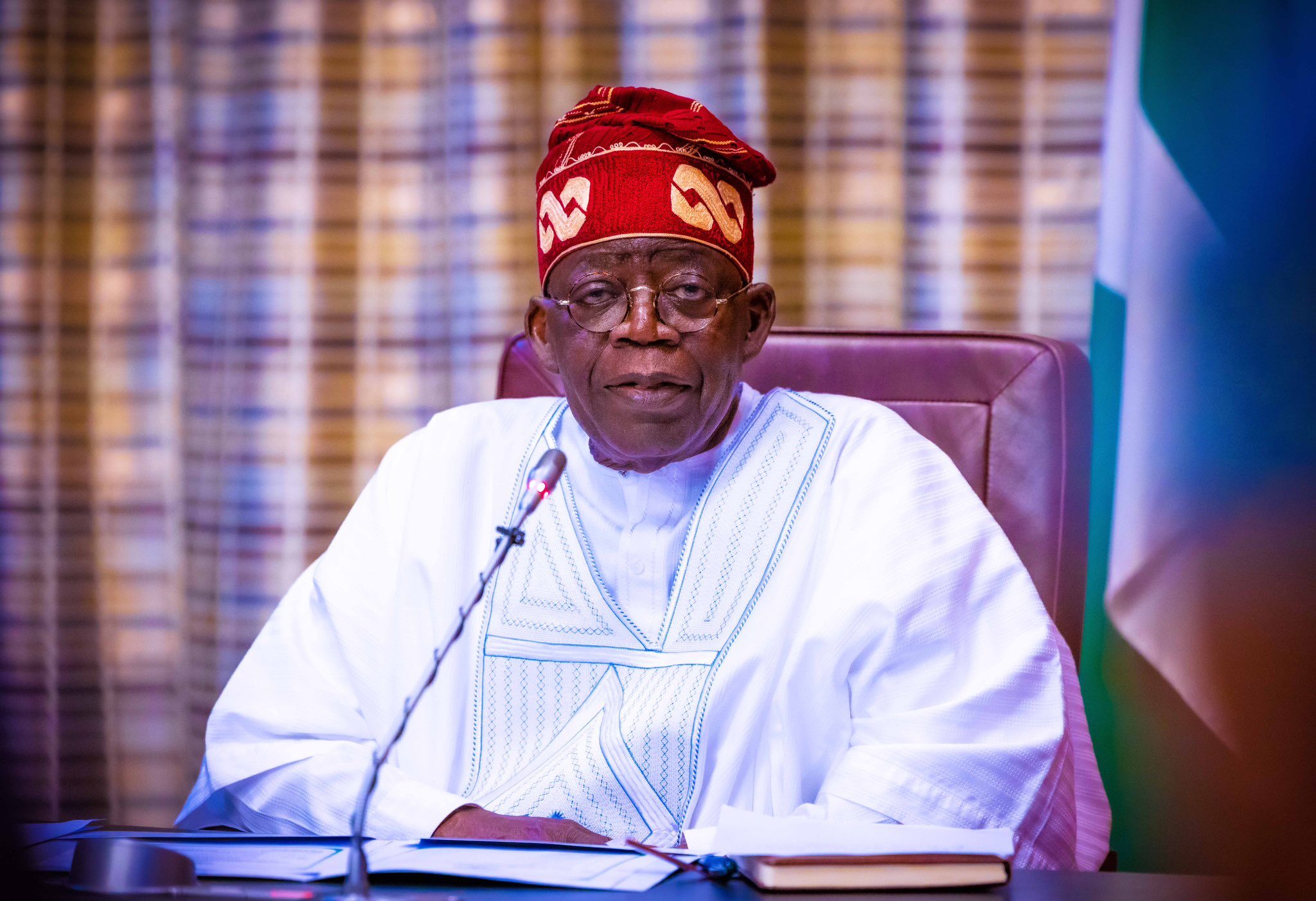
President Bola Tinubu has embarked on an official visit to Addis Ababa, Ethiopia, to participate in the 37th ordinary session of the assembly of the African Union (AU) heads of state and government. 

President Tinubu arrived in Ethiopia on Thursday night, touching down past 10 p.m.

Accompanying him on the trip is a delegation of ministers and other high-ranking government officials. 

The Presidency had previously announced Tinubu’s participation in the summit, where he is set to engage in discussions with other African leaders on various pertinent issues. 

These discussions include deliberations on institutional reforms within the African Union, strategies for peace and security across the continent, as well as focused dialogues on thematic concerns like climate change. 

Furthermore, President Tinubu will be involved in shaping the African Union’s agenda and priorities within the framework of the G20, underscoring the continental body’s stance on global issues. 

The overarching theme of this year’s summit is ‘Educate an African fit for the 21st Century: Building resilient education systems for increased access to inclusive, lifelong, quality, and relevant learning in Africa.’ 

This theme reflects the collective commitment of African nations towards enhancing educational opportunities and outcomes across the continent. 

In addition to his engagements at the AU summit, President Tinubu will also participate in an extraordinary summit of the Economic Community of West African States (ECOWAS) in his capacity as the chairman of the regional body. 

This dual representation underscores Nigeria’s active role in both continental and regional initiatives aimed at fostering cooperation and development across Africa.

Not all street beggars are actual Almajirai

By Muhammad Isyaku

I closed late in the shop the other day at around 11:00 pm and went straight to our plaza’s parking space to take my bike since our shop was upstairs. I drove earnestly home, knowing it was already night and there was nothing I had to buy. From Malumfashi’s township market to our community is a journey. I have to pass many communities before reaching ours. 

Along my way down home, around the Gwamutsawa community, I saw a small boy of 7 to 8 years crying loudly and terribly on the other side of the road. The road has a long-cemented expressway that divides it for motorists’ passage. I had to stop by and call the boy to cross the road by climbing the expressway to come and meet me where I parked. He did as I instructed but still kept on crying, which utterly moved me. I have to overpower the pity and emotions to interrogate him. 

What was the matter, and from where is he? He told me he is an Almajiri of one Malam at Hawan-Usman-Lado. He added that he was hungry and didn’t want to go to school because their Malam would beat him. I asked what you did to him. He answered that he didn’t return to school for the evening lesson, for which the offence attracts a penalty. 

I admonished him to return to school on time so that he would not miss any lessons that would make their Malam flog him. He obediently said, “Okay, I would.” I asked him where he was from, and he said Maraban Jos. I further asked if his parents were alive, and he answered no. His answer nearly made me shed tears, as I thought only an orphan who is abandoned by his family and a child born by a careless parent could be sent to a traditional Qur’anic school in such a faraway place at this tender age. 

Two passers-by also met us on the spot and joined me in sympathy and condemnation. One of them even cursed the teacher (Malam) the child mentioned. The other person who didn’t curse the teacher, as his ally did, put his hand in his pocket and brought out some change, which he gave to the boy. I gave him my change, too, and asked him to climb my bike to take him to school and apologise to the teacher on his behalf. 

Upon hearing that, he continued to cry by firmly refusing to climb my bike. Those two people asked to follow me, and he said their teacher would flog him after I left. We insisted he climb, assuring him we would not allow him to flog him. He had no option but to climb, and he did, so I made a U-turn and headed to the community where he alleged their school was located.

Unfortunately for the boy, he started asking me to drop him off before I reached the roundabout, saying he would go by himself. I ignored him and continued moving until I reached the roundabout and saw a group of Almajirai by the other roadside. I asked them if they knew him and were from the same school; they said yes. I then asked him to use the money we gave him to buy food and eat after he should then follow them to school. 

They all started shouting ‘Dangari ne fa’, meaning he’s an indigenous boy! I was shocked by their confession. When I turned to him, he was nowhere to be found. They asked, “How much did you give him?’ I told them it was a small amount just for food.

I bid them good night and went home. However, I still questioned the kind of home training that boy was given and the level of his smartness for mischievously looking innocent and faking his identity. If a boy of such age could lie that way, then I wonder what he might be capable of doing if he grows into a full-fledged man.

In Allah, we seek rectitude!