Month: February 2024

Revitalizing opportunities and promoting employment: A proposal for establishing jobs hub in Kano

By Tahir Mahmood

Kano State, known for its vibrant culture and economic potential, has witnessed an influx of companies and nongovernmental organizations. However, there is a noticeable disparity in the representation of local citizens within these entities.

There is a need to address unemployment challenges and breathe new life into the economy of Kano State by drawing inspiration from the successful Edo Jobs Center model. This initiative comes at a crucial time when the need for job creation and skills development is more pressing than ever. It is suggested that Kano State adopt a framework similar to the Edo Jobs Center, a proven model that has successfully facilitated job placements, nurtured skills development, and fostered economic growth in Edo State. The aim is to tailor this approach to the unique needs and opportunities within Kano.

Acknowledging the existence of the Sani Abacha Youth Center and the challenges it faced, the Jobs Hub may aim to learn from past experiences. It is crucial to analyze the reasons behind the center’s abandonment, incorporating these lessons to develop strategies that ensure the sustained success of the new initiative, particularly in promoting local employment.

It’s important to note the historical context, particularly of the abandoned Sani Abacha Youth Center Kano, which had similar aspirations but fell short of realizing its full potential, serving only as a wedding event center and a popular rawar gala location—a joint for hookups where local ashawos are initiated and recruited, despite the Hisbah’s commitment to curbing those activities in the state. Learning from past experiences, the Jobs Hub may aim to address the shortcomings of previous initiatives and create a sustainable platform for employment and skills development.

The key components of the Jobs Hub may include an online portal connecting job seekers with opportunities, comprehensive skills development programs, and strategic partnerships with local businesses. This holistic approach will seek to bridge the gap between job seekers and employers while equipping the local workforce with the skills needed in today’s dynamic job market.

In light of the challenges faced by the Sani Abacha Youth Center, it is imperative that the new initiative address the reasons behind its abandonment. By incorporating lessons learned from past experiences, the Jobs Hub may aim to not only overcome previous obstacles but also ensure long-term success and sustainability with modern technological advancements.

To achieve the above, collaboration with the government, private sector, and local communities is crucial. This is to encourage the Kano State government to actively engage in supporting and endorsing the establishment of the Jobs Hub, aligning it with existing employment initiatives and leveraging public-private partnerships for enhanced impact.

The success of the Edo Jobs Center model presents a compelling case for the potential for positive outcomes in Kano State. As we endeavor to revitalize opportunities and stimulate economic growth, it is hoped that the government will consider adopting the Edo Jobs strategies, setting in motion a transformative journey towards a more prosperous and vibrant Kano State.

The proposed Jobs Hub integrates various components to create a comprehensive approach to local employment: Online Portal, by establishing a digital platform connecting local job seekers with employment opportunities, making the recruitment process more inclusive and accessible.

Skills Development Programs, through implementing targeted training initiatives tailored to the needs of the local workforce, enhance their competitiveness in the job market. Partnerships with Companies, by fostering collaborations with companies and organizations operating in Kano, and encouraging them to actively participate in the Jobs Hub by recruiting from the local talent pool.

A critical aspect of this is the emphasis on addressing the issue of underrepresentation of Kano citizens in the workforce. The Jobs Hub may work closely with companies to develop strategies for recruiting and retaining local talent, promoting a more inclusive and diverse work environment through government mandates for local recruitment. By recognizing the pivotal role of the government in influencing employment practices, this suggests that Kano State can enforce regulations mandating companies and organizations operating within its borders to prioritize the recruitment of Kano citizens.

This proactive approach aligns with the state’s commitment to promoting local employment and ensuring economic opportunities are accessible to its people. Collaboration and Stakeholder Engagement: Active collaboration with both government bodies and private sector stakeholders is essential for the success of the Jobs Hub. Encouraging dialogue and partnership-building creates a supportive ecosystem for local employment initiatives. The establishment of a Jobs Hub in Kano State not only addresses unemployment challenges but also tackles the issue of workforce disparities.

By promoting local employment, the proposal aims to create a more equitable distribution of economic opportunities. The government’s mandate to enforce local recruitment practices can further solidify the impact of the Jobs Hub, ensuring a brighter and more inclusive economic future for the people of Kano State.

The State holds the promise of revitalizing the local economy and creating a brighter future for the youth. By learning from past experiences and adopting innovative solutions, Kano has the opportunity to pioneer the fostering of employment, skills development, and sustainable economic growth.

Tahir Mahmood Saleh can be reached via tahirmsaleh.seggroup@gmail.com.

Bridging the healthcare service divide in Nigeria

By Aishat M. Abisola

Nigeria, a nation marked by diverse landscapes and cultural richness, grapples with significant healthcare disparities between urban and rural areas. While urban centers face issues such as minimal medical resources, a lack of healthcare workers and a lack of necessary equipment, they still provide decent healthcare services unlike rural communities who face numerous challenges that hinder their access to essential healthcare services.

Rural communities in Nigeria encounter formidable barriers on regular basis when it comes to accessing healthcare services. One of the primary challenges is the shortage of healthcare facilities and trained medical professionals in remote areas.

According to a report by the World Health Organization (WHO), there is a significant urban-rural divide in the distribution of healthcare resources in Nigeria, with the majority concentrated in urban centers.

Challenges in Rural Healthcare Access

Geographic Barriers: One of the primary obstacles to healthcare access in rural areas is the geographic isolation of these communities. Many rural regions in Nigeria are situated far from urban centers, making it difficult for residents to reach healthcare facilities promptly. Long distances, poor road conditions, and a lack of reliable transportation options have contributed to delays or altogether neglected healthcare seeking behaviors.

Shortage of Healthcare Facilities and Personnel: Rural areas frequently deal with a shortage of healthcare facilities and trained medical professionals. Nigeria has a disproportionately low number of healthcare facilities in rural areas compared to urban centers. This shortage not only limits the availability of essential services but also results in prolonged waiting times for medical attention.

Financial Constraints:
Economic factors also play a significant role in healthcare access, especially in rural communities where poverty rates tend to be higher. The majority of rural residents often struggle to afford healthcare services, medications, and transportation costs to reach medical facilities. Out-of-pocket expenses associated with healthcare often deter individuals from seeking timely medical attention, exacerbating health problems and perpetuating a cycle of poverty.

Healthcare Infrastructure Disparities: The disparity in healthcare infrastructure between urban and rural areas is stark. Urban centers have significantly better hospitals and clinics, while many rural healthcare facilities are plagued by dilapidation and a lack of essential medical equipment. The Nigerian government’s National Health Facilities Registry highlights the uneven distribution of healthcare infrastructure, with urban areas having a higher concentration of better equipped facilities.

Lack of Skilled Personnel: In addition to inadequate facilities, rural areas face a shortage of skilled healthcare professionals. The WHO reports that the distribution of healthcare workers in Nigeria is highly skewed as urban areas have a more significant concentration of doctors, nurses, and other healthcare providers. This scarcity of skilled personnel in rural regions further diminishes the quality of healthcare services available to residents.

Power Challenges: Another critical aspect of healthcare infrastructure often overlooked is the lack of reliable electricity in rural regions. Many healthcare facilities in remote areas struggle with power shortages which hinders the functionality of medical equipment and limits the provision of essential healthcare services. Electrification rates in rural areas are considerably lower than in urban centers, exacerbating the healthcare infrastructure divide.

Proposed Solutions

Investment in Rural Healthcare Infrastructure: Increasing investments in rural healthcare facilities is imperative in order to address the healthcare infrastructure disparities. Building new, well-equipped healthcare centers and upgrading existing ones will improve the availability and quality of healthcare services in remote regions. The Nigerian government, in collaboration with international partners, can allocate funds specifically for rural healthcare infrastructure development.

Training and Deployment of Healthcare Professionals: Addressing the shortage of healthcare professionals in rural areas requires a comprehensive strategy. Government initiatives and incentives should be implemented to encourage medical professionals to work in undeserved communities. Investing in the education and training of local community health workers can also enhance primary healthcare services in rural areas and provide a sustainable solution to the shortage of skilled personnel.

Improving Transportation Infrastructure: Efforts to improve healthcare access should also focus on transportation infrastructure. Constructing and maintaining reliable roads in rural areas, as well as implementing affordable and accessible public transportation options, can significantly reduce travel barriers for rural residents seeking medical attention.

Financial Support and Health Insurance: The government can establish and promote health insurance programs targeted at low-income individuals in rural areas. These programs can provide financial relief and encourage healthcare utilization by covering medical expenses. Additionally, subsidies for essential medications and preventive healthcare measures can contribute to a healthier rural population.

Alternative Energy Solutions: Implementing alternative energy solutions such as solar power is crucial to provide a solution to address power challenges in rural healthcare facilities. The integration of sustainable energy sources can ensure a reliable electricity supply, enabling the consistent operation of medical equipment and improving the overall quality of healthcare services in rural areas.

Last line

Nigeria’s urban-rural disparities in healthcare accessibility and infrastructure can only be resolved when there is a concerted effort from the government, healthcare organizations, and the international community. By acknowledging the challenges faced by rural communities and implementing comprehensive, sustainable solutions, Nigeria can pave the way for a more equitable healthcare system.

Bridging these gaps is not just a matter of social justice but a strategic investment in the nation’s health and development. When stakeholders work collaboratively, the possibility of attaining accessible, quality healthcare for all Nigerians, regardless of their geographic location, can become a reality.

Aishat M. Abisola is a NYSC corps member with PRNigeria in Abuja

Zamfara Ambush: Last straw that should break the camel’s back

By Kabir Fagge Ali

It is a known fact that security personnel are always ready to pay the supreme price whenever they are in line of action. Their patriotism and unrelenting effort in tackling insecurity partly make us sleep comfortably at night.

Worrisome, however, are reports that our gallant troops, who protect our territorial integrity and lives, are allowed to be slaughtered like guinea pigs during terrorists’ ambushed attacks.

Last Saturday was a black day as troops of the Nigerian Army, alongside two Police officers, were killed around the Danjibga axis in the Tsafe Local government area of Zamfara State in an ambush.

The attack on the troops by bandits is in retaliation to several attacks launched by troops on different bandit camps in the state, leading to the death of numerous terrorists and the destruction of their camps and ‘operational’ motorcycles, among others.

Zamfara has been battling insecurity for nearly a decade. The Nigerian military, however, must be commended for leading the war to end banditry in the troubled North Central state and general insecurity in the country.

But winning the war demands our collective support. Both the federal government, the military, other security agencies and citizens must join forces and come up with a portent strategy for tackling terrorists and other criminal elements, holding our dear nation to ransom.

That is why a multifaceted approach to fighting insecurity is imperative. Firstly, the military’s intelligence-gathering system must be enhanced. This will help quickly identify the movements and plans of terrorists and other armed groups.

Strengthening collaboration between various security agencies and investing in technology, such as surveillance and communication equipment, are also vital.

Again, we need to equip our troops with modern and sophisticated ammunition, and the government must allocate adequate resources to ensure that the military has the tools and knowledge needed to adapt to evolving security threats. This will also help its troops navigate the challenging terrains often exploited by insurgent groups during gunfire battles.

Community engagement remains a linchpin in the fight against insecurity. Local populations can be pivotal in providing credible intelligence, as they possess invaluable knowledge about their communities.

Establishing trust between the military and communities is paramount for building a united front against insurgency. Addressing the root causes of violent conflicts in the country is another thing that cannot be overemphasised.

Beneficial socio-economic policies and sound development initiatives focused on providing education, healthcare, and employment opportunities can help to dissuade our youths from being recruited into armed and terror groups.

By addressing the underlying issues, the government can reduce the appeal of insurgency, banditry, robbery and oil theft, among other crimes. And marginalised populations will not find cause to take to criminalities and heinous vices for survival.

Furthermore, international collaboration is crucial in tackling cross-border security threats. Zamfara’s proximity to neighbouring countries should necessitate coordinated efforts to prevent armed groups from exploiting regional vulnerabilities.

Similarly, collaborative intelligence sharing, joint patrols, and diplomatic initiatives can contribute to a more robust defence against insurgencies.

In summary, curbing the spate of ambush attacks on troops in Zamfara and other states afflicted by terrorism and banditry requires a holistic strategy, combining intelligence, technology, community engagement, and socioeconomic development.

Let’s hope that those saddled with piloting the affairs of our dear nation summon the political will to do what is needed this time. They have been docile for a long while now.

Kabir Fagge is an NYSC member with PRNigeria Centre Abuja.

Finally, Mbappe is reportedly set to join Real Madrid

By Sabiu Abdullahi 

Kylian Mbappe is poised to embrace a fresh chapter in his football journey with a reported move to Real Madrid for the upcoming season.

Le Parisien, a reputable source known for its insights into Paris Saint-Germain (PSG), has disclosed this significant development, hinting at Mbappe’s strong inclination to sport the renowned white jersey of Real Madrid, although the deal awaits official confirmation. 

Le Parisien’s Saturday report created waves across social media, asserting, “France’s premier star set to grace the world’s preeminent club next season.”

Madrid enthusiasts are brimming with anticipation as negotiations unfold, with the potential for this to become the most financially rewarding contract for the revered captain of Les Bleus. 

Unlike previous summers that left Real Madrid fans disappointed after speculation about Mbappe’s possible move to Santiago Bernabeu, the current narrative seems to be evolving.

Le Parisien’s report adopts a decisive tone, proclaiming, “The battle is lost,” signaling a diminishing likelihood of Mbappe extending his tenure at PSG amid increasing conjecture about his imminent departure. 

PSG, alongside influential figures in French football, appears to have come to terms with Mbappe’s decision to bid farewell to Ligue 1 for an exciting new venture with the club, often touted as the world’s premier football institution.

MARCA echoes this sentiment, shedding light on a prevailing pessimism within PSG’s ranks regarding the prospects of retaining their star player beyond the current season.

Dear men, women are visual beings too

By Aisha Musa Auyo

I have been writing about how women should be patient, understanding, tolerant, verbally appreciative of their men, admire them, massage their egos, and constantly upgrade themselves to please their men, etc. The men are loving it. It’s about time women get their concerns heard.

We all love good things. And I know it’s a man’s nature not to care what his woman thinks about his looks after he marries her. The truth is, smart men know that appeasing their women pleases themselves. Most of the time, women reciprocate what they feel. If they’re happy, they radiate that energy to the people around them, and trust me, a positive vibe is contagious.

You’ve seen her, and you wanted nothing but to marry her at that moment. You will do anything to please, impress, convince, attract, and marry her. That’s not the end, though. You need to work on staying happily married to her. You need to stay attractive to her. Women are strange beings—simple yet complicated. Basic things like hygiene (oral, toilet, clothes, head, nails, and general body cleanliness), choice of perfume, or outfits can make her love or hate you. Yes, we don’t dislike—we hate. Lol.

Frankly, I don’t want to write about this. I don’t want to start telling adult males how to groom themselves, but the direct messages and tags I receive are too numerous to ignore. So, let’s do this!

It was reported to me that most men don’t flush after peeing. Yes, you read that correctly. I feel compelled to bring this out for the sake of my girls. Furthermore, when they flush after a number two, they don’t bother to wait and see if everything is cleared, let alone use the toilet brush or air freshener.

The ideal way to clean up after using the toilet is to wash yourself with soap and water. Water alone will suffice for purification, but soap is necessary for hygiene and a pleasant smell.

When it comes to underwear, kindly change them daily. Buy as many as you can afford. There are affordable ones for everyone’s pocket. Nigerian weather is not very friendly. Those sweatpants and tight trousers are bad for hygiene. Please let your body breathe!

Mouthwash, clove, and chewing gum are not for women alone. They’re oral hygiene products for both genders. Teeth scaling, polishing, and dental check-ups are not just for celebrities. They’re for everyone. Manicures, pedicures, and shaving (for men) every Friday are sunnah. Shampoo, conditioner, and anti-dandruff products are for both genders, especially men who want to grow their hair. However, they should be aware that this decision comes with financial responsibility.

Wash or sanitize your hands immediately when you get home. Bathe and brush your teeth after work, and use deodorant, body spray, antiperspirants, and perfumes (I know most of you do these things before going out). The problem is when you are home. Your wife deserves the best version of you. Please ask her what she thinks of your perfume. If her choice is different from yours, use your own choice when you are going out and her choice when you are home.

When your wife nonchalantly suggests that you freshen up, get the clue, dude… she may not spell out that you stink. And if anyone you trust offers you a clove, chewing gum, or minted sweets, gladly accept it; chances are, you need to freshen your breath. Accept corrections and observations about your hygiene with an open mind.

If you notice that your wife is avoiding physical contact or conversations with you, check your hygiene. A wife prepares herself and waits the whole day just to be with her husband. So if she’s keeping her distance, something must be amiss. Freshen up and both of you will be fine.

Women love money, they say, but decent women love hygienic and good-smelling men more. If you have money, use it to look and smell good. If you don’t, make sure you are not dirty. There are cheaper options for looking and smelling good. A woman can never hate a neat and good-smelling guy. Women pay more attention to how you smell than how you look.

And that annoying jallabiyya you men wear from Friday evening until Monday morning, please try to change the habit. It really annoys us. If we ladies can change at least two outfits a day just to please you, you may as well reciprocate the gesture. There are comfortable casual clothes that are very available and affordable.

The dreaded morning breath… we know it’s unavoidable, but hey, brush your teeth before sleeping, use mouthwash, chew mint leaves or cloves before bed. That morning intimacy couples rave about isn’t so great with morning breath. Please brush before going to Subhi prayer (that one is a complaint from your fellow men). Just brush before talking to anyone. Drink water and eat a date or apple to neutralize the acidity in your empty stomach.

In general, a pleasant smell has a calming effect on the person who wears it and the person who breathes it in. A bad smell is not only offensive to the nose but also damages the recipient’s mood, angering them instantly. The unfortunate thing is that most people who exude a bad smell are unaware of it. Therefore, as an individual, do everything humanly possible to avoid having an unpleasant odor. Never be too busy or in a hurry to the detriment of your personal hygiene and grooming.

Aisha Musa Auyo is a Doctoral researcher in Educational Psychology, a mother of three, a homemaker, caterer, and parenting/relationship coach. She can be contacted via aishamuauyo@gmail.com.

The rise of women’s indecency on social media

By Abbas Datti

Both Islamic and Hausa traditions instruct women to cover up their bodies and guard against indecency when it comes to dressing. But sadly, in the modern age of social media, the issue of indecent exposure of bodies by women on TikTok, Instagram, Facebook and other social media platforms has become a problematic issue.

It is sad to note that the ease with which social media allows people to post whatever content they wish to share has created and exposed potential Nicki Minajs and Rahama Sadaus living in the comfort zones of our different homes.

While many women use social media platforms to express themselves and market their commodities for trade, some choose to show their bodies for public viewing. One wonders how this Indecent exposure emerged, raising questions about the potential consequences and societal well-being

We must blame Hausa Kannywood actresses and Nollywood celebrities for promoting this indecency to boost their social media handles and gather many more followers. It has now become a usual trend, particularly on TikTok, to see girls of different age brackets dancing and shaking their asse, exposing their naked cleavages, thereby promoting provocative sexual desires in our youths. 

The portrayal of the woman’s body has recently found its way into public spaces through various social media platforms, prompting discussions on one’s reputation and its impacts on younger audiences.

This phenomenon has also sparked discussions on the responsibility of social media platforms to regulate content, with calls for stricter guidelines to maintain a balance between freedom of expression and preventing the normalisation of explicit content.

As conversations evolve, finding common ground that respects individual expression while considering the broader societal impact remains challenging. The digital age demands ongoing regulations about the changing norms and ethics of online behaviour, urging individuals, influencers, and platforms to reflect on their roles in shaping the online landscape.

Abbas Datti writes from Kano via abbasdatti448@gmail.com.

Naira stabilisation: FG may convert $30 billion in citizens’ domiciliary accounts into naira

By Sabiu Abdullahi

Strong indications have emerged suggesting that the Nigerian Federal Government is considering a groundbreaking policy that could lead to the conversion of over $30 billion in domiciliary accounts held by citizens into naira, aiming to stabilise the nation’s currency. 

If the plan becomes a reality, the government is set to mandate the conversion of foreign currencies in individuals’ and corporate organizations’ domiciliary accounts to naira, with the exchange rate to be determined by the Central Bank of Nigeria (CBN). 

A government source confided that the issue of dollar scarcity primarily affects the elite, particularly at the end and beginning of each month, coinciding with FAAC (Federal Account Allocation Committee) allocations to governors.

The government seeks to address the unconventional practice of keeping dollars in domiciliary accounts, stating that no other country follows this trend. 

The source was quoted as saying, “In Nigeria today, there are over $30 billion in domiciliary accounts of individuals. It is in the CBN account. The records are there. It is not right. These are issues we will have to deal with. In other countries, dollars are not meant to stay in peoples’ accounts.” 

This potential policy shift marks a departure from the stance expressed by the President Bola Tinubu administration in September 2023, which aimed to attract funds from domiciliary accounts and those held by Nigerians abroad into substantial investments across various sectors of the economy. 

Mr. Wale Edun, the Minister of Finance and Coordinating Minister of the Economy, disclosed this earlier, noting the need to tap into the significant funds held in domiciliary accounts and abroad to revitalize the economy.

Edun indicated that Nigerians in the Diaspora would play a crucial role in contributing to the proposed economic rejuvenation through increased productivity and efficient resource management.

The contemplated conversion policy, if implemented, represents a significant departure from the earlier strategy of attracting foreign funds for economic development.

Ex-PDP leader urges Atiku not to run for president in 2027 

By Sabiu Abdullahi 

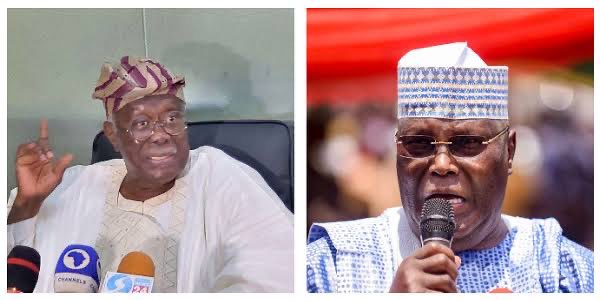
Former PDP Deputy National Chairman, Chief Olabode George, has appealed to former Vice President Atiku Abubakar, asking him to reconsider his 2027 presidential ambition in favour of younger Nigerian leaders. 

Speaking in an interview on Arise Television, Chief George expressed concerns about Atiku’s age, emphasising that, at 81 years old in 2027, he may be too old to effectively govern the nation.

He suggested that Atiku should adopt a mentoring role, acting as a guiding figure for the younger generation, rather than pursuing another presidential bid. 

“My brother Atiku Abubakar was 77 years old last year, and by 2027 he will be 81 years old. Atiku should give room for younger Nigerians, who still have the energy and the brain to develop the country,” George stated during the interview. 

He further stated the importance of consistent adherence to party norms, suggesting that the PDP should prioritize mentorship and continuity.

Chief George concluded by stating that the presidency must remain in the South in 2027, following the completion of the North’s eight years in power. 

The appeal from the PDP ex-leader brings attention to the ongoing discussions within the PDP about generational leadership and the party’s direction in the upcoming presidential elections.

Has Zaidu Sanusi been bad for the Super Eagles?

By Aliyu Yakubu Yusuf

Super Eagles’ Zaidu Sanusi isn’t a bad player. You can’t be a starting player for FC Porto if you are bad. His struggles stem from the position he’s asked to play in these knockout games.

Sanusi is a quintessential left back in a four-man defense, where his primary duty is to stay at the back and make sporadic forays into attack based on the circumstances of the game.

Since the game against Guinea-Bissau, the Super Eagles’ coach, Peseiro, has changed his defensive structure from a four-man to a three-man central defense (Ajayi, Ekong, Bassey) sandwiched by two wing backs in Ola Aina and Zaidu Sanusi.

This means that Sanusi is now expected to strike a balance between defense and attack. When Nigeria is out of possession, he will stay on his flank to provide extra cover for Calvin Bassey from the left. This is what Sanusi excels at.

But when we are in possession, he’s effectively our left-sided midfielder who must make runs behind the opposition defense to join attack. This is Sanusi’s biggest weakness. He’s a square peg in a round hole.

The problem is, when you remove Sanusi from the starting lineup, who are you going to play? One option is to bring Omeruo to the center of the defense and push Bassey to the left wing-back position. But this won’t solve Sanusi’s problem because Bassey isn’t that good going forward either.

Another alternative is to shift Aina to the left wing-back and bring Oseyi to the right wing-back. In my opinion, this is better than the first option. However, when you do that, you strip the team of one of its biggest assets: Aina’s tireless work rate from the right, which Oseyi can never replicate.

Whatever the case may be, the best solution is to stick with Sanusi. After all, tell me a coach who changes a tried and tested watertight defense in the middle of the knockout rounds of a major international tournament.

Aliyu wrote from Kano. He can be reached via aliyuyy@gmail.com.

Mr. President, should we count on you?

By Mahmud Dambazau

With a new year, we were anxiously anticipating a renewed hope. Unfortunately, no. In this devastating economic dilemma, we have been overwhelmed with cries to crowd-fund to secure the release of various victims from kidnappers. 

The latest trending across social media, most especially on X (formally Twitter), was the case of Najeebah and her sisters, who were kidnapped alongside their father. He was later released to go and get 60 million naira for the release of his six daughters! They subsequently killed one of the sisters when the amount was not realised at the expected time to serve as a warning and even increased the amount to 65 million naira initially and then to 100 million naira. 

The kidnappers had the audacity to return her dead body because they were confident that they would escape scot-free,and unfortunately, they were not disappointed. I was delighted to read the news of their release this morning after the ransom of 100 million naira was paid.

There is yet another case seeking public support where 14 children were kidnapped along the Abuja – Kaduna highway on 6th January. One miss Praise God; a student from the Nasarawa State University was also kidnapped a few days ago. Ajeni Mary Olamide and her two friends, Mary and Miriam, from the same university, all 400-level students of Mass Communication, were also kidnapped on their way to Abia state for a wedding, with 15 million nairas requested before their release. 

I just came across another appeal on X where a Navy Officer was also alleged to have been kidnapped with 100 million requested by his kidnappers to secure his release. These are just a few of the numerous in the public domain. Fresh in my memory are the female students from the Federal University Gusau, approaching four months now in captivity. 

The Abuja–Kaduna highway was, at a time, the most dangerous road with incessant incidences of kidnappings. Still, we were all witnesses to its near absolute contentment when the runway of Abuja airport was closed for repairs, and Kaduna airport was used instead. There was constant and consistent patrol, which drastically tackled the issue then. The scourge has now returned when the elites no longer needed that road. 

Within this week, there has been a significant improvement by the security operatives, with several arrests made after several cries across all mediums. Why do we always have to be reactive rather than proactive? In many instances, the capacities and capabilities of our security are top-notch, but only when pressures have been mounted are such improvements seen. Why is it so difficult to maintain progress made?

The president has been commended when he recently suspended some officials of his government who were accused of corruption so that their investigation will go unhindered. That was a good move, undoubtedly sending other officials a strong message. Why can’t that be applied to security heads when results are negative? If corruption has repercussions, doesn’t non-performance have more? Besides, even the perpetrators may not have committed such crimes if all officials had done their duties accordingly. 

Security of lives and properties is the most essential duty of government. Everything else comes second. The fight must be sustained, the perpetrators apprehended should be tried and punished accordingly, and the security operatives should be given the modern gadgets required to confront such criminals as soon as possible. There should be increased collaboration between security agencies, and capital punishment should be introduced for crimes such as this and those responsible; the teams, heads of the security responsible, and ministers should be fired and replaced with those who can because security is not to be joked with! Can we count on you, Mr. President?