Month: February 2024

Nigeria advances to AFCON Final after crushing South Africa

By Sabiu Abdullahi  

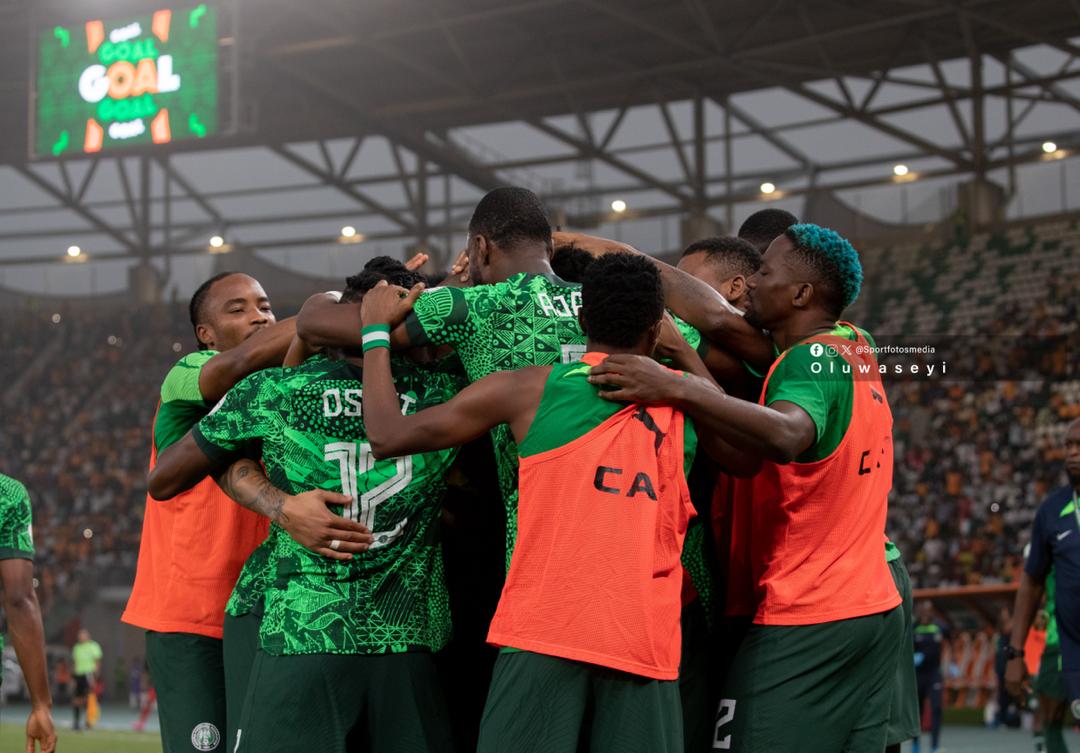
The Super Eagles of Nigeria soared to the Africa Cup of Nations (AFCON) final, edging out the resilient Bafana Bafana of South Africa in a tense penalty shootout.

The match, which culminated in a one-all draw through regular play and extra time, showcased the grit and determination of both sides. 

The encounter marked the Super Eagles’ record 15th appearance in the AFCON semi-finals, a testament to their enduring legacy in African football.

However, it was far from an easy feat, as the match pushed them to their limits. 

Nigeria’s journey to the final was fraught with challenges, including last-minute fitness concerns.

Star striker Victor Osimhen overcame abdominal discomfort to lead the line, while a late injury forced coach Jose Peseiro to shuffle his starting lineup, with Bright Osayi-Samuel stepping in for the injured Zaidu Sanusi. 

The tactical battle unfolded with Nigeria opting for a 3-4-3 formation, mirrored by Hugo Broos’ Bafana Bafana. However, the Eagles initially struggled to contain the pace and positional awareness of South Africa’s attacking duo, Percy Tau and Evidence Makgopa. 

Despite the early setbacks, Nigeria showcased resilience and determination, gradually asserting control as the match progressed.

The defensive trio of William Troost-Ekong, Semi Ajayi, and Calvin Bassey weathered the storm, thwarting numerous attempts from the South African side.

As the tension mounted, neither team could find the breakthrough, leading to a nail-biting penalty shootout. In a display of nerves of steel, the Super Eagles held their composure, clinching a thrilling 4-2 victory from the spot, much to the delight of their passionate supporters. 

With this hard-fought triumph, Nigeria secures a spot in the AFCON final, poised to vie for continental glory against a formidable opposition.

Alistiqama University Sumaila celebrates full 5-year accreditation of Medical Laboratory Science programme

By Amara F.  Sesay 

Alistiqama University Sumaila is proud to announce the full accreditation of its Medical Laboratory Science Program by the Medical Laboratory Science Council of Nigeria. This accreditation reflects the university’s commitment to maintaining the highest standards of excellence in education, research and clinical practice within the field of medical laboratory science.

The accreditation process, conducted by the Medical Laboratory Science Council of Nigeria, thoroughly examined the programme’s curriculum, staff qualifications, facilities, laboratories, and overall educational experience. Alistiqama University Sumaila met and exceeded the rigorous criteria set forth by the Medical Laboratory Science Council of Nigeria, showcasing its dedication to providing students with a comprehensive and top-tier education in medical laboratory science.

The Vice Chancellor of the University, Professor Salisu Shehu, expressed his excitement about this significant achievement. “We are thrilled to receive full accreditation for our Medical Laboratory Science Programme. The full accreditation programme of five (5) years is a testament to the hard work and dedication of our founder, Sen. Dr Sulaiman Abdurahman Kawu Sumaila, the Vice Chancellor, Prof. Salisu Shehu, lecturers of the Department of Medical Laboratory Sciences, other members of staff and students who have consistently demonstrated excellence in both academics and practical application.”

The accreditation not only validates the quality of education provided by Alistiqama University Sumaila but also enhances the programme’s credibility and ensures that graduates are well-prepared for successful careers in the rapidly evolving field of medical laboratory science. The university remains committed to staying at the forefront of advancements in healthcare and technology, providing students with a cutting-edge education that meets the demands of the industry.

This accreditation is a crucial milestone for Alistiqama University Sumaila and underscores its ongoing commitment to fostering excellence in healthcare education. As the university continues to invest in state-of-the-art facilities, innovative research, and world-class faculty, it remains dedicated to producing highly skilled and competent professionals who contribute to the improvement of healthcare services globally.

For more information about Alistiqama University and its accredited Medical Laboratory Science Programme, please visit  https://ausumaila.edu.ng/ or contact Mal. Hassan Abdulrahman at +2348036205039.

Alistiqama University Sumaila is a private university dedicated to providing high-quality education, nurturing integrity and morality while fostering research and innovation, and producing graduates who make a positive impact on society. With a commitment to excellence and a focus on preparing students for successful careers, the university is gradually becoming a force to reckon with in the provision of qualitative and morally sound higher education in Nigeria. 

Mr. Amara F.  Sesay is the Chief Information Officer of Alistiqama University Sumaila, Sumaila Township Road, Sumaila Local Government, Kano.

Embracing diversity in faith: Reflections from Madina

By Dr. Muhsin Ibrahim

Years ago, when visiting a prominent Hindu temple in Himachal Pradesh, India, an Indian coursemate became excited at the sight of a white man worshipping there. I asked why. She told me it was pretty reassuring to see someone you didn’t expect to share your belief practising it.

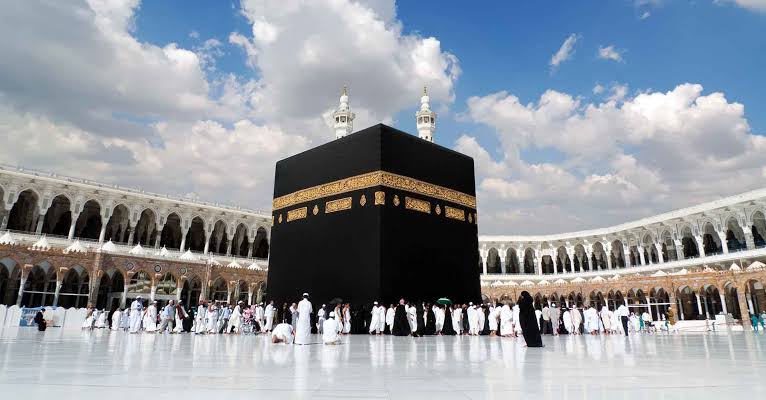
As I walk through sites in Madina, including the Prophet’s mosque, I see the faces of people from far and near, dressed differently and speaking various languages. People from all nooks and crannies of the world visit this holy city. I couldn’t help but recall and, somehow, share my friend’s feelings.

Without a doubt, Islam and Christianity, unlike and above many other religions, have universal appeal. I have also been to several parts of the world. However, seeing a sea of people of different skin colours, heights, and sizes worshipping in unison is stunning and soothing.

There is inflation globally, and poverty is also on the increase. Still, people troop to Mecca and Madina to perform Umrah, the lesser Hajj, as if it were free. For many Muslims, especially those who have never come here before, nothing is expensive.

Although the feeling is indescribable, I can mention just one: visualizing what you have (very likely) heard about all your life about Prophet Muhammad (SAW) and his companions feels distinct and unique. It’s so serene and serendipitous – ma sha Allah.

May Allah accept our prayers and rescue our country, continent, and all that is beyond.

Dr. Muhsin Ibrahim, who is a Nigerian working in Germany, is currently on lesser hajj in Saudi Arabia.

KSCB: Stop the release of Naburaska’s Igiyar Zato

By Ibrahim Uba Yusuf, PhD

Trends in the Hausa Film Industry often divide the industry sharply across socio-political lines. Interactions and production have also not been exclusive to the political dynamics of Northern Nigeria or Kano in particular. However, the recent development requires caution to avoid a relapse into conflict and violence.

On January 28th, 2024, I saw a short video clip of a popular actor-cum-politician, Mustapha Badamasi Naburaska. In the video of about two minutes, the actor announced his intention to release a film that would depict the aftermath of the 2023 Kano State Governorship Petition from the Tribunal to the Supreme Court. In the video, the actor further announced his intention to portray an ‘old man and a musician’ in a negative light.

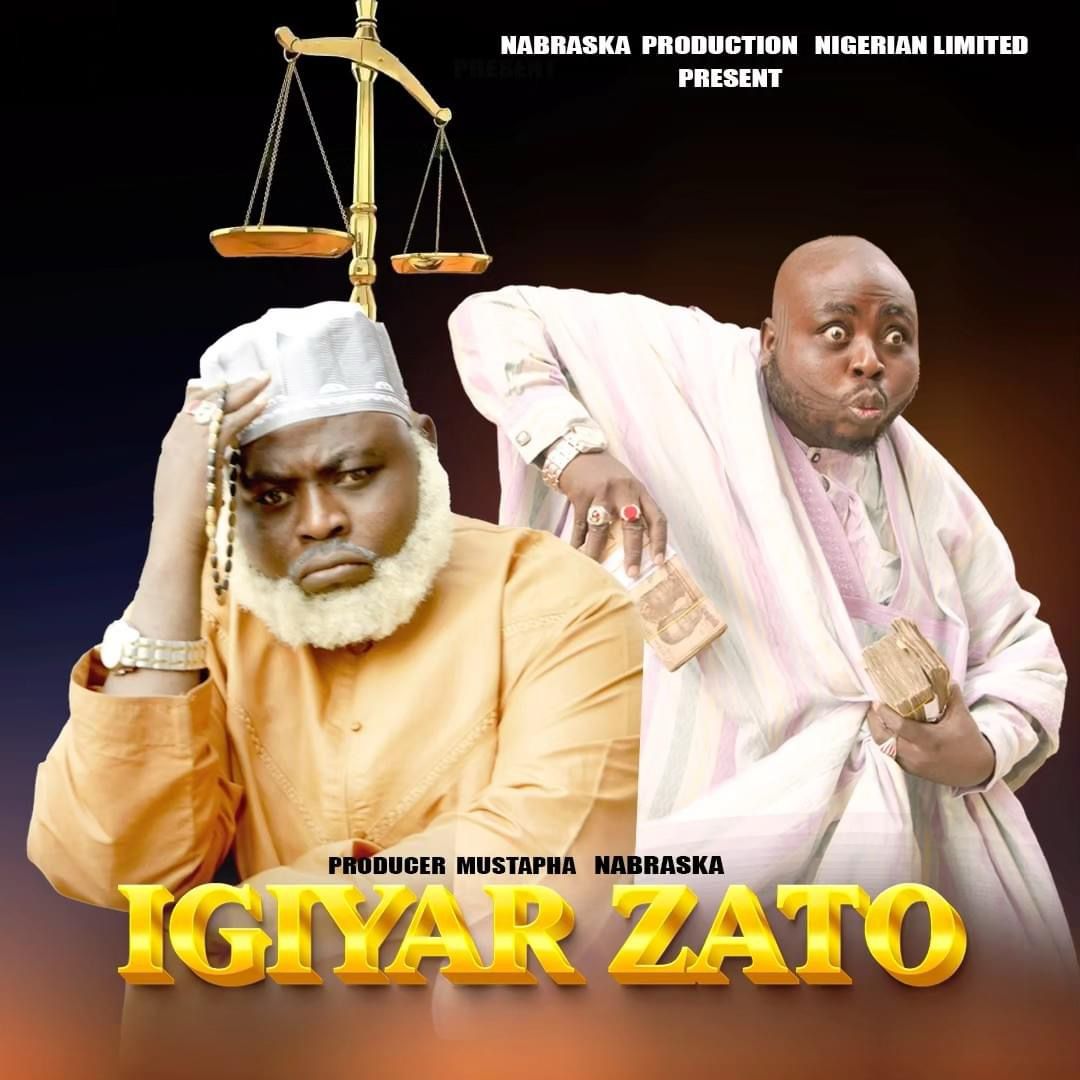
To complement his pledge, the actor released a poster of the intended film called Igiyar Zato on his Facebook page and other social media platforms. The poster contains the name of the producer and the photograph of the lead fictional character adorned with artificial grey beards just to reinforce the political figure he intends to mock. Mocking a politician is not my problem. It is purely a political affair.

I am not a card-carrying member of any political party but rather a researcher and public affairs analyst interested in teaching and conducting research relating to the Hausa Home Video Industry. In fact, my PhD thesis focused on ‘Hausa Home Videos and Peacebuilding in Northern Parts of Nigeria’. These, I believe, provided me with an opportunity to understand some nitty-gritty and make informed remarks about trends in the industry. It is useful to point out that this write-up is not intended to support or discredit any political group. The essence is to draw the attention of regulatory bodies to a danger that needs their urgent attention.

Firstly, my concern is the use of grey beards in the name of mocking an individual. While the announcement and content of the film may sound pleasing to some of his comrades and supporters, it will hoist a red flag if such content could pass the rigorous screening at the Kano State Censorship Board.

The Beard Issue

The beard issue has been a subject of ridicule during the build-up to the 2023 Guber Election in Kano State. A section of the campaigners used the beard impression to ridicule a particular contestant during their public campaigns. After the pronouncement by the apex court affirming the victory of Engineer Abba Kabir Yusuf as the duly elected governor, members of his political party have been engaged in making skit performances in communities using the beard as a subject of emphasis. The skits were done in the name of celebration, to mimic the governorship candidate of the APC.

Igiyar Zato

Although the trailer of the film has not been released, if – at all – it is going to be produced and distributed, viewers and followers of Kano politics can easily predict scenes and the likely narrative it contains. From the different posters, viewers can deduce the direction, rationale and target group of the producer, Mustapha Nabraska. Of concern is the picture of Nabraska with a fictional grey beard. This depiction is a caricature of a recommended tradition of Prophet Muhammad (SAW). Muslims may find this satire offensive, an act of irresponsibility and tantamount to rupturing the peace beingenjoyed in Kano State. Making jest at the Prophetic tradition, consciously or unconsciously, is forbidden. Sufficient is verse 65 of Suratul Tauba. While other scenes of the film might be valuable sources of analysis in the field of political communication, indeed, this depiction can likely provoke and create preventable chaos.

What does the Kano State Censorship Board Law say?

The law establishing the Kano State Censorship Board (KSCB) as a statutory regulatory body is not silent on what should be portrayed in films and home videos. The intended production contravenes the religious beliefs of the people of Kano. The film glaringly incorporates a form of amusement and deliberately alters the creation of Almighty Allah to mock an individual, which is not approved in Islam. In fact, these are yardsticks that some religious scholars used to engender their position on the illegality of popular culture.

The law, as it is, frowns at depictions in films that are not in tandem with the culture and tradition of the Kano people. Even though the law mandates all producers to submit their films to the Board for censoring after the completion of production, there is a need to amend that clause and mandate producers to share their ideas at the level of conceptualisation with the Board to be appropriately guided. It is left for the Board to decide what to do with the film if the producer decides to submit a copy before release.

Abba Al-Mustapha should Act!!!

In the interest of peace, the KSCB, under the leadership of Abba Al-Mustapha, should discontinue the promotion and production of the film at all costs. This is given the potential damages it could cause to the volatile situation in Kano. The Muslim community in Kano and beyond are saddened by this irrational depiction and public display, which directly affects a cherished symbol of the Prophet of Islam Muhammad (SAW). In the same way, you thwarted the distribution and sales of Queen Primer in Kano. Please act fast now.

The KSCB remains the beacon of hope in preserving the culture and religion of the people of Kano, and we hope that it will continue to do so without fear or favour. The Board should avoid politicisation and preferential treatment of members loyal to the government and deliberately make Kano a difficult terrain for actors and musicians who align with the opposition.

I urge the Board to assess the film on the scale of cultural and religious values and their attendant consequences to Kano State’s peace. Already, people are aggrieved and have been registering their displeasure, specifically on the fictional beard, as a subject of ridicule in the post’s comment section on Facebook and other social media platforms. Some comments are inflammatory and may likely throw the State into chaos.

This is the time of political healing and concentration on fulfilling the myriad of campaign promises. Any distraction is uncalled for. As such, there is a need for the Board to provide policy direction to actors and musicians who have become stakeholders in political campaigns on how to produce content devoid of promoting hatred, public ridicule and rupture.

Ibrahim Uba Yusuf, PhD, lectures at the Department of Mass Communication, University of Maiduguri, and is the Director of Communications, Advocacy, and Outreach at the Centre for Media, Policy, and Accountability (CMPA). He can be reached at ibrahim.mcm@unimaid.edu.ng.

Ali Nuhu advocates for quality in Nigerian filmmaking to restore country’s integrity

By Sabiu Abdullahi 

Ali Nuhu, director of the Nigerian Film Corporation, has stressed the importance of prioritising quality in Nigerian filmmaking, citing its potential to elevate the country’s reputation on the global stage. 

In an exclusive interview with BBC Hausa, Nuhu showed the need for a significant improvement in the quality of Nigerian films, revealing that only a fraction, approximately 30–35%, currently meet the desired standard.

He stated that the target should be much higher, aiming for at least 70–75% of films to attain the desired quality level. 

Addressing this concern, Nuhu pledged to spearhead efforts to enhance education within the industry and provide filmmakers with access to quality equipment.

He remarked, “We have an ambition of transforming Nigeria’s film industry into one of the best in the world because we don’t need quantity; what we need most is quality over quantity.” 

Acknowledging the negative perceptions of Nigeria perpetuated by some individuals, Nuhu expressed confidence in the transformative power of films to counteract such portrayals and restore the country’s integrity.

“Through these films, we will restore our integrity,” he affirmed, highlighting the positive impact of quality filmmaking on national image-building efforts. 

In a message of unity to both Kannywood and Nollywood, the two major film industries in Nigeria, Nuhu stated the importance of collective support in achieving shared objectives.

“I am a member of both; what I need most is support from all sides to achieve all our desired goals,” he concluded. 

As Ali Nuhu advocates for a paradigm shift towards quality-driven filmmaking, his vision resonates with industry stakeholders, paving the way for a renewed focus on excellence and innovation in Nigerian cinema.

Customs boss presents 2024 budget

By Sabiu Abdullahi 

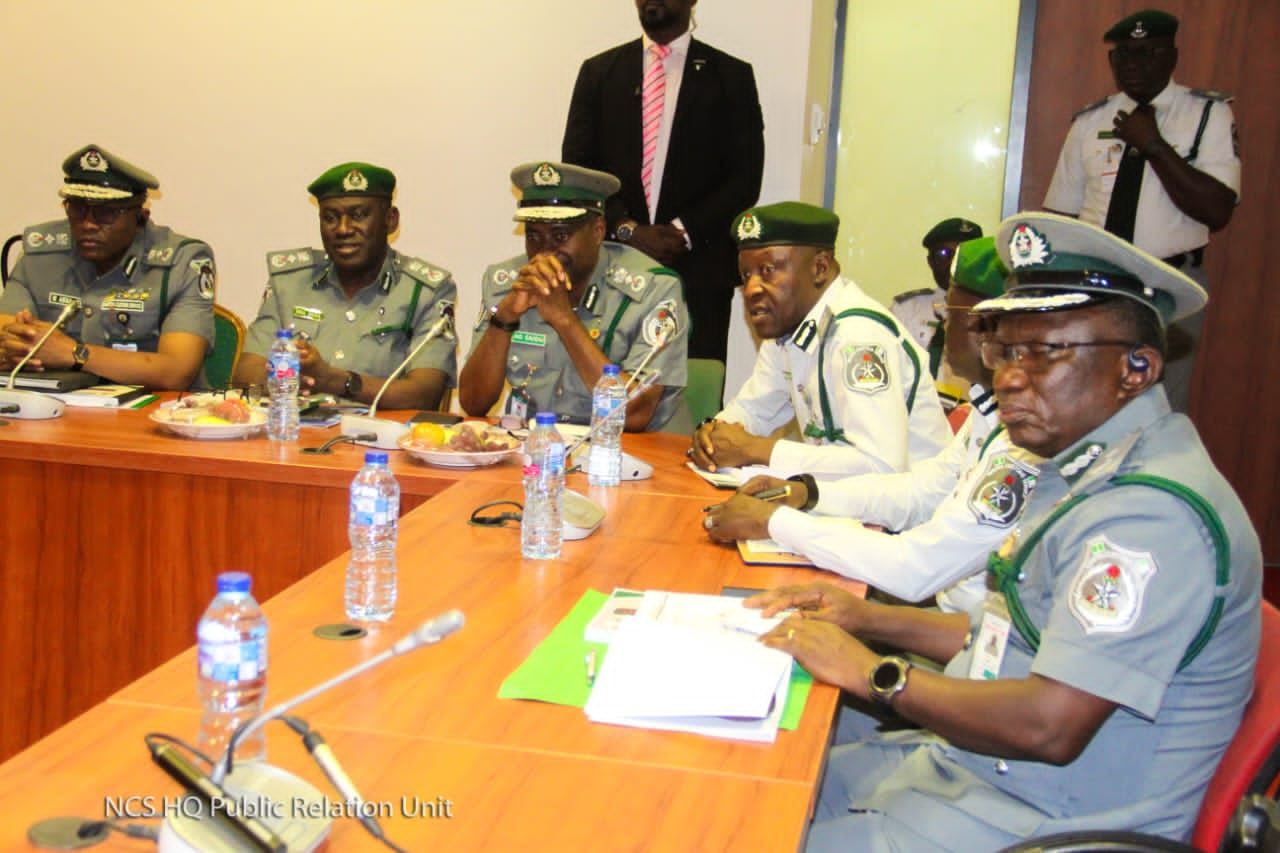
The Comptroller-General of the Customs, CGC Bashir Adewale Adeniyi MFR, presented the service’s 2024 budget on February 5, 2024, to the Nigeria Senate Committee on Customs at the National Assembly. 

The CG, while defending the 2024 budget of 706.43 billion naira, focused attention on consolidating carried-over projects, increasing staff welfare by improving and motivating officers’ performance, and integrating technologies into Customs processes. 

Regarding Officers’ welfare, CG Adeniyi mentioned that Officers will be encouraged in various ways to increase efficiency and improve their well-being.

He stated that this would be done through awards, promotions, and payment of allowances. 

Additionally, the Comptroller General pledges to surpass the revenue target of 5.079 trillion naira in 2024. According to him, the revenue target for 2024 is 27.75 percent higher than the target of 2023. 

Furthermore, the Comptroller-General outlined strategies to achieve the 2024 target, including implementing the National Single Window championed by the Federal Ministry of Finance.

He also harps on strategies to agonize and standardize Customs processes, port decongestion, collaboration with other agencies for efficiency and competitiveness, anti-smuggling operations, integrating ICT into operations, investing in capacity building, and stakeholder engagement, among others. 

The CG also noted supporting local production and taking food security seriously.

He stated, “We intend to grant waivers to vehicle owners to pay duties within a specific time to avoid sanctions and to regularize the importation of vehicles through payment of duties.” 

He added, “The service plans to recruit 1,600 personnel in 2024. The low figure is due to the small vacancies we have available. These vacancies are primarily for junior staff who will carry out Customs operations and guard duties. In subsequent years, more recruitment exercises will be carried out.” 

CG Bashir, however, noted that the service had a shortfall of 12.62 percent in its 2023 revenue target, citing concessions in Section 99 of the Common External Tariff (CET), import duty exemption certificates, cash crunch, general elections, and other factors affecting revenue generation negatively.

He assured a positive outcome in 2024.

The Antifragile: Dr Yusuf Kofarmata

By MA Iliasu

Anytime I’m reading Nassim Nicolas Taleb’s book, Antifragile, one of the books in the celebrated Incerto series, nobody comes to mind more than Dr. Yusuf Ƙofar Mata. Maybe there are better descriptions, but the dynamism of Dr. Ƙofar Mata fits the boxes of intelligent antifragility. If you bear with me, I may tell you why.

Taleb was once asked: “Would you rather be an intelligent fragile or a dumb antifragile?”, to which question he answered: “I’d rather be a dumb antifragile”. That encounter was what rattled my interest in the Incerto series. And I figured, why choose between the two when you can do better, by becoming an intelligent antifragile.

An intelligent fragile, according to Taleb, is an individual with all the mental and cognitive sharpness in the world, who sadly gets shaken by the slightest disruption of adversity. For example, a chess champion that church drums could cause to lose his mind, a professor of software engineering whom Twitter trolls can make cry, or an investment guru who gets chased away by the business cycle. An intelligent fragile is a smart who can’t withstand any kind of physical or mental pressure, big or small, who therefore finds it challenging to survive outside of his ideal environment. He gets bullied physically, mentally and emotionally. He’s a prey. During a hunt, he gets hunted. He won’t survive the survival of the fittest. To Taleb, that’s how many talented individuals become underachievers.

A dumb antifragile meanwhile, is a mentally slow individual who doesn’t get moved by adversity. He doesn’t understand puzzles, he can’t solve maths, he can’t make analogies, he can’t put things into context, and a lot of the bare minimum escape his attention; the kind of people that can vote a political party because of its colours or symbols. However, that person is well-drilled in the unfriendliness of human society. He’s physically robust, mentally firm, and emotionally stone-cold. Trolls shy away from him because they can’t affect his condition in any way. If it comes to it, he will bully rather than get bullied, and he’s a predator rather than a prey. During a hunt, he’s the hunter, not the hunted; in the language of Breaking Bad, he’s not in danger, he’s the danger. The floor of such a person in any environment is good for survival. He’ll survive an intelligent setting because he’s strong for labour and ripe for any mechanical task. And he’d excel in non-intelligent settings because he has what most intelligent people lack; thriving in adversity. Taleb believes that’s how a lot of slow individuals come to acquire generational wealth!

Amidst these boring explanations, Dr. Ƙofar Mata falls into the category of Intelligent Fragile. This is a soon-to-be professor of economics who is among the rarest that can humanize economic theory and contextualize it to the level even a street beggar would understand. His mathematical profundity dribbles through models like prime Lionel Messi on a touchline. His statistical acumen collects data with intuition, processes it like a child’s play and interprets it in the same way he eats dinner; with so much ease. I haven’t met five people with a sharper mind. Strategy exists in his random whims. It’s like he was born to solve problems.

The antifragility of Dr. Yusuf Ƙofar Mata is even more amazing. Kano State is tested with the peculiarity of youth who may need more guidance than normal. And so untypical of an active member of the intelligentsia, Dr. Ƙofar Mata was a commander of a local vigilante. Thugs ran away when they saw him because they knew with persuasion or force that day was their last outside the watch of the law. He exudes security, safety and assurance. His aura gives no space for the infiltration of stupidity and idiocy. His charisma is robust. His temperament is firm, just like the tune of his voice and the quality of his oratory. He’s persuasive where it’s due, and blunt if that’s what will solve the problem. No individual with a sound mind or functioning eyes will mess with that!

Those separable combinations of gifts are hardly found together. And in my opinion, that’s what makes Dr. Ƙofar Mata one of the most important people in modern Kano society. He carries effortlessly the wisdom of the past, the energy of the present, and the vision of the future, and deductively or inductively analyses and draws inferences from the same scope and with a single swing of the mind. He’s a politician, a statesman, an administrator, a strategist, a problem solver, a teacher, an economist, a mathematician, a statistician, a comrade and a philosopher. He likes intelligent people like himself, but doers even more. And he tries to push everyone he encounters to become the best version of themselves, and as competent and useful as possible. He despises useless people and cherishes those who are immersed in their pursuit of useful achievements.

During one of our discussions, the work of the ministry he’s presiding over as a commissioner was mentioned. And it reminded me of our earlier discussions before he was appointed when someone wondered which ministry would best fit his abilities. And I said, assign Dr. Ƙofar Mata as a commissioner of common sense and Kano society will never lack critical thinking again. I don’t think there’s any endeavour which Dr. Ƙofar Mata can’t improve, an activity he can’t manage or an individual he can’t interact with. He has a decentralized view of solutions found usually in classical Austrians, with stubbornness of the Germans and the esteem of Victorian Britons.

The peerless achievements of the Kano State Ministry of Higher Education so far are both a reflection of Gov. Abba Kabir Yusuf’s commitment towards higher education and the breathtaking genius of the revolutionary mind he trusted the ministry with. It will go down as one of the best decisions Kano State has made in the 21st century, and I’m not exaggerating. As his student, mentee and keen observer of his philosophy, it’s critical that I let you know. May Allâh guide him. Amin.

M.A Iliasu is a budding writer from Kano, an economist and currently a corp-member serving in Taraba State.

Customs speak on loss of teenager in Katsina, condole with bereaved family 

By Sabiu Abdullahi 

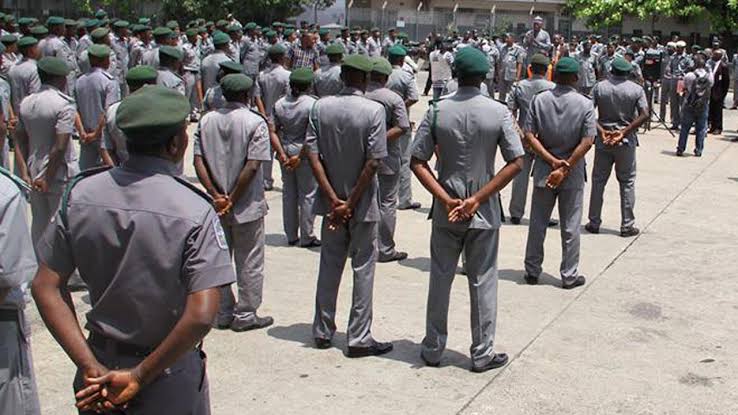
The Nigeria Customs Service issued a press statement today in response to the tragic loss of a young man in the Jibia Border Area of Katsina State on Saturday, February 3, 2024, to provide clarity on the incident and express deep sympathy to the family of the deceased teenager. 

The Chief Superintendent of Customs and National Public Relations Officer, Abdullahi Maiwada, stated, “Our attention has been drawn to the devastating loss of a young life… We extend our heartfelt condolences to the family and loved ones of the innocent teenager whose life was tragically cut short.” 

Addressing media reports, Maiwada clarified, “It is pertinent to address the misinformation circulating in the media regarding the reported killing of the teenager by a reckless driver of a J5 vehicle.”

He stated that Customs operatives were not involved, saying, “Our operatives neither drove the J5 vehicle nor intercepted it during the reported incident, contrary to some press allegations of the involvement of our Officers.” 

Maiwada shared preliminary findings, noting, “Preliminary reports suggest that the J5 vehicle was transporting soya beans, and the driver is currently in Police custody pending further investigation.” 

The press statement conveyed the sentiments of the Comptroller General of Customs (CGC), Bashir Adewale Adeniyi MFR, stating, “The CGC, alongside the officers and men of the service, expresses profound sympathy with the bereaved.” 

Reiterating the commitment to community relations, the CGC said, “He also urges members of the public to adhere to Government directives and cooperate with law enforcement agencies to maintain peace and security in our communities.”

The customs spokesperson appealed for calmness, further expressing gratitude for ongoing cooperation from border communities and stated the importance of working together to address challenges and promote safety and prosperity for all.

BBC staff member fired over anti-Semitic comments

By Sabiu Abdullahi

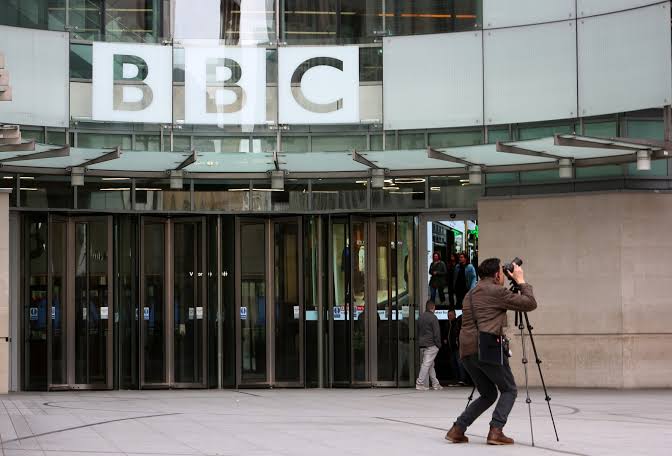
Dawn Queva, a BBC senior staff member, was fired on Friday for posting disturbing anti-Semitic content on Facebook.

The 55-year-old playout planner faced swift termination after referring to the Holocaust as a ‘holohoax’ and using derogatory terms against Jewish people.

The BBC’s decisive action has triggered a debate on hate speech within the organisation, with calls for firm leadership responses from figures like broadcaster Andrew Neil.

The Campaign Against Antisemitism condemned the posts as “utterly horrific” and called on the BBC to confront anti-Semitism.

Queva’s termination has raised concerns about intolerance within media organisations.

Who are the North’s next political leaders?

By Zayyad I. Muhammad

In northern Nigeria, discussions on leadership succession and selection processes usually arise prominently only when the region is not in power at the center. Attention to these issues appears to be less pronounced when the North holds central power.

In four to eight years, the dynamics of politics in Northern Nigeria will witness a major shift because the current ‘Class 1’ political leaders will retire due to old age. For instance, in eight years, the former President Muhammadu Buhari will be 90, the former Vice President, Alhaji Atiku Abubakar will be 86, the former President, Ibrahim Babangida, will be 91, Mamman Daura will be 93, Murtala Nyako will be 90, former Head of State Abdulsalam Abubakar will be 90, former Head of State Yakubu Gowon will be 98, and General Aliyu Gusau will be 89. Also, General TY Danjuma will be 94, Sani Zangon Daura will be 94, Ango Abdullahi will be 84, Abdullahi Umar Ganduje will be 83, etc. Their age will eventually phase them out of active politics.

For ‘Class 2’ political leaders, some will also grapple with old age, and their faces are too familiar to the public. In 8 years, Nasir El-Rufai will be 72, Ali Modu Sharif will be 76, Rabiu Musa Kwankwaso will be 76, Ahmed Lawan will be 73, Aliyu Wamako will be 79, and Nuhu Ribadu will be 72. Bala Mohammed will be 74, Governor Inuwa Yahaya will be 71, George Akume will be 79, and Governor Abdullahi Sule will be 73, while the current Vice President, Kashim Shettima will clock 66, which is fairly good for him. However, globally, in recent times, people in their 80s have clinched the presidency of their countries, indicating that age is gradually becoming inconsequential in political contests.

However, the individuals poised to play a prominent and vital role, naturally succeeding the ‘Class 1’ political leaders, include some state governors completing their second terms in the 4 years and other political figures who are relatively young and have excelled in their positions. Notable among them are Governors Babagana Zulum (63), Ahmadu Umaru Fintiri (64), who is performing wonders in Adamawa despite its meager resources, Simon Lalong (69), Yahaya Bello (57), Mai Mala Buni (65), Senator Aminu Tambuwal (58), Speaker Tajuddeen Abbas (60) and many more in both the public and private sectors. While the dynamics remain uncertain over the next 4–8 years, it promises to be an intriguing new chapter in the political leadership of Northern Nigeria.

Furthermore, the next leadership of the North may emerge in contrast to our existing selection process, a process that was always haphazard and mostly shrouded by the vestiges of personal interests. It has often been devoid of the sub-national’s or country’s interests. This time around, someone’s performance in public office may play a vital role in his or her emergence as the leader of the North. The Northern masses are now more concerned about development-oriented personalities than just political names. Performance is key.

And the dynamics of the Nigerian political landscape are changing overtime as well. The country needs a well-planned leadership succession arrangement. This is even more crucial because the nation is a developing country. A structured political succession plan will free the current age-old leadership from the burden of ‘carrying the camel and its loads’.

Though our succession planning, especially in the North, has been happening within the spheres of political leadership in Nigeria, it was based on some old systems and outdated processes, so to speak, for example, when former President Olusegun Obasanjo was tackled on his choice of former President Umaru Musa Yar’Adua while being fully aware of the latter’s health condition, Obasanjo said his decision was based on the information available to him and Yar’Adua’s honesty. This has brought to the fore the need for the North and the Nigerian political leadership at large to cultivate the culture of having succession advisors and employ the science of succession. It will help them make sound decisions for the transition of leadership between the current generation of leaders and potential younger successors while still maintaining some sort of political relevance and influence.

Unfortunately, the current political leadership has a poor mentorship system, especially in terms of teaching the art of politics and participation in national politics. The most hit are often their offspring and lieutenants; they are mostly engaged in power play and wealth accumulation, forgetting the importance of leadership and governance . Thus,  when they find themselves in power, they become confused with power.

Let us also not forget that picking a successor in Nigeria is a painstaking job because of the complex nature of Nigeria’s politics. Our fault lines, apparent influence of geography, tongue and faith in our polity are some of the factors responsible for this. For instance, the political geography of the North has a large number of these political leaders, and the region has some of the oldest people in the national and state assemblies, including commissioners and council chairs.

The north’s “Class 1” political leadership must establish a well-organized yet practical succession plan – a crucial step for them, their politics and the region. Notably, some governors who will conclude their final terms in 2027, having excelled in their roles, should naturally be the future political leaders in the North and at the center.

Zayyad I. Muhammad writes from Abuja, 08036070980, zaymohd@yahoo.com