Month: January 2024

Miyetti Allah vigilante group as a potential disaster

By Professor Abdussamad Jibia 

Those of us from Jibia LGA of Katsina state have been mourning for the past ten days. Last week, bandits launched an attack on the Kukar Babangida community of Jibia LGA. The infamous guests had visited Kukar Babangida many times, but this is probably the worst. They killed the ward head, Alhaji Haruna, along with nine others. 

Kukar Babangida is located about 15 kilometres from Jibia on the Jibia-Katsina highway. It was called Kukar Zaure until sometime during the administration of General Babangida when he launched the annual tree-planting campaign at the village. On that occasion, the then Emir of Katsina, Alhaji Muhammad Kabir Usman, renamed it Kukar Babangida. Of course, for a local community to be validly renamed, it must have the blessing of the emirate. In its case, Kukar Zaure was renamed by the Emir himself. The annual tree planting campaign was a very good practice of military regimes that politicians have abandoned for no apparent good reasons.

Magaji Zaure, which is his traditional title, refused to relocate to either Katsina or Jibia as many of his colleagues have done. He has always stated that abandoning his people and running away would be a breach of trust. This time around, he paid the supreme price. If you have been following my writeups for the past eight years, you would understand the kind of frustrations our communities have been subjected to with respect to insecurity. Lives have been lost, women and girls disgraced, people kidnapped for ransom, farmers displaced from their farmlands and communities occupied.

This introduction would only tell you how badly in need people like me are for a solution to the problem of insecurity. That is why my curiosity was piqued when I came across a video clip yesterday.

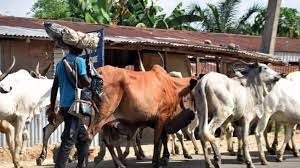
The clip, which is obviously a news item from a Hausa service of one of those big foreign radio stations, is about the launching of a vigilante group by the Miyetti Allah Kautal Hore Association. The activity, which took place in Nasarawa state, featured a parade by the new recruits in their uniform, a fashion parade by Fulani youth and an interview with the President of the Miyetti Allah group, one Alhaji Bello Abdullahi Bodijo. Very senior police officers also graced the occasion.

According to Alhaji Bodijo, the aim of establishing the group is to assist regular security forces to “peacefully” arrest criminals without killing the innocent. Asked whether or not they have obtained Government approval to establish the group, he only expressed hope that the Federal Government and its security forces would give them the necessary recognition. “We shall also help Nigerian Governors to tackle the problem of insecurity”. 

In Nasarawa state alone, Alhaji Bodijo stated they will recruit 4,000 members. First, they have already screened 2140 selected from different (Fulani) families. He promised to end the security problem in Nasarawa state in six months. While stating they have their traditional sticks, Alhaji Bodijo pledged to seek Government approval to obtain weapons allowed by law.

First, let me commend the Miyetti Allah group for their concern about the insecurity problem bedevilling Nigeria and, for the first time, admitting the contribution of their kinsmen to the problem. That most of the bandits operating in the North West and North Central states are Fulani is not debatable. This became well known during the time of Buhari when he directed Governors in the North West geopolitical zone to dialogue with bandits. All the bandits’ leaders that met with Governor Masari were Fulani, and they are well known, with some of them still moving unscathed even when the Federal Government is spending billions of Naira of taxpayers’ money on insecurity.

With the resolve and non-cowardly nature of Fulani, I do not doubt that if the all-Fulani group decide to face their criminal kinsmen, banditry will come to an end in a very short time. But are they ready to do it?

Miyetti Allah Kautel Hore group has itself been criticised for aiding and abetting criminality on several occasions. Perhaps the best known for this accusation is the immediate past Governor of Benue state. We can also recall that at a point in time, a Zamfara state commissioner of Police issued a warning to the Miyetti Allah group to bring an end to banditry in the state or face the wrath of the law.

The tone of Alhaji Bodijo does not suggest that the Miyetti Allah group is ready to face the criminal elements among their kinsmen, fire for fire. In fact, he mentioned the name of a hardened criminal in the North West and stated that they are ready to partner with people like him to end insecurity. But Alhaji Bodijo has a reply for me if he wants it. What is news about partnering with bandits if the Government, with its security forces and an obligation to protect lives and property, has dialogued with them several times? 

But come. Why Nasarawa state? Does the Governor have any interest in the new Miyetti Allah project? Politicians can be unpredictable. Many of them have been accused of using ethnic militia for their political agenda. Governor Abdullahi Sule should come clean on this.

Or does the Nasarawa project have anything to do with the “innocent” herdsmen killed by the military sometime in 2022? We are aware that the Horijo, Mallam Sanusi Lamido Sanusi, visited both President Buhari and President Tinubu to seek compensation for his tribesmen even though he has never done so with respect to the many innocent people killed by criminals suspected to be of Fulani descent. How are we sure that this project is not about revenge?

Assuming revenge is not the first idea. If an incident like the one in question happens again, can we rule out a confrontation between an armed Miyetti Allah vigilante group and the Nigerian Air Force? If the group has branches in all states of the Federation or at least the Northern states, would that not be a major disaster?

By the way, this is Nigeria, a multiethnic and multireligious nation. Any security outfit to be recognised by the Government at the state or Federal level must not be ethnically biased. While Fulani herdsmen (Fulanin daji as they are called) have a very good knowledge of the forest because of the nature of their occupation, the collaborators of forest-based bandits are usually hidden in the cities. The victims of banditry are mostly people in the villages, and they can tell the different ways in which bandits attack.  All these mean that an unbiased vigilante group must be composed of different categories of people, not just people with knowledge of the forest.

My advice for MACBAN is to modify their approach. Reach out to other interest groups and form an all-inclusive vigilante group. Government should do the screening with inputs from Miyetti Allah Kautel Hore and other law-abiding groups. 

Recognising the new group without modification is a potential disaster for Nigeria.

Professor Abdussamad Umar Jibia wrote from Kano. He can be reached via aujibia@gmail.com.
Life Career: The dilemma of making the right choice 

By Lawan Bukar Maigana

Unlike many other secondary school graduates who made their course choices based on advice received at a cafe during their JAMB/UTME registration, my decision-making process was different. I had clear aspirations when I graduated from secondary school, and nobody influenced my choices. I had always had a strong desire to pursue a career as a psychologist working in a psychiatric setting or as an outstanding journalist.

Unfortunately, the University of Maiduguri did not offer a psychology department, and financial constraints added to the challenges. Consequently, I chose Sociology and Anthropology as my first choice and Mass Communication as my second during my application years ago. However, I didn’t meet the cut-off mark for admission into Unimaid, and this setback led me to pursue Social Work at Ramat Polytechnic Maiduguri, where I completed my studies and graduated.

I found my time at the Polytechnic remarkably enjoyable because my lecturers and colleagues treated me exceptionally well, acknowledging my dedication to academic excellence by generously supporting me financially. My commitment to attending lectures, meeting assignment deadlines, delivering presentations, and thoroughly exploring course materials earned me this recognition.

However, a year later, I deliberately chose to apply for Mass Communication at Unimaid instead of opting for Sociology and Anthropology, despite numerous suggestions to pursue the latter—a field closely related to Social Work. I respectfully declined these recommendations because I sought a more demanding course to equip me with the necessary skills to achieve my desired career path. This decision was endorsed and validated by one of my senior colleagues who had recently completed his Ph.D. program.

Dr. Ibrahim Uba Yusuf, a lecturer at the Department of Mass Communication, University of Maiduguri, catalysed my decision to pursue Mass Communication. His words, “You have the qualities to excel in gaining admission and thriving in Mass Communication. Your aggressive commitment to excellence, despite facing challenges, speaks volumes about your potential.” 

His encouragement didn’t stop there; he cautioned me, “However, be aware that studying Mass Communication requires substantial financial investment. There will be numerous assignments that may strain your finances, potentially burdening both you and your father.” His guidance was pivotal in my choice to apply for Mass Communication through Direct Entry (DE).

Dr. Muhsin Ibrahim, a lecturer at the University of Cologne in Germany, recounted an incident where a young girl chose to pursue microbiology in her UTME without much understanding of the field. She revealed that she was advised at an internet café while registering for the university entrance exam, leading her to select a course she had little knowledge about—an astonishing decision made on a whim.

In reflecting on this, Dr Ibrahim unveiled a broader issue: the lack of proper counselling for many young people, particularly girls, when making important educational and career decisions. While some are enthusiastic about pursuing education, others may prioritise marriage. However, those with academic aspirations often lack guidance and support, sometimes falling prey to ill-informed advice. This can lead to unfortunate outcomes.

He emphasised the urgent need for parents, relatives, and especially older siblings, to actively engage with and support younger family members in understanding their aspirations and navigating life’s challenges. Dr. Ibrahim pointed out the common failure among brothers to have meaningful conversations with their sisters about their dreams and difficulties.

He concluded by urging immediate action, stressing that it’s never too late to start engaging with and guiding our children and younger siblings regarding their career choices after completing secondary school.

Lawan Bukar Miagana writes from Borno and can be reached via email: lawanbukarmaigana@gmail.com.

Islam and the conservation of natural resources

By Abubakar Idris Misau

“…Muslims need to look no further than the Quran for guidance, where there are approximately 200 verses concerning the environment.”  — Ibrahim Ozdemir

Asked about what Islam has to say about the conservation of natural resources, here is my take: Like the secondary school students who would want to start arguing their points by defining the key terms of their topics, this writer defines Islam, conservation, and natural resources before connecting the dots. However, the terms are concisely defined, requiring only the essential information for even those unfamiliar with the terms to understand their existence. By defining the terms, the writer intended to allow as many classes of readers to take a message home from the article as possible. 

Meanwhile, unlike in the case of secondary school students, the intent of this article is not to score points but to reiterate, for it has often been neglected that Islam is the most compatible religion to science and remains the mother of many scientific disciplines. The religion explains and advocates for the conservation of natural resources – to say mildly. 

Islam, not because it was founded some 145 decades ago, but because it is often defined as such, is the Abrahamic monotheistic religion centred on the Qur’an and the teachings of the Prophet Muhammad Sallallahu Alaihi Wasallam. It has five pillars and six articles of faith. With the followers of this faith, called Muslims, numbering close to 2 billion worldwide, Islam is not only universally seen as the second-largest but also the fastest-growing religion in the world.

Collectively referred to as Ummah, Muslims believe that their religion, a Deen or comprehensive way of life, is the complete and universal version of a primordial faith revealed many times through earlier prophets such as Adam, Nuhu (Noah), Ibrahim (Abraham), Musa (Moses), and Isa (Jesus) may peace and blessings be upon them all. Perhaps in the most concise edition, this can be said to be the meaning of Islam.

Conservation, however, carries different meanings depending on the time and situation in which it is used. For example, the meaning it conveys in the sciences as physics is not the same as that which it takes in arts. Meanwhile, in this essay, the meaning relating to natural resources is strictly considered. It is thus the triangle of protection, management and wise use of the resources in question for the benefit of current and coming generations. The natural resources meant to be conserved are the tangible and intangible materials drawn from nature – which are utilised with little to no alteration. Examples of such resources include vegetation, wildlife, land, water, sunlight and so on.

Given the above definitions, this article suggests that Islam as a religion and a way of life speaks about natural resources and even strongly preaches that they must be protected, managed and wisely used.

While there is no one place in the Qur’an where it is said, “Oh you who believe do well to conserve your forests…” and or that failure to protect wildlife could amount to crumbling in the fire of Jahannam; evidence from the same book and other sources such as the tradition of the Prophet (Sunnah) are very clear and enough to debunk [to say mildly] any opinion that is against conservation of natural resources – at least from Islamic viewpoint.

To start with, Allah The Exalted [SWA] says in Surah Yunus, Qur’an chapter 10 verse 14, “Then we made you trustees (Khalifa) on the earth after them, to see how you would act.” Other verses, such as in Surah Al-Ahzab (Q 33:72) and Surah Al-An’am (Q 6:165), directly emphasise the same message. In line with this, the Prophet [PBUH] said, “The world is a beautiful and verdant, verily God, The Exalted, has made you His stewards in it, and He sees how you acquit yourselves” (Saheeh Muslim).

According to Muhammad A. Chakaki, an independent environmental consultant and a founding member of the American Green Muslims in the Direct, that man is made the khalifa, trustee, steward, successor, custodian, …name it, “does not mean absolute power of humans over nature. … It is a trust, an immense responsibility.” Indeed, Chakaki’s explanation of this stewardship could hardly be far from the truth. 

For in Surah Al-Ahzab, chapter 33, verse 72, Allah [SWA] says, “Verily, We offered the entrusted property (Amana) to the heavens, and the Earth/land, and the mountains; but they refused to undertake it, being afraid thereof: but man undertook it;- He was indeed unjust and foolish.” As man is allowed to use the natural resources upon which he is made a custodian, being warned against using it extravagantly presents stewardship as a double-edged sword: remaining as an honour whilst also a test.

At the heart of the famous George Washington University stands the Islamic Studies Professor Seyyed Hossein Nasr. Of the highest order, Nasr is a faculty, an environmentalist, a philosopher, and an author of more than 50 books and over 500 articles. The erudite scholar expresses his environmental philosophy in terms of Islamic Environmentalism and Resacralization of Nature. According to the more-than-90-year-old distinguished academic, environmental crisis cannot be understood, much less solved, without a wider spiritual approach. In his view, man must humble himself as the steward he is and stop the dictatorial approach in his relationship with nature. [See, for instance, his book ‘Religion and the Order of Nature’].

While many of Nasr’s propositions are frowned at and thrown to the dust bin, labelled as too unscientific and religiously induced – because ours is an over-obsessed-with-technology sort of a world – the very idea that environmental crisis is a self-inflicted wound caused by human activity, remains a universal convention. Surah As-Shura has it all said: “And whatever misfortune befalls you, it is because of what your hands have earned…”

However, influenced by Nasr, in an opinion published by Aljazeera, a renowned environmentalist and a professor of philosophy at Uskudar University Turkey, Ibrahim Ozdemir said, “Islam teaches its followers to take care of the earth.” And that in his opinion, the one simple yet neglected solution to the environmental crisis is ‘interpreting the issue from an Islamic perspective’.

In this line of thinking, when this writer [of this article] writes, he shall discuss Hima (Protected Area), Waqf (Endowment), and Israf (Prohibition of Wastefulness), among other natural resource conservation concepts – from an Islamic viewpoint. Meanwhile, suffice it to say that climate change and its resulting environmental crisis are real, and Almighty Allah says in Surah Al-Ra’ad, “… Verily, Allah does not change the condition of a people unless they change what is in themselves…” [Q 13:11].

Abubakar Idris Misau, a graduate of Forestry and Wildlife from the University of Maiduguri, writes from Yola, Nigeria. He can be reached via email at abubakaridrismisau@gmail.com.

The prospect of ChartGPT and how to optimize its application

By Bilyamin Abdulmumin

While toggling between TED videos, my mouse hovered over a talk titled “Can AI Catch What Doctors Miss?” which I decided to watch. The talk was given by a revered Cardiologist, Eric Topol. He espoused the possibility of AI surpassing expert physicians. To lend credence to his argument, he showed a picture of a retina to which he posed a question: can retina experts identify the gender by merely looking at this retina? He then replied that the expert chance of getting it correctly is only 50 per cent, while AI has an impressive chance of 97 per cent. So he argued if an AI could have such high precision compared to humans, how about relying on them to spot some diagnoses doctors have been missing? Dr Topol buttressed the idea with real examples.

A six-year-old boy suffering from an undiagnosed disease would shuttle between 17 experts, but for three years, his condition could not be diagnosed. So a decisive inspiration came to his mum, and she decided to consult ChartGpT by describing all the signs and symptoms she observed from the boy, and within a blink of an eye, the AI would successfully diagnose the condition:  “occult spina bifida”. After the doctors worked on the result, the boy became “perfectly healthy well”.

Topol finally closes his remark by recounting his conversion with an apprenticeship student one day after seeing patients together. He reflects the student how lucky he was to practice during an AI era, as he will connect with patients in a  way they could only imagine: the help of getting assistance for diagnosis.

This talk reminds me of my own mental note about ChartGPT—the prospect of the chatbot against the then-savior software like Grammarly, Quibolt, Google, etc.

Just as the advent of the phone rendered a plethora of gadgets obsolete—such as cameras, wristwatches, calendars, radios, recorders, calculators, tape players, speakers, torchlights, TVs, etc—the introduction of ChatGPT is poised to usher in a similar transformation. ChartGPT can make many tools redundant, including Grammarly, Quillbot, Turnitin, Google, Wikipedia, Britannica, and many more.

Crafting error-free text was a significant challenge for young writers: the intricacies of grammatical structures were daunting, especially for us bilingual individuals. But the advent of Grammarly, then, was revolutionary. With Grammarly, writers found relief from the hassles of English grammar intricacies. They could focus on generating a draft, confident that Grammarly would do the rest. But now, ChartGPT, in a similar vein, emerges as a game-changer.

Quillbolt is a six of one and a half dozen of another with Grammarly.

The quest for originality is paramount, mainly when composing a manuscript where maintaining a high degree of uniqueness—often limited to around a few per cent—is crucial. Authors submitting manuscripts endure a nerve-wracking moment as their work undergoes scrutiny through Turnitin software, hoping for a positive outcome. But with the introduction of Quillbot, much of this drama was alleviated. However, ChartGPT takes this capability to another level.

A mere decade ago, the idea that Google, with its dominance in information retrieval, could be overshadowed by a newer invention would have seemed far-fetched. Enter ChartGPT, and suddenly, the status quo is challenged.

While platforms like Wikipedia and Britannica offer ready-made articles, ChartGPT takes interaction to a whole new level. It doesn’t just provide answers; it collaborates with users to deliver precisely the information they seek.

Another hassling undertaking is programming. Coding used to be akin to a jewel in the crown or an elusive skill that felt like searching for a needle in a haystack. Few possessed the ability, and its intricate, time-consuming nature made those with such expertise exceptionally rare. However, for the proud coding masters, ChartGPT has emerged as a liberator. It can unravel the complexities of coding and teach it in a non-specialist manner. With ChartGPT, the once formidable barriers to coding knowledge are dismantled.

As Professor Topol reflected, I have also been in awe of ChartGPT transformations. Encountering it during my student years feels like a true blessing. Its impact on reshaping the educational landscape, especially in 2023, is remarkable. Being a student at this transformative juncture allows me to witness and reflect.

For optimal utilization of ChartGPT, however, a strategic approach should be involved. One has to initiate one’s efforts by crafting a draft before turning to AI for assistance. For instance, when comparing a request for a 250-word article on climate change without a draft to someone who provides a 50-word draft for improvement, the latter receives a more refined result. For even finer results, breaking down tasks into smaller components yields superior outcomes.

The same thing applies to coding with ChartGPT. If you ask ChartGPT, for instance, to generate a code for a specific task, there’s a likelihood that it might not run perfectly, leaving some details for you to fill in. However, if you start by writing your own code, even if it doesn’t run initially, and then turn to ChartGPT for assistance, it can swiftly identify and correct the errors.

Bilyamin Abdulmumin is a doctoral candidate in Chemical Engineering at ABU Zaria, a public affairs commentator, and a science writer.

Understanding ChatGPT and addressing issues of concern

By Ismail Ismail Tijjani

Large Language model (LLM) is a subset of Generative AI that focuses on generating human-like text based on the input it receives. Evidence shows how good it is in generating creative text formats, like poems, code, scripts, musical pieces, emails, letters, etc. Chatgpt plays a significant role in bringing LLMs to wider public attention, though it wasn’t the first one. I will use Chatgpt throughout this article because of its popularity, though there are other popular ones like Gemini, Bard.AI, LaMDA and much more.

Let me provide a very simple description of how ChatGPT works. Just imagine you enter a library and ask the librarian a question. The librarian will first try to understand your question and then scan the shelves, looking for books they think might contain your specific answer. Using their records and expertise, they connect related stories from different books and give you the best possible answer. This is what ChatGPT does in a few seconds.

ChatGPT underwent training using an extensive and diverse internet dataset, which covered a wide spectrum of content ranging from different subjects, styles, and perspectives. Its core skill lies in tranformer architecture, a neural network which is primarily designed for language processing to encode an input text, analyze its structure and meaning, and decode it to produce an output by predicting the most likely next word in a sequence.

Certainly, the introduction of new technologies often sparks heated debates. Critics often strive to oppose and even reverse these advancements. However, their efforts typically falter in the end. Some critics may genuinely misunderstand the technology, while others, perhaps a majority, are driven by the pursuit of publicity rather than accurate assessment.

ChatGPT wasn’t an exception. When it was launched in October 2022, some people argued that it would make students lazy, lead to job loss for editors, result in high plagiarism, breach copyrights, steal people’s data, exhibit sentiment, intentional bias, spread disinformation, create deep fakes, and much more. We will discuss some of these concerns below. Some of the allegations are true and have already been addressed, while others are false.

ChatGPT lacks the ability to discern whether information is biased, disinformation or false. It operates based on its programmed structure and produces results accordingly. OpenAI, the creator of ChatGPT, has taken measures to enhance the model. Although the technical details haven’t been disclosed, it likely involves implementing guardrails and filtering mechanisms to address accusations of misinformation, bias, falsehood and more.

For students and researchers, ChatGPT will serve just like an advanced internet search engine that will generate output after going into multiple webpages, saving time and stress hopping between sites. It will in no way make students lazy, However, some concerns related to students’ use will be discussed in a later article.

Its ability to remember previous prompts, though impressive, doesn’t imply sentience. It’s merely a clever technique within its architecture. This raises separate questions about the path to achieving true artificial general intelligence (AGI), discussed in my previous article. It is only a technique in tranformer that makes it capture it.

The impact of ChatGPT on jobs is a complex and nuanced issue with both potential downsides and upsides. While some job losses are inevitable, they will likely be offset by the creation of new ones. Adapting to this changing landscape through education, reskilling and responsible policymaking is key to ensuring a future where AI benefits everyone.

Despite the evident improvements seen since ChatGPT’s initial release, OpenAI must continue to dedicate significant resources to refining its model. This is crucial not only to mitigate legal risks but also to enhance its accuracy and reliability for responsible public use. While striving for absolute perfection is unrealistic, reaching a consistently high level of trustworthiness should be a priority. Additionally, users must be mindful of the model’s limitations and exercise critical judgment, fact-checking, and verification before relying on its output.

AI is here for good. Innovation often sparks a variety of perspectives, and AI is not an exception. Some people believe that AI has the potential to solve some of the world’s most pressing problems, such as poverty, hunger, climate change, corruption and disease. Others are concerned about the potential for misuse, such as the development of autonomous weapons systems or the use of AI to manipulate people.

AI is not like any other innovation we have seen before in the history of humankind. It is among the most powerful of all, and it is likely to be among the last innovation that we ever need.

AI is already making significant positive impacts in various industries, such as healthcare, finance, retail, manufacturing and many others. Of course, like any industry, there may be individuals with malicious intent in the AI sector who are willing to exploit it for negative purposes. For example, I recently came across a women-uncovering app with high precision that raised concerns. However, the actions of these individuals should not lead to the shutdown of the entire industry.

We don’t shut down the arms and weapons industry because of terrorists, the financial industry because of fraud, the biotechnology industry because of bioweapons or social media because of misinformation and hate speech. Instead, we regulate them by establishing governing bodies to oversee their operations and foster collaboration between top companies, stakeholders, researchers and the government to develop effective solutions. This approach will also be applied to AI.

Our primary focus should be on humanity. It is crucial for everyone to actively participate and collaborate in order to develop effective solutions that will propel us and the industry forward as a unified whole.

Path to Artificial General Intelligence (AGI) 1: the year 2023 stood out as an exceptional period in the AI industry, marking a significant moment when the masses truly connect with the essence of AI.

AI has been around for years, primarily utilized in backend functions like relevance ranking, personalization, spam detection, and more. ChatGPT was the remarkable innovation that astonished the world, revealing the true potential of AI. While it may not have surprised researchers who had already witnessed AI capabilities in the lab, its impact on a broader audience is undeniable to the extent that many non technical individuals use the words AI and ChatGPT interchangeably, thinking its same thing.

Other notable innovations in 2023 include Hugging Face, Google Bard, Capcutand many others, all these are great innovations we have seen in 2023.

Are these innovations clearing a path to Artificial General Intelligence (AGI), which informally means machines reaching human-level intelligence? This question remains unclear to researchers, as there are two camps with differing opinions on the matter. Some believe AGI is imminent, while others hold a more skeptical view.

Yann LeCun the chief AI scientist in Meta is among those with skeptical perspective, he believes that Language models like ChatGPT that people are using as an evidence that AGI is imminent are not as smart as a cat which is the truth and believes it will happen in decades or even a century — a point of view that I share.

For machines to achieve true intelligence, they must possess both cognitive and metacognitive abilities. While significant advancements have been made in cognitive AI, bridging the gap to metacognitive intelligence remains the key barrier. Researchers are diligently seeking solutions to overcome this challenge. For machines to be metacognitive intelligent, which necessitates the ability to sense the environment and effectively process and interpret sensory signals. Our discussion was focused on the process of it being intelligent alone, not as intelligent as a human being, which is the AGI. This clearly shows that we are nowhere near AGI.

The timeline of AGI is not only a matter of time but rather depends on the speedy research and innovation advancement. Improvement in advanced neural networks, symbolic reasoning, embodied cognition, unsupervised, and reinforcement learning will make a great impact in clearing the path to AGI.

The path to AGI is not a solitary trek for AI researchers. It demands a symphony of minds, where scientists, physiologists, engineers and other researchers from diverse fields join hands in a grand collaborative effort. Only through their combined expertise and tireless dedication can we hope to unlock the secrets of true machine intelligence.

Police apprehend student with gun in Bauchi

By Ahmad Deedat Zakari

The Nigerian Police Force in Bauchi State have arrested a student for illegal possession of a gun.

The accused, whose identity is sketchy as at the time of writing this report, is believed to be a 400-level student of Abubakar Tafawa Balewa University, Bauchi.

Police spokesman in the state, SP Ahmed Wakil, stated in Bauchi on Wednesday that the suspect was arrested on Saturday following a tip-off by a vigilance group.

Wakil added that the suspect had already admitted to the offence and claimed that the weapons belonged to another person previously arrested for possession of a locally made pistol in 2021.

The accused is the second student to be caught with a gun in a space of one month in the university. In December 2023, a student identified as Atim Emmanuel, was arrested for owning a revolver pistol and a cartridge.

S’Court sets Friday deadline for verdict on Gombe governorship election appeal

By Uzair Adam Imam 

The Supreme Court is scheduled to deliver its judgement this Friday on an appeal seeking to nullify the election of Governor Inuwa Yahaya of Gombe State. 

The Peoples Democratic Party (PDP) and its candidate, Mohammed Barde, are urging the court to overturn the decisions of the Court of Appeal and the Gombe State Governorship Election Petition Tribunal, which had dismissed their case challenging Governor Yahaya’s victory in the March 18, 2023, gubernatorial poll. 

The five-member apex court panel, led by Justice Kudirat Kekere-Ekun, approved the case for judgment after all parties presented their briefs of argument. 

Additionally, the court dismissed an appeal against Governor Yahaya’s election by the African Democratic Congress (ADC) candidate, Nafiu Bala, who withdrew the case upon realising it contained pre-election issues. 

In a related matter, the court also deferred judgement on the Kaduna state governorship election dispute, where the PDP and its candidate, Mohammed Ashiru, seek the removal of Governor Uba Sani, an All Progressives Congress (APC) member.

Artificial Intelligence: The good, the bad and the ugly

By Haruna Chiroma

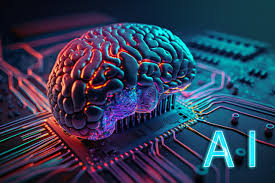
Artificial Intelligence, commonly known as AI, has recently garnered significant attention in mainstream media outlets such as BBC, CNN, Al-Jazeera, Daily Trust Newspaper, Forbes, New York Times, Wired, and others. It is widely considered to be the most talked-about scientific discipline globally at present. AI is like a smart and helpful digital friend. It’s a computer system trained to perform tasks that usually require human intelligence, such as learning, understanding language, and solving societal problems.

The AI-based computer system learns from experience and adjusts to new information, making it a bit like a digital wizard that can handle various tasks independently. Siri on Apple devices, Google Assistant on Android phones, Amazon’s Alexa, facial recognition capabilities, Facebook’s language translation feature, friend suggestions on Facebook, and language translators are examples of AI systems in operation. These are some of the few AI systems that illustrate how AI impacts everyday tasks.

The influence of AI on our daily lives is increasing across various domains, including security, small and medium enterprises, education, communication, health, business, entertainment, transportation, homes and workplaces. The realm of AI is a double-edged sword. While we have elucidated the opportunities and benefits, there are growing concerns surrounding risks, ethical considerations, job displacement, potential threats, and legal conflicts. Here, I will delve into the positive aspects, reserving a discussion of some negative dimensions later in the article.

AI is the foundation for transformative technologies like the widely discussed ChatGPT, which has over 18 million active users daily. Now, the GPTs store has been launched for business. An AI non-invasive device has been invented to read what a human is thinking in his mind, convert it to text and display the text on the computer screen for everyone to read. The research has been conducted and pilot-tested at the University of Sydney. Such a device has a multifaceted benefit to humans. For example, anyone with speech impairment can use the device to communicate his thoughts and wants with people without talking.

There is an AI tool for converting text to video that only requires the user to write a story in text, then prompt the AI tool with the story and a video based on the story will be generated. I foresee the possibility of rapidly integrating the text-to-video converter on phones in the near future. Imagine with a simple request like, “Hey Siri, Alexa or Google assistance, turn my story into a cool video,” you’re on your way to experiencing your tale in vibrant animations and vivid scenes. With her AI prowess, Siri makes storytelling not just a written adventure but a visual journey for all to enjoy. The text-to-video converter can potentially revolutionize the movie industry by reducing the cost of production and time for making movies. Content creators like skit makers can utilize such an AI tool to create short videos to post to engage their followers.  

In a remarkable leap forward for technology, a cutting-edge AI device has emerged, revolutionizing how we experience videos by effortlessly transcending language boundaries. A cutting-edge AI tool that seamlessly translates video-spoken words into different languages, showing the same person speaking in different languages, opening up new possibilities for global communication. The device operates as a user-friendly interface where videos are uploaded and transformed into a linguistic tapestry. The device not only translates spoken words but also adapts captions and subtitles, preserving the original intent and emotions of the content. Filmmakers and content creators worldwide have already begun incorporating AI devices into their creative process, providing viewers a more inclusive and immersive experience. As stories seamlessly unfold in multiple languages, the device adds a new layer of depth to digital storytelling.

Let’s now turn to the dark side of AI: Should AI systems attain or surpass human intelligence, there exists the potential for these systems to make decisions that could lead to the extinction of the human race on Earth or decide to go to war with humans. A recent incident in South Korea exemplifies the risks, where an industrial robot designed to identify boxes mistakenly perceived an industrial worker carrying a box as a box, leading to a fatal outcome – death. Legal conflicts further highlight the challenges posed by AI advancements.

The New York Times has initiated a court case against OpenAI, the owner of ChatGPT, in which Microsoft holds a significant investment. The lawsuit alleges copyright infringement by ChatGPT, prompting OpenAI to assert that developing a powerful system like ChatGPT without some level of copyright implications is unfeasible. This legal dispute initiates discussions on copyright issues in the AI era. Google is also facing legal action related to AI, with a patent infringement suit filed by Singular Computers against the Tensor Processing Unit, an AI-based processor.

Concerns about job displacement loom large, with an estimated 800 million jobs expected to be replaced by AI in 2024 alone. Additionally, the unethical use of AI tools to generate false or misleading information disseminated through social media raises significant concerns about potential threats to coming democratic elections in Asia, the USA, South America, and the UK, potentially leading to civil unrest.

On a final note, criticisms have emerged regarding AI tools employed in recruitment processes, with accusations of introducing bias and ethical concerns. In a recent publication by Shelton Leipzig on the responsible use of AI systems, she categorizes AI systems into three groups: low risk, high risk, and prohibited. The classification is based on the varying levels of risk associated with each AI system. Certain situations are deemed inappropriate for deploying AI systems, as exemplified by their exclusion in voting during elections.

Some AI systems are considered very low risk, such as those employed in video games or product recommendation systems on e-commerce sites. However, most AI systems fall into the high-risk category, including those used in recruitment and financial applications; 140 use cases were identified within this classification. These multifaceted challenges underscore the complex landscape surrounding AI development and deployment.     

Haruna Chiroma, University Professor of Artificial Intelligence, wrote from the University of Hafr Al Batin, Saudi Arabia, via freedonchi@yahoo.com.

AI takes center stage: A look at the powerful new Galaxy S24 lineup

By Sabiu Abdullahi

The dust has settled after the dazzling launch of the Samsung Galaxy S24 series, and the tech world is abuzz with excitement (and a touch of scrutiny).

While not a complete overhaul, the S24 lineup boasts refined features, AI-powered innovations, and battery life improvements that promise to solidify Samsung’s position as a smartphone leader.

Let’s dive deep into what makes these new flagships tick.

Key Features:

AI Focus: The S24 series prioritizes artificial intelligence, with enhanced camera processing, AI-powered search tools, and personalized user experiences. The ProVisual AI Engine elevates photo quality, while AI Edit Suggestions offer helpful tweaks for your snapshots.

Display Upgrades: While the S24 retains its Full HD+ resolution, the S24 Plus gets a glorious Quad HD+ boost. Both models now boast a staggering 2,600 nits peak brightness, ensuring vibrant visuals even in harsh sunlight. Additionally, variable 120Hz refresh rates adjust to optimize battery life.

Camera Powerhouse: All three models pack a punch with their camera systems. The S24 and S24 Plus sport a 50MP main sensor, 12MP ultrawide, and 10MP telephoto lens, while the S24 Ultra ups the ante with a groundbreaking 200MP main sensor and improved zoom capabilities.

Long-lasting Power: Battery life receives a welcome boost, with the S24 housing a 4,000mAh battery and the S24 Plus carrying a hefty 4,900mAh cell. The S24 Ultra retains its impressive 5,000mAh battery, ensuring you stay connected all day long.

Price and Availability: The S24 and S24 Plus maintain their familiar price points of $799 and $999 respectively, while the S24 Ultra sees a $100 bump to $1,300. Pre-orders are already open, with in-store sales kicking off on January 31st.

Conclusion

The Galaxy S24 series may not be a revolutionary leap, but it delivers a refined and powerful offering for Android enthusiasts. The focus on AI, upgraded displays, camera improvements, and extended battery life solidifies Samsung’s commitment to cutting-edge technology. Whether you’re a die-hard Samsung fan or simply looking for the best Android experience, the S24 series deserves a closer look.

Unlocking academic potential: The need for institute-provided email addresses in Nigerian universities

By Abubakar Umar Gbs

One of the primary challenges students face is the lack of institutional email addresses provided by universities. This seemingly minor oversight has far-reaching consequences, particularly in academic publishing. Platforms like Google Scholar and ResearchGate have become indispensable for scholars worldwide, providing a space to share and access valuable research. However, many Nigerian students are excluded from this global academic dialogue due to the absence of institute-issued email addresses.

In an era where collaboration and knowledge exchange transcend geographical boundaries, the inability to access such platforms places Nigerian students at a significant disadvantage. The academic community is a vast network where ideas are exchanged, collaborations are forged, and research is disseminated. By not providing students with the necessary tools to participate in this global discourse, we are inadvertently stifling their academic growth and limiting the potential impact of Nigerian research on the international stage.

Institute-issued email addresses are not merely a formality but a gateway to a wealth of academic resources. These email addresses authenticate the identity of students, ensuring the credibility of their work on platforms that demand institutional affiliation. Moreover, they foster a sense of pride and belonging among students as they become official representatives of their institutions on the global academic stage.

I urge Nigerian universities to recognise the significance of this issue and take proactive measures to address it. By issuing academic email addresses to students, we empower them to contribute meaningfully to the global academic community. This simple yet impactful step will bridge the gap between Nigerian students and the wealth of opportunities platforms like Google Scholar and ResearchGate offer.

In conclusion, providing institute-issued email addresses to students is not just a matter of convenience but a crucial step towards fostering a culture of academic excellence and global collaboration. By highlighting this issue, we can collectively work towards creating an environment where Nigerian students can fully realise their academic potential and make meaningful contributions to the global research landscape.

Abubakar Umar Gbs wrote via abubakargbs@gmail.com.