Month: January 2024

Drama as PDP Lawmakers sacked by court defy court ruling, vow to resume duties today

By Sabiu Abdullahi 

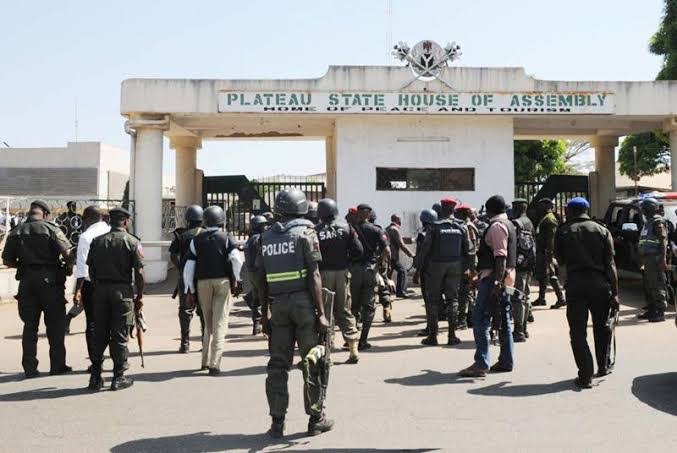
Sixteen ex-Peoples Democratic Party (PDP) lawmakers in Plateau State, ousted by the Court of Appeal in November 2023, plan to defy the court ruling and return to legislative duties.

Despite having their election nullified over party structure issues, they argue that the recent Supreme Court judgement, validating Governor Caleb Mutfwang’s election, supports their claim as authentic members. 

Led by Ishaku Maren, the former majority leader, they stress their commitment to democracy and assert their constituents’ unwavering support.

The lawmakers are set to resume today, raising concerns from the APC and warning against potential legislative and security implications in Plateau State.

This is coming as observers await developments and reactions to this audacious move by the former lawmakers.

Why our movie series don’t accommodate songs and dance – Kannywood directors 

By Uzair Adam Imam

The Kannywood movies are widely loved by Hausa-speaking communities across Nigeria and beyond. They are known for depicting Hausa culture and life.

The plots of Kannywood movies often feature drama, romance, and comedy, which many viewers find an escape from the harsh reality of everyday life. 

The songs and dances featured in the movies have become a signature of Kannywood cinema and are popular with audiences.

However, the songs and dances have ceased to be featured in the present Kannywood movies due to the new dimensions that the movies have taken.

In an interview with The Daily Reality, some Kannywood producers explained their reasons for taking the new direction.

Songs are incompatible with present movies – Lawan Ahmad

Lawan Ahmad, the producer of and a leading actor in the popular Hausa TV series Izzar So, said the songs have been removed to accommodate the kinds of films produced nowadays.

Ahmad said the songs still possess their enormously powerful impact in conveying messages but added that the nature of the movies nowadays does not accommodate songs. 

He said, “The songs were removed to suit the kinds of most produced movies in the Kannywood industry today. However, they are still useful in those movies.

“The songs were not removed because they are insignificant – their immense impact is still relevant.”

Hausa movies re-create folktales, history 

Another director and actor in the industry, Ali Rabi`u Ali, popularly known as Daddy, said Hausa films in those days were primarily traditional and required songs and dances. 

He stated, “Most of the Hausa films in those days were a replica of tales (tatsuniyoyi) and history that needed to be accompanied with songs and dances of dandali (a stage).” 

“These songs contribute(d) to the advertising and selling of the films. That is why the songs used to be released even before the production of the movies.

“This was to let people know about the film, just like the way Indian movies did,” Daddy explained.

He added that film series now do not require songs and dances because people are after the theme of the film, not songs.

“Besides, song and dance scenes are very costly and time-consuming, forcing us to cease using them in our films,” he stated.

Removal of songs: An opportunity for singers

Asked whether this was a threat to the Hausa singers, Ahmad said this was a wonderfully exciting opportunity for singers to be known for their intellectual production.

He stated, “This has helped the Hausa musicians to be known by the people for their talented works, as they make and act videos of their songs – and there is a lot of creativity in their businesses nowadays as singers resort to dramatic songs, with sole independent themes. 

“Now, instead of saying Ali Nuhu or Adam A. Zango should be featured in the video of their songs, the singers have seized the opportunity to sell their faces while taking a new dimension,” he added.

He added that the dramatic songs have now taken a new dimension, a development which attracts many people in Hausa communities.

Songs, dances mere imitations of Bollywood – don 

A Department of Mass Communication lecturer at Bayero University, Kano, Malama Ummi Hassan, opined that songs and dances in Hausa movies are simulacrums of Bollywood movies. 

The lecturer, who has taught film over the years, stated that “Songs and dances in Kannywood movies are mere facsimiles of Bollywood movies. And now that Bollywood has stopped using them in their movies, particularly series, Kannywood also stops.

“Bollywood now uses only some musical interludes as background sounds in their series movies to establish settings or set moods, to mention a few. Sometimes, they use the songs of the already-produced films, say Kalhonaho.” 

She added that a movie can achieve a desired theme without songs and dances.

She stated, “You must not show an actor or actress dancing before your film sells.” 

Some songs out of context

The university lecturer argued that the songs and dances in most Kannywood movies are sometimes out of context but were used to meet the tradition of Kannywood movies.

She said, “It is like the Kannywood has made it a tradition to put songs in their movies. The songs, however, are sometimes out of context.”

Ummi, who sees films and songs as two different things, advocates that the duo remain independent, with each conveying different meanings.

She added that although songs and dances have ceased to be used, the Hausa movies have witnessed a steep increment in their viewership. 

“I personally see this as a new development. Films and music are two different things. Songs can be used in the background to set the mood,” she added.

Our business at risk – singer

A singer, Hafeez Umar Maikano, who spoke to the Daily Reality, said their business is at risk following the removal of songs in the Kannywood movies.

According to Maikano, although songs have preceded films, singers now rely on filmmakers to survive.

He added, “I see this as challenging for the Hausa singers. The removal of songs from movies has discouraged not only professional but also upcoming singers.

“Before, filmmakers contracted singers to sing for a particular movie, giving them all the required information, including the theme of the movie.

“However, there is no denying that the removal has become a stepping stone to many of the singers,” Maikano added.

Celebrities’ body trends and toxic influence on youths 

By Al-Janat Firdous Mohammed

In the dynamic world of media and entertainment, the definition of an ideal physique has continuously developed, creating and redefining societal beauty standards. 

Like many other countries, Nigeria has seen an increase in body trends among celebrities, which significantly impact their audience, particularly impressionable youth. 

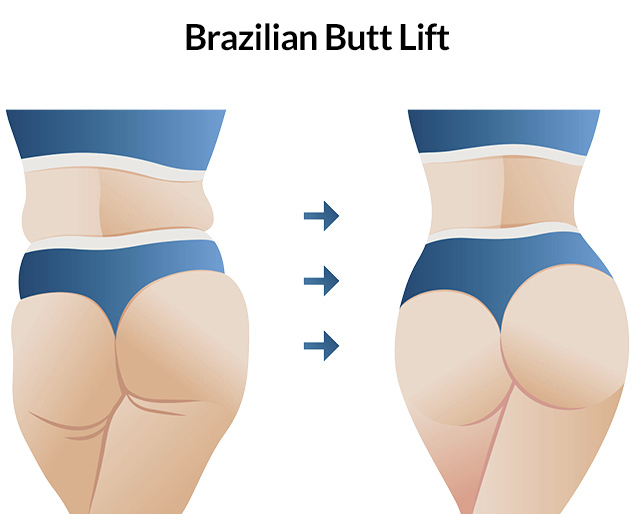
From Brazilian Butt Lifts (BBL) to facelifts and Botox treatments, the pursuit of a specific look has become a dominant influence. The early 2000s saw a boom in the global fad of becoming ultra-skinny, with many celebrities striving for a waif-like appearance. 

However, in recent years, a paradigm shift has happened, with curvier silhouettes becoming the new ideal of beauty. BBLs have become highly fashionable, with celebrities publicly discussing and even getting these procedures to improve their curves.

Facelifts and Botox treatments have also become popular as people seek to combat the natural ageing process. The media’s portrayal of faultless celebrities frequently adds to false beauty goals, which may lead fans and adolescents to explore comparable operations.

Celebrities play an important role in moulding society’s norms, and their physical modifications can significantly impact their fan base, particularly the youth. The pressure to conform to these ideals can have a harmful influence on self-esteem and physical appearance. 

Many young people may feel compelled to change their bodies to fit in or meet the perceived standards of their idols. For example, the rise of social media has led to celebrities displaying their nearly ideal bodies, creating the illusion that these standards are attainable and desired. 

This can exacerbate fans’ vulnerabilities, creating a culture in which bodily changes are viewed as a way to earn acceptance and validation. How can we prevent our youths from succumbing to ‘fake’ beauty standards?

One, promoting body positivity and acceptance is critical for demolishing false beauty standards. Celebrities who advocate for accepting one’s natural body, warts and all, can be strong role models.

Second, educating young people about the manipulative nature of media images and the frequency of picture editing can help them develop a critical mindset. Understanding that the images portrayed may not reflect reality can help mitigate the media effect.

Equally, creating an environment where mental health discussions are normalised is critical. Young people who are dealing with their body image should have access to support networks, such as counselling services or community groups.

Several Nigerian celebrities have spoken out against unrealistic body ideals, serving as constructive role models for the kids. Actress Adesua Etomi-Wellington, for example, promotes self-love and frequently uploads unfiltered photographs to demonstrate sincerity. 

Similarly, media star Tolu Oniru-Demuren, commonly known as Toolz, has been outspoken about embracing her curves, challenging the concept that only certain body types are attractive. As body trends in Nigerian media emerge, it is critical to recognise the potential harm they might cause to the impressionable minds of young people. 

By developing a culture of body positivity, increasing media literacy, and offering mental health care, we can help young people resist the temptations of conforming to unattainable beauty standards. Positive role models in the celebrity world can significantly influence cultural attitudes regarding body image, fostering a healthier and more accepting mindset for future generations.

Al-Janat Firdous Mohammed is an NYSC member serving with PRNigeria.

I don’t care what people say about me—Mommy Gombe 

By Uzair Adam Imam 

The graduate role played by a well-known Kannywood actress, Momy Gombe, has raised serious social media concerns.

This is coming as Momy Gombe was cast in a full NYSC khaki in a new movie, Darasi

As soon as the pictures went viral, the actress came under attack, with some university graduates condemning the role. 

The graduates and other critics say they are disappointed in the actress since she cannot speak English. 

Others claimed that Momy Gombe did not complete her secondary school education, saying she has no moral right to wear NYSC khaki. 

One of those who condemned her for wearing the khaki, Aliyu Danladi, said, “The issue is that Momy Gombe wore this NYSC khaki at the wrong time when corp members had just passed out, and the struggles were fresh in their minds. 

“I sincerely feel sad, especially when I remember waking up early for morning meditations, SAED lectures, and the evening parade,” he added. 

Another one by the name of Bello Ahmad Rufa’i said, “I am pleading with the Nigerian government to introduce a law that will ban people from wearing this khaki anyhow because nowadays people just wear it and act (as graduates) in movies.” 

According to Sulaiman Rabi’u Ishaq, “This is terribly pathetic! We suffered a lot, and this woman just came from nowhere and wore the khaki. 

Musa Miraj Rumah said, “Whoever says or thinks that she is right (to wear the khaki) mustn’t have worn it before.” 

Expressing his worry, Manir Sani Wakil stated, “What worries me the most was the fact that she has not even completed her secondary school, let alone going to any tertiary institution.” 

However, film experts have posited that the arguments were unnecessary and baseless, as films are imitations of reality. 

They also said that even if Gombe was wrong, the blame should go to the crew, not the actress, who simply followed instructions. 

Films are meant to mimic reality—experts 

Dr Ashir T. Inuwa, a senior lecturer at the Department of Mass Communication, Bayero University, Kano, said films are mere imitations of reality and, therefore, must not be real. 

Inuwa stated that Gombe must not be a graduate before she was cast as a university graduate, let alone any other role. 

He said, “Film is a replication of reality, real events, vividly through characterisation, sceneries and actors or actresses.” 

“It is a film so she can act as a graduate, professor, police or any other role, just as we see in the Bollywood movies and the rest.  

“You may find someone who has never become a local government chairman acting as a president in a movie, and it is cool because it is not real.”   

A film critic, Dr Muhsin Ibrahim, who is also a university lecturer at the University of Cologne, Germany, said that casting the actress as a graduate was not wrong.

“When did casting become an issue for us? How many times do non-Muslim actors act as Muslims and vice-versa? Or Hausa as non-Hausa, etc.? Please, we don’t have to criticise everything related to Kannywood,” he stated. 

Crew to blame for Gombe’s blunder  

Dr Ibrahim opined, “If the scriptwriter, script supervisor, and director do their job well, she should be able to deliver her lines flawlessly.” 

He added that the crew should be held responsible for any grammatical errors Gombe made while acting in the movie.  

He was quoted as saying, “In other words, if she commits grammatical errors or mispronounces words, the crew are more to blame. For instance, I once acted as an Indian sage and spoke some Hindi on the stage in India! I believe I did well.  

“Yes, I want to see Kannywood actors correctly delivering their lines (in Hausa, English, or any language).” 

Dr Inuwa also associated the flaw with the director’s inability to do his job well, reiterating that the actress must not be blamed. 

He stated, “The director of the film should be held responsible for Gombe’s grammatical errors and failure to pronounce words correctly.  

“Because it is his duty to take care of all that, giving her good training to be able to deliver her lines flawlessly.” 

I don’t care what people say about me—Mommy Gombe 

In an interview with The Daily Reality, the well-loved actress, who has recently suffered torrents of criticism, said she was not bothered by the criticism. 

Gombe says she just does her work and always tries to do everything she is instructed to the best of her ability. 

She was quoted as saying, “I don’t care what people are saying about me because I am just doing my job. Besides, I try to ensure that I do everything related to my work to the best of my ability. 

“Also, I try to ensure that I do anything I am instructed to do. That is why I don’t bother myself about this at all.”

She further called on her fans not to be distracted but to continue to support her for more interesting scenes.  

Bitter truth: A reality Gombe’s critics must know 

Despite the fact that English is the official language in Nigeria, many graduates in the country cannot speak the language fluently, a bitter reality that Gomber’s critics must know. 

Dr Ibrahim associated the menace with the emphasis students place on written exams rather than trying to demystify the mystery of the language through practice before their graduation. 

He said, “Truth be told, countless graduates (in Nigeria) cannot speak English fluently. My wife was shocked when I told her some of them studied English.  

“How is this possible? Simple: one can graduate without speaking for a minute before the class. Our emphasis is mainly on the written exams. For that, one can memorise pages and write them during exams, and that is it.”

How investing in shares, mutual funds can help you become financially independent

By Aminu Mohammed

The inspiration for this article came from a short Facebook post by Bashir Abubakar Gazaki, who advised young people to invest their money in shares of good companies to attain financial independence. His followers’ lack of financial awareness caught my attention, as evidenced by the comments below the post, where many people asked him to explain the stock market. 

It is not surprising that personal finance is not taught in universities. I learned about stock investments through books such as “The Richest Man in Babylon” by George Samuel Clason, “Rich Dad Poor Dad” by Robert Kiyosaki, and “Rich Dad’s Guide to Investing: What the Rich Invest In That the Poor and Middle Class Do Not.” I read these books shortly after graduating from Ahmadu Bello University, Zaria. 

The books gave me insight into why some people, despite working for many years, still struggle in life. The inspiration from these books led me to purchase my first share during my service year in Adamawa state. Similarly, a fellow corps member from the southwest who knew the stock market advised me to invest in good companies.

Invest money in assets Instead of liabilities 

Investing your time actively and your money passively is an excellent way to secure your financial future. Passive income refers to the money you earn from your assets, such as property, shares, mutual funds, Treasury bills, etc., while you sleep. Unlike your job, assets generate income for you, whether you work or not. So, it’s crucial to avoid wasting your money on liabilities and start investing in assets.


If you earn a salary or own a business, it is best to save at least 10 per cent of your income and invest it wisely. Investing in shares doesn’t require a large sum of money. Suppose you know about stock trading. In that case, you can invest in the United States stocks or the Nigerian stock market, even if you start small with a low amount.


However, it is understandable that many individuals are scared of investing their money in the stock exchange, given the capital market crisis in 2008, where several people lost a significant portion of their funds. I have experienced losses in the stock market myself, particularly with the shares I bought in the defunct Oceanic Bank and Bank PHB. But I have also gained from stocks like Dangote Sugar, GTBank, and Zenith Bank. Life is all about risk; sometimes, we win, while other times, we lose due to unforeseen circumstances. But that shouldn’t stop us from exploring new investment opportunities, no matter how little.

Investigate companies before Investing

Investing in the stock market is a business that requires a long-term strategy and patience rather than a quick way to get rich. Having a good understanding of the companies you invest in is crucial. According to Warren Buffet, the Chairman of Berkshire Hathaway, one of the most successful investors in the world, the best way to achieve greater rewards is to think long-term. Buffet recommends holding stocks for at least five to 10 years to accumulate wealth. However, some traders still profit by trying to beat the market daily.


If you are hesitant about investing directly in stocks, you can consider mutual funds, designed for people who want to minimise risk but have lower returns. You can contact your local banks, such as First Bank, GTBank, UBA, Stanbic IBTC, and others that offer asset management services. These companies manage various types of mutual funds under the guidance of experts.


As a salaried worker, unforeseen circumstances such as job loss or a downturn in business can be devastating. Therefore, it is important to have a safety net in the form of investments to help you recover in case of any unforeseen circumstances.

Consult a stock broker before buying any Shares

It is important to conduct thorough research and seek expert advice before investing in shares. Look for stocks with strong fundamentals and invest in them wisely. Diversifying your investment across different sectors and companies is recommended to maximise your returns.

It is crucial to emphasise that individuals with little knowledge about the stock market should educate themselves on basic financial concepts before investing in shares. The companies mentioned in this article are for illustration purposes only and to encourage young people to take control of their financial future through smart investments. Investing in shares is not a quick way to get rich, and seeking professional advice before investing is highly recommended.

I wish you the best as you strive towards financial independence and personal growth.

Aminu Mohammed wrote this article from Ingolstadt, Germany. He can be reached at gravity23n@gmail.com.

Again, IELTS fee hiked for second time in 5 months in Nigeria 

By Sabiu Abdullahi 

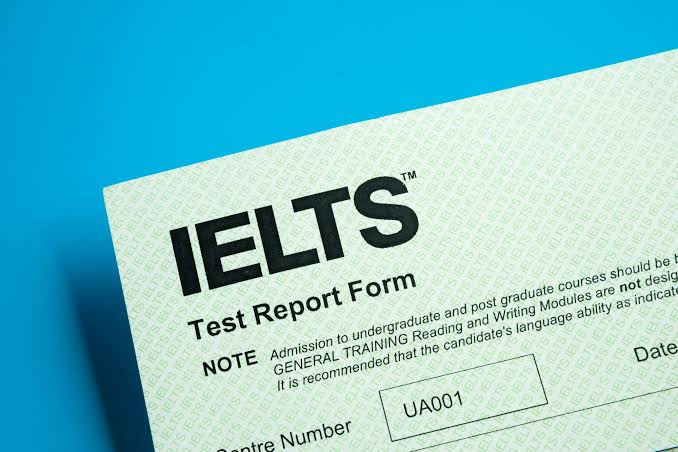
The British Council in Nigeria has thrown test-takers for a loop, announcing a 29% increase in the fees for the International English Language Testing System (IELTS) exam, effective February 1, 2024. 

This marks the second price hike in just five months. In September 2023, the fee jumped from N80,000–N90,000 to N107,500.

Now, applicants will have to shell out a whopping N139,000 for the Computer Academic and General Training Modules. 

The Council attributes the latest increase to “increased costs of the delivery of our exams,” claiming it will enable them to “continue to offer a wide range of services and comprehensive support.”

However, this explanation has met with widespread skepticism and frustration among potential test-takers in Nigeria. 

Many Nigerians rely on the IELTS exam for studying abroad, immigration purposes, and professional opportunities.

This repeated hike makes the test increasingly inaccessible to a large portion of the population, especially considering the current economic climate. 

The news has sparked heated debates online and offline, with concerns that the price surge could create unnecessary barriers and hinder educational and professional mobility for Nigerians.

Some are calling for “greater transparency from the British Council” regarding the specific cost factors driving the increases, while others are urging the body to “consider alternative solutions” to ensure affordability without compromising quality. 

With no word on potential future increases, the rising IELTS fee adds yet another layer of anxiety for Nigerians aiming to pursue international opportunities.

It remains to be seen whether the British Council will address the concerns of its Nigerian clientele or face continued backlash for its pricing decisions.

From Gawuna is coming to Sanusi is coming!

By Abbas Datti

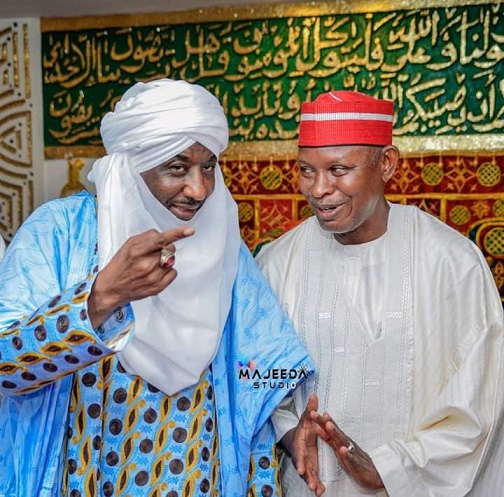
Following the Apex court’s ruling in favour of Eng Abba Kabir Yusuf as the legitimate elected governor of Kano State, there arises the compelling debates with regards to balkanization of Kano emirate, and potential return of Sunusi II to Gidan Dabo, as well as possible removal of the present emir, Alh. Aminu Ado Bayero.

Sunusi’s potential return to the throne is not without its challenges and complexities. Understanding the possibilities of post-Sunusi II and assessing the current political climate before making such a decision is paramount.

Considering Sunusi’s wide popularity and global influence, he may not necessarily obey Abba Kabir Yusuf as governor of Kano State. Sunusi’s tacit approval for women to confront their maltreating husbands in their matrimonial homes comes into play. Therefore, there’s a need for both Kwankwaso and Abba Kabir to ensure a delicate balance between addressing the fears that may arise from Sunusi’s reinstatement and charting a justifiable reason towards the dismounting of Ado Bayero’s biological son from the throne.

Supporters of Sunusi II passionately advocate for his reinstatement, citing his worldwide recognition and his radical approach to some social problems. Also, for opponents of the immediate past governor of Kano State, Sunusi’s enthronement is seen as a stab in the back to Eng Dr Abdullahi Umar Ganduje and the restoration of Kano’s kingdom dignity.

However, the broader implications of such a move require diligent, careful considerations. Both supporters of Aminu Ado Bayero and Sunusi are closely watching the unfolding events, with questions threatening the respect, dignity, and reverence enjoyed by the Kano emirate.

Balancing the expectations of various factions, addressing the concerns of opposing voices, and fostering an inclusive dialogue will be key to a successful solution to the emerging calls about removing Alh. Aminu Ado Bayero.

The possibility of enthroning back Sunusi is a multifaceted scenario with far-reaching possibilities. As the political stage sets for Sunusi’s potential return, the world observes with keen interest, eager to witness the unfolding of a narrative that could reshape the destiny of Kano State and redefine the dynamics of the leadership of Kano emirate.

Abbas Datti writes from Kano via abbasdatti448@gmail.com.

NSCDC arrests traffickers attempting to transport 16 children from Taraba to Edo

By Uzair Adam Imam 

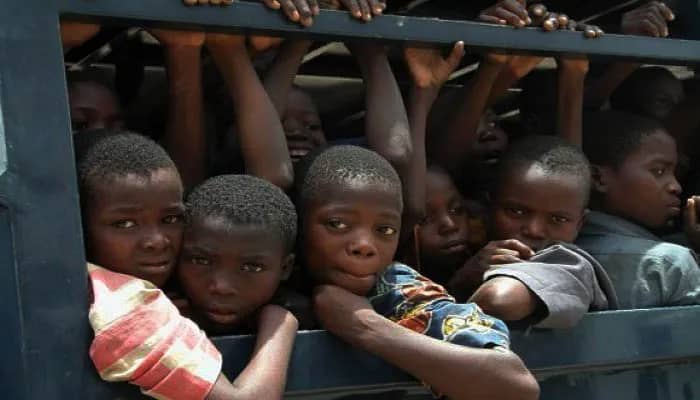
The Nigerian Security and Civil Defence Corps (NSCDC) in Taraba Command apprehended two suspects at the Jalingo Main Motor Park attempting to traffic 16 children to Benin in Edo.  

The suspects, identified as Daniel Madin and Federation Markus, were apprehended on Thursday. 

The children, aged between 10 and 16, included five girls and 11 boys, originating from the Zing and Bali Local Government areas of Taraba. 

Adamu Salihu, the State NSCDC Commandant, disclosed that preliminary investigations unveiled the suspects as part of a larger syndicate specialising in trafficking underage children, promising them a brighter future in Edo. 

However, these children often end up in dehumanizing jobs, and the earnings from such work are seized by their handlers. 

Salihu expressed concern about the alarming rate at which parents relinquish their responsibility for raising their children, handing them over to strangers for a meagre sum. 

He condemned the acts of forcing children into labour, prostitution, baby factories, organ harvesting, and money rituals. 

The commandant stated the urgency of halting this trend and called on relevant stakeholders in the state to take decisive measures against the rising scourge of human trafficking.  

The suspects and the 16 children have been handed over to the National Agency for the Prohibition of Trafficking in Persons for further investigation and prosecution.

Nasarawa State governor denies future political ambitions beyond eight-year tenure

By Uzair Adam Imam

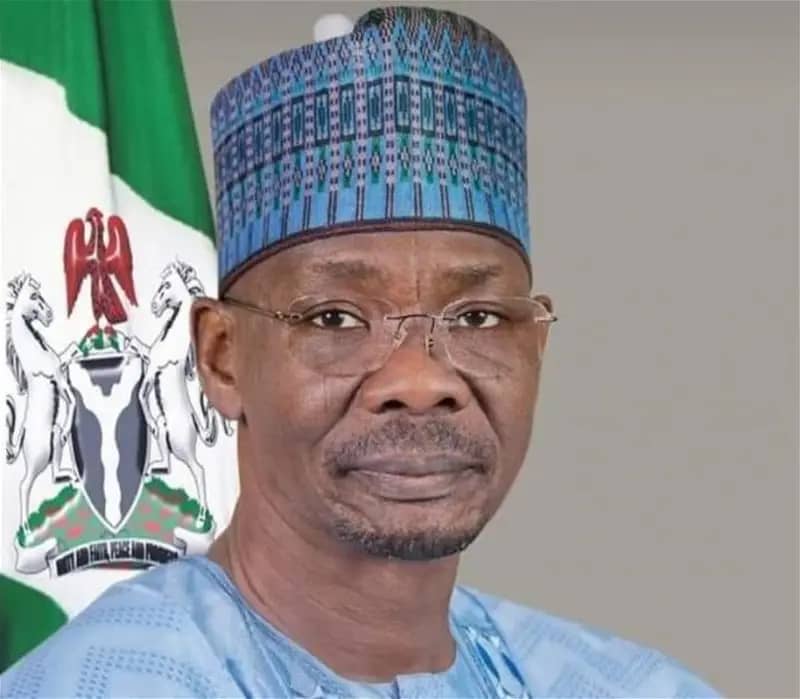
In an interview on Channels Television’s Politics Today, Governor Abdullahi Sule of Nasarawa State declared that he harbors no political ambitions beyond his current eight-year governorship tenure.

He noted that his sole aspiration is to serve as governor and has no intentions of pursuing roles such as chairman, senator, or member of the House of Representatives.

Governor Sule stated firmly, “I have no dream of becoming even president. You can take it from me confidently that I have no intention to run for the office of a senator.”

He affirmed that after completing his eight years, he is open to exploring other pursuits.

Expressing confidence in his post-governorship plans, Sule conveyed his disinterest in seeking a senatorial position, urging viewers to hold onto the statement for future reference.

The governor also revealed his anticipation of a favorable Supreme Court judgment, signaling the conclusion of the court case.

With the legal challenges behind him, he expressed readiness to focus on governing the state.Governor Sule, a member of the ruling All Progressives Congress, served his first term from 2019 to 2023.

In the 2023 governorship election, he contested against the Peoples Democratic Party’s David Ombugadu.

Despite legal challenges, the Supreme Court recently upheld Sule’s election victory, solidifying his position as the state governor.

Sule reiterated that his primary goal is to govern the state, dispelling speculations of seeking a Senate or House of Representatives seat in the future.

The Federal Republic of Lagosia

By Muhammad Sulaiman Abdullahi

The Bola Ahmed Tinubu-led government’s effort to forcibly uplift and upgrade Lagos State shouldn’t surprise anyone who knew or read about Nigeria’s history. The military initiated the idea of the creation of Abuja as the Federal Capital Territory of Nigeria in the late 20th century, precisely in the late 70th. The idea was well thought out, well planned and well executed in good faith by successive military governments. 

The actualisation of Abuja as the capital city of the federation was one of the few tasks inherited and continued by more than one regime of governance. A Wikipedia article says that; “it is a planned city built mainly in the 1980s based on a master plan by International Planning Associates (IPA), a consortium of three American planning and architecture firms made up of Wallace, Roberts, McHarg & Todd (WRMT – a group of architects) as the lead, Archi systems International (a subsidiary of the Howard Hughes Corporation), and Planning Research Corporation. The Central Business District of Abuja was designed by Japanese architect Kenzo Tange. It replaced Lagos, the country’s most populous city, as the capital on 12 December 1991.”

It is one of the fastest-growing cities in the whole world, not only in Nigeria or in Africa. “According to the United Nations, Abuja grew by 139.7% between 2000 and 2010, making it the fastest-growing city in the world. As of 2015, the city is experiencing an annual growth of at least 35%, retaining its position as the fastest-growing city on the African continent and one of the fastest-growing in the world.” This is Abuja for you. 

Everything about Abuja was well-planned by intellectuals of repute in the world. Its strategic location, terrain, weather and, above all, compatibility to all, comfort and suitability as the capital city of this complex combination. There are so many planned cities in the world, and they are done for a purpose. Right from the beginning of the amalgamation, those who perpetrated it had known that it would be so complex to manage. They, therefore, according to their expectation, helped in realising where the leadership would be easier for all. Thus, the idea behind the planned city of Abuja. And this shows how disciplined and committed the military were to the general development and progress of the country. If it were these set of politicians of today, such a momentous task would never be accomplished.

History recorded that the Yorubas vehemently rejected the idea of Abuja’s formation. The “biggest” opposition to the formation of Abuja was the then Yoruba chieftain and presidential candidate, Chief Obafemi Awolowo. Awo pledged and promised to his people that if elected, he would hire the American Walf Disney Corporation – an American multinational mass media and entertainment conglomerate, to convert the current site of Abuja into an amusement park. Perhaps Chief Awo’s dream is quickly becoming a reality under Tinubu’s administration.

Awo lost the election, and it was reported that one of the first works of Alhaji Shehu Shagari, when he assumed power, was to accelerate and lay the foundation of Abuja and push for its early completion. Successive governments took over from him, and the trend continues until these days when we see the reversal in quick gears.

I contested the supremacy of Lagos over Kano a long time ago, but later, when I visited the state in 2013, I concurred and agreed that Lagos state is so blessed and looks like other well-developed foreign cities, if not because of the roughness and ruggedness of some its people. The state is both naturally and artificially endowed. Its intellectuals also support it at the expense of all others. They are the kind of people who love themselves more than anyone else. We started seeing the manifestation of this love so early in this Tinubu-led government.

It is undoubtedly clear to anyone who pokes his nose into Nigeria’s issues that Lagos is by far more prosperous than all the 36 federation states combined. You may not be wrong if you call Lagos a country of its own. That’s why I find it weird when public structures are shamelessly moved to Lagos in the name of convenience, proximity and all other silly excuses. These flimsy excuses can look strong from the surface, but some hidden weaknesses may be uncovered after a deep X-ray.

I once asked a knowledgeable friend about the issue of population between Kano and Lagos. Those who promote Lagos promote it even where others are better. Almost all the time, I see conflicting and contradictory reports on the issue of population. He explained to me in layman’s language that Kano is the most populous city in Nigeria, and there is no doubt about this. But Kano’s population is a dispersed population while that of Lagos is the most densely populated city in Nigeria. 

Then, in the actual number of people living in the two states combined together, Kano is the most populous state in Nigeria. Even this, many people do not care to know. Back to the Federal Republic of Lagosia! The state has been leading in terms of infrastructural development, IGR, investment, inventions, entrepreneurship, companies and all that the world counts as the indices of development. This, no one can deny. Maybe Kano can only be ahead of Lagos in terms of decorum, legitimate earnings and legal dealings. But Kano, being the Centre of commerce, has for long been hijacked by many powers beyond an ordinary imagination to comprehend.

Recently, the Central Bank of Nigeria (CBN) has been reported to have moved some of its key departments to Lagos. Why? It was said that close to 60 per cent of Nigeria’s wealth revolves around Lagos state only. Then, why should CBN sit far away from the Center of money? In this respect, one should salute the courage and foresight of CBN to relocate. Those of you shouting, what do you bring to the CBN’s table to make the CBN move the headquarters to your state? 

FAAN also moved its key offices and officers and even issued a statement that they have done so for the good of the country. It was said that the former aviation minister, Hadi Sirika, was the one who forced them to be in Abuja. 

In the statement issued by FAAN, its PRO Obiageli, it is said that they don’t have enough space/offices to accommodate their personnel in Abuja. Whether this is true or false should not matter, as truth is so expensive in Nigeria, and lies are so cheap. Whatever may happen, they moved out, pending when there would be enough space for them. They would form a committee to start looking for whether they could move back to Abuja. But one important thing that Obiageli mentioned was the issue of 60% of Nigeria’s flights hovering around Lagos. This singular statement is heavier than all the other flimsy and silly excuses given. This holds water!

Abuja was not ordinarily built without any thinking. It was strategically chosen, located and designed. Abuja was one of the purposely well-planned cities in Africa, as explained. It was designed to be in the centre to ease everything for everyone. When it was established, as is the norm, many companies, government agencies, embassies, foreign establishments and above all, the seat of the government were all transferred to the location. This is how Abuja was made.

Today, under the Asiwaju’s government, silly excuses are forwarded, and some government agencies headed by Yorubas are taken back to Abuja without even consulting the two houses of assemblies. I thought such a decision must be backed by law. They should first take the issue to the National Assembly for consent. But even the movement is systematic. They started by saying we are moving “some offices”, maybe to outsmart Nigerians. Many other movements might have been shrouded in secrecy.

The preferential treatment given to Lagos state sends terrible signals to the remaining states. Yes, Lagos generates revenue, but don’t forget that many of Nigeria’s population resides in the North. Lagos is made to be a necessary location for all Northerners or their goods to pass through. To compound issues and systematically actualise this, the Northern land borders are shut. Therefore, everyone is systematically forced to carry his fate, money and energy to Lagos. The import and export solely rely on Lagos. Why all this centralisation? Something is fishy here. Are Yoruba’s up to something? Only time will tell.

Lagos state is rich enough to have its own Central Bank. It shouldn’t take everything away from the rest of Nigerians with the support of the president. Already through the shrewdness of its technocrats, more than half of what is supposed to be shared by all Nigerians is given to her alone, in the name of its ports and other cover-ups. If we go by the statement of proximity and suitability as issued by FAAN and CBN, then the Ministry of Defense should be relocated to Zamfara or Borno, NNPC to Rivers or Bayelsa, Mining and Solid Minerals to Zamfara, Borno or Yobe, among many others. 

Let Abuja be either disbanded for all Nigerians to take their share or be retained as it is. Developmental projects should be distributed evenly throughout the country. You have already forced so much of Lagos on all at the expense of all. Lagos has snatched away the lion’s share of the country’s earnings, and no one says anything. It is another country in Nigeria, so everything about her is different. The train, the power, the companies, and now Nigeria’s CBN, FAAN, among many others. Haba! Why all these? A stitch in time…