Month: January 2024

Kano police make arrests as young man kills relative after impregnating her

By Uzair Adam Imam 

The Kano State Police Command has apprehended two men, including a self-proclaimed doctor, for their involvement in a tragic incident that saw the death of a young girl after she was impregnated by her relative.

SP Abdullahi Haruna Kiyawa, the Kano State Police Public Relations Officer, revealed the details in a video seen by the Daily Reality on Thursday. 

The Kano State Police Command, under the leadership of CP Muhammad Usaini Gumel, acted swiftly to arrest two individuals involved in a disturbing case. 

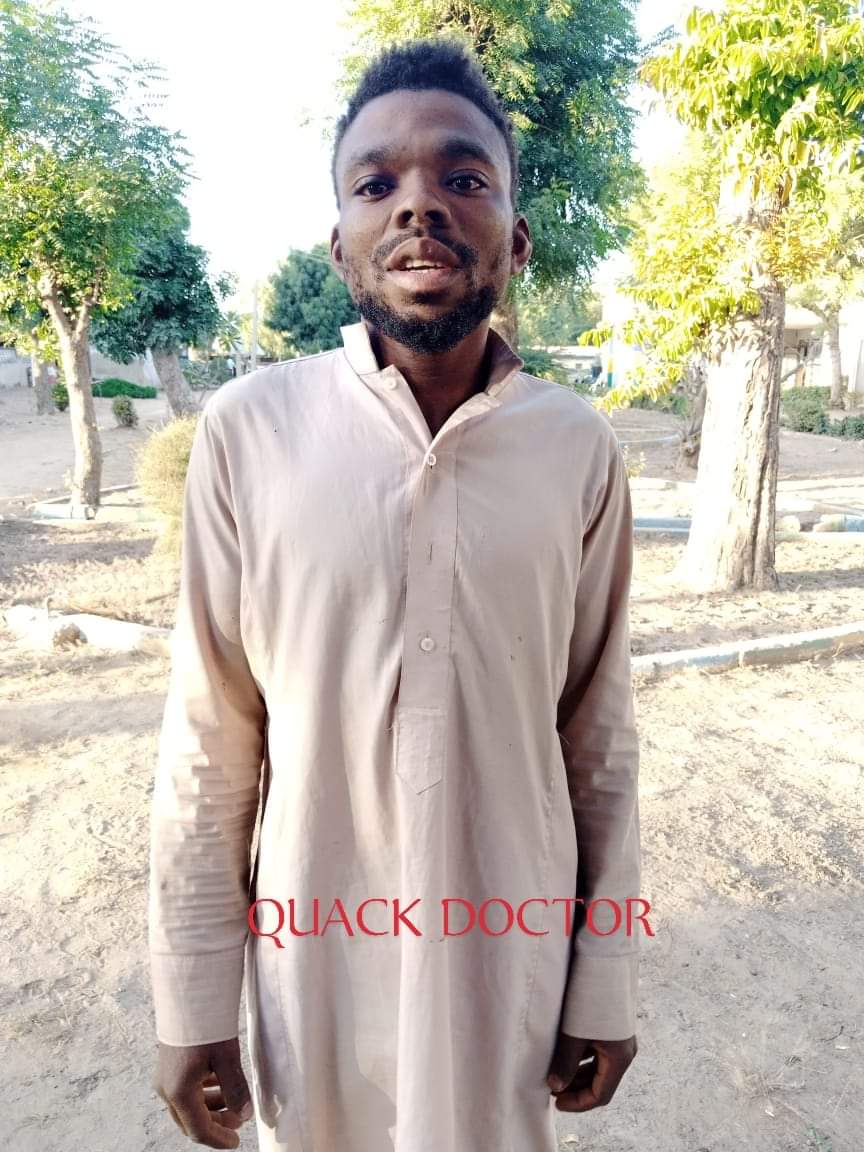
The primary suspect, a fake doctor named Gugu Chidera, was taken into custody for allegedly attempting to perform an abortion that resulted in the unfortunate death of a young lady. 

According to SP Kiyawa’s disclosure in the video, the fake doctor injected the lady and administered drugs that made her unwell, ultimately leading to her demise.  

The victim had reportedly been brought to Chidera by her boyfriend, who impregnated her. The couple, for reasons undisclosed, did not want the child to be born. 

The boyfriend, explaining the sequence of events, stated that Chidera provided drugs and injections to the lady, leading to her untimely death three weeks later. 

He clarified that, although he accompanied his girlfriend to the fake doctor, it was she who paid for the drugs. Chidera, during police interrogation, confessed that he lacked any medical qualifications.

He claimed to have only attended primary and secondary school and is currently a chemist in Kano. The self-proclaimed doctor admitted that the boyfriend sought his assistance because his girlfriend was five months pregnant. 

The dubious procedure performed by Chidera involved a payment of N2000, and he administered a concoction of vitamin C and VCM injections. 

The tragic consequences of this unlicensed and unauthorised medical intervention have left the community in shock. 

As investigations continue, the Kano State Police Command is determined to bring justice to this distressing case.

Nigerian Law School reschedules resumption date for Bar II students 

By Ahmad Deedat Zakari 

The Nigerian Law School, NLS, has rescheduled its resumption date for Bar Part II students. 

The students are now to resume on January 29th, 2024, a shift from the earlier stated date of January 15th, 2024. 

A statement signed on Wednesday by the Director General of the Nigerian Law School, Prof. Isa Hayatu Chiroma, SAN, communicated the new development to the newly admitted Bar Part II students. 

The update was also published on the Nigerian Law School’s website. 

The statement informs all prospective Bar Part II students of the change in the academic calendar.

The change is attributed to the ongoing renovation of facilities across all campuses and the headquarters of the Nigerian Law School.

Consequently, the 2024 Academic Session will now kick off on Monday, 29th January 2024, a deviation from the previously announced date.

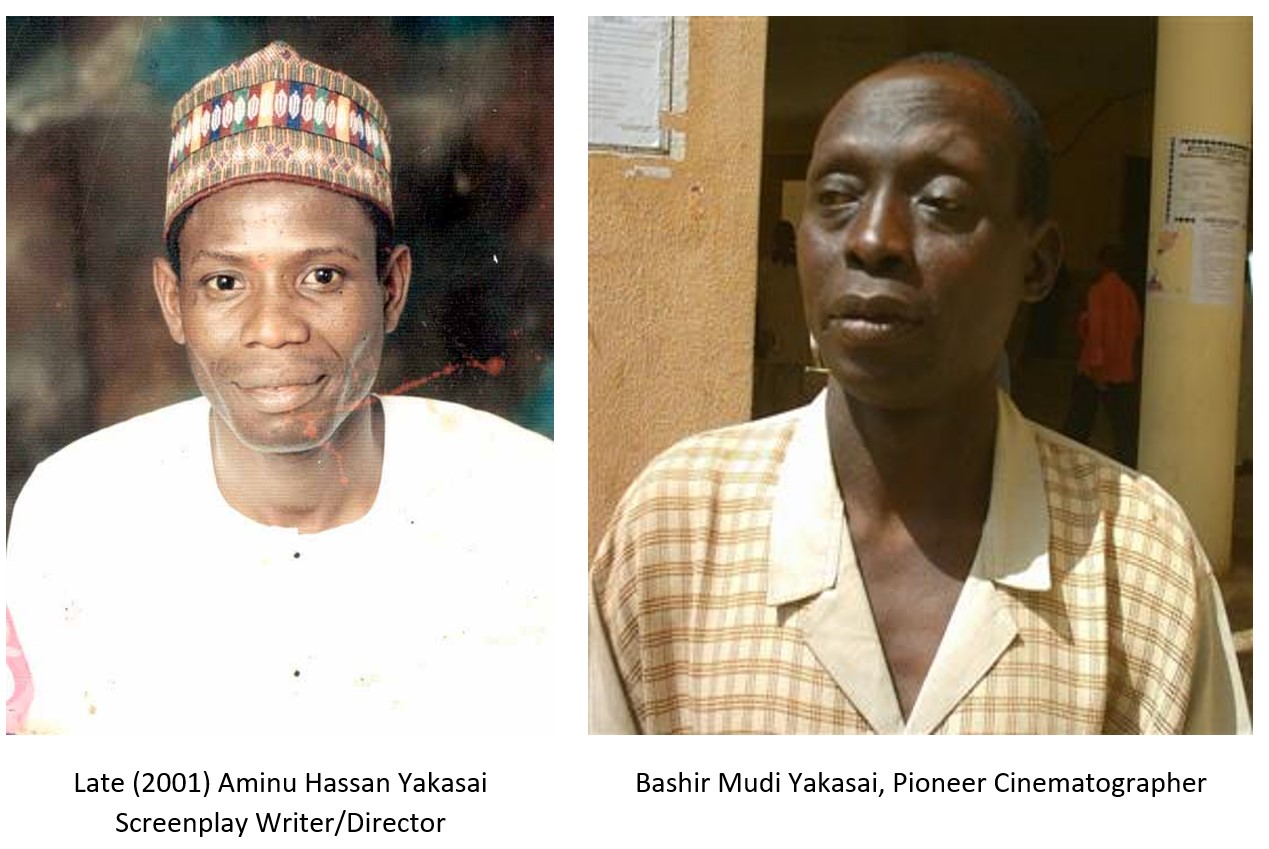
#2: Kannywood Chronicles – Aminu Hassan Yakasai and Turmin Danya

By Prof. Abdalla Uba Adamu

An industry is a system made up of interconnecting parts that synchronise together to create a perfect dynamic and functional entity. However, there is a central creative focus. Thus, while no one can claim to have been the actual originator of commercial Kannywood since many people – and processes contributed to its development – nevertheless, the creative spark that lit the fire of Kannywood was the late novelist Aminu Hassan Yakasai. If one person can be credited with creating the industry, it was him and only him. 

In the late 1970s, the Nigerian film director Ola Balogun directed two successful Yoruba films. The first, “Ajani Ogun”, was co-produced with the actor Ade Love. The second, “Ija Ominira”, starred Ade Love. Hubert Ogunde, a famous Yoruba travelling theatre showman, decided to join the trend. He invited Ola Balogun to direct Aiye, which was hugely successful and led to a follow-up, Jaiyesinmi. 

These Yoruba films found their way to Kano’s bustling “stranger” (or, more appropriately, “guest settlers”) communities of Sabon Gari in the 1980s, where they were shown in cinemas and hotel bars. This attracted the attention of Hausa amateur TV soap opera stars and crew, such as Bashir Mudi Yakasai (cinematographer), Aminu Hassan Yakasai (scriptwriter) and Tijjani Ibrahim (director). Surprisingly, despite the massive popularity of Hausa drama in television houses and government financial muscle, the idea of full-scale commercial production of Hausa drama episodes by the television houses was never considered. Individuals wishing to own certain episodes simply go to the television station and pay the cost of the tape and a duplication fee, and that was it. There was no attempt to commercialise the process on a full scale. 

In the same period, the northern cities of Kano, Kaduna, and Jos benefitted immensely from the massive transfusion of modern media influences caused by not only a liberal society but also the tolerant interaction of diverse cultures and religions in the same public spaces. They were, undoubtedly, the creative hubs of northern Nigerian popular culture. Jos was famous for its vibrant nightclub and music scene. Kaduna also had a rich musical heritage, coupled with a TV culture. Kano was more muted and relied on music and club life inflows to Sabon Gari from other regions. 

However, one aspect of popular culture Kano had that was absent in Kaduna and Jos was prose fiction. While other cities were grooving the night away, residents of Kano were burning the midnight oil. The first published modern Hausa fiction was “So Aljannar Duniya” by Hafsat AbdulWaheed from Kano in 1980`. It opened the floodgates and led to hundreds of novelists creating a whole genre of African indigenous fiction referred to informally as Kano Market Literature. 

Also, at the same time, Kano had many drama groups that enjoyed stage plays that were often improvisational and not based on any script but with a general focus on social responsibility. These drama groups became spawning grounds for those who established the Kannywood film industry. These included Tumbin Giwa Drama Group (Auwalu Isma’ila Marshall, Shu’aibu Yawale, Ibrahim Mandawari, Adamu Muhammad, Ado Abubakar, Jamila Adamu. (Gimbiya Fatima), Hajara Usman, Ɗanlami Alhassan, etc.), Jigon Hausa Drama Club (Khalid Musa, Kamilu Muhammad, Fati Suleiman, Bala Anas Babinlata), Tauraruwa Drama & Modern Film Production (Abdullahi Zakari Fagge, Shehu Hassan Kano, Iliyasu Muhammad, Hajiya Rabi Sufi, Auwalu Ɗangata, Ado Ahmad G/Dabino, Asama’u Jama’are), and Hamdala Drama Wudil ( Its members include Rabilu Musa Ɗanlasan (lbro), Mallam Auwalu Dare, Ishaq Sidi Ishaq, Bappah Yautai, Bappah Ahmad Cinnaka, Haj. Hussaina Gombe (Tsigai), Shua’ibu Ɗanwamzam, Umar Katakore etc.) There were many more, of course, but these were foundational to Kannywood. 

The TV shows from then Radio Television Kaduna were gripping and inspiring to these drama groups. TV show stars that became role models to these Kano drama groups included Ƙasimu Yero, Usman Baba Pategi Samanja, Haruna Ɗanjuma, Harira Kachia, Hajara Ibrahim, Ashiru Bazanga (Sawun Keke) and others. 

Thus, it was that at the time of producing Bakan Gizo in Bagauda Lake Hotel 1983 to 1984 Aminu Hassan Yakasai, Ali “Kallamu” Muhammad Yakasai, Bashir Mudi Yakasai started strategising creating a drama for cinema settings (thus Kannywood was often seen as the creation of a ‘Yakasai Mafia’ as those from Yakasai dominated its creative direction!).

The tentative title of the film they were thinking of shooting was to be called Shigifa. It was a story of four unemployed graduates thinking about setting up a company – a departure from the romantic or comedic focus of then-then-popular TV shows. A script idea was floated, and Aminu Hassan Yakasai was to be the scriptwriter. However, before the idea matured, the group started getting contracts for video coverage of social events, etc. Actually, part of the coverage was also stored as footage, although the film was not eventually made. 

The precise decision to commercialise the Hausa video film, and thus create an industry, was made by Aminu Hassan Yakasai in 1986, with technical support of Bashir Mudi Yakasai, the leading cinematographer in Kano, and Tijjani Ibrahim, a producer with CTV 67. 

Aminu Hassan Yakasai was a member of the Tumbin Giwa Drama Group. He was also a writer and a member of the Raina Kama Writers Association, which spearheaded the development of what became known as Kano Market Literature in the 1980s. Thus, the idea of putting Hausa drama—and extending the concept later—on video films and selling it was a revolutionary insight, simply because no one had thought of it in the northern part of Nigeria. The project was initiated in 1986, and by 1989, a film, Turmin Danya, had been completed. It was released to the market in March 1990—giving birth to the Hausa video film industry. Salisu Galadanci was the producer, director, and cinematographer, while Bashir Mudi Yakasai provided technical advice. 

The moderate acceptance of Turmin Danya in Kano encouraged the Tumbin Giwa drama group to produce another video, Rikicin Duniya in 1991 and Gimbiya Fatima in 1992 — all with resounding success. By now, it was becoming clear to the pioneers that there seemed to be a viable Hausa video film market, and this viability laid the foundation of the fragmented nature of the Hausa video film industry. While organised groups formed to create the drama and film production units, individual members decided to stake out their territories and chart their future. Thus, Adamu Muhammad, the star of Gimbiya Fatima, decided to produce his own video film, independent of the Tumbin Giwa group in 1994. The video film was Kwabon Masoyi, based on his novel of the same name, and outlined the roadmap for the future of the Hausa video film. At the same time, it sounded the death knell of the drama groups. This was because Aminu Hassan Yakasai, who created the very concept of marketing Hausa video films—and thus created an industry—broke away from Tumbin Giwa and formed Nagarta Motion Pictures. Others followed suit.

Other organised drama groups in Kano did not fare too well either. For instance, Jigon Hausa, which released a genre-forming Munkar in 1995, broke up with the star of the video film, Bala Anas Babinlata, forming an independent Mazari Film Mirage production company (Salma Salma Duduf). Similarly, Ado Ahmad Gidan Dabino broke away from Tauraruwa Drama and Modern Films Production (which produced In Da So Da Ƙauna) and formed Gidan Dabino Video Production (Cinnaka, Mukhtar, Kowa Da Ranarsa). While Garun Malam Video Club produced Bakandamiyar Rikicin Duniya, written by Ɗan Azumi Baba, after the video film was released, Baba left the group and established RK Studios (Badaƙala). 

From field studies and interviews with the producers in Kano, most of these break-ups were not based on creative differences but on financial disagreements or personality clashes within the groups. The number of officially registered “film production” companies in Kano alone between 1995 and 2000 was more than 120. There were many others whose “studio heads” did not submit themselves to any form of registration and simply sprang into action whenever a contract to make a film was made available. 

Interestingly, Adamu Muhammad of Kwabon Masoyi Productions produced the first Hausa video film entirely in English. It was “House Boy”. Although it was an innovative experiment by a Hausa video filmmaker to enter into the English language video genre, it was a commercial disaster. Hausa audience refused to buy it because it seemed too much like a “Nigerian film”, associating it with southern Nigerian video films. When the producer took it to Onitsha—the main marketing centre for Nigerian films in the south-east part of the country—to sell to the Igbo marketers, they rebuffed him, indicating their surprise that a Hausa video producer could command enough English even to produce a video film in the language. Further, the video had no known “Nigerian film” actors and, therefore, was unacceptable to them. Thus, the Hausa audience rejected it because it looked too much like a “Nigerian film”, while non-Hausa left it because it used “unknown” Hausa actors, so it must be a Hausa film, even though the dialogue was in English!

Tragically, Aminu Hassan Yakasai died in an automobile accident on Saturday, June 16, 2001, on his way to Katsina to participate in a film, “Arziki da Tashin Hankali”.

‘Mu Farka Youth Development Initiative’ lights up Kano as over 240 children embrace gift of education

 By Uzair Adam Imam 

“Mu Farka Youth Development Initiative,” in collaboration with the Ministry of Women Affairs and Social Development and UNICEF, orchestrated an event that brought unparalleled joy to the faces of over two hundred children in Kano.  

The grand enrollment ceremony took place on Wednesday at the Kano State Hisbah Board, Kano Municipal, unfolding a new chapter of education and sparking excitement and hope among the children and their families. 

Nura Ahmad Muhammad, the Executive Director of Mu Farka Youth Development Initiative, radiated enthusiasm as he spoke about the collaborative effort with the Ministry of Women Affairs and Social Development and UNICEF.  

The foundation’s achievement involved enrolling more than 240 children, a significant number of whom were Almajiri and girls who had discontinued their studies for various reasons. 

As a beacon of educational empowerment, Mu Farka did not merely open the doors to classrooms but generously provided the children with essential reading materials, school bags, uniforms, and books.  

The foundation has placed education at the forefront of its initiatives.

This includes specialised programmes designed to teach the girl child and Almajiri various businesses, all while ensuring their protection from any form of abuse.  

Moreover, the foundation takes on the responsibility of safeguarding the health and well-being of these budding scholars. 

Nura Ahmad Muhammad urged the government to lend its support to such noble initiatives, emphasising the significant role communities play in nurturing the moral upbringing of children. 

The collaborative effort of Mu Farka, the Ministry of Women Affairs, and UNICEF showcased the potential for positive change when organisations and communities unite for a common cause. 

The jubilant voices of the children echoed stories of newfound joy and opportunity 

Fatima Tijjani from Dukawa, overwhelmed with happiness, expressed gratitude for being enrolled in school and fervently prayed for continued assistance from Allah.

She also appealed to the government to promote and support similar programmes. 

Usman Muhammad, another excited beneficiary, pledged to do his best to make the most of the educational opportunity presented to him.  

Zainab Sa`ad Muhammad, who had to pause her education due to financial constraints, now revels in the happiness of returning to the classroom. 

Students have their choices – Hajiya Jamila 

One notable aspect of Mu Farka’s initiative was affording the children the liberty to choose the school they wished to attend.  

Hajiya Jamila Garba Umar, expressing her excitement, affirmed the importance of considering proximity to prevent future challenges associated with transportation. 

Sheikh Nasir Abdullahi, the Imam of the Al-Hamsad Juma`a Mosque, applauded the event and called upon the government and affluent individuals in the community to join hands in supporting such impactful programs. 

He stressed the crucial role parents play in ensuring that the children enrolled in school continue their educational journey.

List of 18 foreign universities FG banned over allegations of issuing fake degrees

By Abdurrahman Muhammad

Following the report of how the Daily Nigerian journalist obtained a university degree from Cotonou in six weeks and participated in the NYSC scheme, the Federal Government of Nigeria, through the Ministry of Education, had on Tuesday, January 2, 2024, suspended the evaluation and accreditation of degree certificates from Togo and Benin Republic universities.

In a statement on its website, the National University Commission labelled the blacklisted foreign universities as ‘degree mills.’

The statement reads in part, “The under-listed “degree mills” have not been licensed by the Federal Government and have therefore been closed down for violating the Education (National Minimum Standards, etc.) Act of the Federation of Nigeria, 2004.”

The affected institutions include five universities from the United States, three from the Republic of Benin, six from the United Kingdom, and three from Ghana.

Below is the list of the 18 foreign universities the Federal Government banned from operating within its borders.

1. University of Applied Sciences and Management, Port Novo, Republic of Benin or any of its other campuses in Nigeria.

2. Volta University College, Ho, Volta Region, Ghana or any of its other campuses in Nigeria.

3. The International University, Missouri, USA, Kano and Lagos Study Centres, or any of its campuses in Nigeria.

4. Collumbus University, UK, operating anywhere in Nigeria.

5. Tiu International University, UK, operating anywhere in Nigeria.

6. Pebbles University, UK, operating anywhere in Nigeria.

7. London External Studies UK operating anywhere in Nigeria.

8. Pilgrims University operating anywhere in Nigeria.

9. West African Christian University operating anywhere in Nigeria.

10. EC-Council University, USA, Ikeja Lagos Study Centre.

11. Concept College/Universities (London) Ilorin or any of its campuses in Nigeria.

12. Houdegbe North American University campuses in Nigeria.

13. Irish University Business School London, operating anywhere in Nigeria.

14. University of Education, Winneba Ghana, operating anywhere in Nigeria.

15. Cape Coast University, Ghana, operating anywhere in Nigeria.

16. African University Cooperative Development, Cotonou, Benin Republic, operating anywhere in Nigeria.

17. Pacific Western University, Denver, Colorado, Owerri Study Centre.

18. Evangel University of America and Chudick Management Academic, Lagos.

MURIC hails FG for suspending degrees from Benin, Togo

By Abdurrahman Muhammad

An Islamic human rights organisation, the Muslim Rights Concern (MURIC), has commended the Federal Government (FG) for suspending the accreditation of degrees obtained from the Republic of Benin and Togo. 

The ban on accreditation followed the discovery of irregular and fraudulent practices in the admission and course programs of some universities in the two countries.

MURIC’s commendation came through a statement issued by its Executive Director, Professor Ishaq Akintola, on Wednesday, 3rd January 2024. 

He said:

“A laudable move was made yesterday by the Federal Government (FG) when it suspended the accreditation of degrees from the Republic of Benin and Togo for their irregularities and fraudulent practices” (FG Suspends Accreditation Of Degree Certificates From Benin Republic, Togo – Channels TV).

“It will be recalled that Umar Audu, an investigative journalist of Daily Nigeria newspaper, reported recently that he bagged a degree within six weeks of being admitted into one of such universities and also served as a corper in the National Youth Service Corps (NYSC) with the certificate obtained. The undercover journalist received both the transcript and certificate of the Ecole Superieure de Gestion et de Technologies (ESGT), Cotonou, Benin Republic, after six weeks only.

 It was this story that prompted FG to ban the accreditation of certificates obtained from universities in those countries (https://dailynigerian.com/undercover-how-daily-nigerian/). 

“MURIC lauds FG for banning those fraudulent certificates. The holders of such fake credentials pose a grave danger to the lives of Nigerians and the quality of public service, too. 

“We charge the ministries of education at both federal and state levels to be wary of holders of such certificates. Those found to have been employed with them should be shown the way out. Furthermore, the security agencies should fish out those behind the fraudulent admissions within Nigeria. Those are agents of the fake tertiary institutions in faraway Benin and Togo. They should be made to face the full wrath of the law.

“We demand an investigation into circumstances surrounding the clearance letter issued by the Federal Ministry of Education, which confirmed that the university (ESGT) is on the ministry’s list of accredited institutions. It was this letter which enabled NYSC to accept 51 fake graduates to serve in the scheme.  On its own part, NYSC authorities must take necessary action on the 51 fake corpers from ESGT who are serving illegally. They must be flushed out. 

“We also advise gullible but innocent Nigerians who have obtained the certificates to quickly set the machinery in motion to correct the anomaly. They should upgrade themselves by seeking authentic university admission either within or outside the country.

“Education may be the key to technological breakthrough and the concomitant industrial progress, but half-baked education and fake certificates are deadly dynamites in the system which is capable of destroying everything that may have been achieved.

“Before we draw the curtain, we find the undercover journalist equally worthy of encomiums. He went underground to unearth this educational fraud. He put his life on the line for the sake of his country. Umar Audu is worthy of emulation by his colleagues in the Fourth Estate of the Realm.”

As bandits relocate to Taraba and the Plateau 

By Zayyad I. Muhammad

Recently, the media have been awash by the news of bandits’ attacks in Taraba and Plateau states. On November 24, 2023, it was reported that gunmen in their numbers attacked and killed 20 people in the Yangtu Development Area of the Ussa Local Government Area of Taraba State. In the early hours of Tuesday, December 19th, 2023, other gunmen attacked the Pupule community in Yoro Local Government Area of the same Taraba state, kidnapped Umaru Nyala, the chief of Yorro chiefdom, and also abducted 22 other people.

The Taraba State police command and other security operatives killed over 50 bandits terrorizing villages along the corridor of Bali Local Government Area on Tuesday, November 28th, 2023. On the other hand, on Wednesday, December 27, 2023, a group of bandits stormed the Gondon Maliki weekly market in Taraba State, kidnapped scores of people, and carted away food and wares using motorcycles.

The Sultan of Sokoto, Alhaji Sa’ad Abubakar III, while condemning the gruesome murder of over 100 people in the Plateau, said, “The bandits seem to be ahead of the government.”

To be fair to all the Nigerian security operatives, they’ve done an excellent job in the Northwest states of Zamfara, Kaduna and Katsina, in facing the menace of the bandits. These states have witnessed a visible improvement in security in areas being terrorized by the bandits, and the Abuja-Kaduna highway is secured while the Niger axis is a little bit silent.

It appears that the military onslaughts on the bandits and other terrorists have killed many of their leaders, and they have dispersed to the Northeast axis and some parts of the Plateau. Why did the bandits settle in these areas, especially the Northern parts of Taraba State – Yorro, Lau, Jalingo and Ardo Kola local government areas? Is it due to its topography, location or economy? Taraba State is among the poorest states in Nigeria but rich in agriculture and forestry. Probably the bandits found solace in Taraba due to its uniqueness in geography and agricultural activities. Furthermore, the Cameroonian mountains, which stretch almost to the entire Northern and Southern parts of Taraba, linking the state with the River Niger, will certainly provide a hiding place for criminals, bandits in particular.

The only way of this menace is for the state, federal and local communities to work together; collaboration is key to security management. For example, at its 8th and 9th meetings held in Maiduguri, the Borno State capital, on September 9th, 2023, and in Yola, the Adamawa State capital, on November 24th and 25th, 2023, the Northeast Governors’ Forum expressed its concern about the new dimension of the growing banditry in Bauchi, Gombe and Taraba states, and this may be as a result of the concerted efforts of the military on neutralizing the bandits from other parts of the country. The governors called on the federal government to intervene and promised to work with and support all security agencies.

Managing security in a vast country like Nigeria with inadequate modern technology for security management can be very difficult, and our security operatives cannot be everywhere and anywhere at the same time. So what is the solution?

The re-invigoration of the kinetic and non-kinetic security approaches by the Office of the National Security Adviser (ONSA) has resulted in many successes and breakthroughs; however, more intelligence gathering is needed; community engagement and direct communication with the bandits should be employed. In community engagement, the model being used by the Governor Ahmadu Umaru Fintiri-led Adamawa state government in tackling farmer-herder conflict should be adopted; the community should be made to feel part of the solution in security management, thus providing intelligence and also being a watchdog for security operatives without being endangered.

Secondly, the reported ongoing ‘soft approach’ should be sustained and, indirect communication with the bandits. Most of them now also use social media; thus, a kind of smooth operation should be launched by the ONSA and other relevant bodies to recruit people who speak the languages of bandits to send convincing messages to them on the ills, disadvantages and evils associated with their dangerous ‘trade’ while showing them the beauty and benefits being enjoyed by their ‘kind’ who adopt normal lives, go to school both western and religious, but still maintain their culture, beliefs and inherited legal trade.

Furthermore, radio and TV are also tools to reach the bandits, as satellite TV and solar power technology have now made it possible to watch or listen to the world, wherever one is – bandits, hiding in thick forests, use solar power and satellite technology to charge their phones, watch TV and listen to the radio. Above all, justice and fair play by those in power in providing the basics of life and alleviating poverty and ignorance away from these bandits will surely assist a lot in reforming them back to society.

Zayyad I. Muhammad writes from Abuja via zaymohd@yahoo.com.

The hidden reality of life in Europe

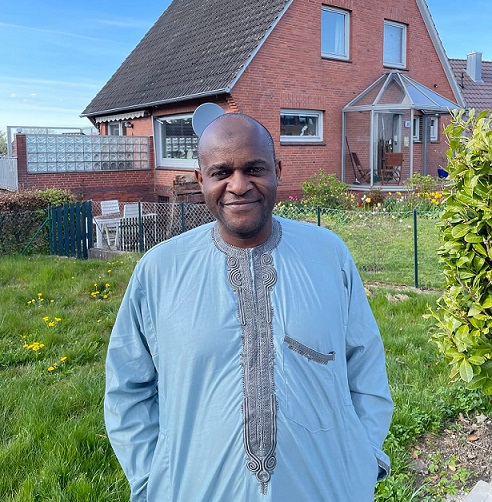
By Aminu Mohammed

This article was inspired by a recent post by Dr Muhsin Ibrahim on Facebook regarding money belonging to someone named “Hassan Idris” sent through his PayPal account. Muhsin made the post asking the person to identify himself by sending him a message. However, soon after, he was inundated with messages from people seeking help in various forms. Some even asked him for money, assuming he had won a lottery or had ample cash stocked somewhere.

This issue not only worried me but also made me sad about the attitude of our youths. So that you know, I also live in Germany. I am yet to fathom the reason for the sudden influx of requests based on a Facebook post. Is it desperation, greed, ignorance, or the belief that money grows on trees in Europe?

I have thought about this issue and wondered why this behaviour occurred. Is it that the economic situation in the country has impoverished a large segment of society, making people desperate and in dire need of free money? What could be the reason behind this attitude?

I want to make it clear that I am aware of the difficult economic situation in Nigeria due to inflation and other factors. I also understand that there are genuine people who are in dire need of help and who reach out to Muhsin for support. However, I want people to know that just because Muhsin lives and works in Germany, it does not mean he is rich.

The Untold Story About Europe

Europe is often seen as a paradise with streets paved with gold and abundant wealth. However, the reality is different. Life in Europe is not as easy as it seems. Homelessness and begging are common in countries such as France, Italy, the Netherlands and the United Kingdom. In London alone, at least 167,000 people are homeless due to the high cost of living. Comparably, a great number of immigrants, among them Africans, are stuck in Europe and unable to return home because they are afraid of what is ahead.

 Although the standard of living is high in Germany and the government provides stipends for jobless citizens, there are still poor people, beggars and homeless people in the country. In my former city, Kiel, I have seen people sleeping in public buildings and bank corridors, even during the harsh winter months. I recently saw a naked woman amongst the homeless folks at the Hamburg Central Station, probably suffering from mental illness. It was heartbreaking.

Despite these challenges, there are still opportunities for people with relevant skills to excel and succeed in Europe. Even without a university education, one can live a good life in Germany by being disciplined and hardworking.

Rising Living Expenses

The ongoing war between Russia and Ukraine has brought about significant economic changes in Europe, particularly in Germany. As a result of Germany’s reliance on Russia for affordable energy, particularly gas, to power its numerous industries, the country has been severely impacted. Germany had to look for alternative gas sources, mainly from Norway and the Middle East. This has led to an increment in energy costs and subsequently affected the cost of living and production.

The high cost of living has affected many families, with numerous individuals struggling to pay their bills monthly. The rat race has worsened, and many people live paycheck to paycheck. Groceries and the prices of other goods have doubled or, in some cases, even more. This is in addition to an increase in rent, energy, water bills, etc.

2024 Goals

It is an incredible experience to step out of your comfort zone and explore new places in life. However, before travelling to any country, please conduct thorough research and set reasonable expectations. Life is not always easy, but you can succeed with diligence, perseverance, and hard work.

Set your goals for this year, and take concrete steps to achieve them. Additionally, aim to acquire new digital skills to increase your earning potential. I wish you the best as you enter the New Year with renewed energy and determination.

Aminu Mohammed wrote this article from Ingolstadt, Germany. He can be reached at gravity23n@gmail.com.

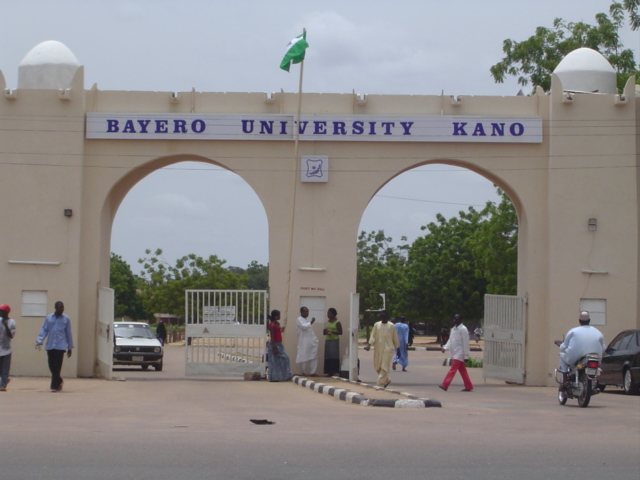
BUK graduates give out almost N1 million, foodstuffs to deceased colleagues’ families 

By Sabiu Abdullahi

The graduates of the Faculty of Arts and Islamic Studies (FAIS) class of 2004 at Bayero University Kano (BUK) gathered at their 12th Annual General Meeting in Kano on Sunday to extend a helping hand to the families of 18 deceased classmates. 

Chairing the reunion, Sulaiman Muhammad Adamu noted that the event wasn’t merely about socialising but a platform to reminisce about the past, savour the present, and collectively envision the future while fortifying the bonds that tie them together. 

Daily Trust quoted Adamu to have said, “We are here to enhance unity among the members of this forum and support the families of our deceased colleagues who have passed away. We are supporting them in order to bring them in for more support.”

Disclosing that the support includes food items and a cash token amounting to N50,000 for each family, Adamu assured that the forum would continue to explore additional ways to assist the bereaved families. 

The beneficiaries expressed gratitude for the thoughtful gesture, acknowledging the significance of being remembered and included in the activities of their former classmates. 

This act of solidarity not only reflects the compassionate spirit of the FAIS class of 2004 but also serves as a testament to the enduring bonds forged during their university years.

UK issues strict policy stopping Nigerian, other international students from bringing dependents

 By Sabiu Abdullahi 

In its effort to curb the high rate of Japa, the United Kingdom’s Home Office has officially rolled out its rigorous policy restricting Nigerian students and other international counterparts from bringing dependents into the country via the study visa route.

This significant development, designed to tighten immigration controls, was announced on the Home Office’s social media platform, X (formerly Twitter), this Monday. 

According to the updated regulations, only postgraduate research students and those with government-sponsored scholarships will be exempt from the prohibition on bringing family members.

This follows the implementation of a law in May 2023 that specifically targets the entry of dependents for Nigerian and other international students, reflecting the broader government objective of reducing immigration, which currently stands at approximately one million. 

The Home Office reaffirmed its dedication to a substantial reduction in migration, declaring, “We are fully committed to seeing a decisive cut in migration. From today, new overseas students will no longer be able to bring family members to the UK. Postgraduate research or government-funded scholarships students will be exempt.” 

In addition to the ban on bringing dependents, the new regulations include the removal of the permission for international students to switch from the student route to work routes before completing their studies, aiming to curtail any misuse of the visa system. 

The UK government also announced a comprehensive review of the maintenance requirement for students and their dependents, coupled with a crackdown on “unscrupulous” education agents involved in improper applications that exploit immigration pathways rather than genuine educational pursuits. 

A statement on the official site of the UK’s Home Office outlined the government’s objective to significantly reduce net migration by restricting the ability of international students to bring family members, with exceptions only for postgraduate research routes.

The move also seeks to prevent individuals from exploiting student visas as a backdoor route to work in the UK.