Month: October 2023

From school bench to professorship: The inspirational journey of Dr MI Aminu

By Tijjani Ahmad, FCA

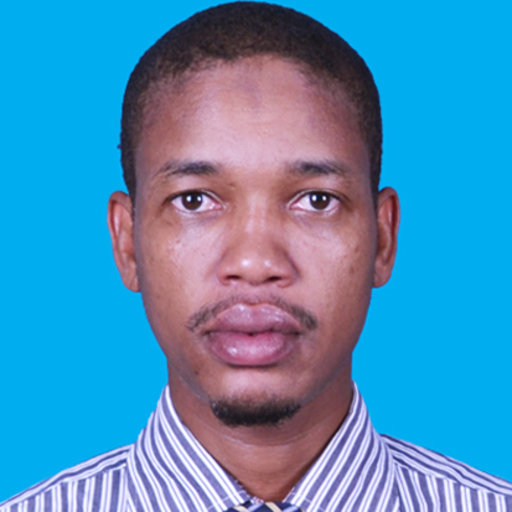
Our lives are often shaped by the people we meet along the way, and for me, one of those people has been a dear friend whose journey I’ve witnessed since our junior secondary school days. Dr MI Aminu’s life is a testament to the power of determination, hard work, and the pursuit of excellence, leading to his remarkable success as an academic and career professional.

Our paths first crossed in junior secondary school, where we shared the challenges and triumphs of those formative years. From there, we ventured into senior secondary school, navigating the complexities of education and personal growth side by side. But our educational journey was far from over. After completing our senior secondary education, we took a significant step in our academic paths by attending the College of Arts, Science and Remedial Studies (CAS), Kano, for IJMB A-level. During these pivotal years, we solidified our friendship and embarked on a shared journey of intellectual growth.

It was after our time at CAS that our paths diverged. Dr Aminu pursued his dreams at Usman Danfodio University, Sokoto (UDUS), where he chose to study Business Administration, driven by his passion for business and entrepreneurship. Meanwhile, I ventured to Ahmadu Bello University (ABU), Zaria, to pursue a degree in accounting, charting my unique course.

While our locations and fields of study differed, our friendship remained steadfast. We supported each other from afar, exchanging stories of our academic pursuits and experiences. It was evident that a shared desire for knowledge and personal growth drove both of us. After completing his studies, Dr. Aminu entered the corporate world, working tirelessly in the banking sector for four years. During this time, his dedication to knowledge and personal growth never wavered.

The academic world beckoned at this stage, and he answered its call. He left his banking career to pursue an academic path, starting with Kano State Polytechnic. This transition reflected his commitment to knowledge and desire to inspire the next generation of leaders and entrepreneurs. His academic journey reached a pinnacle when he set his sights on a PhD in Entrepreneurship. This pursuit took him to Malaysia, where he immersed himself in research and scholarship, guided by the erudite Prof. Rosli Mahmood, one of the foremost professors in the field of management and entrepreneurship in Asia. Under Prof. Mahmood’s mentorship, Dr Aminu honed his expertise in the area he was so passionate about.

Upon earning his PhD, Dr Aminu returned and found his way to one of the prestigious universities in Nigeria, ABU, Zaria, where he was welcomed as a faculty member. His dedication to research and scholarship is evident in his publication of over twenty articles in reputable journals, leaving an indelible mark on entrepreneurship, as reflected in the impressive 160 citations garnered by his works.

Beyond his scholarly achievements, Dr Aminu’s commitment to education shines brightly through his mentorship of over 20 MSc and PhD students. With a generous spirit and fervour for guiding the next generation, he imparts the values of perseverance and academic excellence. Dr Aminu’s unwavering commitment to research and his nurturing of future academics epitomises his lifelong dedication to knowledge and personal growth, serving as an inspiring testament to the transformative influence of education and mentorship.

But the story doesn’t end there. Dr. Aminu recently achieved another milestone in his academic career – he was promoted to the coveted position of Associate Professor of Entrepreneurship at ABU, Zaria. This promotion is a testament to his years of dedication to academia, rigorous research, and his commitment to entrepreneurship. It is not just a title but a recognition of his contributions to the academic community and his impact on countless students over the years.

Dr MI Aminu’s remarkable journey reminds us that the pursuit of excellence and the fulfilment of one’s dreams are endeavours that require unwavering dedication and the courage to navigate diverse paths. His story underscores the profound impact of mentors and the importance of nurturing the next generation of leaders. It teaches us that regardless of the challenges we face or the twists and turns in our journey, with resilience and a steadfast commitment to our aspirations, we, too, can achieve greatness. His life is an enduring testament to the boundless possibilities that await those who embrace lifelong learning, pursue their passions, and inspire others.

Today, Dr. Aminu stands as a beacon of inspiration to all who have known him. His journey from our school days to his current position as an Associate Professor at Ahmadu Bello University, Zaria, is a testament to his unwavering commitment to education, entrepreneurship, and personal growth. May his story continue to inspire us all as we pursue our paths to success.

Tijjani Ahmad wrote from Kano via ahmatee123@gmail.com.
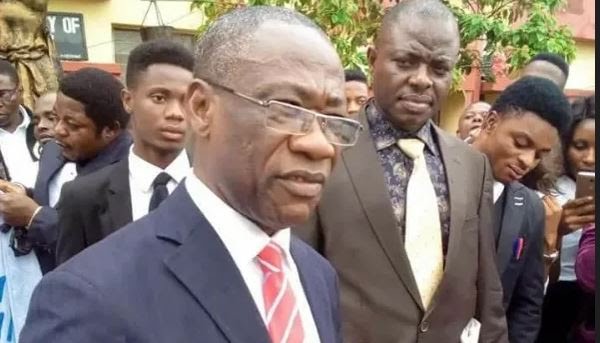
DSS arrests university professor for alleged sexual harassment

By Sabiu Abdullahi 

Operatives from the Department of State Services (DSS) have apprehended and detained Prof. Cyril Ndifon, the former Dean of the Faculty of Law at the University of Calabar, over alleged sexual harassment of female law students.

This development comes after a series of protests erupted within the institution, leading to the suspension of Ndifon by the university management pending investigations into the allegations. 

Prof. Ndifon vehemently denied the accusations, asserting that the protests orchestrated against him were the result of a conspiracy by certain individuals within the faculty who aimed to destroy his reputation.

He labelled the claims against him as baseless lies aimed at tarnishing his image. Confirming the arrest, DSS spokesman Peter Afunanya revealed that Ndifon was taken into custody in Abuja after he repeatedly refused to comply with several invitations extended to him for questioning.

Afunanya clarified that the DSS’s intervention was initiated following a request from the Independent Corrupt Practices and Other Related Offences Commission (ICPC).

This joint effort between the agencies was conducted within the framework of inter-agency collaboration and was executed in accordance with a court order granting permission for Ndifon’s arrest. 

Despite efforts to obtain comments from the ICPC spokesperson, Azuka Ogugua, she could not be reached for a statement as calls to her phone remained unanswered at the time of filing this report.

Sex Education: MURIC commends Kano State Gov’t for banning teaching materials

By Abdurrahman Muhammad

The move by the Kano State Government to remove some lewd and pernicious teaching materials from the curriculum of both public and private basic schools in the state has been commended by the Muslim rights advocacy group, the Muslim Rights Concern (MURIC).

The Kano State Government, through the office of the Special Advisor on Private and Voluntary Institutions, issued the prohibition in an announcement made on Thursday, 5th October 2023. 

In the announcement, the Kano State Government listed some six (6) textbooks prohibited for instructional use “due to observed inclusions(sic) of inappropriate and sexually explicit contents that are harmful to the morals of our young students.”

The decision of the Kano State Government, under the leadership of Governor Abba Kabir Yusuf, to prohibit the use of obscene teaching materials in the state has come at the right time. Therefore, all parents, educationists, learners and advocates must embrace and support the initiative so as to tame the alarming rise of immorality amongst the youths in the state. 

The human rights group lent its support by calling on the authorities to ensure strict compliance by both public and private schools in the state. 

The commendation was contained in a statement released by the Chairman of the Kano State Chapter of the group, Malam Hassan Sani Indabawa, on Friday, October 6, 2023. 

Mr Indabawa further said:

“As one of the front-line advocates for the removal of all obscene teaching aids from the nation’s educational system, we at MURIC rejoice and commend the Kano State Government for doing the needful by prohibiting the use of some selected teaching materials found to contain sexually explicit contents which are perverse to the moral upbringing of pupils in the state.

“The surreptitious inclusion of explicit sexual contents in some of the basic education teaching materials was part of the Comprehensive Sexuality Education (CSE) developed by the United Nations Population Fund (UNPF) for worldwide use to promote promiscuity, fornication and homosexuality. This is one of the evils of globalisation. Certainly, this strange knowledge contradicts our faith, culture and values.

“Aside from the CSE, many textbooks used in Nigerian schools have been corrupted with lewd contents. 

“Nigerians may be well aware that in the last twenty years or so, classical English literature books and novels such as Macbeth, Julius Caesar, Merchant of Venice, Weep Not Child, Things Fall Apart, The Man Died, African Child, Akin the Drummer Boy, Mine Boy, The Delinquent and so forth have been removed from our school curricula and replaced with sex-related local English literature and other science books containing lewd and pernicious matters to give the unsuspecting young school pupils the wrong impression that self-control is unnecessary and that casual sex makes them feel good; that they should engage in casual sex before marriage; that ‘safe sex’ is what to aim for in life provided that they don’t get pregnant and if they do get pregnant, they should go for abortion. 

“As we may equally be aware, one of the negative consequences of this is the sexualisation of primary and secondary school pupils.

“Therefore, the prohibition of the use of offensive textbooks by the Kano State Government must be backed by appropriate legislation to provide a legal framework for sanctioning any erring school authority for effective implementation of the government’s directive.

“The Office of the Special Advisor on Private and Voluntary Institutions and Kano Educational Resource Department (KERD) must be well-equipped to ensure strict compliance as it is our belief that some self-seeking, unscrupulous and unconscientious groups and individuals may attempt to frustrate the effort with the support of the global conspiracy designed to destroy the fabric of our family value system, decency and modesty.

“We also call on other state governments to emulate Kano State Government by reviewing and removing all lewd and pernicious teaching materials from their various basic education curriculum.

“Finally, we reiterate our earlier call, made on the 25th May 2023, to the Nigerian Educational Research and Development Council (NERDC), a federal government agency charged with the responsibility of implementing educational policies in Nigeria, to immediately review and expunge any sex-related content from the curriculum being used in Nigerian basic schools.”

Napoli issues statement dissociating self from caricature of Osimhen

By Sabiu Abdullahi

Napoli, the renowned Italian football club, vehemently denied reports circulating in the Italian media regarding the release of a children’s toy named ‘Cicciobello Bomber,’ inspired by Napoli striker Victor Osimhen wearing the club’s shirt. 

The club’s spokesperson stated, “We’re denying any report on the Italian media about releasing kids toy ‘Cicciobello Bomber’ inspired by Victor Osimhen in Napoli shirt.” 

The statement continued with a firm assertion that the said product was not authorised by the club. “That product was not authorized by the club — we will settle this issue in court,” added the spokesperson, underscoring Napoli’s determination to resolve the matter through legal channels. 

This announcement comes as a response to recent media speculation, which suggested the launch of a toy featuring Osimhen, a key player for Napoli, in the team’s attire.

Napoli has made it clear that they have no connection to, nor have they endorsed such a product.

The club’s decision to pursue legal action notes their commitment to protecting their brand and ensuring that unauthorised merchandise is not associated with their esteemed name. 

As the club prepares to address this matter in court, Napoli fans and the public await further developments regarding the unauthorised toy release.

Napoli remains focused on their upcoming matches, striving for success on the field while simultaneously safeguarding their reputation.

Lost Heritage Series: The (w)rite stuff of Hausa Islamic learning

By Prof. Abdalla Uba Adamu

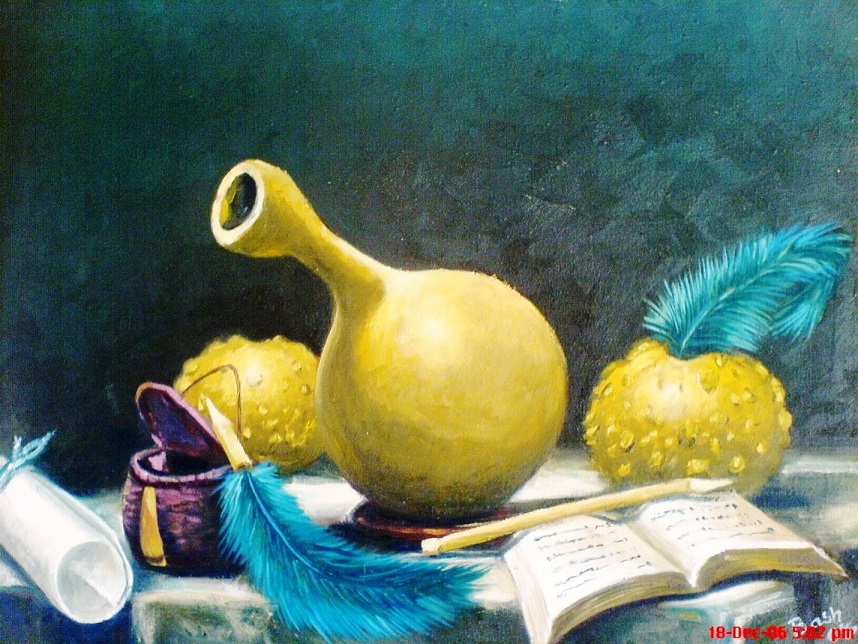
The painting evoked memories. And a sense of scholastic pride. Pride in being part of a process that has generated centuries of excellence. And today is Teacher’s Day, a case for celebration of scholarship from below. Even Google’s Doodle for the day acknowledges this.

Years ago, a painting was brought to me to purchase by an artist, Nura Yusuf – the artist being aware I am an art nut. It was a medium-sized canvas and truly beautiful in a photorealistic way. My Ajamization of Knowledge initiative inspired him. But there was no way I could afford the price he was asking, even if I accepted that it was a fair price. I asked his permission, though, to photograph it with my Sony DSC.

I eventually saw the canvas hanging in the outer waiting room of the Emir of Kano’s main reception chamber. Regretfully, you will only notice it if you swing your head up. I think, eventually, it was relocated.

Looking at the painting, as I said, evoked memories of Makarantar Malam Hussaini, Mandawari. Now renamed Makarantar Malam Buhari and reinvented as an Islamiyya school, along Sabon Titi, in the inner city of Kano. In the school, when Malam Hussaini was the Head, you left early if you reported early; otherwise, you stayed behind after the school closed to continue your studies.

Memories of going from house to house, requesting the good folks to allow us to brush their cooking pots with our bare hands, seeking the fine soot that covers the pots, the result of open-fire cooking with logs of wood. Once you gather enough powdered soot, you then dunk your hand in a bowl of water and wash the soot off. Next, you sprinkle a few crystals of gum Arabic in the water and boil the lot – effectively creating a syrupy ink, the classical ‘tawada’. While burnt wood from home cooking fires can do the job, the elite of Tsangaya inks is ‘zuge’, a burnt desert-date tree. The ink itself is often mixed in various colours, depending on its use in copying the Qur’an. These colours come in handy, especially on the graduating certificate – allo – when it is decorated with zayyana calligraphic designs. A whole industry has existed around this trade for years, especially in the heart of the city of Kano, northern Nigeria.

To make a pen, you need a thick dry stalk – gamba – from the grass used for fencing (zana) homes in rural areas. Using a Tiger razor blade (not Nacet, as it easily breaks), you sharpen the edge of the stalk and fashion a neat nib, creating an alƙalami — pen. There were many styles for the nib, depending on the writing to be done. For some, the alƙalami can be a true calligraphic tool.

Properly armed with a pen and ink, you begin the process of carefully copying the verses of the Qur’an, according to your grade, onto the wooden slate until you copy the right passages. You lean it against the wall for it to dry and await your turn to read what you copied by the teacher. Once properly groomed on the reading, off you go to practice reciting on your own.

Once you feel you are proficient enough, you go back to the teacher, read your passages and once satisfied with your diction, and cadence, you are permitted to go to the next passages – wash off the present one – wanke allo – and copy the next sequence. Due to the dark colour of the ink, the wooden slate often absorbs the ink and darkens the slate. The best way to get rid of it is to use sandpaper to scrape it completely – or, failing that due to cost, rice bran – ɓuntu – which works just as well – to remove traces of the previous ink. If the smudges or shadows of the ink still remain, you can use powdered limestone – farar ƙasa – to overlay the darker stain of the ink, giving a clean white surface on which to write.

Ink is kept in a pot, kurtun tawada, while the pens are kept in a pen holder, ƙorami/alkurdu. For adolescents starting up, it was the wooden slate. For the more advanced students, the writing is done on conqueror bond paper (usually imported from North Africa), but the pen is now a quill from the tail or wing feathers of a bird (chicken, duck, guinea fowl).

And in case one gets thirsty doing all that hard work, you can always quench your thirst from the water stored in your water bottle – jallo, made from a gourd. This type of water bottle enters into the Hausa lexicon with the expression: “ina neman sa kamar ruwa a jallo/desperately looking for him.”

This scholastic tradition is well-preserved in this painting by Nura Yusuf, who incidentally happened to be a brother to the writer and poet Khalid Imam. Being Teachers Day today, I dedicate this painting to all Alarammomi, Gardawa, and Ƙolawa, who are my fellow classmates in every Tsangaya in this country. We pray for the souls of our Malaman Tsangaya, who set us on the right path. Allah Ya jiƙansu da Rahama.

Happy Teachers’ Day!

By Abdurrazak Muktar Makarfi

On this particular day, we celebrate the incredible dedication and hard work of teachers who shape the future of our society. Teachers play a vital role in nurturing young minds and inspiring a love for learning.

However, it’s important to acknowledge the challenges many teachers face, especially regarding their financial well-being. In Nigeria, the issue of primary school teachers’ salaries is a pressing concern. It’s disheartening to hear that fresh graduate primary school teachers are earning less than ₦50,000, which is not enough to sustain them for a month, given the rising cost of living.

Moreover, the situation in Kaduna State is even more distressing, where primary education teachers have to endure 45-55 days without receiving their salaries. This not only affects their livelihood but also their motivation to continue their invaluable work in educating the next generation.

On this Teachers’ Day, let’s hope for change and improvement in the conditions of our primary school teachers. May the Nigerian government take prompt action to address the issue of teacher salaries and ensure that our educators receive the fair compensation they deserve for their tireless efforts in building a brighter future for our children.

Thank you for being a part of this noble profession, and let’s continue to advocate for better conditions for our teachers. Happy Teachers’ Day once again!

A fool

A fool I was,

To believe we shared something.

I had never felt so broken before,

Not even when my last left me.

I should have learned my lesson then,

But NO!!

I believed you were better than that.

Now, it’s all plain in sight,

Directly in my face 

I can’t deny the obvious truth anymore.

Your betrayal hurt like hell,

The thought of our “forever deal” breaking off 

Keeps turning me mad,

I seem to be losing control……

I know this is me 

not letting go of the shattered dreams,

But if this is truly a dream,

Wake me up to reality 

I don’t think I can survive this pain.

©Ink of Emotions 

Nigeria’s Independence Day: The journey so far

By Usman Abdullahi Koli

Nigeria, often called the “Giant of Africa,” celebrates its independence day on October 1st each year. This significant day marks the country’s liberation from British colonial rule in 1960. Over the past six decades, Nigeria has experienced a tumultuous journey characterized by both achievements and challenges. 

Nigeria’s quest for independence was a long and arduous journey spanned several decades. The seed of nationalism was planted in the hearts of Nigerians during World War II, as they contributed significantly to the British war effort but received little in return. This sparked a desire for self-determination and freedom.

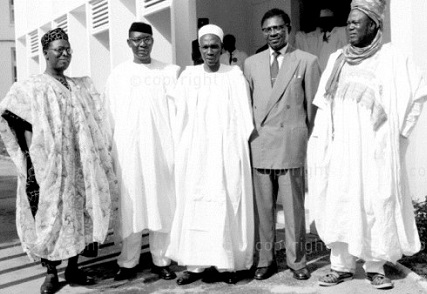
Key figures in Nigeria’s independence struggle included Nnamdi Azikiwe, Obafemi Awolowo, Abubakar Tafawa Balewa and Ahmadu Bello, who advocated for self-governance and pushed for constitutional reforms. In 1960, their efforts bore fruit when Nigeria finally gained independence from British colonial rule, with Sir Abubakar Tafawa Balewa as its first Prime Minister.

While independence brought newfound freedom, it also presented significant challenges for Nigeria. One of the most pressing issues was the need to unite a diverse nation of various ethnic groups, languages, and religions. The delicate balance of power among these groups has often led to ethnic tensions and conflicts.

Additionally, Nigeria has grappled with political instability, military coups, and periods of military rule. The Biafran War (1967-1970) and subsequent coups disrupted the nation’s stability and led to a loss of lives and resources.

Economic fluctuations have marked Nigeria’s journey since independence. Despite being blessed with abundant natural resources, including oil, the country has faced challenges in managing its economy effectively. Over-reliance on oil exports has left Nigeria vulnerable to fluctuations in global oil prices, resulting in economic instability.

Corruption has also been a persistent issue, hindering economic growth and development. The mismanagement of public funds and the lack of transparency have impeded progress in various sectors, including education, healthcare, and infrastructure.

Despite the challenges above, Nigeria has achieved noteworthy progress in several domains. The nation exhibits a lively cultural landscape abundant in traditional practices, artistic expression, and literary works.

In recent years, there have been efforts to diversify the economy away from oil dependency. Investments in agriculture, technology, and entrepreneurship have begun to yield positive results, with a growing number of startups and innovations emerging.

Nigeria has also played a prominent role in regional and international diplomacy, contributing to peacekeeping missions and serving as a key player in the African Union and the United Nations.

Both progress and challenges have marked Nigeria’s journey from colonial rule to independence and beyond. As the country celebrates Independence Day each year, it is an opportunity to reflect on the past, acknowledge the struggles, and look forward to a brighter future. Nigeria’s rich cultural heritage, economic potential, and resilient people continue to be sources of hope as the nation strives for unity, stability, and sustainable development in the years to come. 

Usman Abdullahi Koli wrote via mernoukoli@gmail.com. 

Balarabe faints during Senate screening

By Ahmad Deedat Zakari 

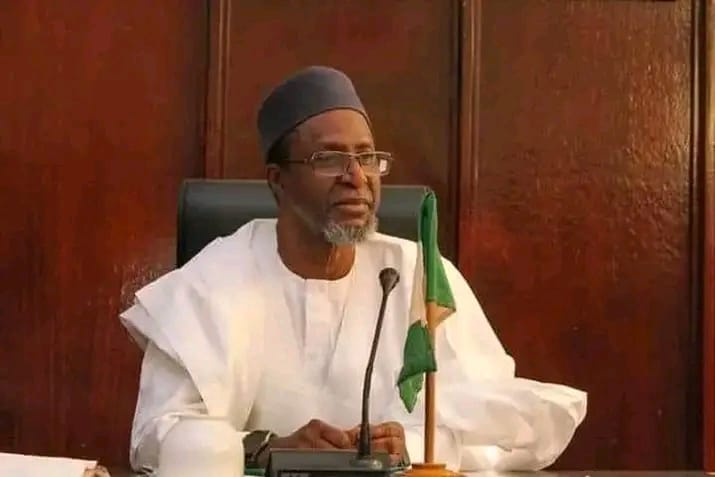
A ministerial nominee, Balarabe Abbas Lawal, collapsed during his screening by the Senate. 

Mr Balarabe passed out on the floor of the Red Chamber of the National Assembly during interrogation by senators on Wednesday. 

Concerned senators rushed to the aid of the 65-year-old ministerial nominee while they called for help. 

As soon as the incident occurred, the Senate President, Godswil Akpabio, was heard requesting water and sugar to revive the ministerial nominee. 

“Water, water! Can you give him sugar and water? Can someone bring water and sugar? Please, call Dr Wale!” Akpabio exclaimed. 

He also requested that members of the press exit the hollow chamber while the senators tried to help Abbas get a seat. 

He was taken to the hospital at the time this report was filed, but his condition remains unknown. 

Recall that Balarabe Abbas Lawal was nominated by President Bola Tinubu as a replacement for former Kaduna State governor, Nasir El-Rufai.

Mohbad: Police declare Primeboy wanted, offer ₦1m for helpful info 

By Abdurrahman Muhammad

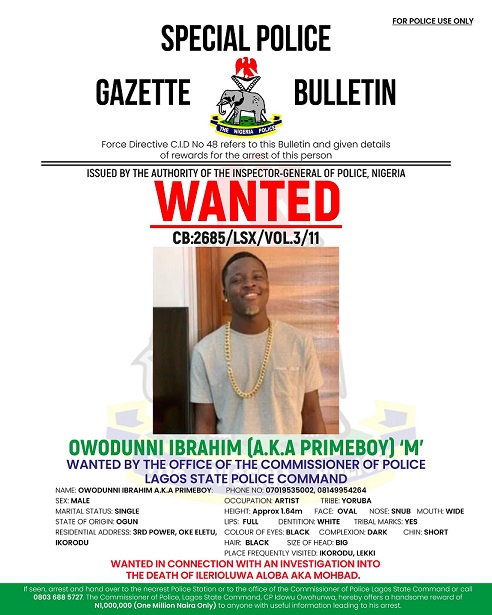
Following his failure to honour the police invitation successfully sent to him since the commencement of investigation into the circumstances leading to the death of Mr Ilerioluwa Aloba, aka Mohbad, the Lagos State Police Command, via its PRO, SP Benjamin Hundeyin, now declares wanted Owodunni Ibrahim aka Primeboy.

Ibrahim is approximately 1.64-m tall, dark-complexioned, with tribal marks and Yoruba by tribe. His last known address is 3rd Power, Oke Eletu, Ikorodu.

If seen, contact the nearest police station or call 0803 688 5727. The Commissioner of Police, Lagos State Command, CP Idowu Owohunwa, hereby offers a handsome reward of N1,000,000 (One Million Naira Only) to anyone with useful information leading to his arrest.