Month: October 2023

The Night Prayer (Qiyamul Lail): A test of true desires

By Abdurrazak Muktar Makarfi

In the depths of the night, when most of the world sleeps, there are those who choose to rise. They are the ones who understand the value of Qiyamul Lail, the act of waking up to pray during the night. This predawn vigil is not just a spiritual obligation for Muslims but also a powerful manifestation of one’s deepest desires and intentions.

Qiyamul Lail is an act of devotion and a reflection of one’s commitment to one’s faith. It is a time when the world is still, and the heart is most receptive to spiritual connection. The act of willingly sacrificing sleep to stand in prayer is a testament to the strength of one’s faith and the sincerity of one’s desires.

Desire, in its purest form, is the driving force behind our actions and aspirations. It is what motivates us to work hard, to overcome obstacles, and to strive for better lives. But how can we measure the depth of our desires? Qiyamul Lail offers a unique litmus test.

If you find yourself desperately wanting something in life, be it success, happiness, or peace, and yet you are not waking up for Qiyamul Lail, then you may need to question the authenticity of your desires. True desire demands sacrifice. It requires us to prioritise what matters most to us. When we value something deeply, we are willing to make sacrifices to attain it.

Waking up for Qiyamul Lail is not just about fulfilling a religious duty; it’s about demonstrating the intensity of your yearning. It’s a declaration that your connection with the Divine is so profound that you are willing to forgo sleep, one of the most basic human needs, to nurture that connection.

Moreover, Qiyamul Lail is a time for reflection, self-examination, and supplication. It is a chance to pour your heart out to the Creator to seek guidance, forgiveness, and blessings. It is a moment when you can lay your deepest desires and concerns before the Almighty with a heart filled with humility and hope.

In the stillness of the night, when the world is hushed in slumber, you have the opportunity to reflect on your aspirations and the path you are on. If your desires are sincere, if you truly long for your goals to be realised, then Qiyamul Lail is your arena to prove it. It’s a chance to show that your ambitions are not mere words but a profound yearning that drives you to action.

So, let the night prayer be a reminder—a reminder to measure your desires against your actions. If you’re desperately wanting something and you’re not waking up for Qiyamul Lail, then you don’t want it enough. But if you’re willing to rise from your slumber, stand in devotion, and whisper your desires to the heavens, then your desires are genuine, and you’re on the right path to fulfilling them.

Dangote Cement surges with 15.2% Pan-African sales growth, record profits, unstoppable expansion

By Uzair Adam Imam

In the nine months leading up to September 30, 2023, Dangote Cement has reported a remarkable 15.2 percent increase in its pan-African sales volumes, reaching 8.5 million metric tons (Mt) compared to the 7.4 million Mt in the same period in 2022.

Pan-African volumes represent the sales volume from Dangote Cement plants located outside Nigeria.

These figures were revealed in the company’s unaudited results on the Nigerian Exchange (NGX) portal. The surge in volumes was primarily driven by exceptional sales performances in key locations.

The Dangote Cement Plant in Senegal saw a substantial 66.9 percent increase in sales, while the Dangote Cement Plant in Congo reported a 60.5 percent surge in volumes.

Dangote Cement Zambia experienced an 18 percent increase, with Ghana and South Africa following closely at 15.5 percent and 18.5 percent growth, respectively. Ethiopia and Tanzania also contributed to the positive trend with 6.5 percent sales volume increases.

Furthermore, Dangote Cement noted a 20.5 percent increase in profit before tax, rising from N335.9 billion to N404.89 billion, while the profit after tax increased by 30.2 percent, from N213.10 billion to N277.55 billion.

Arvind Pathak, the Chief Executive Officer of Dangote Cement, commented on the results, stating, “This positive nine-month result reflects our strong value proposition, enhanced operational efficiency, and our commitment to cost containment in the face of rising inflation. Group revenue reached ₦1,514.6 billion, with EBITDA reaching an all-time high of ₦662.8 billion, marking a
28.5 percent increase.”

He also highlighted the impressive growth of the company’s pan-African operations, which contributed 41.9 percent to Group volumes, with a record revenue growth of 103.9 percent and EBITDA growth of 255.4 percent.

Pathak emphasized that the growth was a result of sustained demand across the regions in which Dangote Cement operates.

Looking ahead, Pathak expressed optimism about the company’s future, particularly with
the final stages of a new grinding plant in Cote d’Ivoire nearing completion.

He reaffirmed the company’s commitment to delivering quality cement products to
its customers and expressed confidence in a strong finish to the year.

Dangote Cement is Africa’s leading cement producer with a capacity of 52.0 million metric tons across the continent. Through strategic investments, the company has not only eliminated Nigeria’s dependence on imported cement but has also transformed the nation into an exporter, serving neighboring countries as well.

Dangote Cement’s extensive operations include plants in Cameroon, Congo, Ghana, Ethiopia, Senegal, Sierra Leone, South Africa, Tanzania, and Zambia, in addition to its prominent presence in Nigeria.

Contrasting priorities and policy impact between Abba and Ganduje

By Mansur Hassan, PhD

Engr. Abba Kabir Yusuf, the Executive Governor of Kano State, has recently shed light on the alleged misappropriation of funds by Nigerian governors, exposing lack of impactful policies.

Over the past eight years, Kano State witnessed a dearth of policies that benefit the less privileged directly. In contrast, the Kwankwasiyya administration, led by Abba Gida Gida, has swiftly demonstrated its prowess in governance within five months, particularly through transformative healthcare and educational ‘revolution’ spanning from primary to tertiary levels.

Under Kwankwasiyya’s leadership, there has been a significant focus on education, including sponsoring first-class graduates to foreign universities—an initiative emulated by other nations. The educational revolution initiated during the 1999-2003 and 2011-2015 periods has left an enduring mark, with numerous scholars benefiting from foreign scholarships.

However, the governors who presided over the state from 2015 to 2023 failed to implement any substantial policies for the state’s improvement. Criticism was leveled against the transformative programs introduced by H.E. Abba Kabir Yusuf, particularly after the mass wedding event known as “auren ‘yangata.” The sponsorship of 1001 first-class graduates further intensified opposition, with the former Governor of Kano State, Abdullahi Umar Ganduje, dismissing the program as useless.

This criticism seemingly stemmed from the program’s focus on underprivileged children, contrasting with Ganduje’s past sponsorship of his own children’s education abroad. The clash underscores a debate on priorities and equitable policies in Kano State.

Dr. Mansur Hassan is a Senior Lecturer, Department of Mathematics, Yusuf Maitama Sule University Kano

Buhari, not Tinubu, destroyed Nigeria—Hausa political singer Rarara

By Sabiu Abdullahi

In a recent press conference held in Kano, the renowned Hausa political singer, Rarara, made startling accusations against Nigeria’s immediate-past president, Muhammadu Buhari.

Rarara, who gained fame for his unwavering support for Buhari through numerous hit songs, publicly voiced his regret over endorsing the former president.

He accused Buhari of leaving behind a crumbling economy for the current president, Bola Tinubu. 

Rarara’s criticisms were not limited to Buhari alone; he also questioned the current administration’s silence regarding what he described as the alleged financial mismanagement during Buhari’s tenure.

He called for transparency and openness, emphasizing the importance of truthfulness in governance.

The singer warned against building the foundation of the current administration on falsehoods, highlighting the potential disastrous consequences such a path could lead to for the nation. 

He expressed deep concern over the destruction he claims Buhari caused to the country and urged the current administration to openly acknowledge these challenges to the Nigerian people. 

When asked about his regret for supporting Buhari, Rarara openly admitted his disappointment, stating that he had supported the former president blindly, hoping that Buhari would address the damage caused by the previous administration.

He emphasized the need for transparency and honesty in governance, urging leaders to be accountable to the citizens they serve. In addition to his criticisms, Rarara highlighted his significant contributions to the success of the ruling party.

He asserted his right to have a say in political appointments, citing his pivotal role in supporting President Tinubu’s victory.

The singer argued that his efforts, particularly in the northern region, warranted recognition, either in the form of a political appointment or the opportunity to recommend individuals for such positions.

Zamfara institute of technology bill passes second reading at House of Reps

By Sabiu Abdullahi

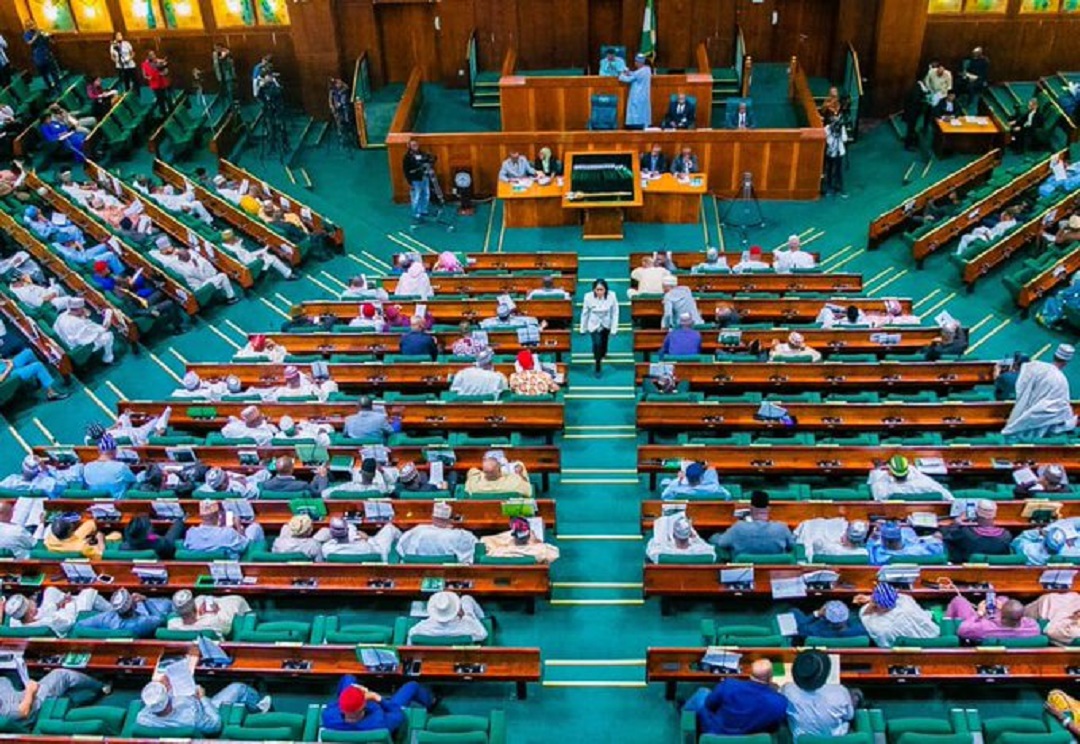
The House of Representatives has advanced the Federal Institute of Technology and Entrepreneurship Bill to the next stage of the legislative process.

The bill, sponsored by Hon. Abdulmalik Zubairu Bungudu, representing Bungudu/Maru Federal Constituency of Zamfara State, successfully passed its second reading, garnering widespread support from lawmakers. 

The proposed legislation seeks to amend the Federal Polytechnic Act, 2004, enabling the establishment of the Federal Institute of Technology and Entrepreneurship in Bungudu, Zamfara State.

The institute’s primary focus would be on offering specialised courses and programmes tailored to address the technology and entrepreneurship challenges faced by Nigeria.

By equipping students with relevant skills and knowledge, the institution aims to empower them to create jobs and contribute significantly to the nation’s economic growth. 

During the deliberations, Hon. Abdulmalik Zubairu Bungudu passionately argued for the bill, emphasising the urgent need to reposition the education system.

He highlighted the prevailing economic realities, where traditional job opportunities are limited, especially in regions like Zamfara State, where farming, a primary source of income, is severely impacted by banditry and insecurity. 

Members of the House expressed unanimous agreement on the bill’s potential to transform the educational landscape. They underscored the importance of aligning education with the demands of the contemporary job market and commended Hon. Abdulmalik Zubairu Bungudu for his vision in sponsoring the bill. Speaker Hon.

Tajudeen Abbas, in his closing remarks, reiterated the House’s commitment to promoting initiatives that enhance economic opportunities for Nigerians.

He assured that bills like the Federal Institute of Technology and Entrepreneurship Bill, aimed at fostering self-employment and economic growth, would receive expedited attention. 

The bill has now been referred to the House Committee on Tertiary Institutions, where it will undergo further scrutiny before returning to the Committee of the Whole for final deliberations.

This development marks a significant stride towards empowering the youth, encouraging entrepreneurship, and ultimately bolstering Nigeria’s economic resilience.

Budget and National Planning

By Bilyamin Abdulmumin

Last week, during the FEC meeting, the Minister of Budget and National Planning, Senator Abubakar Atiku Bagudu, made a groundbreaking announcement by revealing the budget forecast for 2024. It sent shockwaves through the nation, and understandably so, as the projected budget of 26 trillion naira was unprecedented; it was a staggering  4 trillion compared to the previous year.

Nigerians have consistently expressed concerns about the ever-increasing budget forecasts year after year. Regrettably, this budget inflation trend has persisted. For instance, the budget started at 299 billion during the Obasanjo government in 1999 but ballooned to 2.3 trillion when he left office. Yar’adua handed over a 4.4 trillion budget to Jonathan, who returned the exact figure in 2015 (despite presenting a 4.9 trillion budget in three previous years). The budget increase went wild during President Muhammad Buhari’s tenure, reaching a staggering 21 trillion in 2023 when he left office.

Although I am not an expert on budget matters, it’s apparent that every budget must consider factors such as market dynamics, inflation, and the growth of the national population and its demographics.

Rather than fixating solely on the budget figures, we, as citizens, should focus on the prudent and effective utilisation of these budgets. If the Nigerian budget had been prepared and executed more efficiently, we might have already achieved the promised Eldorado.

For example, 43 years have passed since the Shagari and Gowon green revolution, 33 years since Vision 2000, and a decade since Jonathan’s Agricultural Transformation Agenda. However, the majority of Nigerians still lack access to quality housing and healthcare, and we continue to struggle to feed ourselves. Similar ambitious visions have come and gone, including IBB’s structural adjustments, Abacha’s Vision 2010, Obasanjo’s Vision 2020, Yar’adua’s seven-point agenda, and PMB’s Vision 2050.

One crucial issue highlighted by BudgIT, a civic organisation monitoring the Nigerian budget, is the disconnect between our budget and national planning, hindering the realisation of the promised utopia. Our budget is not aligned with our national planning, and it seems that from the beginning, Nigeria has not been drawing the budget structure from national planning.

In the words of Oluseun Onigbinde, Global Director of BudgIT, “The Nigerian budget has delivered sub-optimal results because it has not been linked with national strategic plans written for the medium or short term. The current President has a public manifesto, and the Federal Government recently, at a significant cost, also delivered strategic plans that terminate in 2025 and 2050. It does not make sense if the national budget is not linked to these documents. The budget needs to stop just being a contract vending machine stuffed with varied interests but a thorough planning document.”

If the masses can redirect their attention to this issue rather than merely reacting to budget forecasts, expecting more effective and desirable results is plausible.

Interestingly, the Minister of Budget and National Planning, Senator Atiku Bagudu, has pledged to address this issue and reached out to the public for understanding and engagement. This outreach occurred during an official visit by the House of Representatives Committee on Alternative Education. The minister reaffirmed the government’s commitment to the APC comprehensive plans, particularly Agenda 2050 and the 5-year development plan.

Dear Nigerians, it’s time to refocus our priorities and stop chasing after the shadows.

S’ Court upholds tribunal’s decision on Atiku Abubakar, Peter Obi’s appeals 

By Sabiu Abdullahi

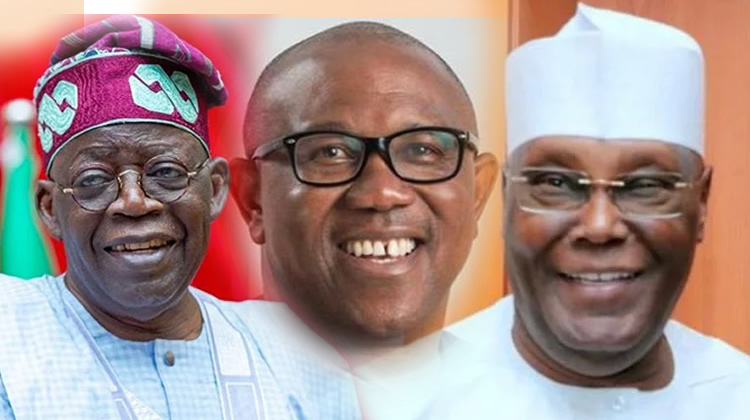
The Supreme Court has affirmed the decision of the tribunal concerning the appeals of Atiku Abubakar and Peter Obi.

The apex court, in a unanimous decision, backed the lead judgment delivered by Justice John Okoro, thereby dismissing Atiku Abubakar’s appeal challenging the judgment of the presidential petition tribunal. 

The Supreme Court panel, comprising eminent justices including Uwani Aji, Mohammed Garba, Ibrahim Saulawa, Adamu Jauro, Abubakar Tijjani, Emmanuel Agim, and Salawa Ibrahim, collectively upheld Okoro’s ruling.

Justice Salawa Ibrahim stated, “The application by Atiku is frivolous and vexatious and deserves to be dismissed. I find no merit in the appeal and dismiss, and I affirm the decision of the lower court.” 

Justice Agim echoed similar sentiments, emphasizing the necessity for the authentication of evidence.

He said, “I agree with the reasoning that the fresh evidence is not authentic as stated by the authority before it was presented. It was not sealed or had the signature. It cannot be used in Nigeria without authentication.”

Kogi 2023: Countdown to an election whose campaign is characterised by ethnic agendas

By Prof. Abdelghaffar Amoka

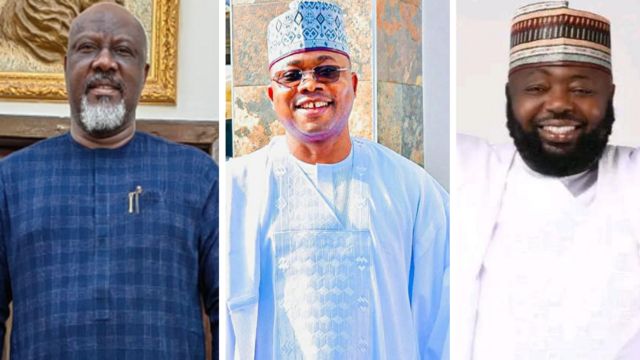
Kogi state still remains one of the worst-governed states in Nigeria since its creation in 1991. We are 14 days away from electing the man who will run that state for another four years, and every camp is doing its bit to enhance its victory at the poll. The zones of the candidates of the major political parties are all hopeful. Kogi West is hoping for a miracle to happen as the 139,485 votes from the senatorial election can’t win the election, supposing Dino Melaye can mop up all those votes from Kogi West. Unfortunately, Dino’s presence at the East and Central seems weak.

Kogi East is leveraging on its strong voter strength to reclaim Luggard House after eight years break. The truth is that the zone has the largest votes, and there are 217,460 votes from the Senatorial election to hold onto, supposing Muri Ajaka can mop up every one of those votes from Kogi East. The zone actually doesn’t believe that any other zone deserves to occupy the Luggard House. You can’t blame them. An election is said to be a game of numbers. Those with the number can even make an idiot to lead the wise.

Kogi Central, no doubt, has the least voter strength. They have a total of 106,303 votes from the Senatorial election, which cannot win the governorship election. But just like everyone else, the governor is working hard to make his preferred candidate succeed him. He has picked Usman Ododo, a potential successor, from his Local Government. His candidate has now been adopted as the KC Agenda. He is using the incumbency factor to get support from the East and West for his boy.

There was the emergency establishment of the third state university in the West, and the ministerial slot went to Kogi East. That is a nice political calculation, but is that enough to swing votes from these zones? Commentators are wondering what will a state that can’t pay LG and primary school teachers do with the burden of another state university.

There was a recent report that the state government has appointed over 200 SAs. 215 Special Assistants in an election period and a few months to the end of the government does not make sense to an ordinary person, but it makes a lot of sense to politicians. They are likely special assistants on election matters. Nearly all the traditional rulers, including that of my clan, are now first-class chiefs. Will my clan and the other clans across the state work for the victory of the governor’s candidate just because our traditional rulers are now upgraded to first class?

There is also an ongoing reconciliation within the Kogi Central. There are ongoing radio programs telling the people that they know they have wronged people and appealing to them to forgive and forget. It’s like the governor realises that it’s not everything that can be achieved with force and no more sending glowing fire to perceived enemies. He is trying to deploy a peaceful approach. We have not heard much of threats in recent times. That’s not a bad idea.

I read the names of some professors and other respected elites on a reconciliation tour. My question was this: where were these people when they were busy excavating and digging trenches on the roads of the opposition zone that they refused to fix? Where were they when criticism was considered as “haram” and critics were hunted? Where were when our public schools were left without teachers for the past seven years?

I wish these respected individuals had played an advisory role to right these wrongs before now. I hope the LG and primary school teachers and their families will find it easy to forgive and forget our ethnic and Kogi agendas

Is the reconciliation move late? It may be, and it may not be. Human beings, especially Nigerians, are known to have very short memory. We live by the moment. We are quick to forget yesterday if today is favourable. If I were the Governor, I would have started the reconciliation in January 2023 in preparation for the election and my agenda.

One of the basic problems is salary payment. No matter his achievements in other areas, the salary issue has shrouded them. If I were him, I would have blocked the loopholes and mopped up the available cash to improve the percentage of the salary paid to LG workers and primary school workers. Promise the workers that the next government will improve on it. Make them see reasons why they need to support me to actually the Ododo Agenda for “renewed hope”, especially on salary payment. The people need a glimpse of the promised hope before they can key into your project. That would have resuscitated his battered image and attracted support from unexpected places. He could have found it easy to sell the candidature of Ododo across the state without much stress.

Nobody is even discussing the future of Kogi state and the well-being of the people of the state. It’s all about selfish agendas. However, it’s about two weeks to the election, and I am still struggling with the choice of who to support. So, who should I support? Ododo for KC, my zone, to retain power for another 4 to 8 years? Muri for KE to reclaim their birthright? Or Dino for KW to also have a taste of Luggard House? It doesn’t matter if the candidate is said to be a clown.

The people of the state have gone through a lot over the last seven years. It was tough and tougher now economically.

My appeal is for the election gladiators to ensure that we have a violent, free election. Please, let’s have a peaceful election.

Abdelghaffar Amoka PhD, wrote from Ahmadu Bello University, Zaria. He can be reached via aaabdelmalik@gmail.com.

Tinubu presents 2024 budget to National Assembly 

By Sabiu Abdullahi 

The Nigerian National Assembly is gearing up for a pivotal period as President Bola Tinubu prepares to present the 2024 budget within the next two weeks. 

Additionally, the President is set to submit the supplementary budget for 2023 to the National Assembly for consideration, according to Senator Solomon Adeola, the Chairman of the Senate Committee on Appropriation. 

During the inaugural meeting of the committee, Senator Adeola assured that the National Assembly would work diligently to ensure that the 2024 budget is passed before December 31, 2024.

Addressing concerns about the delayed budget presentation, Senator Adeola acknowledged the challenges posed by the change in government, emphasizing that the new administration’s vision and policies needed careful consideration. 

“We must acknowledge the change of government on May 29. The new administration has a new vision, and there are bound to be challenges,” Senator Adeola stated.

Despite these challenges, he promised a thorough examination of the budget, emphasizing the committee’s commitment to meeting the expectations of the Nigerian people. 

“The Finance Minister and the Minister of Budget and Planning are working tirelessly,” Senator Adeola affirmed.

Senator Adeola also addressed concerns about budget padding, dismissing the notion and emphasizing that projects nominated for the budget document were essential to meeting the needs of the people.

He stressed the importance of efficient implementation, highlighting the committee’s dedication to ensuring that government spending aligns with the priorities of infrastructure development. 

In a move signaling a shift in fiscal focus, the National Assembly aims to collaborate closely with key economic stakeholders.

The Governor of the Central Bank of Nigeria, Wale Edun, and the Minister of Budget and Economic Planning, Senator Atiku Bagudu, are scheduled to brief the committee on the action plan for the economy and the collaborative efforts between the National Assembly and the executive branch. 

Senator Adeola emphasized the assembly’s commitment to directing a significant portion of the budget towards driving essential infrastructure projects.

“We won’t support a government where the majority of the budget is spent on the cost of running the government,” he stated firmly.

President Tinubu appoints 9 INEC commissioners

By Sabiu Abdullahi 

President Bola Tinubu has appointed nine new Resident Electoral Commissioners (RECs) for the Independent National Electoral Commission (INEC). 

The appointees and their respective states are: 

  1. Mr. Isah Shaka Ehimeakne — Edo State
  2. Mr. Bamidele Agbede — Ekiti State
  3. Mr. Jani Adamu Bello — Gombe State
  4. Dr. Taiye Ilayasu — Kwara State
  5. Dr. Bunmi Omoseyindemi — Lagos State
  6. Alhaji Yahaya Bello — Nasarawa State
  7. Prof. Mohammed Yalwa — Niger State
  8. Dr. Anugbum Onuoha — Rivers State
  9. Mr. Abubakar Fawa Dambo — Zamfara State

These appointments, pending Senate confirmation, signify President Tinubu’s commitment to fostering a transparent and fair electoral process in Nigeria.

The nation eagerly awaits the Senate’s decision, anticipating a future marked by credible and unbiased electoral practices.