Month: August 2023

Fear of war vanished, hope for peace rekindled as Nigerian Islamic scholars met with Niger coupists

By Aisar Fagge

There were growing anger and threat between the Niger Republic and the Economic Community of West African States (ECOWAS) since the military coup in July that ousted the democratically elected government of Muhammed Bazoum. The ECOWAS, under the chairmanship of President Bola Ahmed Tinubu, demanded that the military junta should handover power Bazoum or else face its wrath.

Several media reports indicated that all attempts by the ECOWAS to peacefully restore power to Bazoum had failed, a development that exacerbated the already worse situation. On Saturday, the leaders of the Islamic groups from Nigeria met with the coupists in Niger. In this interview, Professor Salish Shehu, one of the Ulamas, detailed The Daily Reality about the purpose of their visit, how fruitful it was and what they have achieved.

TDR: Prof., can you please detail The Daily Reality about the purpose of your visit to the Niger coupists?

Prof. Salisu Shehu: The purpose of our visit to Niger is very clear. The purpose is for reopening, so to say, the windows of dialogue on AMFAS between ECOWAS, on one hand, and the military junta in Niger. There is an apparent breakdown of communication since the refusal by the junta to receive the former head of state, General Abdussalam Abubakar and his eminence, the Sultan of Sokoto. You know people generally across the two countries are becoming increasingly anxious and are becoming increasingly afraid that violence may breakdown – there is palpable fear, actually. A collection of some Ulama felt that we need to meet the president of Nigeria and discuss this matter with him. And, when we met him, we emphasised the fact that dialogue should be the only thing and dialogue should prevail in this matter and he accepted. We asked him that he should give the chance to the Ulama to play their own role, to contribute to ensuring that dialogue prevails and to ensuring that the crisis is resolved amicably through peaceful means. And, therefore, it was for the purpose of contributing to the promotion of dialogue, contributing towards broadening consultations and engagement, that was actually the reason why we went to Niger and to meet the new military administrators in Niger with the view to engendering a sort of reconciliation process between the two purpose.

TDR: Sir, you said the visit was constituted by the group of some Ulama. Can you please tell us about the members of your entourage?

Prof. Salisu Shehu: The entourage constituted of scholars from different Islamic groups and Islamic sects. That why you can see that all the Islamic groups and organisations were represented in the composition. Beginning from the group of scholars that met with the president, foremost was Sheikh Dahiru Usman Bauchi, represented by his eldest son, Ustaz Ibrahim Sheikh Dahiru Usman Bauchi, Sheikh Abdullahi Bala Lau of the Izala group, Sheikh Qarbibullah, the leader of Qadiriyya in the whole of Africa; and then there academics like us and other da’awa wokers, like Professor Mansur Malumfashi, Prof. Mansur Ibrahim Sokoto, Imam Abdurrahman Ahmad; the Chief of Ansaruddin, Sheikh Jalo Jalingo, Sheikh Muhammad Haruna Gombe, Sheikh Yakubu Musa among others. These were also some few government officials that accompanied us.

Sheikh Bala Lau was the one that led us to Niger and he was the leader of team and he was the one that introduced us to the  military leaders. We met the military leaders together with the scholars of the same kind of categories we went in Nigeria. So all the the leaders of the groups – the Tijjaniyya, the Qadiriyya, the Izala groups, we all met in Niger. It was such a successful paternal visit.

TDR: Sir, what have you discussed and was your visit any meaningful?

Prof. Salisu Shehu: I can only tell you about the general discussion we had. But, it is not possible to broadcast the nitty-gritty details of our discussion, especially some of the very very specific issues we discussed with them. But, what we actually generally discussed was about the fact that we came as a group of scholars from Nigeria, having been permitted and approved to come by the president. Therefore, we were in Niger with the consent of the President, Asiwaju Bola Ahmed Tinubu, who is also the Chairman of the ECOWAS, that we could come and discuss with them as a demonstration of acceptance of dialogue and reopening of communication between them. So we emphasised the need for dialogue. We drew their attention to the fact that as long as we don’t reopen the door of dialogue, the animosity will keep increasing. And, hence, it is not going to be good for us. So, we made it very clear to him that we went there in order to avert violence, to avert military intervention and to promote peaceful and amicable resolution to the problem, actually. And, we also emphasised the need for the give and and take in the matter. That it will do no good for both of them and the entire West African sub-regions, that if both of them were not ready to give something and take something, if both of them maintain extremist positions, then it is not going to be good. And, they actually accepted. They were already told to make some concessions on the matters.

TDR: What have you have achieved in your meeting with the coupists?

Prof. Salisu Shehu: The most important achievement in this regard is the fact that that option of dialogue have so much sufficiently be promoted. And it is hopeful that this our visit has led the foundation for peaceful engagement between the two. So, I think this is an achievement. Another tremendous achievement is the fact that across the two countries, the palpable fear, that was so preponderant, has been allied and the people’s hope regarding the fact they will continue to live in peace, they will continue to leave as brothers and sisters, they will continue to live as neighbours, that spirit has really been rekindled even if it was about to die. People have so much been at rest and at ease now because of this visit. People have become more assured that there won’t be violence. And, I believe this is the most important achievement as far as this visit is concerned. Like I said, there is no reason actually to keep on avoiding meeting and discussion. So, we have to intervene in this way. And because we are not supposed to give specific details, there is no any discussion about the terms of agreement we had with them.
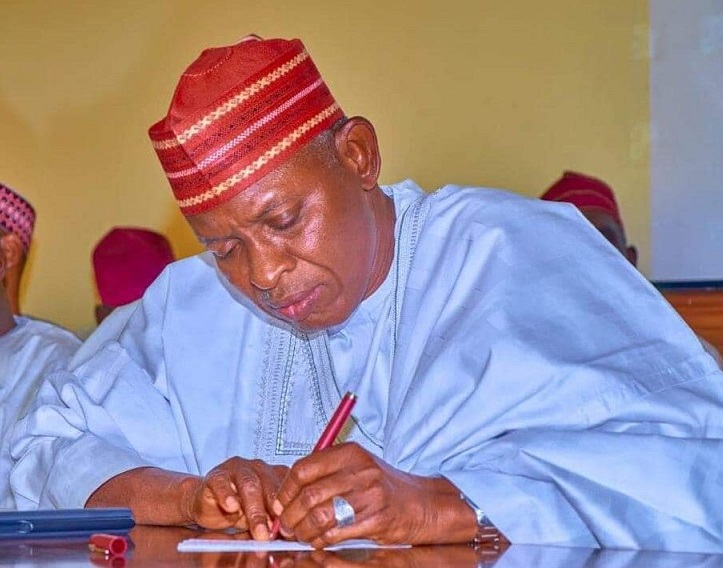
Letter to the Kano State Governor, Alhaji Abba Kabir Yusuf

Your Excellency, Abba Kabir Yusuf

I hope this message reaches you in good condition. I write this letter to advise you on the teachers whose salaries have been withheld pending their verification and screening of their recruiting processes. We all believe this is for sustaining education quality within the state boundaries. 

It is heartbreaking and adds pain to the people in mourning. The suspended teachers can now be seen as unemployed, leading to a high rate of criminality, a threat to the state’s peace and stability, and creating economic hardship for the state. 

With due respect, Your Excellency Governor, not all suspended teachers are unqualified and incompetent. Most of them obtained National Certificate In Education (NCE), which is requisite for teaching, and we believe in putting everything in place.

I kindly call on the Excellency Governor of Kano State, Abba Kabir Yusuf, and his cabinets for urgent consideration to reinstate the suspended teachers to take a breath of liberty. I hope this message reaches you on time and that you will consider my request.

Thank you for your attention to this matter, and I extend my best wishes to you as you continue leading Kano toward a brighter future.

Yakubu Nasir Khalid

yakubunasirukhalid@gmail.com

Fuel Subsidy: Thoughts and Reflections

By Bilyamin Abdulmumin

Since the return of democracy in Nigeria, successive governments have contemplated removing fuel subsidies. The then government of President Olusegun Obasanjo (OBJ) saw multiple fuel price hikes, from N20 per litre it inherited from the transitional military government to the last unforgettable fuel hike. In 2007, two days before the expiration of his tenure, OBJ jacked up the pump price from 65 to 75 naira per litre.  However, the incoming president Umar Musa Yar’adua returned the honest nest to order.

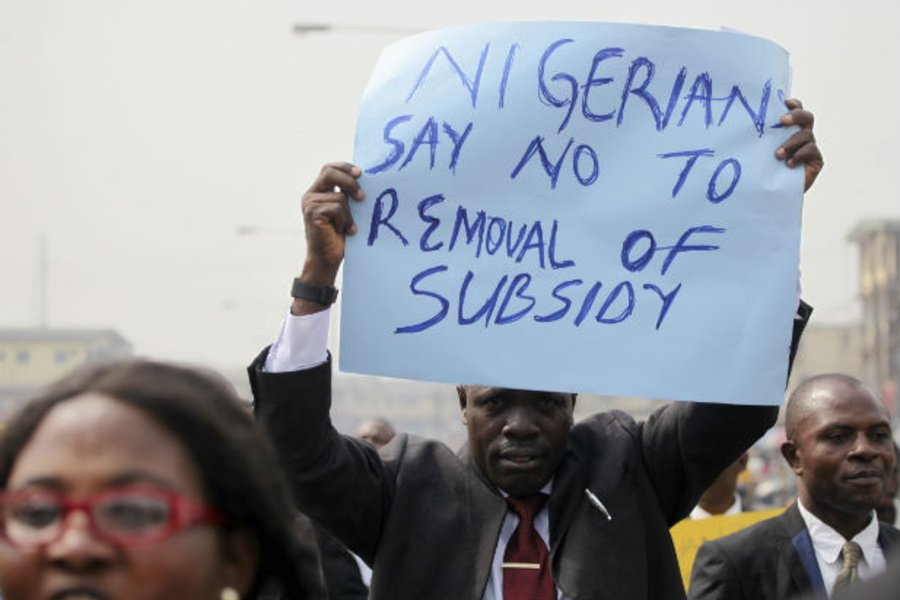
The subsequent struggle to remove fuel subsidies, perhaps the biggest standoff, came in 2012 during the government of Goodluck Ebele Jonathan (GEJ). Vibrant labour, trade, civil and student unions, and agglomeration of opposition descended on the government for the decision, forcing GEJ to lower the price from the initial N141 to N97 and later in 2015 to 87 naira per litre. The struggle would continue. As soon as President Muhammadu Buhari (PMB) ascended to power, he greeted the public with partial subsidy removal.

PMB took the pump price from the official N87 to N145 before hitting N187 at the end of his tenure. But all out on fuel subsidy removal came during the run-down to the 2023 general election, where all the major presidential candidates dismissed any doubt left on fuel subsidy. They all warned the point black electorates that they would remove fuel subsidies so that President Tinubu would walk the talk even from the inaugural stage. 

The government and subsidy removal activists argue that an unbelievable amount of funds are being poured into the scheme while the national infrastructure languishes in bad condition. The large amount spent on the subsidy has been said to reach this height dubiously, no thanks to inflated numbers by some unscrupulous officials and the diversion of subsidised fuel to neighbouring countries by rogue marketers. To add insult to injury, Nigeria borrows to sustain this counterproductivity. Although this argument is plausible, instead of throwing a baby with the bath water, why not the government sanitise the scheme so that it brings the amount to within its capacity?

Another pro-subsidy removal argument was that only a few rich Nigerians benefit from the subsidy, the poor masses who were the target of the scheme are not benefiting the way it is supposed to. This slogan is challenging to explain to people; which ‘The poor masses are not benefiting the way it is supposed to’? When people can visibly see the effects of the subsidy when they buy fuel. No answer is as crunching as for a Nigerian to enter a filling station, and after purchasing an expensive fuel, he declares, they said we don’t benefit from subsidy!

 GMB and APC supporters have an additional puzzling dilemma to unravel because GMB had outrightly opposed the plan in 2012 when President Goodluck Jonathan mulled the idea of its removal. GMB and other APC chieftains famously proclaimed ‘over their dead bodies’ would they allow it. Meanwhile, by the side of the TV screen, we threw roses at them.

So, one of the top Buharist El-Rufai’s tried to rescue the situation in the aftermath of the then PMB’s backpedal. According to an accidental civil servant: ‘When fact changes, decision changes.’ This was to defend the then PMB decision even though he opposed it earlier. This philosophy convinced me; I said that Elrufai rightly arranged the pieces together. But one of my friends would make my life miserable; he said the same philosophy could also be applied to Jonathan as his reason behind fuel subsidy removal. I became speechless.

The speed with which the marketers change fuel prices immediately after price changes from NNPC (Nigerian National Petroleum Corporation), regardless of what’s in their stock, whether old or new, is perhaps the biggest showdown between the public and marketers. As soon as NNPC announces a new price, marketers countrywide change the price in the blink of an eye. The public argues that since the new price is for the new product, the marketers with the old product should stick to the old price. One Sheik brought this public sentiment to the fore when he calculated the difference between the old and new prices and multiplied that by a presumably large number of litres for one marketer. The profit he got was staggering, about 300 million naira.

I share this public sentiment, and I, too, initially thought the marketers were doing it illegally until Mele Kyari explained it on BBC Hausa Ra’ayi Riga program. According to the NNPC MD, marketers must sell their old products at a new price. This approach enables them to recoup their old investment. For instance, if a marketer had 100 litres, he had to sell them at a new price so that he could buy the same amount, but if he sold them at the old price of N250, he would not be able to buy the same 100 litres of new product at a higher price.

This is a plausible reason from a market viewpoint; what of the masses? Because while the market provides safety measures for marketers, it does not offer the same to the general public, especially the poor. Economics and the related professionals’ expertise are needed here; they should help us balance these conflicting but appealing arguments.

Although it could be too late to cry when the head is chopped off, Nigerian policymakers may need to learn from thermal shock phenomena when it comes to subsidy removal or any government policy implementation.  Thermal shock is a situation a material experiences when exposed to sudden changes in temperature conditions; it can lead to the material cracking or even breaking down. 

Take a glass cup of tea, for instance. If the tea glass cup is scorching and you suddenly put it in cold water to cool the tea inside, the glass may crack or even break depending on the level of the thermal shock, but to cool the tea inside the got glass cup successfully without harming the glass, you apply gradual cooling. First, you put the glass cup in warm water, then gradually reduce the water temperature until it becomes cold; in this way, the tea inside the glass cup can cool without causing any injury to the glass.

Bilyamin Abdulmumin is a doctoral candidate in Chemical Engineering at ABU Zaria, a public affair commentator, and a science writer.

Education: Empowering divorcées to pursue their dreams

By Kamal Alkasim

For many divorcées, the decision to return to school and pursue their dreams after parting ways with their husbands presents a significant challenge. In this article, we will explore the undeniable transformative power of education and its role in empowering divorcées to build a brighter future for themselves. Through the voices of these resilient women, we will understand the importance of providing them with the opportunity to pursue higher education and break free from the false theories that have hindered their path.

The Transformative Power of Education

Education is a powerful tool that can turn any individual into a star; women are no exception. By prioritising their studies over remarriage, divorcées can equip themselves with knowledge, skills, and confidence to overcome obstacles and shape their destiny. Education serves as the foundation for the development of any society and holds the key to personal and societal growth.

Challenging False Theories

Unfortunately, outdated and false theories surrounding women’s education in tertiary institutions have deterred many from pursuing their dreams. These misconceptions have created barriers for divorcées seeking to return to school. By challenging these beliefs, society can open new opportunities for these women to thrive.

Voices of Empowerment

Through conversations with divorcées who have chosen to pursue their dreams through education, we gain valuable insights into their determination and resilience. One woman shared her regret for not pursuing her studies earlier but expressed optimism about the positive changes education would bring to her future. Another divorcée spoke of her unwavering ambition to gain an education and fulfil her goals despite her challenges.

“If I had known earlier, I would have pursued my studies long ago. But now, this opportunity will bring positive changes to my future. I may have faced some challenges, but with education, I can overcome any obstacle.” – Divorcée.

“My greatest ambition is to gain an education, and after my divorce, I promised myself that I would come back to achieve this goal.” – Divorcée.

“People may judge me based on appearances and talk rubbish, but that won’t deter me. I will mind my own business and study human behaviour. This knowledge will help me solve matrimonial cases and more.” – Divorcée.

Overcoming Judgment and Criticism

Divorcées often encounter judgment and criticism from others, but their determination to succeed remains unshaken. One brave woman acknowledged the judgment she faced but declared her commitment to minding her own business and studying human behaviour to help others in similar situations. These voices exemplify the strength and resolve of divorcées in their pursuit of education.

Empowerment Through Education

Let us join hands in defeating these nonsensical theories and supporting divorcées in their educational journey. By empowering these women with education, we provide them with the tools to overcome obstacles and create a brighter future. Education holds the potential to transform lives and enable divorcées to achieve their dreams without fear or judgment.

Education is a beacon of hope for divorcées seeking to rebuild their lives and pursue their aspirations. By allowing them to learn and grow, society can break down barriers and empower these women to become agents of positive change. Let us recognise the transformative power of education and support divorcées in their quest for knowledge and self-fulfilment. With education as their ally, the future holds boundless opportunities for these strong and determined women.

Kamal Alkasm is writing from Kano.

BUK initiates N15,000-per-month job scheme for students

By Muhammadu Sabiu 

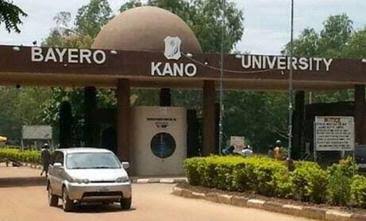
Professor Sagir Adamu Abbas, the vice chancellor of Bayero University, Kano (BUK), has revealed that the university has implemented a job programme for students in which the university hired students to do some jobs for it in exchange for N15,000 per month. 

Delivering a speech over the weekend in Kano when he met a group from the university’s main campus and the Education Correspondents Association of Nigeria (ECAN), Adamu-Sagir said: “The university equally introduced a kind of job scheme for students, whereby they were engaged to render some services to the university, and they were paid N15,000 monthly.  

“This does not affect their normal learning because it does not take much of their time as some were to clean some surroundings or render certain minor service within the university and got paid at the end of the month.”

The Vice-Chancellor bemoaned the large expense of maintaining the institution in his remarks over the rise in registration fees, particularly the exorbitant cost of providing fuel. 

He disclosed that the monthly cost of power is approximately N35 million, and the cost of diesel for generator purchases is approximately N40 million. 

He also noted that with a student body of almost 45,000, including postgraduates, and a staff of over 5,000, both teaching and non-teaching, it was practically impossible to provide social services. As a result, the management was compelled to hike registration fees.

Niger Coup: Border closure costs northern traders 13 billion naira

By Muhammadu Sabiu 

According to the Arewa Economic Forum (AED), the weekly financial loss brought on by the closing of the Nigerian border with Niger is 13 billion naira. 

In a press conference on Sunday in Abuja, the forum bemoaned the over 2000 trucks of perishable commodities that Northern Nigerian merchants have stranded as a result of the closure that followed the coup in the Niger Republic. 

Ibrahim Shehu Dandakata, the forum’s chairman, spoke to journalists about the decisions that have been made thus far and their economic ramifications. 

According to 2022 statistics, formal trade between the two countries accounts for $234 million (N171 billion), while informal trade is roughly estimated to be at $683 million (N515 billion), mostly in perishable commodities. 

“With the closure of the border, the average weekly loss is about N13bn in value of trade.” Mr. Dandakata also noted that: “The Nigerien population is about 25m. About 70% of the people live in towns with proximity to Nigeria. 

“Nigeriens depend on Nigeria for most of the essential commodities they consume. Nigerian businesses also rely on transit points for importation from Niger Republic.” 

In light of the humanitarian crisis it would bring about for both Nigeria and the Niger Republic, he asked President Bola Ahmed Tinubu and other subregional leaders to refrain from using the military option. 

The AEF chairman also suggested that all ECOWAS sanctions be directed at the conspirators of the coup that ousted President Mohamed Bazoum of the Niger Republic and said that the penalties shouldn’t be used to harm law-abiding Nigeriens. 

He specifically urged President Tinubu to act quickly to address the restricted borders, which are endangering the livelihoods of many northerners. 

“Since the closure is on major borders between Niger and Nigeria i.e Jibia in Katsina, Illela in Sokoto and Maigatari in Jigawa, we strongly recommend the immediate reopening of Maje/Illo border station in Kebbi state which Nigerian traders use to access Benin Republic and Niger Republic,” he noted.

We’re Ready for Dialogue—Niger Junta 

By Muhammadu Sabiu
 
General Abdourahmane Tchiani, the head of the Niger Junta, has consented to look into diplomatic dialogue to break the country’s political deadlock.
 
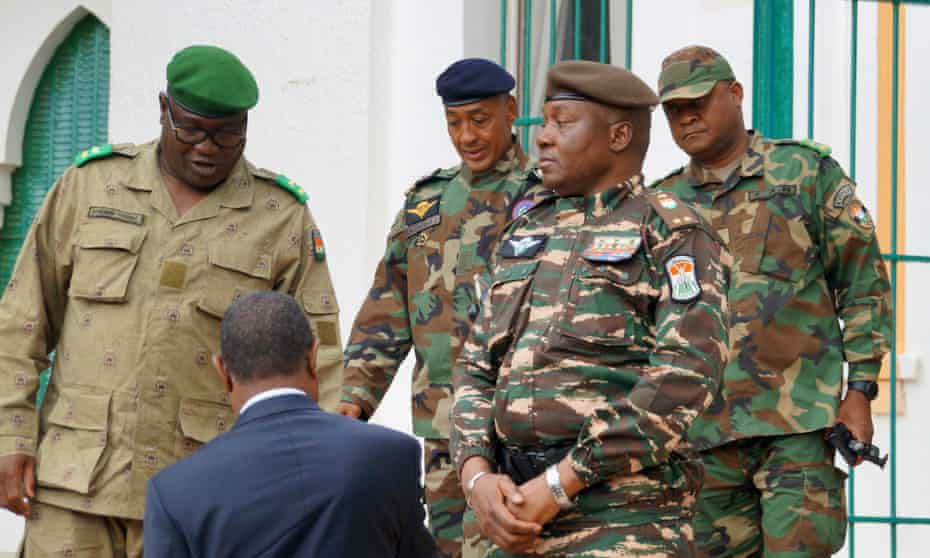
Tchiani addressed the Nigerian intervention team comprising Nigerian Islamic scholars, which was led by Bala Lau, the national leader of Jamatul Izalatu Bida Waikamatu Sunnah.
 
In a statement signed by Lau on Sunday, he told Tchiani that “the visit to Niger was to engage in constructive dialogue to encourage him and other military leaders behind the coup to embrace dialogue instead of war to resolve the crisis.”
 
Responding, Tchiani said, “Their doors were open to explore diplomacy and peace in resolving the matter.”
 
Tchiani voiced concern about the Economic Community of West African States’ ultimatums being given without the junta’s point of view being heard.
 
According to the Prime Minister of the Niger Republic, Ali Zeine, it was learned that Tchiani was prepared for a conversation and expressed the hope that the discussions with ECOWAS would happen soon.
 
Zeine noted, ‘’We have agreed and the leader of our country has given the green light for dialogue. They will now go back and inform the Nigerian President what they have heard from us. We hope in the coming days, they (ECOWAS) will come here to meet us to discuss how the sanctions imposed against us will be lifted.”
 
West African leaders ratcheted up their criticism of the coup leaders in Niger on Thursday, ordering the deployment of a regional standby army to reestablish democracy there.
 
Since late last month, when the presidential guard overthrew President Mohamed Bazoum in a coup d’état, the Niger Republic has been mired in political upheaval.
 
Days later, ECOWAS responded by imposing sanctions and giving the military junta in power one week to disband or risk military intervention.
 
On Sunday, August 6, that deadline passed without causing the political climate to change. The leaders of ECOWAS have stated that they will only send soldiers in a last-ditch effort to resolve the problem diplomatically.

El-Rufai: MURIC tells Tinubu to save North-West alliance

By Abdurrahman Muhammad

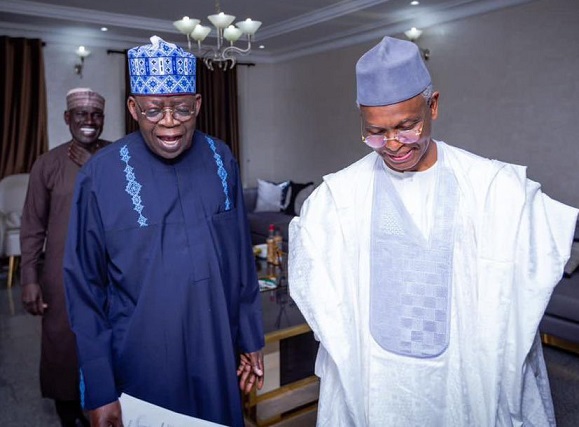
As the failure of the Senate to confirm the ministerial nomination of the former governor of Kaduna State, Mallam Nasir El-Rufai, continues to generate controversy, an Islamic human rights organisation, the Muslim Rights Concern (MURIC), has told President Bola Ahmed Tinubu to save the North-West alliance which gave him victory at the polls by ensuring that El-Rufai gets the ministerial appointment.

MURIC made its stand known on Sunday, 13th August 2023, after an emergency meeting of its Central Think Tank (CTT) held in the evening of the previous day. A statement signed by the Executive Director of MURIC, Professor Ishaq Akintola, after the meeting reads: 

“The Central Think Tank (CTT) of the Muslim Rights Concern (MURIC) met yesterday to consider the circumstances surrounding the failure of the Senate to confirm the nomination of the former governor of Kaduna State, Mallam Nasir El-Rufai, as a minister. 

“CTT considered the issue a major setback to the North-West alliance which gave President Bola Ahmed Tinubu victory during the 2023 presidential election. Furthermore, CTT regards the non-confirmation of Mallam Nasir El-Rufai’s ministerial nomination as a big threat to future alliance between the North and the South-West. The North may not hobnob with the South-West again if the champion of the North-South alliance is shabbily treated.  

“CTT also noted the huge contribution of Mallam Nasir El-Rufai who persuaded the Northern political elite, particularly the twelve Northern governors, to allow power to go to the South. It was observed that the monumental power shift of 2023 was a fulfilment of a 2019 agreement. It was therefore an act of honour while El-Rufai is seen as the icon of Northern integrity. 

“CTT affirms clearly, emphatically and unequivocally that it behoves the South as represented by President Bola Ahmed Tinubu to reciprocate the North’s noble stand by walking his talk, particularly his open offer and public invitation to Mallam El-Rufai to join his cabinet. The story of Tinubu’s invitation to El-Rufai to join his cabinet is already public knowledge.

“It has become necessary to jog the President’s medulla oblongata today because the North has exhibited integrity by keeping its promise on power shift to the South. It therefore behoves the South to reciprocate, to manifest decorum, decency and dignity, particularly with the ‘Omoluabi virtue’ for which the Yoruba are well known.

“Tinubu has a duty to protect the good name of the Yoruba people in particular and the whole South in general. Besides, a promise is a promise in Islam and Tinubu is a Muslim. Allah says in the Glorious Qur’an ‘And fulfill the promise, surely (every) promise shall be questioned about.’ (Qur’an 17:34). Allah also said, ‘O you who believe! Fulfill your pledges.’ (Qur’an 5:1).

“The good relationship and the bond between the North and the South-West must not be allowed to break. 2027 is around the corner. Even 2031 is already knocking and politicians are already doing their calculations. The North supported Tinubu because they found him to be credible. He must not do anything capable of diminishing that credibility.

“El-Rufai is the gem of the collection and everybody knows it. He is a performer. He is cerebral, iconic. If it is true that the president himself already hinted El-Rufai to set the machinery in motion for the energy sector, the president is morally bound to walk his talk regardless of all other encumberances. 

“Records show that there are precedents. Festus Keyamo was cleared in spite of Senate’s earlier objection. Something made Senate change its mind. Ex-President Olusegun Obasanjo got this same El-Rufai cleared despite Senate’s opposition in 2004. El-Rufai withdrew having read between the lines. He will still do it for the sake of Nigeria if the president’s body language conforms.

“Criminality, dishonesty, fraud, impunity, lack of patriotism and other Nigerian problems spring from a wrong mindset. They will all disappear or at least be reduced to the barest minimum if the leadership sets the pace. Islamic scholars North and South who nurtured the North-South alliance are watching. All men and women of conscience are keeping vigil. Nigeria holds its breath and shivers. The buck stops at Mr. President’s table.”

Ronaldo clinches Golden Boot in Arab club Champion Cup with six goals

By Muhammadu Sabiu 

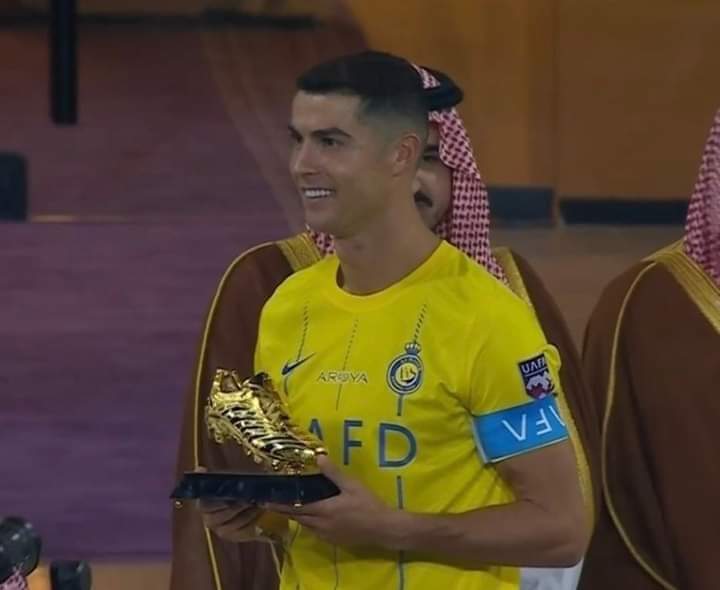
Soccer legend Cristiano Ronaldo has once again proved his prowess on the field by securing the coveted Golden Boot in the Arab Club Champion Cup. 

The iconic athlete, often hailed as the Greatest of All Time, emerged as the top scorer of the tournament, netting an impressive total of six goals across six matches. 

Ronaldo’s performance throughout the championship has left fans in awe, as he showcased his exceptional goal-scoring ability and unrivalled dedication. 

The Arab Club Champion Cup, known for bringing together some of the finest clubs from the Arab world, provided the perfect stage for Ronaldo to exhibit his talents.

Students loan and fees: easing the difficulties

By Dr. Aliyu U. Tilde

FOR STUDENTS, two days ago I learned about the tragic death of a mother who developed sudden BP after failing to gather enough funds for the last minute registration of her orphan daughter at a federal university in the northwest.

Within a day of illness, the mother died. This got me thinking of means to reduce difficulties for hundreds of thousands of students facing similar challenges on all our campuses. They are well into their courses when the fees were tripled. The students’ loan promised has not taken off and institutions have set deadlines for online registration. Do we sit back as a nation to see the students abandon their studies? No. We must do something. Here are my humble suggestions:

  1. Installment payments. Higher institutions should allow old students to spread payments over the remaining sessions of their courses, with the caveat that no student shall sit for a semester exams or be issued his certificate without completing his payment. However, an initial deposit, say 30% of the fee, can be required at the beginning of the session or semester.
  2. Students loan: The Special Committee under the CBN which is statutorily empowered to administer the loan should double its effort to enable a quick take off. Remember that the President once said he would like to meet the first set of beneficiaries of the loan in September.
  3. Remove Family Earning Cap: The Committee can remove the family earning cap to allow any student to access the loan as the President has ordered.
  4. Guarantors: State governments can serve as guarantors for their indigenes instead of individuals.
  5. Online application: The Committee can explore digitizing all or part of the application process to reduce stampede at banks and check corrupt practices like extortion of students by officials of institutions and banks.
  6. Legislation: To effect these changes, some sections of the Student Loans Act, 2023, need to be amended. This can be expressly done with the cooperation of the National Assembly and the Presidency.

Dr. Aliyu U. Tilde can be reached on Twitter: @Dr_AliyuTilde