Month: July 2023

KADUNA: Panic over outbreak of new disease leads to shutdown of schools

By Uzair Adam Imam

A Kaduna State Community, Kafanchan of Jema’a Local Government, was thrown into a sheer panic over the outbreak of an unknown disease that kills people.

Our reporters gathered that at least five people died and over ten were admitted at Sir Patrick Yakowa Memorial Hospital, Kafanchan, for medical treatment.

Speaking to journalists about the development, Ezra Joshua, the secretary of the hospital, said the hospital had taken samples to Kaduna to confirm the type of the disease with its treatment.

The Daily Reality learnt that all the nursery and primary schools in the community were locked by the schools’ authorities after sending their pupils back home as the outbreak was reported on Wednesday.

Joshua stated that, “Yes, we received the case of the new disease that starts with fever, headache, sore throat and general weakness of the body that affects zero to 13 years children.

“We learnt that four to five children have already died of the disease in Kafanchan town but we can’t confirm since it was not referred to our facility.

“What we have received now are 10 children that we have kept in isolation and their samples taken to Kaduna as of now,” he said.

Those reported to have died from the disease are, Zulaihat Abdurrasheed 13, Hussaina Aliyu 13, Maryam Mustapha 3, Aliyu Umar 4, and Abdulshakur Umar 2.

Namadi constitutes committee on illegal land allocations in Jigawa

Muhamamad Suleiman Yobe

Jigawa State governor, Mallam Umar Namadi, has constituted a committee to retrieve pieces of land that were indiscriminately allocated to individuals and corporations without the approval of the government. 

At the Council Chamber of the Government House, the governor inaugurated the committee to be chaired by the Secretary to the State Government (SSG), Mallam Bala Ibrahim (Mamser), in his bid to re-establish order and due process. 

Recall that Mallam Umar Namadi has promised to bring back sanity and run an administration based on the ethics of bureaucratic governance. 

He said the objective is to prevent the occurrences of farmer/herder clashes as a result of such encroachment around the state, especially during the rainy season. 

The land retrieval committee is part of Governor Umar Namadi’s effort to ensure that land designated as a cattle grazing route is not encroached on for selfish reasons and therefore reserved to serve its purpose.

THE LAND

The world is liveable

But this land is terrible

Releasing orders without sympathy

Where’s your instinct of empathy?

Abrupt removal of subsidy

Things loose out of custody

Prices go rocket higher

Traders nap having no buyer

We can’t secure aliments

Nor can we cure ailments

Schools have been deserted

After the increment exerted

Compatriots hover without refuge

Nobody can afford a mortgage

Even the fittest can’t survive

We’re not but corpses alive!

Vanguards of liberation

Become gladiators of domination

Not only a rare golden opportunity,

Seat is heavy responsibility!

– By Hashimu M Bala

Nigerian economy and the Washington package

By Mohammad Qaddam Sidq Isa (Daddy)

Now that Nigeria has finally embarked on the total implementation of the Washington Consensus package of neoliberal economic policies, what becomes of the country’s economy, in the long run, remains to be seen. 

As a product of consensus among the Washington-based World Bank, the International Monetary Fund (IMF) and the United States Department of the Treasury, the package was purportedly designed to guide developing countries bedevilled by protracted economic crises to recovery and achieve sustainable economic development. 

Also, as a capitalist template with inherent and unmistakable lopsidedness in favour of the rich and those with access to public resources, the package encourages governments to literally but gradually wash their hands of the critical economic sectors in favour of profit-oriented local and foreign investors.

Under pressure from neoliberal international financial institutions, successive Nigerian governments have gone to various extents in selective and partial implementation of the package, triggering rounds of controversy. 

However, now with the country going fully and irreversibly capitalist, there is no more time to waste in criticising capitalism and romanticising some obsolete socialist and populist ideas that are no longer realistic. After all, the reform policies can still work out if the federal government pursues requisite measures, which include, among other things, total transparency in governance, governance cost-cutting and prioritisation of the strategic sectors of the economy that have a direct bearing on people’s lives. 

In other words, for the reform to be effective, governance at all levels must be too transparent to accommodate any act of corruption; and anti-corruption measures, including appropriate punishments, must be in force and deterrent enough to deter any would-be perpetrator. 

Likewise, appropriate governance cost-cutting measures must be implemented judiciously to save resources without prejudice to productivity and efficacy.   

Equally, public spending must strictly follow the public’s priorities that entail appropriate investments in strategic sectors with clear short, medium and long-term goals measured not by mere figures but by their real effect on people’s living conditions. 

With these and other requisite measures in place, the investment atmosphere in the country will be transparent and competitive enough to attract local and foreign investors with appropriate job-creating investments that would facilitate real and sustainable economic development. 

That way, and with time, the local and foreign rent-seeking opportunists and profiteers, who have dominated the business sphere in the country, making hugely disproportionate returns compared to their real investments, will have to follow suit to remain relevant or simply lose out. 

Unless the Tinubu administration pursues these measures with appropriate commitment, the reform will end up counterproductive, thus making life even more unbearable to most Nigerians. At the same time, a tiny politico-business clique continue to wallow in abundance.

Interestingly, there has been conspicuous silence on the part of our local West-admiring Washington Consensus apologists, who have advocated total capitalist reform as the only panacea to the country’s persistent underdevelopment. Ordinarily, having passionately advocated it, they should now feel morally obliged to show some understanding, or at least fake it, over the ensuing escalating hardship in the country. 

Besides, though supposedly experts in economics and other related fields, none have developed a viable alternative economic recovery package or even introduced viable inputs to the Washington Consensus package to make it relevant to our peculiar circumstances and other underlying challenges.

Mohammad Qaddam Sidq Isa (Daddy) wrote from Dubai, UAE. He can be reached via mohammadsidq@gmail.com.

₦‎8000 palliatives: Tinubu should not repeat Buhari’s mistakes

By Kasim Isa Muhammad

I was quite gobsmacked when I came across the news that President Bola Ahmed Tinubu plans to compassionately alleviate the burden of subsidy removal on 12 million impoverished households by providing them with a meagre sum of N8000 for a period of six months. Initially, I had to rub my eyes in scepticism, questioning the authenticity of what I had just read. However, to my surprise, it appears that numerous media outlets have indeed reported this astonishing news.

Struggling to recover from what I scanned earlier, I stumbled upon a startling piece of news that left me exceedingly in complete disbelief. The gravity of the situation rendered me speechless for several minutes as I pondered the implications for the future of our country. Now, dear reader, I sense your anticipation to learn what I read. Brace yourself, for I came across an incredibly disturbing article in The Sun newspaper last Saturday.

In the midst of the unprecedented sufferings experienced by our nation, it was reported that the Senate and House of Representatives are planning to allocate a staggering N40 billion for the purchase of vehicles intended solely for the lawmakers inhabiting the Red and Green Chambers of the National Assembly.

The report further disclosed that a mind-boggling number of vehicles would be procured: precisely 107 units of the 2023 model of the Toyota Landcruiser for the Senate and an astounding 358 units of the 2023 model of the Toyota Prado for the House of Representatives.

Of course, this disclosure left me contemplating the priorities of our elected representatives and the ostensibly vast disconnect between their actions and the dire needs of our nation. As our country wrestles with countless challenges and its citizens endure untold encumbrances, it is disheartening to witness such extravagant expenditures.

The immense amount of funds allotted for luxury vehicles raises valid concerns in my mind about the judicious utilization of our collective wealth and the overall commitment of our lawmakers to serve the people’s best interests.

It is at moments like these that one cannot help but question the future trajectory of our country. The glaring contrast between the exorbitant spending on lavish vehicles and the pressing issues that demand urgent attention sends a disconcerting message about the priorities of our leaders. As a concerned citizen, I cannot help but wonder if there are better ways to allocate these funds and address the genuine needs and aspirations of our nation.

However, let me not dwell excessively on the shenanigans of our lawmakers, for Nigeria is a country that never ceases to stun with its myriad shocks and surprises.

My dear reader, allow me to transport you back to the discussion surrounding Tinubu’s poverty alleviation scheme. It is frankly baffling to comprehend how a mere 8K could possibly ameliorate the devastating impact of fuel subsidy removal in a country where people are already burdened with exorbitant prices for essential food commodities.

The current petrol pump price alone stands at nothing less than N500, and the cost of education in our public universities has experienced a drastic surge. In light of these distressing circumstances, one cannot help but reflect upon the efficacy of allocating a slavish sum of 8K to 12 million poor Nigerians over a period of six months.

Perhaps it is necessary to remind our leaders, as it seems they may have forgotten, that according to the National Bureau of Statistics (NBS), an overwhelming 84 million Nigerians are currently trapped in the clutches of extreme poverty, surviving on less than $1.9 per day. Instead of actively seeking lasting solutions to the multitude of challenges that plague us, it appears that Tinubu’s administration is perilously poised to repeat the mistakes of previous administrations.

We are all aware that the last government under former President Muhammadu Buhari implemented innumerable poverty mitigation programs, such as N-power, Survival Funds, and the National Youth Investment Fund (NYIF). However, it is worth questioning whether these initiatives have really succeeded in alleviating the pervasive poverty that plagues our country.

Similarly, the Nigerian Economic Summit Group (NESG) has also projected a distressing tide in unemployment, estimating it to reach a startling breathtaking 37 per cent this year. Is the N500 Billion not truly sufficient to empower our youth with viable and veritable skills?

Regrettably, it seems that our leaders have lost their ability to listen and empathize with the very people who entrusted them with power. Instead of prioritizing the well-being of those who elected them into office, they have chosen to inflict unnecessary hardships, seemingly oblivious to the devastating impact of their policies.

To illustrate, allow me, my admirable readers, to outline what N500 Billion can potentially achieve for our country.

First and foremost, education must be prioritized as it is essential for any nation’s progress. In Nigeria, the situation regarding education is particularly concerning.

According to a UNESCO report in 2023, approximately 20 million Nigerians, which accounts for 20 per cent of the country’s population, are not enrolled in school. This figure exceeds the total population of several African countries. In my opinion, by utilizing N500 Billion to build and renovate schools in both rural and urban areas, we can significantly reduce the number of out-of-school children in the country.

Furthermore, agriculture, being a vital sector of our economy, faces insurmountable challenges. By allocating a substantial portion of these funds to the agricultural sector, we can provide our farmers with adequate and affordable fertilizers, thereby enhancing the agricultural industry.

To incredibly uplift Nigeria, it is vital to focus on promoting rural infrastructure. By wisely directing the funds towards initiatives such as improving rural roads, ensuring a reliable electricity supply, and establishing cold storage facilities, we can also address issues of poor management, facilitate transportation of agricultural produce, and foster overall economic development in rural areas.

Additionally, our public universities are currently battling with insufficient funding, making education increasingly unaffordable for children from economically disadvantaged backgrounds. Will N500 Billion be sufficient to revamp many of these universities and address the pressing needs of students?

Finally, I would like to take this opportunity to address our esteemed President, Bola Ahmed Tinubu. Nigerians have high expectations of you, Mr President, as we believe you possess valuable insights into the economy. We eagerly anticipate your visionary ideas and urge you to wear your thinking cap. It may be early to pass judgment, but please do not disappoint us.

Kasim Isa Muhammad is an investigative journalist who contributes as a full-time journalist at both Neptune Prime and The Citizen Reports newspapers.

Hadejia Emirate relieves traditional ruler over drug abuse

By Muhammad Suleiman Yobe

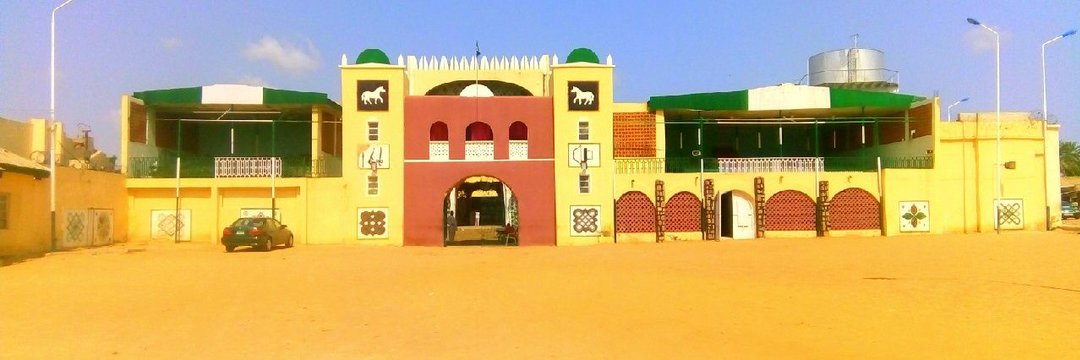
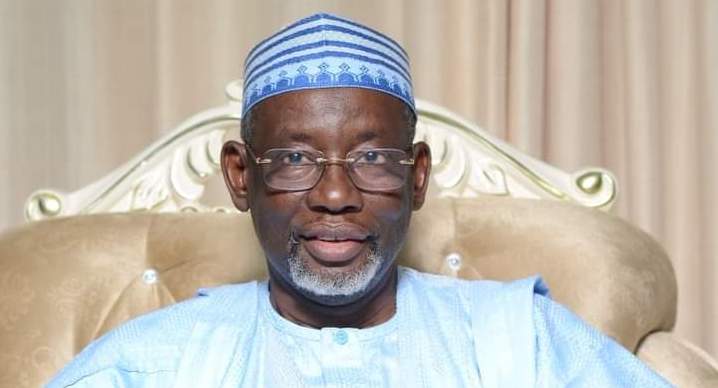
Hadejia Emirate Council in Jigawa State has relieved one of its traditional title holders, Alhaji Abubakar Hussain Abubakar, known as Dan Lawan of Hadejia.

This is contained in a letter sent to The Daily Reality by Muhammad Garba Talaki, a Public Relations Officer of the Council, signed by Council Secretary Alhaji Muhammad Baffale Abbas.

Baffale said the dismissal was due to his engagement with illicit drugs.

He said the council confirmed the matter through a letter from National Drug Law Enforcement Agency (NDLEA) Jigawa State intimating the council on the issue.

He added that the traditional title holder refused to honour an invitation letter sent by the Emirate Council to defend himself, which was found to be disrespectful to the council.

Consequently, Alhaji Abubakar Hussain Abubakar was dismissed and warned to avoid parading himself as Dan Lawan of Hadejia.

Secretary Alhaji Muhammad Baffale advised the general public, especially those interacting with him, to take note.

He said the strict measure was taken to serve as a deterrent to other traditional leaders and urged traditional leaders in the area to be sound moral.

PDP slams Tinubu over hardship caused by new petrol price

By Uzair Adam Imam

The Peoples Democratic Party (PDP) has slammed President Bola Ahmed Tintubu over the bitting economic hardship caused by the recent hike in the pump price of fuel from N534 to N617 per litre in Nigeria.

Mr. Debo Ologunagba, the National Publicity Secretary of PDP, mounted this challenge in a statement he made available to journalists.

Ologunagba also described the new price as provocative and extortionate, adding that the recent increment worsened the already suffocating economic situation under the leadership of the APC.

The statement read in part, “Our party insists that the N617 per litre of fuel is excessive, unacceptable and cannot be justified under any guise. This is especially given the economic potential and prospects within our country.

“It is appalling that instead of seeking ways to stabilise and grow the economy, the APC administration has abandoned the welfare of Nigerians which is the primary purpose of government under Section 14 (2)(b) of the Constitution of the Federal Republic of Nigeria, 1999 (as amended) and left the citizens to the vagaries of market forces and exploitative cabal; a disposition that is characteristic of a government that is not accountable to the people.

“The PDP is alarmed that with its ill-thought out, badly planned and hurriedly-executed policies, the APC is running Nigeria’s economy aground with the value of naira rapidly plummeting, businesses and production shutting down; citizens losing their means of livelihood, commercial and social activities crippled, with millions of families no longer able to afford their daily needs as the costs of food, medication and other essential goods and services continue to skyrocket.

“Indeed, this is not the nation that Nigerians yearned for after the abysmal, harrowing and inhuman eight years of the Buhari-led APC administration as the situation has currently gone from a frightening bad to a terrifying worse with no hope in sight,” the statement said.

According to Ologunagba, “Even with the removal of subsidy on petroleum products, with a deft, transparent and innovative management of resources, economic potentials, national comparative advantage and expanded value chain in refining capacity, fuel should not sell for more than N150 per litre in Nigeria.”

NUC approves 10 new degree programmes for Al-Istiqama

By Uzair Adam Imam

The National Universities Commission (NUC) has approved ten new degree programmes for Al-Istiqama University, Sumaila, Kano.

Professor Salisu Shehu, the university Vice Chancellor, disclosed the news of the NUC’s approval to the press Wednesday.

“10 new degree programmes approved for Al-Istiqama University, Sumaila,” Processor Shehu announced in a message seen by The Daily Reality.

According to him, the ten new programmes include; B.A Arabic, B.A Shari’a, B.A English language, B.A International Relations and B.A Peace and Conflict Resolution.

Other programmes are B.A Sociology, B.A Criminology and Security Studies, B.A Biotechnology and B.A Environmental Health and Community Health.

It was gathered that admissions into these programmes would be made against the 2023/2024 academic session using the 2023 UTM Jamb results.

APC’s ineptitude, Nigerians’ suffering: Who is to blame?

By Salisu Uba Kofar Wambai

Atiku Abubakar made campaign promises about tackling border closure which seriously ushered hardships, especially in the North. He equally rolled out plans to liberate Nigeria from the shackles of foreign loans President Muhammadu Buhari immersed it into.

PDP is the party that has formidable and unnerving politicians who fought tooth and nail for democracy to thrive in this country. The party people know the long walk to freedom they walked, and their 16-year dispensation spoke for them. 

PDP mastered campaigns for the creditors to give us waivers, which prevented the country from such loan spells. They ensured Nigeria hadn’t been submitted to total external control like we see today with APC’s inexperienced and heartless dispensation.

PDP has think tanks that guide their foreign relations which made sure we did not accept in toto any development strategy which could undermine the welfare of citizens in the long run. Thanks to their inclusion of technocrats both from home and outside in their socioeconomic and political decision makings 

Atiku was an integral part of all these goodies mentioned; that’s why we suggested northern voters vote for him during the 2023 presidential campaigns. As a northerner who willingly gave power to the South from 1999 to 2015, I thought it was economically stagnant due to the selfish allocation of federal government projects under OBJ and GEJ. The North had expected Buhari to compensate the region for even development of the country.

However, Buhari seemed to have failed and was ignorant of why power was being rotated at the centre. He favoured the South in many aspects of development project allocations like railways, good roads, bridges and electricity. 

Most of the projects Northerners have been clamouring for, like Mumbila Power Plants, Baro Port, Ajakuota Steel Company, KKK gas pipeline projects, and roads linking states of the region, have not seen the lights of the day. And how could North continue to support power-sharing and shift these injustices, shabbiness and iniquity?

The southern PDP governors under Nyesom Wike led a mischievous campaign against their party candidate PDP to work for the southern presidency. They were not a bunch of idiots like some undesirable elements of the northern politicians who selfishly sold out the region for their egocentric notions.

Now that Nigerians are paying the price of what they had bought by bringing APC to power again, we must remind our people how to become politically smart next election season. And many folks from this part of the country cannot still see things as they are. Sad.

Salisu Uba Kofar Wambai writes from Kano State and can be reached via salisunews@gmail.com.

As you prepare for success, make provision for failure

By Aisha Musa Auyo

One thing everyone wishes for and works towards is to succeed in life. From infancy to adulthood, up to old age, we aim to succeed in every part of our lives. But what we fail to do is also to prepare ourselves for failure. Yes, because it’s inevitable. 

One of the pillars of the Islamic faith is the belief in qadr (divine will and decree), good or bad. This means that good and bad will surely ensue in life, success and otherwise. It’s how life is designed. But why do we do nothing or very little in preparing ourselves and our wards for failure? Why are we shielding ourselves and wards from the reality of life? 

This may be why people cheat, as they cannot afford to fail. They just have to win at all costs. Others commit suicide. Some go on drugs because they have been unable in certain expectations or tasks.

So as parents and teachers or elders, we need to let ourselves and our wards know that failure, not consistently winning, or not being at the top is okay. It is acceptable, and life does not end there. We can always try later and do better. 

Let’s show our wards and significant others they can trust us to be there for them whenever they fail. Just as they will want to come to us with success stories, they should be free to do that with failure stories. This is what unconditional support is all about. We should be a shoulder to cry on. 

We should also, as parents, accept that we sometimes fail and let our kids see how we feel and how we are going about it. The norm is to show the kids that we are always succeeding and doing great, just so they can be inspired, but we are not helping them by doing so. 

In summary, these are the points I want us to reflect on and ponder. 

1. Prepare your child for failure. We will always have good and bad days. Let them know they cannot always win, and it’s okay.

2. Let us always put in the back of our minds and theirs that “Over every possessor of knowledge is one [more] knowing”. Qur’an 12:76 

Regardless of one’s intelligence, hard work, and luck, we will surely meet others who are better than us. Let us know that we are better than others too.

3. Failure is a learning process to know what to do and what to avoid in the future. If one fails in a certain task, one may succeed in another task.

4. We should learn to compete with ourselves, not others. Set a target for yourself, and work towards achieving it.

5. Life doesn’t end or begin with school grades, work promotions, or huge profits. There’s more to life than these.

6. Good relationships, emotional intelligence, compassion, contentment, and adaptability guarantee success in every life situation.

8. It’s lonely up there: If you cheat your way up or compete to be better than everyone else, people will leave you with your success. No one wants to be with someone who always wants to be on the top by hook or crook. Cheating often backfires. And if it doesn’t, the people who made it to the top by defrauding others end up very lonely and have no genuine person to share the success with. 

9. Healthy competition is okay. Being motivated by other people’s success stories is okay, but we should not cheat or compete. We are made differently.

10. Avoid social media attention or fame: The pursuit of likes, followers, and validation has led to detrimental effects on mental health, values, and overall well-being. The obsession with social media fame has resulted in a culture of superficiality, narcissism, and moral erosion, hindering the progress and development of society as a whole.

Parents and teachers must take responsibility and invest in youth development, focusing on their holistic growth, character development, and real-world contributions. By doing so, we can create a future where youth can realise their full potential and social media platforms can be used for positive change rather than as a means of self-promotion and validation.

11. School, parental, and peer pressure

School positions are not necessary; Those numbers instil unhealthy competition among students. Instead of children competing against themselves, they are pushed to compete with each other. 

A student should be encouraged to push himself harder to get better grades, not in comparison with another student. Teachers should do as much as possible to adopt learner-centred teaching so that each student receives the attention they crave.

Parents should learn to accept their children when they fail. We should know our capabilities and not push ourselves and our wards to be what we can’t be. I know it’s hard to accept defeat or reward failure, but that is the moment when self-love and support are needed most. If we know we did our best, we should not be disappointed. 

Parents should stop comparing siblings. Each child has his/her unique quality. A child lacking intellectual intelligence may score higher in emotional or social intelligence. Let’s focus on our highs instead of our lows.

When the storm is over, parents or guardians can discuss with the kids how to do better, with a reward or promise that will make the kid want to do better. We elders must learn to discourage cheating and encourage integrity and self-acceptance.

Aisha Musa Auyo is a Doctorate researcher in Educational Psychology, a wife, a mother of three, a Home Maker, a caterer and a parenting/ relationship coach.