Month: June 2023

Tinubu receives APC governors in Aso Rock

By Ahmad Deedat Zakari

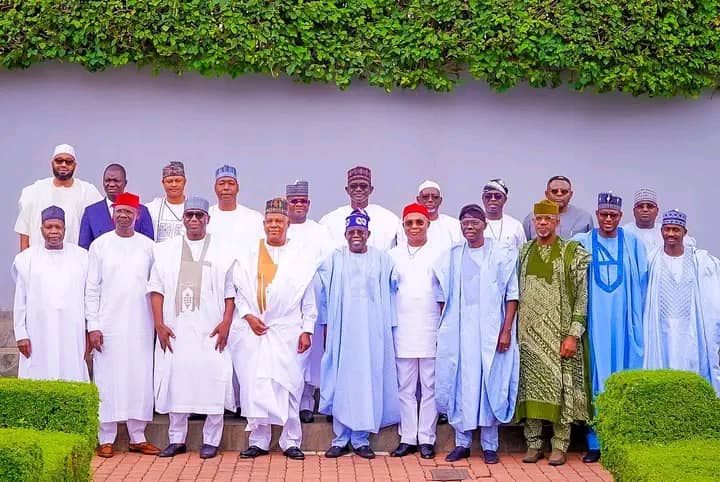
President Bola Ahmad Tinubu, on Friday, had a meeting behind closed doors with governors of the All Progressives Congress, APC.

President Tinubu, in a Facebook post, posted about the meeting with the governors at the Presidential Villa, Abuja.

“Today, I had the delight of welcoming distinguished Governors from our great party, the APC, to the State House.

“Together, we reaffirmed our commitment and united efforts in realizing our cherished vision for Nigeria. With every hand on deck, We are resolute in our pursuit of a prosperous nation.” the post says.

The governors were led to the State House by Imo State Governor, Hope Uzodinma, who recently assumed the role of Chairman of the Progressives Governors Forum, PGF.

Seventeen of the twenty APC governors were in attendance. However, conspicuously absent from the meeting were Governor Oluwarotimi Akeredolu of Ondo State, Abiodun Abayomi Oyebanji of Ekiti State and Dr Nasir Idris of Kebbi State.

FERMA: Bauchi-Jos highway needs urgent intervention

By Ukasha Rabiu Magama

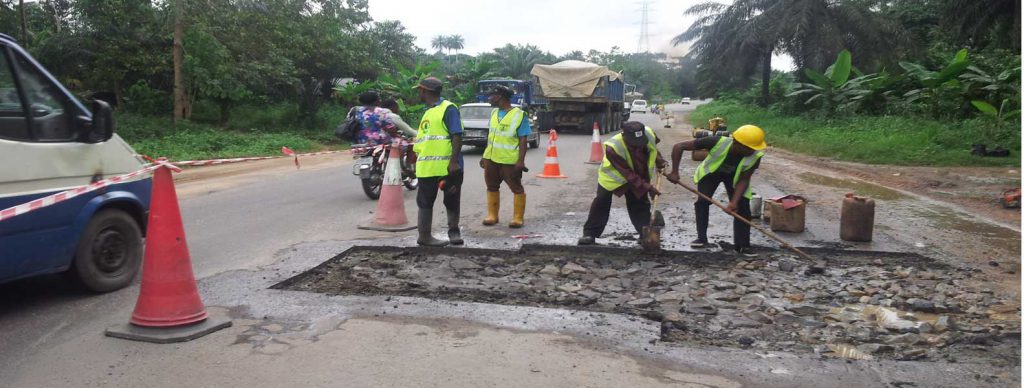
The lives of the commuters passing through Jos-Bauchi road to other states in the Northeast and Northcentral regions are in precarious situations due to the gully erosion that washed away the road in Narabi, Toro local government of Bauchi state.

The affected area has already been declared dangerous by the residents. Though the site has been closed-off with stones and a red rope to serve as a warning signal to motorists, they are still managing to pass through at a low speed because there is no alternative.

Nonetheless, the Federal Road Maintenance Agency FERMA should hurriedly aid commuters by repairing the affected area before it is damaged entirely and cause havoc to motorists flying the roads daily.

It’s good for the FERMA to know that the way is the only way linking the entire north-central and northeast. Also, the Agency is aware that the road is among the busiest roads in Nigeria. Meanwhile, if FERMA refuses to fix up the ashed-away area hurriedly, it will affect and endanger the lives of thousands of commuters and stop motorists’ movement entirely. 

Similarly, it’s undoubtedly that the Bauchi-Jos road has become a dead zone for commuters because of the severe potholes along the road. This has been continuously claiming the lives of innocent commuters daily.

Annoyingly, the Bauchi-Jos highway is among the roads recording high rates of accidents in Nigeria. Given this, the federal government approved 348 billion in 2018 for the dualisation of the road from Akwanga-Jos-Bauchi to Gombe. This is to reduce the risk of accidents along the road, but more needs to be done on the ground to actualise the project.

Therefore, since the protection of the lives and property of every citizen is bestowed upon the government’s shoulders, it is significant for the FERMA to urgently intervene by repairing the washed-away area; this is to save innocent lives. Also, since the outgoing president cannot fulfil his promise, we are drawing the attention of the incoming president Ahmad Bola Tinubu to dualise the road; hence the need is to save lives and properties.

Meanwhile, we need FERMA’s urgent intervention before the new administration settles. If not, lives are at stake, and only God knows what will happen if the road is damaged completely.

Ukasha Rabiu Magama writes from Magama Toro, Bauchi state.

“Subsidy is gone”: A simple explainer


By Abdulhaleem Ishaq Ringim

The enactment of the Petroleum Industry Act 2021 was intended to mark a significant shift in the regulation of the downstream petroleum sector. The act aimed to align petrol prices with market dynamics, phasing out the fuel subsidy regime. However, despite the planned full deregulation in February 2022, the government continued to allocate funds for subsidies, leading to financial strain and mounting debts.

Under the Petroleum Industry Act, the government ought to have terminated fuel subsidies and allow petrol prices to reflect the general market rates six months after its enactment. However, the government continued to provide for subsidy costs in its budget. Due to financial constraints, the government could not back the subsidy provisions in the 2022 and 2023 budgets with financing, resulting in unpaid subsidy costs. The Nigerian National Petroleum Company Limited (NNPCL), acting as the supplier of last resort, offset these costs. This resulted in the accumulation of debt of N2.8 trillion for the government in the process.

The new President, Bola Ahmed Tinubu, has pronounced the termination of the subsidy regime. This is in line with the law and is further necessitated by the inability to finance subsidy commitments since February 2022. The removal of subsidies means that petrol prices will now fluctuate based on market dynamics rather than being fixed. 

While the arguments continue on whether the announcement approach was systematic or not, it has to a certain extent, saved the country from the intense speculative buying activities that would have resulted from scheduling the announcement and other implications that would have marred such gradualism. I consider it a welcome development and commend the President for such uncommon courage, which has been missing in the governance space for long. 

However, the repercussions extend beyond price adjustments. The rise in price will naturally raise the costs of transportation, which will, in turn, further pressurise the country’s inflation rate. The government’s lack of resources to offset subsidy liabilities since February and the outstanding debt to NNPCL means there will hardly be any room for reinvestment, including allocating funds for palliatives or post-subsidy shock alleviation. Moreover, it is crucial to note that even when the government was able to offset the subsidy costs, it relied on borrowing rather than revenue to cover the costs, exacerbating the financial burden.

With the subsidy officially and finally gone, the government must prioritise strategies to repay NNPCL’s debt of N2.8 trillion and other subsidy-related debts while refocusing on the productive sectors of the economy and social welfare. This commitment demands immediate attention, as the accumulated debt poses a significant liability and might impede the effective utilisation of government revenues.

An encouraging prospect arises from the current situation as we grapple with outstanding subsidy debts. Once the government’s financial circumstances improve, its focus will permanently shift away from the subsidy regime and towards prioritising crucial areas such as education, health, infrastructure, and other significant sectors. This shift is anticipated and underscores the government’s intention to allocate resources towards enhancing public value and renewing national hope. 

Meanwhile, the government should advisably prioritise the enhancement of public transport systems and collaborate with state governments to improve mass transit systems and infrastructure, especially by incorporating more diesel-based buses into the stock of public transport vehicles in their various states. The situation should also serve as an incentive for state governments to renew focus on developing Bus and Light Rail Transit systems. 

To consolidate this hard decision, the government should consider the privatisation of state-owned refineries to enhance efficiency and promote private sector participation in the downstream sector. By opening up the refineries to private investment, the government can improve their operational performance, output and overall local refining capacity. As the Dangote refinery gets ready to begin operations, the government should also support other private oil-refining projects like the BUA refinery in Akwa Ibom.

Additionally, the Nigerian National Petroleum Company Limited (NNPCL) should explore the possibility of an initial public offering (IPO) to raise capital and expand its operations. Emphasising the development of the gas sector could also be beneficial, considering its potential for revenue generation and reducing dependency on imported fuels.

Abdulhaleem Ishaq Ringim is a political/policy/public affairs analyst. He writes from Zaria and can be reached via haleemabdul1999@gmail.com.

 At the mercy of delegates: The imperative of breaking free

By Mohammad Qaddam Sidq Isa (Daddy)

Regardless of the expectation and anticipation with which the new administration in Nigeria is being greeted, there is no better time than now to embark on efforts to address the underlying challenges that have always undermined the credibility of primaries, hopefully by the 2027 election season, relevant legislation and methods will have been duly reformed.

Towards every election season, people lament the scarcity of suitable candidates for elective positions, which they also rightly attribute to the systematic manipulation of the party nomination process by powerful vested interests within the parties, who impose candidates on the electorate via charades in the name of party consensus or primaries by some hand-picked party delegates.

Public officeholders and other party elites use the instruments of power and public resources at their disposal to ensure the emergence of their political associates, in addition to themselves, of course, as party delegates with a mandate to elect party candidates, on occasion typically characterised by systematic vote buying deals between delegates offering their consciences (if any) for sale. Deep-pocketed politicians jostle to outbid one another.

That has discouraged many conscientious individuals with the potential to turn things around in their respective jurisdictions given the mandate from getting into politics, for they rightly wouldn’t bootlick any so-called political godfather or bribe any greed-motivated delegate. After all, many like-minded individuals have ventured into politics but ended up frustrated at the hands of party manipulators. In contrast, many others of similar calibre have compromised their moral principles to join the corrupt elite they have previously often castigated.

Consequently, the electorate is left with the dilemma of choosing amongst candidates with notorious pasts for gross incompetence, massive corruption cases, and even court convictions against many of them. The average voter, therefore, betrays his underlying frustration by voting for the highest bidder amongst the candidates or voting for whoever his immediate political master endorses, with some hope that the candidate will win. His master will be rewarded with some political appointment or other privileges, for him (voter) to be occasionally rewarded with peanuts by the master throughout his stay in office or continuation of his privileges.

Only a few votes with a conviction may still not be in order anyway, for it might be influenced by one manipulative tactic or another.

Ironically also, there is general indifference in all segments of society. Even democratic activists and advocates for good governance, who are supposed to be particularly committed to demanding, among other things, the reform of the party nomination process, have been largely and inexcusably indifferent. They only rant in futility when it’s too late, i.e. when birds of a feather flock together have emerged as their respective parties’ candidates. Many have become mere attention-seeking opportunists hiding behind activism to extort political appointments and other privileges from the politicians they have criticised in return for their loyalty.

Even the few voices of reason in society only urge the electorate to vote for the so-called best of a bad bunch among the candidates, if any.

Now, until relevant legislation governing the party nomination process and the methods of conducting it are reformed in such a way that it guarantees maximum transparency in the process, the kind of change Nigerians wish for under democracy will never be achieved.

Instead of chasing shadows, therefore, it’s high time that genuine advocates for good governance and other concerned groups and associations embarked on a concerted campaign to demand the reform of relevant legislation to abolish the current corruption-laden delegate primaries and consensus and adopt a direct and transparent primary where all party members are eligible to vote, as the only legal method of nominating party candidates at all levels.

The imperative of demanding such reform represents a challenge that puts Nigerians’ yearning for good governance to the test. If the next general election doesn’t achieve the reform, then the yearning is simply not genuine enough. 

However, even when realised, it’s naive to assume it’s unmanipulable. Vested interests within parties will keep trying to manipulate it. Yet, when sustained, it will undoubtedly make the quest for good governance more achievable, enabling people at various levels to push for and secure the emergence of the best amongst them as parties’ candidates for various elective offices.

That way, Nigerians will be able to break free from the grip of party delegates to freely elect the calibre of people with the capacity, credibility, inventiveness, and passion necessary to turn things around in the country.

Though the beneficiaries of the status quo will vehemently resist and undermine any attempt to reform it, they will eventually succumb to the collective willpower of the people, provided they remain passionate, resilient, and determined enough.

Mohammad Qaddam Sidq Isa can be contacted via mohammadsidq@gmail.com.
Cost of governance: Shekarau urges Tinubu to reduce number of lawmakers

By Muhammadu Sabiu

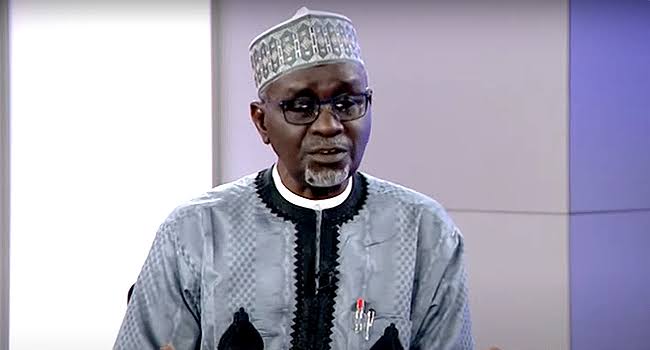
Kano Central Senator Ibrahim Shekarau has advised President Bola Tinubu on measures to cut the government’s expenses.

According to Shekarau, Tinubu should reduce the number of members in the Senate and House of Representatives in order to minimise the expense of government.

Appearing on Channels TV Wednesday night, Shekarau said that Nigeria does not require both chambers.

He was quoted as saying, “Left to me, we don’t need to have the two chambers, the two houses.

“It’s costing the country. I agree, a democracy means getting as many involved as possible, but the way it is going on now, it’s almost 500 legislators nationwide; I don’t think we really need this much at the moment.”

How Tinubu should compensate the North West

By Prof. Abdussamad Umar Jibia

It is no longer news that Alhaji Bola Ahmad Tinubu has taken over as the President and Commander-in-Chief of the armed forces of the Federal Republic of Nigeria. Nigerians are always happy when there is a change of leadership because we are a hopeful people. It doesn’t matter that we have been disappointed and had our hopes dashed many times over. Most of us believe that it shall be different this time around. Nigerians believe that the hardship that immediately greeted the inauguration of President Tinubu due to removal of oil subsidy is only temporary. This only shows how optimistic our hope can be.

Party stalwarts who have participated in campaign and are important enough to be remembered by Mr. President are even more hopeful. Offices shall soon be shared. Ministerial appointments, advisors and other aides of the President, Boards membership, headship of Government agencies are some of the ‘gifts’ given to individuals who have shown enough commitment to the project of selling Mr. President and his party to Nigerians.

Another way in which politicians compensate states that gave them a large number of votes is situating infrastructural and empowerment projects. 

To become the President of Nigeria, Asiwaju, a National candidate, polled  8,794,726 votes  to defeat Atiku Abubakar and 16 other candidates, some of whose influence does not transcend their states of origin. Out of this number of votes, more than thirty percent came from the North West. Thus, if political support is important to Tinubu, and of course it is, he has an obligation to thank the people of North West and to practically acknowledge that they are his people.

Now, how is Tinubu supposed to compensate the North West? To answer this question it is important to note that only an insignificant few of the more than two million voters mentioned above are politicians who are expecting contracts or appointment to public offices from President BAT. Thus, while those appointments and contracts may or may not affect commoners in the North West, there are things that affect their lives for which they need the attention of Government.

President Tinubu has taken over at a time when banditry has exhausted and impoverished an average villager in the North Western part of Nigeria. Banditry began as cattle rustling by people who believe that only they have the right to own cattle. It then metamorphosed into full scale armed robbery and occupation. As I m writing this, there are many communities under bandits’ control. Many of them decided to submit willingly out of frustration since their Government has failed to provide them protection.

For communities that have not submitted to the bandits’ authority, the attacks continue.

To rationalize banditry, a number of false narratives have been created and spread by bandits and their sympathizers. For example, it is common to hear people saying that banditry was brought about by the unfair treatment given to nomadic Fulani for decades. Thus, according to this narrative, what we are witnessing today is a backlash of this unfair treatment. Some years ago, I had a reason to write a rejoinder to a group of Islamic scholars who bought into this narrative and, instead of calling on the Government to deal ruthlessly with bandits, were asking for fair treatment of nomads.

I don’t know of any group of Nigerians that is not complaining of unfair treatment. In fact, Nigerians, especially the proletariat, have for long been unfairly treated by the elites and the system they control. Does that mean every Nigerian should acquire arms and become armed robber? Surely no. Injustice does not justify crime. This narrative is thus faulty in every ramification. It is unfortunate that some people in Government have been deceived into accepting it.

Another narrative is that banditry taking place in the North West and North Central geopolitical zones is a fight between Hausa farmers and Fulani cattle-rearers. This is even as we saw travelers who are not Hausas being intercepted and burnt alive. We also saw Fulani cattle rearers  who refused to join criminal gangs being attacked and killed in their homes. Yet, the immediate past central Government bought into this narrative and asked Governors of the affected states to negotiate with bandits. If nothing else, those negotiations exposed the identity of the criminals. They appeared before press cameras and confessed their crimes and gave conditions to Government. They continued with their crimes almost immediately after the 2016 and 2019 peace accords. 

Another false narrative is that banditry is being executed by foreigners from other West African countries. Yet, during the failed peace negotiations all the bandit leaders were Nigerian Fulani whose ancestry is well known. In fact, all the bandits known to be operating in the North are like that. Now that they have occupied many rural communities their identities are even more exposed. 

This is the number one problem of the North Westerner that Tinubu should confront even if it means stepping on some of the biggest toes in this country.  Fortunately he has come at the same time with Governors who are interested in fighting crimes. In particular, the new Governors of Katsina and Kano have shown early signs that they mean business as far as crime-fighting is concerned. Working with them closely would help President Tinubu. Zamfara that has been serving as the hideout of bandits has also a new Governor.

Professor Abdussamad Umar Jibia wrote from Bayero University, Kano. He can be contacted via aujibia@gmail.com.