Month: June 2023

Malam Saidu Jibrin Kwani: A case study of a strong man vs strong institution debate

By Nasiru Manga

Anytime Nigeria’s myriad problems and challenges are raised in a discussion which also involves how to turn around the country’s fortune, it more often than not leads to a fascinating argument among intellectuals as to which is more important between establishing a solid institution which produces successive good leadership or having a leadership of strong men to engender strong institutions. In that instant, I find myself vacillating between the two opinions. I find both of them valid and very difficult to be disputed. It’s a case of a chick and an egg dilemma regarding which must have existed first, the chick which laid the egg or the egg from which the chick was hatched.

Reasoning with either of the points, I reflected on my teenage experience in secondary school more than two decades ago. I then relate the arguments with the leadership of five or six successive principals in my secondary school, Government Arabic College, Gombe. How these principals managed the school was a practical example of the validity of the two arguments depending on the side one takes.

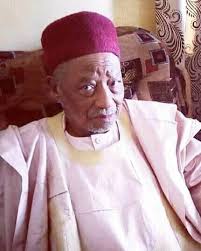
One of the principals, in particular, stood out. He is Malam Saidu Jibrin Kwami. His exemplary leadership during his stint as the school’s principal afforded me the feeling of what good leadership can do, even in a small school environment. Before him, his predecessors couldn’t make any difference. The principal who succeeded him couldn’t equally build on his achievements. It’s also proof that without a vital institution, a strong leader’s efforts come to nought if he leaves the stage and succeeds by a weakling. For my readers to deeply appreciate why Malam Saidu Jibrin Kwami’s exemplary leadership towered above the rest of the principals, let me take you down memory lane of what was obtainable in the school.

The system was, and until we left the boarding secondary school in 2002, the principal, in addition to the daily management of the school, was in charge of students feeding. I didn’t know whether the funds for the feeding were released to the principal directly from the state ministry of education or the ministry provided the school with all foodstuffs. It released some funds to the principal for the daily running of the school and buying groceries. But I did know that the school store was getting restocked regularly.

The three square meals day in and day out consisted of mostly pap with sometimes two pieces of ƙosai served as breakfast. The pap had no sugar, and perhaps, due to how it was prepared, it had a sedative effect on students during school hours. Black tea with rumpled tiny bread was served as breakfast once a week. The lunch and supper were either tuwo made from processed maize, mostly half-done, called gabza by students or eba made from gari, served alternately for lunch and supper. The soup for the gabza or eba, mostly miyar kuka, was prepared with little to no spices and bereft of any accompanying protein in the form of meat. Rice which one couldn’t tell whether it was a jollof rice or simply white rice without soup, was served on Thursdays. The meat was served only once in a blue moon.

It is needless to say that the rations were not enough for students. Worse of it, many students used to end up not having their rations as what was given to the cooks to prepare was barely enough to go around. The service was, therefore, on a first-come-first-served basis, excluding senior students who needed not join queues. If one missed his share, that was all, and he would be told “ka bi Yerima“, an expression meaning “you have missed, there is nothing for you.” It was said that the cliché “ka bi Yerima” has its historical origin in one of the Gombe princes who sought and lost his father’s throne to then Emir of Gombe, Alhaji Shehu Abubakar. So “ka bi Yerima” means one followed in the footsteps of the prince, a loser. Ask me not about its authenticity.

To be fair to the principals of my secondary school, the situation was almost the same in all boarding public secondary schools, at least in Gombe and Bauchi states, around that time and even some years before that, as confirmed by those who attended the boarding schools before us. There were, of course, slight differences here and there occasioned by changes of different school administrators depending on their level of prudence and management of resources.

One incident I can’t forget during my first year was a riot in the school. The then-principal was unbelievably niggardly. Students’ rations which were, to start with, too little, only enough to feed a three-year-old baby, became so frequently inadequate to go around. Kun bi Yerima became the order of the day as more and more students started missing their rations at the dining hall. This was exacerbated by the fact that it was towards the end of a term when the foodstuffs brought from home by students and some money given to them by their parents to complement the school feeding programme had finished, thereby forcing many to rely on the food provided by the school which was not enough. There was also a shortage of water in the school.

So, one morning, some senior students from SS 2 and 3 woke up and said they had had enough. They took to the school’s streets chanting slogans that the principal should go and that he was a thief. After gathering, they headed to the school’s staff houses, where the principal lived. They started pelting stones at his house. He escaped by a whisker, and the school got shut down for a few weeks.

Upon resumption, we met a new principal and were informed that about seven (7) students, leaders of the protest, were expelled from the school. But still, there was no significant improvement in school feeding or academics. We only had three to four subjects maximum, out of the nine subjects we were supposed to have daily. The only exception was when we had teaching practice students from the Federal College of Education. And during that time, permanent teachers virtually abdicated their responsibilities, leaving everything to the student-teachers. Another two principals we had afterwards couldn’t effect any change. Their priorities were neither students’ academic nor their nutritional well-being.

Then came the revolutionary principal, Malam Saidu Jibrin Kwami. We were in SS 3, about five years after that principal against whom students revolted, and the fourth in the succession of principals since we enrolled in JSS 1.

The first thing he undertook was an improvement in our academics. He frowned at some teachers habits of sitting and chit-chatting in staff rooms without attending classes. He declared that he wouldn’t condone their flagrant negligence of duty. He insisted that every teacher must not miss his lesson twice weekly without a genuine reason. We then started having completed nine lessons on an unprecedented day.

How did he achieve that? He gave all class monitors notebooks to use as registers where each teacher would write their name and append their signatures at the end of their period. At the end of the class every day, the class monitors would queue up at his office, where he checked the register of each class to see if there was an absentee teacher. He also told us in the assembly that we should report any teacher we observed wasting away their period of 30 minutes or 45 minutes blabbering instead of teaching.

Malam Jibrin Kwami also introduced extra evening classes (which we called prep) daily, save weekends. Before him, there was not much importance attached to it by his predecessors. Only junior students used to attend it, and it wasn’t daily. But during his time, he supervised the evening classes himself; and he would personally go around hostels to chase out stubborn senior students who would rather stay put in the hostels while the prep was ongoing. If he sighted a student loitering about, he would shout from afar, “Who is that gardi?” He also ensured that all the classrooms and all the streets from students’ dormitories leading to the classes were fully lit so that students wouldn’t complain of darkness. There were no Discos then, and NEPA was genuinely faithful. How he achieved that, beat me.

You may be wondering what happened to our food, right? Suffice it to say that during his short period as the school’s principal, we also saw what our parents enjoyed in public schools in the ‘70s and ‘80s. He told us that he also finished in the same school in 1982, and it was unfortunate that things had deteriorated to that level.

Most days of the week, our breakfast became tea (not just black tea, but with milk) and bread as against pap. And we started feeling the taste of sugar in our pap too. White rice and stew, tuwo and eba started competing as our lunch and supper, with rice winning most times. Pieces of meat suddenly appeared in our daily meals, and the soup started having condiments.

One day, he summoned us as the school’s prefects, informed us that we would notice a change in our meal the next day, and urged us to survey and feed him about the change.  He told us the meat price was high, so he decided to alternate the meat with fish. So he wanted us to sample students’ general opinions on the fish substitute as he knew some people didn’t like fish. Such a thoughtful leader!

Unfortunately, as they say, good things hardly last; his tenure as a principal was short-lived. No sooner had we started enjoying his good leadership than he got elevated and appointed as the secretary of our state’s pilgrim board. The school was literally thrown into mourning upon hearing the news.

The man who succeeded him couldn’t properly step into his shoes. Things started deteriorating very fast. Before you know it, we were back to square one. This is the case of having a strong man without a strong institution. And the strong institution doesn’t exist in a vacuum; it has to be built by strong men.

Nasiru Manga can be reached via nasmang@gmail.com.
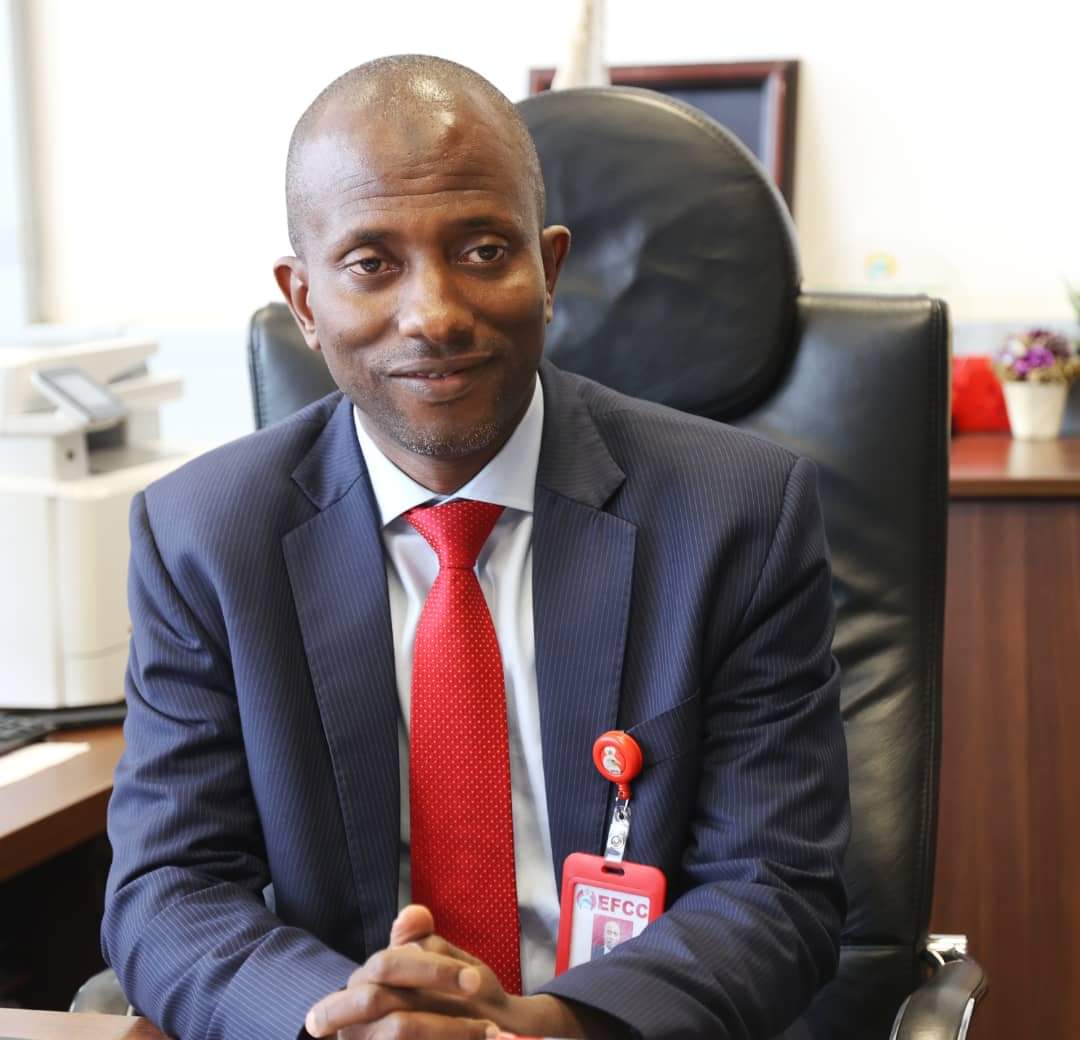
EFCC presents profile of its Acting Chairman Abdulkarim Chukkol

News Desk

Following Tuesday, June 14, 2023, suspension of Mr. Abdulrasheed Bawa, as Executive Chairman of the Economic and Financial Crimes Commission by the Federal Government, Mr. Abdulkarim Chukkol has stepped in as Acting Chairman of the Commission.

Until this new role, he was the Director of Operations of the Commission.

A pioneer staff of the Commission and an illustrious member of the EFCC Cadet Course One, Mr. Chukkol is a consummate and vastly experienced investigator with speciality in cybercrime and money laundering.

His Command appointments in the Commission include spells as Head of the Advance Fee Fraud and Cybercrime Sections of the Lagos and Abuja Zonal Commands between 2011 -2016, pioneer Commander of the Uyo Zonal Command in 2017 and Commander of Port Harcourt Zonal Command in 2020.

Chukkol has participated in several special operations with international law enforcement organizations and maintains close relationships with Law enforcement agencies such as the FBI, UK National Crime Agency, United States Postal Inspection Service (USPIS), United States Secret Service, Australian Federal Police, Dutch Police, German Police, South African Police etc.

The acting EFCC Boss has worked closely with other Governments to develop law and infrastructure for carrying out law enforcement actions. He is Nigeria’s Contact person at the International Mass Marketing Fraud Working Group representing key Government regulatory, law enforcement, prosecution, immigration and customs, financial intelligence, and consumer protection agencies as well as trade and competition bureaus dealing with mass marketing-related issues from Spain, Nigeria, Belgium, Europol, Canada, United Kingdom and the United States.

He has attended several courses, seminars and workshops on Public Corruption, Advance Fee Fraud and other economic and financial crimes both locally and internationally, including the Oxford University, United Kingdom, in 2022.

His work and initiatives over the years have earned him several awards and commendations both locally and internationally, including “the Most Outstanding Award in Operations” by the EFCC and the “Outstanding Performance Award” by the United States Department of Justice, among others.

The acting EFCC Chairman holds a bachelor’s degree in Agricultural Economics from the University of Maiduguri (2000) and Post Graduate Certificate in Criminal Justice Education from the University of Virginia, United States as well as Graduate Diploma in Cybersecurity and Spectrum Management from the United States Telecommunication Training Institute, Washington DC, United States.

He is also an alumnus of the FBI National Academy, Quantico; European Center of Security Studies, Germany and a Fellow of the War College, Nigeria.

Man electrocuted tampering with transformer in Lokoja

By Ahmad Deedat Zakari

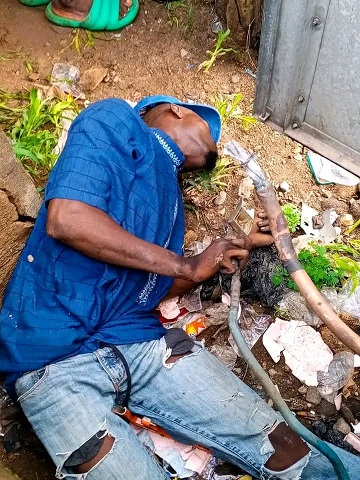
A yet-to-be-identified young man has died while tampering with a transformer and feeder pillar in Lokoja.

The lifeless body of the deceased was found in the early hours of Thursday beside a transformer at Paparanda Square, Lokoja.

Pictures of the deceased circulated and seen on social media showed the deceased clutching to the cables believed to be taken from the equipment. 

Residents who spoke to The Daily Reality narrated that the man set out at dawn to steal cables believed to be expensive from the transformer.

The Abuja Electricity Distribution Company (AEDC) removed the deceased corpse and handed it to the police for further investigation.

However, as of the time of writing this report, the police is yet to comment on the tragedy.

Kano, know your Comrade

By Murtala Sani

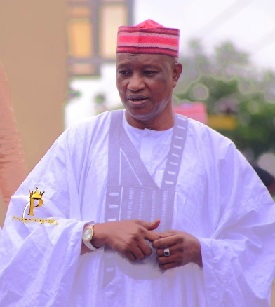
Beyond the eloquence and vibrancy that are attributed to the newly elected Deputy Governor of Kano State under the platform of New Nigeria Peoples Party (NNPP), Comrade Aminu Abdussalam Gwarzo, there are other special qualities that earned him the title of a Comrade. His entire life, from teenage to date, is spent in the struggle for the betterment of the lives of the people.

Comrade Aminu Abdussalam Gwarzo was born at Gwarzo Local Government, Kano State, on 6th November 1960. He was set for the quest for Islamic knowledge at Alkalawa Islamiyya and then transferred to Kofar Fada Islamiyya, all in Gwarzo town. He was later enrolled into Gwarzo Central Primary School from 1966 to 1972 and then proceeded to Kano Educational Development Centre (K.E.D.C) in 1973 for Secondary School Education.

Within one year, Aminu was transferred to Kano Teachers College (K.T.C) and graduated from the college in 1977. In the same year, he started teaching at Kara Primary School on 1st July 1977 for six months, when Kano and Jigawa States were in the folder old Kano State. The brilliant young Aminu was the youngest primary school Headmaster when he headed Salihawa Primary School in Gwarzo Local Government.

In his quest for more knowledge, Aminu got admission into the School of Management Studies, Kano State Polytechnic, in 1981, where he obtained a National Diploma in Banking and Finance, the qualification that propelled him to get a new job at the Kano State Board of Internal Revenue in 1986. In the same year, Aminu was re-admitted to the same School, School of Management Studies, Kano State Polytechnic, and bagged Higher National Diploma in the same course, Banking and Finance. In 1988, Aminu received his National Youth Service Certificate (NYSC) after serving as a corps member at Nigerian Mining Corporation, Jos, Plateau State.

As a youth, the comradeship of Comrade Aminu started manifesting glaringly when his activism beckoned him to join Gwarzo Youth Progressive (GYPA) in 1980. The Association was founded in 1979, but he became its first Chairman in 1981 due to his immense struggle to bring positive change within his society. The dominant role he played in stabilizing the then embattled Gwarzo Development Association (GDA), an association of Gwarzo elders, made the elders accommodate the useful Aminu into their association. They also considered his impact on the progress of GYPA, especially the way his wonderful leadership brought huge development within Gwarzo Local Government.

As a civil servant, his activism earned him the seat of Interim Secretary General of the Nigerian Union of Teachers (NUT) of the Gwarzo branch in 1981. Again, he became the Secretary-General and then Chairman of the National Civil Service Union (NCSC) board. Noticing his charisma while steering the leadership of the Union in the board, the then Chairman of Nigerian Labour Congress (NLC), Kano State, Comrade Baffa Gaya, suggested that talented people like comrade Aminu should not be limited to a low level. Therefore, Comrade Aminu was propelled to the position of Auditor General of the Nigerian Civil Service Union (NCSU), Kano State branch, from 1987 to 1991.

After carving Jigawa State out of Kano State, Aminu Abdussalam clinched the seat of Chairman National Civil Service Union, Kano State. As a politician, the Comrade was among the seven Local Government Chairmen that initiated the formation of the Association of Local Government Chairmen of Nigeria (ALGON) in the whole Country. He was the pioneer Chairman of ALGON in Kano State. He was the pioneer National Co-ordinator of ALGON North-Western States comprising Kano, Kaduna, Katsina, Sokoto, Kebbi, Zamfara and Jigawa, and lastly, the pioneer National Auditor of ALGON.

His passion for the struggle for the masses led him to support Mallam Aminu Kano’s Peoples Redemption Party (PRP). He was also an active member of the Social Democratic Party (SDP), the political party registered alongside Nigerian Republic Congress (NRC) by General Ibrahim Badamasi Babangida. Comrade Aminu’s diving into mainstream politics was when he contested and got elected the Chairman of Gwarzo Local Government of Kano State in 1996 during the reign of General Sani Abacha’s military regime. After the formation of New Political parties by the same Government, Aminu vied for membership in the Federal House of Representatives to represent Gwarzo/Kabo Constituency under the umbrella of the Democratic Party of Nigeria (DPN). The controversial election declared his opponent, Alhaji Aminu Sule Garo of the United Nigeria Congress Party (UNCP), the winner of the election. Therefore, Aminu Abdussalam challenged the victory in court.

On 5th December 1999, Comrade Aminu Abdussalam was elected as the Chairman of Gwarzo Local Government, Kano State, where he defeated Engineer Abdullahi Tijjani Muhammad Gwarzo, who contested under the platform of All Peoples Party (APP). His pragmatism led him to develop Gwarzo through the execution of countless developmental projects, providing employment and other humanitarian activities. This moulded him to become a strong political clout in the stream of Gwarzo Politics. From 1999 to 2011, Comrade Aminu was the Director General of Senator Bello Hayatu Gwarzo’s Campaign Organization, the leadership that hugely contributed to the victory of the senator throughout his four Senatorial races. During the Presidency of late Alhaji Umaru Musa ‘Yar’adua, the Comrade was appointed the Federal Commissioner of the National Assembly Commission.

When Dr Rabi’u Musa Kwankwaso was re-elected as the Governor of Kano State in 2011, he appointed Comrade Aminu Abdussalam as the Commissioner of Monitoring and Evaluation. Satisfied with his hardworking, honesty, trustworthiness and loyalty, Kwankwaso promoted him to the position of Commissioner of State Affairs, thus, occupying the office very close to the Governor. The duo decamped to the All Progressives Congress (APC) and supported Dr Abdullahi Umar Ganduje to become the state’s governor. In President Muhammadu Buhari’s tenure from 2015 to 2019, Comrade Aminu was appointed the Chairman Governing Council of the Federal College of Education, Kwantagora.

After the eruption of a feud between Kwankwaso and Ganduje, Comrade joined his boss, Kwankwaso, by decamping back to PDP, where he and Abba Kabiru Yusuf contested for Deputy and Governorship seats, respectively, in 2019. Although they won against Ganduje with more than twenty thousand votes, the election was declared inconclusive by the Independent National Electoral Commission (INEC) due to the controversy that trailed the election. Again, Comrade and Abba contested and won the election against Nasiru Yusuf Gawuna and Murtala Sule Garo under the platform of the New Nigeria People’s Party (NNPP) during the 2023 gubernatorial election.

One of the greatest challenges against Comrade Aminu was when he was contesting for Member at the Federal House of Representatives to represent Gwarzo and Kabo Constituency. At that moment, more than twenty of his prominent supporters were arrested by the forces challenging his candidature. This made others flee from Gwarzo to other hidden places within and outside Kano State, seeking refuge.

At the same time, Comrade’s house was invaded by political goons who attempted to break into his house and assassinate him. With the help of his die-hard supporter, a ladder was erected for him and his entire family and escaped to his neighbouring house. This forced him to run for political asylum in the Cameroon Republic, but on his way, he found refuge in Gombe State. Again, the Comrade escaped lynching by some political thugs in 2003 at the Madadi ward of Gwarzo Local Government when they set his official car ablaze.

Every discerning mind could detect Comrade Aminu’s erudition and intellectual analysis either on the podium of a political campaign or interview. He expresses himself with facts and figures while debating. He laces his speech with quotes from Qur’an or Hadith.

Comrade faces a lot of criticism, one of which is his austerity measures at home office or public. He doesn’t pamper his children to run a luxurious life. He doesn’t embezzle government funds or throw money at his followers. Furthermore, Comrade frowns at favouritism and nepotism. He only relies on creditability and merit. Moreover, he detests thuggery and bloodshed; he allows things to flow naturally. More so, the Comrade doesn’t hesitate to get his beautiful, educated and morally sound children married to commoners or children of commoners.

The Comrade has two wives with twenty-three children.

Murtala Sani, a lecturer at Kano State Polytechnic, writes from Kano.

Dispute resolution committe a solution to phone snatching – Sheikh Daurawa

By Aisar Fagge and Uzair Adam Imam

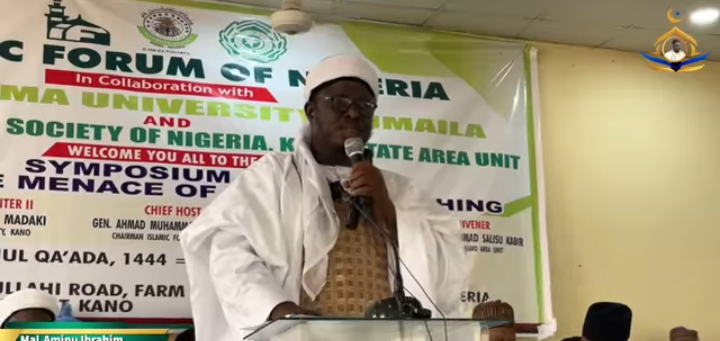
Sheikh Aminu Ibrahim Daurawa, a renowned Kano-based Islamic cleric, has challenged people to establish a dispute resolution committee as the “only solution” to the menace of phone robbery rocking our states.

The sheikh stated this in a symposium Saturday organized by The Muslim Forum of Nigeria in collaboration with Al-Istiqama University Sumaila, Kano and the Muslim Students Society of Nigeria (MSSN) Kano chapter to discuss the way forward to put to an end the menace of phone snatching in Kano state.

The Islamic cleric stated, “We must come together and analyze how and why these thugs are into this kind of business before we can address it. Any ward should establish a dispute resolution committee that would include parents, traditional leaders, Islamic clerics, teachers, security personnel, retired civil servants and lawyers to ensure discipline and exemplary character among the youth in the area.

“The committee will help provide jobs for the unemployed youth, enrol them into schools, empower orphans and widows, and form vigilante committees, among others.

“This committee will also assist the security personnel with an intelligent report on any unknown persons or suspicious act,” Daurawa stated.

The speaker reiterated his stance on parents who give birth to kids they cannot care for or moralize.

Daurawa said although Prophet Muhammad (peace be upon him) encouraged marriage and giving birth, he would never be proud of a useless crowd of spoiled kids and thugs.

He also called on the government’s intervention through empowerment and provision of skills acquisition centres for the youth.

In the symposium that hosted security personnel, traditional rulers, analysts, journalists, Islamic clerics and university dons, Daurawa empowered two phone snatchers with N100,000.

Selfies during Hajj – right or wrong?

By Ibrahim Suleiman Ibrahim

It is a human trait, especially in this digital era, for people to take pictures in memorable places, should they have the privilege of travelling to those places. This is because we humans love to capture our favourite moments in memorable places or with memorable personalities so as to treasure the memories. It isn’t ‘always’ a show-off, as some people misinterpret it to be.

A good example of the manifestation of this trait is how almost, if not all, Nigerian graduates have a picture of them in NYSC Camp wearing their NYSC uniforms, how almost every married person treasures the picture of his/her own wedding ceremony, and of course, how almost all privileged pilgrims take pictures in front of the iconic Ka’abah in Makkah when they go for pilgrimage.

However, I still can’t understand why some holier-than-thou folks quickly conclude without any unambiguous Quranic and Hadith references that anybody who takes pictures in Makkah lacks ‘Ikhlās’, i.e sincerity to Allah, whereas the same people will snap pictures at their respective Juma’at Masaajid after every Friday Prayer, take pictures of themselves learning under Islamic scholars and the likes, without anybody questioning their Ikhlaas.

If there’s anything the pilgrims are showing-off when they travel for Hajj, then it will be the beautiful and memorable locations they were privileged to travel to and not their act of Ibādah that took them there.

I mean, Makkah, aside from being a very beautiful place, is a dreamland to all Muslims across the globe and a place they rarely have the privilege of going to. As such, you shouldn’t expect them not to want to treasure the memories of the once-in-a-lifetime experience they have there.

I understand that some pilgrims allow snapping of pictures to interfere with their acts of Ibādah during Hajj, and that is wrong, but even at that, we aren’t in the position to judge them, as the sincerity of intention is only known by Allah, the all-knowing.

Even where Allah talked about giving alms in the Qur’an, as sacred as it is, he mentioned in Qur’an 2:271 that revealing alms-giving to the public is okay, but concealing it is much better.

We can analogically deduce that it’s actually better if you decide not to take pictures for fear of ‘show-off’ when you travel for Hajj.

However, it is wrong to bully those who choose to take pictures, especially if their intention is to treasure their memories.

We take pictures at important places, in cars, in aeroplanes, and other places. I feel that’s human nature. Do Muslims have any better place than Makkah? Still, I reason that we should guard our Iman and take our pictures with Ikhlas.

Ibrahim Suleiman Ibrahim

When we thought we produced our best

By Muhammad Sulaiman Abdullahi, PhD

President Muhammadu Buhari has come and gone. It is believed that many Nigerians thought Buhari would be the best president of their lifetime. Even Baba Buhari himself assumed and pretended that he was the best. And he did his best; only that his best was not enough for Nigeria.

Baba accused all those before him, directly or indirectly, of mismanaging Nigeria. However, with all the accusations he heaped on others, Nigeria was technically and practically raped under his watch. It is even alleged that most of the suffering inflicted upon Nigeria and its innocent citizens was the handiwork of some of the closest associates of Buhari, including his family members. Some supporters claimed that his style was the best way to govern. They boasted that Buhari assigned competent hands to govern, and he never interfered. This assertion has many troubles, and I will mention only two.

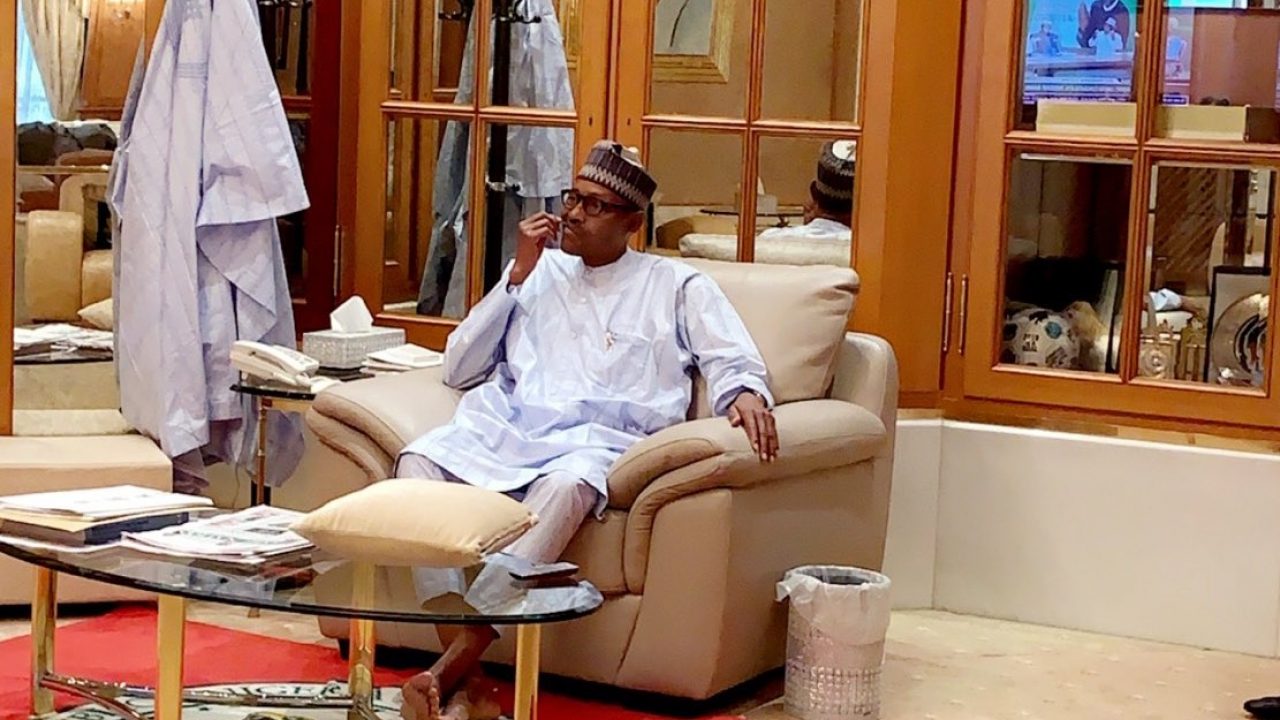
First, it is wrong for any leader to assume that his workers or those he assigns to do a specific job for him are perfect. They are not, and no one is. And even if assuming they are, he is responsible for watching, gauging, supporting and assessing them. Buhari didn’t do that. He was just there sitting, flossing and picking his teeth.

Second, some of those assigned some responsibilities and some ministries during the Buhari era were not competent. Look at what Adamu Adamu and Ngige and some of their close allies did to education. Look at what Hadi Sirika did to aviation. Look at what Godwin Emifele did at the Central Bank of Nigeria. These are just a few among many. One would wonder how did that happen under Buhari’s watch.

When Nigerians voted for Buhari in 2015, most believed Nigeria’s worries of 1960 downwards would just vanish. There is a widely circulated story of someone who sold his generator, considering that the electricity would be fixed and that the generator would be a nuisance to him and occupy space. Buhari disappointed him and all other Nigerians in the energy sector. The electricity tariff was hiked unprecedentedly, to the corrupt extent of not even giving notice. They hiked it at their will without recourse to anything or fear of anyone. This was Buhari’s era.

Furthermore, according to what many Nigerians believe, had Buhari not become a president, many fools and even non-foolish among Nigerians would have tagged him “The best president that never is”! He came and went, and his performance shows he isn’t the best.

However, no one will occupy that seat without doing good, willy-nilly. Buhari did some things, but I don’t think he did it consciously. His undoing and the power of the seat made it happen, as Baba didn’t seem to care then. I can’t mention a lot, but I know he tried not to influence the 2023 elections in favour of his party. That single action should be emulated by all those who come after him.

Also, some of our airports look majestic but at the expense of our roads. Some think that it happened due to his excessive love of foreign trips. He couldn’t bear the sinister looks of our airports as he happens to be a constant, consistent and regular customer there.

The health sector received almost total neglect during Baba’s era. He knew about it very well as he shunned all Nigerian hospitals because his government abandoned them. The former president enjoyed robust, healthy and developed foreign medical healthcare when Nigerians died in Malaysia and lack of genuine Capenol. He didn’t care, and neither did he ever talk about it.

Wallahi Nigerians suffered a lot under his leadership. Inflation has never been bad, like how it grew big during Baba. Another thing that Nigerians may live to regret is their high hopes for Buhari’s government, which became a curse on them. The ordinary people with whom Buhari sided and dined when he looked for the seat lost him completely. He later started accusing them of laziness.

His non-strategic accusations to all classes of people in Nigeria started in phases and kept on changing based on the position he found himself. 

The first phase was when he was aspiring to be the President. Then, he tactically sided with the masses and openly demonstrated with them on the streets. He yelled at the PDP government and accused them of various things, and his government multiplied all the suffering. The second phase was when he became the president, accused all the Nigerian politicians, and painted them bad in the eyes of all Nigerians and the world.

Lastly, in the final phase, when he consolidated his grip on the leadership, he turned and accused all Nigerians, especially the youth and the masses he sided with and voted for him. He accused them of being lazy and full of enjoyment as if he didn’t want to see anyone enjoying and smiling!

He governed as if he was doing Nigerians a favour while most of those who supported him were either dying of hunger, kidnapped or wholly disoriented.

Nigerians from the North and South graciously excused many of Buhari’s excesses, thinking he would do wonders. Today is only a few days of President Bola Tinubu’s government, but he has taken some decisive actions which Buhari’s eight years couldn’t do.

We didn’t have high hopes for Tinubu initially, but we foresee and pray that his government will be better and more beneficial to Nigerians than the I-don’t-care government of Baba Buhari.

Dr Muhammad can be reached via @muhammadunfagge (Twitter) or email: muhammadunfagge@yahoo.com.

Before you assume, learn the facts; before you judge, understand why

By Aisha Musa Auyo

My mom and her colleagues were sitting in the famous Faculty of Education train at Bayero University, Kano (BUK), a corridor linking five faculties in the New site before the renovation. A lady walked by, and her ID card fell from her books. They kept calling her attention, but she ignored them. One of them even attempted to run after her while yelling the name they saw on the card, but she cared not to look back. They got annoyed and decided to let her pay for the consequences of her arrogance.

In those days (I don’t know for now), when a student lost a school ID card, they had to bring evidence, such as a police report to get a replacement. If exams are approaching, the student may be given a temporary ID card from the admin before they present the evidence, and a new ID card will be processed for them. This protocol was not an easy one. I’ve gone through it. It was my first time going to the police station.

My mom’s colleagues assumed the girl was doing ‘Yanga’, a typical snobbish attitude of undergraduate ladies. So they planned to throw away the ID card. My mom, being her usual kind person, begged them not to. She collected the card with the intention that she would take it to the lady’s department after work. As she read the name on the card, she identified the surname. We live in the same neighbourhood.

After work, she went to the house and gave them the card, explaining how they kept calling the girl, and she didn’t bother to answer. One of the mothers in the house said, ‘Ai ba za ta amsa ba, tana da matsalar kunne, ba ta ji’. (Meaning she couldn’t answer because she is deaf). Mom was so happy and relieved that she helped and promised to inform her colleagues about the lady’s condition.

If not for our human nature, we are quick to assume a thorough look into the ID card will reveal that the student is from the Department of Special Education. Most of the students in the department are either deaf, blind, or mute, and we are obliged to help them in any way we can. My mom’s colleagues were kind; they could ignore the card when it fell. They attempted to help her. They even called her name and ran after her. What they did wrong is the ‘judging’. They were quick to assume.

But they are only human. We do this all the time—you and I. We are quick to judge and assume. I have been accused of being a snub because I couldn’t recognise some of my relatives, colleagues, or classmates. People did not know that I have been diagnosed with Prosopagnosia, a medico-social disorder characterised by difficulty recognising family members and close friends. (I’ll write extensively on the topic next week, in sha Allah.)

This judging and quick-to-assume syndrome didn’t stop in our offline interaction with others. We brought it online. It’s especially unforgiving if it’s coming from a vendor. I read yesterday a comment from a vendor complaining that she did a voice-over of the price and location of her items, yet some annoying people kept asking her for that information.  

The question here is, what if some of those asking her are deaf? What if they don’t understand the language she used? Of the few thousand friends I have on Facebook, some are deaf. About seven of them have reached out to me. Many others have not. We interact with them, and they comment and react, but we don’t know what they’re battling with. You may also have similar people in your contacts or come across them on other social platforms.

Please, let us be less judgemental; it’s God’s responsibility, not ours.

Please, let us have more compassion.

Please, let us have more patience.

Before we assume, let’s learn the fact.

Before we judge, let’s understand why.

Aisha Musa Auyo is a Doctorate researcher in Educational Psychology, a wife, a mother of three, a Home Maker, a caterer and a parenting/ relationship coach.

Revisiting a Classic: M.U. Adamu’s notes on North African traders in Kano

By Prof. Abdalla Uba Adamu 

In 1968 I was a twelve-year-old whippersnapper and found solace in my father’s library (hate football and games anyway!). A journal, Kano Studies of the year, caught my attention because of the way my Dad held on to it. I fixed my sights on it, eventually opening it and trying to read it. Oh, I did, quite all right, but I did not understand half of what was written! However, I did not give up and continued perusing the journal. 

Eventually, during high school years, a couple of years down the road, I discovered what glued my late father, Muhammadu Uba Adamu, alias Kantoma, to that specific issue – his article. The article was titled “Some Notes on the Influence of North African Traders in Kano”. This time when I read it, it made sense. I found it fascinating, and I can genuinely say it planted the roots of historical interest in me. However, I was keener on race, culture and identity, and in particular, how new racial identities emerge as a result of what Kantoma himself later referred to as ‘confluence and influences.’

“Some Notes on the Influence of North African Traders in Kano”, as I was to discover later, was based on the methodology of what Victor Turner referred to as “the anthropology of experience”. Kantoma embedded himself in the Arab community (a bit easy to do, with an Agadesian grandmother) in the Alfindiki community in the heart of the city and close to his traditional family homestead at Daneji. It was through extremely loose focus group discussions that he was able to gather as much data as he could. And he was then a student of Political History at Ahmadu Bello University Kano (via Abdullahi Bayero College). 

Years later, I had the chance to befriend one of Kantoma’s teachers, John Lavers. He glowingly told me how excited he was with Kantoma’s initial paper and how he made a series of suggestions that eventually turned the paper into a classic. John Lavers was one of the founders and editors of Kano Studies. 

The paper was extensively revised by Kantoma as “Further notes on the influence of North African traders in Kano”. It was presented at the International Conference on Cultural Interaction and Integration Between North and Sub-Saharan Africa, Bayero University Kano, 4th–6th March 1998 – some thirty years after the original. Unfortunately, despite being the person who typed it up for him, I could not locate a copy (remember, we were using floppy drive storage in those ancient days!).

Some notes planted in me an interest in race, culture and identity and the interrogation of the specific gravity of racial identity in Africa. For instance, take a community of Tripolitanian Arabs who settled in Dandalin Turawa, Kano, right on the edge of the Kurmi market. Years later, they were no longer ‘Turawa’ but African – at least in colour and language, as most have also lost the Arabic language of their forebears. So, what exactly are they? Arabs? Hausa? Or do they create a crazy hyphenated identity – Hausa Arabs (like the ridiculous ‘Hausa Fulani’)?

So, I started my own anthropological trajectory by writing a proposal for a Stanford University (US) residency on Race, Culture and Identity. I wanted to map the six groups of Arab residents in Kano to determine how they self-identify – language or genes. These are Shuwa, Sudanese, Tripolitanians, Syrians, Lebanese, and the Yemeni. Again, Kantoma had much data on especially the Yemeni, in addition to his earlier Tripolitanian engagements.

For a few years, I worked with him to flesh out the project and even got some of the Yemeni elders interested in proper documentation of their community (as was done by S.U. Albasu in “The Lebanese in Kano”). I did not get the Stanford residency, and other things about the daily grind kept me away from the project, so I put it on hold! I can’t even locate the original proposal now. But who knows? Once I have a free year or so, I might rummage through some forgotten hard drives and see what lurks there and, if possible, get back into the race (pun intended!). 

Here, for your archival pleasure, is a gift from Kantoma pending a full-blown site that will have all his writings much later in the year (hopefully by Fall). Download from here:  https://bit.ly/3p2LeOx.

Governor Namadi Relieves Chairmen, Board Members, Head of MDAs

By Muhamamad Suleiman Yobe

Jigawa State Governor Malam Umar Namadi has relieved chairmen, board members and chief executives of parastatals of their appointments with immediate effect.

This was contained in a statement signed by the Permanent Secretary, Administration and Finance, office of the Secretary to the Government of Jigawa State, Alhaji Muhammad K. Dagaceri.

The statement said “His Excellency, Governor Malam Umar Namadi has approved the relieve of appointments of Managing Directors, General Managers, Executive Secretaries, Chairmen and Members of Board of Agencies/ Parastatals with exception of Commissions.

“The statement explained that Career Executive Secretaries, Managing Directors and General Managers were excluded.”Accordingly, this exclude career Managing Directors, General Managers and Executive Secretaries ” the statement said.

The statement directed all the affected officials to hand over Government properties in their possession to the most senior officer in their organization.

The statement further added that “His Excellency, Malam Umar Namadi appreciates your contributions and wish you success in your future endeavours”.