Month: June 2023

Sokoto Killing: Stop jungle justice – MURIC

By Muhammad Abdurrahman

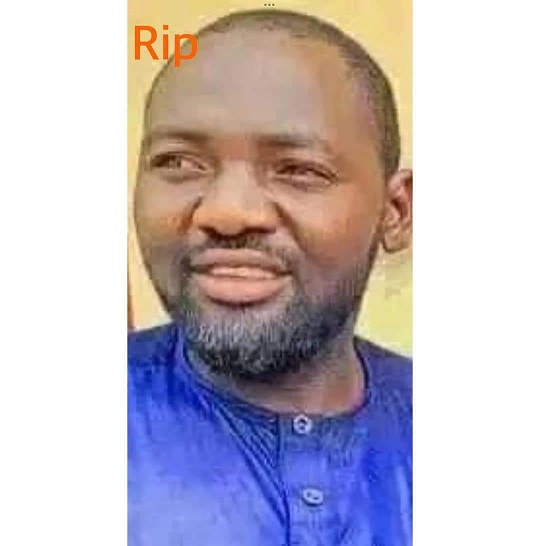
On Sunday 25th day of June 2023, the good people of Sokoto woke up and learnt about the murder of one butcher called Usman Buda over an alleged blasphemous comment against our noble Prophet Muhammad (SAW).

Sources revealed that some of the victim’s closest business associates at the Sokoto abattoir made frantic efforts to rescue him, but they equally sustained injuries and have been admitted to the hospital sequel to the attack.

Sokoto State Chapter of the Muslim Rights Concern (MURIC), in a statement signed by its chairman Muhammad Mansur Aliyu Esq., has condemned the murder and urged the Muslim Ummah to stop taking the law into their hands each time there is an alleged blasphemy. It reads:

“We assert that Islam abhors jungle justice because it will lead to the taking of innocent lives and the destruction of the properties of innocent persons. Islam does not allow people to do what they like or take laws into their hands as they deem fit. It is only the courts (Shariah and common law courts) that have the power to execute offenders after proving them guilty through a fair trial. This position can be found in many Qur’anic verses such as Qur’an 4:65, 6:57, 12:40 and 43:10 etc.

“It is not in dispute that Islamic law provides a death sentence against anybody who insults, defames or brings disrepute to the Prophet of Islam, Muhammad (Peace and Blessing of Allah be Upon Him). However, Islamic law does not leave the killing open in the hands of private individuals as it happened in the case of Usman Buda.

“In fact, Islamic law stipulates that the offence of blasphemy, like other offences, should be established through evidence by witnesses before a court of law, and the Court shall pronounce such person guilty of blasphemy before the execution could be carried out by the authorities.

“Finally, while we condemn the murder of Usman Buda, we also, in the strongest terms, urge Muslims to stop jungle justice and allow the law to take its course whenever issues of such nature arise. May the peace and blessings of Allah continue to be upon the noble prophet Muhammad (SAW).”

Kano State governor swears in 19 commissioners

By Muhammad Abdurrahman

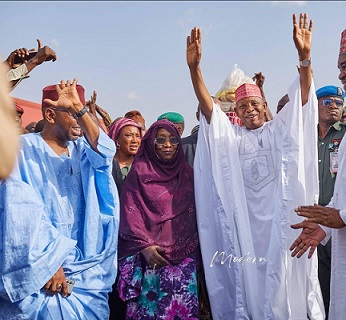
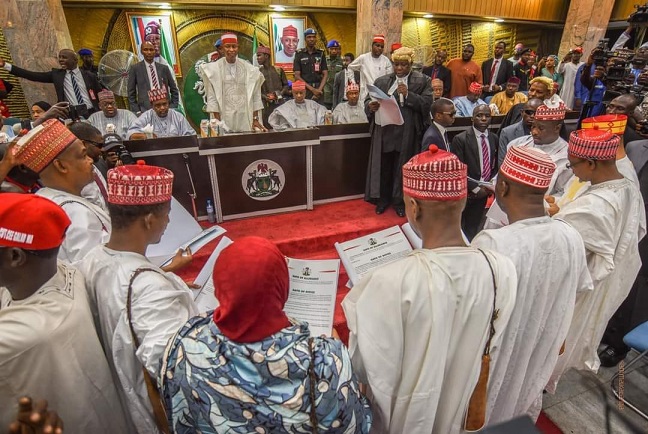
Today, the Executive Governor of Kano state, Engr. Abba Kabir Yusuf, swore in his newly appointed commissioners and assigned them to their respective ministries.

During the governor’s speech, he urged the appointed commissioners to prioritize honesty and sincerity and avoid any involvement in corrupt practices.

The commissioners and their ministries are as follows:

1-Comr. Aminu Abdulsalam  – Ministry for Local Government

2-Hon. Haruna Umar Doguwa -Commissioner for Education

3-Hon. Ali Bukar Makoda -Commissioner for Water Resources

4-Dr. Abubakar Labaran Yusuf – Commissioner Ministry of Health

5-Engr. Marwan Ahmad – Commissioner Ministry of Works, Housing and Infrastructure

6-Barr. Haruna Dederi – Commissioner Ministry for Justice

7-Dr. Yusuf Kofar Mata – Commissioner Ministry for Higher Education

8-Hon. Nasiru sule Garo-Commissioner Ministry for Environment

9-Engr. Muhammad Diggol – Commissioner Ministry for transport

10-Hon. Abbas Sani Abbas-Commissioner Ministry for Commerce and Investment

11-Hon. Hamza Safiyanu-Commissioner Ministry for Rural Affairs

12-Dr. Danjuma Mahmoud -Commissioner Ministry for Agriculture

13-Hon. Musa Sulaiman Shanono – Commissioner Ministry for Budget and Planning

14-Haj. Ladidi Garko -Commissioner Ministry for Culture and Tourism

15-Hon. Adamu Ali Kibiya – Commissioner Ministry for Land and survey

16-Hon. Tajuddeen Othman- Commissioner Ministry for Science and Technology

17-Hon. Baba Halilu Dantiye – Commissioner Ministry for Information

18-Sheik Tijjani Auwal – Ministry for Religious Affairs.

19-Aisha L. – Commissioner Ministry for Women Affairs

Gov. Yusuf meets designer of demolished Golden Jubilee roundabout, vows to rebuild it

By Uzair Adam Imam

The Kano State Governor, Abba Kabir Yusuf, has met with the designer of the demolished Kano Golden Jubilee Edifice of the Government House Roundabout.

The governor who made this disclosure Monday on his verified Twitter handle, said the roundabout will be reconstructed along Na’ibawa Flyover, Zaria Road.

According to the governor, the demolition of the Government House Roundabout was for security purposes and structural considerations.

He stated, “Recently, we took the decision to move the Kano Golden Jubilee Edifice from the Government House Roundabout, due to security and structural considerations. 

“It was therefore in that regard, I met with its designer, at the structure’s new home, along the Naibawa Flyover, Zaria Road. 

“Our government is highly committed to the massive improvement of Kano’s infrastructural architecture, and its accessibility to all,” he added.

The Daily Reality recalls that the demolition of the roundabout a few weeks ago generated painful arguments with many people saying the demolition was meant to satisfy the political anger of the Abba’s Godfather, Kwankwaso, against the immediate past governor, Ganduje.

Seeking world-class writing mentor


By Abdurrazak Muktar Makarfi

As a budding writer, I have always admired Mahmud Jega as a role model. His eloquent prose, thought-provoking ideas, and ability to captivate readers with his words have inspired me to strive for excellence in my own writing. Mahmud Jega’s works have inspired me, ignited my passion for the written word and pushed me to improve my craft.

However, as I embark on this journey of self-discovery through writing, I realise that one crucial element is missing from my writing growth. This senior, world-class mentor can provide guidance, impart wisdom, and help me refine my skills. While I have studied Mahmud Jega’s works and learned from his style, nothing compares to the personalised guidance and invaluable insights that can come from a seasoned writer who has already traversed my path.

A mentor would be a guiding light, someone who could help me navigate the intricacies of the writing world, offer constructive criticism and share their own experiences, triumphs, and setbacks. A mentor would challenge me to push my boundaries, encourage me to explore new genres and provide a wealth of knowledge that only years of writing experience can bring.

With the guidance of a mentor, I could learn to develop my unique voice, polish my storytelling techniques, and sharpen my ability to convey emotions and ideas through words. A mentor’s wisdom would enable me to navigate the challenges ahead, understand the nuances of the publishing industry, and provide me with the tools to elevate my writing to new heights.

I yearn to have a mentor who can nurture my talent, critique my work honestly and compassionately, and guide me towards becoming my best writer. I believe that with the guidance of a mentor, I can hone my skills, overcome obstacles, and ultimately make my mark in the world of literature.

Until I find that mentor, I will continue to immerse myself in Mahmud Jega’s works, studying his techniques and extracting lessons from his writings. I will strive to incorporate his brilliance into my style while exploring other literary voices and expanding my horizons. Though the path may be challenging without a personal mentor, I am determined to push forward, driven by the passion and dedication that writing instils within me.

One day, I hope to find a mentor who can provide the guidance and mentorship I seek—a senior, world-class writer who can help shape me into the best version of myself as a writer. Until then, I will persevere, inspired by the words of Mahmud Jega and the countless other literary giants who have paved the way for aspiring writers like myself.

Abdurrazak Muktar Makarfi wrote via prof4true1@gmail.com.

Reimagining education in Kano State: A call for visionary leadership

By Huzaifa Dokaji

Imagine a bustling city nestled in the heart of West Africa that radiated intellectual brilliance and creativity long before the Europeans reached the region. This is Kano, a city whose intellectual achievements have shone brightly throughout history, never hidden from the world’s gaze. A state North African merchants describe as “a city like a thousand city”. Allow me to paint a vivid picture of Kano’s intellectual past, a portrait that will captivate your imagination and unveil the greatness that lies within.

Centuries before the arrival of colonial powers, Kano was a thriving centre of learning, attracting scholars from far and wide. It was a place where minds converged, knowledge was cherished, and intellectual pursuits flourished thanks to state and privately-sponsored academic spaces. In the corridors of Kano’s renowned educational institutions, such as the intimidating Madabo centre, scholars delved into the depths of philosophy, science, literature, and Islamic studies. They engaged in intellectual debates, exchanged ideas, and produced works that left an indelible mark on the intellectual landscape of their time and beyond. This legacy, however, is at peril more than ever.

In a state that once boasted of kings and emirs renowned for their generous support of scholars and students, state scholarships are now only disbursed on the eve of elections, serving as mere tools for vote canvassing. Our schools are among the worse in the world. Although once a space where literary production was at its fines, schools in Kano lack access to any useful library resources. Lecturers resort to illegally downloading books online or relying on pirated copies to fulfil their teaching duties.

It is genuinely dismaying that a junior lecturer in our universities must spend nearly half their monthly wage to order an essential textbook on Amazon, while students at even the poorest universities in America have access to such materials through interlibrary loans. Adding to this bleak scenario, for example, over three years, Stony Brook University in New York spent about half of our 2023 budget for education to renovate its Student Union building. As worrying as this is, I believe Kano State still possesses the potential to emerge as a shining example of educational brilliance once again. My intervention is limited to institutions of higher learning.

To transform the Kwankwasiyya vision for education into a reality, we must transcend the mere provision of basic educational infrastructure and sponsoring students to study abroad. We must embrace a bold approach that surpasses the efforts of our Nigerian and West African counterparts. We need visionary leadership and innovative infrastructure. We need leaders who understand that education is not merely about constructing classrooms and dashing out scholarships; it is about providing qualitative and enduring infrastructure and creating an environment that fosters intellectual growth, critical thinking, and cutting-edge research. We need leaders who recognise that the quality of education is directly proportional to the quality of infrastructure provided and the system created.

Imagine a Kano State where universities boast state-of-the-art research laboratories with cutting-edge technology. Envision lecture halls that facilitate interactive and engaging teaching methods, equipped with the latest audiovisual tools and comfortable seating arrangements. Picture libraries filled with a vast array of books, journals, and digital resources, providing students and faculty with access to a world of knowledge at their fingertips. Imagine campuses adorned with green spaces, inspiring architecture, and modern facilities that foster an atmosphere conducive to learning and intellectual exploration. Imagine a Kano where lecturers are paid a decent wage.

We must transcend those dilapidated buildings that even counties are ashamed of building abroad. There is a critical need to dream beyond the limitations of what other Nigerian governors have failed to achieve. We must look to the examples set by leaders in more progressive societies and strive for such excellence. Let us aim to provide our students and faculty with infrastructure that not only meets their basic needs but also inspires them to reach new heights of knowledge and innovation. This should be the Kwankwasiyya vision.

The interventions

a. Infrastructure

To realise this vision, it is crucial to prioritise the modernisation and expansion of our universities’ infrastructure. Outdated facilities, overcrowded classrooms, and limited resources hinder the educational experience and impede the pursuit of cutting-edge research. It is time to break free from the shackles of mediocrity and invest in infrastructure that reflects our commitment to academic excellence. We need well-equipped laboratories, not just buildings with nothing to offer our science students. By allocating a significant portion of the state budget to education and ensuring the judicious utilisation of funds, we can establish a sustainable funding model that facilitates the development of world-class infrastructure.

The above investment will benefit our universities and attract renowned scholars and researchers from around the world. They will see Kano as a place where they can pursue their academic endeavours in an environment that supports and nurtures their intellectual growth. By looking at what governors in more advanced regions are doing, we can identify innovative approaches to infrastructure development. These leaders understand that modernising educational institutions goes beyond constructing buildings; it involves creating spaces that foster collaboration, critical thinking, and creativity. They invest in research facilities, technological resources, and student support services that enrich the educational experience and provide students with the skills needed to thrive in the global economy.

b. Wages and Allowances

There is a pressing need for Governor Abba Kabir Yusuf to reconsider the current remuneration package for lecturers in our state-owned higher institutions. It is essential to rise above the confines of the narrow mindset that accepts the prevailing notion of meagre salaries for lecturers on the selfish idea that it is what all states and the federal government are paying. In this era, marked by heightened awareness and accountability, there is no plausible justification for not paying a reasonable wage when politicians have continued to show ingenuity in sourcing money to fund their expensive and outrageous lifestyles. Paying lecturers a meagre salary of $200 a month undermines their professional dedication and the essence of a vibrant and dynamic education system. Recognising the invaluable contributions of these esteemed educators, Governor Yusuf must transcend the limitations of prevalent practices and champion a new paradigm of valuing and rewarding academic expertise. By offering a respectable and competitive wage, he can demonstrate his unwavering commitment to nurturing an environment that attracts and retains top-notch scholars, who, in turn, inspire students to reach new intellectual heights.

c. Grants and fellowships

The absence of grants in Kano universities is not only a concern for the institutions themselves but also a reflection of the broader condition of education in our beloved state. No society can truly develop its education system and produce graduates who can address the nation’s needs without ensuring access to basic resources, such as grants, which fuel academic progress and knowledge dissemination. To rectify this pressing issue, there is an urgent need to prioritise establishing grant programs that cater to the needs of faculty members and students across all universities in Kano State. It is imperative to allocate funds in the state budget specifically dedicated to supporting and rewarding research, innovation, and academic excellence.

For several reasons, grants and fellowships are crucial in developing academic research, especially in developing countries. First, they provide financial support to researchers who may not have the resources to pursue their studies. Second, they facilitate collaborations between researchers worldwide, enabling the exchange of ideas and knowledge. Third, grants and fellowships often come with opportunities for training and mentorship, which can enhance the skills and expertise of researchers. Finally, supporting academic research, grants, and fellowships can lead to the developing of new technologies, products, and services that can have significant social and economic benefits for developing countries.

The government should collaborate with private organisations, philanthropists, and international institutions to establish a successful fellowship and grant program in Kano. By working together, the government can leverage existing resources to create a sustainable program that supports research and innovation in academic institutions.

Grants, both for lecturers and students, are crucial lifelines that enable universities to flourish and produce graduates equipped with the skills necessary to thrive in today’s rapidly evolving world. They will provide financial support for research projects, allow for acquiring state-of-the-art equipment and resources, and facilitate collaboration with industry partners. Without grants, universities face a significant impediment to progress and risk falling behind in the global academic landscape. Establishing fellowships and grants in Kano can help bridge the gap between local and international education systems by attracting talented scholars and researchers worldwide. This will give students and scholars access to diverse ideas and perspectives, enabling them to compete globally.

Grant investments will demonstrate Abba Kabir Yusuf’s commitment to developing Kano’s education system. It will make him, perhaps, the only governor to establish such in the entire Northern region. Such a move will enhance the quality of education and attract renowned researchers, industry partnerships, and prestigious grants to our universities. The ripple effect of such investment will position Kano State as a hub for innovation, drive economic growth, and nurture a generation of graduates ready to tackle local and global challenges.

Denying students access to grants limits their potential and hampers their ability to engage in hands-on, practical research experiences that enrich their educational journey. By investing in grants, we empower our students to contribute meaningfully to their respective fields upon graduation. Moreover, these programs will create a culture of research and innovation in academic institutions, leading to increased productivity and competitiveness.

In conclusion, by embracing visionary leadership, investing in infrastructure, and establishing grant programs, Kano State can transcend the limitations of the past and emerge as a leader in educational excellence. Let us not settle for mediocrity but strive for greatness in our pursuit of knowledge and innovation. The future of Kano’s education system lies in our collective commitment to providing world-class infrastructure and nurturing a generation of scholars capable of making significant contributions to society. Together, we can transform Kano into an educational powerhouse that inspires and empowers future generations.

Huzaifa Dokaji is a PhD student and teaching assistant at the Department of History, State University of New York at Sony Brook. He can be reached via huzaifa.dokaji@stonybrook.edu.
Ángel Di Maria set to join Benfica

By Muhammadu Sabiu
 
Ángel Di Maria, the Argentine winger, is set to join Benfica in a verbal agreement.
 
According to a renowned football journalist, Fabrizio Romano, “Ángel Di Maria will become new Benfica player next week, verbal agreement sealed”.
 
He added that the deal will be valid until June 2024.
 
Di Maria’s arrival is expected to boost Benfica’s attacking prowess, and the signing is being hailed as an impressive move.
 
Fans eagerly await the official announcement and anticipate the impact the talented winger will have on the team’s success.

President Tinubu meets with Nigerians based in France

By Muhammadu Buhari
 
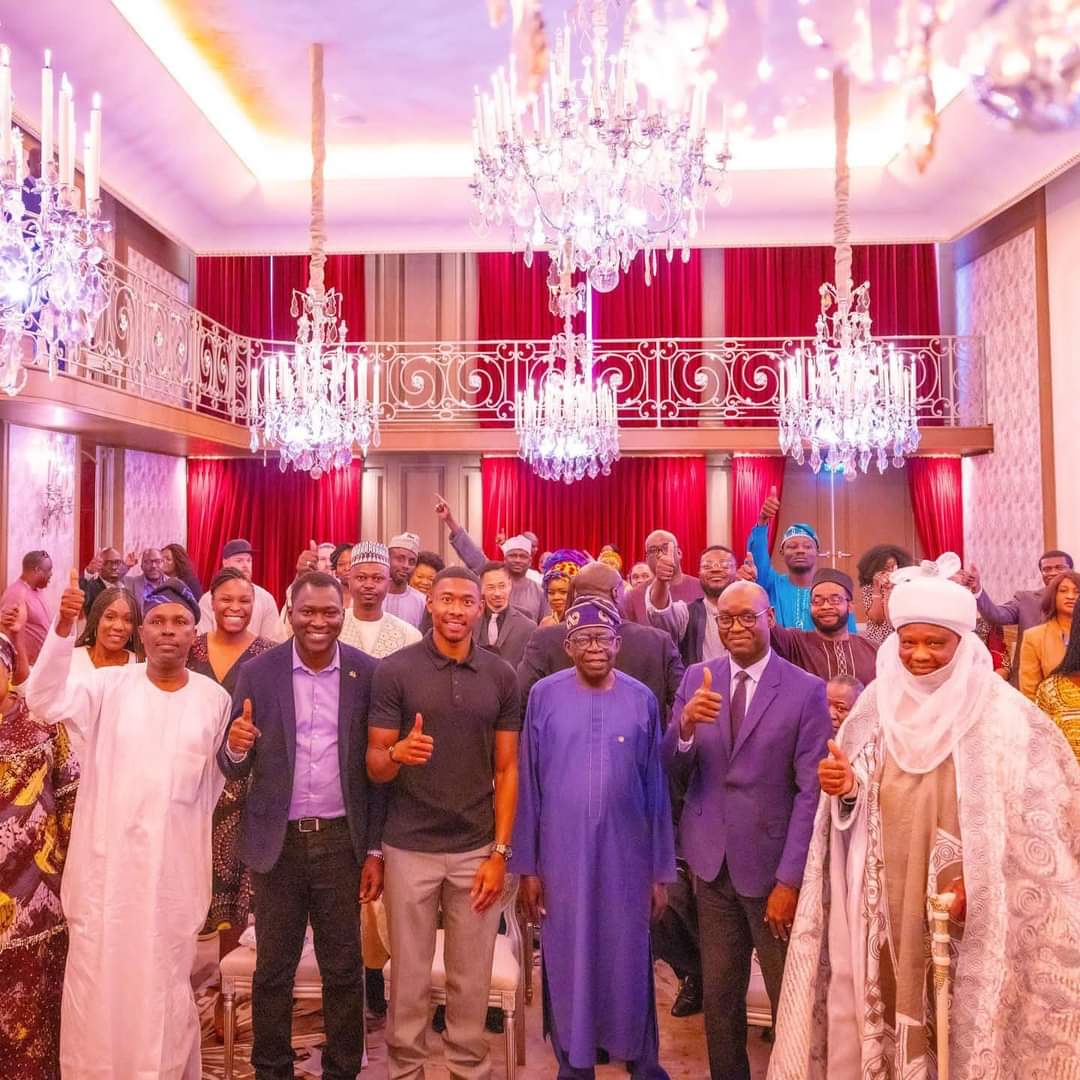
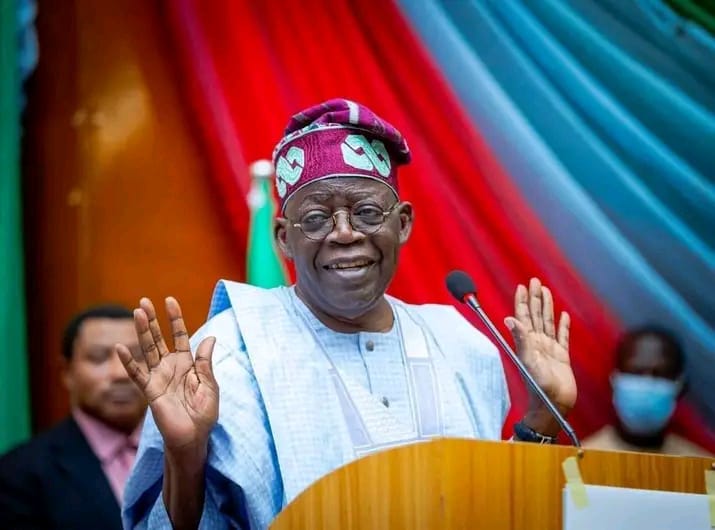
President Bola Ahmed Tinubu held his presidential diaspora engagement in Paris, France, today, meeting with Nigerians residing in the country. 
 
This is contained in a short statement released by the President’s aide, Dada Olusegun, via his Facebook handle.
 
He said, “President Bola Ahmed Tinubu hold[s] his first presidential diaspora engagement in Paris, France with Nigerians Living in France today.”
 
The event, marked by a spirit of unity and dialogue, provided an opportunity for President Tinubu to engage with the Nigerian community abroad and discuss their concerns, aspirations, and ideas.

Titanic submersible: Pilot, 4 passengers presumed dead

By Muhammadu Sabiu 
 
All five passengers of a missing submersible near the Titanic catastrophes, according to sub operator OceanGate, have died.
 
It’s now suspected that Paul-Henri Nargeolet, Hamish Harding, Shahzada Dawood, and his son Suleman Dawood have tragically passed away, the company said in a sombre statement on Thursday.
 
The firm expressed condolences to every member of their families during this tragic time and described the men as true explorers who shared a distinct spirit of adventure, and a deep passion for exploring and protecting the world’s oceans.
 
“We grieve the loss of life and joy they brought to everyone they knew. This is an extremely sad time for our dedicated employees who are exhausted and grieving deeply over this loss.
 
“This is a very sad time for the entire explorer community, and for each of the family members of those lost at sea,” it says in a condolence message.
 

Tinubu has not approved salary increases for political office holders – Presidency

  • News Desk

The above is contained in a statement signed by Dele Alake, Special Adviser to the President Special Duties, Communications and Strategy. It reads:

We have followed with consternation the viral story of the purported 114% increase in the salary of the President, Vice President, elected Federal and State political office holders and judicial officers.

We state without any equivocation that President Bola Tinubu has not approved any salary increase, and no such proposal has been brought before him for consideration.

While we recognise that it is within the constitutional remit of the Revenue Mobilisation, Allocation and Fiscal Commission (RMAFC) to propose and fix salaries and allowances of political office holders and Judicial Officers, such cannot come to effect until it has equally been considered and approved by the President.

It is important to note that RMAFC, through its Public Relations Manager, has responded to this fake story being circulated and has already set the record straight.

However, this unfounded story gained prominence on social media and in a section of mainstream media, again, bringing to the fore the danger fake news poses to society and our national well-being.

The misinformation was, obviously, contrived to create an ill will for the new administration and slow down the upward momentum and massive goodwill the Tinubu-led administration is currently enjoying among Nigerians as a result of its fast-paced, dynamic and progressive policies.

It is important to reiterate to journalists, media managers, and members of the public that stories on government activities and policy issues that do not emanate from approved official communication channels should be ignored.

Media practitioners are enjoined to, at all times, cross-check their stories to ensure accurate reportage, which is the hallmark of responsible journalism.