Month: May 2023

Sudan’s warring parties arrive Saudi Arabia for peace talks

By Muhammadu Sabiu  

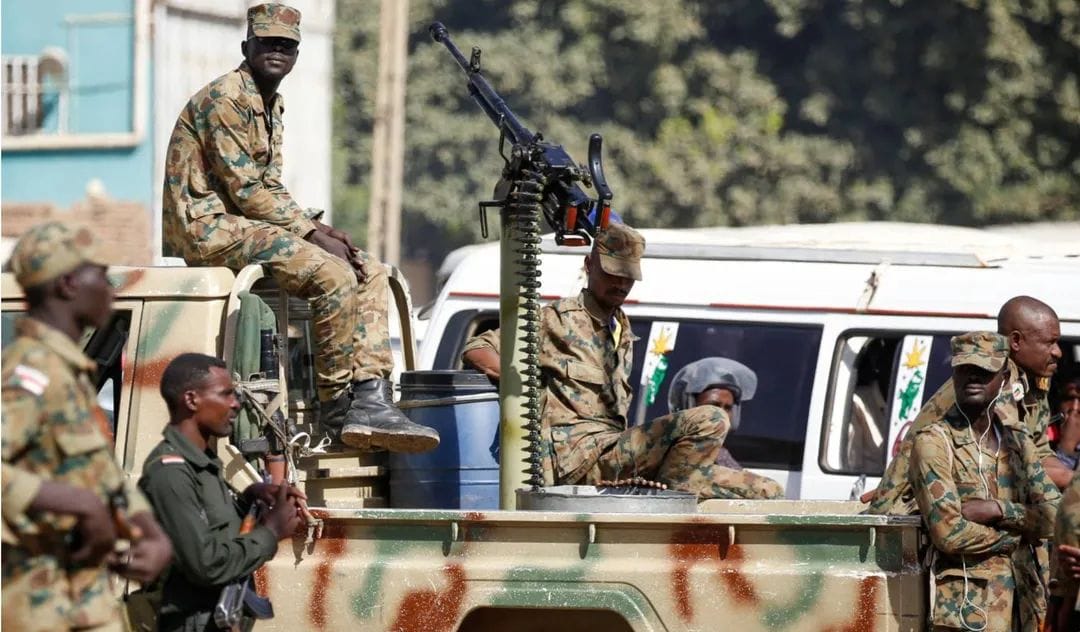
Representatives of the warring factions in Sudan have gathered in Saudi Arabia for face-to-face peace talks for the first time since the war broke out in mid-April. 

There will be talks sponsored by Saudi Arabia and the United States between the country’s military and the RSF security forces. Several previous ceasefire agreements have failed since the start of the war a few weeks ago. 

Both sides said they would agree to a ceasefire to allow civilians to leave the areas where the war is most intense. On Saturday, the Minister of Foreign Affairs of Saudi Arabia, Faisal bin Farhan, welcomed the representatives of both parties who arrived in the country for the reconciliation talks. 

He said he hoped the talks would end the conflict and restore peace and security to the country. General Mohamed Hamdan Daglo, who leads the RSF forces, stated on his Twitter page that the RSF welcomed the decision to cease fire in order to be able to send support into the country. 

He also said that the RSF is ready to return power to the hands of civilians in the country.

The importance of proficiency in the official language of one’s country

By Abdurrazak Muktar Makarfi

The ability to communicate effectively in the official language of one’s country is a hallmark of education and social mobility. Mastery of the official language is essential for communication and for accessing educational, economic, and social opportunities.

Language proficiency is a barometer of education and intelligence. One’s ability to articulate themselves with precision and clarity in the official language of their country is a reflection of their level of education, critical thinking, and cognitive abilities. Proficiency in the official language is integral to formal education, typically mandatory for accessing higher education and advanced employment opportunities.

Furthermore, proficiency in the official language is crucial for social mobility. Communicating effectively in the official language is paramount to accessing educational, economic, and social opportunities. Individuals who lack proficiency in the official language face barriers to accessing these opportunities, resulting in social exclusion.

Additionally, proficiency in the official language is pivotal for national integration and unity. A shared language promotes a sense of national identity and solidarity, fosters social cohesion, and enhances cultural exchange and understanding. The ability to communicate in the official language facilitates participation in democratic processes and civic engagement, promoting active citizenship and democratic values.

In conclusion, proficiency in the official language of one’s country is a crucial aspect of education, social mobility, national integration, and democratic participation. Therefore, it is imperative to prioritise language learning and provide equitable opportunities for all individuals to develop their language skills and reach their full potential. Doing so will foster inclusive and cohesive societies that value linguistic diversity and promote social and economic progress for all.

Makarfi can be contacted via prof4true@gmail.com.

My experience at Yakubu Gowon Orientation Camp, Fanisau Dutse, Jigawa state

By Amina Barau Inuwa

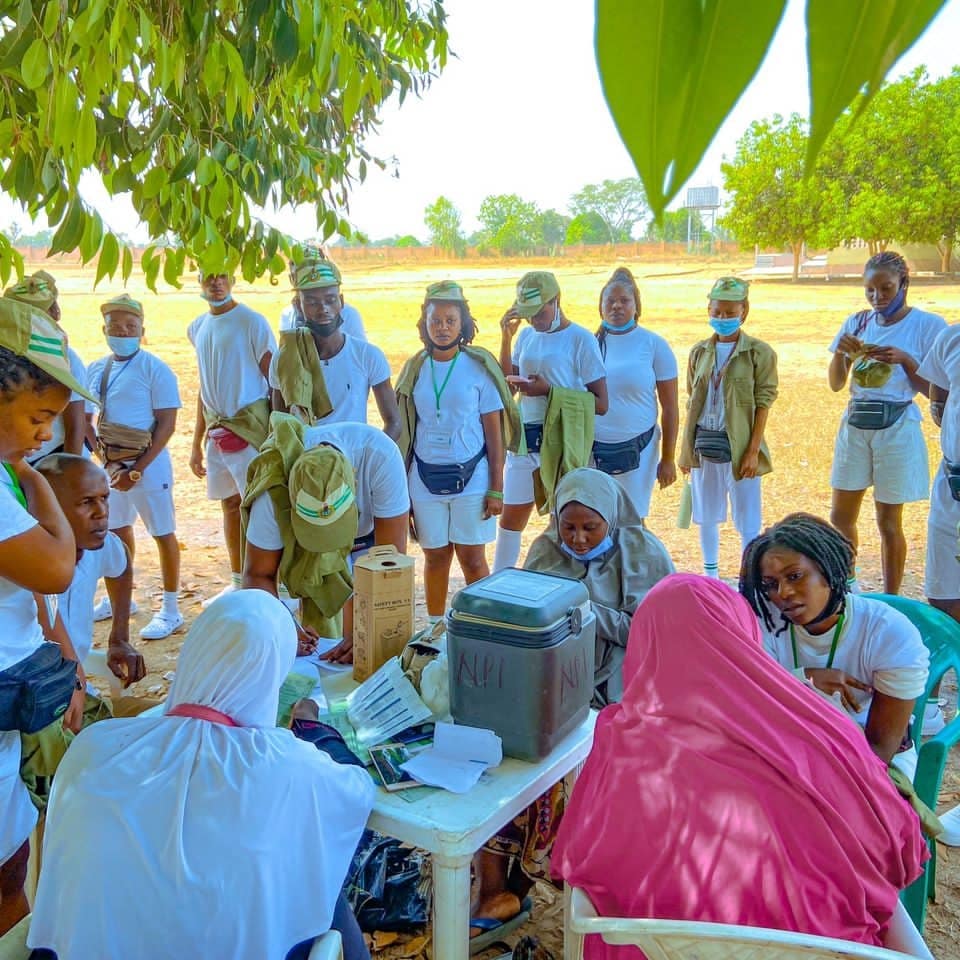
On 28th October 2015, a cool Tuesday morning, I headed to Jigawa State for the national call to offer my service to the nation. I wasn’t the type of person that went outside Kano often. I found it so amazing because it was my first trip for three weeks outside Kano. I felt a bit afraid. I didn’t know the nature of the people I would meet during my trip and the people in the orientation camp because all my schooling was in Kano State.

We were inside the car with my friends; as they were busy talking and laughing, my eyes and mind were on the road seeing long trees swinging and dancing to the tune of the winds, topographies, landscapes, undulating slopes, farms, markets, schools, and children among others. We reached the orientation camp around 10:00 am, along Dutse Road in Fanisau. I saw hundreds of people called Corps members at the gate being checked. We quickly followed the long queue to be checked too.

I remembered home, asking myself how I could cope among thousands of people as we were 4000+ during the exercise. We were in that queue till 4 pm, and still, we didn’t get accommodation and other things that would be used during the exercise at the camp. Finally, my friends and I sneaked to a line (short-cut), wrote our names and completed the registration for accommodation. We prayed, ate and returned for another registration and collection of kits (uniform, canvas and jungle boots). When I opened my gear, I saw that my boots were not my size, so I went outside around 2 am to change them.

It was hard to sleep because I wasn’t used to sleeping in a big room with many people as we were 64. So I cried as my friends had all slept. But I got used to the camp after 2 – 3 days; I became closer to many people from different schools, states, backgrounds, religions, and tribes.

The morning meditation was the first thing that scared me; we woke up by 3 am, took our baths, and, if there was time, ate something and headed to the mosque for prayers. Immediately after the Salaam was said, the soldiers would shout, “If you are finished, come out”; “If you are sleeping, you are wrong…come out”. I felt afraid for the first two days as soldiers used to scare me, but I was used to it the following days as the soldiers were friendly if and only if you followed their instructions. Each Platoon participates in different activities in the camp. Our group participated in the kitchen too.

I enjoyed the parade on the parade ground, especially when the drums were being beaten. I miss the friends I met. Going to Mami market with Fatima and eating noodles, that is when we don’t want to eat the food prepared by the kitchen, Platoon meetings, lectures (boring sometimes), Entrepreneurial skills which I was in a cosmetology group where I learned how to make air freshener, hair cream, liquid soaps etc. many my friends join different groups and learn other skills.

Activities that I miss at the camp include a parade, lectures, skill learning and friends. My Platoon parade commander (Danladi Mairiga and Aminu), Platoon leader and members, I missed you. The friends I miss include Fatima, Doris, Nene, ‘Yar Gaya, Hauwa, Patience, Your Excellency, Ayo (room leader), Aysha, Aysha (from Niger state), Makkiyya, Sabi’u Halliru, Rislan, Adamu, Aminu Funtua, Ahmad KD, a friend that I can’t recall his name in Kofar Waika of Kano. Many friends and roommates said the space would not be enough to write their names. My colleagues (Amina, Rabia and Walida) started together but later relocated. Some colleagues we started and finished together are all in my mind.

Government Secondary School Kanya Babba, Babura Jigawa State, was my first primary assignment, but I was transferred to Babura Divisional Library for some reasons. I served alongside Ann and Isma’il. That is where I completed my one-year national call.

In conclusion, National Youth Service is an activity that unites people of different tribes and religions, paving the way for many relationships, from marriage (my friends have married during the service year) to jobs and many opportunities. It strengthens the unity among Nigerians.

My service year was peaceful; it was perfect and successful. During my trip, I miss Bandirawa, Kwanar Dumawa, Minjibir, Danbatta, Koko, Tukui, Wailare and Makoda when taking off from Kano. When heading to Jigawa, I can’t forget Kazaure, ‘Yankwashi, Karkarna, Dandi, Burji, Walawa, Tasawa, Kwanar Sandamu, Koko, Kanawa, Babura, Rafin Canji, ‘Yar Kirya, Garun Gudunya, Babura Kudu, Babura Yamma, Gari Uku, Kanya Babba and many other places that I can’t recall their names. Indeed, the people in those areas showed great hospitality to us.

Amina Barau Inuwa wrote from Kano. She can be contacted via aminabarau257@gmail.com.
On immodest dresses and dance at wedding parties

By Sadam Abubakar

We all know and believe that marriages are associated with numerous cultures. These cultures come together to add flavour to the unforgettable memories that would be created in the minds of the brides and grooms during so many events of marriage celebrations.

The indelible joys and memories of marriage ceremonies usually transcend to even the minds of parents, friends, and relatives of both the brides and grooms. So, the importance of all the events associated with marriage ceremonies cannot be overemphasised in many cultures.

However, adopting the so-called Western civilisation has marred many events associated with marriage ceremonies, especially in the Northern-Muslim societies of Nigeria. 

For instance, not more than a decade ago, the bride’s popular “Kamu” or “Sa lalle” usually took place in a sister’s house to the bride’s mother. And the people that would be in attendance at this event will comprise only the closest friends of the bride and some of her few female acquaintances.

Unfortunately, today, such events usually take place in outside rented event centres where the groom and his friends could be in attendance too. Not only that, it’s possible for a dance competition between the groom and bride, or between the groom’s friends and the bride’s friends during this historically decent event.

The most moving part is that it’s now a normal and unpreventable trend in so many events associated with marriage ceremonies that the brides must appear almost half-naked. So instead of the decent “riga da zani of Atamfa“, the bride will wear a Western wedding gown. 

Even if the dresses are tailored locally, they will not only be diaphanous that one can see through, they are ensured to be tight enough to reveal all the contours and bumps in the bride’s body. And it’s in this kind of dress that the dancing will take place. So common. Are we really in our senses?

Remember, I insinuated earlier that parents usually attend these kinds of events. Can’t they stop it? Is it now normal for them too? I am sure our forefathers are not like this. And they didn’t train their children to be like this. Why only us? 

May ALLAH guide us right, amin.

Sadam Abubakar can be contacted via sadamabubakarsoba@gmail.com.

ABU loses final year law student

By Ahmad Deedat Zakari

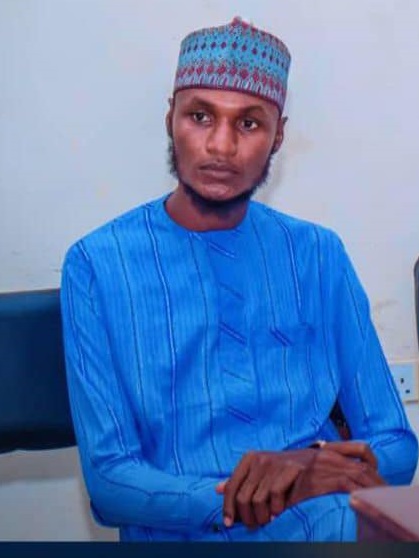
Abdulaziz Ahmad Adam, a final year student of the Faculty of Law, Ahmadu Bello University, Zaria, has passed on. 

The deceased was admitted to the university sickbay on Tuesday due to an unverified illness and died on the evening of Thursday. 

Mr Adam, before his admission to the hospital on Tuesday, wrote the Legal Research Methodology examination with other classmates. 

As of the time of writing this report, plans are underway for his funeral at the Alhaji Haruna Danja Mosque in Zaria.

Classmates and friends of the deceased have expressed shock and deep sadness over his demise. 

Yakubu Muhammad Abubakar, the Chairman Council of Principal Partners and classmate of the deceased described Abdulaziz’s death as a great loss that has left many disheartened. 

He said: “I was shocked to the marrow when I received this sad news today, But we all remember that God loves him much more than us. He was a kind, humble and dedicated someone that everyone would love to be with. May Allah forgive him and Grant him Jannah”

Abdulaziz passed on at the age of 30, and he is survived by his aged father, siblings, his wife and daughter.

Man kills biological mother in Kano

By Muhammadu Sabiu 
 
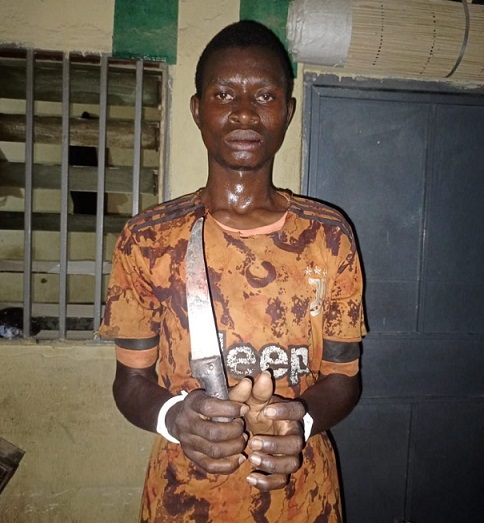
Ibrahim Musa, alias Iro Kwarangwal, 22, from Kano, allegedly killed his 50-year-old biological mother, Jummai, by stabbing her during an argument.
 
The unfortunate incident occurred on Wednesday at around 5:30 p.m. in the Karshen Kwalta and Rimin Kebe apartments in the Ungogo Local Government Area of the state.
 
An eyewitness said, “I was standing outside my house when I suddenly heard screaming from the deceased residence.”
 
He stated that when he ran in to see if he could help, he discovered the dead woman wailing for assistance in a pool of her own blood.
 
The culprit is said to have left the scene quickly after allegedly committing the horrible crime against his mother, according to the eyewitness.
 
The deceased was later brought to the hospital on a tricycle with blood all over her body, according to the witness, and was later declared dead there.
 
“She had since yesterday been buried in accordance with Islamic rites. May Allah forgive her and admit her to paradise,” the witness prayed.
 
When reached, Abdullahi Haruna Kiyawa, the Kano Police Command’s public relations officer, confirmed the incident.

DSP Kiyawa later added, via his verified Facebook page, that they arrested the suspect at a hideout in Dawakin Tofa, after which he (Iro) “confessed to the crime and also confessed to dealing in illicit drug abuse.

He will be charged to court upon completion of the investigation.”

The report was updated on 5.5.2023 at 12:50 pm.

Leveraging social media for better opportunities

By Mujahid Ibrahim

As I sat in the conference hall at the Kano Social Influencer’s Summit (KANSIS) of 2021 and 2022, organised by the Centre of Information Technology and Development (CITAD), I couldn’t help but wonder about the immense power of social media. The conference brought together a diverse group of social media influencers, entrepreneurs, and enthusiasts who shared their experiences and perspectives on how social media can be leveraged to drive social and economic growth.

However, amidst all the exciting stories and success tales shared at the conference, one thing was clear: the effects of mismanaging social media can be disastrous. From cyberbullying to misinformation and hate speech, social media has the potential to be a double-edged sword. While it can be used to amplify positive messages and drive change, it can also be a breeding ground for negative and destructive forces.

One instance of the adverse effects of social media mismanagement is the infamous #EndSARS protest in Nigeria, which was initially launched on social media platforms. The protest started as a peaceful campaign to end police brutality but eventually turned violent due to the spread of fake news and misinformation on social media. The consequences were dire, with many lives lost and properties destroyed.

However, it’s not all doom and gloom. Social media platforms provide endless opportunities for individuals and businesses to connect, engage, and grow their brands. From advertising to influencer marketing, social media has become indispensable for businesses looking to reach new audiences and drive revenue.

Numerous success stories exist of individuals and businesses leveraging social media to achieve their goals. For instance, the fashion brand Fashion Nova has grown from a small online store to a multi-million-dollar brand by utilising social media platforms to drive brand awareness and engagement. Similarly, entrepreneurs like Jeffree Star and Kylie Jenner have built successful cosmetic brands by leveraging their massive social media followings.

Other examples of social media success stories include:

Salt Bae: The Turkish chef Nusret Gökçe went viral on social media after a video of him sprinkling salt on a steak went viral. Since then, he has built a global empire of restaurants and has over 20 million followers on Instagram.

Wendy’s, the fast-food chain, has become famous on social media for its witty and engaging responses to customers. Wendy’s Twitter account has amassed over 3 million followers and has been hailed as a masterclass in social media marketing.

Glossier, the skincare and beauty brand, has built a cult following on Instagram, with over 2 million followers. Glossier has used social media to build a strong community of loyal customers who engage with the brand and share their experiences online.

GoPro, the action camera company, has used social media to create a platform for user-generated content. By encouraging users to share their GoPro footage on social media, the company has created a vast library of high-quality content that promotes the brand and inspires others to purchase their products.

Old Spice, the men’s grooming brand, revitalised its image through viral videos that parodied traditional male grooming advertisements. The videos were hugely popular on social media and helped to reposition the brand as edgy and irreverent.

These success stories, however, demonstrate the power of social media in building brand awareness, engaging customers, and driving revenue. By leveraging the unique features of each social media platform, businesses can create targeted and effective marketing campaigns that resonate with their target audience. Social media also provides opportunities for individuals to build personal brands, connect with like-minded people, and share their passions with the world.

To sum it up, social media has the potential to be a powerful force for good or bad, depending on how it’s managed. By understanding the power of social media and leveraging its unique features, individuals and businesses can drive social and economic growth. However, it’s important to use social media responsibly and to be mindful of the potential adverse effects of mismanaging it.

As social media continues to evolve and shape our world, we must use it to build a better, more connected, and more inclusive society. So, whether you’re an entrepreneur, an influencer, or just a casual user, remember to use social media to spread positive messages, connect with others, and make a meaningful impact.

Mujahid Ibrahim, Program Officer, Centre for Information Technology and Development (CITAD), can be contacted via littlemujahid4@gmail.com.

Centre for Fiscal Transparency and Integrity Watch embrace NAPPR project

By Ibrahim Uba Yusuf

The Centre for Media, Policy and Accountability (CMPA) has continued its advocacy to seek collaboration with sister agencies on the successful implementation of the Nigeria Anti-Corruption Performance Public Reporting (NAPPR) project. 

The Executive Director of the Centre and project lead, Dr Suleiman Amu Suleiman, who led the project team to Centre for Fiscal Transparency and Integrity Watch, explained that the project has four components: research, advocacy, training and developing a harmonised template for anti-corruption reporting.

He lamented the differences in the pattern of reporting corruption by Anti-Corruption Agencies (ACAs) as a result of the different indicators used and hope that the project will fill this gap by developing a harmonized template that the ACAs will use in reporting corruption in Nigeria.

Also speaking, the Deputy Project Manager, Naziru Mikailu, said at the onset of the project, ‘the Centre faced difficulties in convincing the ACAs to key into this project’. 

‘We hope that the Centre will help us in the implementation of this project and development of the template in view of your field experiences’, Naziru noted.

The Executive Director Center for Fiscal Transparency and Integrity Watch, Mallam Umar, described the NAPPR project as brilliant which will give civil society organizations, the media and members of the public an opportunity to check those who check others. 

‘We will support CMPA Implement this project’, Umar assures.

Also speaking, Chairman of the Centre Abdulrahman A. Mustapha expressed the hope that the template, when developed, will give the required result of unifying various variables of measuring corruption which will facilitate development.

‘The centre is ready to provide CMPA with all the technical support needed to ensure that the template is accepted by the ACAs in Nigeria’, he added. 

Days of future past: A take on Nigeria’s future

By Lawi Auwal Yusuf

Thinking of Nigeria’s future has left me swinging between apprehension at the prospect of some future doom and anxiety. However, I can see how the country can secure an imperium position in the comity of global superpowers considering its unique and extraordinary endowments that are rare for a country to possess. An idyllic realm where all Nigerians, regardless of their social background, have a smooth path to realise their dream world.

It is widely believed that the benefits of long-term planning last longer. And only beautiful destinations attract arduous treks of long distances full of hurdles and cruxes. But on the other hand, successful journeys are well-planned and adequately prepared for over a long period. Traditionally, farmers reap what they sow. Therefore, only those that planted beneficial seeds laugh at the harvesting period’s end.

It’s against this backdrop and considering other factors that drive national building in Africa, especially in Nigeria, always fail to see the lights of their desired destinations. As a result, Nigeria’s manifest destiny to inspire the global black race and lead Africa has remained in the doldrums despite its enormous human and material resources that could be judiciously utilised to translate such famed potentials into concrete aggregates for sustainable development.

Positive imaginations, futuristic political articulation and prescient abilities are imminent qualities and cardinal leadership principles. But, historically, the consistent absence of committed, transparent and future-oriented leadership has been a significant hindrance and unequivocal bane to Nigeria’s development.

Practical politicians are those whose political philosophy includes making the world a better place to live for their people and posterity. This is a core and thematic value of the politics of leaders who dedicate their lives canvassing for their country’s better future. This makes me recollect William Jennings Bryan’s food for thought that says, “Destiny is not a matter of chance, it is a matter of choice; it is not a thing to be waited for, it is a thing to be achieved.”

So, I ask you: have you ever bothered to ask yourself these questions, where is Nigeria heading to? What are we planning for the future? I asked again, have you ever thought of such critical questions? We must be curious enough about the country’s fate in the forthcoming decades, whether we are still alive or utterly forgotten. What would be the nation’s state then?

But the bigger question remains, do the country’s movers and shakers give a damn about its predestination and are busy strategising revolutionary, historical and ambitious deft policies geared towards defining Nigeria’s moment and securing the future? Unfortunately, the answer to this question is not in the affirmative.

In Nigeria’s contemporary context, where the gamut of formal and other traditional institutions has failed to generate vital mechanisms for efficient service delivery to Nigerians and the coming generations, coinciding with emerging trends of pervasive poverty and inequality amid burning acrimonious civic bond, political hooliganism and hollowed nationalism are particularly not a good look for the future.

I beg your pardon. I’m not a prophet of doom. But one is compelled to admit that the situation is entirely hopeless. From a cursory observation of the national scheme of things, there are explicit tales of troubles ahead. I don’t see fortune looming on the horizon from where I’m standing. And by all estimates, I don’t see a bright future for a nation whose kleptocracy deteriorated into kleptomania.

For all I know, there is no bright outlook for a country whose politicians are preoccupied with self-centred political hustles and busy making contacts to negotiate themselves for a place on the table of political spoils carrying along the baggage of selfish and vested interests, to wit, protection and advancement of these interests have become the defining nature of public office holding. On the contrary, I see a foggy future for a society whose bigwigs throw constitutional order and due process overboard under the suzerainty of selfish and vested interests, lest they consistently fall short of their public commitments.

In reality, we must come to terms with the fact that the destiny of a country can’t be secured while its bosses are absentminded about their public obligations and constantly engaged in party meetings, extravagant banquets and jetting over the country on chartered and private planes attending series of lavish occasions at its expense and detriment. A nation whose ‘spark plugs’ can’t put the nation’s interest above theirs, while its most favourable policies go awry when such interests are compromised.

Of course, this version of Nigeria we see today isn’t what its progenitors worked tirelessly for. This is reminiscent of the generational disconnection spawned by the egregiously rapacious leadership of their predecessors. However, people dogmatically believe history has an uncanny knack for repeating itself. I hope this unfortunate odyssey will not be repeated in the annals of Nigeria’s history.

So, now that we are here, I pray for a benevolent mother for all generations. A saviour to save us all.

Lawi Auwal Yusuf wrote from Kano via laymaikanawa@gmail.com.

Recruitment: NDLEA schedules online test

By Ishaka Mohammed

The National Drug Law Enforcement Agency, NDLEA, has announced an online test for recruitment to its superintendent cadre, including professional and general duties. 

According to the statement by the agency’s director of media and advocacy, Femi Babafemi, the recruitment test will be held between May 8 and 10, 2023 (Monday and Wednesday).

The statement further urges those with successful applications for the superintendent cadre to start checking their email inbox and spam folder from Wednesday, May 3, for notification and further instructions.

The agency has also scheduled a Twitter space for Friday, May 5, between 3 and 5 p.m. to guide applicants on the online test. The session will also be “streamed live on our Facebook, YouTube and Instagram accounts”, part of the statement reads.

Applicants can also make enquiries by visiting www.ndlea.gov.ng or the following social media handles: @NDLEA01 on Facebook and @ndlea_nigeria on Twitter, Instagram and YouTube.

Recall that the recruitment applications were submitted between March 12 and April 17, 2023.