Month: April 2023

Defiled Muslim minor: MURIC demands justice

  • News Desk

The fourteen (14) year old daughter of an Igbo Muslim, Mallam Tahir Akpan, has been reportedly defiled. The suspect, Emeka Emmanuel, 29, has been remanded in Kirikiri Correction Centre.

But an Islamic human rights organisation, the Muslim Rights Concern (MURIC), has raised the alarm concerning attempts being made by certain people to sweep the matter under the carpet. MURIC has insisted on justice for the family of the defiled Muslim girl.

This was disclosed in a statement issued on Wednesday, April 26, 2023, by the Executive Director of MURIC, Professor Ishaq Akintola.

The statement reads :

“A fourteen (14) year old Muslim girl has been allegedly defiled by one Emeka Emmanuel, 29 of No. 2, Sam Onwudinjo Street, Igbo Elerin, Lagos State. The victim is the daughter of an Igbo Muslim, Mallam Tahir Akpan.  

“Although the suspect has been remanded in Kirikiri Correction Centre by the Family Magistrate Court, Agbo Malu, Ajegunle since 13th April, 2023, we are raising the alarm today because of attempts being made by certain people to sweep the matter under the carpet.

“According to the victim’s father, Mallam Tahir Akpan, from Ini Local Government of Akwa Ibom State, a highly placed individual in Igbo Elerin, Lagos State, has threatened to deal with him for refusing to soft-pedal on the matter. The father also alleged that the culprit’s lawyer also threatened to write a petition against him alleging child abuse.

“MURIC rejects this attempt to arm-twist Mr Tahir Akpan. He is a well-educated, highly enlightened, disciplined and fearless man. The threat to deal with him and to charge him for child abuse is sheer blackmail. How can a sexual abuse complainant be turned into an accused? What kind of justice is that?

“We suspect foul play. We warn that officials involved in this case should not allow themselves to be used in circumventing the law. Any attempt to turn the case upside down will be resisted with every legitimate means available. We want those involved to know that Akpan is not alone. MURIC and all conscious and freedom-loving Nigerians are with him.

“MURIC demands justice for the Akpan family on this case of sexual assault on their underaged daughter. Also, in view of threats issued against the victim’s father, Mr. Tahir Akpan, we warn that nothing should happen to him or any member of his family.

“MURIC is in possession of the medical report which confirms a case of penetration and defilement against the culprit. We therefore warn all those who are making attempts to interfere with the course of justice in this case to steer clear. The Akpan family is fully aware of their Allah-given and fundamental human rights and any attempt to encroach on any aspect of their rights will be rebuffed with the full force of the law.

“Finally, we commend the police in Iba for playing their role professionally and fearlessly. By taking the case to court, the police have proved that they have no skeleton in their cupboard.

“However, it is not over until it is over. There is one more thing the police need to do. We demand full protection for the family, and the onus falls on the Divisional Police Officer (DPO) of Iba Police Station, Iba, to ensure this for Mr Tahir Akpan and all members of his family. MURIC will continue to monitor the situation until justice prevails.”

#JusticeForAkpanFamily

Malam Jamilu Salim: A Short Tribute to a Fatherly Administrator

By Muhsin Ibrahim

Part One

It was 2005 when I applied for admission into Bayero University, Kano (BUK). In Nigeria, getting admission without knowing someone at the university is pretty hard. My late father was working there as an accountant, but remembering how my immediate older brother couldn’t secure admission a year before despite our father’s efforts, I did not bother to ask for his help. Our eldest brother (Yaya Babba), now late, was nonetheless a student. Knowing he was not an ‘ordinary’ student due to his age, I approached him for assistance.

I was lucky Yaya Babba knew Malam Jamilu Ahmad Salim. I cannot say what his position at the University was then, but he could help, Yaya Babba assured me. My only fear was my SSCE result, which was neither WAEC nor NECO, the two conventional entry exams. I had NABTEB and was applying to the Faculty of Education. But on the other hand, my UTME/JAMB result was excellent.

Yaya Babba met Malam Jamilu during a Hajj pilgrimage the previous year, and they clicked. To those who knew our brother, he was almost everyone’s friend. Thus, they maintained a cordial relationship after the Hajj. When we met Malam Jamilu, he calmed me down, virtually assuring me of admission. Although I got the admission without his help – or anyone’s but Allah – in the end, how he treated me was fantastic and fatherly.

Part two

After graduating in 2010/2011, Bayero University employed me as a lecturer. Fast forward, I got another lecturing position and admission for my PhD at the University of Cologne, Germany, in 2017. I signed a bond and left BUK on a Study Fellowship in late August. Months later, I thought about the implication of collecting two salaries, something I didn’t plan for. I thought I would only be a Teaching Assistant à la the American university system. I discussed this confusion with selected colleagues, including my contemporaries and seniors. Opinions differed. Confused, I decided to go to the top.

With the intervention of a friend, I met Malam Jamilu, now a Director of the Establishment. He advised me as if I were his child on what I should do when I met the Vice-Chancellor, Prof. Yahuza Bello. So, I did, and it worked like magic. Appreciating my sincerity, Malam Jamilu thought the University could (should?) release me – on a Leave of Absence (LOA) – without paying back the few months’ salary I received. So, he asked me to request that in my application letter. Although it didn’t work, I remain eternally grateful for his rare kindness and generosity.

Part three

Weeks before my four-year-long LOA ended, I received an email from my Head of Department that I should resume or resign. My love for BUK is more than you can imagine. But, of course, I love my new workplace, which offers me abundant opportunities, resources, and much more. Still, I hesitated to divorce my beloved BUK, where my academic journey began just like that. Nevertheless, my close family and friends suggested I bid BUK a final farewell. But how do I do it? Just tender your resignation, and that’s it, a voice told me. Another one said no, contact the ever-helpful Malam Jamilu for guidance – so I did.

Malam Jamilu, now a Registrar – the peak of his career – was much busier. He probably lost my number and couldn’t return calls from unknown callers. The friend who helped me the other time and his underling, Rabia Shour, told him that Muhsin called the other day. He apologised for not answering. Thus, when I called again, he quickly picked up. He was apologetic in his welcoming manner.

Upon hearing my story (again) and my current request, he didn’t mince his words on what he would do in my situation: resign. He added that that was a development we should all celebrate. He briefly lamented the condition of Nigerian universities and congratulated me.

I was about to drop the call when Malam Jamilu advised me to word my letter carefully and diplomatically. For instance, instead of titling it “Letter of Resignation”, it should read “Notice of Withdrawal of Service”, among other excellent tips.

The last part

I am sure Malam Jamilu did more for many more people in his decades-old career, four of which were as the University’s top administrator. He was an incontestably hardworking, dedicated and brilliant manager who rose through the ranks and contributed significantly to the university and its members’ growth and development. Since our father’s death in September last year, no other death shocked me as his. Wallahi, I spoke about him with a friend visiting me from Nigeria yesterday. We didn’t know he would die at the age of 59 later in the night!

May Allah forgive the shortcomings of Yaya Babba, my father (Alhaji Ibrahim Lawal), Malam Jamilu and our other loved ones. The list is getting longer. Everyone and everything will perish (Quran 55:26).

Muhsin Ibrahim, PhD, wrote from Cologne, Germany. He can be contacted via muhsin2008@gmail.com.

On pseudo-intellectual engagement in Nigerian social media

By Iranloye Sofiu Taiye

One of the essential elements that strengthen the unity of countries with numerous ethnicities is the mutually esteemed mode of communication, respect for their diversities, and by extension, mutual political relationship. But presently, the Nigeria social media fora are nothing but a channel for perpetrating, promoting, and sowing seeds of national discord, anchored on the uncivilised conduct of the politician and the supporters of political parties. It’s now conspicuous, apparent, and plausible that the spurious actions of the users of the social media platforms encompassing Facebook, Twitter, Instagram, and WhatsApp groups have nourished the already perturbed and suffocating political terrain. 

Glaringly, this is an indication that we have a long battle to wrestle with, considering the pandemonium that ravaged the online space aftermath of this year’s general election. It’s very disheartening and daunting that we now freely strike and attack each other on the online space devoid of decorum and let alone having regard for divergent political opinions, which ought to be the beauty of democracy. The uncultured and vulgar attitude of the Baptists, Obidient,s, and Articulators was very appalling, which invariably made users of social media jettison the esteemed hitherto cultural mode of interpersonal communication, alas! we’ve now regrettably substituted it with barbarous, sadistic, and wanton mannerisms. 

The magnificent of social media platforms being a free platform where people exchange ideas, audio-visual content, and debate political perspectives with the use of internet connection had forthwith metamorphosed into caliginous and obscurity due to the pretentious salvage rhetorically disseminated by politicians to their naive and gullible followers who have been brainwashed with the grandiloquence of their preferred candidate. Hence, mutual content-sharing and collaboration have become hallucinations in the social media space.

It’s a known fact that all the political parties now budget a humongous and whopping sum of money on social media purposely to manipulate the thinking of the people to kowtow to their interests. These are cliques and gangs the political parties recruited as an online army of soldiers to perform several tasks, including the following: cyberbullying, paddling false information, using hate hashtags, threatening and intimidating their opponents with their unguarded utterances and abusive statements, spreading derogatory anonymous articles and engaging in an illogical debate just to mislead the public. 

This is quite terrible, horrendous, and awkward. Many youths have been cajoled and fed with negative thoughts and hatred about the country. After all, youths are the major users of social media, and this uncivil engagement is a stigma on the image of our nation State. The hate speech and this needless confrontation, brawl, and hullabaloo have set the citizens against each other, which is a setback to our nascent democracy and a violation of the expression of freedom, respect for the dignity of man and freedom of association as entailed in our national constitution. 

However, Since the ill-ambitioned politicians and the hatred-fed supporters of the political parties have no monopoly on expression and the online space is free for all citizens to utilise, then the intellectuals, scholars, and objective writers should brace up their pen to engage in thoughtful and analytical political discussions, and logical debates on the Facebook, Twitter, Instagram, and other online space, to stem this delinquency before it wakes up the sleeping dogs. Let’s remember that the pen is mightier than the gun.

Note a Yoruba maxim said, “When elders are in the market square, the head of a new baby cannot be laid upside down”

Iranloye Sofiu Taiye (Optimism Mirror) is a public affairs analyst, public speaker, writer, and youth advocate. He can be reached via iranloye100@gmail.com

India will soon surpass China in population – UN

By Muhammadu Sabiu 

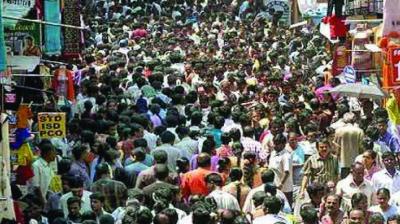
India is soon to overtake China as the world’s most populated country, according to the United Nations Population Division.

John Wilmoth, the director of the UN Population Division, stated this at a press conference held on Monday at the UN’s New York headquarters.

Wilmoth asserted that the fertility rates in the two countries were the primary cause of this trend, stating that China and India together made up more than one-third of the world’s eight billion people.

Wilmoth was quoted as saying, “By the end of April, India’s population is expected to reach 1,425,775,850 people, with projections indicating further growth for several decades more.

“That’s slightly higher than China’s global record of 1.4 billion in 2022.

“China’s population reached its peak size in 2022 and has begun to decline.

“Projections indicate that the size of the Chinese population could drop below one billion before the end of the century.”

The need to shun obsession with scholars

By Ishaka Mohammed

There is a clause that is capable of solving many problems, but most of us often use it only to defend our flaws. The clause is: Nobody is perfect. Instead of internalising and living with this priceless statement, we tend to remember it only when people criticise our misbehaviour or mistakes. This clause is much more than a defence tool. Its proper use comes with an invaluable gift: open-mindedness.

Almost every time I come across a war of words (especially such that involves religion) between ordinary people on social media, I quickly blame our inability or refusal to listen to alternative views. I find it unfortunate that my guesses regarding such unhealthy behaviour are usually right.

We sometimes hold certain opinions so strongly that every other view becomes repulsive. This is one reason that makes me doubt if I will ever forget the year 2007. It was a time when I realised the danger of obstinacy. I discovered that a single source or person could never attain a true scholarship. Although it is still a work in progress, when I receive an important piece of information from anyone, I try to examine it or consult other sources to confirm its reliability. 

I’ll explain my point with a few examples. In my quest to upscale my communicative competence in English, I follow certain scholars online. One of them, a professor of English, once made a social media post about English grammar, and I noticed a “wrong” pattern in the post. In an attempt to know if that was an exception to the general rules, I told him what I knew about the pattern. He never replied; he only liked my comment. If it were today, I would try to ignore his “mistake” because, considering his status, such a question could embarrass him.

Three years later, I bought a book he authored, and I noticed about six “wrong” patterns, including the one I had asked about on social media. Although the book is an interesting read, when a colleague of mine asked how she could get it for her daughter, I discouraged her because I feared that the teenager might internalise some “wrong” patterns.

Much as I would refrain from stating categorically that the prof is completely wrong, all the sources I have consulted, including the Oxford Advanced Learner’s Dictionary, point to that.

Away from English grammar, there is a renowned Islamic scholar who has been on the international scene for decades. Today, like many other people, he stresses the need to avoid castigating Muslims who try to mend their ways in Ramadan, arguing that the season is an opportunity to turn over a new leaf. However, I once heard him criticise the same category of people, calling them Ramadan Muslims (who are disbelievers for 11 months, only to become the most sincere believers in Ramadan). I would say that his earlier statement was either a mistake or due to a gap in his understanding. He is a human being.

In addition, my little exposure has revealed certain mistakes my teachers (from elementary classes to university) made while I was under their tutelage. I have also realised some of my mistakes as a teacher. My students could discover even more.

This discussion points to one fact: Humans are fallible. If you pointed out one perfect human being today, I would argue that you do not know that person. Therefore, it is advisable to tread very carefully in our interactions with human beings. Although I respect my teachers, [religious] scholars and elders, I believe that there is no single person in the world today whose lifestyles are completely worthy of my imitation or whose statements are totally deserving of my adherence. Instead, I strive to expose myself to multiple sources before taking a stand on issues, especially religious ones. It is dangerous to be obsessed with a single scholar because nobody is perfect.

Ishaka Mohammed wrote from Kaduna. He can be contacted via ishakamohammed39@gmail.com.

The Daily Reality reporter loses father 

By Ahmad Deedat Zakari

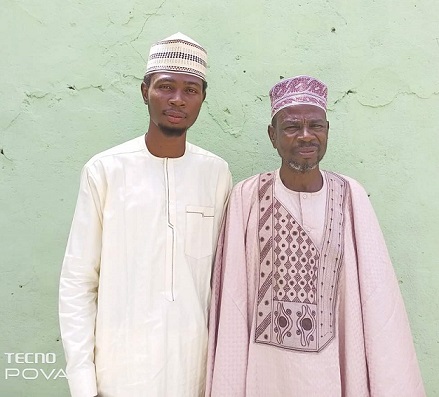
Malam Adam Imam, the father of The Daily Reality reporter in Kano State, Uzair Adam Imam, has died.

Late Adam died on Sunday at Aminu Kano Teaching Hospital (AKTH), Kano State, after a protracted illness. 

Announcing the demise of the deceased on Facebook, Malam Aisar Fagge, co-founder and editor of The Daily Reality, wrote: 

 “Innalillahi wa inna ilaihirrajiun! Yanzu na ke samun rasuwar mahaifin su Uzair Adam Imam bayan fama da jinya da ya sha ta watanni. Mal. Uzair was one of our outstanding students as well as the staff of The Daily Reality. May Allah rest the soul of his father and give them the fortitude to bear this monumental loss, ameen.” 

He has since been buried according to Islamic rites.

What next for Aishatu Binani?

By Zayyad I. Muhammad

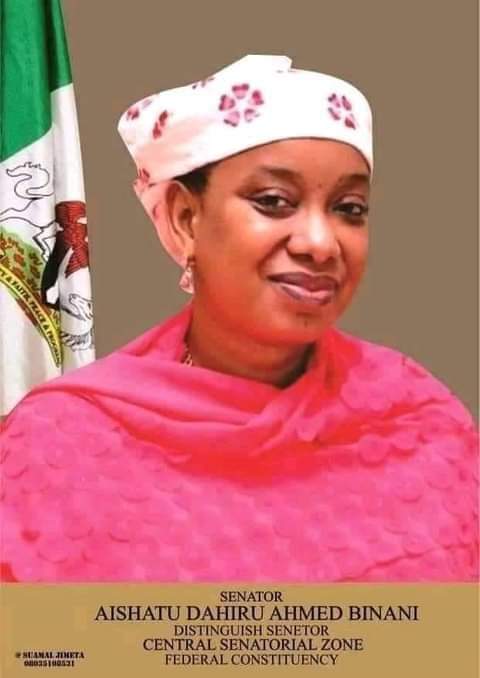
Now that the storm in the drama-filled Adamawa gubernatorial election has been subdued, the two big contenders, Aishatu Dahiru Binani and Governor Ahmadu Umaru Fintiri, will have the opportunity to retrospect and strategize for their next steps. 

On Binani’s path, there are two junctions. First, stick to the moment. Second, make a U-turn to a new path. 

The fact is, the actions of the now-suspended Adamawa state Resident Electoral Commissioner (REC) Hudu Yunusa have ‘dented’ Binani’s public sympathy, especially outside Adamawa. The REC’s actions have put the APC on edge. So, Binani needs both ‘on-the-shelves’ and ‘off-the-shelves strategies, as her next moves may make and mar her political future. She has three (3) options.

First, continue to insist that she is the Governor-Elect, as declared by REC, Hudu Yunusa Ari. In this case, Binani will approach the tribunal with a sole demand – the court to proclaim her Governor-Elect,  based on Section 149 of the Electoral Act 2022, which states that: ‘Notwithstanding any other provisions of this Act, any defect or error arising from any actions taken by an official of the Commission in relation to any notice, form or document made or given or other things done by the official in pursuance of the provisions of the Constitution or of this Act, or any rules made thereunder remain valid, unless otherwise challenged and declared invalid by a competent court of law or tribunal.

The second option for Binani is to pursue her cause through the tribunal while completely ignoring Hudu’s bizarre actions. She can reinforce her case by hammering on the alleged irregularities in some local government areas during the 18th March 2023 gubernatorial election. Places like Governor Ahmadu Umaru’s village, Madagali LGA, which claimed a whopping 42.2% voter turnout

Binani’s third opposition is to retreat – congratulate Fintiri, discard the option of any litigation and move for the future.

These three options have implications for Binani, Adamawa politics, and Nigerian polity.

If Binani and her team decide to take the first option, she would be testing the effectiveness and the efficacy of section 149 of the Electoral Act 2023. While it will be good for democracy, as the court will interpret the section, INEC will do whatever possible to save its face.

The Bola Ahmed Tinubu government may be interested as well because it may want to distance itself from Hudu’s actions to show the international community and Nigerian ‘eagle eyes’ that the election which brought Tinubu to power was fair and that the umpiring was not jungle-like. Binani taking this option means that many heads will roll, as Hudu may spill the beans. Binani may also continue to lose support because Hudu’s actions were a ‘third-rate’ action in politics (elections are best won at the polling units). REC Hudu’s action has attracted many observers even outside Nigeria.

For the second option, Binani has good advantages over Fintiri if she can assemble an excellent legal team alongside experienced politicians, political experts, and intellectuals from Adamawa to provide data, facts and figures, and shreds of evidence to back up the claims of irregularities during the elections. Binani has a bright chance of winning the case based on technicalities, while Fintiri will face a lot of hurdles here. This option is very expensive and requires both political and individual commitment from Binani’s team.

The third option for Binani is to retreat, congratulate Fintiri, and move on. This is the most difficult option for her, in fact, for any politician who has come as far as she has. If Binani goes for this option, many of her supporters will be initially demoralized. But in the long run, she would relieve the entire polity of the suspense, uncertainty, and unknowns. In fact, the investigations on Hudu Yunusa, securities heads, and other people will be inconsequential.

Binani will rediscover herself, remove the dent of Hudu’s action on her political outlook, and technically trounces her adversaries in the Adamawa APC. She will create the road to becoming  Adamawa’s version of Kwankwasiya because of her well-known philosophical activities and for being an Iron Lady.

Furthermore, with this (third) option, Binani will ‘save the day’ for many people. But it is a very difficult option; only politicians operating with a complete mind of their own will opt for such an option. It requires foresight to see tomorrow from today.

 Binani may have depleted her arsenal, but she has had a good fight; Fintiri will not forget her in a jiffy.

Zayyad I. Muhammad writes from Abuja via zaymohd@yahoo.com.

Open Letter to President-Elect Bola Tinubu: A Golden Ticket to Presidency Success

By Group Captain Sadeeq Garba Shehu (rtd.)

When new executives with a change mandate take over an organisation, they typically invest time in reshaping its strategy and determining the kind of culture needed to succeed. Those choices guide other decisions, including who their senior managers will be and how the leaders will allocate their time. Sadly many neglect the key factor that will help determine their effectiveness: the administrative system that guides day-to-day operations in their offices. This system ensures that leaders make the most of their limited time, that information arrives at the right point in their decision-making process, and that follow-up happens without their having to check. Many new executives default to the system they’ve inherited. Often there’s a better way to handle the information flow necessary for a President to succeed—and very often, a chief of staff (CoS) can play an essential role.

The CoS to the President is a political appointee of the president who does not require Senate confirmation and who serves at the pleasure of the President. While not a legally required role, Since President Obasanjo, all Nigerian civilian presidents have appointed a chief of staff. President Obasanjo had Gen Abdullahi Mohammed, while President Umaru Musa Yar’Adua had Gbolade Osinowo. The position was temporarily absent between 18 September 2008 – 17 May 2010 when President Yaradua sacked Osinowo and never appointed a replacement. President Goodluck Jonathan had Mike Oghiadomhe and Jones Arogbofa. President Muhammadu Buhari had the late Abba Kyari, and after his demise, the current CoS Prof Ibrahim Gambari. The position of CoS to the President is widely recognised as one of great power and influence, owing to daily contact with the President and control of the Office of the President. Almost all, if not all, governors in Nigeria now have a Chief of Staff, and many ministers have them.    

The CoS role originated in the military and dated back centuries. Cicero, the Roman politician and orator, used a slave named Tiro, who, according to Cicero’s biographer Zach Bankston, served as a secretary, a financial overseer, and a political strategist. Andrew Roberts’s Napoleon: A Life describes the vital role that Louis-Alexandre Berthier played in assisting Napoleon at the height of his powers. The historians Ron Chernow and Joseph Ellis have described the CoS–like a role that Alexander Hamilton played for George Washington. These people aren’t to be confused with the personal secretaries or aides-de-camp that each leader also had. Rather, they were close advisers who handled the most-delicate strategic matters and became trusted confidants. While the Chief of staff is a role that started in the military, and now, we can see it in most industries and sectors.

WHAT DOES A CHIEF OF STAFF FOR THE PRESIDENT DO? 

While there is no one-size-fits-all when it comes to describing the duties of a CoS in Nigeria, and each incumbent had wielded / not wielded power according to his personality and the relationship he has with his principal, the President, or the style of the President, their primary duties are making time, information, and decision-making for Mr President more effective. In other words, a CoS to Presidents helps Presidents become the best version of themselves.

The role of the chief of staff is not about dealing with administrative tasks only as he is not a PA. A CoS does not manage the President’s day-to-day schedule. The chief of staff is a leader. He/she makes high-level decisions, strategizes processes, and sets policies by devising meaningful plans and generating useful ideas, anticipating problems, and coming up with new solutions.

Paraphrasing Patrick Aylward, who breaks down the job of any CoS into five categories, I would say the job of the CoS to the President can be summed up as:

1. An air traffic controller for the President and his cabinet controlling the flow of people into the President’s office. 

2. An integrator connecting MDAs’ work streams that would otherwise remain siloed, breeding inter-ministerial/inter-agency squabbles, duplication, overlap and fragmentation.

3. A communicator linking the Presidency team and the broader FG apparatus. 

4. An honest broker and truth-teller when the President needs a wide-ranging view without turf/mandate considerations.

5. A confidant without an organisational or personal agenda-His agenda being only that of Mr President.

An effective and successful CoS to the President should be able to translate the above five categories can be translated into tasks and duties.

REQUIREMENTS OF AN EFFECTIVE AND SUCCESSFUL CoS: SKILLS AND PERSONAL QUALITIES 

The main responsibility of CoS is to help the President stay organised, which will allow him to give time to more important A items. This requires a good understanding of the business of government, effective communication skills, and the ability to manage projects and relationships. It also requires the skill to anticipate and avoid problems, add value to the President’s vision, and be intelligent on the organisational and political levels. The CoS must be excellent in the management of important projects. The ability to simplify complicated tasks, strategic thinking and problem analysis is one of their strongest suits, and they should know how to see things through, from idea to execution, even when the President himself forgets.

The best skill one would have for any position is being effective in getting the right things done. In his book The Effective Executive, Peter Drucker argues that effectiveness derives from a set of five practices anyone can learn: managing time; focusing on results (what to contribute to an organisation); building on strengths; concentrating on top priorities; and making effective decisions. Experts are agreed that the above five skills or practices are extremely useful when it comes to the chief of staff position.

Managing time: When it comes to time, presidents find it challenging to have enough of their time at their disposal and available for important matters, which do make a difference. They can get easily distracted, and leaving little time to focus on strategy is usually the outcome. A good chief of staff helps presidents record, manage, and consolidate time and reallocating time through doing, delegating, and deferring non-urgent tasks and cuts unproductive demands on time. CoS helps diagnose time wastage (e.g., excess of meetings) and communicates where the President’s time should be spent to key stakeholders.

Focusing on results: Most executives focus on efforts rather than results.. An excellent CoS redirects the President’s attention towards contribution by focusing on direct results, building values, and developing people.

Building on strengths: Presidents might not be fully aware of all the available strength points (the strengths of associates, the strengths of individual ministers and cabinet members, and even the President’s own strengths). Excellent CoS helps the President conduct strength assessments to fully comprehend the team’s strengths and how to manage them best. CoS can help redesign jobs to attract and scout the right people and talents, recognise those with weak performances, especially managers, and initiate action plans.  

Concentrating on top priorities: The need to prioritise and focus on major opportunities is the very core of a President’s job. This is what delivers results. Successful Presidents need to eliminate anything that is not worth doing and concentrate on the tasks that, if done perfectly, will make a difference. A successful CoS prepares and facilitates strategic planning processes and encourages the President to drop processes before they begin to decline. CoS leads or co-leads strategic initiatives and aims for what makes a difference rather than what is easy and safe to do.

Reaching effective decisions: With the chief of staff handling a considerable number of tasks, the President will have more time to think through big decisions, with the CoS serving as a reliable sounding board by testing opinions against facts. Without the help of a quality CoS, the President may make rash decisions, will not study the consequences of a decision before making one, and may be indecisive most of the time. An effective CoS gathers different teams’ perspectives to help Mr President understand the implications and helps direct the President to make decisions only when there is a disagreement, test opinions against facts, and compare the effort done and the risk of not taking action versus taking action.

Managing Meetings: Holding meetings is an integral part of the chief of staff’s responsibilities. Meetings represent a great demand on the President’s time, and the role of the chief of staff is to help the President never allow meetings to become the main demand on his time. To effectively manage meetings is a crucial part of the role of a chief of staff, as this chief of staff must not only manage the meeting but the people, agenda, objective, goal, strategies, and measures. To do this, the CoS must ensure all relevant MDA representatives are in the room, at the table, and participating while ensuring that meetings are designed to move the business forward with timed actions against goals. So, effectively managing team meetings is an important job requirement for the role. 

The most sophisticated chiefs of staff also assist the President in thinking through and setting policies—and making sure they are implemented. They anticipate problems and are especially sensitive to issues that require diplomacy. They function as extra eyes and ears by pointing out political potholes their bosses may not recognise (especially if the bosses are new to the company). Importantly, a CoS acts with the implicit imprimatur of the President—something that calls for humility, maturity, and situational sensitivity.

Regardless of specific responsibilities, a CoS can help a leader achieve sharp gains in productivity and impact. The CEO to the President helps the leader become better organised, with more time for A items; Manages important projects well; Helps President and his Cabinet navigate through uncertainty and risk. Required capabilities include: Can do project management, Can manage relationships, Communicating well, Organising the President’s office, Can simplify complexity, Does strategic thinking and problem analysis, Can manage the process of idea to execution, Can anticipate and avert problems, Can grasp and adding value to the president’s vision, Has organisational and political intelligence, ability to research on a full range of topics. A good CoS knows which relationships are most important to the leader’s agenda. Being organised and disciplined, showing attention to detail, and following up doggedly to ensure the right results. Ability to see what pressures the leader faces in pushing for changes and to find ways to lessen them. Finally, communication skills are crucial because the CoS must help refine the leader’s message and ensure that it is understood by the right audiences. 

WHAT KIND OF CoS SHOULD THE PRESIDENT-ELECT LOOK FOR? 

So far in the CoS role , we have seen Gen Abdullahi Mohammed (OBJ), Gbolade Osinowo (Yaradua) Mike Oghiadomhe and Jones Arogbofa (GEJ) , Abba Kyari and Prof Ibrahim Gambari (PMB) , each with his different style , the powers he wielded , and based on the style of his Principal . With respect, the most enduring name, for good or bad (depending on who you ask) is that of late Abba Kyari. Many agree there were fewer inter-ministerial squabbles and less confusion in the Presidency when Kyari was around. He left a legacy and a reputation of a rigid gate-keeper for PMB, qualities that several analysts believe are required of a CoS to the President. During the last days of his presidency, Barack Obama observed: ‘One of the things I’ve learned is that the big breakthroughs are typically the result of a lot of grunt work—just a whole lot of blocking and tackling.’ Grunt work is what chiefs of staff do.” Richard Nixon’s first chief of staff, H. R. Haldeman, garnered a reputation in Washington for the iron hand he wielded in the position—famously referring to himself as “the president’s son-of-a-bitch”, he was a rigid gatekeeper who would frequently meet with administration officials in place of the president, and then report himself to Nixon on the officials’ talking points.

Everyone requires help to achieve his or her highest potential and to sustain the effort it takes to lead a complex organisation. The right chief of staff can be an important source of assistance to leaders who are pushing their organisations and themselves to ever better performance. President-elect Bola Ahmed Tinubu, in looking for a CoS, should look for all the qualities enumerated here but in addition, look for that person that also has the capacity and personality to be a rigid gatekeeper and, like Nixon’s CoS Haldeman and PMB’s CoS late Abba Kyari be “the president’s son-of-a-bitch”. But to be an effective CoS, the President must also empower the CoS. Both Nixon’s Haldeman and PMB’s Kyari have empowered CoS.

Group Captain Sadeeq Garba Shehu (rtd.) is a Private Security Consultant and member APC PCC Security Committee.

Afflictions and Stitches

By Zee Aslam

The door slammed open to reveal a heart-touching moment of a mother struggling to discover her breath as she aimed to bring another life into the world. The birth of a baby is one of the world’s most wondrous and hazardous moments. 

Childbirth is a challenge, but it is undoubtedly one of life’s most rewarding events. As painful and fearsome as it may seem, the mother has this wonderful emotion overwhelming her as she awaits the arrival of her bundle of joy. 

Being a mother comes with lots of sacrifices. Your body figure will be altered, re-moulded, and your brain becomes addled as you are being re-programmed right from the womb swelling with pride down to experiencing the pain of labour. 

Pregnancy is exciting and scary all at the same time. Some days feel like a breeze, while others are just plain hard. However, the long nights with no sleep and mood swings are all worth it. 

Despite all the doctors, nurses, and loved ones in the room during childbirth, it is all about you, your body, and your child. It’s an incredible experience. It’s like uncovering a superpower you never realised you had. 

As she gasped for air while pushing out the baby, she looked around her and reminisced on the decision she took months back, which she never regretted once but still harboured doubts and fears. “What would become of this baby?” She asked herself. 

The cry of her little one signalled the beginning of a new life. She looked keenly as the nurse cleaned up her baby and placed him on her, wrapped in boundless passion. 

The aftermath of her decision just began. At night and when the hospital staff were distracted by an emergency, she stealthily sneaked out and walked miles away to a place where an orphanage was situated before dropping off the baby at the foot of a gate and then knocking at it. 

An elderly woman came out and was attracted to the baby’s cries. She stood halfway, staring at the innocent boy before she reduced her height and picked him up inside. The mother watching from afar, only wiped off tears as they streamed down her face. “That was the best she could do for her baby”. 

She travelled down memory lane to the path where some unknown men abducted, defiled and abused her. Then she thought she only paid the price of being an orphan roaming on the street, but now she knows better. 

Her life took a new turn and brought her to face its realities, she has just given away her soul and a piece of her heart to a total stranger, but she rests assured that her boy will grow up amidst other kids and be a better person. 

She calmly dragged her feet out of that street to what she called home and picked up the remnant from her shattered life, yearning to stitch them back together. 

If she could turn back the hands of time, she would. 

But since it’s beyond her control, she will only move on with her life and keep praying for the best to unfold into a piece. 

‘We’re determined to evacuate you’, FG tells trapped Nigerian students in Sudan

By Muhammadu Sabiu 
 
The National Emergency Management Agency, NEMA, informed Nigerians in Sudan on Saturday that the federal government was working to bring them home.
 
This is contained in a statement released by Manzo Ezekiel, the head of NEMA’s press unit, in Abuja. 
 
He said that NEMA was very worried about the situation, was keeping an eye on it, and was working on all available possibilities to return the trapped Nigerians to their loved ones’ homes in a safe and respectable manner.
 
The statement reads, “The attention of the National Emergency Management Agency (NEMA) is drawn to the widespread public concern on the situation in Sudan especially in regards to the ongoing conflict and the safety as well as well-being of stranded Nigerian citizens including hundreds of students in various universities of the country.
 
“It has become necessary to inform the public that NEMA is in constant communication with all relevant partners including the Ministry of Foreign Affairs, the Nigerian Embassy in Khartoum, Sudan, the Nigerians in Diaspora Commission and security agencies while seeking for an appropriate window of opportunity to evacuate all stranded Nigerians back home in a safe and dignified manner.
 
“The current emergency situation in Sudan is very complex with fighting between waring factions going on and all airports and land boarders closed. NEMA is working assiduously with all its partners and is constantly compiling updated information on the situation.
 
“A committee has been set up comprising of professional emergency responders, search and rescue experts to constantly evaluate the situation and seek for the safest way to evacuate the Nigerian citizens even if it is through a country neighbouring Sudan.”
 
Recall that there is ongoing violence involving the Sudanese Army and its paramilitary, which was recently characterised by heavy gunfire and explosions in the capital Khartoum.