Month: March 2023

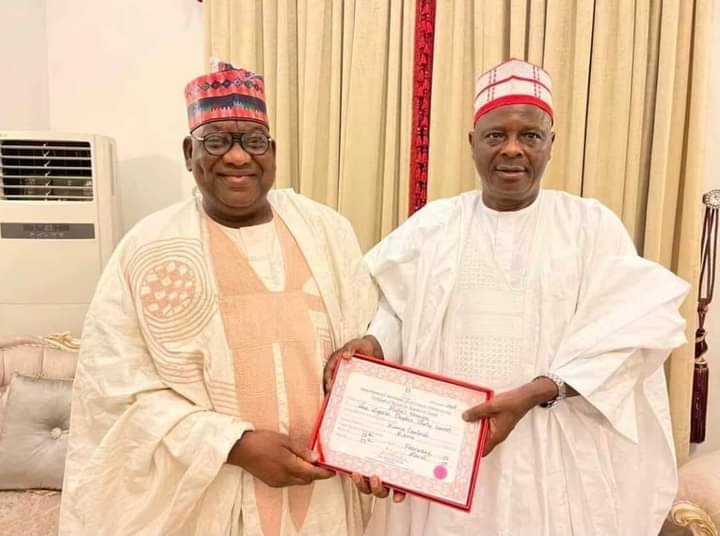
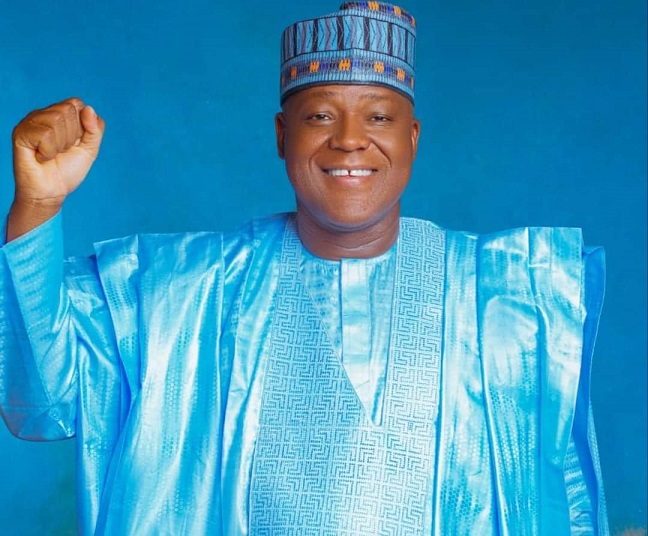
Former Kano APC deputy governor endorses Abba Gida-Gida

By Uzair Adam Imam

A former deputy governor of the State, Professor Hafizu Abubakar supports Engineer Abba Kabir Yusuf ahead of Kano gubernatorial elections on Saturday, 18th March, 2023.

Prof. Hafiz, who’s still a member of All Progressives Congress (APC) stated this during an interview on Express Radio on Thursday.

Professor Hafizu also blamed the APC government for imposing numerous unnecessary hardships of cash and fuel scarcity on the citizens over the years.

He called on Kano citizens to vote for Abba Kabir Yusuf, popularly known as Abba Gida-Gida, for a better Kano on Saturday, March 18, 2023.

Professor Hafizu also urged the people Kano State to vote wisely in order to get rid of the APC government in the state.

The Former Deputy Governor also asked the citizens to ensure peaceful election while casting their votes and never allow anyone to rig or disrupt the election process.

He stated, “I ask the Kano state people to come out and vote for NNPP. And, they should not allow anyone to rig the election results because this people (APC) can do whatever to rig this election.”

Furthermore, the former deputy governor explained how he sponsored over 1000 youths into various trainings in order to solve some of their problems.

He said that the trainings were to reduce the number of jobless people and enabled them to be self-reliant due to the incessant job scarcity in the state.

The trainees comprised of 700 females and 300 males. Each of them received a start-up capital of N 5,000.

“We consider the situation people find themselves today of poverty. We therefore decided to come up with this idea of training 1,000 people on various skills acquisition.

We gave N5,000 to each of them. We also have the data of these people and many others and we will consider them if NNPP wins the Saturday’s election,” he said.

Senator Hanga: A beacon of hope for Kano Central

By Mubarak Umar

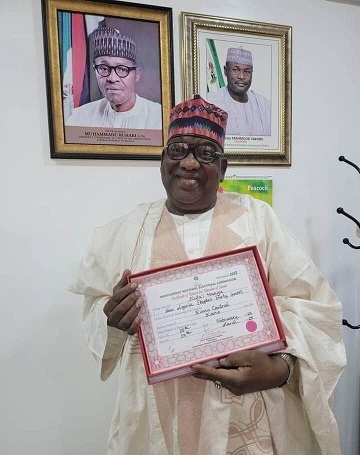
With the Supreme Court Judgment that affirmed Senator Rufai Sani Hanga of the New Nigeria Peoples Party (NNPP) as the Senator-Elect, Kano Central Senatorial District, the people of Kano Central have reason to rejoice.

Kano Central is truly abuzz with excitement following the judgment, which Senator Hanga challenged the Independent National Electoral Commission’s (INEC) declaration of Malam Ibrahim Shekarau as the winner of the February 25th, 2023 senatorial election in Kano Central.

This victory of Senator Hanga is a significant boost for the NNPP. It also demonstrates the importance of pursuing justice through the appropriate legal channels, rather than resorting to violence or other unlawful means. This is a win for democracy and the rule of law, and testament to his resilience and determination in fighting for his right.

I am delighted that Senator Hanga has been elected to represent Kano Central at the Upper Chamber. With his experience and dedication to public service, I believe he will be an effective advocate for his constituents and a valuable asset to the Nigerian government.

A graduate of Accountancy, one-time member of House of Representatives (1992-1993), senator who represented Kano Central from 2003-2007, chaired several committees including Chairman, Senate Committee on Drugs, Narcotics and Financial Crimes; Chairman Senate Sub-Committee on Housing and Urban Development; Chairman Sub-Committee on Finance; Vice Chairman, Senate Committee on Tourism and Culture; and Vice Chairman, Senate Committee on Special Duties.

These positions contributed to Senator Hanga’s deep understanding of the political and economic landscape of Nigeria. He has shown himself to be a skilled negotiator and collaborator, able to work effectively with others to achieve common goals. I believe that these qualities will serve him well as he navigates the complex issues facing Kano people, particularly his constituents.

Senator Hanga has demonstrated a strong commitment to the development of his community and the nation as a whole. His focus on issues such as education, healthcare, and infrastructure has been commendable, and I am confident that he will continue to work tirelessly to address these and other important challenges facing his constituents.

He is a politician with an impressive track record of public service, making him a valuable asset to any government. With years of experience working at various levels of government, Senator Hanga has developed a deep understanding of the political process, the needs of his constituents, and the challenges facing the country. His wealth of experience and expertise will undoubtedly prove invaluable in driving positive change and development initiatives in Kano Central.

Kano Central Senatorial District located in the northern part of Nigeria has fifteen local government areas, also known for its political and economic importance, it is the metropolitan commercial city of Kano, one of the largest cities in Nigeria.

One of the major reasons Kano Central needs good representations at Nigeria’s National Assembly is to ensure that the interests and needs of its people are adequately represented and addressed at the national level. This is important because the National Assembly is responsible for making laws that affect the entire country, and it is important that the laws made are fair and just for all Nigerians, including those in Kano Central. Now, the voices of Kano Central people will be heard and their needs will be addressed in the national discourse.

Senator Hanga’s representation at the National Assembly should ensure that Kano Central gets its fair share of the national resources. This includes funds for infrastructure development, education, healthcare, and other social amenities. With his effective representation, the district will not be left behind in terms of economic development, as policies that promote economic growth and development are made at the national level.

Furthermore, Kano Central is facing a number of challenges that require urgent attention from the National Assembly. These challenges include insecurity, unemployment, poverty, and lack of access to basic amenities like clean water and electricity. Effective representation at the National Assembly can help to address these challenges and improve the standard of living of the people of Kano Central.

The importance of good representation at Nigeria’s National Assembly cannot be overemphasized. The National Assembly is the highest legislative body in Nigeria, responsible for making laws that govern the country. As such, having good representation is crucial for the development of any district or constituency.

Kano Central is in dire need of infrastructure development. The district is home to several markets, industries, and transportation hubs, making it a hub of economic activity in the state. However, the lack of good roads, electricity, and other basic amenities is hindering economic growth. Good representation of Senator Hanga at the National Assembly should ensure that the district receives adequate funding for infrastructure development.

Kano Central is home to several tertiary institutions, including Bayero University, Kano State Polytechnic, and Yusuf Maitama Sule University. However, the education sector in the district needs significant improvement. His representation at the National Assembly should ensure that these institutions receive adequate funding to improve the quality of education and provide better facilities for students.

Kano Central is also in dire need of better healthcare facilities. The district is home to several hospitals and health centers, but most of them are understaffed and lack adequate medical equipment. Senator Hanga should ensure that the district receives adequate funding for healthcare facilities, as well as training and recruitment of medical personnel.

Kano Central has a high rate of unemployment, especially among the youth. Senator Hanga now has the opportunity to use all means of legislation that can attract foreign investors to the state and promote entrepreneurship, leading to job creation and economic growth.

Kano Central has experienced several security challenges in recent years, especially phone snatching, political thuggery, and burglary. Senator Hanga should ensure that the district receives adequate security funding to combat these challenges and maintain peace.

I am excited to see what Senator Hanga will accomplish during his time in office. With his dedication to public service, his commitment to his constituents, and his extensive knowledge of the Nigerian political landscape, I am confident that he will be a valuable and effective representative for Kano Central. I wish him all the best in his new role, and I look forward to seeing the positive impact he will have on the people of Kano and Nigeria as a whole.

Mubarak Umar writes from Kano State.
A Rejoinder to Binta Spikin’s article “Protest Votes.”

By Auwal Umar

One of the most onerous tasks before anyone though seems so easy is to see things as they are. That squarely sums up the essential job of criticism with the actual sense of the term. We are all subjects therefore, we are all predisposed to certain inclinations that tempt us to be subjective. Truth, no matter how opinionated one seems to be, can be separated from falsity. Against this background, I write this to the rejoinder written by one Binta Spikin titled: “Protest Votes” as a rejoinder to my article “Protest Votes: Abban Kanawa and the Sins of the Kano APC” published on 6th March 2023 by The Daily Reality.

Having had the conviction that even the points are raised cannot be easily refuted without wreaking havoc on the feeble reputation of the Kano APC led government. I really feel sense of pity seeing how Miss Spikin tried to defend her boss at all cost. I cannot reproach her for doing her job but when that shall deter the truth to prevail.

The meaning of criticism has nothing to do with condemnation but to simply point out both the strengths and weaknesses of the situation. The writer went ahead to rate Ganduje as one of the best performing governors especially on security which I equitably agree with no question. However, many questions still left unanswered on whether he is the best in handling the affairs of the state being comfortably positioned as statistically one of the worst performing in transparency which has nothing to do with the writer’s poor attempt as you described it to predict the possible scenarios that might unfold at the gubernatorial election as you called it, you really understood my piece but you skilfully evaded going squarely to disprove the points I raised but unfortunately you keep dangling between the facts and your newly self-appointed job of being a generous spokesperson instead of addressing them directly.

For the record, in the tail end of 2013 as reported by The Vanguard,  Nigerian Union of Journalists (NUJ) decorated Governor Musa Kwankwaso of Kano State as the best Nigerian Governor in the area of Fiscal Responsibility – a concept which refers to openness, discipline and accountability in governance unlike your self rating to please the power. On the other hand, Kano state under the stewardship of His Excellency Dr Abdullahi Umar Ganduje and Malam Nasiru Gawuna have performed woefully that is substantial enough to raise questions rather than answers. This means a lot to any one that is conversant with the art of governance, because lack of transparency signifies absence of financial accountability which culminated into unspeakable corruption allegations and embezzlement of public fund.

It is quite unfortunate to hear the writer chanting a sonorous songs that the governor has done his best with regard to education and health. This kind of “best” is enough to tell you that they have nothing to offer as one cannot give what he does not have. It was the best thing Ganduje could have done to education to close down schools established by his former boss as if they were meant for the children of Kwankwaso not for Kano citizens. He did his best by not constructing new one and recruit competent and qualified teachers in primary and secondary schools across the state. He did a commendable job to the health sector by his lackadaisical attitude to let the medical doctors of Kano extraction to get employed in Katsina and Jigawa with many of them securing juicy jobs abroad while the generous governor’s last attempt was to employ them as volunteers during Covid-19 pandemic.

It is very laughably shameful to describe protest of the frustrated and stranded scholars as indoctrination unlike Rimi’s era. For your information, Dr Abdullahi Umar Ganduje was the main brain behind it, if you even assumed it were. I heard Ganduje’s voice bashing them for even complaining. Those students were rendered like beggars close to importuning for alms to sustain them. Instead for their governor to treat them as his sons, he treated them as his archenemies. When did the heated political atmosphere should transferrable to the innocent people instead of being aimed at your opposite numbers? If you blame this to be indoctrination, you boss is the first culpable. No doubt, we don’t have much problem with Kwankwaso-Rimi political tussle as long as it did not affect the citizens, it was their interest. Had the incumbent governor adopted this style of opposition as that of Shekarau and Kwankwaso, he would not have been so much greeted with blows.

On the rerun, the zig-zag style detected in your writing is very funny. First you did not talk about the perpetrators and the implications of it. But I’m glad you admittedly come to terms with how it has come so much an issue and wonder this bespeaks how deeply it itched and still irking the Kano citizens. It is in order to have a rerun but it is not in tandem with the law of the land to be robbed of your mandate before the whole world by having a recourse to the thuggish force instead of votes. Put up with me! Kanawa will definitely give the right answer on 18th March seeing how the perpetrators are fielded as candidates. How I wish you had denied it but you didn’t.

On sponsoring the Kano state indigenes to attend the Law School the excuse is so frail and obvious. You first associated the failure with the dwindling oil revenue from 2015 to date, it is okay. Even though I cannot blame you for the upward and downward nature of the oil price curve in the world. Despite the dwindling oil revenue of Kano State has the guts to abandon education, health, science and technology, and many other critical sectors in favour of the bridges and underpasses. Wow! The governor is so concerned about these humanitarian projects that he even went further to see for billions of loans to go on with the projects yet the dwindling oil revenue impede the payment of Law school fees for the poor sons and daughters of Kano. One could praise the governor’s audacity to seek for ten billion Naira loan for the installation of CCTV cameras for the security of the state but not meagre amount can be sacrificed for our law graduates. It is very difficult to be one spokesperson but I cannot blame this honourable writer for her job.

In your last point, I respectfully take the different route which maintains that Ganduje is unmatched as he instituted continuity in governance partly true but not that true. Kwankwaso’s laid foundations for many projects  that are left in deplorable condition. Many schools are still close, not to talk of improving them and establishing new ones. Northwest University renamed as Maitama Sule University left in the mercy TETFUND. The training Institutes Kwankwaso established to bridge the wide gap in the rural areas are still part of the unanswered questions.

In conclusion, with much sense of respect, I admire your effort for doing your job as SA Research and Documentation but unfortunately you here got some of your records wrong and fail to do serious research about the points I expressed in my article.

Thank you.

Auwal Umar writes from Kano and can be reached via auwaluumar9@gmail.com

New CP pledges peaceful election in Kano

By Ahmad Deedat Zakari

The Commissioner of Police in charge of the forthcoming gubernatorial election in Kano State, Muhammed Usaini Gumel, has pledged to ensure a peaceful election in Nigeria’s Center of Commerce.

CP Gumel, in a press briefing on Thursday in Kano, disclosed the readiness of the Police to ensure that the guber and state parliamentary elections are conducted peacefully.

CP Gummel, in the press briefing, outlined the measures taken by the Police to avoid security breaches during the election.

According to him, the Police have undertaken security analysis and upscale the level of preparation across all the polling units in Kano State.

He said, “We have undertaken security threat analysis and upscale the level of preparation for the elections across all the polling units at the local government areas of the state, and we are fully prepared to emplace the requisite strategies towards managing the identified threats.”

Against the backdrop of Police preparedness, CP Gumel sought the trust and confidence of the people of Kano. He stated that criminals that wish to thwart the electoral process would be decisively dealt with.

“Ladies and Gentleman, please give us confidence so that nobody should be in doubt, I repeat, nobody should be in doubt as to the current capacity and renewed determination of the police to deal decisively with elements that attempt to test the will by engaging in political violence or other electoral manipulations including vote buying or use of threats; direct or indirect which are some of the elements threatening our democratic values.

“A similar warning also goes to any person that intends to offer himself to be used negatively by some ungodly political class in the state and urges him/her to take the advice that it will be better to have a rethink or else be ready to face the harsh consequences. Thank you for listening,” He said.

Re: An open letter to Barrister Abba Hikima

By Abba Kyari Mohammed

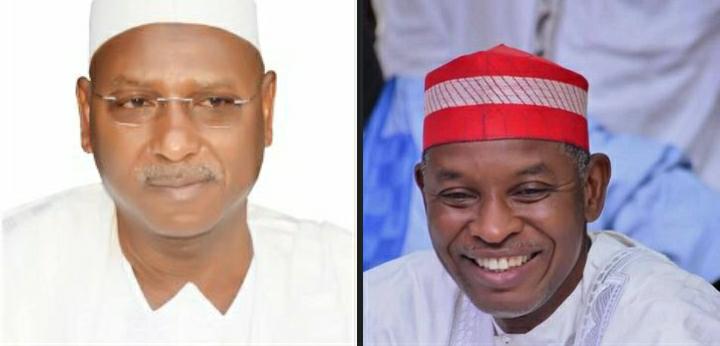
I read an article with the heading above written by one Yakubu Nasiru Khalid, which somewhat tries to demonise activists and freedom fighters venturing into politics. I got heartbroken and dumbfounded at our level of understanding of politics and its roles in our lives and nation-building.

The writer asked a pertinent question: Should a real social fighter be partisan? In this article, I will address just the question.

For clarity, by social fighter, I believe he meant someone who promotes and fights for socially progressive ideas and, where necessary, takes actions that benefit society. This is typical of Abba Hikima’s activism and benevolence in helping less privileged people access justice, voicing out the predicaments of people, the maladministration, and educating the populace about their civic rights and responsibilities. Also, by partisan, I believe he meant partisan politics, where one supports the candidates of one political party over others or decides to contest for office under a certain political party.

To start with, Abba Hikima has not been appointed as a ‘social fighter’ by anyone, nor did he, from my knowledge, ever arrogate to himself that title. It is a result of the work he does in promoting social justice, good governance and progressive ideals that people decided to refer to him as Freedom Fighter, Human Rights Activist, Social Fighter and many more nomenclatures to qualify the person that he is, which left to me are very deserving of him.

However, being a Social Fighter does not in any way exempt a person from participating in the democratic process of his country, which our Constitution generously guarantees and even demands explicitly. Therefore, I believe it is a gross injustice and discrimination to demonise or question anyone from exercising his rights because of his voluntary service to his community and nation, which you coined as ‘social fighting’.

It is also disheartening that we think politics and participation in the political process is an exclusive preserve of the elites or people who have no feelings for social justice and people´s emancipation or people with no impact on society. A serious society should rather have the Social Fighters, the Activists, the Freedom Fighters like Abba Hikima, who are adept at understanding societal problems and proffering people-tailored solutions, than some proletariat who live upstairs and have no touch with the masses to dictate to them whom to vote and even lead them.

For example, Barrack Obama of the United States was a lawyer and community organiser before he ventured into politics. Look how it turned out. Gani Fawehinmi is a Nigerian Human Rights Lawyer and Activist who campaigned for democracy, fought the brutish military regime, defended its victims for over 40 years, and later ventured into politics and contested the presidential election in 1994.

Nelson Mandela, a South African anti-apartheid activist, lawyer and former leader, fought and resisted apartheid in South Africa and was also a politician to become the first black Head of State, among many others. These tell you the place of politics in societal emancipation and social justice.

More so, what Abba Hikima does is more of civic enlightenment to the citizenry on what he firmly believes is right, especially in the face of what seemed like a gang-up to impose characters that have no business in leadership. According to Martin Luther King Jr., “The ultimate tragedy is not the oppression and cruelty by the bad people but the silence by the good people”.

The questions now are: Do you expect Abba Hikima to keep silent in the face of current political oppression in his state? Do you want him to disenfranchise himself because some people think he should not do so when no law or moral code is pointing towards that? Do you want Social fighters to steer clear of politics so thugs and the proletariat can take it over? These are questions worth pondering.

Abba Kyari can be reached via abbakyari2013@yahoo.com.

Planting trees: A quick response to desert encroachment

By Abdullahi Khairalla

Growing up in Maiduguri, a city highly prone to desertification, raises many concerns about my environment and the impending mishap.

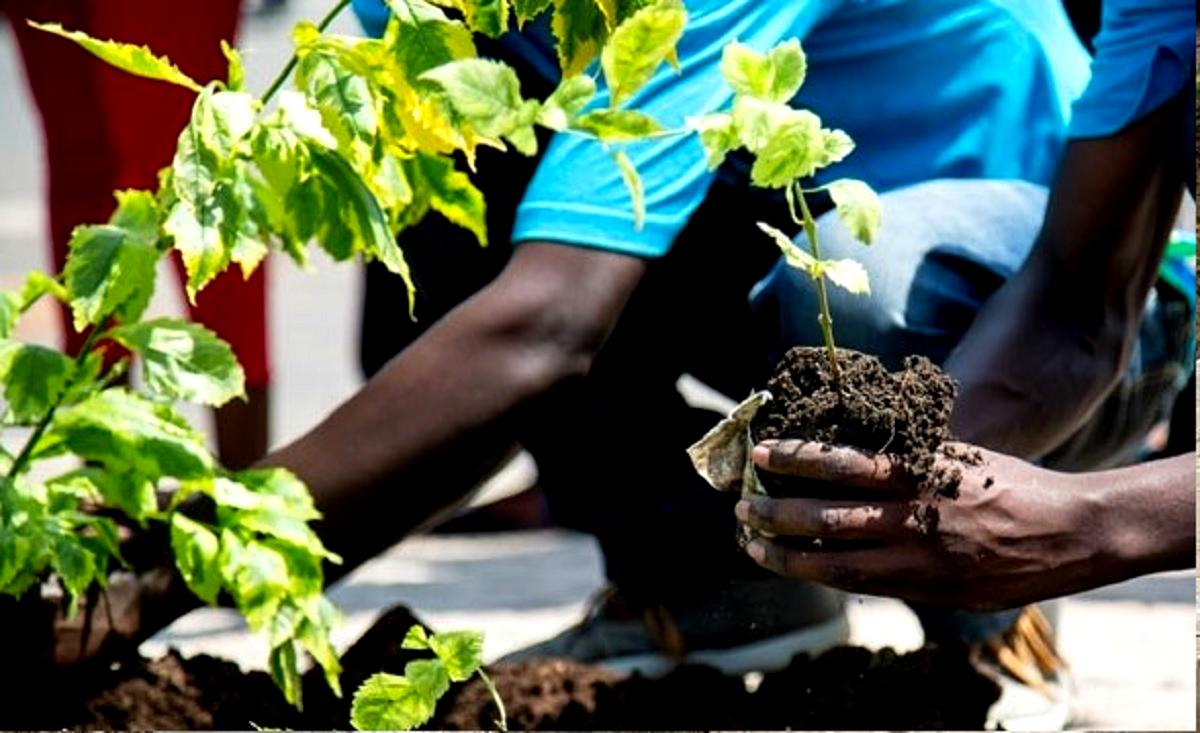
Scientists have already concluded that tree planting and vegetation are the two most effective and quick measures to ending and halting the looming catastrophe (desert encroachment).

Tackling this ecosystemic malaise lies with the governments (state actors), private sector, individuals and communal efforts to arrest the menace.

On the part of the government, I think urgent action is required for state legislation compelling any person who fells a tree to plant two in its place and coming up with stringent disciplinary measures to punish a defaulter.

The “Tree Planting Approach” is of great significance to Nigeria, whose northern borders are directly on the path of their ecological holocaust.

The country has been losing more than a kilometre a year to this scourge for several decades, per Jibunoh’s finding.

Green vegetation seen ten, twenty or thirty years back has vanished. Rivers, Lakes and other water courses are being lost. The most tragic is the shrinking of lake Chad which now hosts less than half of its volume of water a few decades ago.

Of the $42 billion lost to desertification yearly, Africa accounts for two-thirds of the losses incurred annually, as per the statistics released by the UN.

Northern Nigeria should develop a regional approach towards preventing the region from the shackles of climatic disasters. The effects of this problem (desert encroachment) are not philosophical, but we literally feel its adverse impacts on our lives.

Most importantly, at the level of individuals like me, awareness creation is the cornerstone of our responsibility, while the private sector and Non-Governmental Organizations can help in no small measure, particularly in the areas of partnership and bridging gaps between the community and the state actors in the ongoing fight against the dreaded threat to mankind.

On a macro scale, the Africa Union should also strive to devise an African response to the time bomb. If Israel could do wonders and reduce the threat to its bare minimum, we can follow suit because wherever there is the will, there is always a way. Of course, all we need is the will across the board.

The working of Nigerian federalism

By Abubakar Muhammad Tukur

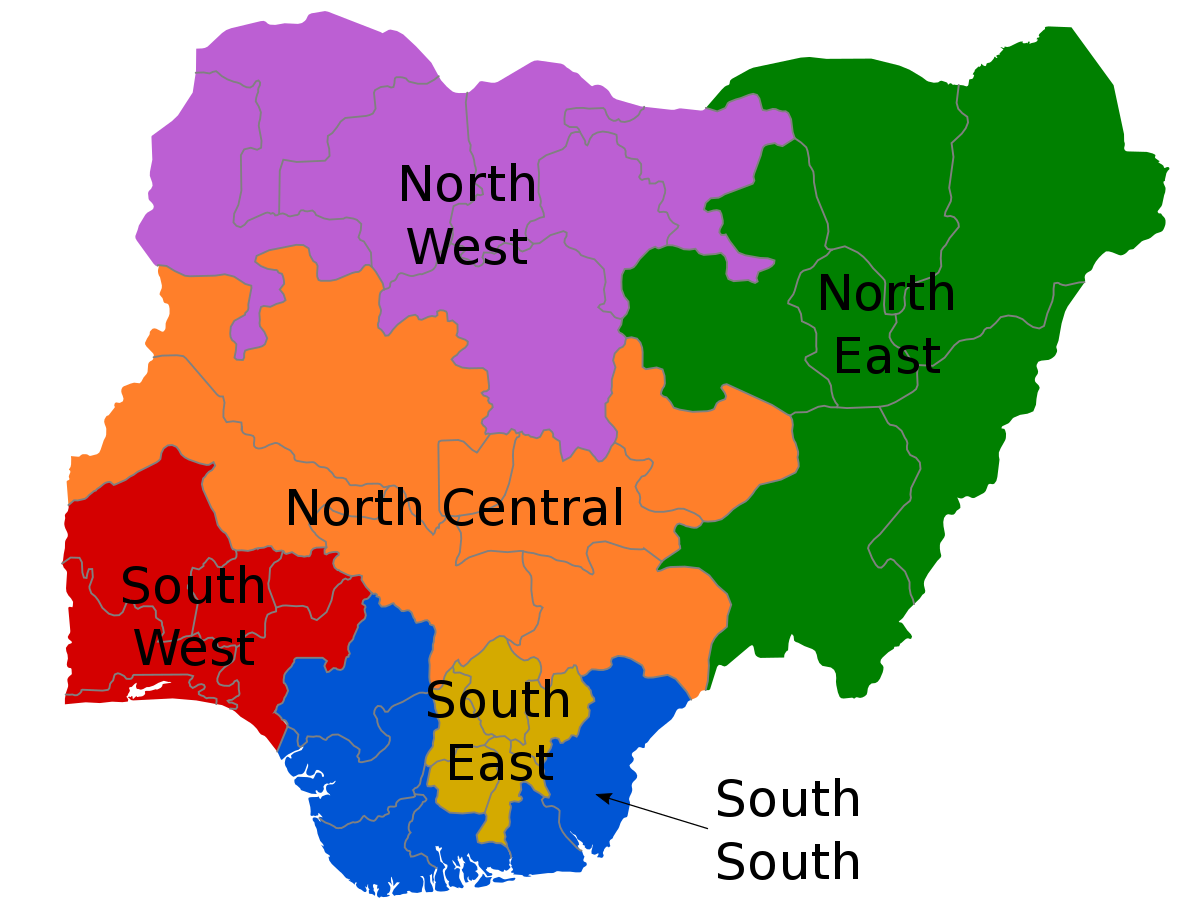
In Nigeria, true federalism means different things to different people. The newfound phrase could be better understood using a geo-political lens. Let us begin with the southwest, which the Yoruba dominates.

The agitation for true federalism started in the southwest immediately after the annulment of the 1993 presidential election, believed to have been won by a Yoruba man. The Yoruba elite argued that the election was annulled simply because their northern counterparts were unwilling to concede political power to the south. Hence, their vigorous campaign for a ‘power shift’ to the south. By power shift, they meant an end to the northern elites’ stranglehold on political power and, by extension, economic control.

However, with a Yoruba man, Olusegun Obasanjo, emerging as the president in 1999, the clamour for a power shift became moribund and was replaced with that of ‘true federalism’. By true federalism, the Yoruba elite means a federal system with a weak centre, a system in which the constituent units are independent of the centre, especially in the fiscal sphere.

The cry of marginalisation has been loud in the southeast, home to the Igbo ethnic group. The Igbo’s position regarding Nigeria’s federal system is that the system is characterised by lopsidedness, particularly in allocating national resources.

Another ground of Igbo agitation for true federalism is their perception of non-integration into mainstream politics since the end of the civil war in 1970, citing a lack of federal presence in the region. This sense of lack of belonging informs the views of some pro-self-determination groups like the Movement for the Actualisation of the Sovereign State of Biafra (MASSOB) and Indigenous People of Biafra (IPOB) that the Igbo people are no longer interested in being part of Nigeria and should be allowed to secede and form an independent state of Biafra.

It is, however, doubtful if the campaign for the resurgence of Biafra is popular among the elite of the southeast whose political and business interests cut across the country. By true federalism, therefore, the Igbos of the southeast mean a federal practice that accommodates every ethnic group in the multinational federation.

Similarly, a sense of political and economic marginalisation forms the basis upon which the minorities in the Niger Delta (or the south-south geo-political zone), where the bulk of Nigeria’s oil is located, persistently demand their own exclusive political space using the euphemism of ‘resource control’ and true federalism.

In the Nigerian context, the term resource control means the right of a federating unit to have absolute control over the mineral resources found within its jurisdiction and contribute to the central government to fund federal responsibilities.

The perceived injustice in resource distribution is the main driving force for the struggle for resource control. The oil-producing states have repeatedly argued that Nigeria’s fiscal federalism, which encourages lopsided distributive politics, has been unfair to them. For the people of the Niger Delta, therefore, resource control is a solution to marginalisation. Thus, for the people of this region, true federalism means a federal practice whereby the federating units are allowed to own and manage their resources as they desire.

Seemingly, the northern elite wants the status quo to remain based on the belief that the present system favours its interest in some quarters. These include the federal character principle, majority representation at the federal level and quota system.

We have been able to demonstrate in this article that central to the agitations for true federalism in Nigeria is the struggle for access to national resources. Oil rents and their distribution have shaped the operation of Nigeria’s federal system and have also contributed largely to the failure of federalism in Nigeria. Nigeria’s history of revenue distribution is about each ethnic group or geo-political region seeking to maximise its share of national resources. One reason for the acrimonious revenue allocation system is that Nigeria’s component units lack viable sources of revenue of their own.

Also, the economic disparity that has given rise to unequal development among them is another source of contention. Therefore, any future political reform must ensure the accommodation of the country’s ethnic diversity because this is one of the many ways national unity could be achieved.

As a way out of the over-centralisation of the system, the country’s fiscal federalism should emphasise revenue generation rather than revenue distribution, as this would ensure the fiscal viability of the states. Any future reform should be tailored towards the states generating their own revenue, and those not endowed with resources should devise strategies to generate revenue from other sources. Internally-generated revenue should only complement a state’s share of federally collected revenue. Moreover, with the decentralisation of economic resources, the states would be in relative control of their resources and be less dependent on the centre.

A weakening of the federal centre may not be a bad idea, but Nigeria needs a federal system that would ensure the relative supremacy of the central government vis-à-vis the state governments. The size of the federation, as well as its ethnic diversity and economic disparity, requires a relatively strong federal government that would be able to regulate the competition for national resources.

It may be concluded at this juncture that Nigerian federalism is defective, and reforms are inescapable. The unending quest for true federalism, political restructuring, and self-determination within the context of the ethnically heterogeneous Nigerian federation will disappear until the political leaders reform the institutions and structures of the federal system to give a semblance of genuine federalism.

Abubakar Muhammad Tukur, LLB (in view), can be contacted via abubakartukur00396@gmail.com.

I don’t belong to any political party for now—Dogara

By Muhammadu Sabiu 

Yakubu Dogara, a former House of Representatives speaker and representative for the Dass/Tafawa Balewa/Bogoro Federal Constituency, has declared that he is not presently a member of any political party.

In addition, he stated that he would only support individuals running for elective offices in the general elections of 2023, regardless of their political affiliation.

Dogara stated this on Wednesday while participating in the Politics Today programme on Channels Television.

Recall that Dogara left the APC for the PDP after vehemently criticising the latter’s Muslim-Muslim ticket and announcing his support for Atiku Abubakar, the PDP’s presidential candidate.

He was quoted as saying, “I am supporting candidates; I am not doing any political party for now, I am supporting candidates.

“Everybody knows that I backed Atiku Abubakar for Presidency for reasons I told the whole world but in Bauchi State before primaries were concluded, I had supported the aspiration of Air Marshal Sadique Abubakar who is the current APC governorship candidate and I have my candidates for House of Assembly in my constituency.

“I have Senatorial and House of Representatives candidates that I helped midwife into those positions, and I can’t abandon them for political stability.”

Senator Hanga: A beacon of hope for Kano Central

By Mubarak Umar

With the Supreme Court judgment affirming Senator Rufai Sani Hanga of the New Nigeria Peoples Party (NNPP) as the Senator-Elect, Kano Central Senatorial District, the people of Kano Central have reason to rejoice.

Kano Central is genuinely abuzz with excitement following the judgment. Senator Hanga challenged the Independent National Electoral Commission’s (INEC) declaration of Malam Ibrahim Shekarau as the winner of the February 25, 2023, senatorial election in Kano Central.

This victory of Senator Hanga is a significant boost for the NNPP. It also demonstrates the importance of pursuing justice through the appropriate legal channels rather than resorting to violence or other unlawful means. This is a win for democracy and the rule of law, a testament to his resilience and determination to fight for his right.

I am delighted that Senator Hanga has been elected to represent Kano Central at the National Assembly. With his experience and dedication to public service, I believe he will be an effective advocate for his constituents and a valuable asset to the Nigerian government.

A graduate of Accountancy, one-time member of the House of Representatives (1992-1993), and senator who represented Kano Central from 2003 to 2007, Hanga chaired several committees. They include Chairman Senate Committee on Drugs, Narcotics and Financial Crimes; Chairman Senate Sub-Committee on Housing and Urban Development; Chairman Sub-Committee on Finance; Vice Chairman, Senate Committee on Tourism and Culture; and Vice Chairman, Senate Committee on Special Duties.

These positions contributed to Senator Hanga’s deep understanding of Nigeria’s political and economic landscape. In addition, he has shown himself to be a skilled negotiator and collaborator, able to work effectively with others to achieve common goals. These qualities will serve him well as he navigates the complex issues facing the Kano people, particularly his constituents.

Senator Hanga has demonstrated a solid commitment to developing his community and the nation. His focus on education, healthcare, and infrastructure has been commendable. I am confident that he will continue to work tirelessly to address these and other critical challenges facing his constituents.

He is a politician with an impressive track record of public service, making him a valuable asset to any government. With years of experience working at various levels of government, Senator Hanga has developed a deep understanding of the political process, the needs of his constituents, and the challenges facing the country. His wealth of experience and expertise will undoubtedly prove invaluable in driving positive change and development initiatives in Kano Central.

Kano Central Senatorial District, located in northern Nigeria with fifteen local government areas, is known for its political and economic importance. It is the metropolitan commercial city of Kano, one of the largest cities in Nigeria.

One of the major reasons Kano Central needs good representation at Nigeria’s National Assembly is to ensure that the interests and needs of its people are adequately represented and addressed at the national level. This is important because the National Assembly is responsible for making laws that affect the entire country. It is also crucial that the laws made are fair and just for all Nigerians, including those in Kano Central. Now, the voices of Kano Central people will be heard, and their needs will be addressed in the national discourse.

Senator Hanga’s representation at the National Assembly should ensure that Kano Central gets its fair share of the national resources. This includes funds for infrastructure development, education, healthcare, and other social amenities. Moreover, with his effective representation, the district will not be left behind in terms of economic development, as policies that promote economic growth and development are made at the national level.

Furthermore, Kano Central is facing several challenges that require urgent attention from the National Assembly. These challenges include insecurity, unemployment, poverty, and a lack of access to clean water and electricity. Effective representation at the National Assembly can help to address these challenges and improve the standard of living of the people of Kano Central.

The importance of good representation at Nigeria’s National Assembly cannot be overemphasized. The National Assembly is the highest legislative body in Nigeria, responsible for making laws that govern the country. Therefore, good representation is crucial for developing any district or constituency.

Kano Central is in dire need of infrastructure development. The district is home to several markets, industries, and transportation hubs, making it a hub of economic activity in the state. However, the lack of good roads, electricity and other basic amenities hinders economic growth. A good representation of Senator Hanga at the National Assembly should ensure that the district receives adequate funding for infrastructure development.

Kano Central has several tertiary institutions, including Bayero University, Kano State Polytechnic, and Yusuf Maitama Sule University. However, the education sector in the district needs significant improvement. His representation at the National Assembly should ensure that these institutions receive adequate funding to improve the quality of education and provide better facilities for students.

Kano Central is also in dire need of better healthcare facilities. The district has several hospitals and health centres, but most are understaffed and lack adequate medical equipment. Senator Hanga should ensure that the district receives proper funding for healthcare facilities and training and medical personnel recruitment.

Kano Central has a high rate of unemployment, especially among the youth. Senator Hanga now has the opportunity to use all means of legislation that can attract foreign investors to the state and promote entrepreneurship, leading to job creation and economic growth.

Kano Central has experienced several security challenges recently, especially phone snatching, political thuggery, and burglary. Senator Hanga should ensure the district receives adequate security funding to combat these challenges and maintain peace.

I am excited to see what Senator Hanga will accomplish during his time in office. With his dedication to public service, commitment to his constituents, and extensive knowledge of the Nigerian political landscape, I am confident that he will be a valuable and effective representative for Kano Central. I wish him all the best in his new role, and I look forward to seeing his positive impact on the people of Kano and Nigeria.

Mubarak Umar can be contacted via mubarakumar96@yahoo.com.

Monday Market Inferno: Measures to prevent a recurrence

By Abubakar Shettima

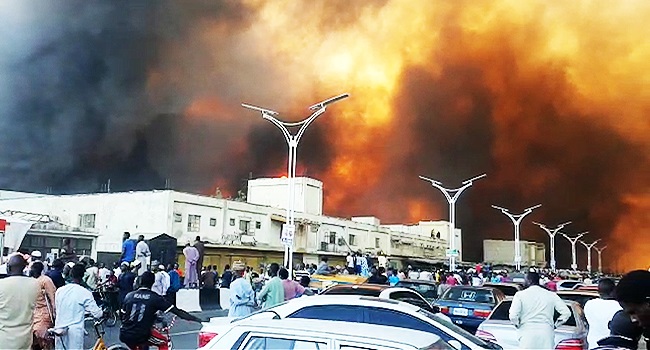
Maiduguri Monday Market is the main market situated in the heart of Maiduguri, Borno State. It was established in 1979 by the then administration of Mohammed Goni of blessed memory.

Since then, it has accommodated thousands of traders and several patronisers from Niger, Chad and Cameroon, among other countries. 

Within its existence, the market had recorded a series of major and minor fire outbreaks, resulting in the loss of millions of naira.

Notably, the state is steadily recuperating from its economic hardship orchestrated by insurgents–for a decade-plus-long. Then comes the recent fire outbreak that engulfed the entire market. 

While sympathising with all the affected businessmen, the Borno State government and the management of the market, it’s pertinent to devise some stringent measures, if carefully considered, will prevent future occurrences.

THEY ARE AS FOLLOWS:

1. It is exhilarating to learn that the market has an existing plan. That alone simplifies the equation we ought to deploy in tackling future disasters. As a matter of urgency, the management should adhere strictly to the original market plan. Ensure no one trades outside the purview of the plan.

2. Construction of a Firefighters Station within the market. This helps significantly and ensures timely response in order to control and curtail the widespread destruction whenever an inferno occurs. Although we are not praying for that to happen.

3. Redesign and modernise the market. Many of the traders are habitually attached to the market in question. On this basis, the government should construct—if need be— a two-storey building. Allocate the ground and first floors for business, while the second floor serves as a store. This will accommodate a large number of tradesmen.

4. Provision of Fire Hydrate in strategic locations within the market. This has been the practice in marketplaces, residential areas, and corporate organisations.

5. All petty traders occupying pathways and tarred roads within the market—hitherto designed to ease vehicular movement—should be allocated shops in the newly built market along Bama road, or they should be convinced to relocate to Bolori market, Abba Ganaram market, Muna or Kano park. Thus, It depopulates the market and brings about easy access. 

6. To achieve all these, a competent supervisory team must be set up to supervise and punish accordingly if one is found trading at a restricted point. The team will also determine the effectiveness and efficiency of policy and laws governing the operation within the market and its environs.

Abubakar Shettima can be contacted via abubakarshettima57@gmail.com.