Month: March 2023

Behind every negative human tendency is an enabler

By Dr Raji Bello

Last Tuesday, I listened to a panel on AIT’s morning programme discussing the increasing weaponization of ethnic and religious identity in Nigeria, particularly during the current election cycle. The discussants were particularly alarmed by the developments surrounding the governorship election in Lagos state, which has witnessed threats, intimidation and violence against voters of a particular ethnic group. The politicisation of ethnic and religious identity in this election cycle is, of course, not limited to Lagos.

Religious identity was a major issue for the APC presidential ticket and some governorship tickets like that of Kaduna state. Religion was a major issue in the Taraba governorship contest, and the issue of indigene vs settler reared its head during the Kano governorship election. There is even a Facebook group which is committed to getting candidates with pure Hausa blood elected into the governorship posts in the Northwest states. Nigeria may be on a slippery slope towards eventual implosion. 

What I have noticed about the AIT discussion is the same thing that I have observed about other similar discussions – they are limited to expressions of sadness followed by appeals to Nigerians to change their behaviour. There is very little discussion on why Nigerians do what they do and if there are any enablers for those tendencies. In my personal reflections, I have tried to answer these questions.

Most negative human tendencies have things which enable them, and rooting out the enablers is an important part of the measures for suppressing these tendencies. Anyone who is familiar with Islamic theology, for example, knows that there is little tolerance for things which are deemed to be enablers of vices. The prohibition of the consumption of alcohol is an example; alcohol intoxication is regarded as an enabler for many vices, which has necessitated a full prohibition of it.

Likewise, the encounter, in isolation, of two eligible and unmarried members of the opposite sex is regarded as an enabler for sexual vices. In the secular world as well, drinking and driving are prohibited in many countries because it is an enabler of fatal road accidents. Relationships between academic instructors and students are prohibited or restricted in many American institutions because they could be enablers for abusive relationships and conflicts of interest.

If Nigerians have come to the conclusion that toxic identity politics is harmful to the corporate well-being of the country, they must find the enablers for such politics and uproot them. Issuing passionate appeals is bound to be ineffective because human beings do not always respond to reason or appeals to stop a negative behaviour, especially when there are things which incentivise such behaviour. In my view, there are two enablers for the weaponization of identity in Nigeria:

1. There is no punishment for it. There are either no laws against toxic identity politics and incitement against ethnic and religious groups in Nigeria or they are never enforced. The result is that offenders almost always get away with their actions. This lack of accountability is a powerful enabler for similar behaviour by the same individuals or others.

2. There is a reward for it under our federal system. Our current constitution provides for semi-autonomous federating units (states) which are loosely coterminous with ethnic and religious identities – for example, Imo State is Igbo and Christian, Katsina is Muslim and Hausa-Fulani, Niger is Nupe, Gbagyi and Hausa, Ogun is Yoruba etc. The federal system has also granted these federating units the power to elect their own leaders (governors and LGA chairmen), unlike in unitary states where these leaders are often appointed by the central government.

Since elections are competitive and every state is identified with certain ethnic and religious identities, the possession of these identities by any individual becomes an advantage towards winning elections. This is why Nigerians have learnt to hold on to these identities and even to flaunt them. Being a Tiv is a huge advantage in Benue state, just like being a Kanuri is in Borno state. It’s not hard to imagine that when electoral competition becomes very stiff, these identities will be weaponised. There is no way to stop Nigerians from engaging in toxic identity politics as long as these two enablers are in place.

Our country was founded on the basis that it has diverse and irreconcilable ethnic and religious communities. Our founding fathers wanted it that way, and they chose a federal system which they thought was best suited to manage our diversity (although most of the major federal states in the world are not so diverse internally). While countries like Ghana took off with the mantra of unity in diversity and did everything to build a united nation, our founding fathers did not even pretend that the country was united. Each of them had regional priorities higher than Nigeria’s unity.

We started with three federating units and have now grown to thirty-six plus the FCT, and the more we created states and LGAs, the more identity fault lines we created. The country is now balkanised into 37 identity enclaves (states), and 774 LGAs and each citizen is marooned inside their own enclave and is entitled to few formal privileges in others – even neighbouring ones.

In the First Republic, this divisive effect of federalism wasn’t up to what we have now because the federating units were much bigger, and they functioned as unitary states internally. The former Northern Region, for example, had thirteen or so provinces whose administrators were appointed rather than elected, and a northerner from one province could be posted to work in any of the other provinces. The provincial boundaries did not keep northerners away from each other, and as a result, the people of the region saw themselves as one because they were indeed one in practice. 

The Northern Region alone has now evolved into 19 federal states and hundreds of LGAs, each with a rigid boundary which separates it physically and functionally from other federating units. This has made intercommunal relations to be worse than they were in the old Northern Region. The late former SGF Alhaji Gidado Idris, who was from Zaria, was once a divisional officer in Benue, Adamawa and Sardauna Provinces, but his grandchildren cannot work for the Benue State Government in today’s Nigeria. They may even struggle to gain admission into state-owned schools in Benue State.

Mr Selcan Miner, a former secretary to the government of Benue-Plateau State, was once an administrative officer in Sokoto Province, and he still has fond memories of his stay there, particularly his close relationship with Sultan Abubakar III. But in the present day, the government of Sokoto State may not grant privileges to Mr Miner’s grandchildren because they are not “indigenes” of the state.

The late chief of the Mbula people in Adamawa state Joram Fwa, who was a US-trained educationist, was the pioneer principal of Ramat Technical College in Maiduguri under the then Northeastern State. He was entrusted with the assignment of establishing the college and was made its pioneer head. The college has since grown to become Ramat Polytechnic and belongs to the Borno State Government. I will not be surprised if, in the present day, the application of Mr Fwa’s grandchildren for entry into the polytechnic is turned down on the grounds that they are not from Borno state. I have used the examples of these three Northern elders to illustrate what we have done to ourselves over the years through our so-called federal system.

Not too long ago in the 1990s, the governor of Lagos state was a military officer named Buba Marwa, a native of Adamawa State. He was appointed under the military government’s unitary style, and he was well-received in the state because the people knew that that was the system in operation then. At a different time before that, a native of Lagos State, Bode George, was appointed the governor of Ondo State. From all indications, Marwa had performed well in Lagos in terms of infrastructure and crime fighting.

If we do a cost-benefit analysis of the process of appointing Marwa as governor and that of the re-election of Governor Sanwo-Olu in 2023, we would see that the former didn’t cost any significant amount of money and didn’t involve any fracture in relations between major ethnic communities in Lagos while the latter had cost the federal government a lot of money in election expenses and has led to flaring of inter-ethnic animosity, intimidation and violence. In the end, both governors are capable of doing a lot of good for Lagos, the difference in the nature of their appointment notwithstanding. This is why we need to ask ourselves if we really need to have elected governors and LGA chairmen as provided in our current federal constitution or we could simply have them appointed and monitored by the central government.

In the late 1960s and 70s, the governor of Kano State was Audu Bako, a police commissioner and native of present-day Kebbi State. He was appointed by the government of General Yakubu Gowon, and from all historical indications, Kano State has had it so good under him. His appointment didn’t cause any inter-communal upheaval in Kano, and there was no violence. Compare that to the re-election of Governor Abdullahi Umar Ganduje in 2019 or the election of Abba Kabir Yusuf in 2023, which were both marked by communal tension and violence. Why should we keep using this costly option of election and risk so much when Kano can have good appointed governors just like Audu Bako and Sani Bello? Only a small number of democracies around the world have elected sub-national chief executives as we have, and countries which don’t have them are not deemed to be less democratic than us.

Sometimes Nigerians view unitary systems negatively because they equate them with military governments, but there is nothing that stops us from having a unitary democracy like many countries in the world. The appointed governors and LGA chairmen under this system are going to be civilians, maybe even members of the ruling party at the centre, just like in the system in Ghana, whose 16 regions are all governed by appointed regional ministers who, at the same time, are elected members of the national parliament.

The other fear that Nigerians have about a unitary president becoming too powerful is also misplaced. Ghana’s presidents are not regarded as dictators, and opposition presidential candidates have even won elections there. In any case, parliament is always there as a check on the powers of the president. Unitary systems are cheap, can minimise toxic identity politics, guarantee harmony in the pursuit of developmental priorities and provide better coordination in fighting insecurity. It’s a better system to have than our current federal system, with its unaccountable and politically autonomous governors whose elections are now driving our ethnic and religious communities further apart and threatening the stability of our country.

Whoever brought this American-style federal constitution and gave it to our African tribal groups to implement has not served us well. It’s time we found the courage to abandon the farce. What Nigeria requires is a unitary democratic system with an element of rotational leadership at the centre to ensure its various groups of inclusion.

Dr Raji Bello wrote from Yola, Adamawa State.
On Naira note redesign: tale of a University student

By Abdulbasit Toriola

I am Abdulbasit – an undergraduate student at the University of Lagos. I first heard about the CBN’s plan to redesign Naira from a hostel mate while returning from the mosque one evening. Soon, the news went all over. The boys of Biobaku Hall, my hostel, quickly picked up on it. It became a good subject for late-night arguments in a few rooms (after Messi-Ronaldo debates). I suppose the arguing parties, like me, were wondering how a change in currency design would help augment Naira’s depleting value against the US’ Dollar and other strong currencies. The Central Bank’s motive, however, was different. According to a CBN handbook I read, the redesigned notes were to help check counterfeiting, straighten the economy, reduce the expenditure on cash management, promote financial inclusion, and enhance the CBN’s visibility of money supply. These – are good benefits, anyone would say.

It was not until January 31st that we started bearing the brunt of a new cash policy. Prior to this, immediately after its launch, we had seen from a viral BBC post what the new notes were like. Some of us said the notes were a bleached version of the old. Others said the CBN only dyed the monies, our monies. Our currency had become more of a joke. Apparently, things were unfolding in the background. CBN had given directives that all old banknotes be deposited on or before January 31, while encouraging Nigerians to explore other payment channels. The CBN, literally, put us on a thin, experimental line.

Soon, banks got filled, stacked up like they were market squares. In order to avoid hiccups, they kept their customers queued outside their premises in very long and rowdy queues that almost never moved. They kept their gates shut, too, till noon or afternoon; especially after some branches reported cases of violent protests. It was hard and perplexing. But as young students, we quickly adapted to the virtual alternatives CBN had left us with.

Still, it was hard. Perplexing. But we knew – judging from what we see or hear – that the pain we feel paled in comparison to that felt by those living beyond the walls of a campus. Sometimes, I lay still on my bed imagining what it would be like for market women, for school children, for drivers, for commuters. I remember, again, our hostel coordinator saying this was Buhari’s final ingenious gift to Nigeria and Nigerians. He says the President’s plan, like in 1984, is to checkmate politicians who have stockpiled Nairas ahead of the 2023 General Elections. I nod.

For us, hostel occupants, the deal breaker was an announcement – coming from the VC – ordering everyone to vacate school hostels for the election break. It was the last straw that broke the camel’s back. In the past few weeks, we witnessed the FG shift the deadline to February 8; various NGOs beseeching them for an even longer extension. We also saw the case brought before the Supreme Court. We saw the Court gives an order; we saw them adjourn the court case.

On February 15, the Supreme Court validated their previous order – that the old Naira notes remain acceptable as legal tender. The following day, we woke up to a nationwide broadcast, by the President, stating that only old N200 notes will remain valid till a due date. It was hard. Some of us left the hostel as early as 6:00am to join queues in front of the Nigerian banks. We had to pay commercial drivers in cash or nothing. Many of us stopped attending lectures, and sat/squat in front of bank ATMs instead. Cash was scarcer than ever. Outside campus, POS outlets had their places shut. Those that opened, literally, sold us the new Naira – they were charging exorbitantly. We looked everywhere for a way. And when we finally found one, we packed our bags, hoping silently that home would be good to us.

Teens, social media and mental health

By Muhsin Ibrahim

Social media has a double-edged function. It can uplift you or do the exact opposite. It largely depends on the people and pages you interact with. Worried about their teens’ mental health, Utah became the first US state to regulate teen social media access this week.

According to a BBC report, “under the measures enacted on Thursday, a parent or guardian’s explicit consent will be needed before children can create accounts on apps such [as] Instagram, Facebook and TikTok.”

People of all ages can have their mental health wrecked on social media if they aren’t cautious. Some of us crave attention or other’s validation. Thus, people do crazy things to get more “likes” or ensure what they do gets their friends’ applause. That is one thing some of your social media ‘friends’ will never grant you because they are not your friends in the true sense of the word. So, the earlier you understand this, the better.

Of course, you should not be carefree. Each culture has its codes, and so on. So, consider these etiquettes but worry not about people’s attention or endorsement. Social media friendship is primarily fake. Folks, especially teens, can’t understand this. Thus, trolling push them to lose self-esteem, hate themselves, and some take their lives!

I salute the government of Utah. I am sure more states in the US and elsewhere will do the same. However, as ours (in Nigeria) will likely not do the same anytime soon, parents and guardians should do more. As it’s very challenging to deny your kids access to social media, monitor whom they interact with and the pages they visit.

Muhsin Ibrahim lives and works in Cologne, Germany. He can be contacted via muhsin2008@gmail.com.

Thomas Tuchel set to replace sacked Bayern Munich Manager

By Muhammadu Sabiu 

Thomas Tuchel, a former manager of Chelsea and PSG, is about to be named the new Bayern Munich head coach.

Football transfer guru Fabrizio Romano made this known on Thursday night.

He reports that a complete deal is in place and that Tuchel has already accepted the position.

Romano wrote in a tweet: “Exclusive news confirmed: Thomas Tuchel becomes new FC Bayern head coach, full agreement in place. He has already accepted the job.

“Contract agreed, documents are being prepared tonight.”

Is the University of Maiduguri witnessing one of its worst administrations?

By Salim Toro

A mistake repeated more than once is not a mistake anymore. It is a decision. – Paulo Coelho

I am not sure if this write-up will reach the appropriate authorities. But, anyway, if it reaches them, they should please consider and solve all the problems facing students of this great learning environment.

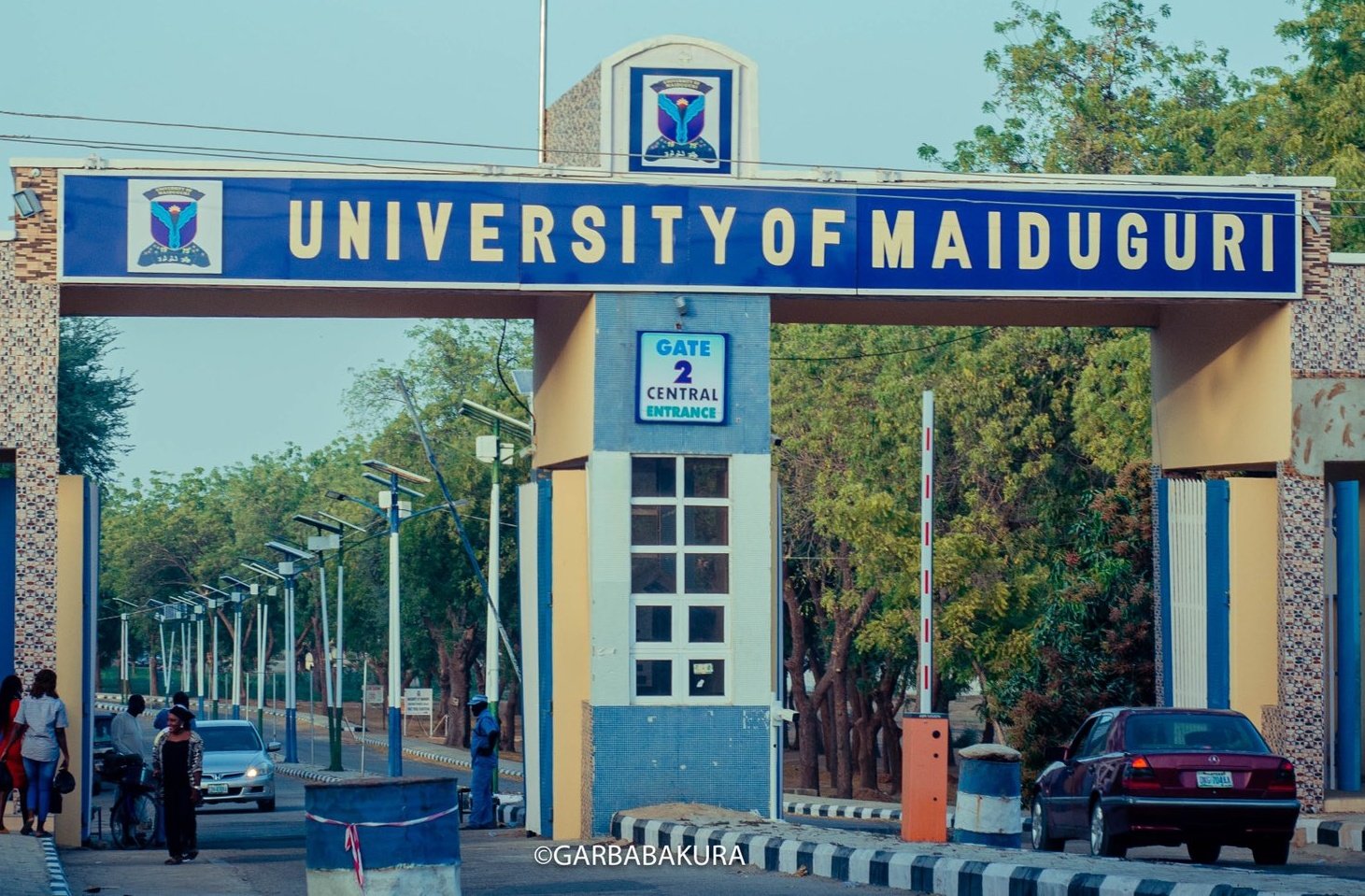
This question keeps coming to my mind. I can say that most of the University of Maiduguri students recall that the school commenced its 2022/2023 academic session on 3rd January 2023 for its new students and 16th January 2023 for returning students. However, I can see that no one is talking about it, although it’s already getting to two months, and no proper academic activities have commenced yet. 

Firstly, I’m not sure if this happens at a few universities. Still, it’s not proper to commence an academic session without placing your students’ results/academic statuses. But the case is different at the University of Maiduguri, and no effort is put into changing it. This same mistake happened last year, resulting in massive failure the following semester for those carrying over previous level courses, especially first-semester courses, because tests had already been conducted before the placement of the academic status. 

It’s tragic to know that the University of Maiduguri, a university created in 1985, doesn’t have any active student portal for registration, hostel registration, etc. They always come up with a new portal at the beginning of each session, with many difficulties for students when registering. Many students could not apply for hostel last year due to such challenges, and the management is still not ready to sort out this problem. 

Moreover, the university management doesn’t listen to students’ pleas on issues such as electricity, hostel maintenance and water supply. Sadly, students stayed in total blackout for weeks during the last examination session, which might result in massive failure in the semester examinations. Unfortunately, neither the school management nor the Student Union Government (SUG) takes serious action to solve the problem.

It’s sad to say that when the student representative met with the Vice Chancellor of the university, he boldly told them that the students should focus on their primary assignment and should not bother about anything other than that, which is impertinent. 

Although the SUG is supposed to be a channel between us and the management and a representative when any matter arises, I think they were appointed without minding to know the exact duty of the student union, and at last, they failed woefully. Aliyu Fannami’s administration is the worst SUG administration the university has ever had. 

Lastly, I’m calling on the JAGABAN of this administration to please put things into order. There’s still time to leave good legacies that will write your name with a golden pen in the university’s history, sir, because going down like this will only write your name as one of the worst JAGABAN the university ever had. 

Best wishes, Sir!

Salim Toro writes from Toro and is a 400l student from the Faculty of Agriculture, University of Maiduguri. He can be contacted via salimabdulhamid0909@gmail.com.

2023 Upper Chamber: Why Barau Jibrin deserves the Senate Presidency

By Engr. Auwal Rabiu Dansharif, PhD

The presidential and national assembly elections have come and gone, but the intense political scheming for leadership roles in the National Assembly is still ongoing. 

While it is very logical and democratic for every geopolitical zone in the country to express interest in any leadership role of their choice, it is important to note that some zones are more qualified and befitting to be chosen based on their incredible performance during the February 25, 2023, presidential and national assembly elections. 

In this regard, the Northwest zone of the country comprising Kano, Kaduna, Katsina, Kebbi, Zamfara, Sokoto, and Jigawa states should be given topmost priority and consideration for the Senate Presidency. 

A critical study of the presidential election results has shown that these seven (7) states alone gave the All Progressives Congress (APC) and its candidate Asiwaju Bola Ahmed Tinubu, a total of 2652824 votes against Atiku Abubakar, who polled a total of 2197824 votes in the region.

The votes of the Northwest have exceeded the 2542797 given to the President-Elect by the South-West, his home region, and represent 30 per cent of the overall votes won by the incoming president. This is a clear demonstration of the confidence and trusts the people of the Northwest have towards President-Elect Tinubu. In Kano, the presidential election results show that the APC scored the second-highest number of votes, with 517341 votes, after the NNPP. 

It is pertinent to note that the APC was able to achieve such success with the good efforts of experienced politicians like Senator Barau Jibrin, who was able to lead the party to success in spite of the formidable opposition in the state. It is only very fair for the Northwest region to be rewarded with the Senate Presidency for its efforts, and no candidate befits such reward more than Senator Barau Jibrin.

Barau Jibrin is the longest-serving senator from the region and has held positions that gave him the experience and network that is required for the seat of the Senate President. These make him the best choice among others to be considered for the position in the 10th National Assembly. 

To support this fact, let us revisit the election results that returned Senator Barau back to the Senate. As the saying goes, charity begins at home. Senator Barau of the All Progressives Congress (APC), who represents Kano North Senatorial District, polled 234,652 votes to defeat his main challenger, Dr Abdullahi Baffa Bichi of the New Nigeria Peoples Party (NNPP), who scored 177,014 votes.

This may appear simple, but it was a really difficult feat for Senator Barau to be able to win re-election in Kano State, where almost all the candidates of the APC lost their elections or re-elections to the opposition in the state.

This was possible for Senator Barau because he has become endeared to his people owing to a patriotic philanthropist who gave generously to society and was always on the front line leading efforts to solve the problems of people both within his political domain and beyond. 

Since he was first elected into the Nigeria Senate in 2015, Senator Barau has initiated and executed almost uncountable interventions and projects in both his constituency and other parts of Kano State, which have directly impacted the lives of the common people positively. 

Some of the projects and programmes he has successfully implemented include the construction of the multi-billion naira Kabuga- Dayi Road, the establishment of Kabo Federal Polytechnic, the construction of access roads in all the 13 local governments of Kano North, construction of five (5) General Hospitals in Kano North, securing employment for a total of 1,459 youths in both state and federal levels as well as empowering thousands of women and youths in different trades and lots more of such. 

Senator Barau, in addition to bringing development to his state and constituency, has also forged excellent relationships with leaders across political divides. He is admired and enormously respected even among formidable opposition figures. 

As the political tsunami in Kano swept away candidates of the ruling party, Senator Barau enjoyed support from people in opposition strongholds who saw him as a bridge builder, a unifying figure that has assisted people irrespective of their political, religious and ethnic affiliations.

Even at the National Assembly, the senator, through his political shrewdness and intellect, has appealed to the good senses of his colleagues from across the numerous geopolitical zones of the country. 

Senator Barau’s journey in the national assembly gave him the opportunity to serve Nigerians in various capacities. Some of the portfolios he held include; Chairman Committee appropriation in the lower and upper chamber, member committee on power in the lower chamber, vice chairman and later chairman committee on petroleum resources (downstream), Chairman committee on the tertiary institution (Tetfund),  Member committees on Niger delta, industries, land transportation. 

The invaluable experience he gathered certainly makes him a good consideration for the seat of the Senate presidency. 

In terms of representation, Senator Barau has been an excellent ambassador of Kano state as well as a champion of many bills or motion that seeks to improve the lives of Nigerians from wherever they come. He was among the champions of the PIB bill, being a one-time vice chairman and eventually chairman committee on Petroleum Resources (downstream) of the Senate. He has also been a moderating voice and a mediator who has made a mark as one of the most stabilizing pillars of the upper chamber. 

Perhaps this virtue is one of the reasons that saw him as the best fit for being Chairman Committee on Appropriation both in the lower chamber when he was a member there and now in the Senate. Having to deal with almost all members in both chambers on issues of constituency projects and, at the same time, executives on their proposals is a herculean task that only the best can be able to handle and succeed at the same time. This virtue is also very important in shortening the journey a Bill takes from motion to accent, bringing closer the benefit of the accented bills to the Nigerian populace. 

His portfolio in the National Assembly has given him the requisite experience to act as a bridge between one hand members across party lines and executives on the other hand. The idea of a rubber stamp senate president is hardly practical, being that motions are debated by all members with diverse political views and interests before being passed to the president for accent. This is, however, indicative of high political shrewdness, intellectual management, and reasoning. These qualities make him a good candidate for the seat of senate president, of which Senator Barau is an embodiment.

The running of the Senate is a continuous process from where the previous stops. Hence, it is pertinent that the incoming Senate president be one that has been actively involved in the activities of the Senate. There are Bills that are in motion, others in their last phase of reading, and a lot of others awaiting the accent of the President. Senator Barau being a second term senator already and having been part of the process all through, and having qualities as highlighted above, will be the best man to lead the 1oth senate to see these Bills see the light of day for Nigerians to benefit from. 

The 2023 elections have exposed some weaknesses that the APC has, among which is their loss of grip on Kano. It will be rational to see the APC strategizing to close that gap. It will be a good move for the APC Excos to galvanise support for Senator Barau’s bid for Senate Presidency, being the highest surviving political officer the APC has in the state, in order to match the formidable structure of the NNPP in the state. The might of the office of the Governor occupied by NNPP can only be matched by the might of the Senate president from the state. Senator Barau has a reputation for using his political strength to gain voters’ affinity, as highlighted above.

Based on the foregoing, there is a need for political stakeholders to study this proposal carefully and make the right choice by ensuring Senator Barau Jibrin emerges as the President of the 10th Senate. In doing so, there would be a joining of the political strength of person and region, which will translate to a win-win situation for the APC and Nigerians at large.

Engr. Auwal Rabi’u Dansharif writes from Kano and can be reached via ardansharif@hotmail.com.

German man sued for having too many barbecues

By Abi Carter

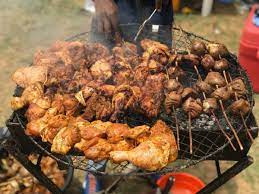
A 75-year-old man from the town of Bad Tölz in Bavaria has successfully sued his neighbour for causing a bit of a stink by lighting his barbecue with unusual irregularity. As RTL reports, the two men live in the same apartment building in the small town, and the one in the upstairs flat began to get frustrated with his neighbour, who apparently took to grilling food on an electric barbecue on his terrace almost every single day. 

The smoke and rising smell became “unbearable” for the upstairs pensioner, who was named by RTL as Heinz J. Together with his wife, he reported his neighbour to the local authorities, and the case ended up in court. 

While the first court threw out the complaint, the plaintiffs appealed and a second district court in Munich – after hearing testimony from around a dozen witnesses about the smell and smoke caused by the grill – eventually sided with the couple. 

The court has ruled that the downstairs neighbour is only allowed to light up his barbecue four times per month and added that he is not allowed to grill two days in a row on the weekend. If he does not comply, he risks being slapped with a 250.000-euro fine. 

Source: iamexpat

An open letter to Governor-elect Abba K. Yusuf “Abban Kanawa”

Dear Sir,

I shall begin by congratulating you for winning the governorship election in Kano state. I am thrilled to write this letter, and I hope it will reach you in a sound manner.

Sir, the awaiting day has arrived, and your dream and ours have come true. The long and rough journey we have been travelling on has now come to an end. A new journey has begun.

Sir, you have witnessed the outstanding hard work and roles played by scholars, educationists and students in bringing you to this stage. We must salute the investment in education by the father, founder and leader of “Kwankwasiyya” in the name of Eng. Dr Rabiu Musa Kwankwaso.

Education is the backbone of the development of every society. Therefore, reformation of the lopsided education system in this state is what poor masses have been dreaming of, and it is one of their reasons (if not the major) for casting their votes for you, courageously hoping that you will repair the broken shoulder of the education system in this state.

I hope this letter will serve as a call for the revocation of the defraud-sold public properties: some parts of the land of some primary and secondary schools, tertiary institutions, and some government organisations by the outgoing government around Kano state.

I shall also not be reluctant to mention the sale of GSS Panshekara, WRECA Quarters, land and defunct abattoir along Panshekara road. I am sure each of these lands is more than enough to build a new primary or secondary school or faculty for some of our state tertiary institutions.

Furthermore, civil servants should also not be forgotten or left behind. We hope that the incessant tears running in their faces for many years hope will be stopped and wiped by your blessing palms.

Sir, I hope you will act as your name implies, “Abban Kanawa”, which means “father of Kano people”. You will handle and take care of us as your children. May Allah help you and make it easier for you to carry out your duties and bring Kano state forward.

Yours faithfully,

Musa Idris Panshekara.

Jigawa: What’s Next?

By Shu’aibu Rabiu

I’m writing this with my heart sinking out of the brink, confused, and absorbed in the prism of my mind lost in the ocean, wandering not because of the outcome of the election or what may become of the winner or the looser but rather, of the situation Jigawans might find themselves due to the unrest that has been going on due to the current mant

Jigawa has been known to be one of Nigeria’s most peaceful and harmonious states for decades. However, this aged-long history is currently being threatened by what seems to be political tribalism and jingoism (emiratism, to be specific).

Since the inception of Jigawa, it has had three democratically elected governors – Ibrahim Saminu Turaki (Jigawa north-west senatorial district comprising Kazaure, Ringim and Gumel emirates), Sule Lamido (Jigawa south-west senatorial district which consists of Dutse emirate only) and Muhammad Badaru Abubakar (Jigawa north-west senatorial district). Looking at the division above, one may wonder what the Jigawa north-east senatorial district is.

Well, after the completion of the party primaries in the state, Malam Umar Namadi Danmodi from Jigawa north-eastern senatorial district emerged victorious under the flag of the All Progressive Congress (APC), While Mustapha Sule Lamido from Jigawa south-western senatorial district, became the flagbearer of the People’s Democratic Party (PDP). This, however, ignites the fire of what seems to be a battle between the already two conflicting emirates of Dutse and Hadejia, respectively.

For, Hadejia believed or rather thought of Dutse as its major shield or barrier in achieving its goal of producing a governor for the state. Dutse, on the other hand, considers Hadejia a threat to the state, for they believe Hadajiwas are selfish, narcissistic and self-centred, hence the hatred and hostility toward them.

The current enmity, hatred, hate speech and uproar doubled after the just concluded presidential election when both emirates decided to support their own (Hadejia went for APC’s presidential candidate, while Dutse voted for the PDP’s). This, however, became the major cause of the political unrest in the state, which, if care is not taken, will be a driving factor for the division of Jigawa in terms of political instability, peaceful coexistence and even beyond.

My main concern in the article is not who’s right or wrong for choosing to support their own and go against the other. Instead, my problem is what may become of Jigawa and its citizens now that Mustapha/Umar is declared governor-elect for the state.

It is pertinent to, at this juncture, make it categorically clear that the constitution of the federal republic of Nigeria states that whoever wins an election will serve all the citizens irrespective of party, region or emirate affiliation. This means that Malam Umar Namadi will be a governor for all the citizens of Jigawa state, and his leadership will have no relation with the saying “to each, their own”. This is a hard-and-fast rule.

Well, first things first, we must know that there’s life after the election, which is one of the most important things to consider now. Because, often, the election comes and goes, and as far as tradition, it usually comes with things that jeopardise people’s relationships, which often lead to lifelong enmity. This, however, will affect the state in such a way that the winner you fought for will find it challenging to manage the administrative duties delicately because you’re at war. So he must find a way to stop it, which will divert his attention from doing tangible things for the development of the state.

For peace and stability to continue in Jigawa, we must eliminate what happened during the camping and the election in our minds. Let’s embrace each other, forgive and forget, and be our brothers’ keepers. Until we do this, the aged long peace and stability will only be a thing to remember.

I, therefore, appeal to my fellow Jigawa citizens to accept this outcome with open arms. If the outcome turnout against your prepared candidate, please pray it turns out the best. Similarly, don’t let what happened to ruin your relationship with your friends anywhere in the state. Remember, this is all politics!

And to Malam Umar Namadi, I pray that you turn out to be the best that ever happened to Jigawa, may Allah the omnipotent guide you to do the right thing for Jigawa, amin.

Congratulations and best wishes.

Shu’aibu Rabiu wrote via shubrabbkd@gmail.com.

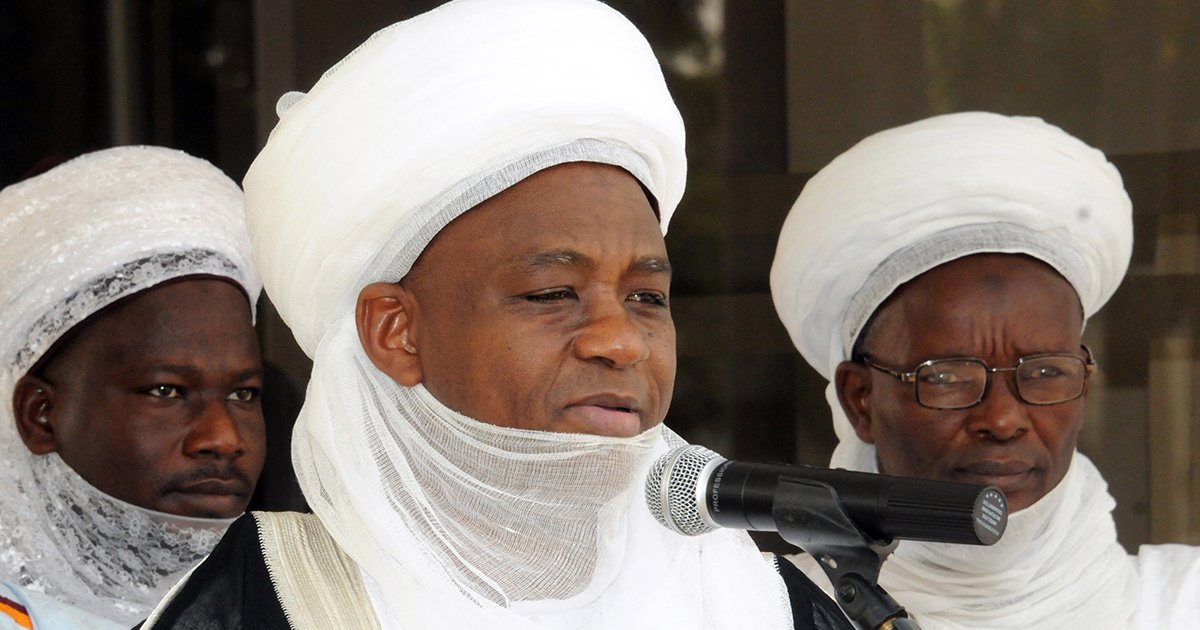
Ramadan starts Thursday, says Sultan

By Muhammadu Sabiu 

The Nigerian Supreme Council of Islamic Affairs has confirmed that the Ramadan crescent has been sighted in different locations in Nigeria.

This announcement was made by the Islamic Council in a statement on its official Facebook page on Wednesday night.

The statement reads, “His Eminence has received positive sighting reports of the Ramadan crescent from various locations nationwide. Thursday, 23rd March, is the first day of Ramadan.”

It added that an official statement would follow afterwards.

The sighting of the crescent marks the beginning of the ninth month of the Islamic calendar, in which Muslims fast for twenty-nine of thirty days before observing Eid al-Fitr.