Month: March 2023

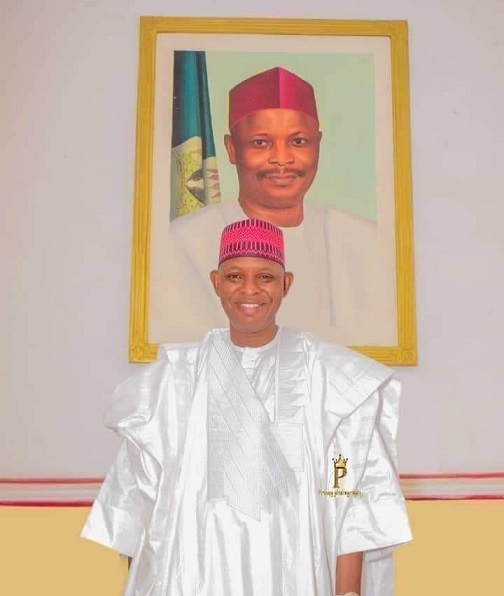
Protest Votes: Abban Kanawa and the sins of the Kano APC Government (I)

By Auwal Umar

One thing that is exciting about democracy is its being internally endowed with an inbuilt system that avails citizens with an automatic power to punish or reward their benefactors or tormentors every four years. Politically, many causative factors bring down elected officials or traditional leaders from their seats or rob away their sceptres.

In a democratic setting, nothing so precarious leads to the downfall, even more, dangerous than powerful political opposition than the collective power of protest votes. Protest votes are votes cast by various aggrieved members among frustrated citizens dissatisfied with the incumbent government and determined to cast their votes to penalise the leaders they perceive as incompetent or self-serving. In the last US election, former president Donald Trump and his fanatics were made to understand the power of protest votes. Here in Nigeria, ex-president Goodluck Ebele Jonathan had his taste in 2015.

With less than a week left for the gubernatorial election, the Kano political thunderstorms have gathered. Kano has various groups of people that have grown dissatisfied and overly tired of the APC government under Dr Abdullahi Umar Ganduje and his deputy, Malam Nasiru Gawuna. These aggrieved groups include students, Adaidaita-Sahu (tricyclists) riders, Kwari and Kofar Wambai markets traders, civil servants, and many others. These people consider voting for the current APC gubernatorial candidate and his deputy as a celebration and incentivisation of their unwanted act that led to the worst rerun election in the history of Kano polity.

That infamous rerun election has become a memory that still haunts us and deprives the Kano people of peace, especially with the daily sight of thugs taking over localities and the government seemingly unflustered. Therefore, the people seem to bear an implacable feeling of revenge towards the APC with their most potent weapon at the moment— PVC. This might be glad tidings for the NNPP and its boss, Dr Rabi’u Musa Kwankwaso, who fields the same gubernatorial candidate, Engr. Abba Kabir Yusuf, alias Abba Gida-Gida.

Abba Gida-Gida won the previous election with an unbeatable lead before it was dramatically declared inconclusive, which eventually changed the course of his victory. The kinds of people who still feel shortchanged by the results of the rerun election have come from diverse social statuses among the good people of Kano.

First, the collective electorate versus the indelible scar of “Inconclusive”: Looking at his wide popularity and acceptance across the teeming population of the state, especially among the youth, nothing was surprising in Abba’s victory in the 2019 gubernatorial election. The electorate toiled and moiled hard all day from dawn to dusk to ensure their favourite candidate emerged victorious. But inadvertently, some unscrupulous thugs led by the current deputy governor, the APC gubernatorial candidate of the ruling party, Malam Nasiru Gawuna and his deputy gubernatorial candidate, Murtala Sule Garo, disrupted the whole scene, which led to the worst rerun in our living memories.

The drama leading to the rerun is an ignominious act that still haunts our psyche and traumatises our brains. That utter embarrassment has planted an undying seed of revenge in the hearts of the Kano people for the upcoming election, irrespective of who is fielded as the APC candidate. The rerun had exposed the deeply insatiable lust for power at all costs. What else can explain the action of someone who hired the services of vampiric thugs that were so thirty of the blood of innocent voters just to ensure the will of the majority was ruthlessly robbed with not an atom of compassion?

Today, such social, psychological and physical casualties of the sham called election are still alive, hale and hearty and fully ready for revenge. People living at Gama ward, in particular, and places affected by the consequences of the terrible rerun need no more explanation of the horrors they saw with their own eyes.

Second, the Kano APC government versus scholars: Kwankwaso’s government had sponsored some brilliant Kano indigenes who went abroad to study different courses for the good of the state and the nation to add more value and human resources for the good of the general public. Some of these students who could not finish their studies during Kwankwaso’s reign needed registration and upkeep allowance to continue their studies during the outgoing Ganduje’s reign. But for the sake of bitter politics, these students were wholly ostracised despite being Kano indigenes who were abroad to study and not for tourism. These people are now ready for the 11th March in the eleventh hour to take their revenge.

Third, the Kano APC-led government versus the Kano state Students at Higher Institutions: Kano state students studying at various institutions of learning across the country have already come to terms with the deafening silence of the Kano state government that no longer gives them their meagre annual scholarship which amounts to nothing but a token of concern and appreciation of their struggle to study and liberate themselves from the darkness of ignorance. From the onset, it began with a wicked issuance of useless award letters; then, it metamorphosed to sample payment before gradually morphing into total non-payment of the scholarship. Therefore, these students are neither blind nor deaf. However, their anger is reserved and will be vented on election day.

Fourth, during Kwankwaso’s and Shekarau’s eras, Kano indigenes who successfully studied bachelor’s of Law were sponsored to attend Law School. That gesture helped many Law graduates from poor economic backgrounds realise their dreams of being called to the bar. But for this humanitarian service rendered by these two governors, many of them I know of would not have been officially addressed as barristers or learned colleagues.

The exorbitant fee for Law School has already risen, leaving many Law graduates roaming the streets with their hope dashed. But based on what I see from the lawyer-cum-activist, Abba Hikima, popularly known as ‘Champion of the Downtrodden”, he pledges to lend his voice to the cause to take those people whose hopes were dashed by this APC-led government. Of course, it is not incumbent upon the government to do that, but it’s something very laudable that might help bridge the wide gap between the haves and the have-nots in the state.

In addition, this act places Kano students in an advantageous position ahead of many students who might not benefit from the same gesture in their states. For the war to save the potential barristers and the stranded Law graduates left in limbo due to their financial status, they will express their anger through their PVCs.

Auwal Umar wrote from Kano. He can be contacted via auwaluumar9@gmail.com.
Battling financial insecurity in Nigeria: A sequel

By Nusaiba Ibrahim Na’abba

While the lack of financial literacy has dominated a greater part of our societies, the challenges of those who are financially literate are also never-ending. By the day, life in this part of the world is continuously being sabotaged by existential financial threats. Recently, government policies have exacerbated these crises further than easing them.

The earlier piece I wrote last year wouldn’t have required a sequel so soon, but the worsening financial situation has compelled me to do so. After the article I wrote about how an average Nigerian man fares to survive worsening financial crises, I experienced a ‘financial attack’ that swallowed my hard-earned money. It was indeed a terrible experience. Like many others who lost their savings due to alleged bank-related thefts, my bank had no cogent explanations to calm me down.

Instead, one of their staff tried to insinuate how one of my family members used my debit card without my knowledge to withdraw such a huge amount, literally proving the height of their incompetence and unkindness. The only statement I heard from another staff whom I presume to be superior was only an exclamation; “Ahhh! This is serious!” And that was it. I had to console myself when I went to enquire because another lady furiously came in to complain about how the bank couldn’t account for her ₦3 million.

Now I know better the fierce heightening kickbacks and the existing polarising debates about the naira redesign and cash mop-up as the country battles to transition into a cashless nation. Nigerian citizens are never at the forefront of making these policies. Until today, there hasn’t been a clear explanation or statement on how the government is implementing this policy amid a rising population of over a whooping two hundred million people, enlisting the country as the most populous black nation in the world.

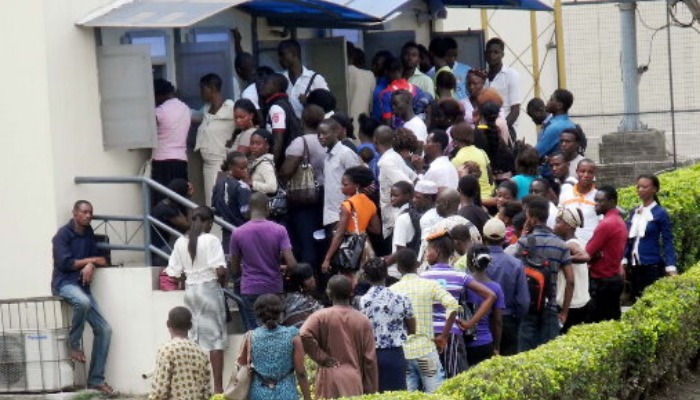
This single policy fuelling the cashless transition has incredibly negatively disrupted businesses struggling to stay afloat, crashed many on medium-scale levels and destroyed the potential of start-ups. As a result, many shop owners have closed down businesses until the economy becomes more favourable. For instance, several POS points have closed shops, and the few others willing to keep up with the new development are only faring really hard.

On commuting, stories from tricycle owners are piercing as they struggle to support their families through the business. The chain of labour attached to the tricycle business is critical. With the breakdown of larger businesses, many people who have lost their jobs resorted to the tricycle business for some solace. It’s depressing to find out how about 4 to 5 shifts are being done with only one tricycle daily. The least shifts you could find cannot be less than 3 in a day, just to find a source of livelihood for families. Now this source of livelihood has been traumatised.

On health, patients and health workers are continuously pointing fingers at each other courtesy of delayed bank transfers. In addition, some deaths that occurred in Kano hospitals have been linked to the untrustworthy nature of the transfers. On the side of market transactions, the transfers have intensified customer trust issues – even destroying an age-long relationship of trust between shop owners and loyal customers.

The height of the financial insecurity has messed with the citizens’ psychological safety and other primary needs. People are left contemplating whether the policy is for positive development or not. People’s yearnings to meet their daily needs have only soared since the implementation of the new policy began. And the recently concluded elections that stopped some daily activities heavily contributed to the current cash struggle.

Nigerian public officeholders are notable for implementing new policies, particularly towards terminating their constitutionally allotted time in office, to either weaken election processes or transfer the bulk of work to new governments. This is hence, not unexpected. Maybe, the only surprising thing about the whole scenario is how fragmented even the ruling party was on the same issue. I’ve been unable to grasp the larger picture of the policy from the President’s perspective. Perhaps, this is not the right time for a financial rebranding in the country.

Even if the current government intends to rectify issues around election malpractices, particularly vote-buying, it degenerated into something worse. The steps weren’t expected in these desperate moments and didn’t halt rigging and other discrepancies during the general elections. Besides, spaghetti and sachet detergents became alternatives. The agitations raised against implementing the policy outweigh the commendations given to the president. It has only exposed the vulnerable citizenry to more financial battles.

At this point, I wonder whether the President has fulfilled his promise of lifting many Nigerians out of poverty. Maybe, he must’ve even forgotten some of the promises he made, which is why in a recent interview before the elections, he claimed he’d done all he could for the nation. Yes, the president initiated poverty alleviation programs, one of his administration’s priorities. Still, these unforeseen policies must’ve shattered the successes of the other programs in a way.

Like all past administrations, President Muhammadu Buhari-led APC government would be weighed appropriately in all aspects when he departs later in the year. Also, because of the lack of a clear-cut pattern of party manifestos, the country isn’t sure how the President-elect from the same political party may wish to tackle the financial challenges in the country. Whether or not he’s adopting the cashless system when he assumes duty is still unknown.

Minds presently should be geared towards financial literacy and intelligence. Understanding the critical roles of these in our lives as Nigerians will undoubtedly support us in curbing our financial difficulties. Meticulous calculations and short-term and long-term plans must be implemented daily. Economic hardships have badly hit a massive population in Nigeria after being forced to fight excruciating spikes in the prices of goods and services. These aren’t good times to be hopeful of delusional government promises.

The consequence of the financial breakdown in Nigeria is enormous, and we may not be able to quantify the level of degeneration it has caused in the coming years.

Nusaiba Ibrahim Na’abba is a master’s student from the Department of Mass Communication, BUK. She is a freelance writer and researcher. She can be reached via nusaibaibrahim66@gmail.com.

International Writing Day Celebration

By Abdurrazak Muktar

On March 3rd, the world celebrated International Writers’ Day. This special day honors the indelible mark writers have made on society, inspiring, educating, and entertaining us all through their words.

While many people may immediately think of famous novelists or poets when they think of writers, the truth is that writing is a skill that can be applied in a wide variety of contexts.

As for myself, I may not be identified as a professional writer yet, but I have personally authored over 200 articles. This in itself is quite a noteworthy accomplishment, and it demonstrates that writing is not simply a domain of a selected few, but rather, it is a skill that anyone can develop if they have something meaningful to share or communicate. Whether you’re writing for your own blog or for a company, the ability to effectively express yourself through the written words can open countless doors and lead to amazing opportunities.

In our current digital era, the demand for writers has grown exponentially. From copywriting to content creation, social media management to email marketing, etc. Today, businesses require writers to help them engage their audience effectively. As e-commerce continues to gain more prominence, companies need high-quality product descriptions and persuasive sales copy to attract customers. As such, freelance writers are increasingly on demand, making this an ideal time for anyone looking to earn an income through writing.

Writing, however, is not just limited to the professional realm. It can be an incredibly therapeutic exercise that allows you to express your thoughts and emotions in a healthy way. Journaling, in particular, is a popular practice that many people use to reflect on their experiences, thoughts, and feelings. By writing down your goals and aspirations, you can also clarify your vision and take tangible steps towards realizing your dreams.

In summary, the Writers’ Day was a day to celebrate the profound impact that writers have made on our lives. Whether you’re a professional wordsmith or someone who enjoys writing as a hobby, you can contribute to society by sharing your knowledge, insights, and experiences through the written words. Therefore, take a moment to recognize the power of writing and don’t be afraid to put a pen on a paper and see what kind of magic you can create.

Happy International Writers’ Day.

Abdurrazak Muktar Makarfi can be reached via; prof4true1@gmail.com

AU urges Atiku, Obi to maintain peace as they seek redress in court

By Uzair Adam Imam

The African Union (AU) has called on the discontent presidential candidates to maintain peace and order as they seek redress over the outcome of the election results in court.

The AU’s Chairperson, Moussa Faki Mahamat, made the call in a statement he issued to journalists on Friday.

Challenging the outcome of the election results that declared Bola Ahmed Tinubu as the winner, both Atiku Abubakar of the Peoples Democratic Party (PDP) and Peter Obi of the Labour Party (LP) have vowed to drag INEC to the court over the results.

Mahamat said, “In this regard, the Chairperson urges all stakeholders to uphold peace and the rule of law and further urges that any post-election dispute or grievance be pursued through the judicial system, as provided for by the law.”

“The Chairperson expresses his deep gratitude to H.E Uhuru Kenyatta, former president of the Republic of Kenya, for his outstanding leadership as head of the African Union Election Mission to the Federal Republic of Nigeria.

“The Chairperson also extends his appreciation to ECOWAS and other partners for their fruitful collaboration in support of a peaceful election process in Nigeria.

“The Chairperson renews the commitment of the African Union to support the sisterly Federal Republic of Nigeria in her journey to deepen democracy, good governance, sustainable development and consolidate peace, security, and stability in the country,” he added.

2023 Elections, Muslim-Muslim Victory: A case on Nigerian Muslims’ numerical supremacy

By Isma’il Hashim Abubakar 

I was primarily not comfortable with the idea and bid of a Muslim-Muslim ticket, which the ruling party APC had issued to Bola Ahmed Tinubu and Kashim Shettima as its presidential candidate and running mate, respectively. I held this view for several reasons, some of which were equally articulated by various analysts, commentators and opinionists.  

Like many thousands of Nigerians, particularly Muslims, I also believed that the Muslim-Muslim ticket was a necessary deceptive winning strategy rather than an intrepid move toward the triumph of Islam in a pluralistic country that has been suffering from the demographic competition. In 2015 when Muhammadu Buhari became the flag-bearer of the APC, there were indications that Bola Tinubu (a major stakeholder in the political merger that culminated in the sweeping victories of the APC during the 2015 elections) had a strong zest to be picked by Buhari as the latter’s running mate. But the old general refused to do so, obviously to carry along the Christians and canvass their support and secure their votes; no farsighted politician would risk hurting the sensibilities of even a small number of voters, let alone a big population that once claimed to possess demographic supremacy in the country’s entire population. 

The Muslim-Muslim presidency was thought by the Christian population but, in fact, to many Muslims as well to be a permanent impossibility in Nigeria’s political arena. Christians, who are a Nigerian minority as it has been proven now beyond the cobwebs of doubt, had been regarding Muslim-Muslim presidency as a unique Muslim utopian vision and a fruitless attempt of flying a kite either to see how high it would go in the sky or to gauge the direction of the wind.

Thus, Nigerian Christians never hid their opposition to the development and spared no effort to fight the bid. Churches became platforms for homilies on Christian unity and mobilization of support and strong, formidable religious support and solidarity in favour of the Labour Party’s candidate, Peter Obi, the only  Christian who contested against three Muslims in the race for the highest political office in the land.

The defeat of Peter Obi, as portrayed in the milieu of Christians, was akin to the fall of the rising Christendom and the failure of the Christian cause in Nigeria. Therefore,  not minding the huge irrecoverable costs of putting their eggs in one basket, Christians unanimously gathered their voting strength on their own candidate and wholeheartedly threw their support to Peter Obi. Although, like their Christian counterparts, Muslims had also used religious infrastructure to mobilize support for Bola Ahmed Tinubu and framed casting votes for him as a “political Jihad”, it was understandably impractical since Muslim votes must be inevitably divided between the three other contenders, Atiku Abubakar of the PDP and Rabi’u Musa Kwankwaso of the NNPP and Bola Ahmed of APC.

After all, many northerners were yet sceptical of Tinubu’s nationalism and cosmopolitanism, and he was certainly viewed as an ethnic champion and a pursuer of Yoruba’s agenda. Added to this, the fact that Tinubu’s wife (and an acclaimed pastor, for that matter) and the majority (if not all) of his children are said to be Christians, some northern Muslims felt that Tinubu’s victory should in some form be considered as the triumph of Christians. As such, Muslims believed that the influence of these important organs around Tinubu must be beyond imagination. 

In the runoff to the 2023 presidential election, the Muslim society in northern Nigeria, which, as always, largely relies on the homilies of the clerical establishment in the region, became extremely divided as to which of the three candidates Muslims should support. Scholars who were loyalists to northern governors, some of whom were/are among their political appointees, had preached in favour of Tinubu and showed his election as a necessity that Muslims must wholeheartedly work for. Other scholars, most of whom were independent and largely young scholars, openly campaigned for Atiku Abubakar and warned northerners against voting for someone outside their region. The majority of scholars, however, seemed to take a neutral position and advised that Muslims could vote for any of the three candidates since each of them is a Muslim.

Despite the respected Jos-based cleric Shaykh Jingir defied this order, it was the position popularized and voiced loudly by the outspoken Izala, the proto-Salafi group which in the past used to explicitly campaign for Buhari and make it a religious obligation upon all Muslims to vote for the old general. It appeared that the group decided this time not to openly side with any of the candidates since some people had been launching attacks on the group for asking them to vote for Buhari, but then the group failed to criticize Buhari’s leadership failure. It was even argued that Izala (whose top figures are friends and loyalists to some northern governors) was inwardly supporting Tinubu’s candidature, but it was afraid of the protest and condemnation of its followers and the larger Muslim public. Thus, it decided to exhibit outward neutrality. 

Whatever the case, the Muslim-Muslim ticket has, despite these binaries, scaled through and Muslims in the North had already accepted the development as a valid testimony of their numerical supremacy in the country. And here is why.

Out of 23377466, the total valid votes cast, 17275933 represent the voting strength of Muslims who divided their votes for the three Muslim candidates. No analysis of the results of this election can ignore the possibility of overlaps of votes between Muslims and Christians in favour of each of these three candidates. But since this was very minimal, the outcomes of the elections have solidly reflected the religious affiliation and sociopolitical orientation of the voting population. After all the mobilizations in churches and social media platforms, including the voluminous circulars disseminated to all chapels and chapters by the Christian Association of Nigeria (CAN) and sister bodies, the results of the election show that Peter Obi had merely scored 6101533, fewer than 27 per cent of the whole valid votes cast. 

Of course, a case cannot be made on fixed and exact statistics on Nigeria’s population through the results of polls, but some circumstances, like elections, are yet crucial in arriving at some useful hints.  A lot of factors have combined to contribute to the rapid increase of Muslims and give them a numerical edge over their counterparts.

The Muslims, who still retain the age-old culture of growing extended families, have a prevailing polygamous lifestyle and have not, to a large extent, assimilated to the western childbearing orientation. Research has shown that Muslim women have a higher fertility rate than non-Muslim women.100 According to the data of Nigeria‘s National Population Commission, as of 2008, birthrates per woman in the North West and the North East stood at 7.3 and 7.2, respectively, while in the South, it was less than 5 children per woman (available on https://dhsprogram.com/pubs/pdf/fr222/fr222.pdf).

Although democracy is a game of numbers and it depends on the principle of “the majority carries the votes”, Nigeria’s democracy has since 1999 been characterized by zoning and rotation between the two major regions and religions  (North and South and Islam and Christianity). And although many politicians have adopted zoning and rotation in the spirit of carrying everyone along, there are places where rotation based on faith is an impossible matter. For instance, Muslims in Gombe State account for about 75 per cent, yet the state has been electing a Muslim and Christian governor and deputy governor for over two decades.

In Kaduna State,  until 2019, when Governor Nasir El-Rufai chose a Muslim deputy governor, the state has been pairing a Muslim and Christian for these two powerful ranks. Other examples can be confidently cited, and it is Muslims who make the most concession. In states like Plateau and Benue, however, which although having a sizable population of Muslims ranging from 40 per cent to above in the case of the former and about 25 per cent in respect of the latter, no Muslim has ever been selected as deputy governor since the return of the present democratic dispensation in 1999. 

Politicians do not toy with the matter of votes irrespective of who the voter is, but the 2023 presidential election will go down in history as a solid testimony establishing the fact that Muslims can determine their political fate and can win the election of the highest political office in the land without the votes of the Christians. And going by the case study of Plateau and Benue states, one may be justified if he alleges that had it been that it was Christians who possessed similar numerical strength to Muslims, no one could guarantee that they would concede the position of vice president to the Muslims.

Whatever the case, it is now clear that propaganda and powerful and frequent presence in the media is not and can never be the practical elements with which to substantiate persistent claims of being half of Nigeria’s population. 

Despite the foregoing arguments, a question that may yet beg for an answer is, does the faith of a president necessarily ensure that his coreligionists enjoy the dividends of democracy better than those with whom he does not share his faith? No clear-cut answers can be supplied to this question. But the attitudes of some presidents since 1999, starting from Olusegun Obasanjo, Umaru Musa Yar’adu’a, Goodluck Jonathan and the outgoing Muhammadu Buhari, testify that some presidents may be too partial to members of their faith to the detriment of others. 

The Muslim-Muslim presidency may benefit Nigerian Muslims through the pleasure they will derive, which is inherent in sharing the same faith with the commander-in-chief and his deputy, but also in putting an end to the fact of their disputed majority. Meanwhile, it is likely that Christians, who will henceforth restrategize to launch further onslaughts on the presidency, and of course, consistently cry wolf where there may be none at all, will, in the long run, be the greatest beneficiaries of Tinubu’s leadership. The justification for this assertion is obvious; Christians recorded bigger gains from his two terms as a governor of Lagos State and perhaps even in the succeeding years.

And despite that it is now clear that there is a wide numerical margin between Muslims and Christians, this may not be radically reflected in the constitution of the presidential cabinet; out of the 40 (or thereabout) ministers that the new president will be appointing in the next few months, it will be hard if he will summon enough courage to appoint 11 Christian ministers which is the proportionate numerical representation of Christian population supplied to us by the 2023 presidential election.

During my childhood, I used to hear Muslims say that Saudi Arabia had a diplomatic policy of raising or lowering the flag of each country according to the faith of its president. I could remember vividly when after Muslims were tired of the Obasanjo administration and Umaru Musa Yarauda, the unfavourable candidate had defeated Buhari (the saint as of then) when some people, despite the dark outcomes of the election results, expressed delight and commented that at least Nigeria’s flag would be raised in Saudi Arabia after it had been dumped on the ground for about eight years. If this diplomatic principle in Saudi Arabia is true and still valid, Tinubu’s victory will now mean that Nigeria’s flag will at least spend twelve uninterrupted years flying in the Saudi sky, and only God knows when it may be lowered. 

In a different essay I penned more than a year ago. I argued that if the situation would warrant that Tinubu’s victory would only be guaranteed if he embraced Christianity, he might end up becoming a Christian just to realize his lifetime ambition. Based on the goings-on of the present political season and the outcome of the 2023 presidential election, it is also safe to argue that despite being admittedly a nominal Muslim as shown by his self-orchestrated  Fatiha recitational suicide, Tinubu had, by picking a Muslim as his running mate, audaciously accomplished what many Muslim politicians could never mull over not to talk of giving it a try.

Ismail wrote from Souss, Southern Morocco, and can be reached at ismailiiit18@gmail.com.

Ganduje plans to rig Kano guber and Fagge supplementary elections, NNPP cries out

By Ahmad Deedat Zakari

The New Nigeria Peoples Party, NNPP, have raised concerns over the alleged plot by Kano State Governor, Umar Ganduje, to rig the incoming gubernatorial election and supplementary election in the state.

The Chairman of Kano NNPP, Umar Haruna Doguwa, made the disclosure in a press statement on Sunday.

Mr Doguwa appealed to President Muhammadu Buhari, the International Community and the Security agencies to foil Ganduje’s plan.

He alleged that Ganduje’s interest goes beyond election rigging, but the total breakdown of law and order in the state is also among his evil machinations.

Part of the statement reads:

“The Kano State NNPP has noticed that some attempts are being made by unscrupulous elements in conjunction with some INEC officials to manipulate the collated results as we also noticed improper conduct by some INEC ad hoc staff. We, therefore, call on Presidency, security agencies, election observers, and the international community to beam their searchlight on INEC, especially on the concluded position to conduct supplementary election in the 15 affected polling units at Fagge. Any shift, either in a number of the polling units or continued cancellation of other polling units, will meet our stiff resistance.


“We are also aware that plans are being nursed and sponsored by the State government to cause a total break down of law and order in the state during the upcoming gubernatorial and state assembly elections. While we call on security agencies to take adequate measures on this, otherwise, we as a party and citizens of Kano State have the capacity to defend ourselves and our votes.”

Emefiele will soon become “Zebra in the hands of Tigers” —Shehu Sani

 By Muhammadu Sabiu  

Senator Shehu Sani, a lawmaker and social critic, projected that Godwin Emefiele, the CBN governor, will be powerless after President Muhammadu Buhari leaves office. 

After Buhari leaves power on May 29, Sani, in a tweet on Saturday, compared Emefiele’s situation to a “Zebra in the hands of Tigers”. 

The tweet reads, “When Baba is gone, Emefiele will be like [a] Zebra in the hands of Tigers.” 

Recall that Bola Ahmed Tinubu, who is thought to have been badly affected by the monetary policies initiated by Godwin Emefiele, was declared the winner in last Saturday’s presidential election. 

Many believe that the CBN initiated its naira redesign policy to cripple Tinubu’s chances of winning the election, as this could not be unconnected to Senator Shehu Sani’s tweet.

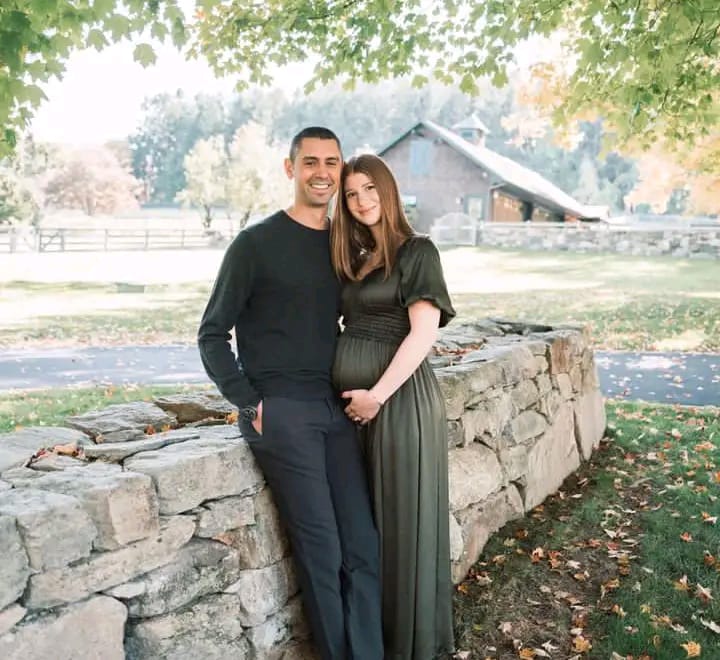
Bill Gates becomes grandfather

By Ahmad Deedat Zakari

Billionaire and Microsoft co-founder, Bill Gates, has become a grandfather for the first time.

This is after his eldest daughter, Jennifer Gates, welcomed a child with her husband, Nayel Nassar on Saturday.

Jennifer Gates announced the news of the birth of their new baby on Instagram.

Sending love from our healthy little family,” she wrote in the caption.

Bill Gates also shared the same photo to his Instagram stories, telling the new parents how proud he was. Melinda French Gates also expressed her happiness over the news.

“Welcome to the world,” Melinda French Gates commented below her daughter’s post. “My heart overflows,” she added. Jennifer’s sister Phoebe also responded to the announcement with heart emoticons.

The couple got married in October 2021. In November last year, they announced that they were expecting their first child.

Youth Society commends INEC, FG, seeks adequate security

By Uzair Adam Imam

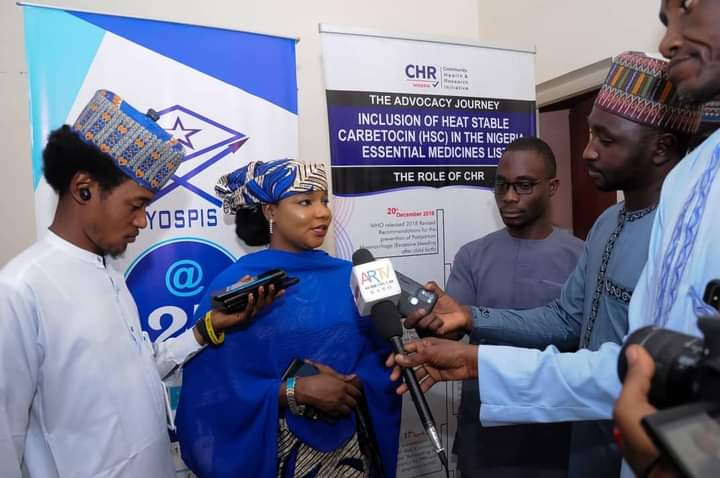
Ahead of the March 11 governorship election, the Youth Society for the Prevention of Infectious Diseases and Social Vices (YOSPIS) has commended the FG’s cashless policy towards the election and the efforts of the Independent National Electoral Commission (INEC) in conducting one of the freest and fairest elections in the country.

The Executive Director of YOSPIS, Zainab Ahmad Nasir, who made the call on Thursday, said, “We would like to commend the National Independent Electoral Commission (INEC) and the Federal Government for conducting a free, fair and credible Presidential election in Nigeria. We hope and pray the same will happen next week for gubernatorial elections across the country.

“The vote buying was hugely reduced due to the new naira policy implemented by the Federal Government. However, despite its readiness, the commission [INEC] failed to provide some materials on time, like cubicles, among other materials. Many polling units in the State experienced the faults of the Bimodal Voter Accreditation System (BVAS), late arrival of INEC officials and materials, change of polling units, absence of cubicles, violence and overvoting in some areas.”

The Director also urged the general public to remain calm and peaceful during the elections process and report any suspicious act to the security personnel.

She said, “We hope the electorates will continue to remain calm, peaceful and confident in the electoral process and report any wrongdoing they witness.”

The Daily Reality gathered that the Presidential elections last week had left many families in deep mourning of their relatives who were burnt to ashes or sustained gunshot wounds on election day in Kano.

Several reports indicated how Alhassan Ado Doguwa, the Majority Leader of the House of Representative of Nigeria, had allegedly shot three people and instructed thugs to set ablaze the Campaign Office of the New Nigerian People Party (NNPP) in Doguwa Local Government Area of Kano.

The development had allegedly led to the death of no fewer than fifteen innocent souls who happened to be inside the building when it was set on fire.

Miss Nasir concluded that “We hope the perpetrators of this dastardly violence will be brought to book and face the consequences of their actions.”

Twitter: Nigerian users troll Zelensky for congratulating Tinubu after election victory

By Muhammadu Sabiu 
 
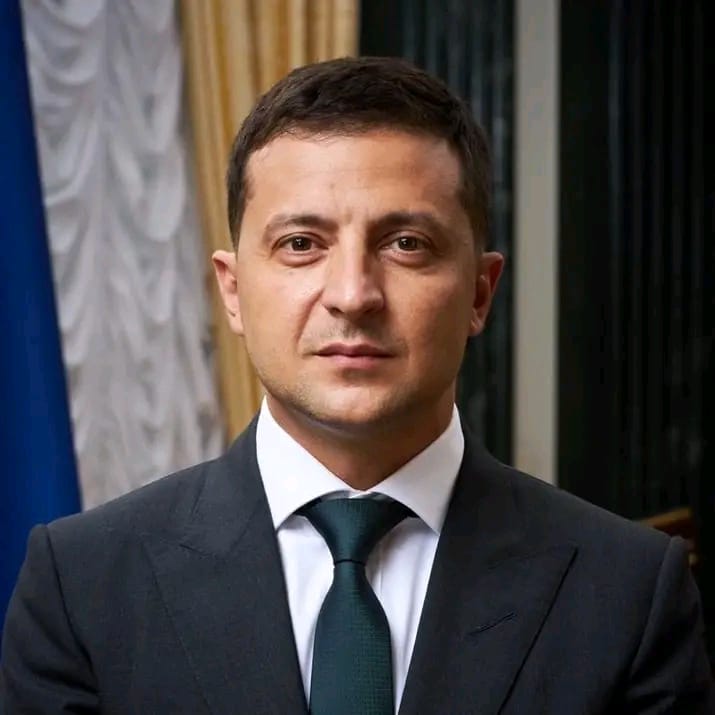
Volodymyr Zelensky, the president of Ukraine, has drawn criticism for congratulating Bola Ahmed Tinubu, the winner of Nigeria’s 2023 presidential election, on his victory last Saturday.
 
Zelensky expressed his country’s readiness to collaborate with Nigeria to address global concerns, particularly risks to food security, in a tweet on Saturday.
 
Zelensky’s tweet reads, “Congratulations @officialABAT on the victory in the election of the President of Nigeria. I look forward to close cooperation. I am convinced that the two-way interaction 🇺🇦 and 🇳🇬 will strengthen. Ukraine is determined to work together to overcome global challenges, including threats to food security!”
 
Criticising the Ukrainian president, some Nigerian Twitter users expressed their dissatisfaction over the tweet, as can be seen as follows:
 
@IjeleMela, “Corrupt people always know how to align with one another. This guy is probably very corrupt.”
 
@WeriseB, “May Putin never leave Ukraine!! Amen!”
 
@TheOliviaMead, “You will not get any money from Nigeria! Get out!”
 
“Our democracy was invaded and you are congratulating the man … on behalf of Ukrainians,” @aai_austin claimed in reply.”

A few other users have also raised Mr Zelensky for the congratulatory message to the President-elect.