Month: March 2023

TRT launches Africa service to counter Western narratives

By Uzair Adam Imam

The Türkish public broadcaster, TRT, has launched a new digital platform, TRT Afrika, to counter Western media narratives about Africa.

Mehmet Zahid Sobaci, leading the launching on Friday, decried the way Africa is underreported by the Western media today.

However, with the emergence of TRT Afrika, many interesting stories that have been silenced would be relayed to the global audience.

Sobaci added that the medium intends to showcase stories from Africa and put its unique values at the heart of the world’s events.

He added that Africans would have a voice to communicate their ideas, values and cultures to the world without any alteration and in their languages, such as Hausa and Swahili.

He further stated that the medium would also pay attention to the good stories of Africa that have been silenced or underreported by the Western Media.

TRT Afrika, which employed staff from fifteen different African countries, would, according to Sobaci, “be like a mirror to Turkey’s policy and its relationship with Africa.”

He further stated that this would enable TRT to find out about different stores from the continent.

Kano Governor-elect nominates 65-man transition council

By Muhammadu Sabiu  

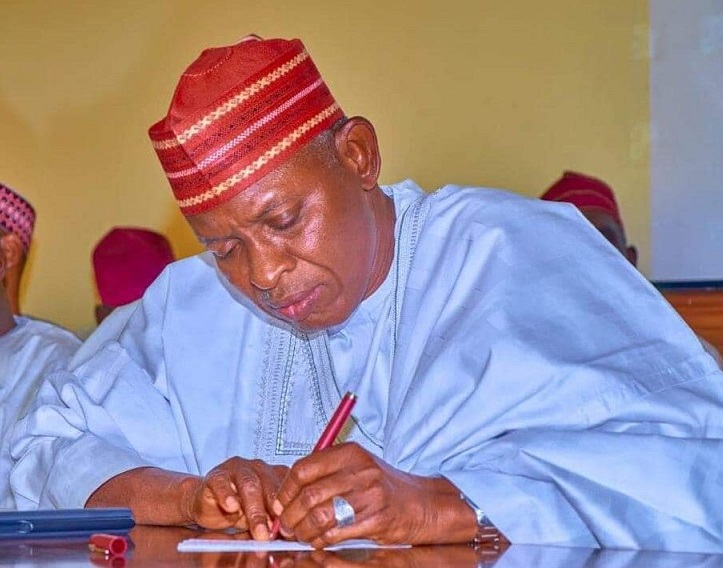
The 65-person 2023 Transition Committee has been unveiled by Kano State Governor-elect Engr. Abba Kabir Yusuf (Abba Gida Gida) ahead of his inauguration. 

Sanusi Bature Dawakin Tofa, the press secretary to the governor-elect said this in a statement on Friday. According to the statement, Dr. Abdullahi Baffa Bichi, a former executive secretary of the Tertiary Education Trust Fund (TETFUND) and senatorial candidate for Kano North on the platform of NNPP in 2023, has been named chairman of the committee, with Abdullahi Musa, a retired permanent secretary, to serve as secretary. 

The statement says, ‘’His Excellency, the Kano State Governor-elect will inaugurate the Committee on Saturday 1st April, 2023 by 2:00 PM. Below is the full list of the Main Committee membership, while sub-committees on various sectors and sub-sectors would be announced in due course.” 

A report seen by The Daily Reality has given the list of committee members as follows: 

Sen. AB Baffa Bichi, PhD Chairman 

Prof. Hafiz Abubakar Member

Hon. Shehu Wada Sagagi Member

Hon. Umar Haruna Doguwa Member

Hon. Ahmad Garba Bichi Member

Dr Ali Haruna Makoda Member

Barr Maliki Kuliya Member

Barr. Haruna Isa Dederi Member

Dr. Danyaro Ali Yakasai Member

Engr. Muhammad Diggol Member

Dr Ibrahim Jibrin Provost Member

Sheikh Aminu Daurawa Member

Dr. Labaran Abubakar Yusuf Member

Prof Sani Lawan MFashi Member

Alh. Umar S. Minjibir Member

Dr. Danjuma Mahmud Member

Engr. Kabir Jibrin Member

Dr. Farouk Kurawa Member

Engr. Dr. Marwan Ahmad Member

Dr. Aminu Garba Magashi Member

Alh. Aminu Ibrahim Abba Member

Alh. Laminu Rabiu Member

Engr. Bello Muhd Kiru Member

Engr. Garba Ahmed Bichi Member

Hon. Tajudeen Othman Member

Hajiya Sadiya Abdu Bichi Member

Hon. Yusuf Jamo Member

Hon. Nura Dankadai Member

Alh Yusuf Lawan Member

Hon. Umar Maggi Gama Member

Hajiya Azumi Namadi Bebeji Member

Prof. Auwalu Arzai Member

Rt. Hon. Gambo Sallau Member

Bar. Muhuyi Rimingado Member

State Chairman, NLC Member

State Chairman, KACCIMA Member

Alh. Audu Kirare Member

PS Adda’u Kutama Member

PS Aminu Rabo Member

Alh. Sule Chamba Fagge Member

Alh. Usman Adamu Gaya Member

Engr. Tijjani Yunkus Member

Engr. Abubakar Argungu Member

Alh. Yahaya Musa Member

Rt. Hon. Alasan Kibiya Member

Prof. Dahiru Sani Shuaibu Member

Arc. Ibrahim Yakubu Member

Dr. Kabiru Muhd Kofa Member

Dr. Mustapha Sani Member

Sheikh Malam Abbas Abubakar Daneji Member

Bar. Bashir Yusuf Mohd Member

Bar. Ibrahim Wangida Member

Umaru Idi MemberDr. Sulaiman Wali Member

Hon. Rabiu Liliko Gwarzo Member

Alh. Kabiru Gwarzo Member

Hajiya Aisha Kaita Member

Hajiya Aisha Lawan Saji Member

Ali Yahuza Gano Member

Hon. Auwal Mukhtar Bichi Member

Alh. Musa Fagge Member

Hon Wakili Aliyu Garko Member

Tukur Bala Sagagi Member

Dr Nura Yaro D/Tofa Member

PS Abdullahi Musa Member/Secretary 

Cutthroat competition, business tussle and victimization of Nigerians by Access Bank and MoMo Agent (I)

Kabiru Haruna Isa

I have been a loyal customer of Diamond/Access Bank Plc., and I can say without any fear of contradiction that I opened my first bank account with them. I have been banking with them for almost one and a half decades. In fact, I have been serving as a volunteer marketer to the Bank as I convinced many people, including colleagues, friends and family members, to open accounts with it ostensibly because of the hitherto quality services it delivered.

With the implementation of the cashless policy, millions of Nigerians, including myself, are forced to rely on and use alternative payment platforms such as MoniePoint, Opay, Squad and Momo Agent, to mention just a few. The services of these payment platforms are a double-edged sword which eases transactions and creates ceaseless suffering simultaneously for the poor and downtrodden Nigerians. They are also used, in some instances, especially by the agents who render services at the Point of Sale (POS), to extort powerless, hapless and helpless customers. From the time this cashless policy was introduced, millions of Nigerians were robbed of their hard-earned money by some financial service providers, and unfortunately, nobody seems to care to fight for the financial rights of these innocent victims.

And so it happened to me on the 10th day of March 2023. I stopped over at Gidan Maza Quarters, Kumbotso LGA, Kano, to make a transfer at one of the POS kiosks around. The POS agent used the MoMo Agent terminal to transfer some amount to my Access Bank account. And based on the receipt given to me, the transaction went successfully. I waited for the whole day, but my account was not credited. To cut a long story short, today 31st day of March, is exactly three weeks, but my money is still hanging at only God knows where.

I complained continuously to the MoMo agent who operates the POS kiosk, but he informed me that there was virtually nothing he could do to facilitate the unconditional release of my money. As a last option, he took me to the Office of MoMo Agent to lodge my complaint directly to the service providers. What I found shocking and troubling during my interaction with the officials was that MoMo Agent used to partner with Access Bank to provide financial services to their customers, but the relations of the duo got strained due to allegedly petty jealousy, business rivalry and unhealthy competition.

The pertinent question here is why should the business tussle between MoMo Agent and Access Bank rob Nigerians of their hard-earned money. Why these financial service providers should be allowed to inflict systematic and psychological torture on their innocent customers? What are the Central Bank of Nigeria (CBN), the NDIC and other Financial Regulators doing? The Government should know that many Nigerians are going to bed with empty stomachs because of the rivalry and skirmishes between these financial service providers. The worst part of it is that when customers go to the branches of the bank to complain, they are subjected to long and interminable waits, after which the customer care unit will only succeed in rubbing salt into the wounds. They treat customers with disdain and make sure that they maximally frustrate and confound their misery.

I finally call upon the CBN to inquire, investigate and take necessary action(s) on the ongoing tussle between MoMo Agent and Access Bank so as to end the suffering of Nigerians. The apex bank should equally penalize any of these financial service providers that are guilty of illegally withholding customers’ money.

A lesson is enough for the wise. With the kind of trouble, trauma and travail I underwent following up on this issue throughout these past three weeks, I will flee from any POS kiosk that I see using the MoMo Agent terminal, more so when it is from my Diamond/Access Bank account that I want to transact from. As a matter of fact, I am contemplating closing my Diamond/Access Bank account unless everything is rectified. This is due to the genuine fear I have that whatever happens once can and will indeed happen again.

Dr Kabiru writes from the Department of History, Bayero University, Kano. He can be reached via khisa.his@buk.edu.ng.

This is the time for women to be financially independent

By Aisha Mahmud Yusuf

A few days ago, Dr Muhsin Ibrahim shared a story about a divorcee whose ex-husband refused to pay her medical bills. This is a familiar story as it happens to many people in our society.

I know of a divorced woman with three kids who has nowhere to go. Another woman was in an abusive marriage. When asked why she wouldn’t leave her husband, she said that he took care of her financial needs.

There’s also this woman whose husband was a serial womaniser and a drunkard, yet she couldn’t leave him because she has no means to sustain herself as her parents are dead.

In this society, a woman will be married off with no skill or education. Then get divorced and be left to start from scratch, thanks to the stigma attached to divorcees. No woman should be in an abusive marriage or miserable because she lacks financial independence.

Parents should let their girls finish at least secondary school and ensure they learn a skill. Those who finished higher institutions should be allowed to work or engage in business. The time to stay idle for women has passed. We should not let this poverty and misery cycle continue.

A woman should be financially independent regardless of her marital status. In case of divorce or the husband’s death, she should be able to care for herself and her children at least.

There’s no denying that our marriage institution needs reform, and the time to do so is now. Alhamdulillah, our scholars are now discussing it, but we need action. There is a need for sensitisation across rural as well as urban communities.

Girl-child education should be supported. There are many opportunities for learning that women can learn in the comfort of their homes, and they should be encouraged to do so.

 Aisha Mahmud Yusuf wrote via aishatyusuf63@gmail.com.

Kano police apprehend 14 suspected criminals

By Muhammadu Sabiu 

The Kano State Police Command reported that its agents had detained 14 suspected criminals as part of their attempts to purge the state of any criminal activity.

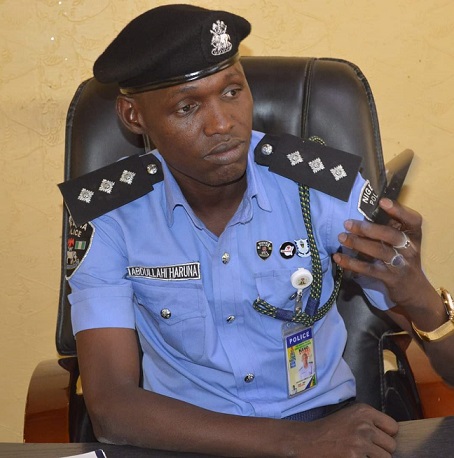
This was stated in a statement released on Thursday via SP Abdullahi Haruna Kiyawa’s Facebook page, the command’s public relations officer.

The arrests, according to the statement, took place during clearance operations carried out by a team of Operation Restore Peace under the direction of CSP Bashir Musa Gwadabe. 

The accused were found to be in possession of lethal weapons, illegal substances, stolen, and looted valuables.

The police spokesman added, “Rigorous patrol and raids of criminals’ hideouts and black spots will continue throughout the state, as the Command will sustain the tempo in ensuring the safety of lives and properties.”

Uba Sani, Kaduna legislators receive Certificates of Return

By Sumayyah Auwal Ishaq

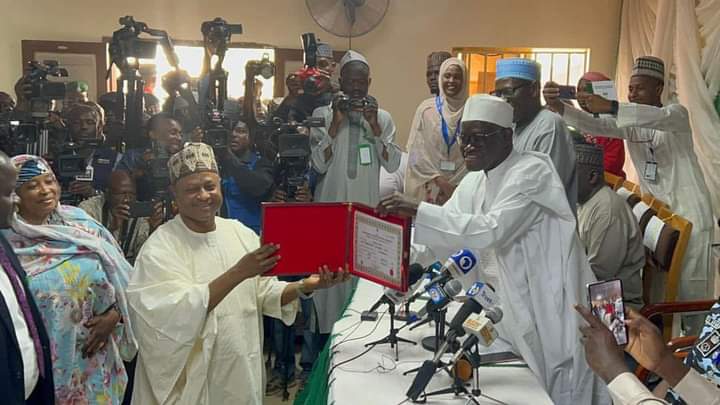
The Governor-elect, Kaduna State, Distinguished Senator Uba Sani, and his deputy, Dr Hadiza Sabuwa Balarabe, were issued Certificates of Return by the Independent National Electoral Commission (INEC) on Friday.

This came after their victory at the March 18 governorship election in the state. Accordingly, the issuance of the certificate of return included lawmakers-elect to the Kaduna State House of Assembly.

Senator Sani, who won the election on the All Progressives Congress (APC) platform, garnered 730,000 votes to defeat his closest rival, Peoples Democratic Party’s (PDP), Isah Ashiru, who polled 719,196 votes.

Abba Kabir and the challenges of education reform in Kano

By Bashir Abdu Muzakkari, Ph.D.

Education is a fundamental right of every individual, and it is crucial to achieving personal and national development. The availability of quality education is a critical factor in reducing poverty, improving health, economic prosperity, and fostering social equality. However, access to quality education remains a challenge in many countries, particularly in developing nations. To address this challenge, governments and stakeholders must take deliberate steps to ensure that education is accessible to all.

The Kano State Governor-elect, Engr. Abba Kabir Yusuf (Abba Gida-Gida), has a keen interest in the provision of quality education in Kano. In his plan to ensure that education is accessible to all, he has outlined several critical policies that will improve access to quality education which include: free education, establishment of additional schools, providing modern furniture, teacher recruitment, school feeding and uniforms, initiation of Mega Schools Policy, and the girl-child education initiative among others.

These critical policies are part of Abba’s Blueprint titled “Our Commitment for Kano: 2023 and Beyond”, and how they can improve access to quality education in Kano state.

To begin with free education: this is a crucial though critical policy in ensuring that education is accessible to all. Abba has proposed the provision of free education for all children in Kano state. This will eliminate the barriers that prevent children from accessing education, particularly those from impoverished backgrounds. Free education will ensure that all children, regardless of their socioeconomic status, can access quality education. The idea is to reduce the number of children – including beggars roaming our streets.

Similarly, establishment of additional schools in under-served areas will help to increase access to education. Abba has proposed the establishment of additional schools in rural areas and areas with a high number of out-of-school children. This will ensure that children in these areas have access to quality education at their doorstep.

In addition, the provision of modern school furniture is essential in ensuring that children can learn in a comfortable environment. His Excellency has proposed the idea “One-Child-One-Chair” to ensure that children can learn in a comfortable environment. This will help to improve schools’ attending and allows teachers to cater for the basic and individual needs of the pupils in their classes.

Moreover, to actualize the above policies, teacher recruitment is necessary. Abba Kabir has proposed the recruitment of qualified teachers to meet the demand for the 21st century learning system. Additionally, teacher training and retraining programmes had been developed to ensure that teachers have the necessary skills and sound knowledge to meet the demands of the standard global system.

Furthermore, school feeding and uniforms are essentials in promoting free education policy. Abba Kabir Yusuf has supported the continuation of school feeding program and distributing free uniforms to improve attendance and ensure that pupils learn with ease. This will help to reduce the burden on families and ensure that children have access to basic needs such as food and clothing.

Not only that, Abba Kabir Yusuf has proposed the initiation of Mega Schools Policy to address the challenges of inadequate resources and infrastructure in many schools. Mega schools are large schools that can accommodate a high number of students and provide all the necessary facilities, including classrooms, libraries, laboratories, and sports facilities. This policy helps to free the existing schools from over-crowded classes and improve free access to education in all parts of Kano State.

Finally, Abba has proposed the promotion of girl-child education initiatives to ensure that girls have equal access to education. This initiative is crucial in addressing the challenges of gender inequality in education, hawking as well as addressing the barriers that prevent girls from accessing education.

Abba’s plan to improve access to quality education in Kano state is comprehensive and addresses critical areas that need attention. By implementing these measures, it is certain people of Kano will have access to free quality education, regardless of their socioeconomic status or gender.

Bashir Abdu Muzakkari, Ph.D. writes from Kano and is a Senior Lecturer at Yusuf Maitama University, Kano.

Stop construction in public places – Kano Gov-elect warns residents

By Uzair Adam Imam

The Kano State Governor-elect, His Excellency, Engr. Abba Kabir Yusuf, has warned residents to stop any ongoing building in public places in the state.

The Govenor-elect also strongly cautioned that anyone who contravenes this warning is doing it at his or her own risk.

He made this warning in a statement Thursday by his Chief Press Secretary, Sanusi Bature Dawakin-Tofa.

There have been popular outrages by the citizens in the state over the selling of some parts of schools and hospitals by Govenor Abdullahi Umar Ganduje.

The statement read, “You are advised to discontinue any construction work on public land within and around the following: All schools in the State, all religious and cultural sites in the State, all hospitals in the State, all graveyards in the State, and along the city walls of Kano.

“You are also advised to discontinue the demolition of, and the construction on, all existing public buildings belonging to the government and people of Kano State.

This Advisory is issued in the public interest, effective from today Thursday 30th March, 2023 till further notice. Any contravener does so at his/her on risk, please,” the statement concluded.

Just In: Kano governor-elect. H.E. Abba Gida Gida appoints Chief Press Secretary

By Muktar Ibrahim

The Kano State Governor-elect H.E. Engr. Abba Kabir Yusuf has announced Sunusi Bature Dawakin Tofa as his Chief Press Secretary for the transition period.

In a letter signed by the Chairman of the Gubernatorial Transition Committee on behalf of the Governor-Elect, His Excellency described Mr. Bature’s appointment as well deserved as it was based on his competence, loyalty, commitment and hard work which he exhibited since 2019.

Sunusi is a seasoned PR guru, development communication and stakeholder engagement expert with 19 years working experience in both international development, private sector and the Media in Nigeria.

He is a winner of the Cambridge education award on investigative journalism in 2008, Bature has worked at different capacities in various national, International and Bilateral organizations such as the British Foreign and CommonWealth Development Office (FCDO), the United State Agency for Internal Development (USAID), Bill and Melinda Gates Foundation, Save the Children International, Discovery Learning Alliance and the Rockefeller Foundation.

He held several positions which include General Manager Corporate Services at Dantata Foods and Allied Products Limited (DFAP), Director Stakeholder Engagement at YieldWise Project, Country Program Manager at Girl Rising (ENGAGE) Project funded by the US Government, State Project Coordinator for MNCH Campaign Project of the BMGF, Deputy Director Operations at Discovery Learning Alliance, State Program Officer, Policy Advocacy and Media Development, Communication and Knowledge Management Specialist among other positions.

Graduated with a Bachelor’s degree (B.A. Hons.) in Mass Communication from University of Maiduguri, Sanusi holds a National Diploma in Mass communication from Kaduna Polytechnic, a Higher National Diploma (HND) and a Postgraduate Diploma in Public Health Education and Promotion.

He also bagged MSc. in Social Work with specialization in Community Development from Ladoke Akintola University of Technology, (LAUTECH) Ogbomosho, Oyo State and another master’s degree in Public Relations (MPR) from the prestigious Bayero University, Kano, Nigeria. He participated in MSc program on Project Management at Robert Kennedy College, Zurich, Switzerland.

Until his appointment, Sunusi Bature served as the Vice President, Nigeria operations for a UK based firm, Kingston Organic PLC.

‘Change Begins with Me’: The power of citizen participation in governance

By Aliyu Bugaje

Many of us have been quick to criticise the government for a long time about certain policies and decisions that we feel are not in our best interest. We voice our frustrations to anyone who cares to listen, and often, we do nothing more than that. But what if we could do more? What if we could participate in the governance process and influence key decisions that affect our lives and the lives of those around us? The truth is that change begins with us.

Recently, I was invited to participate in the APC campaign council in the Dikko/Jobe Call Centre Katsina and subsequently in the APC Situation Room. This opportunity allowed me to understand the workings of the party, the workings of the state government, and how elections are won. In addition, I was allowed room to influence key decisions of the party, was trusted with confidential party documents, and sat down with the gubernatorial candidate and other key figures. This experience has forever changed how I view governance and politics in general.

As citizens, we often complain about the government’s inability to deliver on its promises, but what are we doing to ensure those promises are kept? Are we actively participating in the governance process, or are we content with being mere spectators? The truth is, if we want to see real change in our communities, we must be willing to roll up our sleeves and get involved.

Citizen participation is the bedrock of any democratic society. It is the foundation upon which governments are built and the driving force behind meaningful change. Moreover, when citizens participate in the governance process, they bring knowledge, experience, and ideas to help shape policies and decisions in people’s best interests.

Participation can take many forms, from joining political parties and volunteering for political campaigns to attending town hall meetings and engaging with elected officials. It can also mean organising and mobilising communities around critical issues affecting their lives and holding government officials accountable.

One of the benefits of citizen participation is that it can help bridge the gap between the government and the people. When citizens actively participate in the governance process, they become more invested in decisions. As a result, they are more likely to support policies and programs that benefit the community. It also helps to build trust and confidence in the government, which is essential for a functioning democracy.

Another benefit of citizen participation is that it can help to create a culture of transparency and accountability. When citizens are actively engaged in the governance process, they are more likely to demand transparency from their elected officials and hold them accountable for their actions. This can help to prevent corruption and ensure that government resources are being used for the benefit of the people.

The power to bring about meaningful change in our communities lies within us. As citizens, we must be willing to step up and actively participate in the governance process. We must hold our elected officials accountable for their actions, demand transparency and accountability, and work together to build a better future for ourselves and our children. Change begins with us, and it is up to us to make it happen.

Aliyu Bugaje wrote via aliyukb@gmail.com.