Month: January 2023

Advantages of foreign reserves: the case for Nigeria

By Aliyu Nuhu

Here is the use and advantages of foreign reserve currencies for nations that take their economy serious and have development and growth of their nations in mind.

First, countries use their foreign exchange reserves to keep the value of their currencies at a fixed rate. A good example is China, which pegs the value of its currency, the Yuan, to the dollar. When China stockpiles dollars, that raises its value when compared to the Yuan. That makes Chinese exports cheaper than American-made goods, increasing sales.

Second, those with a floating exchange rate system use reserves to keep the value of their currency lower than the dollar.

They do this for the same reasons as those with fixed rate systems. Even though Japan’s currency, the Yen, is a floating system, the Central Bank of Japan buys U.S. Treasuries to keep its value lower than the dollar. Like China, this keeps Japan’s exports relatively cheaper, boosting trade and economic growth.

A third, and critical, function is to maintain liquidity in case of an economic crisis. For example, a flood or volcano might temporarily suspend local exporters’ ability to produce goods. That cuts off their supply of foreign currency to pay for imports. In that case, the central bank can exchange its foreign currency for their local currency, allowing them to pay for and receive the imports.

Similarly, foreign investors will get spooked if a country has a war, military coup, or other blows to confidence. They withdraw their deposits from the country’s banks, creating a severe shortage in foreign currency. This pushes down the value of the local currency since fewer people want it. That makes imports more expensive, creating inflation. The central bank supplies foreign currency to keep markets steady. It also buys the local currency to support its value and prevent inflation. This reassures foreign investors, who return to the economy.

A fourth reason is to provide confidence. The central bank assures foreign investors that it is ready to take action to protect their investments. It will also prevent a sudden flight to safety and loss of capital for the country. In that way, a strong position in foreign currency reserves can prevent economic crises caused when an event triggers a flight to safety.

Fifth, reserves are always needed to make sure a country meets its external obligations. These include international payment obligations, including sovereign and commercial debts. They also include financing of imports and the ability to absorb any unexpected capital movements.

Sixth, some countries use their reserves to fund sectors, such as infrastructure. China, for instance, has used part of its forex reserves for recapitalizing some of its state-owned banks.

Seventh, most central banks want to boost returns without compromising safety. They know the best way to do that is to diversify their portfolios. That’s why they’ll often hold gold and other safe, interest-bearing investments. 

How much are enough reserves? 

At a minimum, countries have enough to pay for three to six months of imports. That prevents food shortages, for example. Another guideline is to have enough to cover the country’s debt payments and current account deficits for the next 12 months. In 2015, Greece was unable to do this. It then used its reserves with the IMF to make a debt payment to the European Central Bank.

If Nigeria had been a prudent nation we should be having $900bn as our foreign reserve by now, and according to world bank, a Naira will exchange Dollar one for one.

But look at us. We neither have robust national saving, nor an infrastructure to show for the money we earned. A wasted nation. Aliyu Nuhu is a renowned social commentator on African affairs. He writes from Abuja, Nigeria.

Gunmen attack Bauchi community, kill 4, abduct 1

By Uzair Adam Imam

Reports from Bauchi State indicate that at least four people were murdered when gunmen attacked a community in Tafawa Balewa Local Government Area of the state.

It was gathered that, during the attack Sunday, the gunmen abducted one person and left another person critically injured.

The Bauchi State Police Public Relations Officer, Ahmed Wakili, confirmed the attack in a statement he issued to journalists.

He stated, “On receiving the report, detectives of the command were drafted to the scene led by the DPO Tafawa Balewa Divisional Police Headquarters evacuated the victims to the Tafawa Balewa General Hospital for medical treatment.

“Unfortunately, four victims were certified dead by the medical doctor, while one person sustained various degrees of injury during the attack,” he stated.

Wakili added that the Commissioner of Police, Aminu Alhassan, has directed a discreet investigation to arrest the perpetrators of the act and bring them to justice.

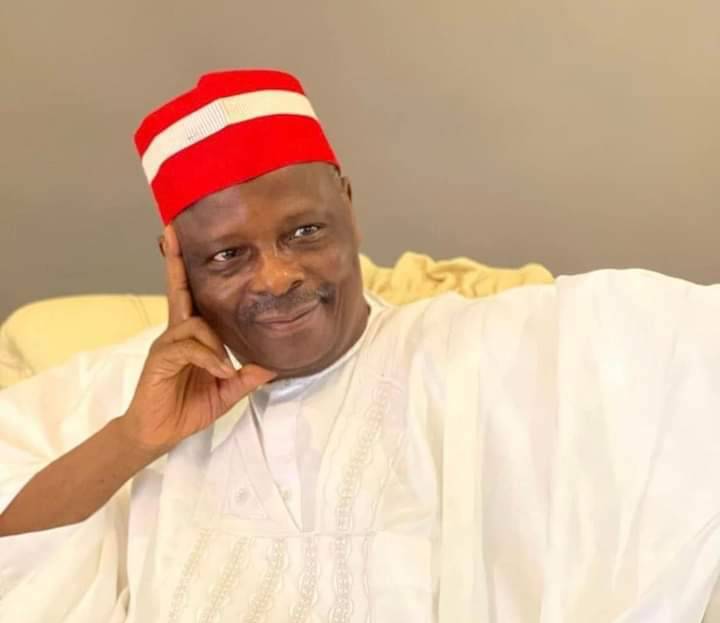
Is the Southern Nigerian press scared of Kwankwaso?

By Muhammad Sulaiman Abdullahi, PhD

Dr Rabiu Musa Kwankwaso’s NNPP has seemingly become the nightmare of many politicians in the Northern and Southern parts of Nigeria. This is simply because many Nigerians are not truly yearning for a better country.

Some Southern press, especially those who used to set the agenda for the country years ago, downplay Kwankwaso’s candidature and deliberately omit, ignore and replace Kwankwaso’s more prominent and more formidable party with someone who is not known beyond Twitter in their coverage.

The Southern press may be scared of Kwankwaso due to several reasons. These could be myopia, tribalism, regionalism, and religious mischief. Yes! I agree that Atiku Abubakar of the PDP and Asiwaju Bola Tinunbu of the APC may be considered as forefront candidates in some contexts. Thus, they may be regarded to be above Kwankwaso in terms of age, venturing into national politics, and political spread but nothing more.

Kwankwaso is naturally ahead of them in terms of integrity, health, foresight, political sagacity and shrewdness, and above all, the love and commitment towards the development of Nigeria. Moreover, his academic credentials are higher than all those who are contesting.

Furthermore, the Southern press thought they could do as they wished without being noticed. So, they cunningly choose to propagate one Yoruba (Tinubu), one Hausa (Atiku) and Peter Obi (Igbo). The latter cannot even publicly and unambiguously condemn the IPOB secessionists’ evil atrocities. Does he even believe in one indivisible Nigeria himself?

The Southern press is not alone in this mischief and tribalism. Some Northern writers who are, to some extent, their puppies and puppets downgrade Kwankwaso and fail to point out a single reason. They even tag him as a local champion. What is bad in being a local champion? All champions should be local, otherwise they don’t have any base.

If you check newspapers, both print and online, such as Vanguard, the Guardian, Punch, Premium Times and the likes, they are at the forefront of this amateur journalism. How can someone be so glaringly subjective in their journalism to the extent that even a blind can see? What kind of a country is this? Are they not aware of Kwankwaso’s credentials and positive antecedents? Are they unaware of how Kwankwaso transformed and developed Kano rapidly? How on earth can you compare Kwankwaso to all those contesting if someone is sensible and objective in his assessment? Most of them are either tribalistic or looking for big brown envelops filled with foreign currency.

These Southern press are not helping matters and are not objective. They are so divisive and tribalistic. To borrow from Orubebe’s outrage when he intended to save the nation from the ongoing catastrophe this Buhari-led government brought, while referring to Jega, he said: You are tribalistic. You are myopic, and we can’t take it!

Finally, the Southern media has achieved much in their agenda-setting warfare. Even some international media outlets borrow a leaf from them and mention Atiku, Tinubu and the other Igbo guy and, conspicuously, leave out Kwankwaso.

However, suppose we are to be sincerely and patriotically fair, let us put all the leading contenders on a scale of preference which is based on capacity and capability and see what happens. In that case, Kwankwaso is the best, followed by the Igbo man, and then Atiku while Tinunbu comes last. At least if they are to be objective, we have four leading contenders and not three, as they are falsely portraying.

Our votes are for Kwankwaso. And he will surely get more than many corrupt contenders and will win the presidential elections.

Muhammad Sulaiman Abdullahi, PhD, wrote from Kano. He can be reached via muhammadunfagge@yahoo.com. @muhammadunfagge.

China’s poverty eradication campaign: lesson for Nigeria

By Muhammad Muzdaleefa

Being a student of diplomatic history, I have been following the poverty eradication campaign in China for years. It is a shame that Western media have decided to bash it as Chinese propaganda instead of looking at the take away lessons that can be applied globally with necessary adjustments for sustainable growth and development.

The way China has been going through this issue is very methodical and practical. They have a clear standard of living which they are working hard to ensure it is universally achieved. In other words, they create a world where everyone has a smooth path to realize their dreams and ensure no one is left behind. This is very different from the competitive capitalist system practiced in the West where everyone is obsessed with being ahead of the other.

The Chinese have used very simple ideas. These include the following;

  1. Housing – The Chinese model is ensuring everyone has adequate and decent housing. Those with poor housing have had their houses reconstructed or relocated to new houses.
  2. Income – The Chinese have ensured everyone has a sustained income source that elevates them above the poverty line. This has been through implementation of various income generating projects based on local needs and environment.

In one example, some farmlands where farming was ecologically harmful were turned into a forest. The former farmers were then employed as forest guards. Another example is where some villages were helped to establish solar power plants from which they earn incomes.

  1. Education – The Chinese model states that education is the best way to stop transmission of generational poverty. As a result they have implemented a system which has resulted in zero school dropout cases. Some 8 million youths who had dropped out of school at various levels have been taken through vocational training.
  2. Health – Unhealthy people can’t fight poverty. They are people who are consigned to poverty due to treatable health issues. China has worked to ensure affordable healthcare in order to ensure that no person falls back to poverty dues to illness. The response of the Chinese government sequel to the outbreak of Coronavirus pandemic was admired throughout the world.

To achieve the above the following foundational issues are critical;

  1. Household targeted poverty eradication – a census of poor people was conducted which identified every household defined as poor. This bottom up approach is key because you cannot eradicate poverty until every household has been lifted from poverty. The household is the epicentre of poverty.
  2. Planning and involving people – after the poor are identified, detailed planning is undertaken and the people are involved in coming up with solutions to eradicate poverty.
  3. Clear goals – the officials are expected to come up with practical goals and realistic timelines. In one case where officials had set lofty and unrealistic targets President Xi Jinping emphasized that for the battle against poverty to be won there should be no procrastination or impatience.
  4. Measurement and independent evaluation – countries that claim to have eradicated poverty have to apply for removal from a list of countries that still have people living in poverty. Such an application is followed by independent verification. Evaluators are sent to verify the claims and they are supposed to visit each household without being accompanied by the village officials. Countries that fail to pass the evaluation have to continue with poverty eradication work.

In conclusion, eradicating poverty is not rocket science. Simple, practical and realistic steps are needed. Most importantly, a visionary, selfless and committed leadership must be in place for this to work effectively. 2023 is a good opportunity for Nigerians to elect capable, dependable and reliable leaders that will not only address the critical needs of Nigerians but will put the country on the path of sustainable growth and development for the contemporary generation and posterity.

Bayero University debunks school fees increment rumours

By Sumayyah Auwal Ishaq

The Bayero University Kano (BUK) has debunked rumours that the institution has increased registration fees.

A statement published in the official bulletin of the university and signed by Lamara Garba, the Deputy Registrar, Public Affairs, says, “The attention of the Management of Bayero University, Kano, has been drawn to a purported fake letter in circulation on social media announcing an increase in registration fees.”

The statement further adds, “In the light of the above, students, parents, and other stakeholders should note that Bayero University has not yet decided o ln any school fees increase as against the social media post being circulated by some unscrupulous elements”.

The Management cautioned members of the public to disregard the information as fake and malicious.

Abubakar emerges Chief Justice as ABU inaugurates students’ judiciary

By Ahmad Deedat Zakari

The Faculty of Law, Ahmadu Bello University (ABU) Zaria, has inaugurated its students’ judiciary.

The inauguration ceremony was held at the Faculty of Law, ABU Moot Court, Kongo Campus, on Monday. 

The event was attended by teachers and students of the faculty and other faculties across the country. 

Mustapha Abubakar, an award-winning final-year student, emerged as the Chief Justice of ABU. 

Mr Abubakar, who, until his appointment, was Justice of the ABU Court of Appeal. He is a recipient of several awards.

In 2019, Abubakar emerged as the best Advocate of Ahmadu Bello University, Zaria. 

The same year, advocacy took him to the national level as he emerged as the best and winner of the 2019 National LAWSAN moot competition.

He was also announced best and winner of the NAMLAS Moot and Mock competition in 2019.

In 2019, he also won Best Brief Writer and Best Oralist Of The Clinical Legal Education (CLE) Annual Mock and Moot Championship.

Mr Abubakar left the student Bar to the student Bench in 2020 as a Justice of the Court of Appeal, where he received a Medal of Honour as a distinguished justice of the court 2020.

The ABU Faculty of Law is where the country’s most distinguished jurists and legal practitioners were thoroughly bred. This explains why there is something particularly unique and different about the ABU student judiciary. It is the microcosm of the Nigerian Judiciary. The Courts are arranged from the Supreme Court down to the Sharia Court of Appeal.  

The Supreme Court is headed by the ABU Chief Justice, who must be a final-year Law student and must be knowledgeable in procedural and substantive law. Other final-year students are appointed as justices of the Supreme Court. 

Then we have the Court of Appeal headed by the President Court of Appeal, who must be a final-year Law student. Other justices of the Court of Appeal are appointed from the 400 level. 

The High Court is headed by a Chief Judge of the High Court, and a Grand Khadi heads the Sharia Court of Appeal. Other judges and Kadis are appointed to aid the efficient learning of the law. 

The arrangement of the court helps students in the procedural and practical aspects of the law. This is because procedures might be similar but are different in all courts.

‘No more indecency on our campuses’: LASU bans indecent dressing 

By Muhammadu Sabiu 

The Lagos State University, LASU, has issued fifteen new guidelines for students’ on-campus dressing that are deemed inappropriate.

The university also instructs lecturers to make sure that no student is wearing inappropriate clothing when in class.

This was contained in a statement issued by Olaniyi Jeariogbe, the interim head of the Center for Information, who warns it is no longer condonable for the students’ continued disregard for its rules and regulations on the manner of dressing on campus. 

According to the statement, Prof. Ibiyemi Olatunji-Bello, Vice Chancellor, has notified the College Provost, Deans of Faculties, Heads of Departments, and faculty officials on both the main campus and satellite campuses to work together to implement the new dress codes.

The Institution’s list of fifteen indecent dress codes prohibits wearing transparent dresses, tattered clothing, “baggy,” “saggy,” “yansh,” “ass level,” and all other varieties of indecent trousers.

It also forbids wearing dirty jeans with holes or offensive subliminal messages.

Others include body piercing and tattoos, wearing necklaces and earrings by male students, wearing necklaces and nose rings by students, tight-fitting clothing, rolling sleeves or flying shirt collars, obnoxious or seductive writing, improperly buttoned dresses, shirts without buttons, completely covering faces (with very dark glasses), wearing face caps, and wearing necklaces and earrings.

The list of the banned dress codes also includes male students braiding, weaving, or glueing their hair or wearing distracting footwear like stiletto heels in the library and lecture halls. 

The rest include lousy footwear, untidy, vividly coloured eyelashes or eyebrows, highly fake or coloured artificial hair, artificial dreadlocks, and the extension of long fingernails or eyelashes.

Leadership potential: Master these 6 essential skills

By Yakubu Sani Wudil, PhD

1. Leading by example and upholding integrity: An effective manager walks the talk and leads by example. They are seen as a role model for the team and instil trust and confidence in their employees by being honest, transparent, and fair in their actions. By being a person of integrity, managers can gain the respect and loyalty of their team, which is essential for creating a positive and productive work environment.

2. Building a diverse and inclusive team: Managers must recognise the importance of diversity and inclusivity in the workplace. They should strive to create a team representative of the community and customers they serve. This includes selecting people for the job based on their skills and qualifications, regardless of gender, ethnicity, or other differences. A good leader can build an inclusive workforce where everyone feels valued and respected.

3. Being a positive and supportive advocate for the organisation: A manager should be a positive and enthusiastic advocate for their company. They should believe in the company’s mission and follow its direction. They should also be able to communicate this enthusiasm and support to their team, which helps to create a sense of purpose and belonging among employees.

4. Communicating effectively and setting clear goals and expectations: Clear communication is essential for a manager to get the most out of their team. They should be able to clearly communicate their goals and expectations for the team’s performance and what is expected of each employee. Setting clear goals and expectations helps to keep employees engaged and motivated to achieve them.

5. Active listening and understanding the needs of employees: Managers need to be good listeners and actively seek feedback from their employees. They should be open to new ideas and suggestions and be willing to make changes in response to the needs of their team. By listening and understanding the needs of their employees, managers can create an environment that fosters collaboration and creativity.

6. Being emotionally intelligent, taking responsibility and learning from mistakes, and effectively delegating tasks: Emotional intelligence is an essential skill for managers. They should be able to recognise and manage their own emotions and those of their team. They should also be able to take responsibility for their actions and learn from their mistakes. Effective delegation is also essential for managers, as it allows them to focus on their key responsibilities and trust their team members to handle their tasks effectively.

Be your parents Sadaqatul Jariya

By Tijjani Muhammad Musa

I left the house without taking breakfast or even a bath in order to meet an 8:00 am appointment with the rest of our SWS.Comms production crew. A client has brought in an advert for emergency production and airing on the radio against an event scheduled to take place the next day, Saturday morning, by 10:00 am after the monthly Sanitation exercise.

The heavy traffic of Adaidaita Sahu, private vehicles, motorcycles, and so on State Road was highly discouraging as I turned into it from Maiduguri Road. Quickly calculating my other options, I thought of taking alternative routes to steer me away from the delay most likely to occur if I should get trapped in the traffic mess.

However, thinking positively and hoping for the best, I still drove into the snailing jam of vehicles. Soon, however, I saw an opening on the side of the road accommodating a trickle of cars and the ever-daring tricycle riders. Now being in a bit of a hurry, I instinctively branched into that flow. 

This gave me and many others the opportunity to cut off almost three-quarters of the “go-slow” that was caused due to road repairs, maintenance and renovation work going on on the roads as a result of adverse effects of heavy rainfall witnessed in the city in recent time. 

So many of the roads in the metropolis have turned into shallow graves and potholes, forcing many drivers to demonstrate their driving skills and dexterity, with pedestrians expressing their anger and annoyance once in a while from getting splashed with dirty potholed rainwater.

As I slowly snake through the engaging challenge, turning my head side to side to check the distance between me and the line up of tricycles to my left, I suddenly saw her in one of the Adaidaita and couldn’t help but stare. While briefly looking at it, I at that same time sensed myself being stared at. So I checked to see who was poring his or her eyes over me.

It was a much younger woman sitting next to the person who had caught my rapt attention. Clearly, she was wondering why my face lightened up and suddenly saddened again upon seeing the old woman sitting calmly by her side. 

To douse her fears, I lowered my car window, pointed at the old woman and loudly said, “She reminds me of my mother, who is now late. May her soul be blessed and rest in peace.” I whispered the supplication to my hearing only.

The younger woman, now relaxed and with a slight smile, said, “Allaah Sarki. Allaah Ya jik’anta da rahama” and I said, “Amin thumma amin” as tears wheeled up my eyes. I quickly got hold of myself as I averted the gaze of both the woman as well as the okada rider, whose attention had now turned to me.

I looked at the old woman intently once again and realized that she didn’t actually look like my Hajia in any way except for her height and the frail, wrinkled body characteristic of old women in their octagenarian stage of life. She was looking absent-mindedly into a future that none could tell what it was her mind’s eye was seeing or thinking.

Once again, tears overwhelmed me, for I could remember clearly the same kind of look on the face of my mother. She didn’t want to die due to the uncertainties that lay ahead. But then, none can avert its coming to pass, as it is a promise that must be fulfilled.

This is because Allaah AWJ Says in the Qur’an, “Kullu nafsin za ikatul maut” – Every soul must taste of death (Q3:185). So we all must eventually bow out. When, where, why, by what or how none of us knows. Thus by the 1001 ways and more to die, we all must become deceased.

I felt for her as I did feel for Hajia then whenever I saw that worrisome look registered on her face. I would immediately want to do something to distract her attention so as to change her mood for the lighter from such disturbing thoughts. 

Suddenly without thinking, I reached into the pigeon hole in front of my dashboard and fetched out some money I usually keep there in case of an emergency and asked the Adaidaita rider how much was the cost of the ride. He told me, and I handed much more than the amount to him, telling him to give her the change.

The old woman looked at me and smiled. She was pleased with what I did and waved her two palms at me in thanks, and all of a brief flash, I saw my mother in her. It was a beautiful sight. The younger woman with her was also happy and prayed fervently for me as I drove off.

Then by Allaah SWT, the dam broke, and I started crying, in the wonder of what my mother might be going through, wherever she might be at that moment. There and then, I started praying to Allaah AWJ to please forgive her, whatever wrong she might have done while alive and bail her from anybody’s haqqi if she has done them wrong. 

That my Lord and Maker should please compensate whoever she owes, whatever it might be and set her soul free in Barzakh, pending when she will be admitted into Jannah and His AWJ’s much sought after Grace. Fortunately, I’ve dreamt of her 3 times already. She’s doing alright, bi iznilLaahi.

In one of such dream, we were at an occasion with Prof. Yusuf Adamu, and she came to the place. So I excitedly introduced her to him. As he respectfully greeted her and started thanking her for me, she said to him, smiling, “A’a haba ai mu ne da godiya”. More tears tore into my composure like a small child.

I had to stop myself as passersby were beginning to stare at me, wondering and whispering to each other what they thought was wrong with me. Though I never liked the idea of tinting off my car windows since I have nothing to hide, for a change, I wished I had done so, so I could indulge and enjoy my emotional outburst in full privacy. 

It’s not every day that such grace from Allaah happens to me. Anyway, I pray that all our parents who have died be in better existing conditions, wherever they may be right now than when they were here living on earth. 

May all other mothers and fathers be similarly forgiven for their wrongs, mistakes and shortcomings. Allaahumma amin thumma amin.

Tinubu campaign director resigns, quits partisan politics 

By Ahmad Deedat Zakari

A campaign director of the Presidential Candidate of the All Progressives Congress (APC), Bola Ahmad Tinubu, has resigned from her position.

Najatu Muhammad was the Director of the Civil Society Directorate of the APC Presidential Campaign Council (PCC) before her resignation on Thursday, January 19, 2023.  

Ms Muhammad, in a letter, addressed to the National Chairman of the APC, Abdullahi Adamu, said she is resigning from partisan politics due to a lack of ideological differences amongst political parties.

The letter reads in part, “In line with article 9.5 (i) of the Constitution of the All Progressives Congress (APC), I am writing to you to intimate you of my resignation from the All Progressive Congress (APC). I am by this letter also informing you of my resignation as the Director of the Civil Society directorate of the Presidential Campaign Council of the APC.

“It has been a great honour working with you (Mr Adamu) to contribute towards the building of our dear nation. However, a number of recent developments in the country’s political and democratic space make it impossible for me to continue to participate in party politics.” 

Ms Muhammad is the third member of the PCC to officially resign from the Council. In early January, Ahmed Ibeto and Zanna Ali resigned. 

Ahmed Ibeto, The Assistant Secretary of the North-central Directorate of Mobilization, in a letter dated January 3, 2023, which was addressed to the APC Ibelu Central Ward, Magama Local Government, Niger State, said his resignation was due to lack of unity of purpose and unending litigations, among others.

Another PCC member, Zanna Ali, a member of the Directorate of Youth Mobilization, North-east, also said his resignation was based on the inability of the ruling party to present a credible presidential candidate.