Month: December 2022

Buhari flays governors for corruption, diversion of LGA funds

By Uzair Adam Imam

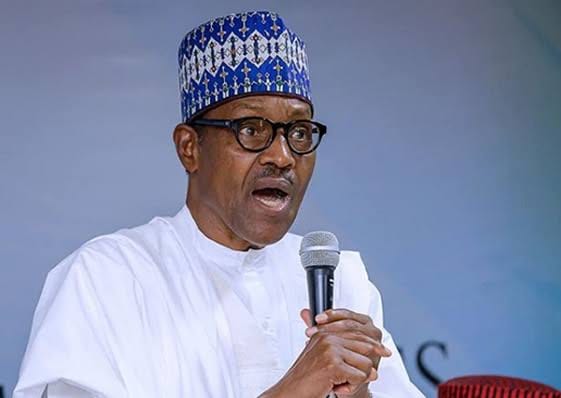
President Muhammadu Buhari Thursday accused the state governors of corruption and diversion of the local government allocations to own personal treasury.

President Buhari decried the menace, saying it was one of the major challenges that hindered the country’s development.

He said the state governors used to collect money on behalf of the council areas in their states and remit just half of such allocation to the council chairman.

Buhari disclosed this at the Presidential Villa in Abuja at an event hosted for members of the Senior Executive Course 44 (2022) of the National Institute for Policy and Strategic Studies (NIPSS), Kuru.

Buhari, who spoke about the height of corruption in the country, said the ugly behaviour of the governors also encourages corruption in the local government system, thereby inhibiting development at the grassroots.

He added, “Speaking from personal experience, a Chief Executive of a state, a qualified lawyer, trained, the treatment of local governments, what they did, this is my personal experience.

“If the monies from the federal government to state governments is N100m, let’s put it at N100m. N50m will be sent to the chairman with a letter that he’ll sign that he received 100 million.

“The governor will pocket the balance and share it with whoever he wants to, and then the chairman of the local government will see how much he must pay in salaries; to hell goes development. Monies for the salaries will be given, and the balance will put in his pocket. This is what is happening.

“This is Nigeria. It’s a terrible thing. You cannot say the person who was doing these was not educated. He was a qualified lawyer, and he was experienced, yet he participated in this type of corruption.

“So, it’s a matter of conscience, whichever level we find ourselves. As a leader, you sit here, with all the sacrifices the country is making by putting you through institutions and getting you ready to lead.

“The fundamental thing is personal integrity. May God help us.” The president said.

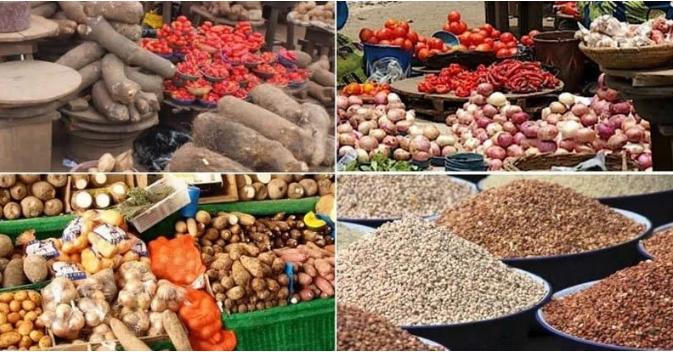
Food loss and waste: Scare of food insecurity

By Lawi Auwal Yusuf

An upsurge in food loss this year in some states, specifically those devastated by disastrous series of flooding that destroyed farmlands and carried away the produce, has raised some concerns about food insecurity in Nigeria. Several media reports actually talked about the widespread flooding damaging dwellings, large swathes of farmland, and infrastructure and displacing millions of people, only leaving them struggling to salvage the remains of their harvest. To this end, over 20 million Nigerians were projected to be facing food scarcity. Crops lost to the pandemic flooding coupled with lower yields, exorbitant prices of fertilizer and security challenges are likely to precipitate shortages and make prices costlier.

Indeed, Nigeria cannot afford to battle famine currently as it is facing a myriad of other extreme challenges. We recall that a 2021 UN report revealed that almost half of all food produced would never be consumed. Nigeria loses and wastes roughly 40% of its total food produced annually. Being the highest in Africa, with a total of 37.9 million tons of food that is thrown into the trashcans of households, restaurants, retailers and other food services. It further disclosed that each Nigerian discards almost 189kg of food every 12 months. No doubt, this trend, augmented by this year’s nosedive in the food supply, will famish more Nigerians.

But the big question remains, are Nigerian authorities conscious of this awful threat? Unfortunately, the government’s continued abysmal attention to the problem is evidenced by its lackadaisical disposition in dealing with the issue. The relatively paltry budgetary allocation to agriculture has made us more assured that they don’t give a damn about food security.

To add insult to injury, Nigerians are not yet willing to back away from food squandering, which they see as normal. The problem’s exacerbation implies that this behaviour is deeply entrenched as a lifestyle without visualising its social, economic and environmental repercussions. Wealthy individuals continue to store excess food while impoverished Nigerians remain at the mercy of starvation.  However, cutting food loss and waste is essential as more people continue to die of hunger every day, whereas millions of tonnes of edible food that can save their lives are extravagantly trashed into landfills.

Generally, food loss or waste is the food that is discarded and lost uneaten and occurs at either the production, processing, retailing or consumption stage of the food supply chain. Unlike in the Western metropolis where most food is wasted at the consumption level, contrarily, most food in the third world is lost at the production stage. Though food waste is a component of food loss, the two terms differ, considering the point at which the loss occurs.

Food loss is the decrease in quantity or the quality of food in the production and distribution process. While food waste is the removal of healthy food at the consumption level from the supply chain and usually occurs in shops or at home. Both are mostly caused by poor stock management, expiration, negligence or the indifferent act of throwing away half-eaten food.  

Consequently, food loss and waste undermine the sustainability of our food systems; hence, they cannot be resilient if they are not sustainable. When food is disposed of, all those resources used to produce it are wasted equally. This includes water, land, labour, energy, capital and precious time. Similarly, they have negative impacts on national food security as well as its availability. Nonetheless, they also help in pushing prices up while depleting farmers’ and retailers’ incomes.

It is gratifying to note that the disposal of food in junkyards leads to greenhouse gas emissions that exacerbate climate change. Studies have shown that more than 10% of global greenhouse gas emissions are a result of uneaten food. In addition, food disposal also produces methane, which is 23 times more potent than carbon dioxide. Bacteria produce methane as they decompose sludge in waste treatment facilities and other decaying matter in garbage lots.

Actions are necessary to check this exponential growth in food loss and waste that threaten national security in order to ensure self-sufficiency, maximize the use of the food we produce, increase profits and be thrifty with our natural resources. This will go a long way towards enhancing the efficient use of these scarce resources, mitigating climate change, increasing exports and reducing imports, and above all, supporting food security and nutrition.

 In view of the foregoing, it is necessary to combat the underlying causes like poor transport and storage facilities, unstable power supply, lack of preservation knowledge and techniques, and unplanned buying and excess cooking. Moreover, behavioural change will undoubtedly make a difference too.

Instructively, Nigeria must do all its best, come what may, to steady this monumental failure in food production as the demand for more food increases year on year due to its acutely growing population. Equally important is the need for the government to fill up the broader supply gap created by this year’s immense loss so as to meet up the national demand to forestall dearth in this already ailing country.

Lawi Auwal Yusuf wrote from Kano, Nigeria
Kano 2023: I never said we’ll abolish Kano new emirates – Abba Kabir

By Aisar Fagge

The gubernatorial candidate of the New Nigeria Peoples Party, NNPP, Eng. Abba Kabir Yusuf, popularly known as Abba Gida-Gida, said we never said we would abolish Kano’s new emirates.

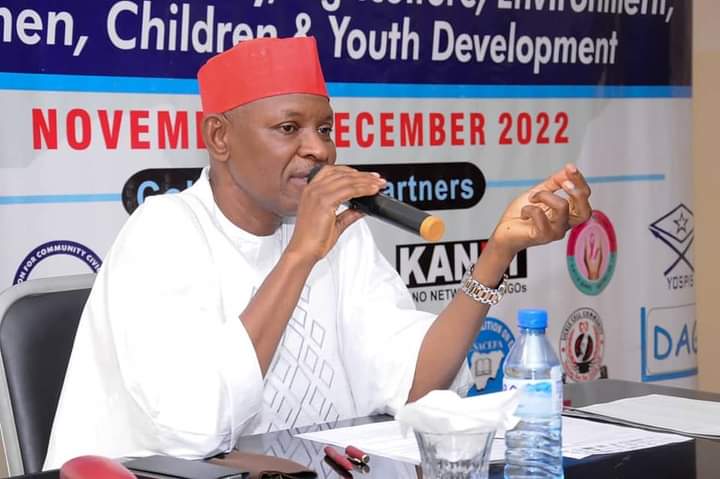
Yusuf made this statement Tuesday during a continuation of interactive session series organised by a coalition of 21 Kano CSOs and NGOs aiming to promote peace and development of Kano State.

He said, “It is APC who are making this campaign of calumny. They went to Gaya Emirate, gathered their elders, feeding them with this blatant lie that Abba would abolish their emirate if elected. Don’t forget in our midst; we have politicians and followers from all these new emirates. They never see any evil intention in us. Had they seen anything like that, they would have abandoned us because they love their localities.

“What these people don’t understand is that Kano people are wise and educated. If you go for a campaign, use your projects and programmes. Stop spreading lies about us and our administration. They made another false accusation about five-kilometre roads that we stole money! [Who stole Kano’s money?] I have been challenging Ganduje for one-on-one debate on five-kilometre roads, but he refused”, he boasted.

Responding to a question about whether, if elected, he would continue with the APC’s uncompleted projects. Yusuf said, “We have been going around supervising their projects and seeing the ones that were properly planned and how they will be completed. Any meaningful project that has a direct impact on the life of the citizenry will be completed. But congested places that are making life difficult for people will be decongested.”

The convener, Dr Aminu Magashi Garba, thanked Eng. Abba Kabir Yusuf, his team, members of the press and all those who made the event successful.

Kano 2023: NGOs are part of my government – Abba Kabir

By Aisar Fagge

The gubernatorial candidate of the New Nigeria Peoples Party, NNPP, Eng. Abba Kabir Yusuf, also known as Abba Gida-Gida, said Non-Governmental organizations (NGOs) are part of his government.

Yusuf made this statement on Tuesday during a continuation of interactive session series organised by a coalition of 21 Kano CSOs and NGOs aiming to promote peace and development of Kano State.

Yusuf said, “NGOs are part of my government. I need creative people who will assist us to make Kano State better. People seem to relegate the power of NGOs when it comes to good governance. They have important roles to play in the socio-economic aspects of human development. Our laws have recognized them. They can even take anybody who frustrates them to court and demand prosecution.

“Our administration will give special consideration to youth development. I, personally, have been supporting youths financially in various capacities, including national competitions. Social media activists and influencers are also part of our plans,” he added.

When asked about Child Protection Bill, the former commissioner said, “We’ll support it. We’ll implement it. We’ll give it maximum support. We’ll bring it back even if it is discarded. These poor kids are being victimized and molested. We’ll not tolerate it anymore,” he frowned.

The event gathered people from all walks of life. People living with disabilities sent their representatives who complained about how they have been constantly ignored by politicians. He assured them important posts such as advisers, MD and [possibly] a commissioner. He lastly appealed to an audience who are eager to see his blueprint, which he said will be unveiled very soon.

The convener, Dr Aminu Magashi Garba, thanked Eng. Abba Kabir Yusuf and his team spared their time to grace the event and interact with the audience on critical issues on health, education, youths, women, the environment, commerce, agriculture, and technology, among others.

Katsina police arrest man, 53, who makes bulletproof charms for bandits

By Muhammadu Sabiu

A 53 year old man who makes bulletproof charms for terrorists and criminals in Katsina State is now providing the police with further details on his operations.

SP Gambo Isah, the State PPRO, told reporters that the suspect lives along Maiduguri Road in the State’s Sabuwa Local Government Area.

He further stated that he was detained by the police in Katsina on Saturday, November 26, 2022, as a result of a tip-off.

The Daily Reality has learnt that terrorists and other criminals in the states of Zamfara, Kaduna, and Katsina are paid N60,000 per piece for the bulletproof charm.

As the suspect was taken into custody it was discovered that he was wearing four bulletproof charms covered in jackets.