Month: November 2022

2023 elections: Kannywood members join APC presidential campaign team

By Muhammadu Sabiu

The All Progressives Congress, APC Campaign Council’s Director-General, Governor Simon Lalong, has approved select Kannywood members to join the council ahead of the 2023 presidential election.

Lalong made the comment in a statement published in Jos, the state capital, signed by his spokesperson, Dr Makut Macham.

The inclusion of film practitioners, according to the director general of the APC’s presidential campaign, was done to increase the involvement of artists from the northern region in the campaigns.

According to Lalong, Bola Tinubu, the APC presidential candidate, recently visited Kano and spoke with group members, which led to the approval.

He added that the APC presidential candidate had pledged to give Kannywood members a chance to participate in the campaigns, showcasing their skills while also aiding the party in winning the upcoming general elections.

The Kannywood group has Abdul Amart as Director, Ismail Afakallah as Deputy Director and Sani Mu’azu as Secretary, with other leaders heading different divisions.

Quest for traffic kills quality journalism in cyberspace – Expert

By Uzair Adam Imam

A communication expert, Aisar Fagge, said the quest to keep up with breaking news has led to a high degree of error in online media reporting today.

Fagge, a lecturer at the Department of Mass Communication, Kano State Polytechnic, said the failure was due to the less or absence of proofreading and confirmation of facts by the editors.

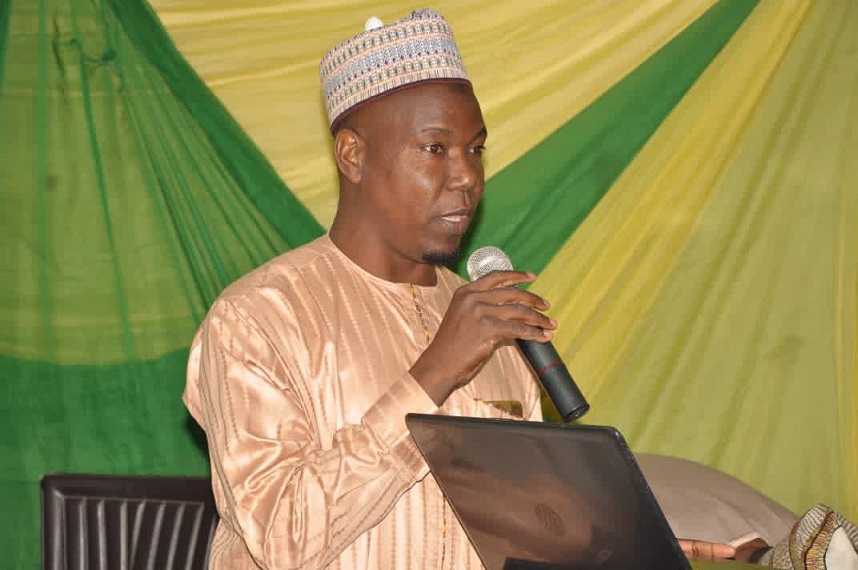
He said this on Sunday when speaking on the “Fake News on Nigerian Cyber Space: The Role of an Ideal Journalist” at a One-Day Workshop for Early-Career Journalists on Reporting Northern Nigeria, Fake News and Journalism Ethics.

At the event organised by the management team of The Daily Reality Newspaper that took place in Bayero University, Kano, Fagge said the absence of or weak gate-keepers contributed to the lack of quality journalism in Nigerian cyberspace.

He also attributed the high degree of error in today’s online news reporting to poor staffing, which leads to the single-handed operation of the media.

He said, “Almost everyone wants to establish an online newspaper. A single person wants to be a publisher, a reporter and an editor all by himself. No doubt, the standard of journalism falls.”

The event had in attendance many communication experts and journalists from within and outside Kano state, including some that joined the workshop via Zoom from overseas.

Fact-check figures to change narratives smearing Northern Nigeria, Don tells journalists  

By Muhammad Aminu and Uzair Adam Imam

A Senior Lecturer at the Department of Mass Communication, Bayero University, Kano, Dr Ibrahim Siraj Adhama, has urged journalists to fact-check figures to change the narratives by the media that paint Northern Nigeria black. 

Adhama stated this at a One-Day Workshop for Early-Career Journalists on Reporting Northern Nigeria, Fake News and Journalism Ethics organized by a Kano-based online media organization, The Daily Reality. 

The workshop, which was held at Bayero University, Kano, was organized by the management team of The Daily Reality Newspaper to groom journalists in Northern Nigeria on reporting.

He said our northern reporters should have apparatuses to re-examine statistics by the World Bank and IMF, among others, before reporting them for public consumption. 

Adhama, who spoke on “Issues in Reporting Northern Nigeria: A Framing/Agenda Setting Perspective, said the north was represented in media as economically and educationally backward with a high number of out-of-school children. 

He said, “We need to stop swallowing statistics about us. Most of these statistics by the World Bank, IMF, etc., will never favour us. 

“Thus, we should have an apparatus to re-examine them before reporting them,” he added.

Speaking on how those reports affect Hausa-Muslim northerners and, by extension, other ethnic groups, Adhama maintained that all the things we read about us in the Southern media were in themselves, despite claiming objectivity, subjective.

Abuja-Kaduna train service to resume this month, FG announces

By Muhammadu Sabiu

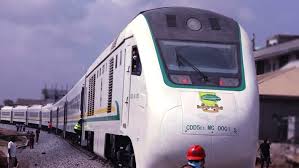
The Federal Government announced on Monday that the restoration of train service between Abuja and Kaduna is scheduled for this month, November.

The Transportation Minister, Mu’azu Sambo, said this in Abuja while presenting his ministry’s scorecard.

He claimed that sufficient security had been put in place to guarantee the well-being of the travellers. 

However, the Minister did not provide a precise start date.

The incident in March, which claimed the lives of several passengers and resulted in the suspension of rail operations on the Abuja-Kaduna route, according to Sambo, taught the ministry enough lessons.

Why struggle for political power cannot save the North

By Aminu Mohammed

This article may ruffle feathers and annoy some people, but it is done with good intentions. I have observed youths’ excitement and political campaigns for presidential candidates on different social media platforms. In some cases, friends and associates have turned to foes for having opposing views on their candidates. Some even terminate a business relationship because of politics.

Indeed, I am aware of the difficulties faced by the people, especially the increasing cost of living worsened by inflation. Nigerians are suffering because of the bad economic policies of the present government and the ongoing depreciation of the Naira, which has plunged millions of people into poverty. In other words, people’s living standards are getting worse, as life was better a decade ago than now.

First, I want to clarify that I’m not too fond of politics and have no interest in any presidential candidate for the 2023 elections. However, as a Nigerian, I am a bit worried about how our people campaign for their candidates on social media platforms. Some clerics have gone to the extent of warning people not to vote for candidates outside their region. Unfortunately, the northern youth have not learnt any lesson in the last seven years.

The fact of the matter is that the current structure and governance system only benefits the elite and their cronies, as well as a coterie of aides, while most people are pauperized. The northern youths who are dissipating energy on these presidential candidates should note that the elite do not care about them but their aggrandizement. The northern political elites are hiding under the name “Arewa” to deceive the masses while using proceeds of corruption to buy properties in London, Dubai, New York, Kuala Lumpur and Paris.

Have they pondered to ask why public universities were closed for eight months, and the elite did not see the urgency to address the plight of the striking lecturers? Has the life of an ordinary northerner improved in the last seven years, although President Muhammad Buhari is in power? Was there any economic transformation in the North in the previous seven years? In my 12 years of experience as a journalist in Nigeria and my interaction with politicians and government officials, I have concluded that politics will not rescue the North, but only an attitudinal change towards entrepreneurship and commerce will change the narrative.

Attitudinal change towards entrepreneurship/commerce

I have never seen a society transformed based on political patronage. I have never seen a prosperous community due to its people being fixated on political power. So let me clarify that our fixation on political power will not save the North. It will not take millions of children out of the streets or rescue our economy.

Our focus should be on improving our economy, empowering women through education, and creating businesses and initiatives that will improve the general well-being of our people. I have seen many cases of global transformation based on entrepreneurship and commerce. For example, we have all witnessed China’s transformation based on the manufacturing and development of small and medium-scale enterprises. This is also the case with countries in South East Asia such as South Korea, Malaysia and Singapore. Thus, emphasis should be placed on the youths’ personal development and self-reliance. The idea of depending on politicians for handouts instead of pursuing self-reliance in the North should be de-emphasized. No society has prospered based on such practices of handing out peanuts to hangers for survival.

 Acquisition of vocational/ digital skills

Our focus and pursuit of political power have never helped us in the past, and they will not help us going into the future. It only helped to enrich the northern political elite and establishment at the expense of the majority. What will save us is a society with an amalgamation of empowered youths equipped with the requisite education and modern skills relevant to the global economy.

I want to reiterate that our youth should learn vocational skills to support themselves and stop wasting their time blaming their relatives for not helping them or sitting in “Majalisa”. Academically inclined people should learn digital skills offline or online to get remote jobs or fend for themselves. They can also learn digital skills for free on platforms like Coursera, Simplilearn, Udemy, and Udacity, among others. I am appealing to northern youths not to waste their time antagonizing friends and associates over these charlatans masquerading as leaders.

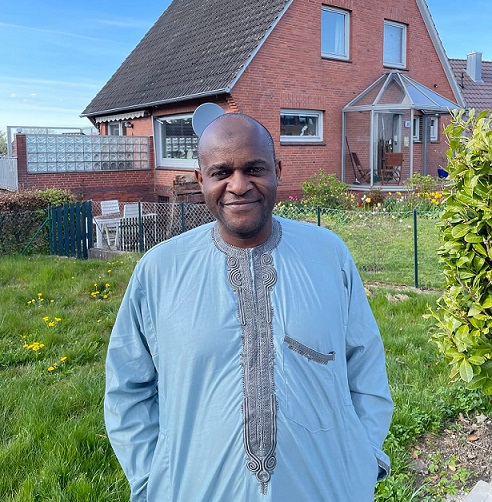
Aminu Mohammed is at the Kiel School of Sustainability, Chrtistan Albrechts Universität zu Kiel, Schleswig Holstein, Germany. He can be reached via gravity23n@gmail.com. 

Qatar introduces Islam to World Cup fans through murals

By Ahmad Deedat Zakari

The Qatari government is preaching and introducing Islam to World Cup fans through murals placed in public places.

TRT World reported on Saturday that as Qatar prepares to host the 2022 FIFA World Cup, it has placed several murals in public places bearing Prophet Muhammad’s (PBUH) sayings and traditions written in Arabic and English.

According to the report, the murals feature various sayings on mercy, charity and good deeds. They are situated across the Pearl District, a popular tourist attraction in the Qatari capital, Doha.

The initiative of Qatar’s government has been applauded by many Arab journalists and Muslims worldwide.

Qatar’s government has been unpretentious about not compromising Islamic values because of the 2022 World Cup. However, their stance on homosexuality and the LGBTQ community has been critical; the government deems it unacceptable to their country’s values and norms.

The Head of Security for the 2022 Qatar World Cup, Major General Abdulaziz Abdullah Al Ansari, in a statement, said the country does not want LGBTQ flags in the venues of the World Cup, and LGBTQ is not acceptable to the country.

He said: You want to demonstrate your view about the LGBTQ situation, do it in a society where it will be accepted. Don’t insult the whole society because of this. You cannot change the religion for 28 days”.

Qatar is the first country in the Middle East to host the World Cup, the biggest tournament in the football world.

The other side of Almajirai

By Sulaiman Maijama’a

Almajiri System, over the last few years, has come under intense pressure, greeted with mixed reactions by stakeholders, especially in northern Nigeria. Many people have written many pieces on the negative consequences of the system, ascribing it to be one of the underlying causes of poverty, hunger, and insecurity, among other social vices in northern Nigeria. For this reason, it has been a topic of debate. Some call for repositioning the system, and some agitate for its total abolishment. In contrast, others argue that it should remain as it is today.

Undoubtedly, the present-day Almajiri system is, to a greater extent, different from what was obtainable in the pre-colonial era, hence the need for a review. Before British colonisation, the system, aside from the authorities’  high recognition and promotion, had enjoyed the support of other major stakeholders, such as the community, the parents and the pupils. So also, the whole financial burden of the system was being taken by the authorities with public funds. These indicate that the Almajiri system in those days was somewhat formal and, therefore, more organised.

However, the magnitude of the attack the system has now come under has given it a distorted image. It has developed a stereotype in some people, so much so that on the mention of the word “Almajiri”, the first connotation that comes to mind is negativity – illiteracy, poverty, hunger, dishonesty, insecurity and all sorts of social vices.

The word “Almajiri” is a derivative of an Arabic word, “Al muhajirun”, which could be traced right from the migration of Prophet Muhammad (peace be upon him) from Makka to Madina. Those who migrated with the prophet to Madina were called ‘Al-Muhajirrun’, meaning migrants. In Nigeria, the word “Almajiri” refers to those, usually teenagers, who are sent by their parents from respective villages and settlements to urban centres in the quest for Qur’an knowledge.

2014 UNICEF report estimated the number of Almajiri conservatively to be 9.5 million in Nigeria, predominantly in the northern part. If all of them were a nuisance, as widely believed by some people, the situation of our region would be worse than we could imagine. 

There is no doubt that there are bad eggs among them, which applies to every category of people. But, as much as bad eggs, there are equally good ones among the Almajiris who have passed through the system and become successful in different facets of life.

Almajiris excelled

Adamu Garba, a former Nigerian presidential aspirant, in an interview with the Punch Newspaper, says the Almajiri system in northern Nigeria produced some of the wealthiest men, including Africa’s pride, Aliko Dangote and the founder of BUA Group, Abdul Samad Rabiu, amongst others. Garba said he was once an Almajiri before he acquired Western education.

When asked whether the Almajiri system promotes terrorism, Garba said Boko Haram has no connection with the Almajiri system because of the dichotomy between Islamic denominations in northern Nigeria. “So, it is very unlikely that you have an Almajiri man becoming a Boko Haram,” he told The Punch.

Garba also mentioned that many business giants are products of the Almajiri system. “Again, if you go to [the] Kano market, most of the rich people in the market are Almajiri. They came through Almajiri, they were able to get [the] necessary training in the Almajiri institutions, and they were able to get to where they are.”

Similarly, several renowned Islamic scholars were once Almajiris. A typical example is Sheik Muhammad Bin-Uthman.

Testimonies from people

Some people interviewed narrated how their encounters with some Almajiri lefts them with a memorable impression.

Abdullahi Muhammad, a resident of Kobi, an Almajiri-dominated area in Bauchi, narrated how an Almajiri once returned his valuable lost items.

“I once forgot my valuable properties around my house. I gave up finding them, but to my surprise, an Almajiri found and returned them to a nearby mosque. It was announced after a couple of days. I claimed ownership and recovered my items intact. I was surprised [at] how honest the boy was.”

In an interview, Aisha Abubakar, a housewife in the Kobi area in Bauchi, revealed that she had two little Almajis coming to help her with housework.

“Two little Almajis come daily to help me with some housework — they fetch me water, wash clothes, and sometimes I send them on an errand. I give them food and sew them clothing when they go home during holidays. For the past two years, they have been coming. They are honest”, she said.

Maryam Abdullahi, another housewife in the Gwallaga area, Bauchi, said she retained an Almajiri who, apart from helping her with housework, teaches her little children Arabic alphabets.

“I have an Almajiri that comes on Thursdays and Fridays to give Qur’an lessons to my children. I’m happy now that my children are good in the Arabic alphabet and Qur’an recitation, courtesy of the lesson they receive from this boy ( the Almajiri). I cannot thank him enough.”

When asked how honest and disciplined she finds the Almajiri, she said, “I send him uncountable times with money to buy foodstuff and other items, and I always find him unblemished.”

Murtala Aminu (Ɗankasuwa), a trader in an Almajiri-dominated area, when asked how he finds the Almajiris around him, he asserted that their stay in the area is a blessing.

“They recite the Qur’an every blessed day and night. This gives us tranquillity and peace of mind. In addition, we cite them as an example for our children to emulate their hard work searching for knowledge. Many of them memorised the Qur’an by heart. What could be more delightful?”.

We take good care of Almajiris under our watch — Almajiri teachers

When interviewed, some Almajiri teachers revealed to us how they strictly manage the Almajiris under their tutelage to be well brought up and face the realities of life early.

Mallam Muhammad Shafi’u Inuwa, an Almajiri teacher in Sabon Gida Tsangaya school, said, “under our school, we have about a  hundred Almajiris. We raise them early in the morning to take classes between 5:00 am and 10:00 pm. In the afternoon, we allow them to work to earn a living. At night, between 8:00 pm and 10:00 pm, is also time for classes. We ensure that all the Almajiris return to their apartments when it is time for sleeping.”

On his part, Mallam Khamisu Ali (Gwani), another Almajiri teacher, said, “we try in this Tsangaya (Almajiri school) to imbue in them (the Almajiris) the spirit of hard work. Moreover, we encourage them to be self-reliant because to work and earn a living is better than to beg; that is why we allow them on school-free days (Thursdays and Fridays) to acquire skills.”

When asked whether the parents of the Almajiris come to check on their wards, Mallam Gwani said, “we are in contact with their parents. We face some challenges regarding this, but plans are underway to make it necessary for every parent to come in person and check on their wards at certain intervals.”

Regarding learning efficiency, Mallam Gwani stated that they had produced brilliant reciters, some of whom memorised the Qur’an by heart as teenagers.

Some Almajiris do not beg nor chant for food

In their efforts to face the realities of life and actualise self-reliance, some Almajiris interviewed claimed to have never begged nor gone to houses chanting for food

In this interview, a teen Almajiri, Zaharadden  Manu, explained how he sustains his life by harnessing and utilising the skill he learned back home before he was taken to Almajiranci.

“Every day after school hours, I go around nearby communities to do shoe shining, and it earns me a living. Then, on Thursdays and Fridays, I fetch water to housewives for food or money”, he said.

Musa Aliyu is an ambitious Almajiri who reconciles Qur’an learning and hand work. When asked where he sees himself in the decade, he said, “I see myself in the future as an educated person and a business owner with employees under me. I pursue this dream to the best of my ability.”

It was observed that on school-free days, markets and commercial centres get populated with Almajiris who do different works to earn some money to live on.

Give Almajiris the atmosphere to harness their full potential – Educationist

Comrade Abdullahi Yalwa, an educationist lecturer with the Department of Crimes Management and Control, Abubakar Tatari Ali Polytechnic, Bauchi, opined, “I think that abolishing the system may not be realistic or so easily achieved. What should be done is to review and revise to align with realities. There is a correlation between nature and nurture, and the two must synchronise to give an effective and responsible person. If one is bound to succeed if given a better condition, he would be double or triple or would be in the book of record for the exceptional display of talent.”

Comrade Yalwa further said, “to maximise the benefits and reduce or eliminate the negative effects of the system. Parents need to be responsible by sponsoring their children when searching for knowledge. They should give them enough resources to manage themselves, visit them periodically, give them what they need in terms of their basic need and also appreciate the person taking care of them in order not for him to use them as slaves.”

On what the government and relevant authorities should do, Comrade Yalwa recommended that “the Almajiri teachers ought to be registered by the government, and a maximum number of students should be allotted to each, and they should have the basic necessities, especially accommodation facilities, where people have a responsible and decent life.”

Maijama’a is a student at the Faculty of Communication, Bayero University, Kano and wrote via  sulaimanmaija@gmail.com.

Kano Censorship Director marries Kannywood star, Rukayya Dawayya

By Habibu Maaruf Abdu

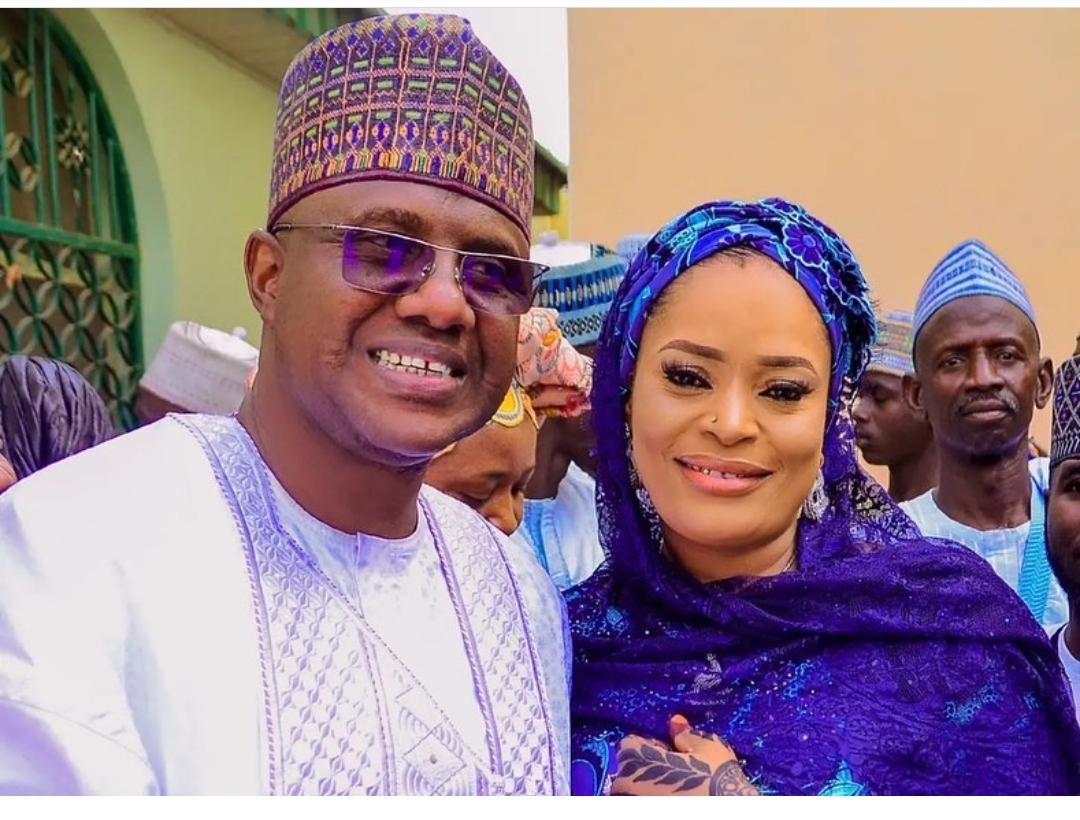
The Executive Director, Kano State Censorship Board, Alhaji Isma’ila Na’abba Afakallah, has tied the knot with veteran Kannywood actress, Rukayya Umar Santa (Dawayya).

The wedding fatiha took place on Friday, November 4, 2022, at Tishama Jumu’at mosque in Kano, after months of speculations about their relationship on social media.

The 37-year-old actress, who is also the founder of Dawayya Movies Nigeria Limited, appeared in hundreds of films in a career which spanned 22 years. Her last production, Ummi Sambo was released in Cinemas on 6 December, 2019.

This is her second marriage as she was previously married and has a son.

Imminent attacks on US: UK warns own US-based citizens to avoid public places

By Muhammadu Sabiu

The United Kingdom has warned its citizens in the United States (US) that terrorists are planning to perpetrate an attack on the US.

It also urged its residents there to remain cautious and stay away from public gatherings.

In a new travel warning to British people in the US on Friday, the UK stated that terrorists may target crowded areas, places where foreigners congregate, or transportation routes.

This may be related to the security warning issued by the Federal Bureau of Investigation (FBI) to Americans in New Jersey regarding terrorist attacks on synagogues.

Recall that a week ago the US and the UK issued security alerts warning that terrorists were preparing an attack on Abuja, the capital of Nigeria.

KASU Dean, Prof. Adamu Ahmad Rufa’i, earns a badge of honour

By Abba Muhammed Tawfiq

ProfessorAdamuAhmad Rufa’i, the Dean, Faculty of Allied Health Sciences, Kaduna State University (KASU) and the first and presently the only Professor of Physiotherapy from the North of the (river) Niger, becomes Fellow of the Nigeria Society of Physiotherapy (FNSP). The highest and most prestigious honour of Physiotherapy in Nigeria was meritoriously conferred on him for selfless service and support in advancing the cause of training and practice of the profession and society.

The fellowship award was conferred on  Friday, October 14th,  2022 in Enugu State during the 62nd Scientific conference and 63rd Annual General Meeting of the Society, held from 9th to 15th October 2022, at the  Amodeo Event Centre, Enugu, Enugu State, Nigeria.

The ceremony was graced by the presence of the National President of the Nigerian Society of Physiotherapy, Dr.(Mrs) Nina Nnenna Chigbo and members of her executive council, Chairperson, Medical Rehabilitation Therapists Registration Board of Nigeria, Dr (Mrs) Umo Udom Registrar, Medical  Rehabilitation Therapists Registration Board of Nigeria, Dr(Mrs) Olufunke Taibat Akanle, Past NSP Presidents in persons of; Dr Felix Olukayode Faniran, Dr Taiwo Oyewumi, Dr Rufa’i Yusuf Ahmad and other important dignitaries. 

Professor Adamu Ahmad Rufa’i has consistently demonstrated impeccable quality leadership in various capacities and showed a high level of professionalism in all of his dealings.

The erudite Professor is a member of the Board of Trustees (BOT), Nwuga Physiotherapy Foundation, Dean of the Faculty of Allied Health Sciences, Kaduna State University, the pioneer Faculty to reach international standard by commencing the  Doctor of Physiotherapy DPT program in Nigeria. He was also the Chairman of the Education Committee of the NSP from  2016 to 2020.

Along with the erudite Professor are three (3)other eminent Physiotherapistsconferred with this prestigious award. They are Dr Saliu G. Akinwale, Director and Head of the Department of Physiotherapy, University of Ilorin Teaching Hospital, Ilorin, Kwara State. The Chairman, Establishment Committee of the Nigeria Society of Physiotherapy, Dr Alhaji Abdul Wasiu Jimoh. A former General Secretary of the Society of Physiotherapy. Dr Olaniyi Oladire, Director and Head of Department of Physiotherapy Federal  Medical  Centre Owerri, Imo State.

Congratulations to the silent achiever and man of several firsts as you add yet another feather to your cap of success.