Month: August 2022

It is an “S-A-N” not a “SAN”

By Hussaini Hussaini

A few days ago, after witnessing the interment of a late Senior Advocate of Nigeria (SAN), I made a grieving post on my social media handles as follows:

“It looks beautiful to witness the admission of an SAN into the inner bar; and it is so direful to witness the laying of a late SAN into the inner earth. The name, the prestige, gone! Bottom line is to watch the end as we watch the goal.”

I received several direct messages seeking to correct my perceived grammatical error in using the indefinite article “an” to “SAN” in the first line of the above post. But in the true sense, there is no error in it, based on the popular usage of the term within the legal circle in Nigeria. An average lawyer uses the term as an abbreviation like “etc” not as an acronym such as NATO or CITAD. So forgive us for not using the dots like “S.A.N.”, which is typical of some abbreviations.

Therefore, an average lawyer pronounces the term to sound like “es-ey-en” and not sound like “-san” as in “Sani”, “san yoghurt”, or “San Francisco”. The contrary is the usual way of pronouncing the term by an average non-lawyer in Nigeria.

It is known that “a” as an indefinite article is attached to a word whose pronunciation starts with a consonant sound, while “an” is attached to a word which starts with a vowel sound. Therefore, since an indefinite article is attached to a word based on the sound of its preceding letter(s) of the alphabet, such as saying “an hour” or “a unanimous”, I believe a lawyer will be correct to say “an SAN”( es-ey-en).

I also said “a late SAN” in my post quoted above. However, I think that is not an issue because the article “a” serves the adjective “late” and not the SAN that succeeded it.

I am not a grammarian, but I hope this little explanation explains the tradition, most especially to people outside the bar.

I can’t imagine how funny it will sound after one works day and night to achieve the silk and a colleague look at him in the eye and call him “-san”.

I sincerely appreciate the efforts of those who attempted to correct my mistakes, and I will always welcome the same at any time. Thank you so much.

Hussaini Hussaini sent this article via hussaini4good@gmail.com.

_____

The views expressed in this article are the author’s own and do not necessarily reflect The Daily Reality’s editorial stance.

FG/ASUU to resume negotiations as strike enters seventh month

By Muhammad Sabiu

The Academic Staff Union of Universities (ASUU) will resume talks today, over their protracted strike, with representatives of the Federal Government.

The meeting, according to the organization’s president, Professor Emmanuel Osodeke, is meant to discuss on one of the seven topics that ASUU is protesting about and “That’s the issue of renegotiation,” Osodeke said.

The chairman stated this in a Channels Television’s Politics Today yesterday Monday.

It is about “the renegotiation of the 2009 agreement. It’s not just about wages. It has to do with the system. The structure, the autonomy and other issues and how to fund universities.

“The government has reduced it to just salaries alone. But if they had looked at the whole agreement and implemented it, we would not be talking about funding.” Osodeke added

It can be recalled that on February 14, ASUU shut down public universities citing as their reason the Federal Government inability to respect prior agreements that both sides had made in their previous face-offs.

The issues of contention include funding for the revitalization of public institutions, earned academic allowances, the University Transparency Accountability Solution, promotion backlogs, among other grievances.

Sokoto: 350 houses, food items destroyed by flood

By Uzair Adam Imam

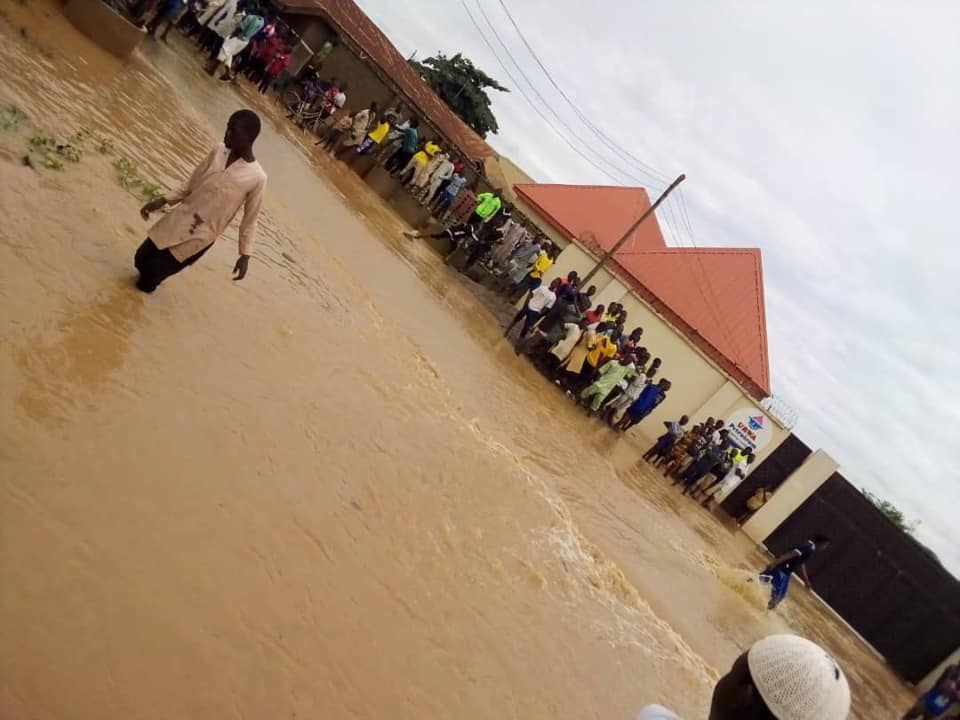
No fewer than 350 houses and food items were destroyed by the flood at three communities in the Tangaza Local Government Area of Sokoto State.

The incident that occurred over the weekend rendered many people homeless and washed away food items.

Abubakar Ghani, the spokesman for the state emergency management agency, confirmed the development Monday.

Ghani stated that the villages affected include Shiyar Ajiya, Makers and Runji, but said no life was lost during the disaster.

The Special Adviser to Governor Aminu Tambuwal symphatized with the people of the area.

He also assured them that the state government would provide relief materials to them as soon as possible.

The Daily Reality recalls heavy downpour has wreaked havoc in Jigawa communities, leading to the destruction of many houses, shops and prosperities worth millions of naira in the areas.

The Daily Reality reported that the communities affected included; Hadejia, Kafin Hausa, Kiri-Kasamma and some parts of Garun-Gabas, Tandanu and Bulangu of Jigawa state respectively.

Professionals have argued that there would be more flood in Nigeria in the next two months because of the climate change.

The Director General/Chief Executive Officer of the Nigerian Meteorological Agency (NiMet), Prof Mansur Bako Matazu, has warned Nigerians to brace up for more rains in the next two months.

NBA in crisis, suspends General Secretary

By Ahmad Deedat Zakari

The Nigerian Bar Association (NBA) has suspended its General Secretary, Joyce Oduah, over what it called “gross misconduct”.

This is coming after an emergency meeting of the National Executive Committee (NEC) of the association held on Monday, August 15, 2022.

The NEC meeting was presided by the 1st Vice President of the association, Mr John Aikpokpo-Martins, after the president , Mr Olumide AKpata, had voluntarily withdrawn from the meeting.

The major allegation levelled against Mrs Oduah was her solitary withdrawal of notices for the amendment of the NBA constitution, an action which has thrown the members of the association into pandemonium.

Troubles started for Mrs Oduah on Friday when the NBA President, Mr AKpata, issued a disclaimer annulling the withdrawal of the notices for the NBA constitution amendment .

Zulum and the unveiled dark side of his administration

By ImamMalik Abdullahi Kaga

It’s recently come to the knowledge of most Nigerians (non-residents of Borno State) about the underpayment in the educational sector and a few cases in the health sector, too, in Borno state. This didn’t surprise me as I see bunches of flares trending. If you are sycophant or unpatriotic, you’ll be mum or deny this unfolded truth.

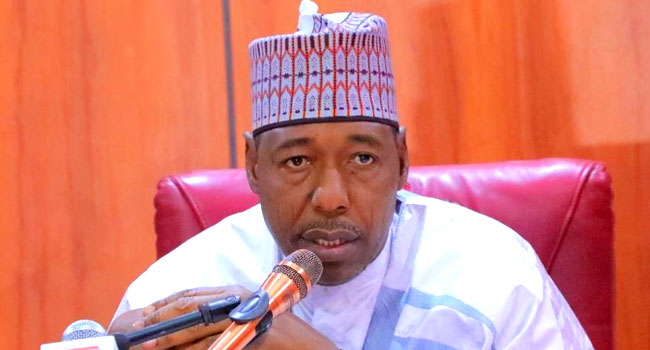
Zulum is indefatigably hardworking and devoted himself to Borno and Bornoans. He has, laboriously, much-needed efforts that deserve accolades, especially in curbing the Boko Haram crisis. A plethora of encomiums were given on his leadership and are still. Compared to the past administration, the status quo of security deserves a ‘must’ commendation. But this, howbeit, will not let us be mum.

As a resident and information hunter, I’ve had numerous encounters with local government teachers, and one common lamentation I got from all is underpayment. Of course, I don’t mean all are underpaid, but most (not underpaid ones) will not deny the grievance of their counterparts, so they tell.

A few months ago, I wrote about the unconstructive criticisms of Alhaji Mohammed Jajari, the PDP’s gubernatorial candidate, towards the incumbent governor. Jajari revealed the flaws bedevilling the state’s educational sector, which captivated the attention of Zulum and Gusau, his spokesman. The indigenes of the southern part of Borno state are on ‘no retreat’ choice to vindictively vote against Zulum cometh 2023 election. (You may denounce this).

Zulum’s administration is blessed with media adepts ready to either publicise the factual account of his efforts or hype his documentary, which will make many Nigerians credulous enough to believe whatever they publish. I think this is not limited to Zulum and his media but every politician.  

I’m calling on those who deny or are discordant with this truth to believe that Zulum is a human. He is not above fallibility as it’s the attribute of all humankind, especially leaders. I also call on the government to intervene urgently on this terrifying and terrible issue because education is the cornerstone in today’s life.

ImamMalik Abdullahi Kaga wrote from Borno State. He can be reached via abdullahiimammalik@gmail.com.

In the fight against malaria, what more should we do? 

By Lawal Dahiru Mamman

Malaria is a mosquito-borne infectious disease that affects humans and other animals. Malaria typically causes fever, tiredness, vomiting, and headaches. 

Malaria can cause jaundice, seizures, coma, or death in severe cases. It is spread exclusively through bites of infected Anopheles mosquitoes. The mosquito bite introduces the parasites from the mosquito’s saliva into a person’s blood. Then, the parasites travel to the liver, where they mature and reproduce.

Malaria is a disease that has bedevilled and is still bedevilling the human race, with a high level of incidence in African countries. The worry is that malaria is preventable and treatable but still affects millions all year round. According to the World Health Organisation, 627,000 people died from the disease, leaving another 241,000,000 infected in 2021.

To curb the menace of this disease, the government is spending a lot, the international community is donating, and non-governmental organisations are helping to see that the world is free from malaria. 

This is mainly done by purchasing insecticide-treated mosquito nets, insecticides of different brands, seasonal malaria chemo-prevention and antimalarial drugs in case of infection.

Families also do their due diligence in ensuring that houses are spread with insecticides to kill mosquitoes and that they all sleep in the comfort and protection of mosquito nets. However, all these will not be enough if the little things are not addressed because after all the efforts indoors, you go out of the house only to find out that those tiny beasts are lurking around to feast on you.

Of the over 3,500 species of mosquitoes, three, anopheles, culex, and Aedes, are primarily of economic importance because they are disease vectors. Anopheles carries a microorganism which causes malaria ‘plasmodium’ and other species to reproduce on standing water and complete a live cycle within 18 days or above, depending on the species.

Looking at this biology, we have so many mosquitoes around that can be deciphered; hence, to eradicate malaria, our drainage systems must be functional and provided in areas that lack them to prevent water from lodging, which invariably provides a breeding ground for the parasites. 

Residents should fill up areas with stagnant water, cut grasses close to their houses and resist dumping refuse in drainages and water bodies to allow free flow.

Communities should be informed about the dangers of dumping refuse in the drainages because, besides exposing themselves to the threat of flooding and its aftermath, blocked drainages are a good ground for mosquitoes to breed since water does not flow through.

A plant that repels mosquitoes should replace some of our ornamental flowers. A study published in Malaria Journal in 2011 titled ‘Plant-based Insect Repellents: A Review of their Efficacy, Development and Testing’ revealed that lemon grass alone could either kill or repel about 95% of certain species of mosquitoes. Likewise, trees like Cinnamon could be used as shelter belts because they can repel insects, mosquitoes inclusive. Further studies could be carried out on other indigenous plant species in order to find if they possess properties that will help eradicate mosquitoes.

Eradication of malaria may seem challenging, impossible and debilitating, but a malaria-free Nigeria is possible with a commitment to the above suggestions.

Mamman, a corps member, writes from Abuja and can be reached via dahirulawal90@gmail.com.

On the unity of the elites and the disunity of the masses in Nigeria

By Hassan Ahmad

Isn’t it surprising that despite the widespread public outcry, there is no real effort by any arm of government, traditional rulers or influential individuals to resolve lingering strike action by university teachers? This is just one of numerous simple but logical questions we should ask ourselves. 

As diverse as Nigeria is culturally, religiously, regionally, and even developmentally, her elites are the most united people you can find. But this unity managed to be sustained with a price: making sure the masses were united in hunger, unemployment, insecurity, lack of good education, access to poor amenities and others too numerous to mention. 

For instance, only ignorance would make Christians in Plateau revolt against Ja’iz bank’s reconstruction of the Terminus market based on a PPP agreement with the state government. While a Christian-dominated government sees its benefits, the common Christian masses wouldn’t see it that way. 

Isn’t it poverty that makes the northern Muslim send his child to the city to be fed by the public under the façade of pursuing Islamic knowledge? This same man would use all his energy to defend a politician from his region because he doesn’t want another man from another area to be his president.

Then you’ll have another set of educated and informed masses. The elites use this set as defenders. They are the intermediaries between the elites and the ordinary people and serve as their social media warlords. They defend their misdoings and praise their good acts no matter how unsatisfying. These people are stuck on a narrow path. They are not meant to be offered jobs in “juicy” government organizations and parastatals according to the design made by the elites. 

President Buhari, in his Sallah message, mentioned, “We don’t have jobs in government anymore. With technology, governments are becoming smaller, nimble and efficient”. He did not lie, but the truth remains that there will always be jobs for the children of the elites. 

What is more frightening is that you’ll find even the educated folks among the masses fighting the shackles of poverty not to better themselves and show a pathway to others but to belong to the elite class and continue with the abysmal state of dualism. 

In making sure they create a small world for themselves and their progeny, the elites put aside their differences – religion, region or political affiliation. This, in no small measure, makes them comfortable. They know that no matter who is at the helm of affairs, their businesses, investments, properties and status remain intact and unchallenged. 

Hence, a business mogul from Kano can go to Lagos to establish a refinery without being uneasy about it. Likewise, another owner of a travelling company from the east can have his vehicles go round the country to fetch him money. Again, a Northern governor can give out his daughter in marriage to the son of a South-Western governor. 

But then, when you come down to the masses, the tomato seller from the North is the number one victim of regional tension in the South. So also, the Igbo trader who finds his way to the remotest village in the North becomes the victim of religious tension—forgetting that they are all victims of misrule and deliberate segregation from the elites. 

As the situation grows further, it becomes more dangerous from the masses killing their relatives in the northeast in the name of establishing an Islamic caliphate to those killing their brothers in the southeast as separatists and bandits from the northwest terrorizing the poverty-ridden villagers.  

In all these, while the masses are the perpetrators, the masses are also the victims. But things have already gone so bad. The elites, too, are not guaranteed safety if the advancing motorcade of the C-in-C can be attacked. 

At this stage, the elites are under necessary, if not compulsory, reciprocity to make Nigeria stable again. The country has done so much for them in the past. The chickens are back home to roost. There is no need to point fingers at each other. 

To do this, the government must make sure that social justice prevails over any sentimental arrangements that have been in place. The government must understand that there is too much illiteracy and poverty in the land, and since they are the primary tools that lead to criminality, efforts must be made to curb them. 

The next administration can be said to be the most important in the history of our country. It mustn’t get it wrong. 

To the masses, we should understand that we are at a crossroads. As we can see in our country’s situation, we need not be begged not to sell our votes. You can sell your votes at the expense of your safety. If things go south, the elites have places to go around the globe in their private jets. You and I will be left to face our deaths in the hands of exciting gun-wielding criminals. Some of us were already asked to take arms and defend ourselves in Zamfara and Katsina states. The handwriting is already written on the wall. 

So please, don’t sell your votes and vote wisely. 

Hassan Ahmad Usman is a student of economics at the Federal University of Lafia. He can be reached on basree177@gmail.com or 77hassan.a.u@gmail.com.
Freed victim of Abuja-Kaduna train recounts how bandits preach, encourage them to pray

By Uzair Adam Imam

One of the released victims of the Abuja-Kaduna train attack, Hassan Aliyu, said the bandits used to preach them and encourage them to pray.

Aliyu disclosed that, while in captivity, they didn’t have problem with prayer as bandits allowed and encouraged them to pray. The man disclosed this to Daily Trust in an interview, adding that “there was no problem about prayers; we were never harassed in any way.”

He added, “It was just the feeling that you were not free because wherever you wanted to go you must take permission. Whatever you want to do you must ask for permission. The only time you don’t ask for permission is when you want to interact among yourselves.”

Aliyu further recounted how the bandits used Qur’an to preach to them, adding that the incident was quite interesting as the bandits gave room for interaction and questions.

He added, “I recall a particular issue where somebody said there was a verse in the Qur’an that, ‘You should call people to religion with wisdom.’ And asked why they were doing what they were doing.

“The preacher replied that there were nowhere two verses collided in the Qur’an. That before anyone is labelled an infidel, such a person must have been taught about Islam first.

“We disagreed. It was quite interesting. They would come in the night or during the day and we would interact. They would ask questions or you ask them questions and they would answer happily,” he stated.

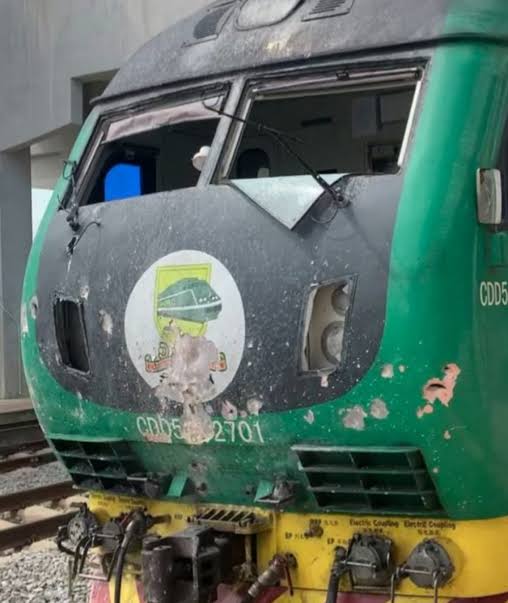
The Daily Reality recalls that on March 28, a Kaduna-bound train was stormed by gunmen. The attack led to the death of several persons while many were injured and others abducted.

Buhari reappoints Bashir Ahmad

By Ahmad Deedat Zakari

The President of Nigeria, Muhammadu Buhari, has reappointed his former media aide, Bashir Ahmad, as Special Assistant on Digital Communications.

Bashir Ahmad took to his verified Facebook account on Sunday August 14 , 2022, to announce his reappointment. He thanked the president for another chance to serve in his administration

He said: “Alhamdulillah! This is an honor. Thank you Baba Muhammadu Buhari, President of the Federal Republic of Nigeria for finding me worthy again and again, this time as your Special Assistant on Digital Communications. I will continue being a good ambassador of your administration, Baba.”

Bashir Ahmad had complied with Buhari’s directive to ministers and aides contesting elections to resign in June. He then contested the APC primary election to represent Gaya Federal Constituency and lost the election.

Rigasa community at the mercy of erosion

By Sumayyah Auwal Ishaq

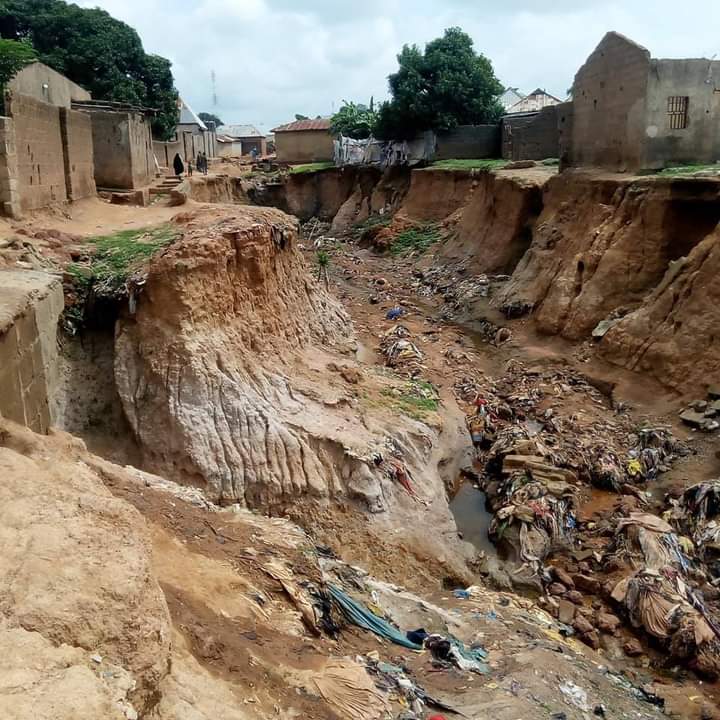
Residents of Rigasa, a major support base of President Muhammadu Buhari in the Igabi Local Government Area of Kaduna State, have cried out over the gully threatening to swallow up the community. The gully had swept away many houses in its paths, rendering many residents homeless.

The Daily Reality observed that areas badly affected by the erosion include Layin Cinema, Unguwar Yan Kilishi, Makera, Tarotaro and Madaki Habu Street. With heavy rainfall, the branches of the erosion are spreading fast as a vast expanse of land is caving in, threatening more houses.

The Secretary-General of Rigasa Development Forum, Mr Sani Ibrahim, who spoke on behalf of the affected communities, pleaded that concerned authorities should come and end the innumerable damages the gullies had done to them.

He said the gully had already cut them off from accessing each other and some other parts of Rigasa town. Another resident, Mr Umar Ahmad, said, “We no longer send our children on errands anymore, and worst still, the people in government, who came to canvass for votes, have abandoned us”.

Findings by The Daily Reality showed that the gully has cut off many routes making life unbearable for the hundreds of residents. A signpost in one of the areas has indicated that the Federal Ministry of Environment had previously awarded the contract in the past. The community is on the edge of the precipice and may be cut off from other communities if nothing is done urgently.