Month: August 2022

Inspiring story: a girl from fish selling to academic ladder

Otto Orondaam

So, 10 years and 8 months ago, I met a little girl who challenged me, inspired me and eventually shaped my life and the lives of thousands of others. This week, we paid her a surprise visit in Abuja. I hope her story will inspire you.

In December 2011, we met a little girl in Makoko paddling a large canoe, 10 times her size. She was 8 years old and never been to school. We were overwhelmed by her strength, so we trailed her to her house by the waterside. Why is a smart girl like her not in school? We wondered!

She jumped off the boat and went to the back of the hut where she was drying fish. She would later take the smoked fish to the market with her mum to sell. She was such an inspiration, but we knew she needed to be in school.
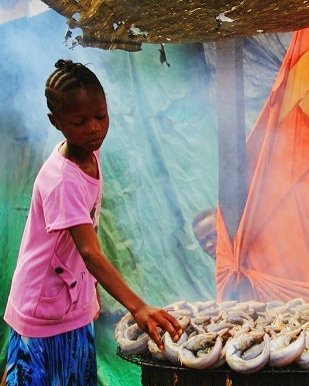
Sisianu drying fish

One of the conversations that challenged us was hearing that girls weren’t meant to go to school and this was a myth we had to dispel in the community. So, we asked her parents to give us a chance with her and that was how our journey began.

While we didn’t have a favorite child, Sisianu was smart, always happy and we took Sisianu as our special child. I genuinely wanted to see her succeed. We eventually got her family to allow us to enroll her into school. This was such a great win for us.

The negotiation process wasn’t easy, but we did it and that was one of our first recorded successes at Slum2School. This became our springboard, propelling us to speak to more families and eventually enrolling 114 kids into school in 2012. The community celebrated and so did we.

Sisianu was so passionate about being in school. She would arrive at school before 7am and help clean her classroom. She eventually became the best in her primary school class. She went on to win trophies in athletics and represented us at various sports competitions. We were so proud of her. “Can you see that girls can achieve great things?” We would brag about her during advocacy campaigns.

Her inspiring story inspired many caregivers to allow us enrol their kids in school. So in 2013 we enrolled 220 additional kids to school and 350 in 2014. Sisianu became our little ambassador and we didnt want to see her fail. But her journey from 2016 wasn’t linear, it was filled with ups and downs. She excelled at many points and also failed at some. What’s happening to Sisianu? We were very worried.

Being a girl isn’t easy, but being a girl having to take care of all your younger siblings while helping your mothers fish business, in an environment where education isn’t regarded as priority, is even more difficult. Sisianu’s education became threatened.

In 2016 her performance dropped and she started missing classes regularly. We got our counseling team to work with her and a lot was recommended. There were several distractions and responsibilities she had besides her education. In 2018, she lost the motivation to go to school.

That year her grades were reallly poor. She missed most mentorship sessions, and we observed several social patterns that led kids to eventually drop out of school. At this point we knew that she needed to leave her community and go far away where she could focus on her education.

We packed her bags, bought her a 1 way flight ticket and flew her to Abuja to join our kids on Scholarship at Word Of Faith Schools but she failed the scholarship exam.

The Athletic Sisianu

She scored 34% and was not offered a scholarship. We knew she would perform poorly but we had no alternatives. At this point our option was to either send her back to Makoko or pay the annual school fees which was about N1,000,000 per annum asides her upkeep and travel costs every quarter. In the end we would spend over N1.4m/year and this wasn’t something we had ever done.

We could also take her to a less expensive school but we didn’t want to isolate her from others and further damage her self esteem. But how do we pay such amount of fees for one child when it could support 30 other children? We were faced with a tough decision.

We had meetings and eventually decided to enroll her in Word of Faith School Abuja together with our other kids while working towards raising funds for her fees, travel expenses and her upkeep. It was a very tough decision but that was the only option we felt Sisianu truly deserved.

3 months later, she wrote her first term exams & from scoring 34% in her scholarship exam, Sisianu aced all her results with 8As and 4Bs. I was shocked and so was everyone. This was the first time since 2017 we saw the shining star that we had always known. How did this happen?

I remembered the day we all saw the results of her scholarship exam and she saw that she had failed. She cried bitterly. We also cried. She didn’t want to go back home so she promised that if she was given another chance she would do her best and make us proud. We trusted her!

In February this year, while I sat in the library preparing for my exams one snowy evening in Boston, I got a call from a random number on WhatsApp. It was very unlike me, but I picked up and I heard a voice screaming, “Uncle it is Sisianu”, “Oh how are you Sisianu” I responded.

She said, “I haven’t seen you since 2020 and you haven’t come to visit me since last year. You promised to visit us every year.”
“I am in school and I haven’t been around since last year.” I responded
“But you taught us to always keep to our promise.” She replied.

Those words felt quite heavy to respond to, so I paused and reminded her “but your mentors uncle Ekene, uncle Aaron, aunty Hauwa, aunty Ajibike and many others visit you often right? “Yes”, she replied, “we would be graduating from school this year, please try to visit us”
“I am using my aunty’s phone to call you and I have to give it back to her. Goodbye Sir.” The phone went off.

It was so tough to continue reading so I packed my bags and walked out of the library. It was indeed a long walk back home that night as I had a lot to reflect on.

At that point I had so much going on, and wasn’t sure when I was going to be back but I promised myself that I would visit her and our other kids before they graduated. Last month Sisianu completed her WAEC, passed her JAMB and this Wednesday she completed her final NECO exams.

Together with our leadership team in Abuja, I paid her a surprise visit at her school right after her final NECO exam. She spotted us from afar and this was what her joy looked like. She told me that she is the General Secretary in her school and shared all her achievements.

She shared her plans for the University and her gratitude to everyone who supported her. Reflecting on her journey left me truly speechless and teary, seeing that through her we’ve made a complete circle.

I am so thankful that we didn’t give up on her throughout the last 10 years. I am thankful to everyone who believed in her and in us.

Since 2019 after we took 4 of them out of Lagos to Abuja, Deborah has graduated and is a first-year student in Benson Idahosa University. Mariam is the deputy senior prefect; Mustapha is one of the best graduating students and Sisianu, she remains our shining star, ready for a new journey in the University and continuously inspiring everyone across her community. 

Our goal is that she attends one of the best Universities in the world we ask that you join us to make this dream possible for her.
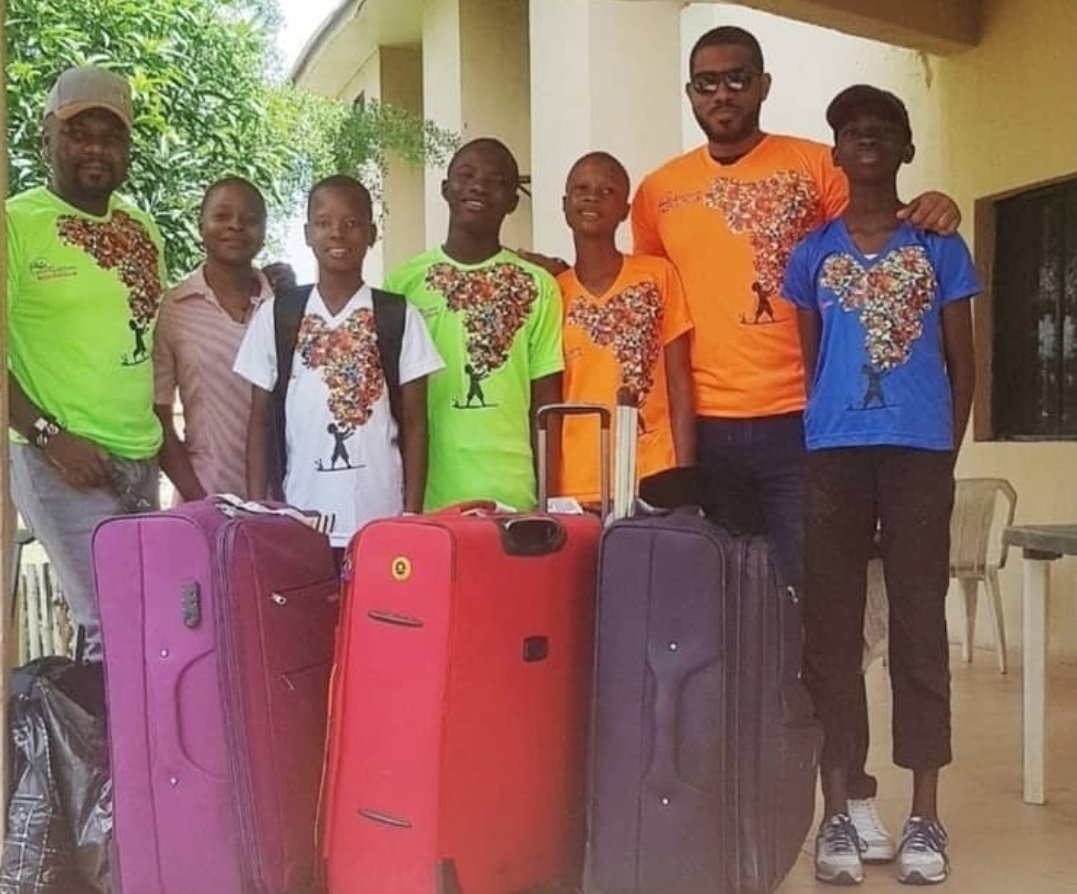
Slum2School Students

Written by Otto Orondaam, the founder of Slum2school Africa.
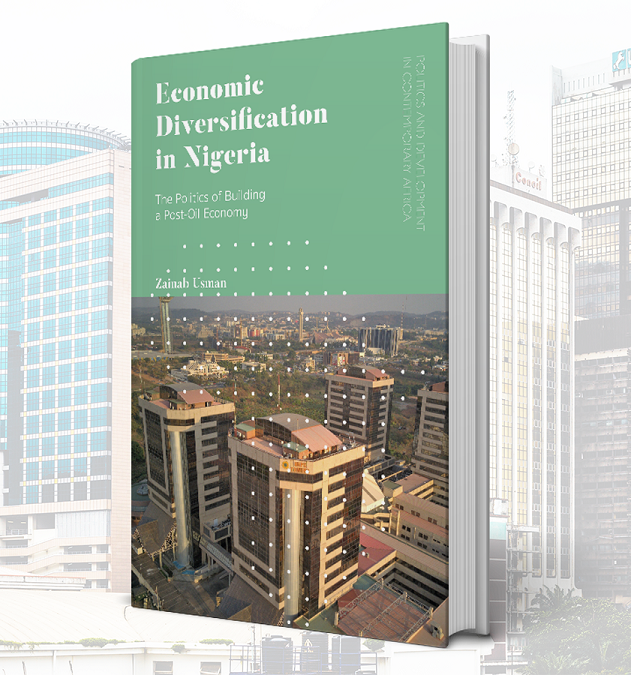
Book Review: ‘Economic Diversification in Nigeria: The Politics of Building a Post-Oil Economy’

By Abdulhaleem Ishaq Ringim

Economic Diversification in Nigeria by Zainab Usman is an in-depth analysis of Nigeria’s political economy that presents an apt delineation of the interplay of politics, institutions and policymaking in the process of economic development. Zainab’s is an attempt at instituting a diagnostic exercise to identify(beyond prevailing conventional narratives) major impediments to sustained development.

By repudiating ‘resource course’ and ‘backward neopatrimonilaism’ as the causal roots of Nigeria’s economic underperformance, the book presents a thesis that centres on challenges to economic diversification in resource-rich countries as the major impediment to economic transformation and development.

The author did a great job at identifying pathways to achieving economic transformation and establishing the state’s role in guiding the process but argued that the efficacy of the state’s guiding interventions remains a function of its institutional capacity which in turn depends on its political character.

Hence, to deconstruct Nigeria’s peculiar political character and its implications for economic transformation, the book deployed carefully designed frameworks for the analyses. Central among these analytical templates is the political settlement framework, which defines the influence of the distribution of political power on policymaking for development.

Per Zainab’s model, economic transformation, especially in resource-rich countries like Nigeria, depends on a kind of political settlement that distributes power among elite formations to ensure the emergence of a stable political coalition. This is why even while Nigeria has witnessed periods of semi-steady economic growth in her national life, such has never been adequate enough to usher in sustained development.

As an “Intermediate” State, Nigeria’s breed of political settlement is characterized by the formation of unstable political coalitions and cyclical political crises (especially in political transition periods). This has ensured that the country is always in crisis management. And the resulting policy and reform orientation has always assumed a manner that prioritizes short-term macroeconomic stabilization over long-term structural economic transformation.

The author, however, believes that such a political configuration is not immune to change. She explained that certain “critical junctures” determine whether a prevailing political configuration will change or persist. At these junctures, elites are constrained to take certain policy actions. And the economic outcomes of such policy actions depend on whether the assumed policy direction takes a stabilization or transformational orientation.

Using this framework, the author analyzed two subnationals, Lagos and Kano, to demonstrate the complex interplay of politics and policymaking and its influence on economic outcomes. The analyses mainly focused on critical junctures for both states and the resulting policy orientation and outcomes in relation to their contrasting political settlements. Lagos presented itself as a model for economic transformation while Kano a microcosm of Nigeria as it is.

The book concluded with recommendations on how Nigeria’s political settlement can be balanced by institutionalizing “zoning” as a power-sharing agreement, adopting a shared vision for transformation, and addressing market failures while emphasizing the imperative of building a post-oil economy. I find the book very interesting. It presents thought-provoking arguments and indeed updates our mental models on the challenges of economic diversification in Nigeria’s context.

Not that I agree with every postulation. In fact, I can’t entirely agree with the relegation of culture as an outcome of economic development rather than a determinant. Culture precedes economic activities(not to talk of development) in global historical trends, so I believe it cannot be an outcome of what it fundamentally precedes as far as existence is concerned.

As I posited some weeks back (linked), I belong to the school of thought that considers culture as a significant determinant of economic development alongside geography and climate. However, I believe culture itself is a product of nature, geography, climate and the environment.

I believe that at every point in human history, the culture of any people is determined and constituted by a combination of the powerful and inter-generationally persistent ‘cultural legacies’ the people have inherited over time (mostly developed in response to geographical and climatic determinants) and the cultural aspects developed as a result of the influence of [mostly unpleasant] environmental changes and the need to adapt to them.

Hence, I believe nature, geography, climate, and environmental changes determine the cultural compatibility and disposition(positive or negative) of any people towards development. Therefore, I have not seen enough reason to forgo Varoufakis, Gladwell and others on geographical and cultural determinism regarding economic development.

Nonetheless, the book is a masterpiece!

Insecurity: Kogi governor suspends traditional ruler, queries LGA chairman

By Ahmad Deedat Zakari

Kogi State Governor, Alhaji Yahya Bello, has ordered the suspension of a traditional ruler and queried the Chairman of Ajaokuta Local Government Area of the state because of insecurity

This was disclosed in a statement signed by the governor’s spokesperson, Onogwu Muhammad, on Sunday, July 31, 2022.

The Spokesperson said :

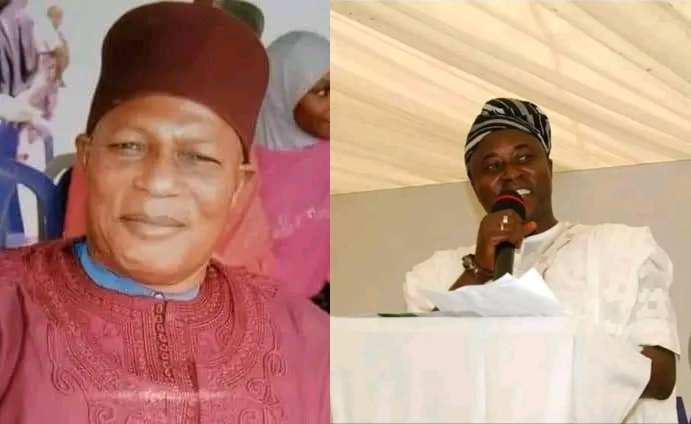
” Kogi State Governor Yahaya Bello has directed the suspension of the Ohi of Eganyi and Chairman, Ajaokuta Traditional Area Council, HRH Alhaji Musa Isah Achuja with immediate effect after an investigation that led to his arrest and detention by the security agency.”

Mr Muhammad added that the Chairman of Ajaokuta Local Government, Hon Mustapha Aka’aba has also been queried and asked to respond within 24 hours.

Mr Muhammad, in explaining the reason for the governor’s disciplinary action, also stated that: 

“The governor’s directive against the affected persons is in connection with the recent security breach in the area, which led to the untimely deaths of some security personnel on their legitimate engagements of maintaining law and orders. 

The governor strongly warned other traditional rulers across the state who may have connections in one way or the other with criminal elements in their domains to desist forthwith, saying that his administration will deal ruthlessly with anybody who romances with criminal elements, no matter how highly placed they are.”

PVC Registration: Nigerians groan over expiration of deadline

By Muhammad Sabiu 

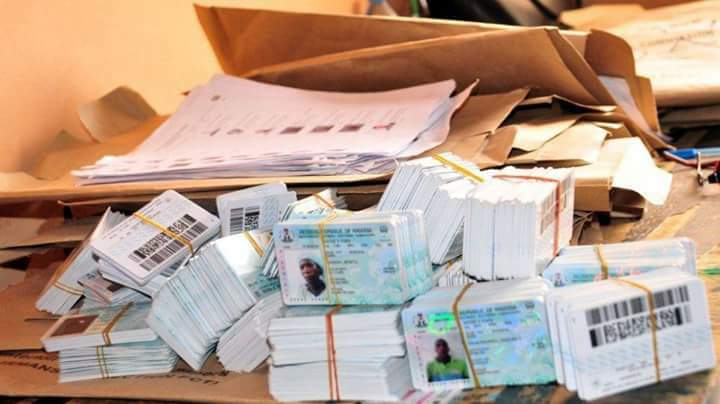
Nigerians who had not been able to get registered made a plea to the Independent National Electoral Commission, INEC, to prolong the Continuous Voters Registration, CVR, process as it came to an end yesterday.

In a rush to register before the deadline, which was set by the electoral authority on June 25, Nigerians flocked to many registration centres on Sunday.

In order to provide eligible Nigerians more time to apply for PVCs before the 2023 elections, INEC extended the application period from June 30 to July 31.

Many people have yet to register, despite the service being extended to churches and other locations in an effort to help with the process.

On Sunday, intended voters were furious in certain voting locations in Abuja, claiming that there were conspiracies to deny some Nigerians the right to vote.

An aggrieved PVC applicant was quoted by journalists to have said, “I think they just don’t want us to vote. Look at the people that are going to be denied the opportunity to participate in the election. What is wrong in this country?

“If you look around, you will notice that most of us here that have been here since 3 am this morning are youths. They are afraid of the revolution that is coming, and that is why they are deliberately pushing us away”.

Threatening to take their grievances to the street, he said, “we must hit the street to demand the extension of the exercise. It is our right to vote, and nobody should violate that right”.

Change Begins with Engausa Hub: Breaking barriers to digital skill acquisition

By Haruna Muhammad Inuwa

Nigeria is a great country. A country with great potential and great people. A giant of Africa and, of course, the most populous black country in Africa. Foreigners from other parts of the time – well, for some that have not travelled well – sometimes confuse Africa and Nigeria. This is because they tend to generalise that every black individual coming from Africa is from Nigeria. This is how dominating our great country has been!

In 2018, on March 10, President Muhammadu Buhari launched a national orientation program tagged “Change Begins With Me”. In the speech, he challenged Nigerians to realise that the change they want to see begins with them and that personal and social reforms are not a theoretical exercise. So, he practically says that for a developing country like Nigeria, everyone must get to work and realise their potential for the needed change we have been seeking. This must be a national assignment from Kano to Calabar, Lagos to Maiduguri. 

Embarking on a sacred expedition of bringing change in any society requires one to be passionate about their ideals. They must first identify a problem within. They must be willing to walk the talk. They must be willing to sacrifice a lot of time and resources. They must be believers in the change they wish for. Change is brought about so ordinary people can do extraordinary things. Hence, an ordinary citizen called Engr. Mustapha Habu Ringim founded Engausa Global Tech Hub. 

The Engausa model emerged as a one-size-fits-all solution in a society with system-wide problems. However, the approach is more interesting because it is skill-driven. Engausa Hub aims to empower these youths with digital skills in a community with battalions of unemployed youths. Engausa advocates teaching digital skills using home-based languages for accessible communication and understanding. From the city of Kano, Engausa Global Tech Hub is becoming a focal point of attraction to many university graduates, undergrads, Almajiris, and even those with natural talent and innovative ideas to be developed, managed or commercialised.

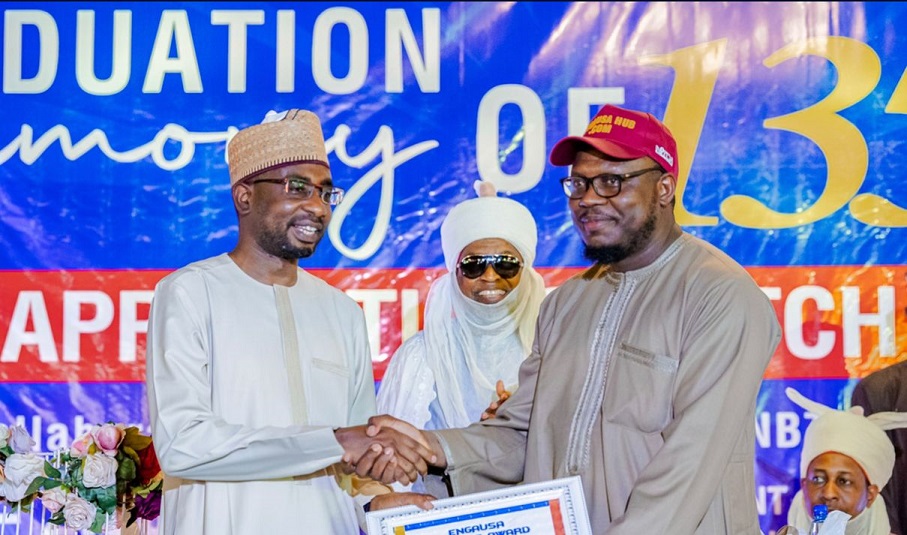
The Engausa story is inspiring because it centres on shaping the way things work and changing the narratives of our society. All thanks to the relevant authorities, who support the innovative activities of the Engausa Hub, the National Information Technology Development Agency (NITDA) and Technology Incubation Centre Kano. During the recent graduation of 1353 students who were rigorously trained in programming, video editing, blogging, graphics design and software development, social media literacy, and digital marketing, the DG of NITDA, Kashifu Inuwa, happily commended Engausa Global Tech Hub for this significant paradigm shift in the digital ecosystem.

Engausa Global Tech Hub thrives on breaking barriers and bridging gaps. So far, the hub has graduated over 1700 technology apprentices with over 50 innovation-driven enterprises owned and managed by the Engausa graduates. Statistically, the hub is turning into a school where you don’t need a college degree before earning a living. Many Engausa graduates are now managing their business; others work in private sectors or are independently freelancing.

Engausa Global Tech Hub seeks collaboration and partnership to expand its operations to other northern Nigerian states because a generational change can only be actualised.

Haruna Muhd Inuwa wrote from Lagos via diamondmuhd@yahoo.com.

ASUU Strike: who is to be blamed?

By Muhammad Abubakar

I believe that the government are entirely to blame for the incessant ASUU strike. This is because it’s their responsibility to provide all that the ASUU members need and pay them handsomely. The government should look into this so long as they want the development of this country. It’s widely known that if there are no teachers in the nation, there will be nothing in that nation but quite a bunch of problems. And ignorance will continue to increase rapidly — which we are not praying for.

A popular saying has it that “Teachers are the backbone of the society”. So, if this is true, why won’t they be respected by all and sundry?

Whoever knows how negatively this strike affects the students (the biggest victims), he would sympathise with them.

“Education is the passport to the future, for tomorrow belongs to those who prepare for it today.” This Malcolm X’s saying implies how bleak our future is!

Truth be voiced out, I completely don’t know the specific role those politicians, who are elected as the leaders of our dear country play in their respective offices. This is because they reluctantly failed to offer a helping hand to the students of public universitie out of the mess they are in. Why are they acting like this? Is it because of the fact that most of their children are not studying here in Nigeria, but rather abroad? In other words, is it they are not part of the victims of all this menacing issue? The answer is ‘yes’ I guess!

Indeed, we should pay attention to this issue. It’s clear now that there is no any public university student that is not affected negatively. For example: a student who supposed to have graduated since last year, as written on his/her ID card, is unfortunately still in the same position. Although I’m a higher level student, frankly speaking, it baffles me whenever I think about this. Why is our country like this for goodness sake?

The government should, therefore, do the needful and fulfill the demands of the ASUU members for the strike to stop. We hold the government responsible for whatever happen to us, our behaviour, our wellbeing and our development. They should also remember that we are also their children and one day, we may become leaders of the country and their children and other family members may be under our care!

ASUU, FG, what happens to students after the strike?

By Fatima Usman

The saying, “when two elephants fight, the grass gets to suffer,” is nothing but a fact. But unfortunately, in the case of the Academic Staff Union of Universities (ASUU) and the federal government (FG), the students are always at the receiving end, and students suffer the consequences of the fight.

At last, ASUU members will get paid and return to classes. What then happens to the students?

In 2020, when ASUU embarked on a strike that lasted for a good nine months coupled with COVID19, what did the students get in return after everything? Nothing! We only got expired rent, a disrupted academic calendar, and some items stolen from our various lodges.

After the 2020 strike, we never knew that another bigger one would await us soon. However, on February 14, 2022, another strike loomed again with the same demands the government failed to fulfil for nine months. This time around, only God knows our fate; five months strike and still counting, yet no positive response.

The Federal Government does not care about whether the poor masses get a quality education. They deny us our right to education by not providing enough equipment that students are supposed to use, not enough classes for lectures, and the teachers do not get well paid.

The ASUU strike has done more harm than good to the students. Some students don’t always get to serve their father’s land due to the age limit placed on NYSC. Once a student is 30 years they can no longer go for the one-year compulsory service. So many disadvantages come with embarking on this strike.

Because of these endless strikes by ASUU and the negligence of the Federal Government, we now have more cybercrime everywhere (Yahoo-Yahoo!), and some girls are now into prostitution as a means of survival.

We want to be compensated too after everything by increasing the age limit one can do the one-year compulsory service if we can’t get other compensation. At least this should be done.

Fatima Usman is a 300-level student of mass communication at IBB University, Lapai. She can be reached via usmanfatima499@gmail.com.