Month: August 2022

Kenya becomes the first African country to teach coding as subject in schools

By Damilare Dosunmu

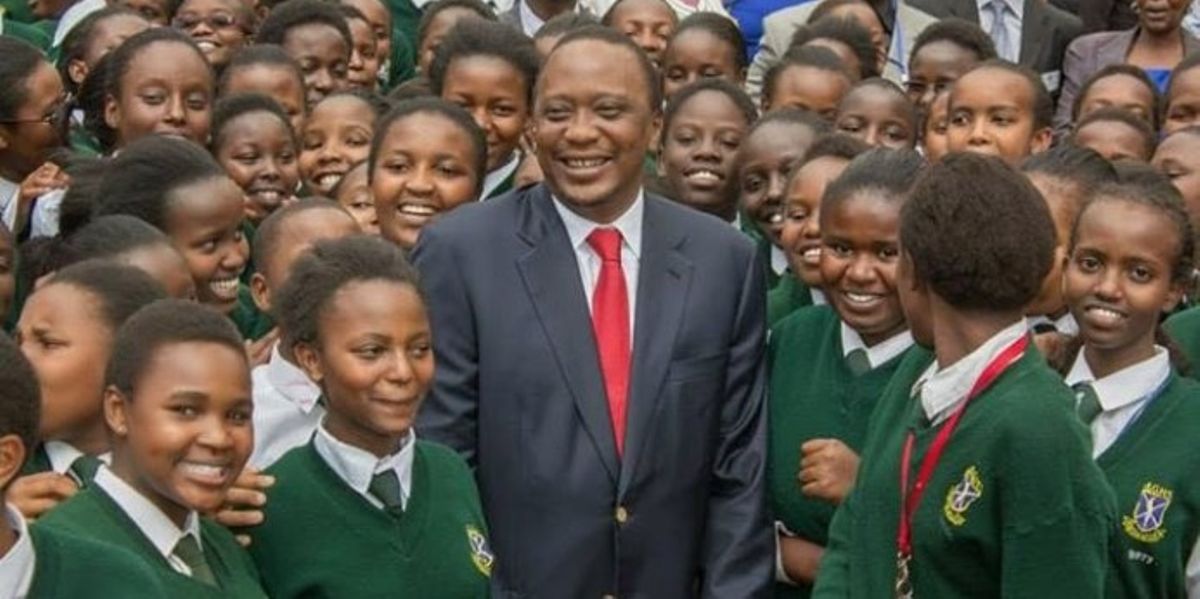
Last Friday at the State House in Nairobi, the president of Kenya, Uhuru Kenyatta, announced the addition of coding as a subject into its primary and secondary schools curricula. This new development makes Kenya the first country in Africa to approve coding as a subject of study in the two early schools.

 “I applaud the Kenya Institute of Curriculum Development for leading our nation to this landmark achievement, by implementing coding as a critical skill within our new Competency Based Curriculum,”  President Kenyatta said at the event.

The President also launched the National Cybersecurity Strategy 2022, which provides strategic interventions in addressing national cybersecurity challenges in Kenya. The Kenya National Digital Master Plan, which will run till 2032, was also inaugurated.

With all these digital roll-outs, the president, whose tenure comes to an end in a few weeks, is optimistic about the impact the National Digital Master Plan would have on the country. He believes the plan will establish the country’s leadership in ICT by fostering the growth of ICT-related businesses and creating an enabling policy, legal and regulatory environment for the greater adoption of e-governance.

“This, no doubt, will enhance employment creation, enable and scale up ICT innovation and the development of a dynamic and robust ICT sector that will enhance the growth of all sectors of our economy. The master plan also guides investors while planning their investment priorities,” President Kenyatta said.

The digital master plan’s target of establishing over 20,000 village digital hubs across the country will enable the government to employ an additional 40,000 youth directly to run the centres and train interested citizens.

Kenya continues to maintain its place as one of the hotbeds for digital innovation on the continent. This new initiative reflects an ambition to reimagine education and a solid dedication to building the future. And as it seems, both the private and public sectors are aligned with this vision. Just this year alone, Microsoft, Visa, and Google opened their first development centres in the country’s capital.

Source: www.techcabal.com

Hamas: The faith triumphant

By Bala Muhammad

Every Israeli Prime Minister makes it an article of faith to attack Palestine – both the West Bank and the Gaza Strip. But as the West Bank is usually led by the compliant and complacent so-called Palestinian Administration of PLO inheritors, it is mainly spared the fury of Israel. But Gaza, the home of HAMAS and Islamic Jihad, always takes the brunt whenever an Israeli leader wants to flex muscle and show ‘manhood’.

With each passing day of the Israeli aggression against the Palestinians, with each additional death of a child or mother, Muslims worldwide are becoming more militant, more fundamentalist, and more jihadic. This is very ominous for the West, on whose behalf Israel is doing what it is doing.

Samuel Huntington, who died not too long ago, wrote Clash of Civilisations. Now, more than ever before, this Clash is at hand. If there is any cause that unites Muslims today, it is the Palestinian Question; if there is any future war that Muslim youth would gladly join and wage, it would be the Jihad to liberate Al Aqsa, Al Quds and Palestine. But for the Western-propped-up Arab regimes encircling Gaza, many young people would have gone into the Strip to join the martyred army of Hamas and Islamic Jihad.

In the matter of HAMAS, Faith will always be Triumphant. Incidentally, The Faith Triumphant is the title of Chapter Eleven in one of the most important books of the Islamic Movement, Ma’alim fit Tariq (Milestones), written by the Movement’s leading intellectual and Martyr, Sayyid Qutb (1906-1966) of the Muslim Brotherhood, Ikhwan al Muslimun.

In Milestones, Qutb wrote: “Allah says, ‘Do not be dejected or grieve. You shall be the uppermost if you are Believers’ (3:139). The first thought which comes to mind on reading this verse is that it relates to the form of Jihad, which is actual fighting, but the spirit of this message and its application with its manifold implications is greater and broader than this particular aspect. Indeed, it describes that eternal state of mind that should inspire the believer’s consciousness. It describes a triumphant state which should remain fixed in the believer’s heart in the face of everything, every condition, every standard and every person; the superiority of the Faith.

“It means to be above all the powers of the earth which have deviated from the way of the Faith, above all the values of the earth not derived from the source of faith, above all the customs of the earth not coloured with the colouring of the faith, above all the laws of the earth not sanctioned by the Faith, and above all traditions not originating in the Faith. It means to feel superior to others when weak, few and poor, as well as when strong, many and rich. It means the sense of supremacy which does not give in before any rebellious force.

“Steadfastness and strength on the battlefield are but one expression among many of the triumphant spirit which is included in this statement of Almighty God. The superiority through faith is not a mere single act of will nor a passing euphoria or a momentary passion but is a sense of superiority based on permanent Truth centred on the very nature of existence.

“The person who takes a stand against the direction of the society – its governing logic, its common mode, its values and standards, its ideas and concepts, its error and deviations – will find himself a stranger, as well as helpless, unless his authority comes from a source which is more powerful than the people, more permanent than the earth, and nobler than life.

“Conditions change, the Muslim loses his physical power and is conquered; yet the consciousness does not depart from him that he is most superior. If he remains a Believer, he looks upon his conqueror from a superior position. He remains certain that this is a temporary condition which will pass away and that faith will turn the tide from which there is no escape. Even if death is his potion, he will never bow his head. Death comes to all, but for him, there is martyrdom. He will proceed to the garden while his conquerors go to the fire. What a difference!”

So wrote Sayyid Qutb. Let us now end today’s treatise with the following story on Challenge, the type the Palestinians are facing: “The Japanese love fresh fish. However, the waters close to Japan have not held many fish for decades. So to feed the Japanese population, fishing boats got bigger and went farther. The farther the fishermen went, the longer it took to bring in the catch. If the return trip took more than a few days, the fish were not fresh. The Japanese did not like the taste.

“To solve this problem, fishing companies installed freezers on their boats. They would catch the fish and freeze them at sea. However, the Japanese could taste the difference between fresh and frozen, and they did not like frozen fish. So fishing companies installed fish tanks. They would catch the fish and stuff them in the tanks, fin to fin. After a little thrashing around, the fish stopped moving. They were tired and dull but alive. Unfortunately, the Japanese could still taste the difference. Because the fish did not move for days, they lost their fresh-fish taste. The Japanese preferred the lively taste of fresh fish, not sluggish fish. So how did Japanese fishing companies solve this problem?

“To keep the fish tasting fresh, the Japanese fishing companies still put the fish in the tanks. But now, they add a small shark to each tank. The shark eats a few fish, but most of the fish arrive in a very lively state. Because they are challenged, they kick and protest and ultimately arrive fresh. Or martyred.”

Allah has put a tiny shark (Israel) in the Arab tank. Only some fish called Hamas, Islamic Jihad and Hezbollah are kicking. The others are frozen stiff. RIP. After all, L. Ron Hubbard once wrote: “Man thrives, oddly enough, only in the presence of a challenging environment.”

May Allah help the Palestinians.

Dr Bala Muhammad wrote from Kano, Nigeria. He can be reached via balamuhammad@hotmail.com.

Kano: Tragedy as father, son drown in well

By Muhammad Sabiu 

Malam Bala, 60-year-old, and his 35-year-old son, Sunusi Bala, drowned in a well in Kano.

The unfortunate incident occurred while they were drawing water from the well in Sabon Garin Bauchi, Wudil Local Government Area.

According to Saminu Abdullahi, spokeswoman for the State Fire Service, the incident happened on Tuesday morning.

A statement from Abdullahi noted that one Isma’ila Idris called the Wudil fire station in an emergency at around 11:30 a.m.

“A father and his son were called to drain a well, they had successfully drained it.

”But, the son went back into the well to clear it when he was trapped and suffocated.

“His father went after him to rescue him when he also got trapped and suffocated due to the lack of oxygen inside the well”, Abdullahi said.

The victims were brought out of the well in a coma and were eventually confirmed dead.

Their bodies have been handed over to Insp. Felix Gowok of Wudil model police station.

Celebrating General Ibrahim Attahiru in death

By Samuel Aruwan

“One who is loved, never dies.” – C.S. Lewis

Certain people we meet in the course of our lives become so important to our reality, that permanent separation from them is something the mind can never fully comprehend. The duration of meeting may not be long; it is the intensity and impact that linger in the memory.

Death is an inevitable end, but some people are simply larger than life, or should I say, death. Many times, it is easier to forget that they are no longer with us. We visualize their expressions, remember their presence, and hear their voices clearly in our heads as we recall conversations. For those who were known to the wider society, their work remains as a landmark to their lives, however short . The happiness of a memory quickly mixes with the sad recollection of absence.

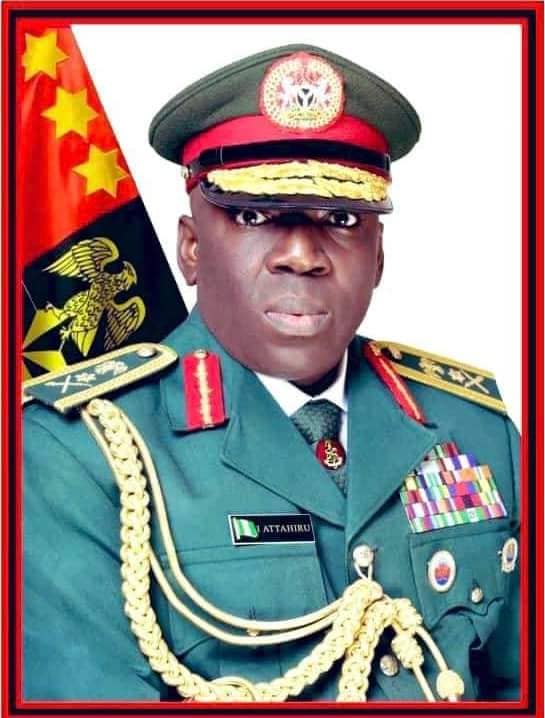
It is with such mixed feelings, but mostly with a sense of great honour, that I remember, on what would have been Lt. General Ibrahim Attahiru’s 56th birthday, a man of immense character, discipline, selfless service and dedication above and beyond the call of duty. With a sense of supreme privilege and humility, I pay a post-humous birthday tribute to Attahiru, who was in all ramifications, a consummate officer and a gentleman, and truly a soldier’s soldier.

As we commemorate him today, it would not be out of place to remember him as a nation builder and a true patriot in his own right, who served his country impeccably in a stellar military career through which he rose admirably to become the 25th Chief of Army Staff.

It is in his final role that many – including myself – will most potently remember General Attahiru. Upon his sudden and tragic demise in May last year, I recalled his reassuring ebullient presence, underneath which he carried the determination, discipline, and professionalism of a born soldier. I reflected on his attentiveness and enthusiasm in our fight against banditry, terrorism, and general insecurity in our state, and in the region at large. I remembered then, as I do now, his crystal-clear vision and passion for the Nigerian Army.

That is the General Ibrahim Attahiru with whom I was blessed to interact. I also know that he is fondly remembered within military circles as a leader who reached out to the men under his command, and even to all who came under his care, and he looked out for them.

In contemplating the lives of great Generals, we wonder if the uniform makes the man, or if it is the man who fills up the uniform he wears. Beyond all that General Attahiru was in his professional sphere and in the limelight, we must not fail to remember him simply as a human being, as a father, as a man who lived by a creed of openness and accessibility. At the launch of the General Ibrahim Attahiru Foundation earlier this year, we heard about the man behind the uniform, Ibrahim Attahiru, the family man, the loving husband who never failed to put a smile on the face of his wife Fati. We learned of the doting and devoted father to Aisha Farrah, Zainab Maliha and Fatima Iman, who made it a priority to spend quality time with his three lovely daughters, encouraging them in their faith, in their academics, guiding them in their social lives and always letting them know that he was proud of them.

His job and its attendant demands notwithstanding, he made time to be a father and a friend to his daughters, and through his charm and courage, mentored them. These are the actions that will forever remain priceless in the lives of his wife and children, and they reflect the dedication with which General Attahiru conducted himself even outside the spotlight.

I will always be grateful for the privilege I had to interact with him, albeit briefly. During our engagements, he demonstrated to me quite clearly the power of hope, through his optimism, energy, and cooperative disposition. For me, and for others involved in security management, our highest tribute to General Attahiru, would be to walk in his footsteps, and to throw ourselves with unalloyed commitment at the fight which remains before us.

The General Ibrahim Attahiru Foundation which was launched at the one-year memorial of his demise, will seek to cement and transmit the legacy of the man, and the virtues which he typified; the values of strength, dignity, commitment to excellence, leadership, tenacity, openness, accessibility, mentorship, and fatherhood. It is upon such values that nations are built. It is these virtues which have led to so many honouring him today, on the 56th anniversary of his birth, to celebrate what he stood for in his life, and indeed the way he represented the Nigerian Army with distinction for nearly 35 years.

Today, once again, it is right that we celebrate the legacy of a hero, as we also continue to immortalize his love for service, knowledge and impact. It is a mark of honour, and a tribute to his memory. He is no longer with us, but he lives on in the quality of life that he lived; a life, cut short just shy of 55 years on this earth. We are saddened at the fact of his absence, but we are reminded by so many aspects of his legacy, that truly, he lived.

And so today we salute the memory of a patriot, and (I am privileged to say) a companion and ally, who would have turned 56. We celebrate with honour, the memory of a mentor, a brother, a father, a husband. We commemorate the birth, the life and the times of a quintessential soldier, a true General, who exited the arena suddenly, in the middle of a war, and more so, in the line of duty.

In remembering him on the day of his birth, we ensure that the torch of his legacy and ideals will continue to burn brightly, to inspire and lead, as he did.

For truly, one who is loved, never dies.

Aruwan is Commissioner of Internal Security and Home Affairs, Kaduna State.

Federal Government fails to salvage education sector

By Yusuf Salisu Muhammad

It’s a very sad incident to Nigerians that the Academic Staff Union of Universities’ (ASUU) strike has been persistent for decades. It firstly started in the 70s during Obasanjo’s regime. ASUU went on firmly with its struggles and opted for strike as a major weapon to fight for its rights and those of Nigerian students. For many years, strikes have been  reoccurring like celebrated festivals; it’s hardly to end an academic session without ASUU embarking on a single strike. If the history of the ASUU strike will be unbundled, it will be clearly seen that it has been consistent since the military regimes and thus; one may not be unjust to say, the needed actions were not taken even in the past, had they heeded to ASUUs agitations and calls, we wouldn’t have been experiencing what we are experiencing now. 

Today, under Buhari’s administration, which even a layman thought would enjoy when it grabbed power; students have been suffering from the repercussions of the conflicts between the FG and ASUU. On Monday 14th February 2022, the union declared its first one month warning strike, and then added two months, after which they extended the strike by three months. If I may ask a question which may not have an answer, I would say, even in Africa, if not in Nigeria, where can universities be shut down for almost more than six months, and the government seems not to care? But if answer is to be given, it might be: no serious administration will “take no notice of” its country’s education sector sliding into anarchy and confusion like this. However, no thanks to the I don’t care attitude of the government, it is surely making history. 

The main ASUU’s demands now, as declared by the union, are: ensuring the acceptance of the University Transparency and Accountability Solution (UTAS) and also to fulfill the ASUU/FG’s signed agreement of 2009, which can all be implemented if the FG’s effort is genuine in getting rid of the “cog in the wheel” of the future of the Nigerian Youths. Therefore, the FG’s refusal to implement the aforesaid ASUU’s demands is simply “adding salt to the wound” of the Nigerian students and the education sector in general.

On the other hand, the demanded money and facilities by ASUU for revitalizing the sector can be disbursed as far as the FG treats the issue seriously considering what it spent on other sectors, which compared to education, they are definitely less important. Some menies spent are even irrelevant to the welfare of the masses or misplacement of priorities.

For instance; on  24th November 2021, the Punch Newspaper disclosed that “the minister of State for Budget and National Planning, Prince Clem Agba said that, the FG spent more than 2.3 trillion as a stimulus for covid19.” If the FG can spend more than 2 trillion on Covid-19, why can’t it at least spend 1 trillion on the education sector for ensuring its activation and ending the ASUU strike that has been in existence for more than twenty years? The same union strike which the current president and his minster of education were criticizing the last administration on?

In addition, Vanguard Newspaper reported on May 15, 2022 that the “Socio Economic Right and Accountability Project (SERAP) sues Buhari for spending  N1.48 trillion on maintaining refineries with no crude oil”. If more than 1 trillion can be unfruitfully spent on reviving the useless refineries why can’t 500 billion be disbursed to ASUU for revitalizing the education sector?

Additionally, the Punch reporterd on 22 February 2022 that: “FG to spend 3.53 trillion on infrastructure and human capital development in 2022”. This was amidst the ASUU strike, which is yet to be called off. If 2.53 trillion would be spent mostly on invisible infrastructure, why can’t 1 trillion be allocated to the education sector for its rescue or is there any infrastructure that can be enjoyed without qualitative education? I believe commoners would rather love to have education than any other infrastructure. Also, providing sound knowledge is the best way to development, not only for humans but for the whole country and what it contains.

Based on Daily Post analysis on October 15, 2021,” about 12 trillion has been allocated to the security sector in the past 7 budgets under president Buhari”. Based on this analysis the increment of the spending for the sector in the administration is whooping 15 percent of the country’s budget. If this can be done in an attempt to tackle the insecurity we still suffer from, despite the relevance of security in any country, why can’t the same attempt be done for the education sector even for once? These are few examples. One may argue that all the aforementioned spendings were already budgeted and also the education sector has its own budget, but is he aware that the sector’s budget is just a paltry sum?

Premium Times Nigeria, on October 27, 2021 stated that “since taking office, president Buhari’s highest allocation to the education sector is 7.9 percent of the total budget”. Meanwhile, the United Nations Educational, Scientific and Cultural Organization (UNESCO) recommended 15-20percent of any developing country’s budget for the sector. 

The FG should be alerted that this persistent strike is affecting not only students, their parents, and lectures but also the economy of the country as many small scale and medium enterprises depend on the campuses, howbeit, It’s indeed condemnable that ASUU’s demands have not been attended to. 

Moreover, it will shock any Nigerian of good will to hear the claim that the president was unaware about the ASUU strike till when he was notified during his Sallah visit to his home town! Kudos to Nigeria, my fatherland, where universities could be shutdown and academic staffs’ salaries stopped for months and yet the president doesn’t even know what is happening! The university lecturers’ strike for months with stoppage of their salaries, but the president was unaware? This alone, can prove the FG’s failure in salvaging the education sector in Nigeria. They don’t seem to care and I don’t think they will care at all. Their beloved children are elsewhere, outside the country, enjoying good education, while the poor peoples’ children grow in ignorance.

In addition to the points raised above, Nigeria, with 10.5 million out of school children, topped the list in the world, as declared by the United Nations Children Funds (UNICEF), Daily Trust on Monday, 24th January reported. Furthermore, the FG’s budget allocation to the sector is yet to reach the UNESCO’s recommendation, while looting allegations on government officials are not unknown, but still ASUU’s demands are neglected. 

In conclusion, I urge the government to move with rapid efforts in overcoming the hindrances in the education sector, others the government and all Nigerians should await more troubles, confusions and skirmishes.

Yusuf Salisu Muhammad writes from Katsina State, Nigeria.

Marrying money and today’s marriage industry (I)

By Alkasim Harisu Alkasim

It is beyond exaggeration to say that marriage for money is a norm today. Repeating this amounts to a cliché. A great score of us want to marry money, and we hate to bring to mind poverty, never mind the difficulties accompanying it. That is why, today, many a family frown upon poverty-ridden dudes. Such families try to avoid poverty by marrying into monied families. They hold that, given the fact their homes are poor, they should, as a matter of fact, change their fates. Hence, by marrying rich men, they will be able to compensate for the difficulties biting them.

Unknowingly, there are difficulties that rehappen to destroy newly-built families. The first thing that throws a spanner in marriages is the recognition of the male spouse that his wife weds him thanks to his wealth. She also attracts for herself the despise of her in-laws who accord her and her family no respect. They disgrace and see them as a bunch of people that worship money. Also, the groom, who earnestly believes that the woman marries him because of his riches, ponders the fact that whenever he becomes poor, she will turn her back on him.

There are decisions we oftentimes take that we tend to regret after the passing of time. Because of our thirst for money, we take to cheapening and even slaving ourselves to attain the consideration of the haves. After throwing ourselves to the dogs, we then begin to think of a way to regain our good names. But the game is already over. This is a true definition of turning back the clock. Alas! Time never comes back once it is gone. What I imply here is that girls do themselves a disservice when they choose to be in love with undeserving fellows. What should you do when this happens, that is, when a girl sees nothing in you? I personally advise that whenever a girl hates building up a relationship with you, you should call it quits. Otherwise, you will be carrying a torch for somebody and nothing will expiate for you the time, energy and money you have expended.

Another thing that ruins relationships is poor moral standing. It is true that girls that idolise money quickly grow immoral. And boys with money seduce such girls for a quickie one-night stand. Yes, their sole desire is to hit it and quit it. Achieving this, they vanish into the thin air. As the girl conceives and becomes heavy with pregnancy, the world concentrates attention on her. Bad words from the public begin to weigh on her mind as well as her negligent family’s. People will antagonize her to the point of tears. Then, she will begin to regret her mistakes. Sadly, she has already got deflowered. And no amount of crying can return her virginity. The boy is gone. She and her family will try to get back at the missing boy, but they will just be carrying coals to Newcastle. At that very moment, the family starts to an afterthought. They will ruminate on ways to punish the boy or force him to marry the girl.

The problem of marrying money is mother to many immoralities that are currently occurring. It causes infidelity which is becoming the father of our ailing society and falling apart as a people. I was told about a wife that cheated on her husband. Albeit she was husbanded well, she did what only the baseborn do. The spouse catered for all her needs but she was notoriously infidel enough to practice adultery as though she did not subscribe to Islam. Whenever he left for market, this adulterous wife would take her children to her mother-in-law’s. She would then call her paramour. A faithful neighbour has often seen this thus he got devastated. Given the gravity of the issue, he was compelled to shut it. For he didn’t know how to let the husband know. Later, as the misdeed persisted, he locked the house on the two wrongdoers. He quickly called the husband who was already at market. The husband rushed it home and saw the nightmare of his lifetime. No sooner had he witnessed what his neighbour had been feeling indifferent to let him learn than he divorced her. Parting the way of unfaithful wives is the best decision no matter how one loves them. Because, if you don’t summon the courage to divorce them, they can mother you bastard children and pretend you are the one that fathers them. Was this woman fathered well? This is a question many people pose.

Another story is of a smart guy who triples as a husband, teacher and relative. He doctors for a living. Despite his running busy all time, he keeps house while his wife idles her hours away at the same home. She does not know how to even cook or do the house chores. It connotes a tragedy when you marry a woman that does not know how to prepare water that drinks well or food that eats well. This is one of the humiliating errors a wife can ever commit in her home. More telling is that the husband had excellently patched up many problems that came up. But, one horrible argument persisted. He tried his best possible to patch up things with his wife but she refused to forget the differences thanks to her stubbornness. He pressured her into buying the idea, but he could not make her let bygones be bygones.

To control how his children marry, I was told about a father who sons ten children. He also selects wives for his children. He is very responsible and commands obedience. The norm in this family is that the father wives all his children. He also schools his sons in respecting one another. That is why, they brother themselves extremely well. They reek charm and none of their actions sisters on disrespect, despise or fakery.

When you get broken-hearted, it feels as if your whole body was giving you pains. You will be long in healing before you bounce back to excellent health. You will be suffering terrible romantic ill-health too. You will keep wondering if you would ever be able to battle the condition. To you, such a situation is a small armageddon because nothing can purge you of harrowing thoughts. Living in solitude cannot not expiate the shock you will be going through nor will it cleanse the psychological trauma you are going through. Of course, mourning the loss of one’s one-time better-half is extremely painful.

Indeed, many of us do not see the value of those we marry ourselves with either in social, friendship, work or marriage commerce until they are no more or when the relationship goes south. We mourn and weep profusely for our relatives only when they close their eyes for the last time. When alive, we don’t see the world of them. Some people take betrayal lightly. But I would rather die a thousand deaths than betray a person who reposes trust and confidence in me.

When a love relationship dies a death, responsible people, more especially those that are not the guilty party look like death warmed over. A times, the social intercourse that reigns among diverse social networks sours thanks to betrayal. As this happens, everybody swears distancing his fellow for an unimaginable period of time. People get wedded to a devilish thought. This dilemma abounds with the absence of peace and bad blood. I said earlier that we affix importance to material gains by devaluing virtue and celebrating infamy. All this plays out in marriage transactions.

I have a friend since secondary school who was schooled at BUK. He learnt medicine. Of late, he broke up with his long-time girlfriend who also doubles as his female cousin. His home neighbours the girl’s. At the morning of the misunderstanding, he sought the intermediation of his close friend. The friend tried to correct the situation, but he failed. The relationship, to sum it, has latterly met its waterloo. Another person, a close buddy of the boyf tried to talk her out of her intentions. Still, she turned a deaf ear. He too, failed to appease the tumult abounding in the relationship. Toward the end of the relationship, that was when turbulence overwhelmed everything, the girl grew the habit of talking back her boyfriend. Not only that, she most a times talked him down. Worst of all, she made him appear as if he were talking to the hand. “Am I talking to myself?” This is a question he oftentimes asked himself. She avoided his sight only to strike him dumb. Dharma has been crushed. We never feel duty-bound to things our parents did feel. But karma will have its toil on people that betray the confidence of those that trust them.

In situations such as this, if you try your best possible to mend a long-standing feud through intervention and things refuse to put to rights, what you should do is to take a backseat. Just put everything to bed and move on. It was amazing that when the relationship was booming, it put in the shade every other love commerce. But as the relationship spoilt, things failed to repair. The girl also helped in putting a spoke in the boyfriend’s wheel. Because she made all his attempts to get them back to talking terms impossible. Her father did his best to put a gun on her head, but she summoned courage and put a brave face on.

Recently, I have been neighbouring this guy. We break bread and move around. He discusses the girl a lot with me. What I gathered from the girl’s moves can be said to neighbour on deception and a total change of mind. She is not in two minds about the relationship. Because she has already taken her own verdict. Thus, I tell him to be a man since the girl considers mending relationship with him a non-issue. Everybody that receives the news of the break up pities the girl. People say she is a hundred years too early to change mind on such a highly educated, literatured and smart person everybody wishes loved his sister or daughter. That guy is the be-all and end-all when it comes to moral standing and knowledge. When he was at a tender age, grown-up females had wished he were marriageable to tie the knot with him. By turning her back to him and switching attention to another boyf, this girl is just riding for a fall. I am no stranger to break ups, but this one makes a novel exception. In truth, the girl will at the end become her own worst enemy.

More so, to me, what appears to be more worrying is that her mother chose to shut her mouth. She took the side of the girl because she often said she had never told her daughter to unlove the guy. But she is blamable because she did not try soft-soaping her daughter. This is what caused the girl to be her own man. The problem is no longer what I considered it to be. From beginning, I thought the problem would be as soft as a baby’s bottom. But it turned out to be as hard as a rock. Many a time and oft, many a boyfriend goes to a girl’s. But you can count on your fingers those of them that mean marriage. Girls such as this, don’t listen to admonishing. The best thing is to allow life to school them. “Experience is the best teacher”, says Socrates. It is true that every occurrence has a first. However, this is not the first time she had milked quarrels to muddy the waters. She capitalized on the singular wish of her boyf to throw the gauntlet to make him come the offender with her.

Our struggle is bigger than you – ASUU-KASU replies El-Rufa’i

By Muhammad Sulaiman

The ongoing academic dispute between the Academic Staff Union of Universities (ASUU) members, and the Federal Government of Nigeria, has taken a new dimension in Kaduna State. The governor of Kaduna State, Malam Nasiru El-Rufa’i, has threatened to sack the Union members if they fail to resume their normal academic activities at Kaduna State University. However, the ASUU branch at the Kaduna State University (KASU) responded, saying that they are far above his usual tactics. They added that they would not, in any way, stoop to his intimidation and threats.

Excerpts of the ASUU Zonal press release, signed by its coordinator, Comrade Abdulkadir Muhammad, read:

“The Kano Zone of ASUU comprising Ahmadu Bello University, Zaria (ABU), Bayero University Kano (BUK), Federal University, Dutse (FUD), Kano University of Science and Technology, Wudil (KUST), Kaduna State University (KASU), Sule Lamido University, Kafin Hausa (SLU) and Yusuf Mataima Sule University, Kano (YUMSU) met on 7th August 2022 and deliberated on the intimidation meted on the ASUU members at KASU by the Government of Nasir Ahmed El-Rufai due to the ongoing nationwide strike action embarked upon as directed by the ASUU National. The Governor had threatened to sack all academic staff that have been on strike in the branch as he usually does on similar matters. ASUU as a Union had experienced similar threats in the past, and that had never deterred it from the patriotic struggles to salvage our public universities from imminent collapse.

As you are fully aware, our roll-over strike action has now entered its sixth month. The goal of the strike is to get government to timely and substantially address ASUU’s demands, namely: revitalization funds for public universities, Earned Academic Allowance (EAA), conclusion of the renegotiation of the 2009 Agreement, Visitation Panels to universities, and stoppage of the proliferation of state universities and governance issues in them, and deployment of UTAS as a payment system in Federal Universities. These demands were agreed upon, with timelines, by the Federal Government in the MoU and MoA it signed willingly with ASUU in February, 2019 and December, 2020 respectively.

The rhetorical question as to why ASUU is always embarking on strike action has been asked time and again by the concerned citizens and stakeholders. The straightforward answer is that ASUU is strongly convinced that if academics fail to fight the cause of university education, the fate that befell public primary and secondary schools would soon become the lot of the public university system in Nigeria. It is also worthy of note that ASUU as a Union does not derive pleasure in the disruption of academic calendar and hindering students from graduating in good time. Strike action always comes as the Union’s last resort after exhausting all other options and consultative avenues.

KASU has benefited immensely from the TETFund interventions, revitalization fund, staff development and provision of research grants, which are dividends of ASUU strikes. In fact, KASU is one of the universities that could rightly be described as “TETFund University” since virtually all buildings in the University were constructed through TETFund interventions. At this juncture, we challenge the Visitor of KASU to show a single structure he constructed on KASU campuses during his two-term tenure as Governor of Kaduna State. It is therefore illogical for the Government of Nasir El-Rufai to bluff that members of ASUU-KASU should either break away from the National strike or be sacked. Since the issuance of this threat, our members have constantly been intimidated and coerced by the University Council and Management through opening of registers, conduct of a comic exercise called examinations, selective stoppage of staff salaries, among others.

These theatrical exercises that the University Management confused and referred to as examinations that are currently going on in KASU are characterized by non-coverage of course outlines, incomplete lecture contact hours, non-participation of lecturers who taught the courses in the setting of the examination questions and supervisions, involvement of students in invigilation and non-moderation of question papers, which are clear violations of the laid down rules and regulations governing the conduct of examinations.

The Union would not fold its arms while the University evaluation system is being bastardized and abused by the Management of KASU. Therefore, ASUU demands that all the so-called examinations so far conducted be discarded in order to maintain and respect the sacred system of evaluation in the university system. The examinations must be re-conducted after following the due process and suspension of the ongoing strike action, otherwise, the Union will be left with no option but to write a petition to the National Universities Commission (NUC) and the Independent Corrupt Practices Commission (ICPC) against the Management of KASU.

The ASUU-Kano Zone commends the commitment and resilience of ASUU-KASU members for not succumbing to the antics of Kaduna State Government and its agents. The Union calls on its members in KASU to remain resolute and prosecute the strike action to its logical conclusion. Finally, the Union thanks the good people of Kaduna State for their patience, understanding, support and cooperation.”

The North is at war with itself

By Abdulrahman Yunusa 

Entire my life, I have never seen Nigeria more divided than this time under President Muhammadu Buhari. Even those who share the same geographical location, history and ancestral background at some point are fighting each other today. 

To be precise, the current tussle between Hausa and Fulani disturbs my psyche. Who really curses us? Are we used to such trivialities before, or just by accident, we found ourselves in this predicament overnight?

How can we convince the upcoming generation that the North used to be peaceful, where the inhabitants peacefully mingle with each other irrespective of tribal affiliation or identity? After all, the gleaming narratives have been bitterly coloured into ugly ones.

Perhaps, the crisis of identity was a thing of obscure in the North in those days. Nevertheless, for over several decades, the ethnics group have been romancing each other as if they were of the same origin, although they are to some degree. Hence they even succeeded in burying the ethnic difference by making social unions among themselves.

Sadly, today we are talking about another issue. Things have changed over time. We bow down and take a different dimension which goes in contrary to that of our great-grandfathers. The rising hostility is out this world today among the major ethnic groups in the North.

Honestly, this man may be the worst leader Nigeria has ever had. His advent into the corridor of power is a curse to the then two harmonious ethnic groups, who are fighting each other fiercely under the curtain of politics and other politically related issues. 

It’s unbecoming for the conflictual parties to shun the history of their peaceful relation to some cheap matters that don’t worth their attention, let alone consuming their long, everlasting, and marvellous cordial relationship. However, attached to any upheaval, there is a lesson to learn for the future.

On a lighter note, I sense some suspicious plan meant and orchestrated by some intruders to get this everlasting combo broken down. Sadly, soon chicken will come back home to roast. The invisible hands igniting the fire of hatred among the interrelated parties would bury their face in shame.

North would never be divided, in sha Allah. May North and Nigeria proper, amin.

Abdulrahman Yunusa is a political and social affairs analyst. He writes from Bauchi and can be reached via abdulrahmanyunusa10@gmail.com.

Multi-talented Nigerian director, Biyi Bandele, is dead

By Muhsin Ibrahim

Biyi Bandale’s death was announced via a Facebook statement signed by his daughter, Temi Bandele.

Born in Kaduna to Yoruba parents, Bandele, 54, was the director of the movie adaptation of Chimamanda Ngozi Adichie’s classic novel, Half of a Yellow Sun; Blood Sisters, among other remarkable works.

Last month, Bandele, who also wrote novels and directed plays in the UK, Nigeria and other places, announced the release of his new film, Elesin Oba: The King’s Horseman, a Netflix-Ebony Lifefilm production.

At the time of this report, the cause of his death is not yet clear.

“As Biyi’s daughter, I am heartbroken to share the sudden and unexpected death on Sunday 7th of August in Lagos of my father Biyi Bandele.

Biyi was a prodigiously talented writer and film-maker, as well as a loyal friend and beloved father. He was a storyteller to his bones, with an unblinking perspective, singular voice and wisdom which spoke boldly through all of his art, in poetry, novels, plays and on screen. He told stories which made a profound impact and inspired many all over the world. His legacy will live on through his work.

He was taken from us much too soon. He had already said so much so beautifully, and had so much more to say.

We ask everyone to please respect the privacy of his family and friends as we grieve his loss.”

Neglectful parenting in contemporary society

By Hadiza Abdullahi

Many parents do not care to deliver their responsibilities, leading to different social problems in Nigeria and the world. In layman’s terms, parental negligence can be seen as the failure or inability of parents to fulfil their parental responsibilities of providing the proper and adequate care and attention to their children.

The child-parent relationship is supposed to be affectionate, harmonious, supportive, and productive, but this relationship is becoming conflicting, unsupportive, destructive and agonizing due to certain factors. For example, some parents may be emotionally unsupportive to their children yet provide all their basic needs, i.e. food, clothing and shelter, while some are not supportive.

A study conducted on improper parenting and parental negligence by Dr Manzoor Hussain pointed out that good parenting quality depends on several factors. They include; the mature personality of the parents, which is an essential element of good quality parenting, stable and intimate marital relationship, as well as the form of the pregnancy, i.e. planned or not, as planned pregnancy implies better preparation to be a parent.

On the other hand, a broken home is believed to be the primary factor that contributes enormously to the issue of neglectful parenting, as children from such families are usually brought up by either their biological parent or a step-parent. These children often undergo different sorts of challenges, trauma and agonies from the step-parents, particularly stepmothers, who do not like having a stepchild under their custody. 

A typical example is the case of two minor Almajiris, an eight-year-old Habu and his six-year-old younger brother Tanko (not real names), whose parents got separated and had to live with their father and his new wife. Although the father is financially stable and could cater for their basic needs and education, he refused to do so due to the influence of their stepmother, who rejected them. As a result, the innocent boys left the house, roaming the street as Almajiris.

Research has indicated that couples’ desperation toward becoming a parent also promotes this issue. Some couples, especially the rural residents, who consider the number of children as pride, are only interested in giving birth to as many children as possible without having any adequate plan for their wellbeing. Instead, they exploit the children by engaging them in different forms of child labour such as domestic chores, street hawking, street begging or even working as house helps, all in the name of sourcing for income. The World Health Organization (WHO) regards it as child abuse. This exposes children to dangers when they mingle with bad people who may negatively influence and/or harm them.

These children quickly go astray because their parents are not around to watch and caution their wrong behaviours. Hence most of them end up going into drug abuse, prostitution or even being recruited into terrorist groups, among other crimes.

Hajiya Salamatu Yaqub, a housewife and a mother, lamented that the absence of adequate face-to-face interaction (which is an essential principle for a good parent-child relationship, in which both children and their parents understand each other’s needs, views, emotions, and brings about strong and growing intimacy between them) contributes immensely to this problem.

Similarly, Malama Maryam, another mother, expressed her grief over how some so-called civilized and educated Nigerian parents, especially young mothers, adopt an improper way of parenting. They focus more on their jobs, education, and other forms of businesses instead of the primary role of every traditional Nigerian parent, specifically mothers who are supposed to put the welfare of their families ahead of anything else. However, some abandon these responsibilities altogether while some entrust the responsibilities to nannies and other house helps, who may not be morally upright and talk more of instilling moral values in children.

A teenager (who refused to be named) and a victim of neglectful parenting said, “being neglected by your own parent is the worst and most traumatizing experience of every child”. She further disclosed how she and her siblings went through a lot due to this issue. Even though their parents took proper care of all their basic needs, they are always absent to watch over them, support them emotionally and caution them. She added, “we miss our parents badly and do a lot of things we should not do and mingle with people we would not have been mingling with supposing our parents are around”.

Children with intellectual, psychological, emotional and developmental disabilities are especially vulnerable to being forced into child labour and are more likely to face threats of violence and abuse. These children— especially girls—are often victims of trafficking, prostitution, domestic enslavement, forced marriage and other forms of abuse. In addition, some children who have physical and visual disabilities, visible congenital disabilities, or disfigurement are forced by traffickers to beg. In extreme cases, traffickers intentionally disfigure children to exploit them through forced begging. 

Yusuf Muhammad Daura, a student at the Department of Special Education, Bayero University, Kano, described parents who take advantage of their children’s physical disabilities and refuse to work hard, instead using them as a source of income, as irresponsible and self-centred. He added that when interviewed, most of these children seen on the street begging or hawking explained how they were forced into it and if they were to have an opportunity of living a normal life, they would be more than happy to join their mates in going to school.

However, it is understood that some children undergo neglectful parenting not because the parents or guardians are not around to support them emotionally or failed to provide for their basic needs. It’s, instead, due to their inability to home train and discipline the children properly.

The implications of parental negligence are many. They include a lack of mutual understanding and affection between parents and their children; children’s needs also weaken the close bond that is supposed to exist between their parents and their children. In addition, the children may feel the parent are worthless since they cannot cater for them, which might make them disrespect or hate the parents.

Research indicates that children who lack proper parenting behave aggressively and violently and perform poorly in academic activities. When interviewed, Mr Yahuza Abdullahi, a primary school teacher, confirmed that most children going through improper parenting perform poorly in academics and recreational activities as they do not have the extra support they need, such as helping them with their home works and getting the necessary learning materials.

Therefore, it is paramount that couples must be physically, psychologically and financially ready before they venture into the demanding task of parenting. As someone planning to have a child, prepare for your children or unborn children on how you intend to take adequate care of them. Make provisions for their basic needs, i.e. food, clothing, shelter, education and proper medical care. Also, provide a conducive environment to protect and keep them safe while instilling sound morals and values in them and having a plan on how you intend to caution and correct them whenever they are wrong. 

Also, the government has a critical role in tackling this menace because, as citizens of Nigeria, these children have fundamental rights that the government must protect. Thus, the government should have the full authority to punish any parent or guardian caught abusing or neglecting their parental responsibilities. 

Hadiza Abdullahi, Department of Mass Communication, Bayero University, Kano.