Month: July 2022

Police arrest 5 for robbery in Kano, recover stolen items

By Muhammad Aminu

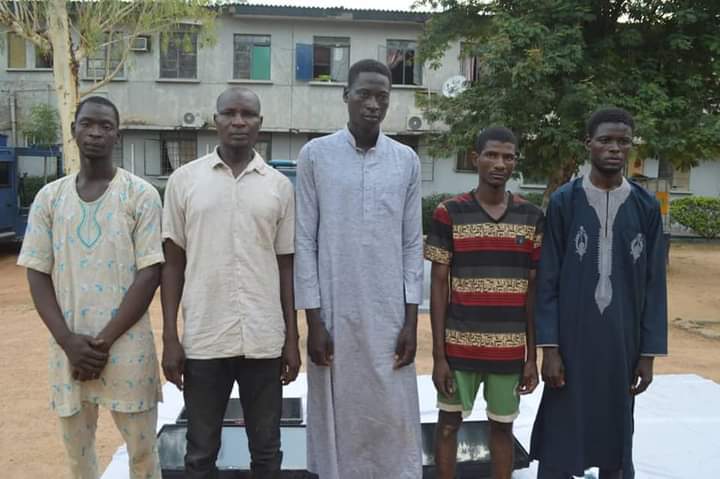
The Kano State Police Command has arrested 5 armed robbery suspects terrorising some parts of the State.

The suspects were said to have specialised in breaking into people’s residences in Tishama Hotoro Quarters where they operated as a syndicate.

Kano State Police Public Relations Officer, SP Abdullahi Kiyawa, in a statement sent to The Daily Reality said the suspects were arrested after an investigation following complaints by the residents.

According to Kiyawa, four suspects were arrested while another suspect who received stolen items was also apprehended.

The statement read: “Between June and July 2022, there was public outcry at Tishama Hotoro Quarters Kano on the activities of a syndicate of hoodlums that specialized in House Breaking and Armed Robbery. One Kabiru Tukur, ‘m’, of Tishama Hotoro Quarters Kano, further complained that the syndicate of four went to his residence twice and robbed him of his Plasma TV and Four Mobile Phones. Four-Armed Robbery cases were recorded in the area with the same “modus operandi”.

“On receipt of the reports, the Commissioner of Police, Kano State Command, CP Sama’ila Shu’aibu Dikko, fsi raised and instructed a team of Operation Puff Adder led by CSP Mansur Idris, Divisional Police Officer (DPO) Hotoro Division to arrest the culprits. The team immediately swung into action.”

“Sustained efforts coupled with intelligence-led surveillance patrol led to the arrest of all the syndicate members as follows:-

i. Idris Mohammed, ‘m’, 19 years old,

ii. Nasiru Abdulhamid, ‘m’, 24 years old,

iii. Sunusi Ibrahim, ‘m’, 27 years old,

iv. Bashir Yunusa, ‘m’, 25 years old, All of Tishama, Hotoro Quarters Kano.

“On investigation, the suspects confessed to all the Armed Robberies committed in the area. A discreet Investigation conducted by a team of Detectives at the Command’s Criminal Investigation Department led by CSP Ahmed Abdullahi resulted in the arrest of the receiver, Rabi’u Sani, ‘m’, 32 years old of Tishama, Hotoro Quarters Kano. Four Plasma TV and Eleven Mobile Phones were recovered from them.”

The Police would charge the suspects to Court and thorough investigation.

He called on the general public to continue to support the Nigeria Police in trying to protect the lives and properties of residents of the State.

Kano: Over 3.1m children to receive supplements against malaria – commissioner

By Uzair Adam Imam 

Over 3.1 million children would receive supplements against malaria, while 2.8 million children would be dewormed, the Kano state commissioner for Health, Dr Aminu Ibrahim Tsanyawa, said.

The Commissioner disclosed that there would be childhood immunization for about 68,135 children, adding that antenatal services would also be provided.

Tsanyawa stated this during a media briefing ahead of the exercise, which begins on Tuesday, July 5, 2022.

He noted that the Kano State Government had identified about 12 million children to receive the seasonal Malaria Chemoprevention for July to October 2022 in the 44 government areas of the state.

The Daily Reality learned that the previous exercise conducted in January 2022 recorded huge success with Vitamin A coverage of more than 88 per cent.

In his words, Tsanyawa added, “the aim was to prevent uncomplicated and similar proportion of severe malaria incidences amongst the age group.”

“We are integrating the two exercises, although the MNCHW is a week-long event conducted twice every year.”

“It has a high impact on low-cost interventions offered to pregnant women and children below the age of five to increase coverage level of preventive and curative health indicators,” Tsanyawa stated.

Reflections on inflation and our ineffective population

By Nusaiba Ibrahim Na’abba

The ongoing unexpected outrageous hike in prices of goods and services stringed by inflation is not all new to our survival in Nigeria as we’ve learnt the hard way to navigate through hurdles and thorns to manage our lives. Simply put, things are at the moment not falling apart but in their right places – exactly where we want them to be. And by extension, we are reaping the seeds our predecessors sowed.

Contextualizing the global outrage on inflation unveils how our population crises are highly influential to the inflation catastrophe we are recently experiencing in Nigeria. Conversations around our incapacitated population have always been cumbersome. People keep reproducing to demonstrate their selfish reasons and associating them with religion, even when they’re fully aware of their inability to cater for their needs – a lifetime debate. Due to cultural and religious reasons, overpopulation is always quite a sensitive issue. Religious gatherings, cultural discussions and even governmental activities deliberately skip them to avoid chaotic scenes.

For reasons best known to the Nigerian government, the census that was supposed to take place a year after President Buhari assumed office in 2016 was unfortunately not prioritized in the list of essential development activities. There wasn’t even a convincing explanation for why it did not occur. I buy that the President was out of office as he severely fought to regain sound health. Still, his deputy, Prof. Yemi Osibanjo, was acting President until he recovered. He also didn’t give it the much significance it deserves. The worth of a National Census isn’t that shabby to escape their radar, as it assumes an unchallenged role in catalyzing the development of every society and nation-building.

Well, as it stands, many international sources now place the Nigerian population to have surpassed 200 million. But, referring to our precedents, the past administrations were unwilling to manage rapid population increase by corroborating it with needed economic, financial and health opportunities, among others. Instead, they were more or less obsessed with starting gigantic projects to leave them halfway done when leaving offices. Regrettably, from budgets, policies and programs among myriad activities, the population is often not carefully factored in.

At this point, explaining the statistical representations of our ailing population is almost unnecessary, especially since we are gradually failing to comprehend the magnitude of our plight in statistical terms. Presently, there exists a colossal number of youths that are desperately seeking jobs. Not only that, they are unemployed. Some are drug addicts, miscreants, and even kidnappers and whatnot. Their realm also includes people still hopeful for job opportunities, including a handful employed but in deep struggles, as they continue to shoulder countless responsibilities. This fraction is the largest among the demography of our country and, sadly, the most ineffective.

Then we have children, who contribute a fair share to the general population. A disturbing figure is that of out-of-school children due to their being part of the lower class and a lot who are quadrupling in number as insecurity is not slowing down in forcing them out of their communities. Visibly, most of them embrace street hawking and begging while others aimlessly litter the streets and little girls into forced labour. Picturing our population from a pie sketch, we also have the elderly, many of whom have delivered relentless service to the nation but have only been rewarded unkempt wretched feet as they search for their legitimate hard-earned pensions. And I don’t forget that we have People Living with Disabilities (PLWDs) who wallow in poverty. This is a fair elucidation of Nigeria’s population pie sketch.

Indeed, how inflation is ripping us apart in this country is an incredibly devastating experience. Development activities here have always journeyed long, and even more terrifying is that slow processes in everything aren’t much valued in today’s fast-paced world. As frightening as it appears, the race to the 2023 general elections is already painting a horrible scene for us. The primary elections recently concluded with alleged countless irregularities and corruption aren’t appealing. Hence, it becomes challenging to collate one’s thoughts regarding how life will likely be as we fight to forge ahead.

In a way, this current plight provokes the young minds who are already out of viable options to embark on deadly voyages to Europe. They risk their lives in search of a better life there. It is terrifying to know that the number of youths clamoring for these voyages includes graduates and those earning petty stipends and are well conscious of the dangers involved. However, they aren’t blameworthy for viewing their lives from angles of their responsibilities.

Many optimists, including myself, are hopeful about Nigeria’s transformation for the best. But, until alternative routes to utilizing our teeming population for efficient development are incurred, we’ll keep chasing the uncertain light at the end of the tunnel. Nigeria is behind schedule on capitalizing on effective strategies to breed an efficient population, opposing its self-anointed maxim of “no dey carry last”. We must reinvent this unfortunate wheel of inefficiency by adopting a knowledge-based economy model to harness the enormous potential of our massive population for the best.

Nusaiba Ibrahim Na’abba is a master’s student from the Department of Mass Communication, BUK. She is a freelance writer and researcher. She can be reached via nusaibaibrahim66@gmail.com.

Thugs attack lawmakers, injure six, smash cars in Bauchi 

By Muhammad Sabiu

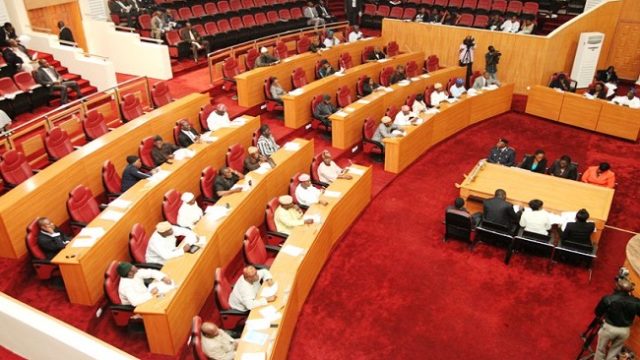
A group of 50 thugs on Monday attacked Bauchi State House of Assembly members who gathered in a guest house on Sir Kashim Ibrahim Road, just a few meters from the Bauchi State Government House.

Six people were reportedly hurt, and the thugs caused pandemonium at the scene by smashing windows and cars at about 4:00 pm.

This occurred just after unidentified arsonists attempted to burn down the House of Assembly complex but were stopped by quick-acting security forces.

After the incident, a combined team of security agents from the Nigeria Police Force, the Nigeria Security and Civil Defence Corps, the DSS, and the Nigerian Army were immediately dispatched to the House and took control of the complex.

Following the incident, security was beefed up in the area by stationing a combined team of security agents comprising men of the Nigeria Police Force, the Nigeria Security and Civil Defence Corps, the DSS and the Nigerian Army.

Reports have indicated that a lawmaker, Ado Wakili, representing Burra Constituency in Ningi Local Government Area of the state who was one of those injured, alleged that the hoodlums were armed with guns and other dangerous weapons.

He was quoted as narrating, “We were inside having a meeting when we suddenly heard noises and banging at the gate, as we rushed out to see what was happening, the hoodlums rushed in holding guns, cutlasses and other dangerous weapons.

“All of us scampered for safety, and in the process, many of us, including me, got injured, as you can see on my face just below my eyes.

“They really turned everything upside down. By the time we came out, they had smashed all our cars and the windows of the house.”

ASUU Strike: Should students blame the Government or ASUU?

By Aliyu Idris

Anyone aware of the lingering strike in Nigeria’s public universities nationwide will sympathise with us students. Now it’s clear that students understand the government’s negligence and I-don’t-care-attitude towards the education sector because none of their sons and daughters goes to public universities.

The government that is supposed to take the necessary actions regarding the strike is showing a lackadaisical attitude towards it as if the education system is normal. Thus, the ASUU strike is not the topic of discussion today.

The government is hellbent on political affairs more than returning the students to their classes. Unfortunately, the issue of the ASUU strike has become a secondary matter to the government in national affairs, sad.

The strike has shattered the dreams of public university students. As a result, The graduation period of million students has been extended to another subsequent year(s) (I do not pray for that occurrence).

It’s an arduous task for public university students to graduate within the stipulated period allocated for their studies. Hence, almost every student’s ID card expires before they graduate.

The victims (students) of the ASUU strike have lost hope in learning and scholarship. Thus, since the government has failed to save their future, they have shifted their focus from education to other life activities such as businesses and learning skills to build their lives.

The statistics of students called up for NYSC in the camps nationwide is low compared to when public universities are not on strike.

The NYSC camps are filled with HND students, students from universities abroad, students from private universities in Nigeria and students from affiliated universities (FCE/CEO/Polytechnic graduates).

There may be the hope of fulfilling the ASUU demands soon (I pray) because I know the Nigerian politicians and INEC will need serving corps members to work for them in the 2023 general elections. However, until the strike is called off, the current corps members are insufficient for the election’s tasks.

The (our) striking lectures are not the problem but the government. May Allah put an end to this strike menace, amin.

Aliyu Idris is an undergraduate at Bayero University, Kano. He can be reached via aliyuidris063@gmail.com.

Were you mocked because of your English in school?

By Lawan Bukar Maigana

 I was spoofed when my father changed my school from a public school to a private school. I remember the first class I had. Our teacher, a lady, asked me a question, and I answered it. She asked me again where I got the answer, and I told her that I got it from my brain. She laughed at me, and everyone laughed at me because I spoke poorly. Our school fee was 16,650.

My friends were always laughing at my spoken English because I didn’t know how to speak good English. I still can’t speak good English, but I am working hard to perfect it. That same lady—my teacher—forced me to start reading a novel in class every day, and she mostly asked me to explain what I understood from the book. She corrected me as I explained it to the class, and that was how I started speaking gradually.

My proprietor had always told me that I would become a perfect English speaker one day and encouraged me to ignore my classmates and teachers who made jest of my English. With His mercy on me, I started speaking well with confidence until our graduation. Right now, I speak better English than some of my friends who laughed at me because of my English.

Today, she is proud of me anywhere she sees or hears about me. Had I worried about what my friends did to me then, I wouldn’t have become who I am today because they mocked me well. Some of them are on this platform. They will read this post and laugh at themselves because they know they have done many bad things to me.

Honestly, those days were difficult for me because there were days I didn’t talk from morning to the closing time in school. I didn’t know how to speak good English; English was our school’s only means of communication. So I chose to keep quiet because I didn’t want to be laughed at or mocked by my classmates.

Don’t taunt people with English and don’t laugh at people’s spoken and written English because everyone makes mistakes. No one has a monopoly on English knowledge, including native speakers. Don’t stop learning English because of what people think about you or what they do to you. Continue learning. You will perfect it one day; they can’t laugh or mock you anymore.

The world reads me today. I want to read your articles and watch you talking to a large audience one day. So, don’t stop speaking in public. Those who condemn you today can’t do so tomorrow. They won’t have the opportunity.

Lawan Bukar Maigana writes from Abuja and can be reached via lawanbukarmaigana@gmail.com.

Gov. Matawalle should not open a Pandora’s box

By Mallam Musbahu Magayaki

The Zamfara State Government has officially directed the inhabited communities of the state to carry arms for self-defence as a result of the insurmountable bandit’s attack shattering the state, leading to the destruction of lives and personal possessions of the zone’s commoners. This action, however, would add fuel to the sad development unfolding in the state and beyond by potentially making it unmanageable because everyone would have a gun to protect himself from these foreboding omens. This defensive stance would lead to an offensive.

The government should therefore be conscious that the Ukraine war, which induced President Volodymyr Zelensky to ring up civilians to take up arms in defence of Russia’s invasion of their state, was the result of Russia’s military outmatching Ukraine’s on every level. This implies that the Ukrainian military may be unable to withstand and deter a full-scale invasion.

Mexico should be a case of study as it became a precedent in the past that was destabilised by its innermost citizens when they were constitutionally allowed to hold weapons for self-defence. As such, we need to be thoroughly observing the situations in those developed countries and be capable of identifying those areas where they erred so that we would avoid repeating what they did.

Although Nigeria is one of the biggest African countries with military power, the one million dollar questions are: is our military number insufficient to strike back against these outlaws’ threat? Or are they not functioning effectively in this hazardous assignment? This action would seriously make the efforts of our brave military less appreciative as, in reality, they have been audaciously doing their best to safeguard our lives and properties day-in-day-out.

In a country like Nigeria, where a breach of law has prevalently become the norm, what can be expected to happen devastatingly if a citizen takes up arms? This is a wrong decision that should be changed to a better option. Moreover, what is the essence of creating various security units in the country if they cannot be utilised to defeat those terrorising the country?

Instead of coming up with this irrational idea, why not engage the state vigilantes, empower them with advanced sophisticated weaponry, and train them with military tactics to strengthen our military capacity? Zamfara government should, head over heels, request support from the Federal Government in employing more civilians for this vigilante unit in different angles of the state to fight these law violators.

Simply put, the government has shown its ineptitude in the fight against terrorism. Nonetheless, Borno State has faced more challenges from Boko Haram militias than Zamfara State, but its governor has never come up with the wrong notion of state dwellers carrying arms.

Mallam Musbahu Magayaki wrote from Sabon Fegi, Azare, Bauchi State via musbahumuhammad258@gmail.com.

MURIC calls for adjustment of NECO timetable for Sallah celebration

By Ahmad Deedat Zakari

The Muslim Rights Concern, MURIC, has called on the National Examinations Council, NECO, to adjust its examination timetable to accommodate Muslims who would be celebrating Eid-el-Adha, aka Sallah.  

NECO has scheduled Data Processing (Practical) from 10 am to 1 pm on July 9, which clashes with the first day of Eid.

MURIC Director and Founder, Professor Ishaq Akintola, made the call on Sunday, July 3, 2022, in a statement.

“We are fully aware that the clash was not deliberate as NECO had actually demonstrated goodwill by setting aside a whole week for Sallah celebrations (Monday, 11th July to Friday 15th July), and this reflected in its timetable.

“We, therefore, appeal to the NECO authorities to kindly shift the examination of that day alone (Saturday 9th July 2022) to another date in order to enable its teeming Muslim candidates [to] sit for their examinations.” Part of the statement reads.

Muslim-Muslim ticket in APC: North, ethno-religious manipulations and the way forward

By Abdulhaleem Ishaq Ringim

It is the realization that Nigeria’s presidency cannot be won by the sole or combined agencies of personal fame, resources or regional influence that informed the ideation of a merger of political parties that eventually birthed the APC. 

And the essence of this merger, as it were, was the pursuit of a formidable confluence between Nigeria’s most politically active blocs – northern and south-western regional voting blocs. This resulted in the officiation of an alliance through the instrumentality of a transnational political platform capable of displacing the political hegemony of the PDP. And the central representative figures of the two voting blocs were unarguably Muhammadu Buhari and Bola Ahmed Tinubu. 

Evidently, the merger would not have been successful without the uncompromising commitment and consensus of these central figures. Lack of such a consensus was the sole reason why attempts at the merger failed in 2011. And the eventual consensus was what translated into a successful merger that ousted PDP in 2015. One could say both of them are indispensable for as far as the merger is concerned. 

In both instances, the dynamics of running mate selection constituted a major challenge; one that stalled the entire merger process in 2011 and almost jeopardized the efforts again in 2015 if not for last minute compromises. And for the purpose of this article, our referential premise would be the events that characterized the selection of a running mate for Buhari in 2015. 

The resumption of merger talks was principally premised on the assurances of improved mutual understanding and primacy of deliberation and mutual agreement on all issues before implementation. Resultantly, the issue of VP selection was agreeably deferred to the ACN side of the merger. And being the leader of the ACN and a southerner, Bola Tinubu was the first point of call. 

However, such a supposition was put to test by the concern of certain stakeholders largely from the non-ACN merging parties over the feasibility of flying a Muslim-Muslim ticket to victory against the PDP. And based on this singularity of a justification defined strictly on the bases of religious [in]compatibility questions, Tinubu was dropped for Osinbajo whose credentialed affiliation to the leadership of Nigeria’s Christian establishment was seen as a suitable match to Buhari’s perceived religious fanaticism. 

7 years later, the same political platform faces same dilemma. Tinubu, the initial choice of Buhari’s running mate in 2015 and flag-bearer of the APC for 2023 presidential elections is faced with the daunting task of choosing a running mate. The dynamics that defined his emergence was largely characterized by ethnic considerations and the process of choosing his running mate seems to be greatly saturated by the influence of the overbearing conflict of ethno-religious interests. 

Ironically, the hypocritical ultimacy of political convenience as against principle has never been this blatant. Scores of politicians who vehemently opposed the idea of a Muslim-Muslim ticket in 2015 are seen today to be championing the cause. Even more perplexing is the dismissal by some of these supporters of issues of religious affiliation(of the running mate) as irrelevant. This group’s advocacy centers around the supposed primacy of merit and capacity to deliver without deference to ethno-religious considerations. The contradiction here is that same group agitated for a Tinubu presidency in fulfillment of a zoning agreement strictly based on an ethno-regional arrangement. 

As the elite slug it out, they keep deliberately torrenting the conflict down to the level of the masses whose minds have over time fallen victim of manipulative conditioning by the elite. As a result, the Christian establishment and followership, especially in the North demand uncompromisingly that the VP be picked amongst their brethren. While the Northern Muslim establishment and followership in the usual feeling of mutual insecurity and distrust have threatened to actively oppose a ticket with a Northern Christian as VP. 

It sadly almost seems as though whoever clinches the VP slot officially and institutionally enhances the presence and validity of the religion he belongs to. But is that accurate? How is a peasant Muslim farmer going to be better off with a Muslim as VP? And how’s the Christian peasant farmer in the opposite situation? What of security? Buhari is president yet the North suffer from insecurity the most. What of Justice? 

This conflict is largely an in-house Northern conflict. And we’ve consistently been falling victim to these manipulative tendencies because we’ve failed to understand certain political and social realities. But the most important among such realities is the glaring yet often forgotten fact that the allegiance of almost every elite in Nigeria is more to the power superstructure than it is to religion.

“This game of masks!”, as Yusufu Bala Usman, of blessed memory, described it only adopts religion as a manipulative enabler and agency for continued relevance within the power cycle. That is all! Religion should not be a manipulative tool. And it is high time we understand that it is never about religion but about power and the spoils that accompany its acquisition. The Muslim community should also be able to distinguish between manipulation and genuine allegiance to religious interest. 

In his seminal work ‘Leadership and Governance in Nigeria: The Relevance of Values’ whose content is drilled in philosophical and ethical theorization of Sokoto Caliphate’s breed of leadership and public policy with an exposition of the imperative of pillaring contemporary political and social value systems on the pristine belief systems and culture of our people; Mahmud Tukur, of blessed memory, explained that affiliation and allegiance to the Islamic belief system and values formed the foundational basis of community identity during the caliphal era. He puts “working hard in co-operation with fellow members to achieve the higher values of society or service in the interest of the community’s raison d’etre” as the archetypal basis of communal belonging. 

Muhammadu Sanusi II in his review of Tukur’s work deduced Islam – as a corpus of teachings(and values) rather than of actions of persons – to be the definitive basis for identity of the Northern Muslims. To quote his deconstruction of this principle, “… the fact that a “northerner” or a “Muslim” or a “Fulani” is the subject of a political issue is not sufficient to make that issue a “northern”, “Islamic” or “Fulani” one. The bottom line is how consistent is the issue at stake with the teachings of Islam as incorporated in the value-systems underlying the caliphate. In effect, every other identity is subsumed under our Islamic identity, and the Islamic values are the ones worthy of defending. These are not to be sacrificed in the name of “nationalism” or “northern politics” or even “Muslims”.

I find these delineations very instructive for it exposes religious manipulative systems and presents us with the philosophical framework for subjecting our political actions as Northern Muslims to intellectual scrutiny. It provides the basis for validation(or not) and examination of the consistency of our collective actions with the pristine Islamic value-systems. In the context of this article, it affords us the opportunity of examining the consistency of our agitation for VP slot(supposedly in the interest of religion) to our foundational Islamic values; is having a Northern Muslim Vice President fundamentally an Islamic interest? And are the Muslim northerners considered for the slot worthy of supporting strictly based on Islamic affiliations and considerations? Will fielding them in anyway lead to achieving the higher values of the Islamic community? 

These are the fundamental questions that require our dispassionate attention. By answering them, we’d be able to realize whether or not we are yet again falling for religious manipulative machinations. It will also reveal to us those social and political realities of ours that render us susceptible to this manipulative tendencies. However, one thing is clear, that the divarication and fragmentation of the formerly United North (into Muslim and Christian North) is our greatest source of susceptibility to manipulation and even marginalization. Even as the Union was not devoid of internal skirmishes, we were presentable as a United, influential front externally. This dichotomization only weakens our influence and negotiating position of advantage. 

Our collective problems as the North do not respect such bifurcations same way the results of incompetence of both Muslim and Christian political leaders of Northern extraction do not too. And good and ethical leadership are not exclusive preserves of any of the two religions. In fact, there’s a strong convergence of both religions on issues of political values, leadership ethics and principles of good governance. Insecurity; poverty; economic underdevelopment; inefficient educational and healthcare systems; infrastructural inadequacies; etc are our collective challenges and our collective resolve should be of getting competent leaders to reverse the situation. Ours should be geared towards sustaining and consolidating the unmatched northern political negotiating base and influence and leverage that to ensure we force the leadership to stick to their side of the social contract. 

To these manipulative elites, religion is only but an agency for the sustenance of relevance and power for self-aggrandizement. We must rise above such manipulative machinations and focus on building a formidable consensus capable of enforcing on the leadership a Northern agenda for development regardless of who becomes VP. 

Abdulhaleem Ishaq Ringim is a political/public affairs analyst, he writes from Zaria and can be reached via haleemabdul1999@gmail.com.